
Community Ecology Chapter 54 Community Interactions Community a
- Slides: 14
Community Ecology Chapter 54
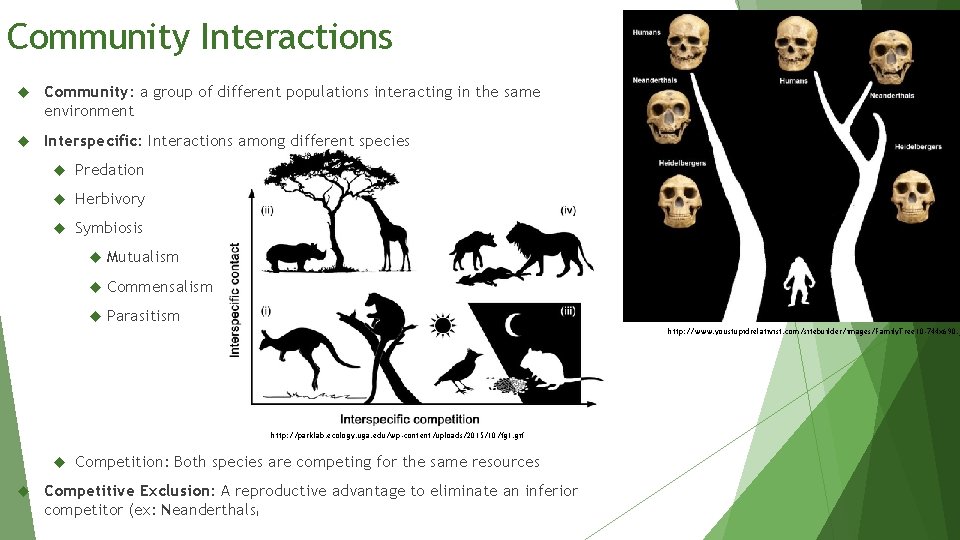
Community Interactions Community: a group of different populations interacting in the same environment Interspecific: Interactions among different species Predation Herbivory Symbiosis Mutualism Commensalism Parasitism http: //www. youstupidrelativist. com/sitebuilder/images/Family. Tree 10 -744 x 690. j http: //parklab. ecology. uga. edu/wp-content/uploads/2015/10/fg 1. gif Competition: Both species are competing for the same resources Competitive Exclusion: A reproductive advantage to eliminate an inferior competitor (ex: Neanderthals)
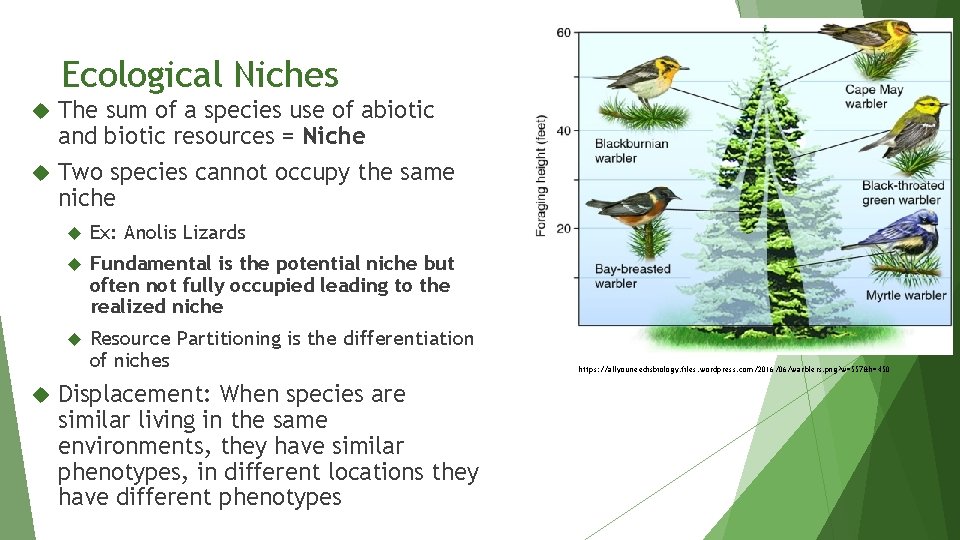
Ecological Niches The sum of a species use of abiotic and biotic resources = Niche Two species cannot occupy the same niche Ex: Anolis Lizards Fundamental is the potential niche but often not fully occupied leading to the realized niche Resource Partitioning is the differentiation of niches Displacement: When species are similar living in the same environments, they have similar phenotypes, in different locations they have different phenotypes https: //allyouneedisbiology. files. wordpress. com/2016/06/warblers. png? w=557&h=450
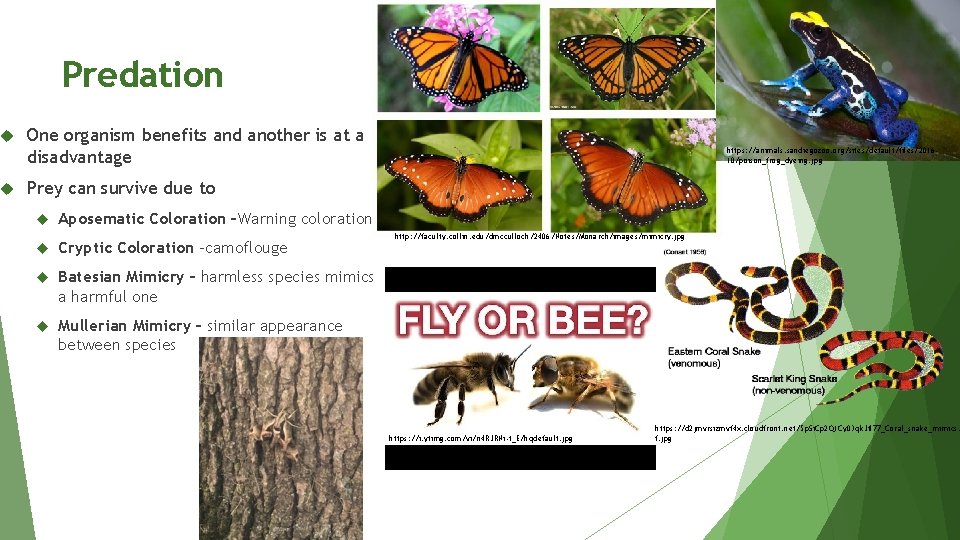
Predation One organism benefits and another is at a disadvantage https: //animals. sandiegozoo. org/sites/default/files/201610/poison_frog_dyeing. jpg Prey can survive due to Aposematic Coloration –Warning coloration Cryptic Coloration –camoflouge Batesian Mimicry – harmless species mimics a harmful one Mullerian Mimicry – similar appearance between species http: //faculty. collin. edu/dmcculloch/2406/Notes/Monarch/images/mimicry. jpg https: //i. ytimg. com/vi/n 4 RJRNi-t_E/hqdefault. jpg https: //d 2 jmvrsizmvf 4 x. cloudfront. net/5 p. Si. Cp 2 Q 1 Cy 03 qk. Jfl 77_Coral_snake_mimics. f. jpg
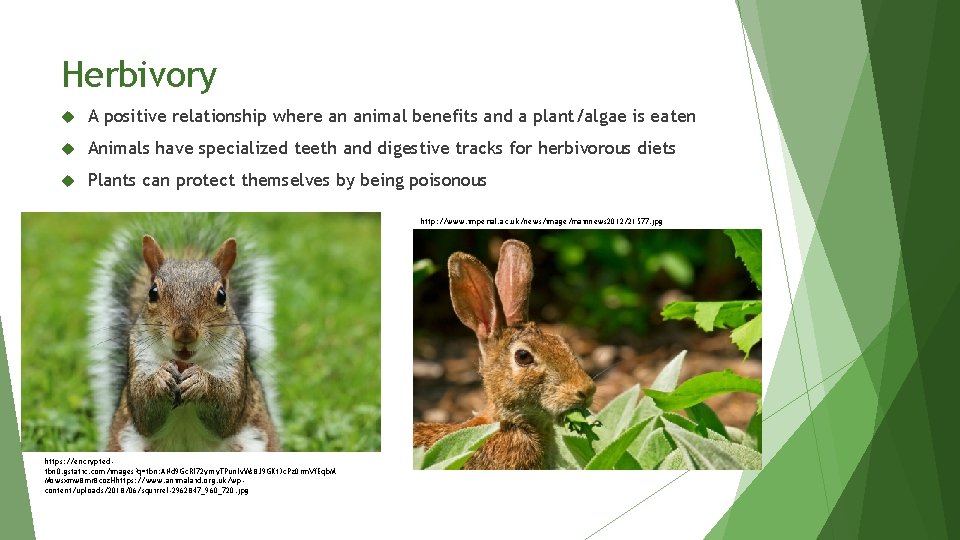
Herbivory A positive relationship where an animal benefits and a plant/algae is eaten Animals have specialized teeth and digestive tracks for herbivorous diets Plants can protect themselves by being poisonous http: //www. imperial. ac. uk/news/image/mainnews 2012/21577. jpg https: //encryptedtbn 0. gstatic. com/images? q=tbn: ANd 9 Gc. Rl 72 yrny. TPun. Iv. Ws 8 J 9 GKt 3 c. Pz 0 rm. Vf. Eqb. M Mowsxmw 8 mr 8 coz. Hhttps: //www. animalaid. org. uk/wpcontent/uploads/2018/06/squirrel-2962847_960_720. jpg
Relationships Symbiosis: other two organisms relate with each Parasitism: harmed One organism benefits and one is Endoparasites or internally and Ectoparasites: parasites feed externally Mutualism: Two organisms benefit from each other Obligate Mutualism: One species loses ability to survive alone Facultative Mutualism: Both species can survive on their own Facilitation: Positively affecting another species without direct contact (common in plant species)
Biodiversity
Diversity Species Diversity: variety of different organisms in a community Species Richness: the number of different species in the community Relative Abundance: the proportion each species represents in the community Shannon Diversity- a way to measure diversity incorporating species and their abundance
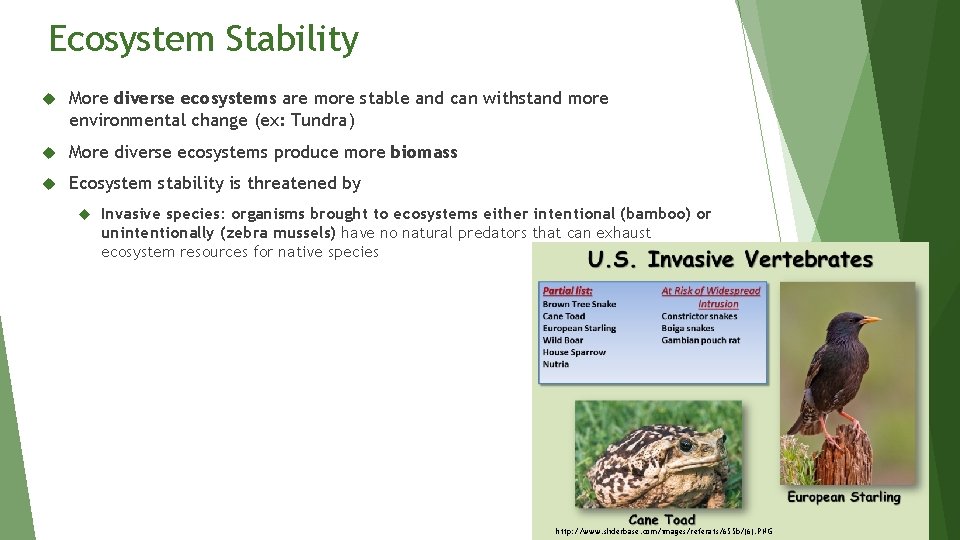
Ecosystem Stability More diverse ecosystems are more stable and can withstand more environmental change (ex: Tundra) More diverse ecosystems produce more biomass Ecosystem stability is threatened by Invasive species: organisms brought to ecosystems either intentional (bamboo) or unintentionally (zebra mussels) have no natural predators that can exhaust ecosystem resources for native species http: //www. sliderbase. com/images/referats/655 b/(6). PNG
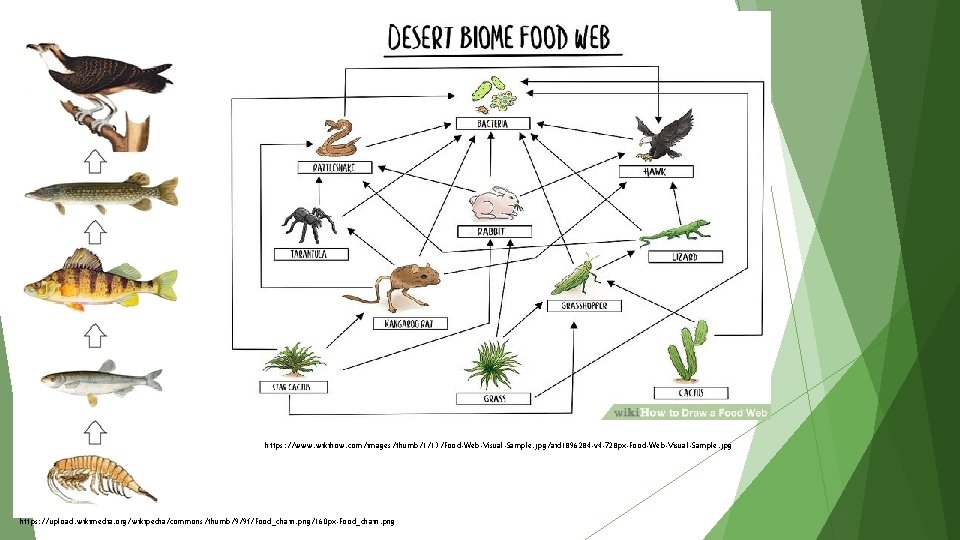
Food Chains, Pyramids and Webs Trophic Level: levels of feeding within an ecosystem Food Chains- go in one direction (P-C-D) Food Webs- show multiple food chains with multiple arrows (different organisms may show up at different trophic levels in a food web) Biomass: only about 10% of energy is passed along the food chain at each trophic level, hence why food chains are short
https: //www. wikihow. com/images/thumb/1/13/Food-Web-Visual-Sample. jpg/aid 1896284 -v 4 -728 px-Food-Web-Visual-Sample. jpg https: //upload. wikimedia. org/wikipedia/commons/thumb/9/9 f/Food_chain. png/160 px-Food_chain. png
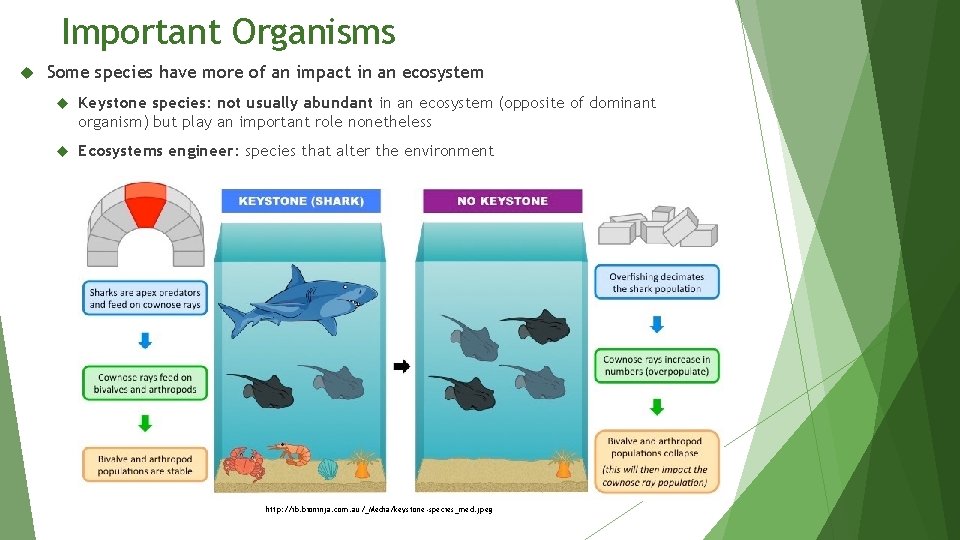
Important Organisms Some species have more of an impact in an ecosystem Keystone species: not usually abundant in an ecosystem (opposite of dominant organism) but play an important role nonetheless Ecosystems engineer: species that alter the environment http: //ib. bioninja. com. au/_Media/keystone-species_med. jpeg
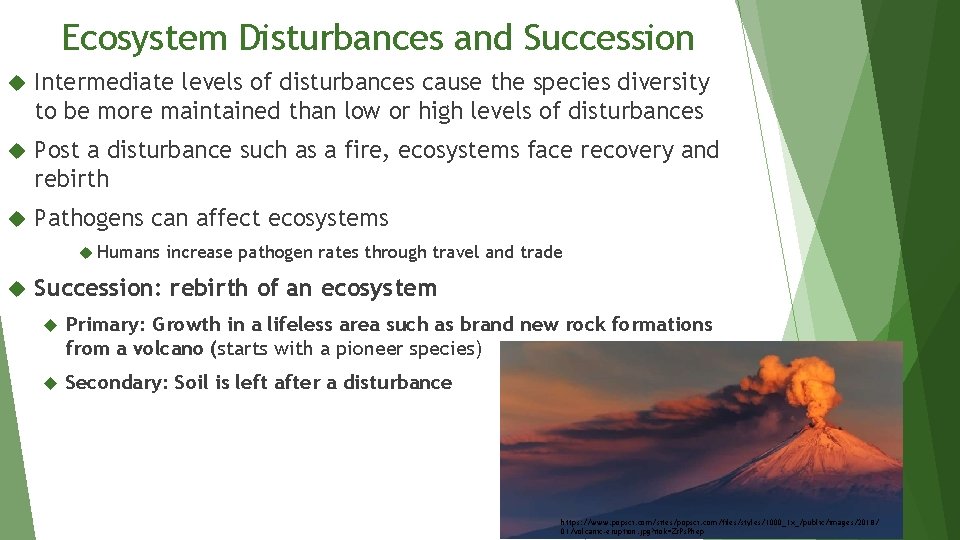
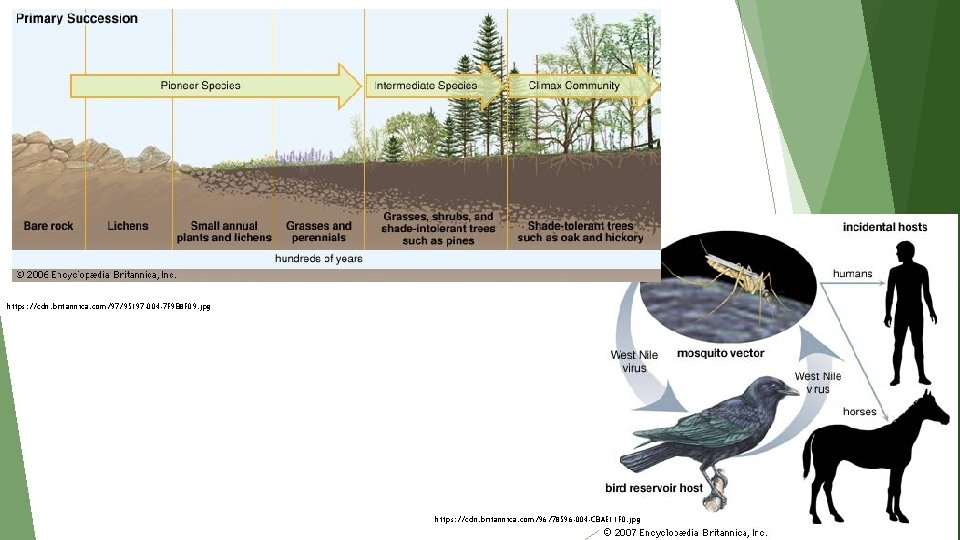
Ecosystem Disturbances and Succession Intermediate levels of disturbances cause the species diversity to be more maintained than low or high levels of disturbances Post a disturbance such as a fire, ecosystems face recovery and rebirth Pathogens can affect ecosystems Humans increase pathogen rates through travel and trade Succession: rebirth of an ecosystem Primary: Growth in a lifeless area such as brand new rock formations from a volcano (starts with a pioneer species) Secondary: Soil is left after a disturbance https: //www. popsci. com/sites/popsci. com/files/styles/1000_1 x_/public/images/2018/ 01/volcanic-eruption. jpg? itok=Zr. Ps. Phep
https: //cdn. britannica. com/97/95197 -004 -7 F 9 B 8 F 09. jpg https: //cdn. britannica. com/96/78596 -004 -CBAE 11 F 0. jpg