
Community Diagnosis By Family Health Survey Dr Abhay
Community Diagnosis By Family Health Survey Dr Abhay Nirgude Professor
Definitions • Health Needs • Felt and unfelt needs • Perceived health needs • Health resources
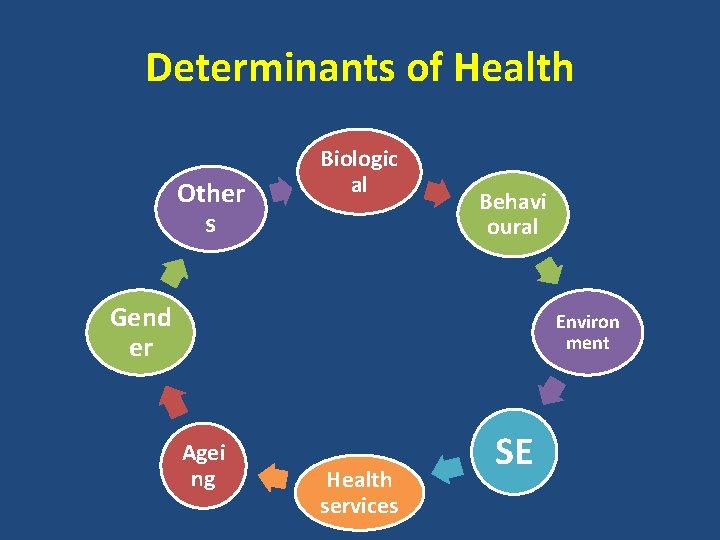
Determinants of Health Other s Biologic al Behavi oural Gend er Environ ment Agei ng Health services SE
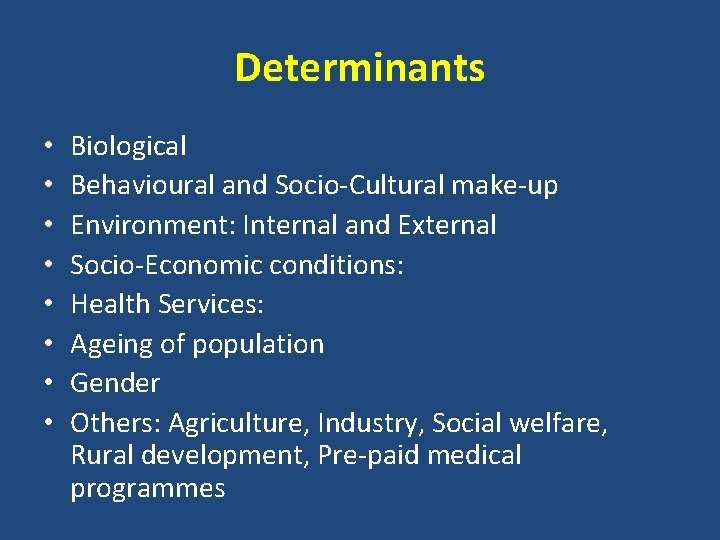
Determinants • • Biological Behavioural and Socio-Cultural make-up Environment: Internal and External Socio-Economic conditions: Health Services: Ageing of population Gender Others: Agriculture, Industry, Social welfare, Rural development, Pre-paid medical programmes
Community • Community is a social group determined by geographical boundaries and/or common values and interests. • Its members know and interact with each other. • It functions within a particular social structure and exhibits and creates certain norms, values, and social institutions. • Individuals belongs to the broader society through his family and community.
Individual Diagnosis • • History Signs & symptoms (ODP) Examinations Laboratory Investigations Interpretation Treatment Follow up
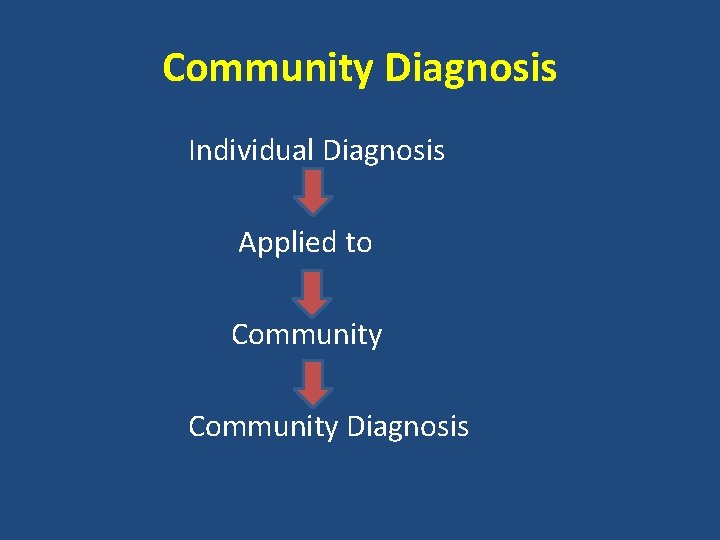
Community Diagnosis Individual Diagnosis Applied to Community Diagnosis
Community Diagnosis • According to World Health Organization (WHO) : - community diagnosis is “a quantitative and qualitative description of the health of citizens and the factors which influence their health. It identifies problems, proposes areas for improvement and stimulates action” An assessment of the health status and health problems is the first requisite for any planned effort to develop health care services. This is also known as Community Diagnosis.
What Information you will gather to do community Diagnosis
Basis of Community Diagnosis Collection & compilation of data 1. 2. 3. 4. Age & sex distribution of a population Distribution of population by social group Vital statistics Incidence & Prevalence of important diseases of the area. 5. Social and economic determinants 6. Health needs and health problems 7. Felt needs
Objectives of Community Diagnosis 1. To determine the major health problems and needs. 2. To identify resources to deal with these problems. 3. To ensure community participation
Steps in Community Diagnosis 1. 2. 3. 4. 5. 6. 7. 8. 9. Listening to people Observations on community Examination of community Survey and investigation in community Tentative Diagnosis Treatment of community Follow up of community Evaluation of therapy Re-planning of services
Community Diagnosis Tools/Methods • • • Family Health Survey Close ended & open ended questions In-depth interview Mapping Participatory methods: -
Information for Community Diagnosis By Family Health survey • Socio-demographic profile and family composition • S-E status and housing • Water supply, sanitation ( waste disposal) • MCH problems and utilization of MCH services • Socio-cultural factors of infant feeding • Diet survey • Morbidity and mortality
Socio-demographic Profile • • Name Age Gender Education Occupation Marital status Caste , Religion
Type of Family • What is family 1. Nuclear Family 2. Joint family 3. Nuclear extended family/Third generation Family
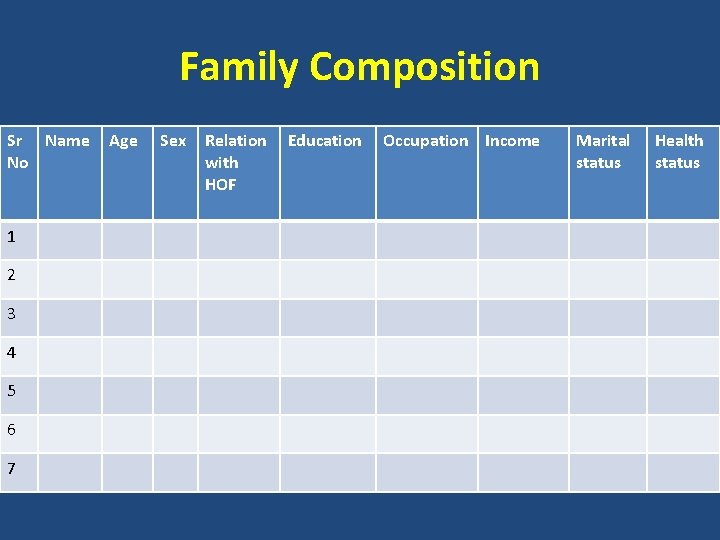
Family Composition Sr Name No 1 2 3 4 5 6 7 Age Sex Relation with HOF Education Occupation Income Marital status Health status
Socio-economic status • SES : - The position that an individual or family occupies with reference to the prevailing average standards of cultural and material possessions, income, and participation in group activity of the community.
Uses of Social Stratification Social class ( Social Differentiation) • These social class gradients have helped to provide a deeper understanding of clinical phenomena. • The poor had a higher incidence of some diseases, the rich of others. • Health practices too, like the use of health services, welfare and maternity clinics, and methods of infant feeding were found to be correlated with social class.
Occupational classification 1. 2. 3. 3. 4. 5. 6. Professional occupation Semi-professional occupation Shop owner/farmer/ clerical skilled Semi- skilled Unemployed
Other measures of social differentiations 1. 2. 3. 4. 5. Education Income Purchasing power Religion Rural & Urban
Social class & Health • Life expectancy • IMR, MMR, PNMR… • Communicable and Non-communicable diseases • Health care utilization • Mental health • Family size • Immunization status
Determinants of social class and health & disease association • Social class & Health Problems : • External resources and internal mechanisms available to individuals 1. Physical environment 2. Differences in services provided 3. Material resources 4. Genetic endowment 5. Educational status 6. Attitude to disease
social classes • • • Upper middle Middle Upper lower Lower
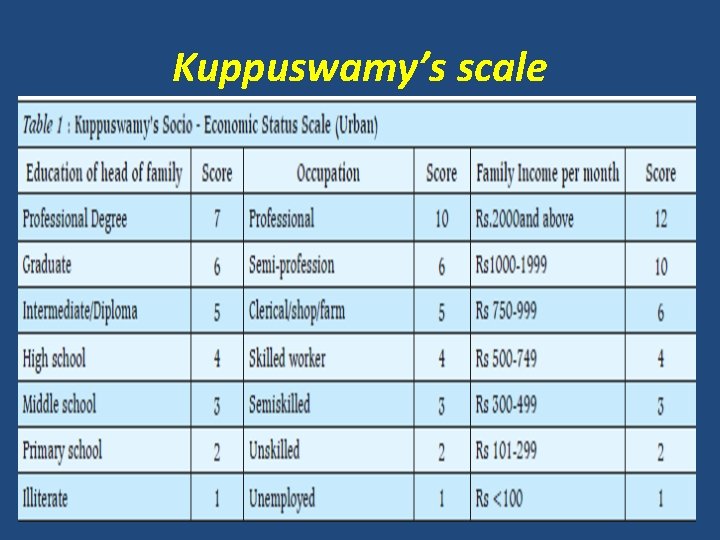
Kuppuswamy’s scale
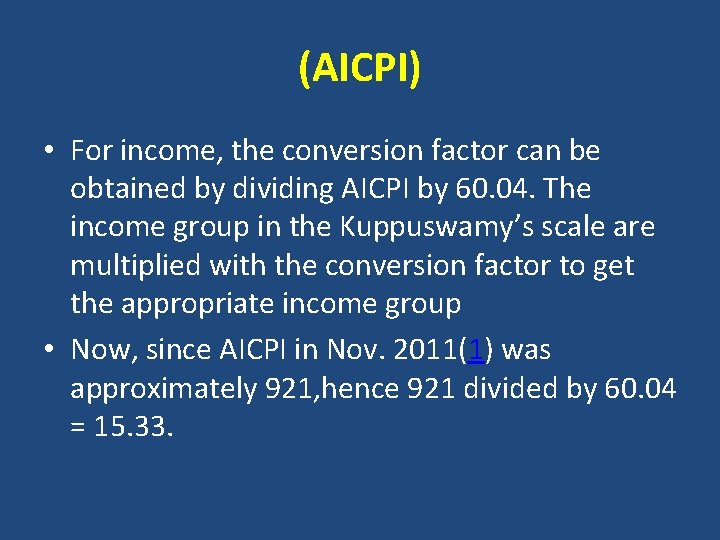
(AICPI) • For income, the conversion factor can be obtained by dividing AICPI by 60. 04. The income group in the Kuppuswamy’s scale are multiplied with the conversion factor to get the appropriate income group • Now, since AICPI in Nov. 2011(1) was approximately 921, hence 921 divided by 60. 04 = 15. 33.
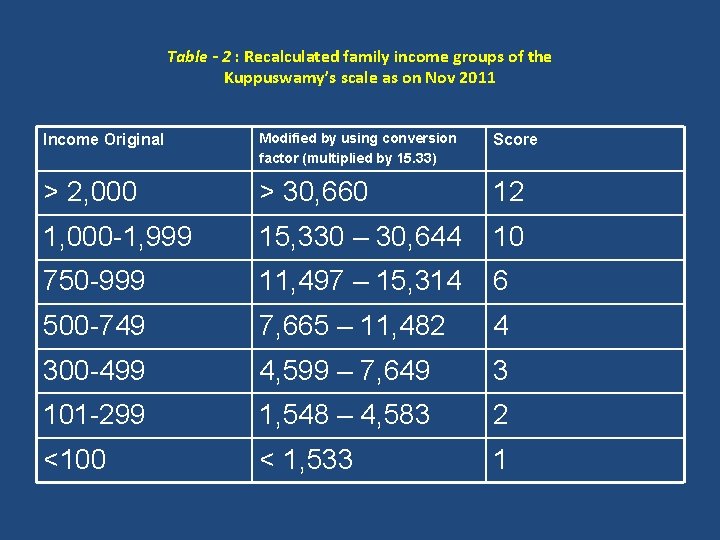
Table - 2 : Recalculated family income groups of the Kuppuswamy’s scale as on Nov 2011 Income Original Modified by using conversion factor (multiplied by 15. 33) Score > 2, 000 > 30, 660 12 1, 000 -1, 999 15, 330 – 30, 644 10 750 -999 11, 497 – 15, 314 6 500 -749 7, 665 – 11, 482 4 300 -499 4, 599 – 7, 649 3 101 -299 1, 548 – 4, 583 2 <100 < 1, 533 1
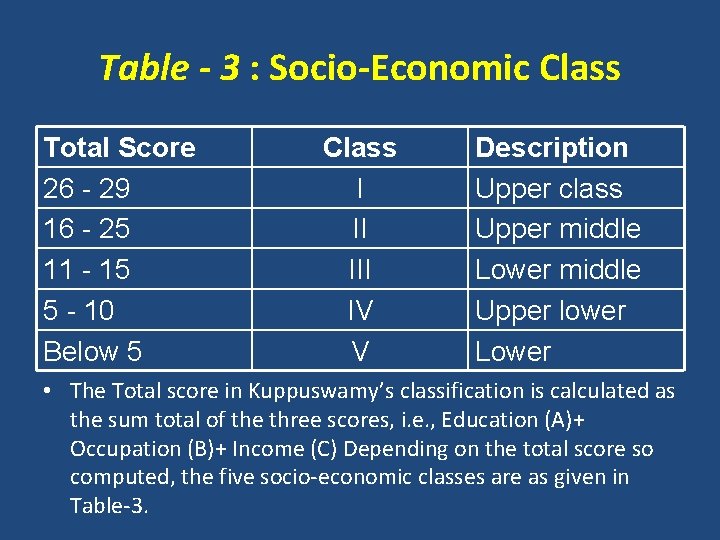
Table - 3 : Socio-Economic Class Total Score 26 - 29 16 - 25 11 - 15 5 - 10 Below 5 Class I II IV V Description Upper class Upper middle Lower middle Upper lower Lower • The Total score in Kuppuswamy’s classification is calculated as the sum total of the three scores, i. e. , Education (A)+ Occupation (B)+ Income (C) Depending on the total score so computed, the five socio-economic classes are as given in Table-3.
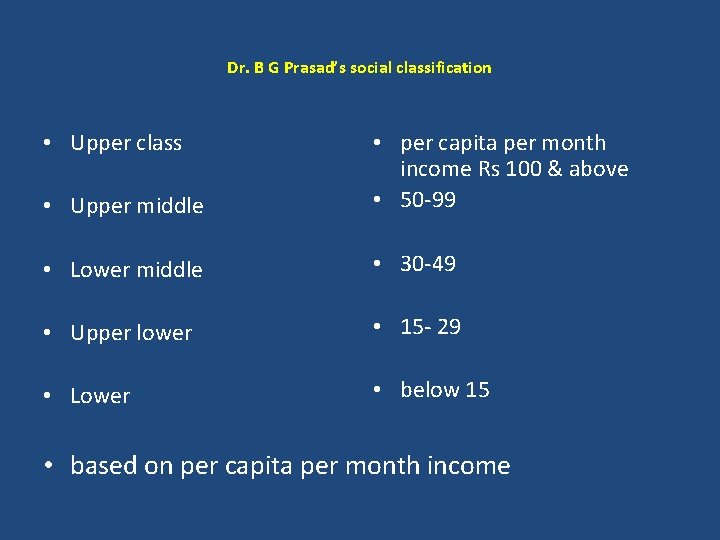
Dr. B G Prasad’s social classification • Upper class • Upper middle • per capita per month income Rs 100 & above • 50 -99 • Lower middle • 30 -49 • Upper lower • 15 - 29 • Lower • below 15 • based on per capita per month income
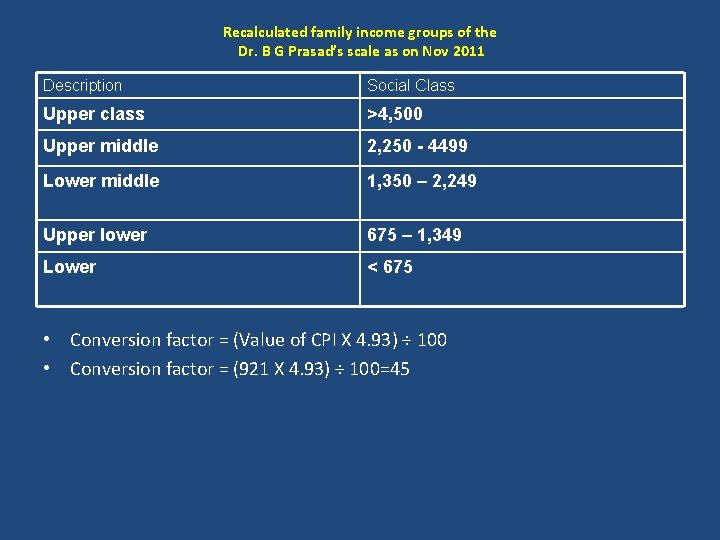
Recalculated family income groups of the Dr. B G Prasad’s scale as on Nov 2011 Description Social Class Upper class >4, 500 Upper middle 2, 250 - 4499 Lower middle 1, 350 – 2, 249 Upper lower 675 – 1, 349 Lower < 675 • Conversion factor = (Value of CPI X 4. 93) ÷ 100 • Conversion factor = (921 X 4. 93) ÷ 100=45
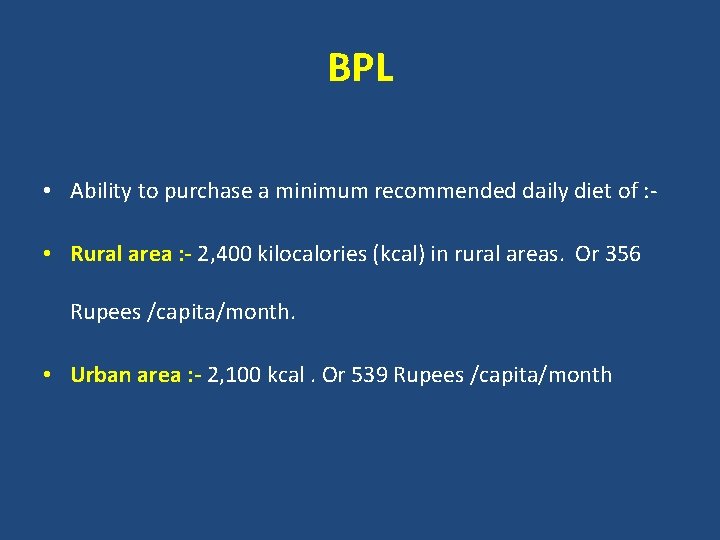
BPL • Ability to purchase a minimum recommended daily diet of : • Rural area : - 2, 400 kilocalories (kcal) in rural areas. Or 356 Rupees /capita/month. • Urban area : - 2, 100 kcal. Or 539 Rupees /capita/month
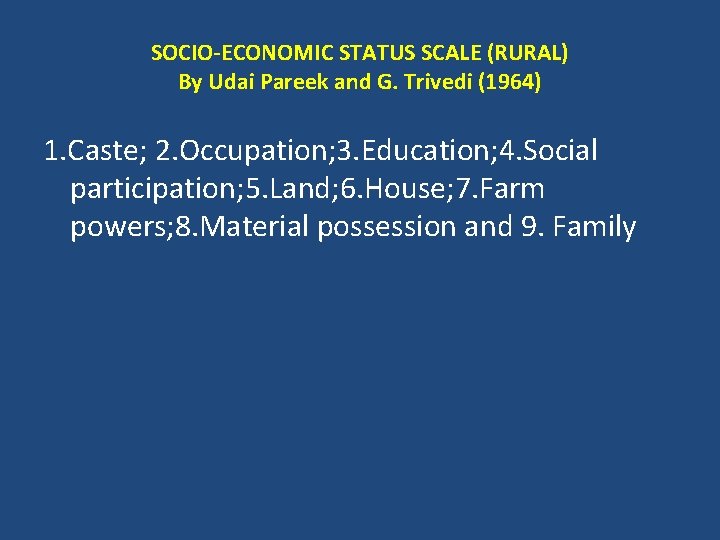
SOCIO-ECONOMIC STATUS SCALE (RURAL) By Udai Pareek and G. Trivedi (1964) 1. Caste; 2. Occupation; 3. Education; 4. Social participation; 5. Land; 6. House; 7. Farm powers; 8. Material possession and 9. Family
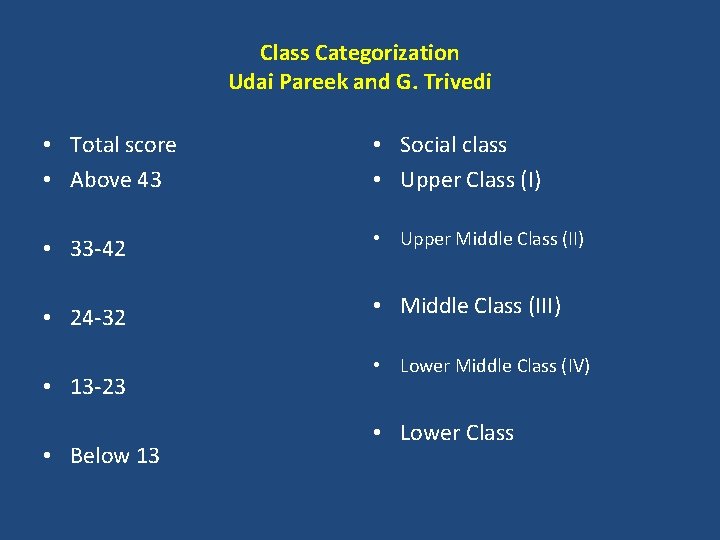
Class Categorization Udai Pareek and G. Trivedi • Total score • Above 43 • Social class • Upper Class (I) • 33 -42 • Upper Middle Class (II) • 24 -32 • 13 -23 • Below 13 • Middle Class (III) • Lower Middle Class (IV) • Lower Class
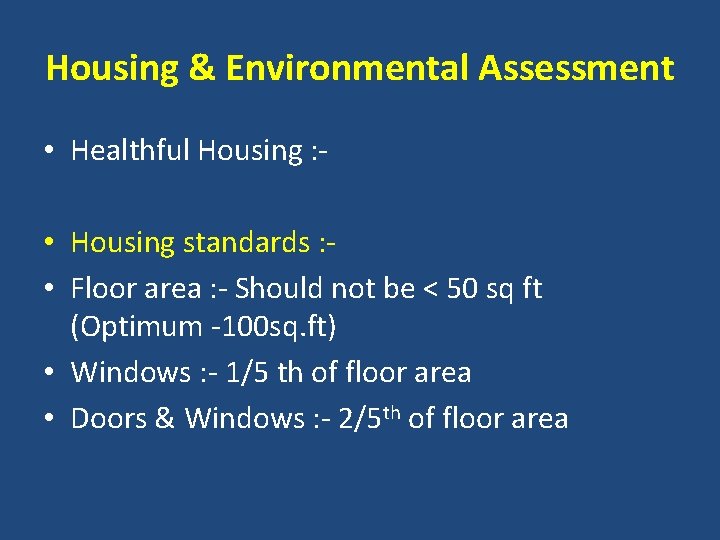
Housing & Environmental Assessment • Healthful Housing : • Housing standards : • Floor area : - Should not be < 50 sq ft (Optimum -100 sq. ft) • Windows : - 1/5 th of floor area • Doors & Windows : - 2/5 th of floor area
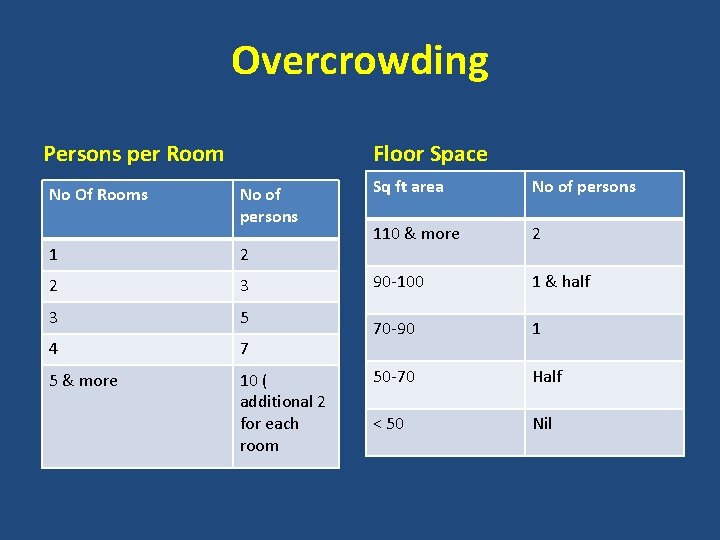
Overcrowding Persons per Room No Of Rooms Floor Space No of persons 1 2 2 3 3 5 4 7 5 & more 10 ( additional 2 for each room Sq ft area No of persons 110 & more 2 90 -100 1 & half 70 -90 1 50 -70 Half < 50 Nil
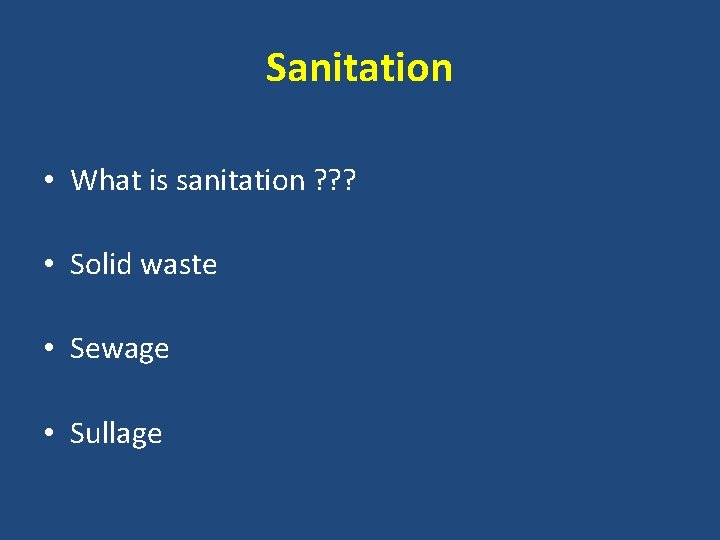
Sanitation • What is sanitation ? ? ? • Solid waste • Sewage • Sullage
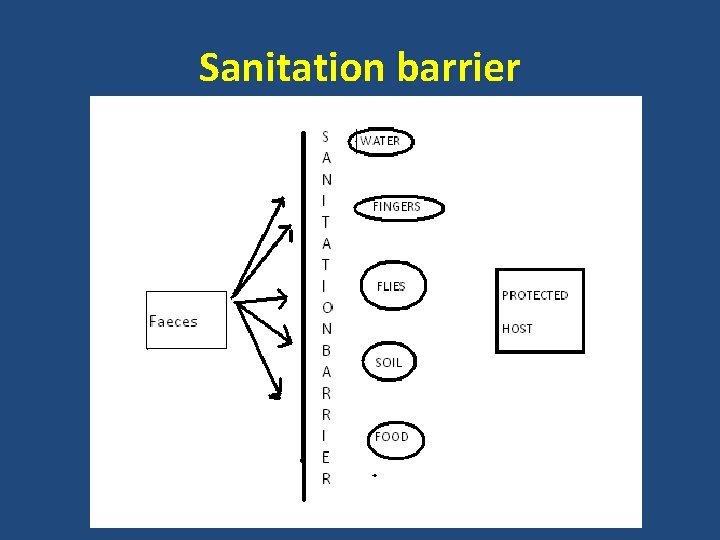
Sanitation barrier
Sewage Disposal
Solid waste
Water supply • • • Source Community purification Domestic water purification How the drinking water stored? How is drinking water used?
Fly/ Mosquito nuisance • • • Public health Importance Potential Breeding sites for mosquitoes: Dry by week……. Malaria Surveillance…. . Mass drug administration against lymphatic Filariasis.
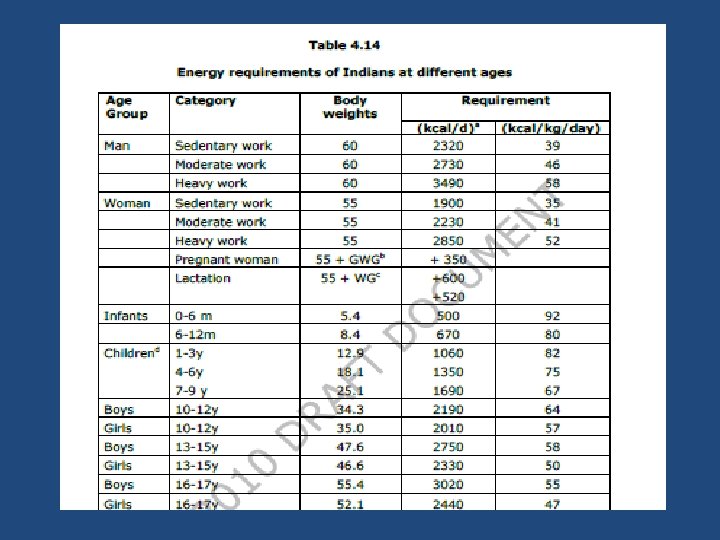
Diet survey • • Raw food assessment : - 7 days diet cycle Last 24 hour recall : - Cooked food Nutritional assessment Extra calories requirement during pregnancy
KAP : - Health services • • • Medical care MCH services Utilization of services Health seeking behaviour Social security schemes Immunization : - < 5 children till date.
KAP : - Socio-cultural • • Breast feeding practices : Which milk is best for the new born: -…. Initiation of B F Prelactal feed? ? Duration of EBF Initiation of complementary feed/weaning. . B F during diarrhoea…. . Knowledge about EBF…. . ?
Substance Use • Tobacco use • Alcohol use
Other…. • School dropout • Child labour • Specific geriatric problems
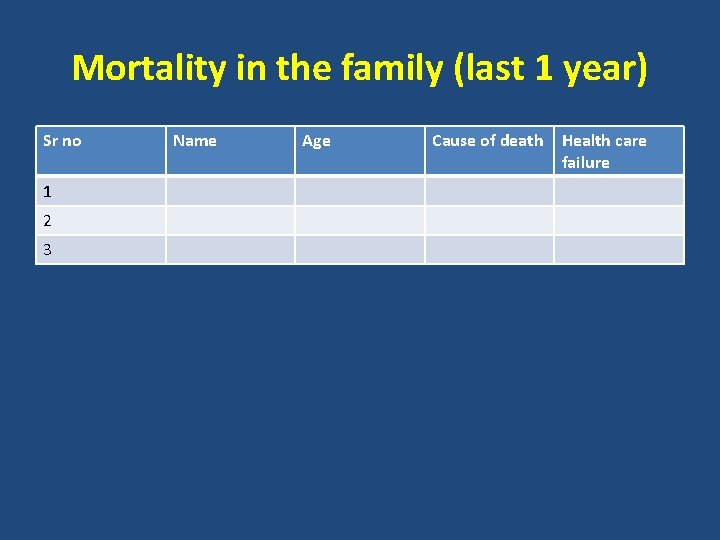
Mortality in the family (last 1 year) Sr no 1 2 3 Name Age Cause of death Health care failure
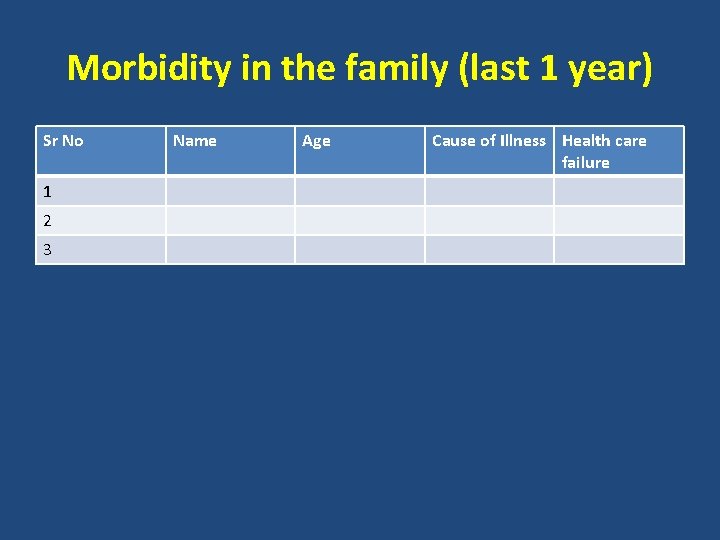
Morbidity in the family (last 1 year) Sr No 1 2 3 Name Age Cause of Illness Health care failure
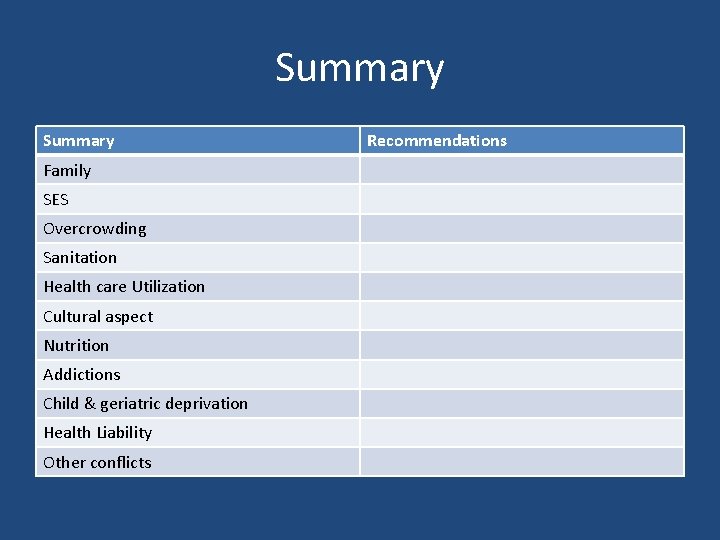
Summary Family SES Overcrowding Sanitation Health care Utilization Cultural aspect Nutrition Addictions Child & geriatric deprivation Health Liability Other conflicts Recommendations
- Slides: 50