
Community Choice Energy as a Community Development Strategy

- Slides: 14
Community Choice Energy as a Community Development Strategy for Oakland March 30, 2010
Today's Presentation • The Problem: One Size Doesn’t Fit All • The Opportunity: Electricity as a Community Development strategy • Local and Regional Renewables are Cost Effective with Important Co-benefits • Results of Jobs Analysis • Administering & Structuring an East Bay program
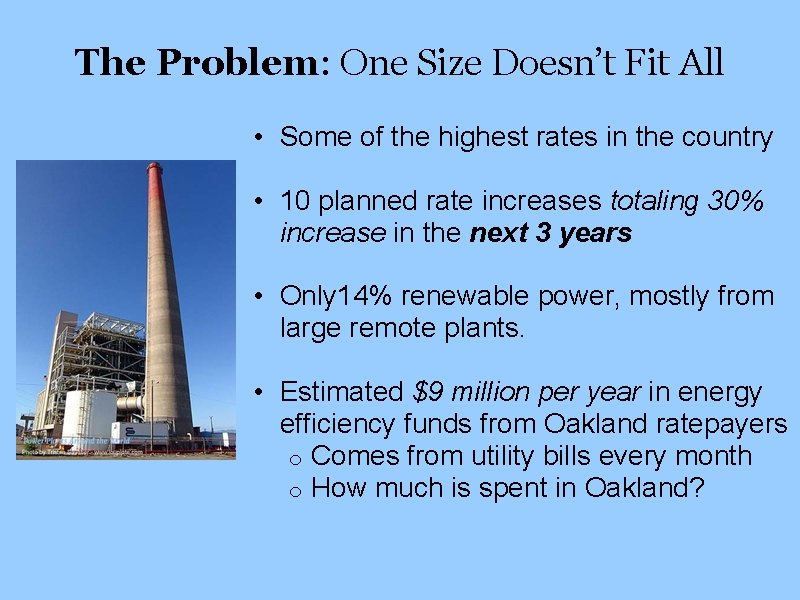
The Problem: One Size Doesn’t Fit All • Some of the highest rates in the country • 10 planned rate increases totaling 30% increase in the next 3 years • Only 14% renewable power, mostly from large remote plants. • Estimated $9 million per year in energy efficiency funds from Oakland ratepayers o Comes from utility bills every month o How much is spent in Oakland?
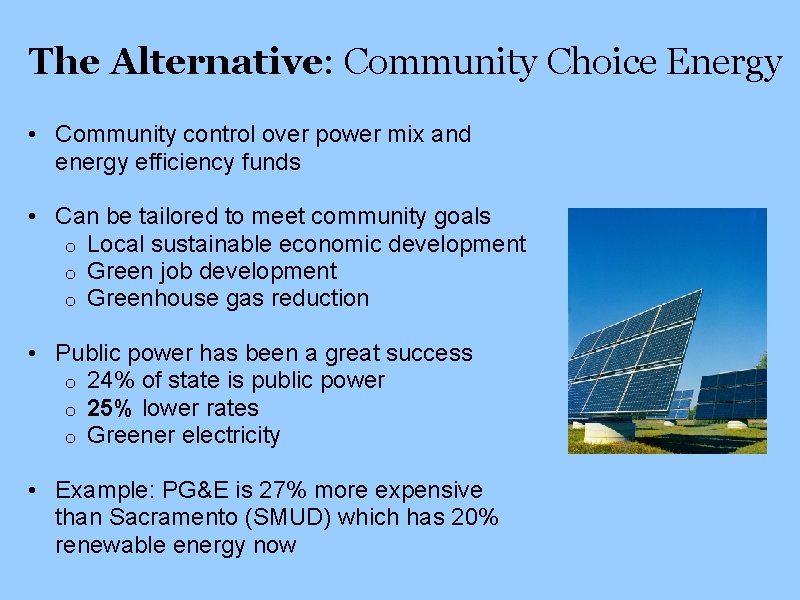
The Alternative: Community Choice Energy • Community control over power mix and energy efficiency funds • Can be tailored to meet community goals o Local sustainable economic development o Green job development o Greenhouse gas reduction • Public power has been a great success o 24% of state is public power o 25% lower rates o Greener electricity • Example: PG&E is 27% more expensive than Sacramento (SMUD) which has 20% renewable energy now
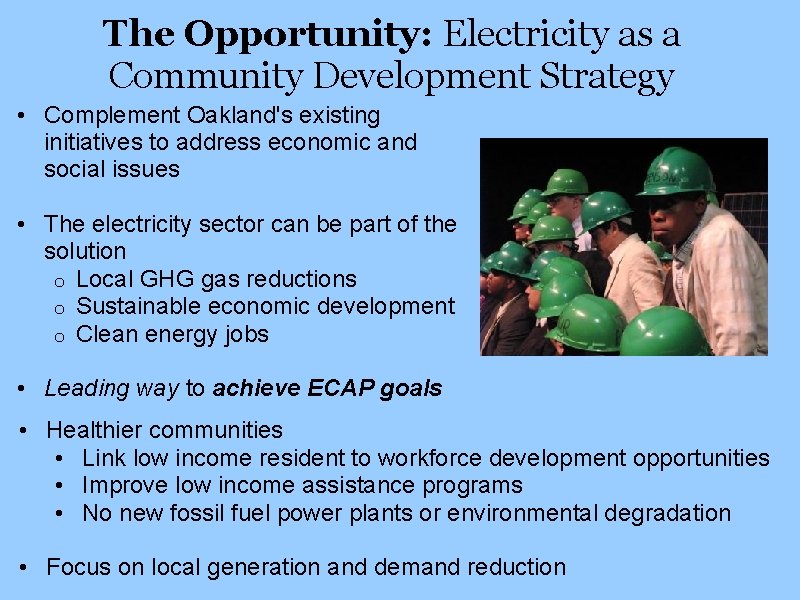
The Opportunity: Electricity as a Community Development Strategy • Complement Oakland's existing initiatives to address economic and social issues • The electricity sector can be part of the solution o Local GHG gas reductions o Sustainable economic development o Clean energy jobs • Leading way to achieve ECAP goals • Healthier communities • Link low income resident to workforce development opportunities • Improve low income assistance programs • No new fossil fuel power plants or environmental degradation • Focus on local generation and demand reduction
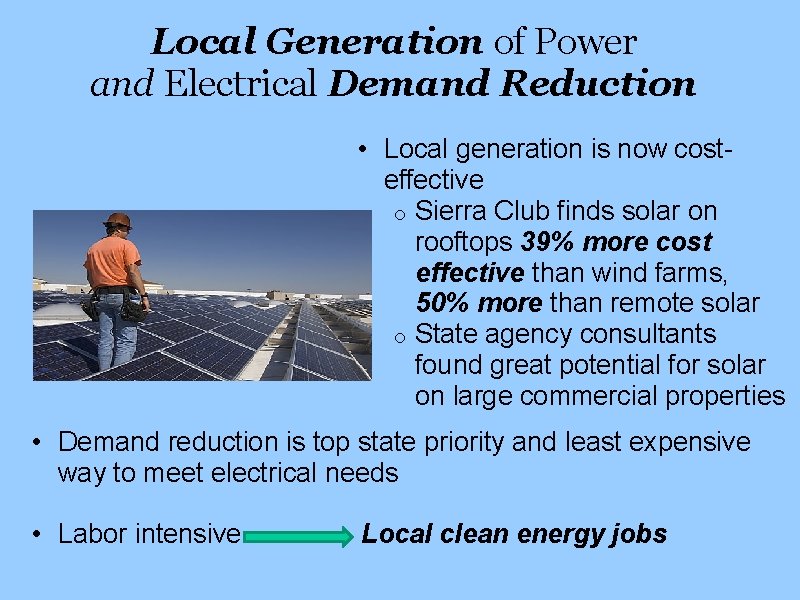
Local Generation of Power and Electrical Demand Reduction • Local generation is now costeffective o Sierra Club finds solar on rooftops 39% more cost effective than wind farms, 50% more than remote solar o State agency consultants found great potential for solar on large commercial properties • Demand reduction is top state priority and least expensive way to meet electrical needs • Labor intensive Local clean energy jobs
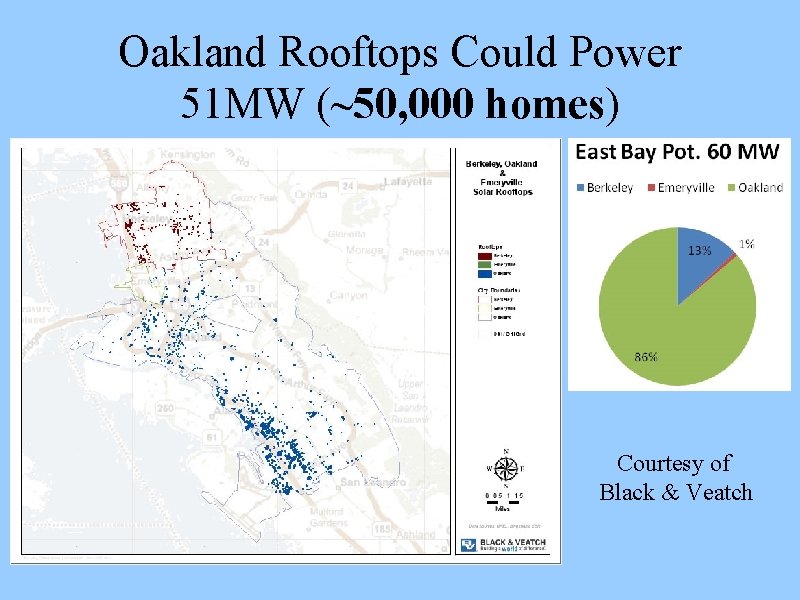
Oakland Rooftops Could Power 51 MW (~50, 000 homes) Courtesy of Black & Veatch
Financial Advantages of Community Choice Energy • Ability to tap into low rate municipal bonds • With nonprofit model, $14 million would stay in Oakland (PG&E shareholders received $1/2 billion in 2009 dividends) • No exorbitant executive compensation: PG&E CEO took $9. 4 million in 2009 • Reduced rates to local consumers • Revenues could fund local initiatives; Los Angeles' public utility sends $220 million to the general fund
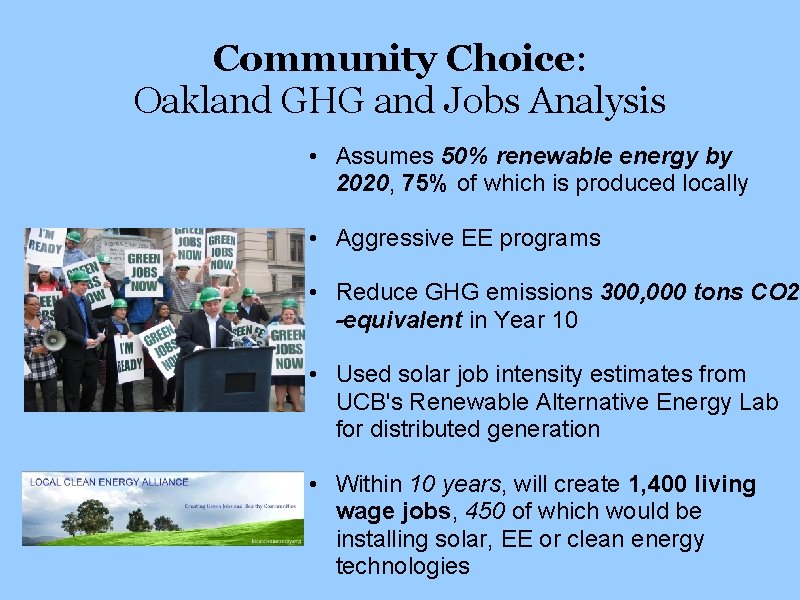
Community Choice: Oakland GHG and Jobs Analysis • Assumes 50% renewable energy by 2020, 75% of which is produced locally • Aggressive EE programs • Reduce GHG emissions 300, 000 tons CO 2 -equivalent in Year 10 • Used solar job intensity estimates from UCB's Renewable Alternative Energy Lab for distributed generation • Within 10 years, will create 1, 400 living wage jobs, 450 of which would be installing solar, EE or clean energy technologies
Administering an East Bay Community Choice Program • JPA governs and tailors program to meet community needs • Contracts with local and remote electricity provider(s) • Managed by an Electric Service Provider o Large company like Shell (Marin Energy Authority) o Public utility like East Bay MUD o Public power company or association
Structuring an East Bay Community Choice Program • Foster accountability and inclusion • Key stakeholders have seat at the table o Community o Labor o Green Business • Precedent: ECAP • Stakeholder committee with clout o Identifies community needs and programs o Evaluates project performance and contracts o Vets proposals
The Next Steps… • Support the resolution Prop 16 on 4/20 • Determine the effects of Community Choice on organized labor • When Marin or SF begins delivering electricity, Oakland should form a Task force o Monitor Community Choice Energy progress o Monitor cost competitiveness of local renewables o Identify Community Development needs and opportunities • Lobby state utilities agency to allow cities more control over EE funds and require utilities to share a lot more data (to aid in strategic program resource planning)
Dave Room Local Clean Energy Alliance Bay Localize dave@baylocalize. org (510) 285 7075 March 30, 2010
Image Credits irps. ucsd. edu/ greenaction. org racewire. org emcity. org lcv. org watthead. org thewere 42. wordpress. com/2009/10/15/ communityhopefinancial. com edab. org Robert Her