
Community Centered Learning A look at Tucker Local
- Slides: 21
Community Centered Learning A look at Tucker Local Schools community centered approach to enhancing student achievement and creating a well designed school environment.
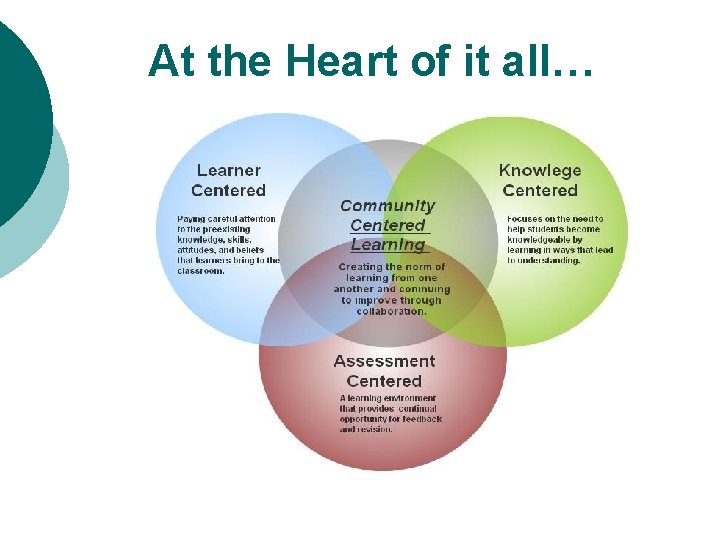
The Four Aspects of a Well Designed Learning Environment At Tucker local schools, we take the best qualities of each of these four learning environments and combine forces to create a learning community that fully addresses the needs of all our students. ¡ ¡ Learner centered Knowledge centered Assessment centered Community centered
At the Heart of it all…
The Learner Centered Environment ¡ ¡ Pays special attention to the knowledge, skills, attitudes, and beliefs that learners bring to the educational setting (preexisting ideas and experiences etc. ) Discovers what student's think in relation to a set of problems or challenges and discusses with them their misconceptions so that they can be able to readjust their ideas. Teachers recognize the importance of building on the conceptual and cultural knowledge that students bring to a class. Teachers need to be aware that learners construct their own meanings (which begins with their preexisting beliefs. )
The Knowledge Centered Environment ¡ ¡ ¡ Focuses on helping students become knowledgeable by learning in ways that lead to understanding and transfer of knowledge. Focuses on the kinds of information and activities that help students develop an understanding of disciplines through the critical examination of existing curricula. There is an emphasis on helping students become metacognitive by expecting new information to make sense and having them ask for clarification when it doesn't.
The Assessment Centered Environment ¡ ¡ Focuses on the fact that feedback is proven to be extremely effective. Student thinking must be made visible to students and feedback must be provided so that they can expand on their knowledge and learn from it. Opportunities for feedback should occur continuously (can be formal or informal, summative or formative). Feedback is most valuable when students have the opportunity to use it to revise their thinking.
The Community Centered learning Environment ¡ ¡ ¡ In a community centered learning environment, everyone needs to work together for the greater good of the environment as a whole. At the heart of community centered learning lies collaboration - teacher to student collaboration, student to outside community collaboration, student to student collaboration, and teacher to teacher collaboration among others. Collaboration leads to improving the group as a whole.
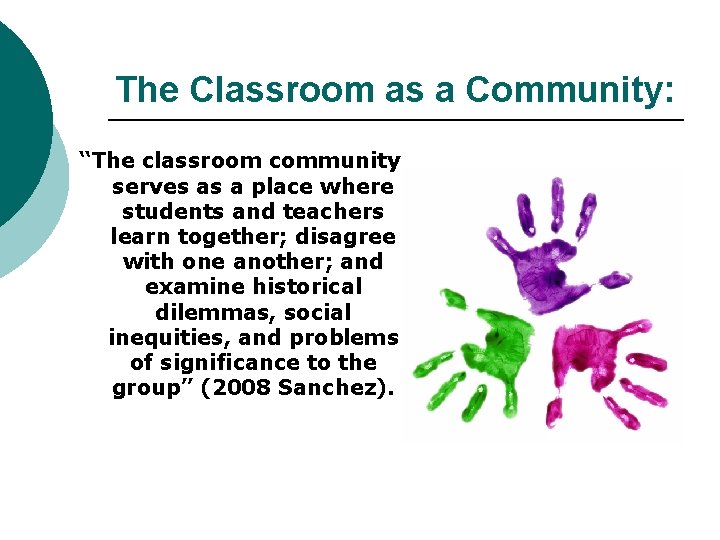
The Classroom as a Community: “The classroom community serves as a place where students and teachers learn together; disagree with one another; and examine historical dilemmas, social inequities, and problems of significance to the group” (2008 Sanchez).
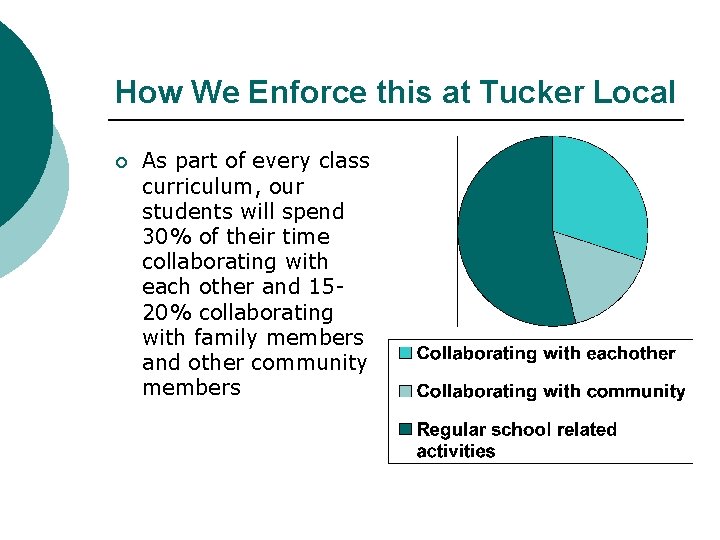
How We Enforce this at Tucker Local ¡ As part of every class curriculum, our students will spend 30% of their time collaborating with each other and 1520% collaborating with family members and other community members
Different Learning Styles: Every school learning environment is made up of students with different learning styles (visual, auditory, and kinesthetic for example). As part of Tucker Local School’s approach to creating a community centered learning environment, our lessons and curriculum are structured to meet the needs of all types of learners in our school community.
Meeting the Needs of Different Learning Styles. Visual Learners: ¡ Our teachers use a variety of displays, posters, and visual representations as part of every class. ¡ Regular field trip opportunities (including online oriented field trips). ¡ Students work together each quarter to create visual representations of what they learned. ¡ We work with the LMC to provide each class with regular videos and resources to elaborate on what they are learning.
Meeting the Needs of Different Learning Styles ctd. Auditory learners: ¡ Small group discussion among students is a critical component to every class. ¡ Students participate in school wide debates, poetry and short story recitals, and quiz show like competitions. ¡ Guest speakers (both in-school and online through tech. like Skype) are a part of each subject’s mandatory curriculum.
Meeting the Needs of Different Learning Styles ctd. Kinesthetic learners: ¡ Students are encouraged to express themselves through illustrations, models, and displays as part of every class. ¡ Regular field trip opportunities that place students in interactive educational environments. ¡ Teachers are encouraged to allow their students to move about the room and participate in things like learning stations or experiments in order to work together.
Bridging the Gap Between the School Community and the Outside Community ¡ ¡ ¡ Students spend 53% of their time at home and only 14% at school. The amount of time that is spent with the family greatly impacts how students learn and it is through this interaction at home that much of the foundation for how students learn at school is created. At Tucker Local Schools, these two aspects of community combine into one large community.
How We Enforce this at Tucker Local Schools ¡ ¡ Each family member of Tucker Local Schools is also a member of our school community and we encourage them to participate in one of our many opportunities to get involved. Options for this include: l l Bring a family member to school day. Having parents share their experiences with students when they complete their family tree and coming in to help their children present their tree to their peers. Volunteering for one of our many committees and becoming a homeroom supporter. Volunteering in the library, the lunchroom, and on field trips.
The Greater Community ¡ ¡ Students can opt to take part in mentoring programs that pair them with community members who want to help students in their district. Each class participates in a yearly outreach program that allows them to work with and support a specific community group. Students have pen-pals with other schools and write letters to soldiers and senior citizens in nursing homes at different times throughout the year. Older students mentor and support the younger students on class projects.
The Teachers as a Community: ¡ “As teachers work on new practices and teaching challenges together, they will express varied perspectives, reveal different teaching styles and experiences, and stimulate reflection and professional growth” (Hindin 2007).
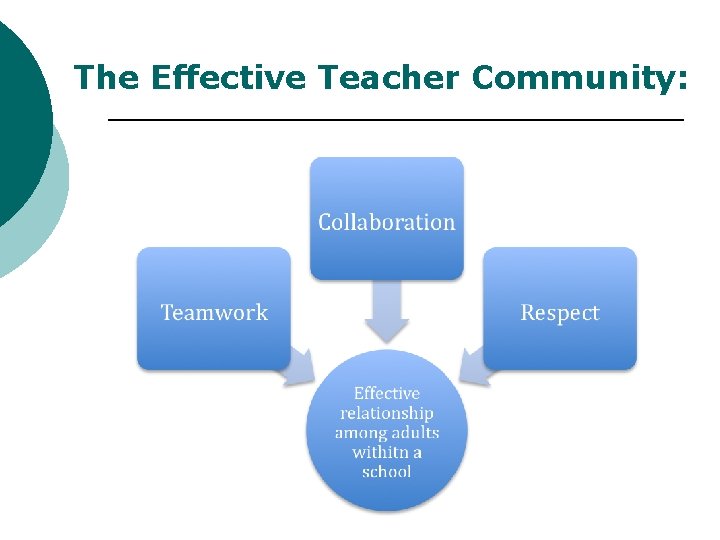
The Effective Teacher Community:
How We Enforce This at Tucker Local Our teachers have weekly brainstorming sessions before and after school together. ¡ Teachers are encouraged to take part in action research as part of their professional development. ¡ Teachers are required to lead inschool professional development meetings/committees. ¡
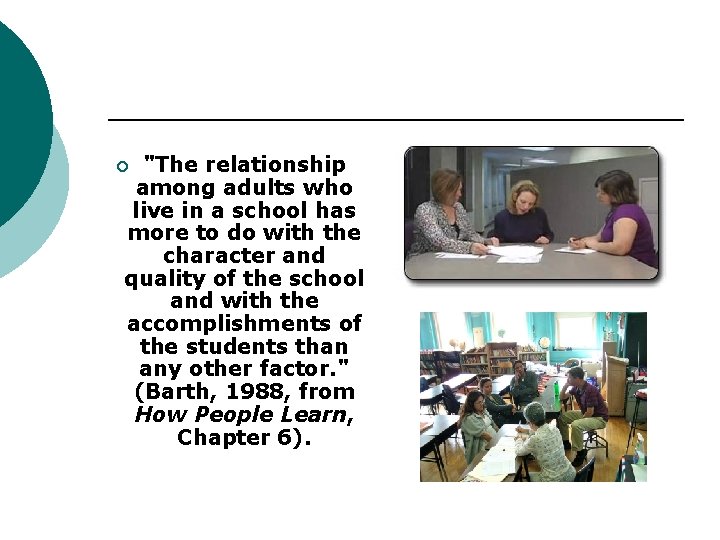
"The relationship among adults who live in a school has more to do with the character and quality of the school and with the accomplishments of the students than any other factor. " (Barth, 1988, from How People Learn, Chapter 6). ¡
How do we assess this model? ¡ ¡ ¡ At Tucker Local Schools, we believe that the success of our students is our greatest achievement factor. We are constantly collaborating with other school districts to see how they structure their learning environment and are continuously striving for improvement. We also look to educational research when it comes to planning our school policies, practices, and curriculum and always try to stay current with new trends and discoveries.