
COMMUNITY BASED MONITORING SYSTEM PROJECT PRESENTATION Project Title
COMMUNITY BASED MONITORING SYSTEM PROJECT PRESENTATION Project Title : CBMS – EDUCATION SYSTEM IN ZAMBIA– the Case of Nachibamba Ward in PEMBA STUDENT DETAILS: Chilala SIN: 1605210506 Programme : MASTERS IN DUCATION 1

PROJECT DETAILS § Study type § Initiators § Year § § § : CBMS SCHOOLS Survey : ICU and ZRDC : 2017 GEOGRAPHICAL CHARACTERISTICS Location : Southern Province District : PEMBA Constituency : PEMBA Ward : Nachibanga :
INTRODUCTION �To collect samples we randomly sampled grade 812 at each school. This group was chosen because there were able to read and right . Due to an increase in the number of schools in the ward only one pupil was selected to participate in the answering of the questionnaires. The competition to participate in the evaluation was very high so we sampled ten from each school and then selected one to participate. This made my samples to be very good and not biased.
Introduction cont. . �For teachers we got four(4) teachers from each school who were also chosen from those teaching grade 8 -12 for consistence in data collection. So we got 4 teachers from Pemba, 4 teachers from Jembo, 4 teachers from Ndondi secondary, 4 teachers from Japi, 4 teachers from Demu School, 4 teachers from Pemba, just to mention a few.

Introduction cont. Before distribution of questionnaires permission will be gotten from Head Teachers of each school. Teachers and pupils will also be informed the purpose of the research to avoid suspicion and information hiding. Pupils and Teachers were given five days to respond to the questionnaires due to the urgency of the research.
POPULATION DISTRIBUTION �According to CSO (2012, p. 4) the population composition by province, region and sex indicate that 49. 3 % are males and 50. 7 are females. �This CBMs findings shows that 46 % are males and 54 % are females �The CBMS mean size findings of 5 reflects in comparison with 2012 CSO population census figure of 4. 5 for western Province.
RESPONSES § 75% of the respondents indicated that recruitment an deployment of teachers in rural areas is going on very well even though 25% said that the recruitment stoppage from 2005 to 2010 affected the number of teachers in the area. There is a correlation between children's teacher ratio and the level of teachers recruitment. § It also came out clear that women are not motivated to participate in technical programmes. From the responses only 25% level was given as being attained.
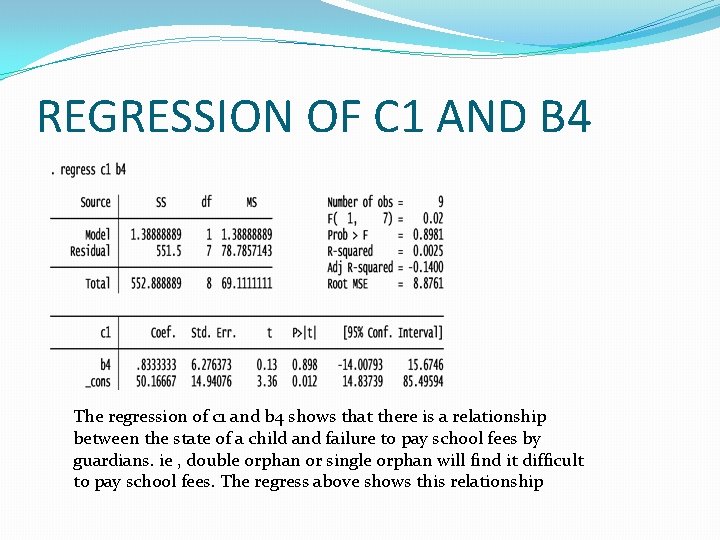
REGRESSION OF C 1 AND B 4 The regression of c 1 and b 4 shows that there is a relationship between the state of a child and failure to pay school fees by guardians. ie , double orphan or single orphan will find it difficult to pay school fees. The regress above shows this relationship
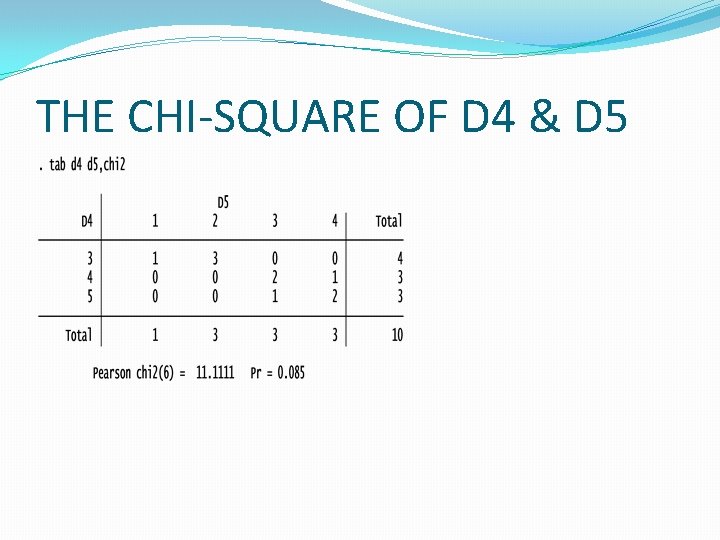
THE CHI-SQUARE OF D 4 & D 5
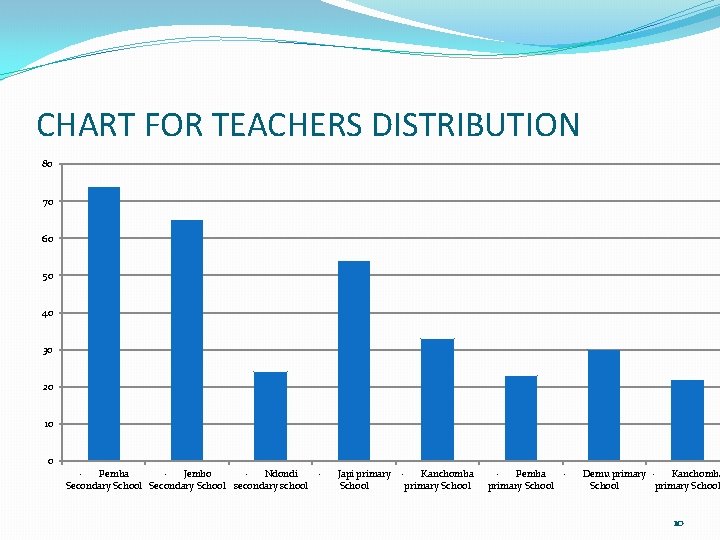
CHART FOR TEACHERS DISTRIBUTION 80 70 60 50 40 30 20 10 0 · Pemba · Jembo · Ndondi · Japi primary · Kanchomba Secondary School secondary school School primary School · Pemba · Demu primary · Kanchomba primary School 10
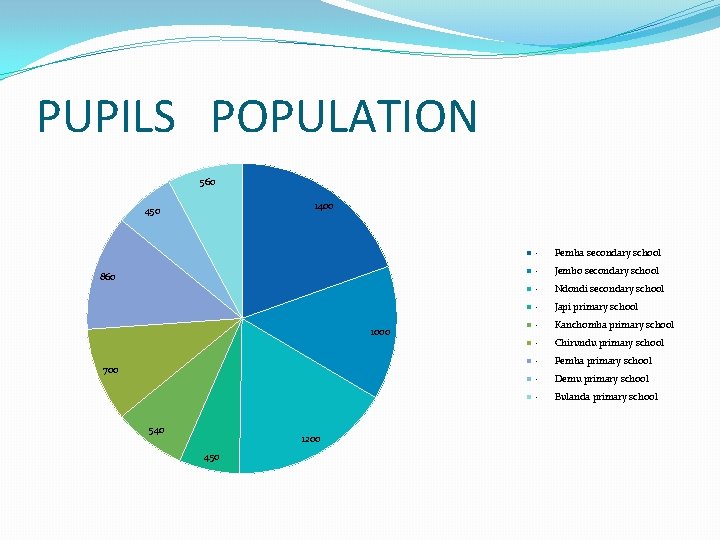
PUPILS POPULATION 560 1400 450 · Pemba secondary school · Jembo secondary school 860 · Ndondi secondary school · Japi primary school 1000 · Kanchomba primary school · Chirundu primary school · Pemba primary school 700 · Demu primary school · Bulanda primary school 540 1200 450
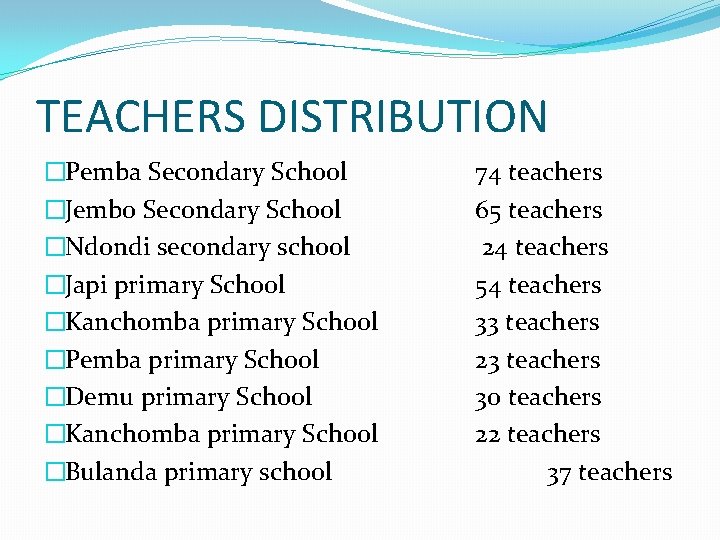
TEACHERS DISTRIBUTION �Pemba Secondary School �Jembo Secondary School �Ndondi secondary school �Japi primary School �Kanchomba primary School �Pemba primary School �Demu primary School �Kanchomba primary School �Bulanda primary school 74 teachers 65 teachers 24 teachers 54 teachers 33 teachers 23 teachers 30 teachers 22 teachers 37 teachers
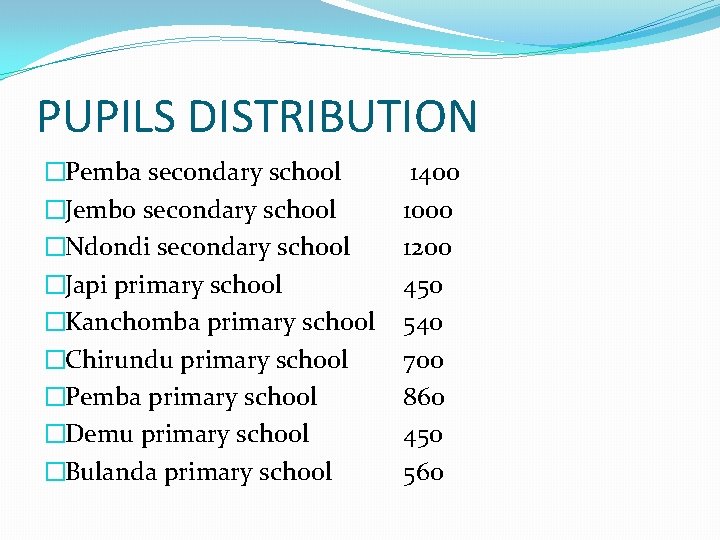
PUPILS DISTRIBUTION �Pemba secondary school �Jembo secondary school �Ndondi secondary school �Japi primary school �Kanchomba primary school �Chirundu primary school �Pemba primary school �Demu primary school �Bulanda primary school 1400 1000 1200 450 540 700 860 450 560
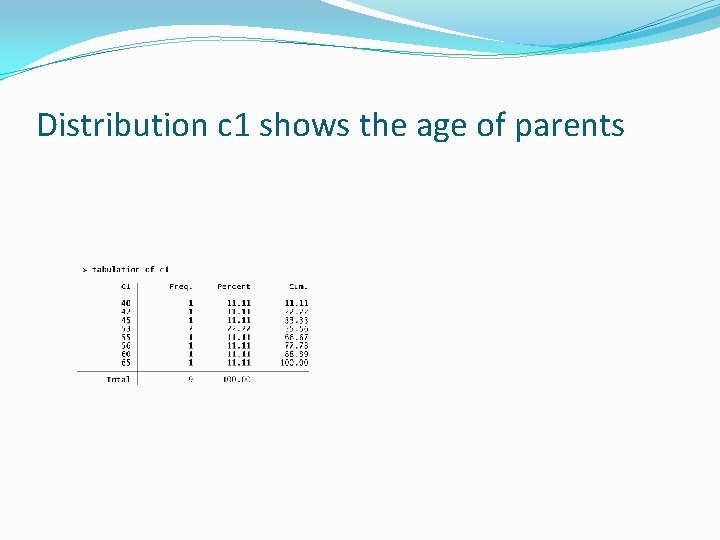
Distribution c 1 shows the age of parents
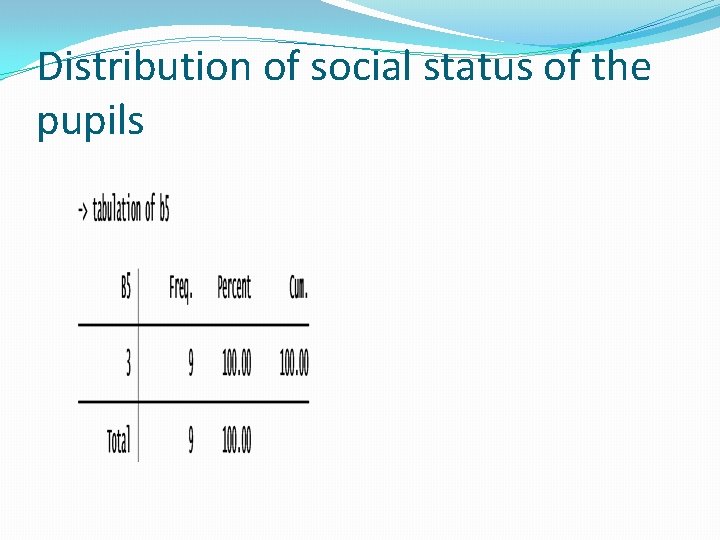
Distribution of social status of the pupils
CHALLENGES AND CONSTRAINTS § The survey of pupils in the local area was enriched by the field data, collected primarily from the respondents. § The time allocated to do research was a constraint. Since the researcher was a full time employee with a lot of responsibilities such that it was difficltuty to assist the respondents closely § Many of school respondents were not very accessible and available at the time required for interviews, questionnaires were left to be filled § limited by inadequate funds for transport and logistics to support respondents.
conclusion � The findings indicate that the enrolment rates are 100% but completion rate is 35% meaning that alot of pupils drop out on the way. � The gender parity index is 1 boy to 3 girls meaning that we are on course to meet SNDP � The provision of training materials to schools is 55% showing that we are half way to meet SNDP � The promotion of women in technical programs is 76% indicating that we are on course to the attainment of this sixth National Development plan

RECOMMENDATION �The government should build other new school to meet the demand reduce the teacher pupil ratio. �Both rural and urban infrastructure investment in education, and agriculture (markets, roads, energy, skills development for women and young men) can enhance productivity and job creation for quality jobs and incomes �Training materials should also be supplied to all schools to improve the academic results.
REFERENCE § Central Statistics Office (CSO) 2010 living conditions of people in Northwestern Province, Lusaka § Central Statistics Office (CSO) 2012 2010 Census of Population and Housing, Lusaka § Government of Zambia (2012) Statutory Instrument No. 47 of 2012, The Minimum Wages and Conditions of Employment Act (Laws, Volume 15, Cap. 276). Government Printer. Lusaka. http: //www. zambialii. org/zm/legislation/statutoryinstrument/2012/47. Accessed 3 rd July 2014 § http: //www. jctr. org. zm/index. php? option=com_content&view= article&id=61&Itemid=27. Accessed 23 rd July 2014 § UNDP (2013) Progress Report on Zambia 2013 New Horizons Printing Press, Lusaka
- Slides: 19