
Community Based Monitoring System Education System in Zambia
Community Based Monitoring System Education System in Zambia Prepared by Anthony Kaluba
Introduction �This is a report based on the research carried out in Chikola ward of Chingola constituency in the district of Chingola. �The research was to find how the education system in Zambia is affecting schools in Chikola ward.
Method of data collection �Questionnaires were used as a way of collecting data from both teachers and pupils from the only school found in Chikola which is Twatasha primary school. � 40 questionnaires were distributed among the teachers and pupils of Twatasha primary school. 30 for teachers and 10 for pupils.
Findings and Analysis �The following are the findings from the data collected �Out of 30 questionnaires for teachers only 10 were able to answer the questionnaire. And out of 10 left for the pupils, 10 answered the questionnaire
TEACHERS
Findings and Analysis �Out of the 10 teachers that answered the questionnaire, 7 representing 70%, were female and 3 representing 30% were male.
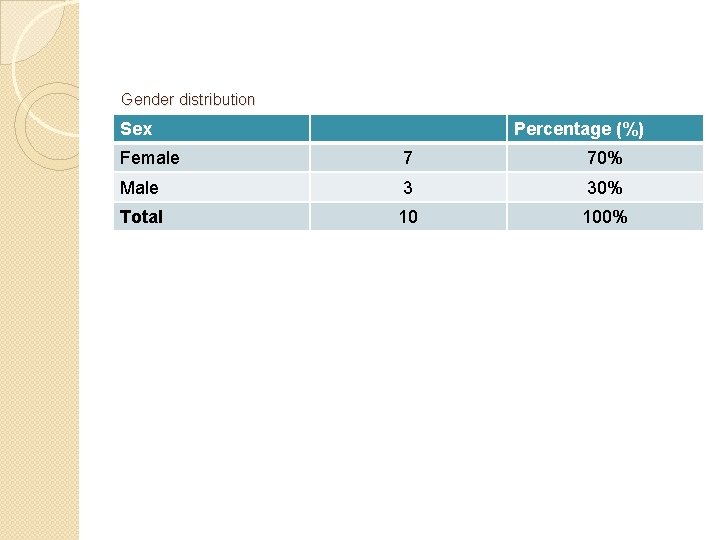
Gender distribution Sex Percentage (%) Female 7 70% Male 3 30% Total 10 100%
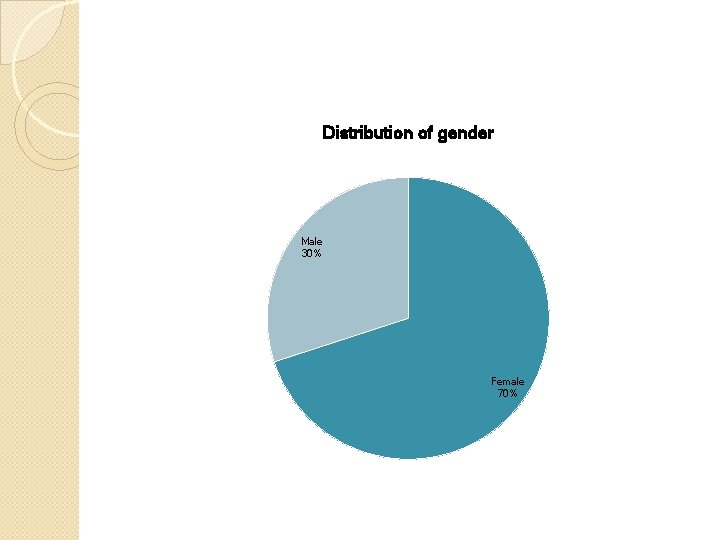
Distribution of gender Male 30% Female 70%
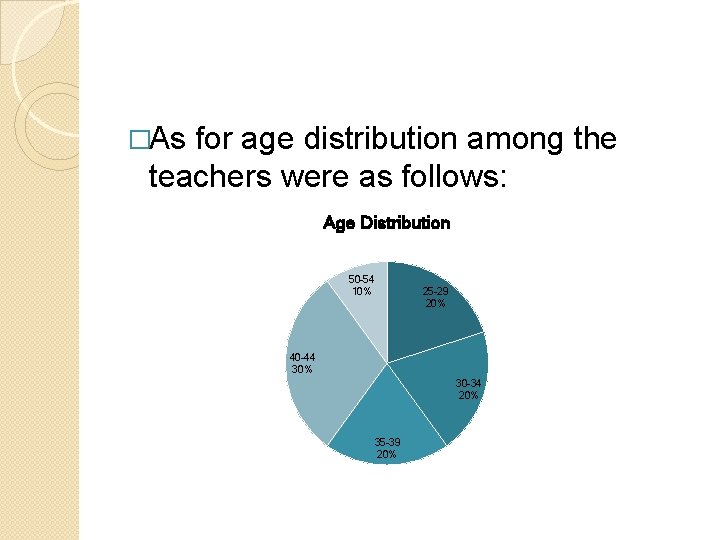
�As for age distribution among the teachers were as follows: Age Distribution 50 -54 10% 25 -29 20% 40 -44 30% 30 -34 20% 35 -39 20%
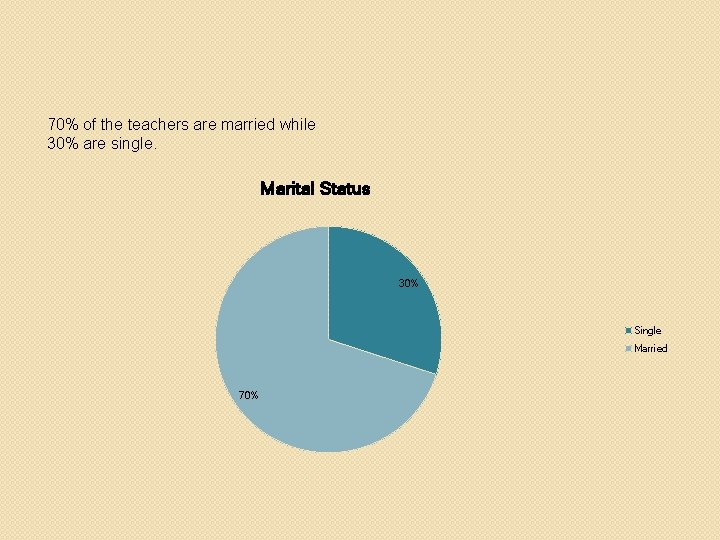
70% of the teachers are married while 30% are single. Marital Status 30% Single Married 70%
� 80% of the teachers are holders of a secondary school diploma. The 20% is equally shared between Primary/basic school certificate and Primary/basic school degree holders.
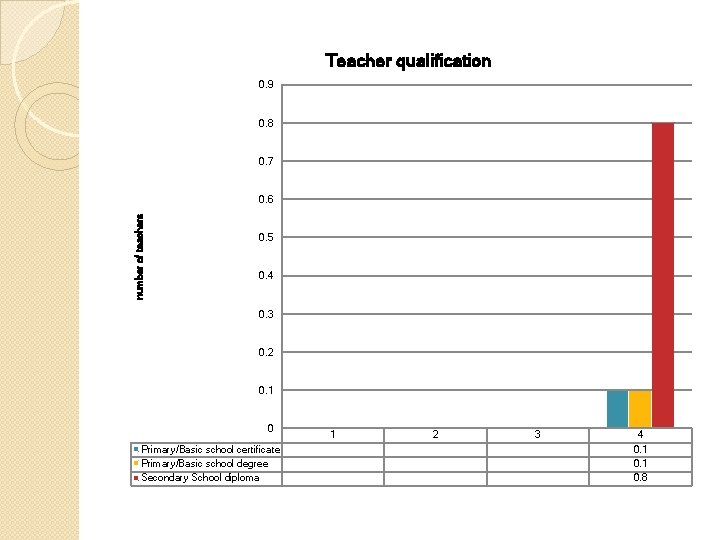
Teacher qualification 0. 9 0. 8 0. 7 number of teachers 0. 6 0. 5 0. 4 0. 3 0. 2 0. 1 0 Primary/Basic school certificate Primary/Basic school degree Secondary School diploma 1 2 3 4 0. 1 0. 8

PUPILS
Findings and Analysis �Out of 10 pupils who took part in the research, 20% said education is very accessible in the ward. The other 80% said it is accessible as shown in the chart;
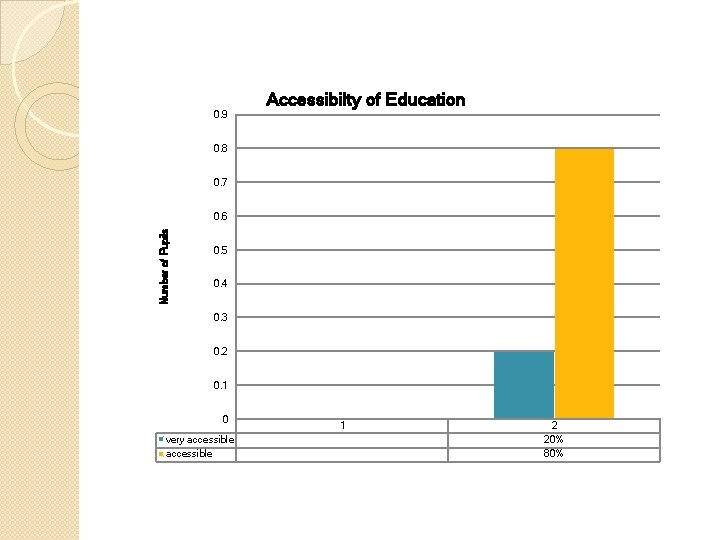
0. 9 Accessibilty of Education 0. 8 0. 7 Number of Pupils 0. 6 0. 5 0. 4 0. 3 0. 2 0. 1 0 very accessible 1 2 20% 80%
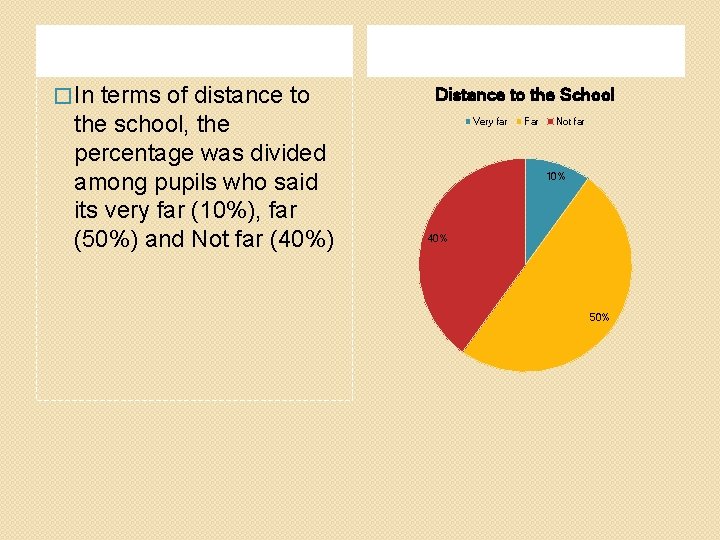
� In terms of distance to the school, the percentage was divided among pupils who said its very far (10%), far (50%) and Not far (40%) Distance to the School Very far Far Not far 10% 40% 50%
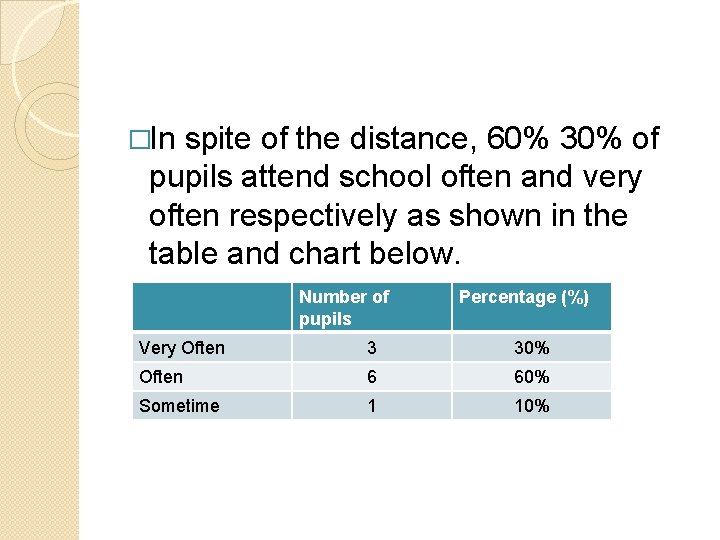
�In spite of the distance, 60% 30% of pupils attend school often and very often respectively as shown in the table and chart below. Number of pupils Percentage (%) Very Often 3 30% Often 6 60% Sometime 1 10%
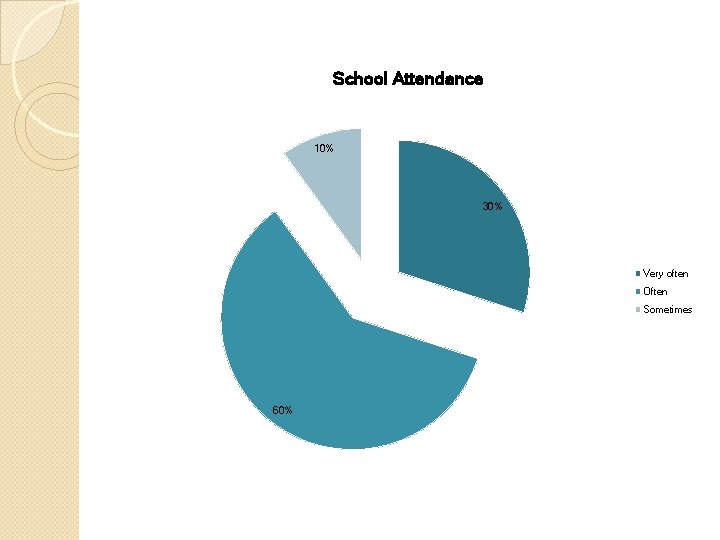
School Attendance 10% 30% Very often Often Sometimes 60%
�Despite the half (50%) of the pupils saying the distance to school is far, reasons for not attending school vary from �Rain (25%) �Lack of money (transport) (12. 5%) �Distance (12. 5%) �Sickness (50%)
Conclusion It can be concluded that Twatasha Primary school in Chikola has qualified teachers with 80% being diploma holders. Pupils on the other hand are complaining of the distance that they have to travel to get to school. However, the attendance levels are affected as a result of pupils getting sick.
Recommendations �I would recommend the government to look at building another school in the ward or nearby wards where there are no schools. �The school should also raise funds for a school bus so that teachers and pupils from afar can use it for transport.
THANK YOU
- Slides: 22