
Community Based Inclusive Education Katharina Pfrtner CBR Advisor
Community Based Inclusive Education Katharina Pförtner CBR Advisor CBM International Estelí, Nicaragua Email: katharina@turbonett. com. ni
FINDINGS UNESCO 2009 n 72 Mio children not enrolled in school n 30% are children with disabilities n Literacy rate for persons with disabilities is 3%, women with disabilities 1% n Studies in OECD and non-OECD countries indicate that students with disabilities achieve better results in inclusive settings

CBR: Strategy for the inclusive community development Access to quality education is the key for social integration and the identity of citizens (Gordon Porter, Managua Nicaragua 1997)
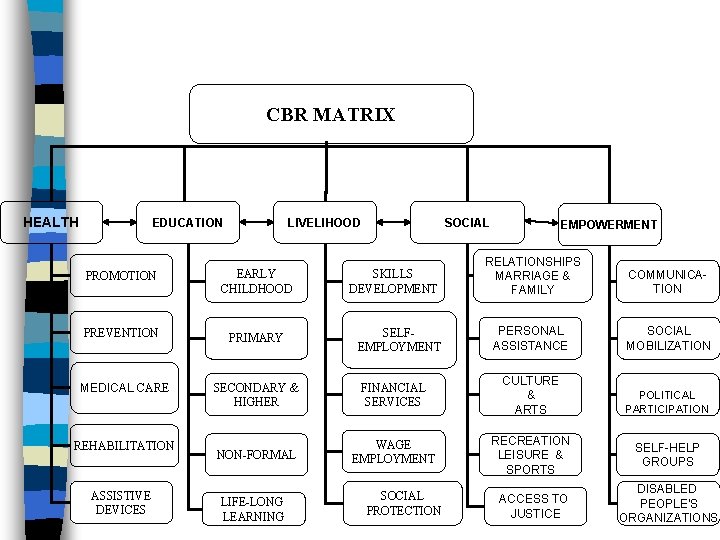
CBR MATRIX HEALTH EDUCATION LIVELIHOOD SOCIAL RELATIONSHIPS MARRIAGE & FAMILY COMMUNICATION PERSONAL ASSISTANCE SOCIAL MOBILIZATION POLITICAL PARTICIPATION PROMOTION EARLY CHILDHOOD PREVENTION PRIMARY MEDICAL CARE SECONDARY & HIGHER FINANCIAL SERVICES CULTURE & ARTS NON-FORMAL WAGE EMPLOYMENT RECREATION LEISURE & SPORTS SELF-HELP GROUPS ACCESS TO JUSTICE DISABLED PEOPLE'S ORGANIZATIONS REHABILITATION ASSISTIVE DEVICES LIFE-LONG LEARNING SKILLS DEVELOPMENT EMPOWERMENT SELFEMPLOYMENT SOCIAL PROTECTION
The ultimate goal of inclusive quality education is to end all forms of discrimination and foster social cohesion. UNESCO 2009
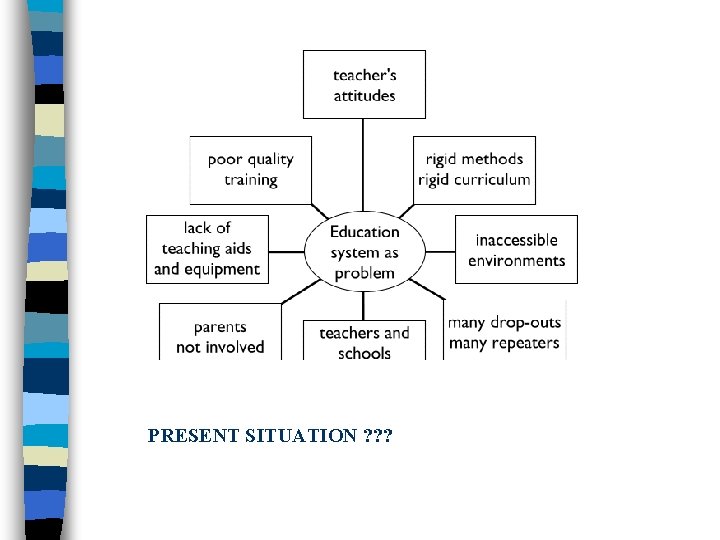
PRESENT SITUATION ? ? ?
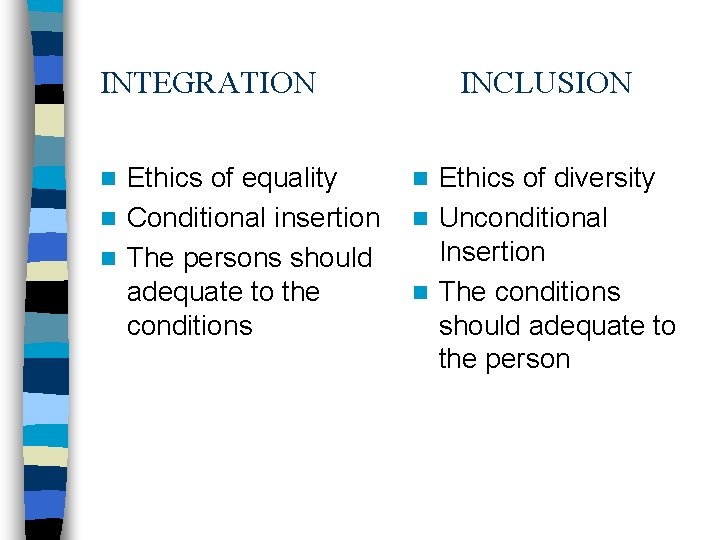
INTEGRATION Ethics of equality n Conditional insertion n The persons should adequate to the conditions n INCLUSION Ethics of diversity n Unconditional Insertion n The conditions should adequate to the person n
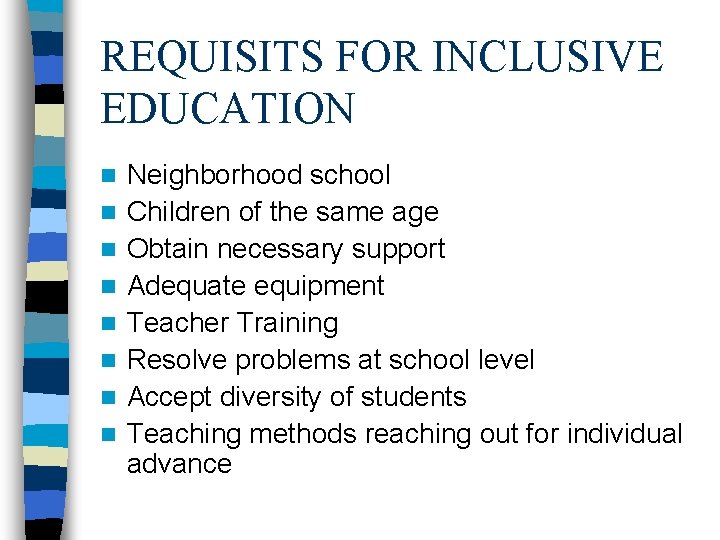
REQUISITS FOR INCLUSIVE EDUCATION n n n n Neighborhood school Children of the same age Obtain necessary support Adequate equipment Teacher Training Resolve problems at school level Accept diversity of students Teaching methods reaching out for individual advance

SAFE ENVIRONMENT INCLUDES ALL CHILDREN: BOYS AND GIRLS FROM DIFFENT CULTURES, WITH DISABILITIES, LEARNING NEEDS, ETC FAMILIES TEACHERS AND COMMUNITIES INVOLVED IN STUDENTS LEARNING CULTURAL SENSITIVE STIMULATES LEARNING OF ALL CHILDREN PROMOTES PARTICIPATION COOPERATION COLABORATION INCLUSIVE LEARNING FRIENDLY ENVIRONMENT GENDER FAIR AND NON DISCRIMINATION PROMOTES OPPORTUNITIES FOR TEACHERS TO LEARN AND BENEFIT FROM LEARNING PROMOTES HEALTHY LIFESTYLES AND SKILLS LEARNING IS RELEVANT TO CHILDRENS DAILY LIVES
STRATEGIES FOR INCLUSIVE EDUCATION
Inclusive education starts in preschool n Early detection system n Home based early education n Detection of children with learning needs in pre-schools n Referral system to specialized attention if needed
SENSIBILISATION n FAMILIES n TEACHERS n STUDENTS n COMMUNITY
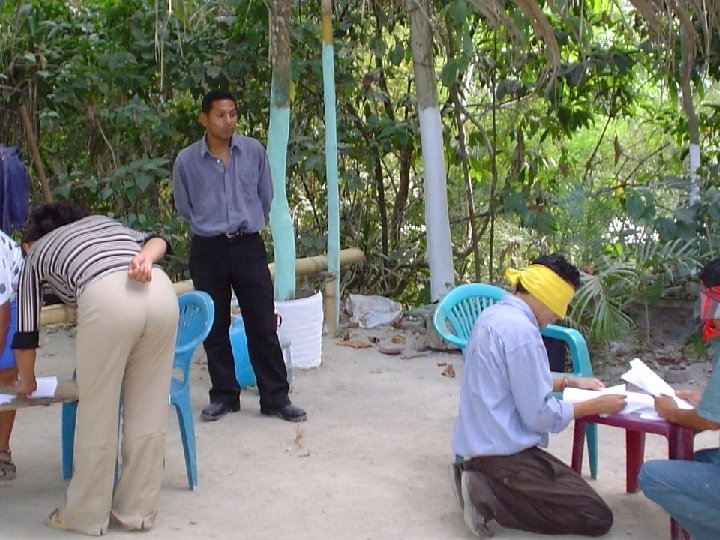
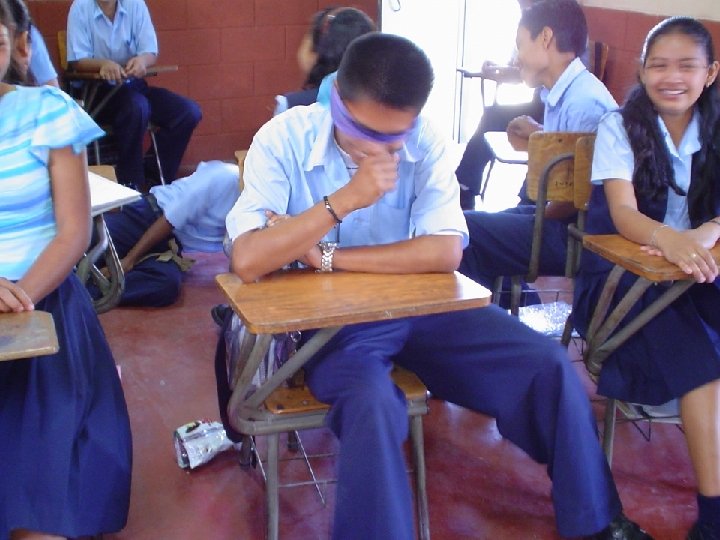
Assessment n Exploration of family live, the family is expert (CBR program develops Mapping by fieldworkers) n Observation during the class n Level of development and advances n Individual learning profile and objectives
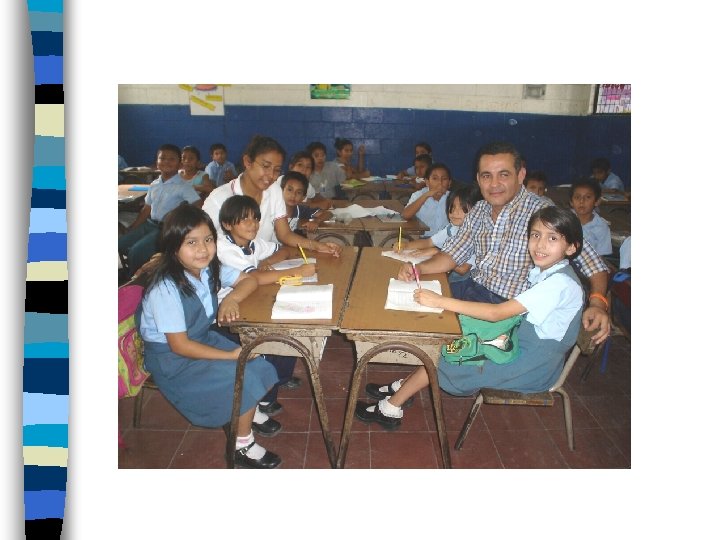
Teamwork Itinerant teachers work together with classroom teachers + developing individual programs + referrals for specialized attention + supporting classroom adaptations + organizing support in the classroom + facilitating activities of sensitation and training
Solve problems with school resources n n n Teachers working in teams (include parents, CBR staff, support persons if indicated) Organize structured meeting with limited time (30 minutes) Elaborate priority of the case Discuss alternatives and elaborate action plan based on needs of the student Implementation plan to evaluate results
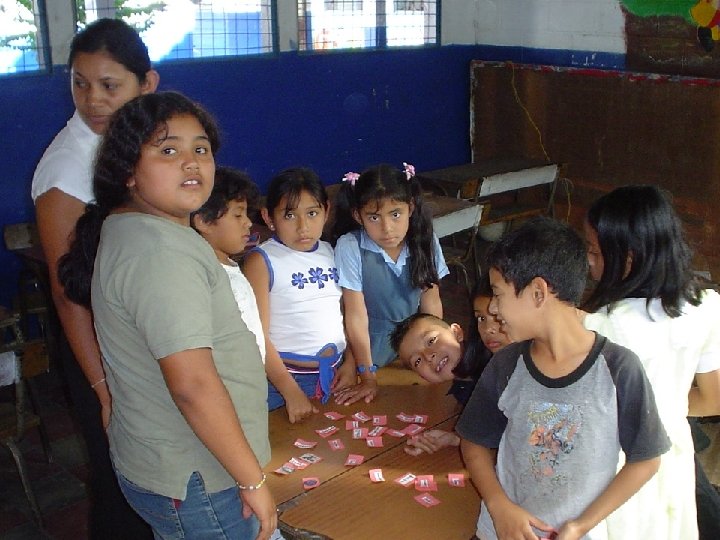
ACTIVITY BASED LEARNING n Start from life reality of the students n Integrate all senses n Movement is the door of learning n “trial and error” allowed n Self evaluation
LEARNING BASED ON INTERESTS, ACCEPTING THE DIVERSITY n 1. Find out common interests in the classroom n 2. Evaluation: K W L K = What do I know W= What do I want to know L = What did I learn
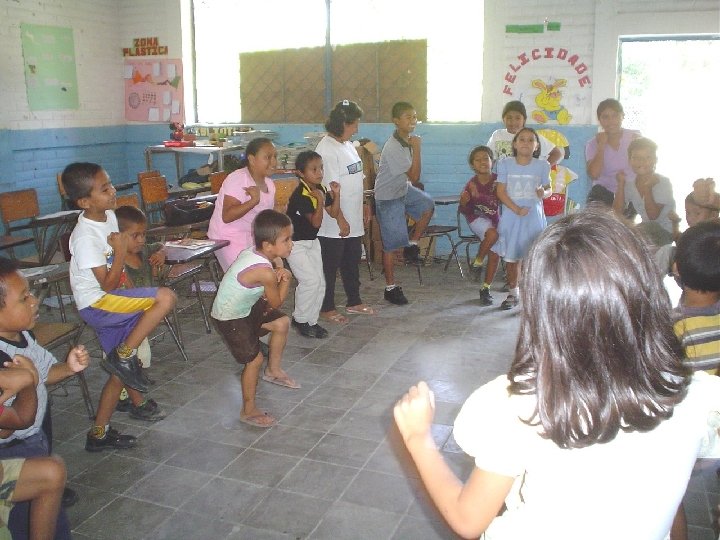
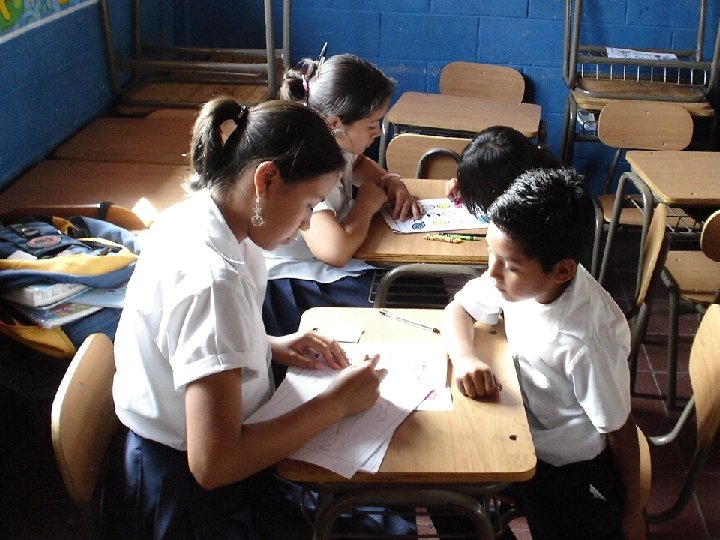
DIVERSITY IS AN ADVANTAGE n Teamwork (everybody contributes) n Cooperative skills (share and help) n Face to face interaction (seat order!) n Homogeneous and heterogeneous groups n Time management adapted to student´s abilities n Individual accountability
Multiple Intelligences HOWARD GARDNER 1983 n logical/ mathematical n verbal / linguistic n musical n bodily / kinesthetic n visual / spatial n interpersonal n intrapersonal
Blooms Taxonomy (1956) Analyze difficulty degree of activities 1. 2. 3. 4. 5. 6. Knowledge Comprehension Application Analysis Synthesis Evaluation
Multi level activities Identify concepts of the class 2. Establish method of presentation 3. Establish method of practical activities 4. Establish method of evaluation 1.
Individualized Adaptations SAME ACTIVITY, BUT ADAPTED n Instructions n Form of presentation of information n Material we use n Difficulty degree n Form of evaluation n Opportunities to practice n Time table of assistance n Physical assistance direct or indirect
WE CANNOT WAIT FOR BETTER SYSTEMS n INICIATION n IMPLEMENTATION n INSTITUTIONALIZATION
- Slides: 35