
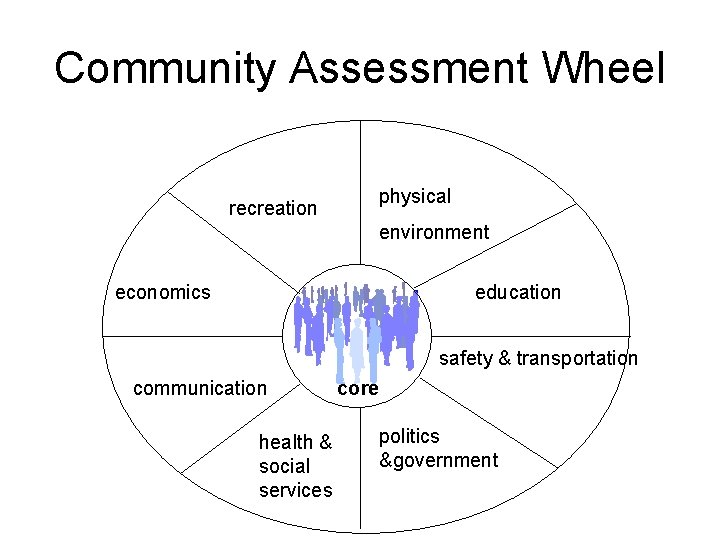
Community Assessment Wheel recreation physical environment economics education




- Slides: 31
Community Assessment Wheel recreation physical environment economics education safety & transportation communication health & social services core politics &government
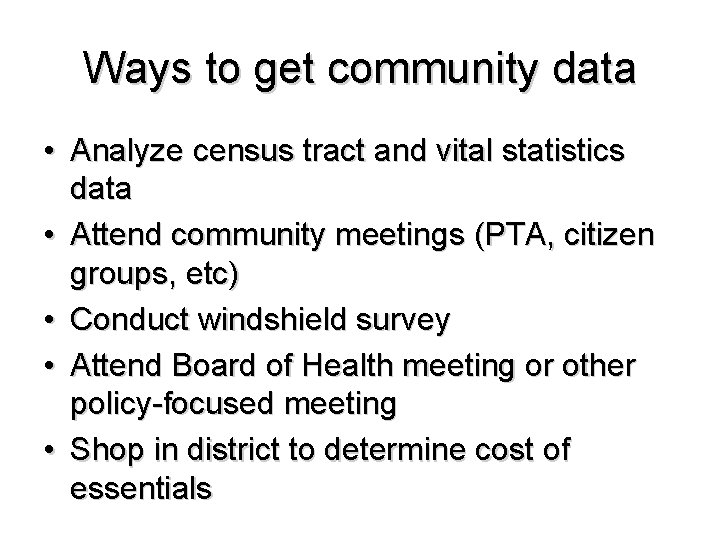
Ways to get community data • Analyze census tract and vital statistics data • Attend community meetings (PTA, citizen groups, etc) • Conduct windshield survey • Attend Board of Health meeting or other policy-focused meeting • Shop in district to determine cost of essentials
More ways to get data • Identify location of community resources: – clinics – recreational facilities – churches – schools – shopping areas • Make field visits with community workers • Participant-observation
Community Assessment Data Gathering • demographic data • vital statistics • institutional data
Core Data • • • History Demographics Age & sex Ethnic distribution Vital statistics – births – deaths • age • leading causes • Library, historical society, census, planning board, chamber of commerce • Local and state health department • Census Bureau
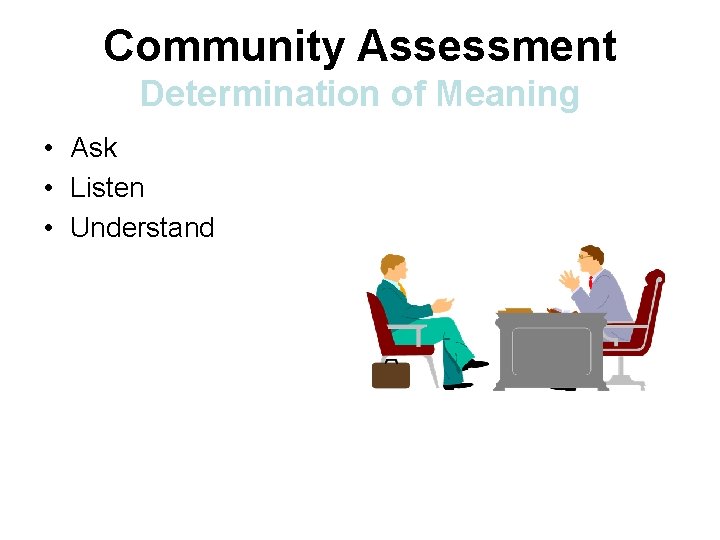
Community Assessment Determination of Meaning • Ask • Listen • Understand
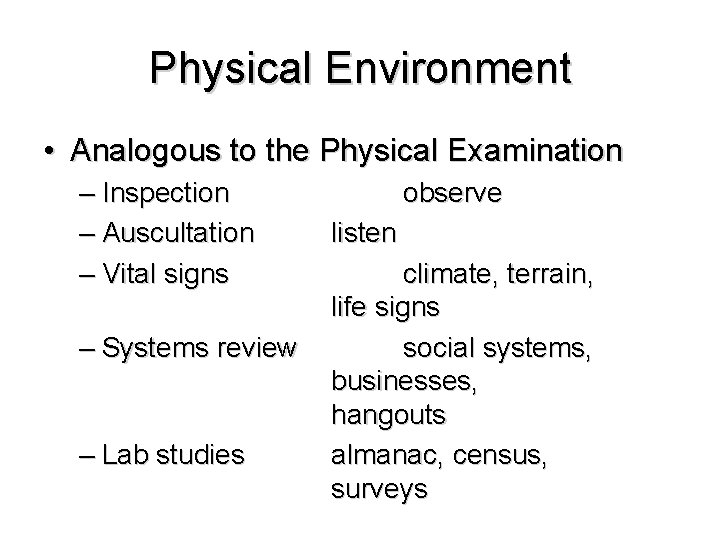
Physical Environment • Analogous to the Physical Examination – Inspection – Auscultation – Vital signs – Systems review – Lab studies observe listen climate, terrain, life signs social systems, businesses, hangouts almanac, census, surveys
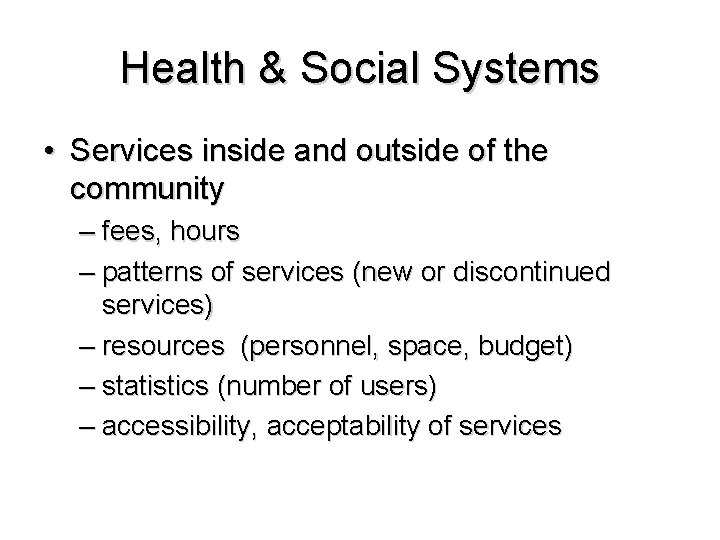
Health & Social Systems • Services inside and outside of the community – fees, hours – patterns of services (new or discontinued services) – resources (personnel, space, budget) – statistics (number of users) – accessibility, acceptability of services
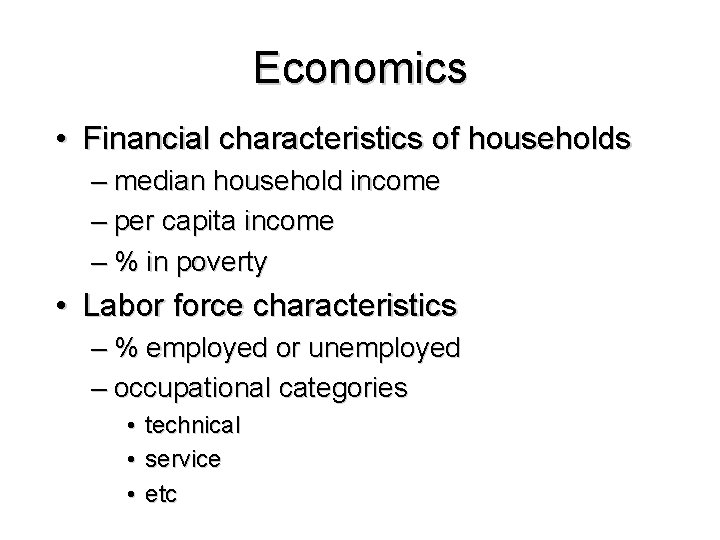
Economics • Financial characteristics of households – median household income – per capita income – % in poverty • Labor force characteristics – % employed or unemployed – occupational categories • • • technical service etc
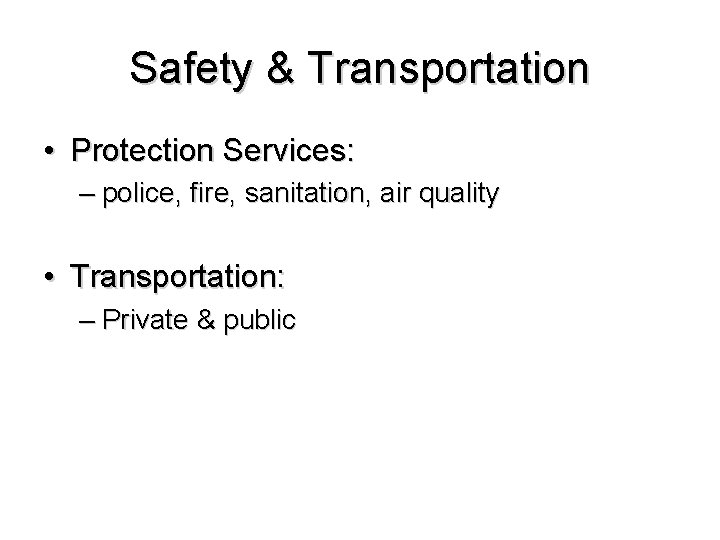
Safety & Transportation • Protection Services: – police, fire, sanitation, air quality • Transportation: – Private & public
Politics & Government • • Form of Government (official) Voting patterns Political involvement Other sources of power – business organizations – C. O. P. S. – “gray panthers”
Communication • Formal – Newspapers – Radio – Telephone service • Informal – bulletin boards, posters, telephone poles – newsletters, “unofficial” neighborhood papers • Dissemination – How do people get information?
Education • Educational status – years of school completed – enrollment by type of school – language spoken • Educational sources – types of schools – % of attendance, graduation – resources and services offered
Recreation • Types of facilities – parks, hiking trails, picnic areas, etc. • established by whom? • state of repair • citizen involvement in programs – church involvement in recreation
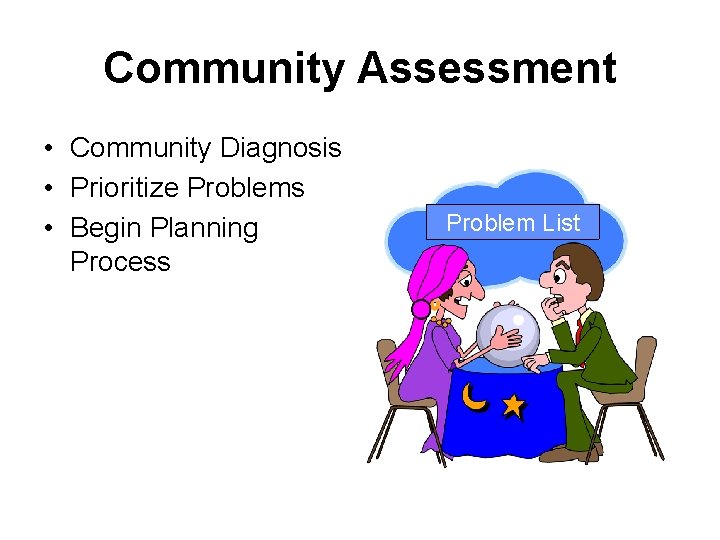
Community Assessment • Community Diagnosis • Prioritize Problems • Begin Planning Process Problem List
Community Development: Some considerations • Relationships between institutions and community groups. • The choice of some groups over others. • Making private troubles public issues. • Institutional programs in community settings. • Self reliance vs self sufficiency