
Communities and disasters What is a Community People
- Slides: 17
Communities and disasters
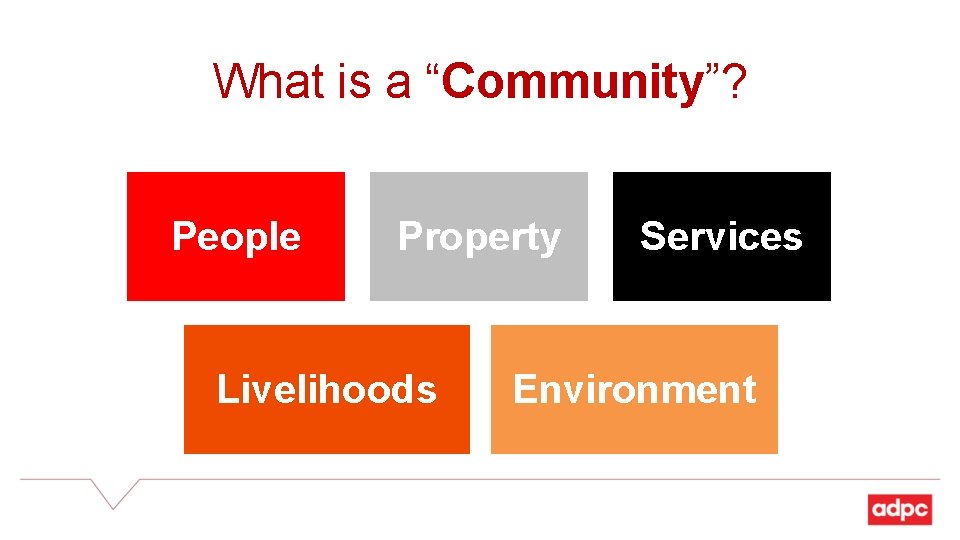
What is a “Community”? People Property Livelihoods Services Environment
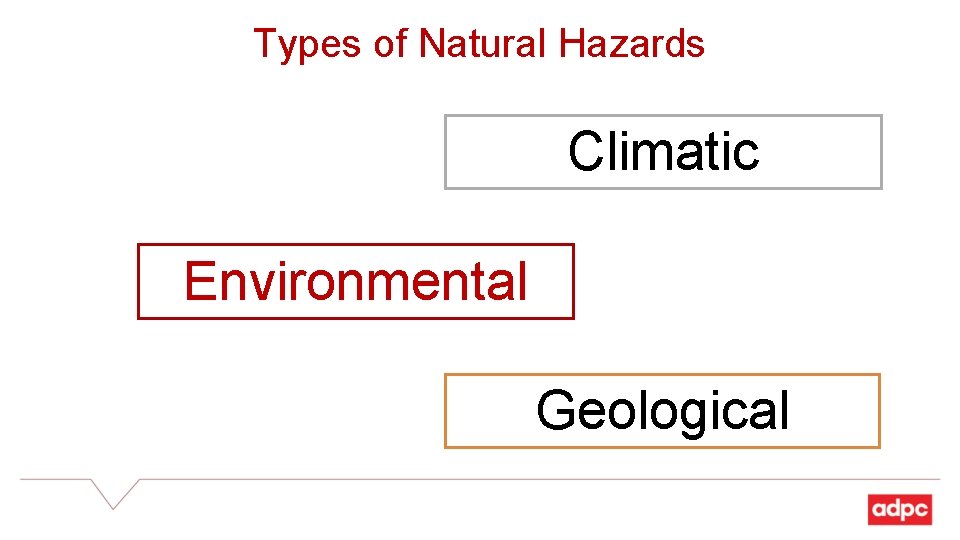
Types of Natural Hazards Climatic Environmental Geological
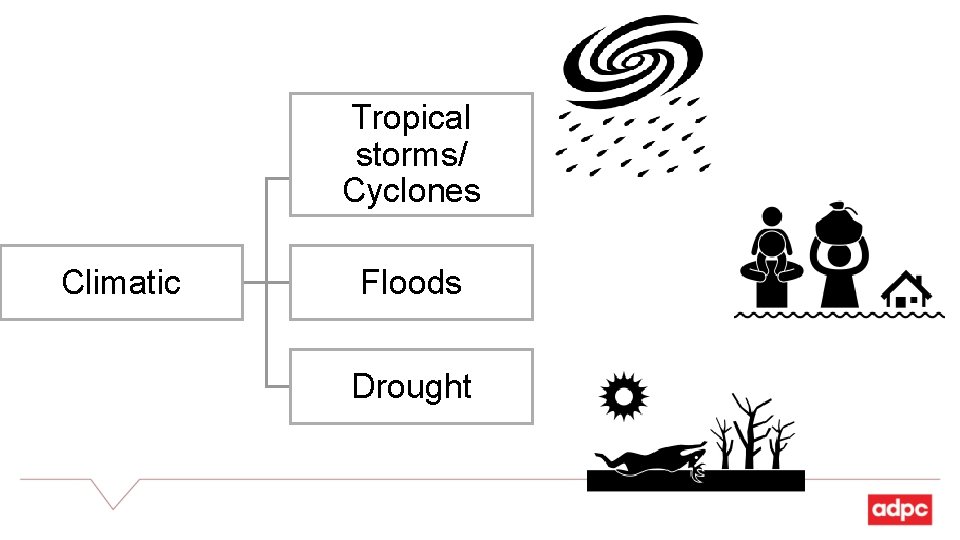
Tropical storms/ Cyclones Climatic Floods Drought
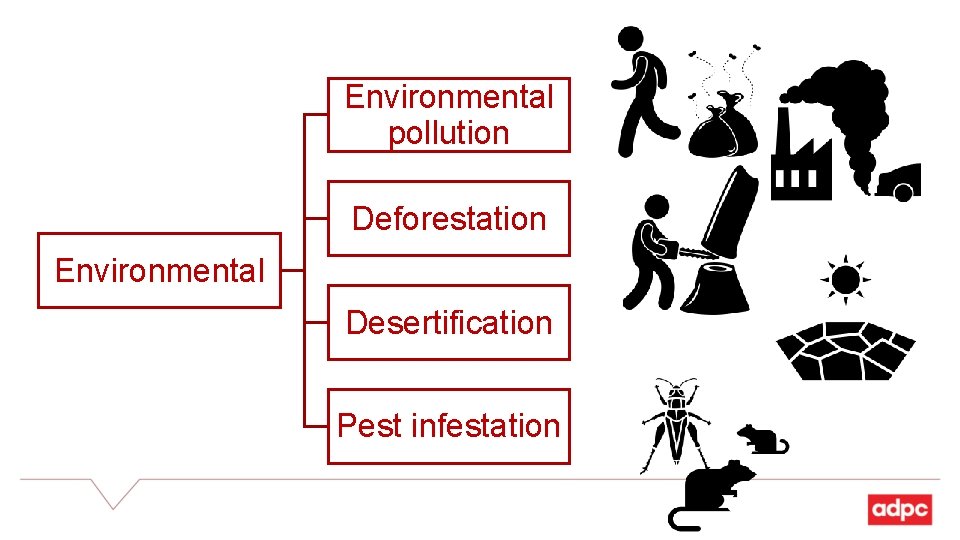
Environmental pollution Deforestation Environmental Desertification Pest infestation
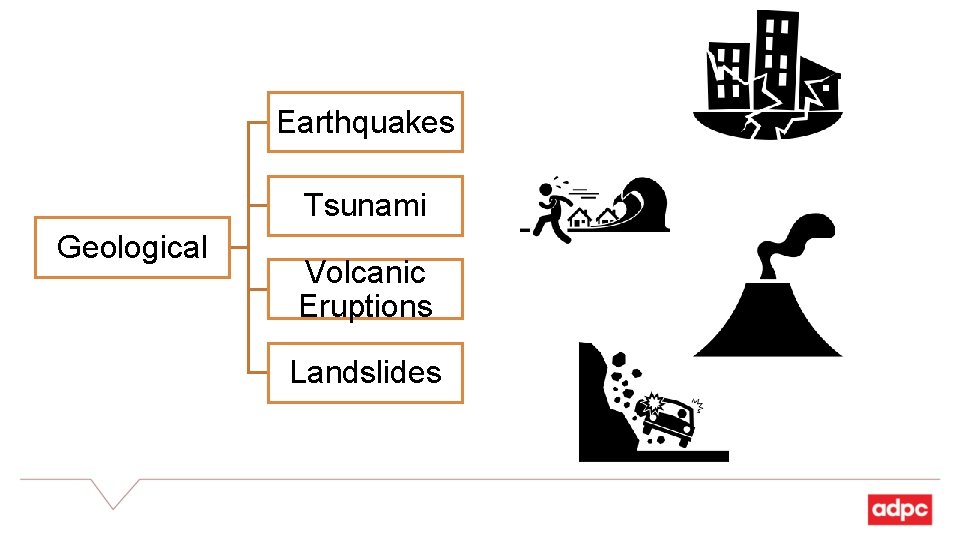
Earthquakes Tsunami Geological Volcanic Eruptions Landslides
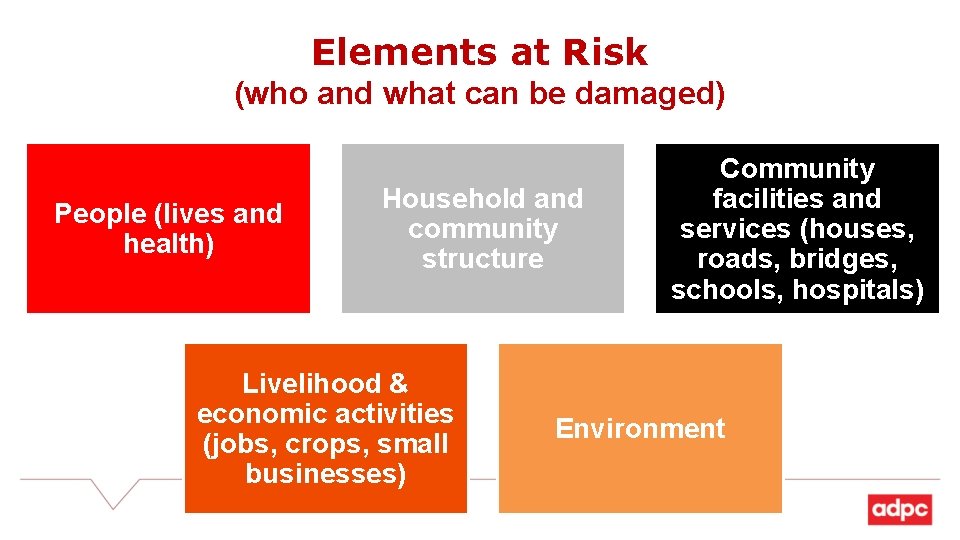
Elements at Risk (who and what can be damaged) People (lives and health) Household and community structure Livelihood & economic activities (jobs, crops, small businesses) Community facilities and services (houses, roads, bridges, schools, hospitals) Environment
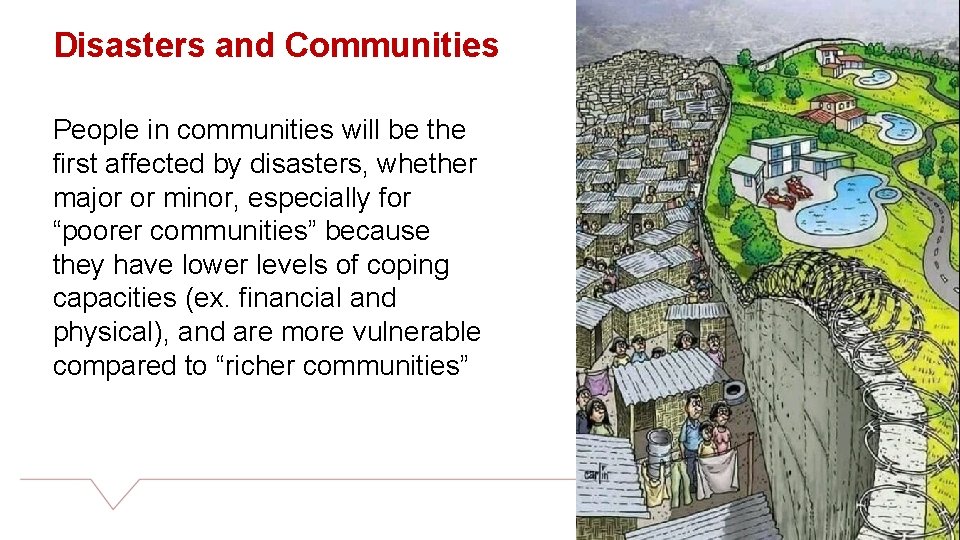
Disasters and Communities People in communities will be the first affected by disasters, whether major or minor, especially for “poorer communities” because they have lower levels of coping capacities (ex. financial and physical), and are more vulnerable compared to “richer communities”
• Communities are often left to cope by themselves when disasters happen before any external aid comes along • The amount of time when aid comes is will determine the survival of the individuals community, especially after disasters
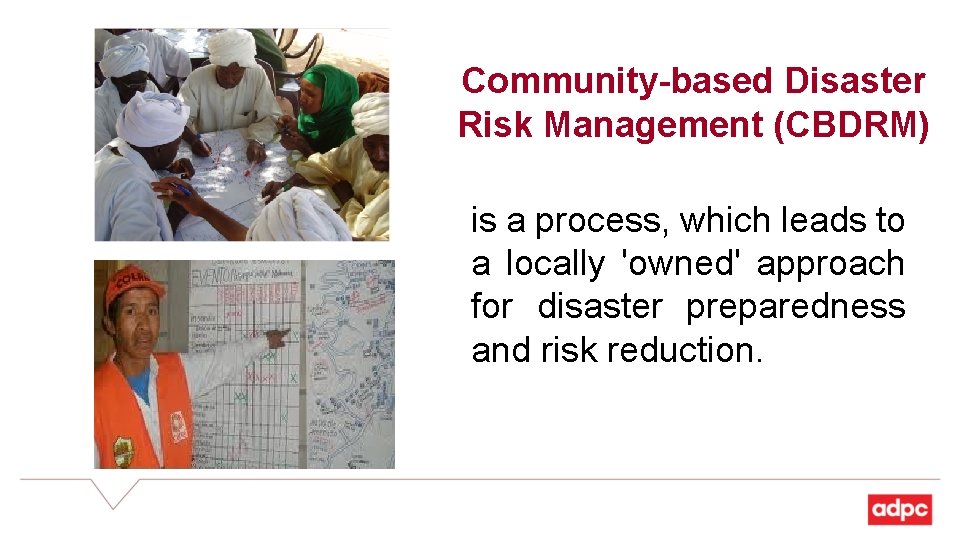
Community-based Disaster Risk Management (CBDRM) is a process, which leads to a locally 'owned' approach for disaster preparedness and risk reduction.
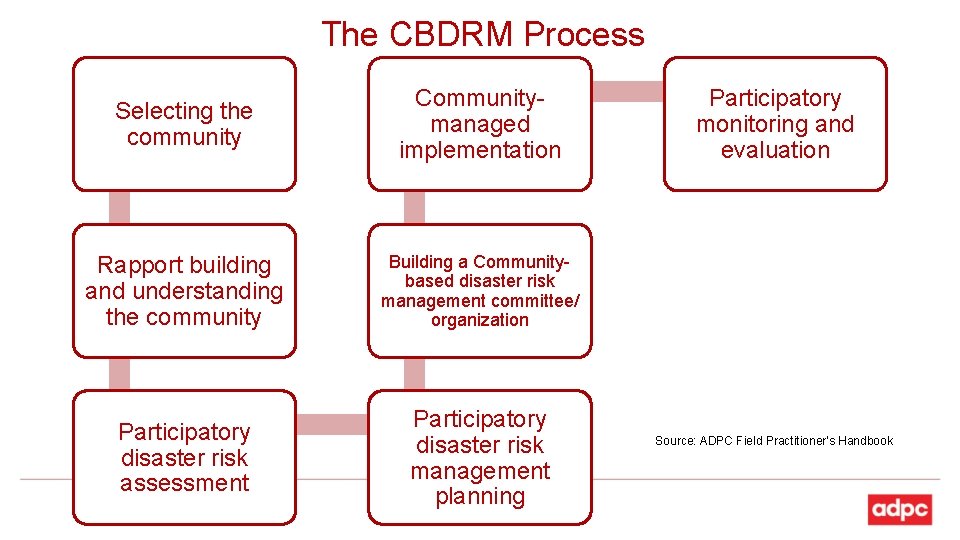
The CBDRM Process Selecting the community Communitymanaged implementation Rapport building and understanding the community Building a Communitybased disaster risk management committee/ organization Participatory disaster risk assessment Participatory disaster risk management planning Participatory monitoring and evaluation Source: ADPC Field Practitioner's Handbook
Roles of youth and children • Children make up more than half the population in vulnerable communities, urban neighborhoods and countries • Involving them in its design and implementation increases the likelihood of a resilience-building program or policy being responsive to their needs. • As children interact with other children and adults, if they are wellinformed and supported, they can be effective channels of information, role models and agents of change. • By developing children’s understanding of risk and ways to manage it, interventions are more likely to have a sustainable impact in the Source: Turnbill, Sterrett, Hilleboe, (2013), Towards Resilience, A Guide to DRR and CCA medium- to long-term.
Children and youths are agents of change and should be given the space to contribute to disaster risk reduction, according to legislation, national practice and educational curricula
Roles of women • Women’s capacity towards DRR is are shaped by their social, cultural, economic and natural resource management roles. • Women often have a major influence on the behavior of children and other members of their households, as well as of the wider community, – therefore play a key role in reducing risk by ensuring safe food storage, adopting climate-appropriate practices for water consumption and hygiene, and preparing for adverse conditions. Source: Turnbill, Sterrett, Hilleboe, (2013), Towards Resilience, A Guide to DRR and CCA
Roles of elderly Many older people and, in particular, older women, are physically, socially and emotionally rely on family and community support structures. • Older people’s have knowledge and experience which can help identify multiple issues • Greater knowledge of traditional coping measures and riskreducing practices, • Older women often play a key role in childcare, allowing productive generations to invest time and energy in new risk reduction or adaptive strategies. Source: Turnbill, Sterrett, Hilleboe, (2013), Towards Resilience, A Guide to DRR and CCA
How are you helping your community prepare for disasters?