
COMMUNITIES AND BIOMES 1 2 3 SEATING CHANGE
COMMUNITIES AND BIOMES 1. 2. 3. SEATING CHANGE – Use the paper up front to find your new seat Turn in your HW Take out your notes from Chapter 3. 1 (Yes I told you to bring them!)
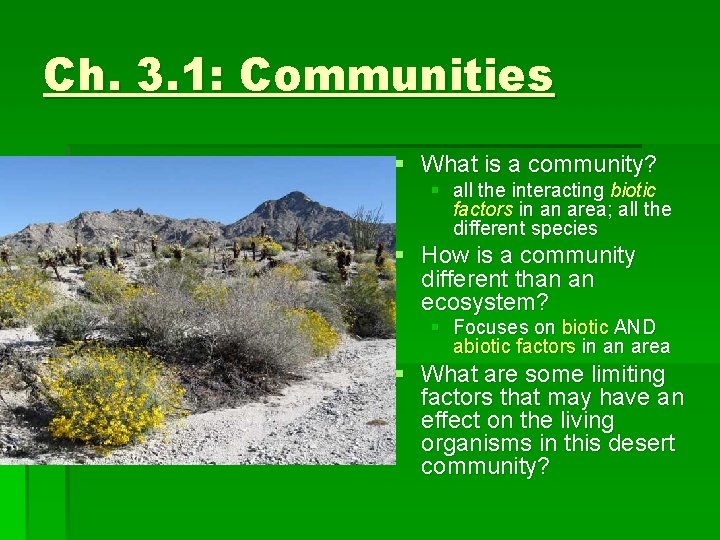
Ch. 3. 1: Communities § What is a community? § all the interacting biotic factors in an area; all the different species § How is a community different than an ecosystem? § Focuses on biotic AND abiotic factors in an area § What are some limiting factors that may have an effect on the living organisms in this desert community?
Limiting Factors § § § Sunlight Temperature Water Soil nutrients/chemistry # of other individuals (shelter/food/protection) § Food source
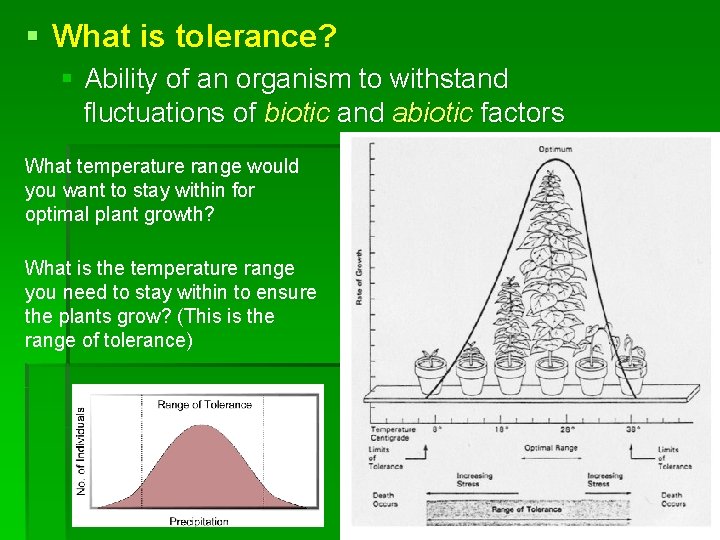
§ What is tolerance? § Ability of an organism to withstand fluctuations of biotic and abiotic factors What temperature range would you want to stay within for optimal plant growth? What is the temperature range you need to stay within to ensure the plants grow? (This is the range of tolerance)
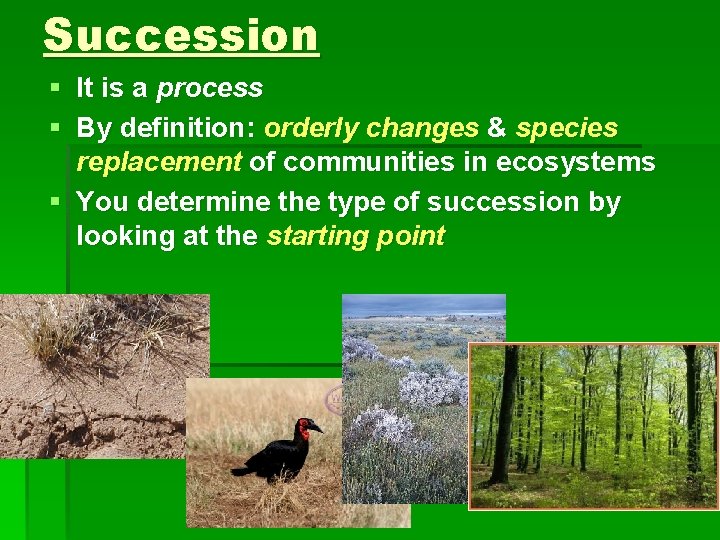
Succession § It is a process § By definition: orderly changes & species replacement of communities in ecosystems § You determine the type of succession by looking at the starting point
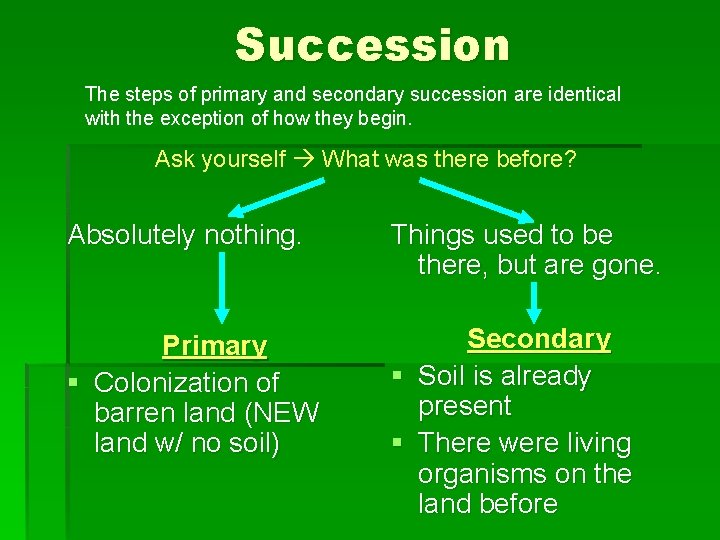
Succession The steps of primary and secondary succession are identical with the exception of how they begin. Ask yourself What was there before? Absolutely nothing. Things used to be there, but are gone. Primary § Colonization of barren land (NEW land w/ no soil) Secondary § Soil is already present § There were living organisms on the land before
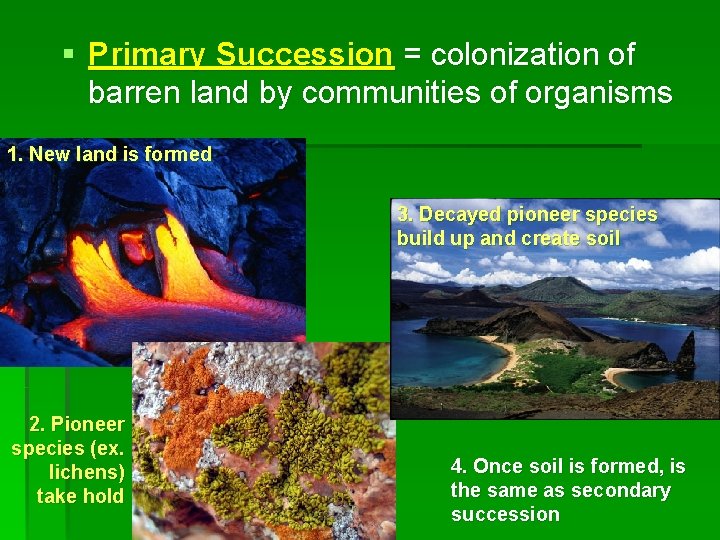
§ Primary Succession = colonization of barren land by communities of organisms 1. New land is formed 3. Decayed pioneer species build up and create soil 2. Pioneer species (ex. lichens) take hold 4. Once soil is formed, is the same as secondary succession
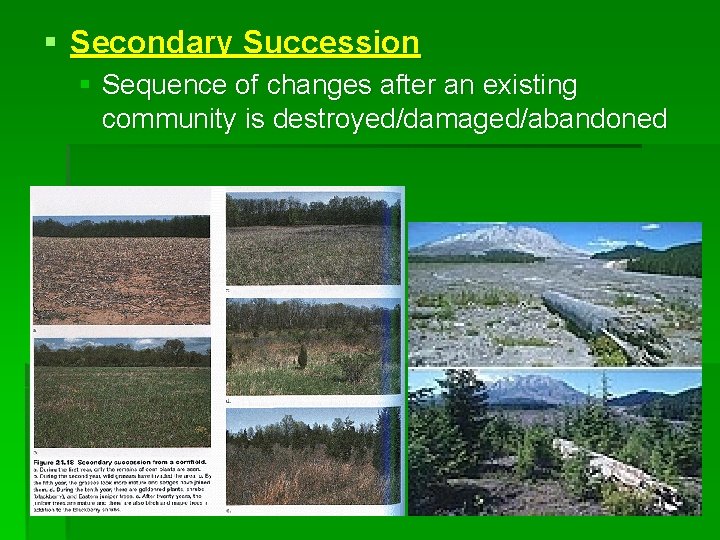
§ Secondary Succession § Sequence of changes after an existing community is destroyed/damaged/abandoned
Once soil has been established… Succession follows the same pattern (whether it started as primary or secondary) Goes through a series of changes until a stable, climax community is reached
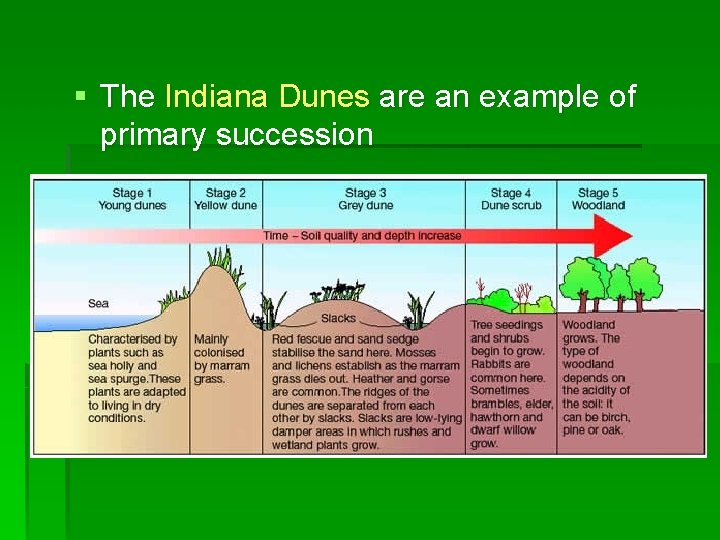
§ The Indiana Dunes are an example of primary succession
Biomes Ch. 3, Sec. 2
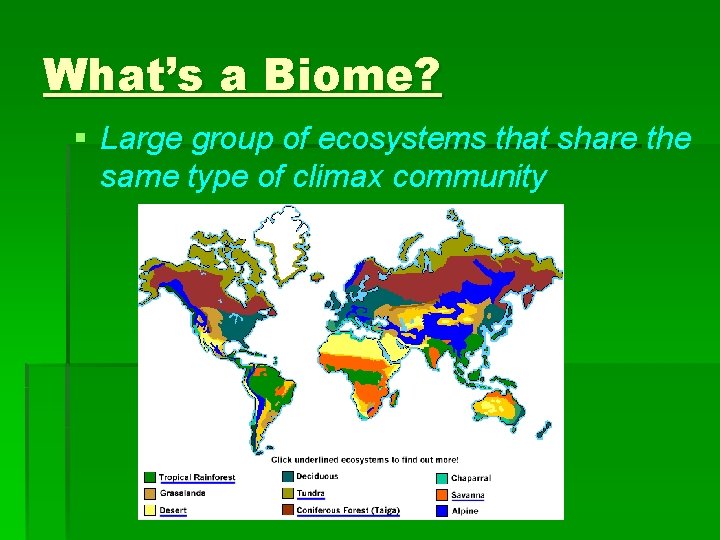
What’s a Biome? § Large group of ecosystems that share the same type of climax community
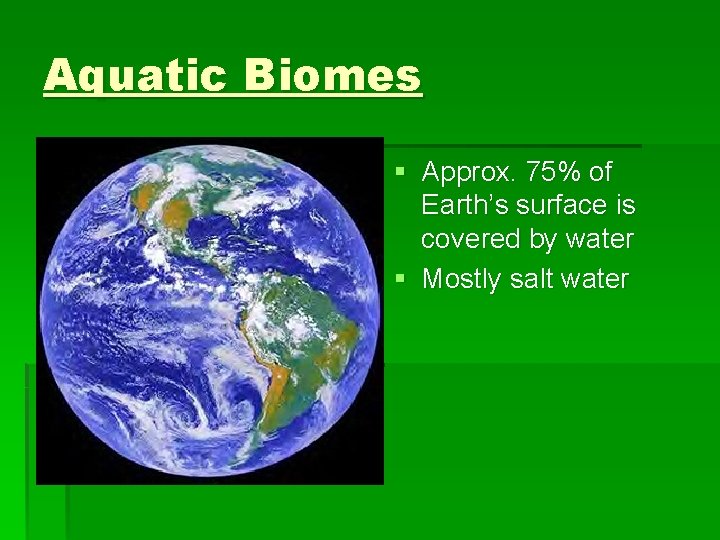
Aquatic Biomes § Approx. 75% of Earth’s surface is covered by water § Mostly salt water
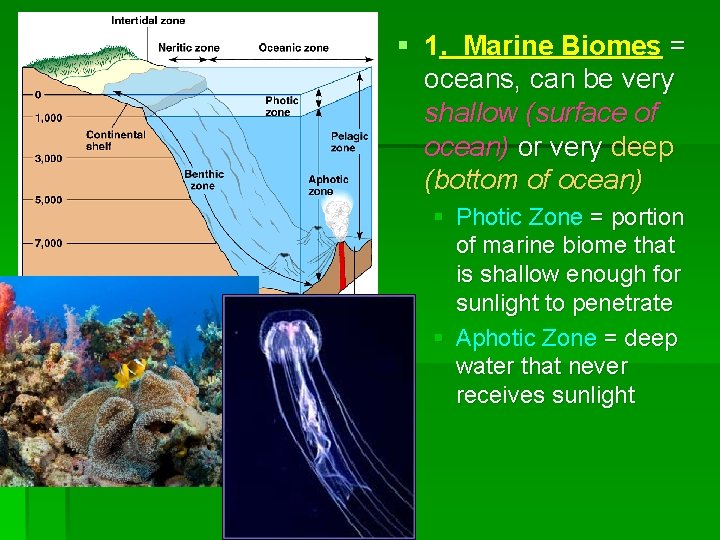
§ 1. Marine Biomes = oceans, can be very shallow (surface of ocean) or very deep (bottom of ocean) § Photic Zone = portion of marine biome that is shallow enough for sunlight to penetrate § Aphotic Zone = deep water that never receives sunlight
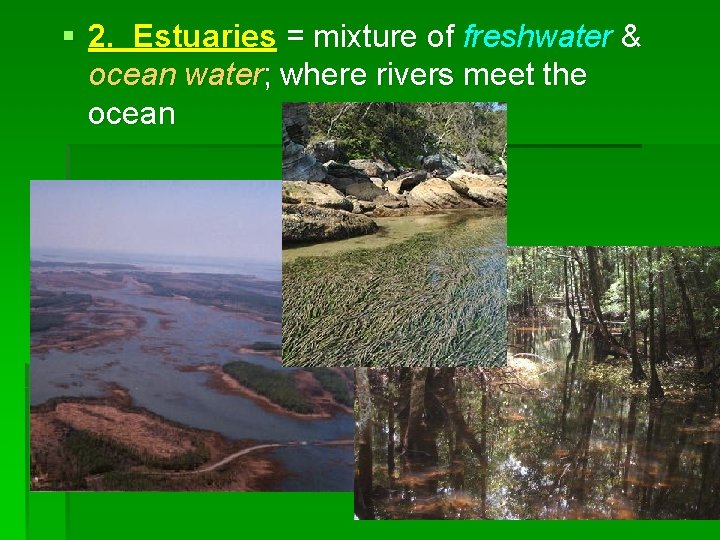
§ 2. Estuaries = mixture of freshwater & ocean water; where rivers meet the ocean
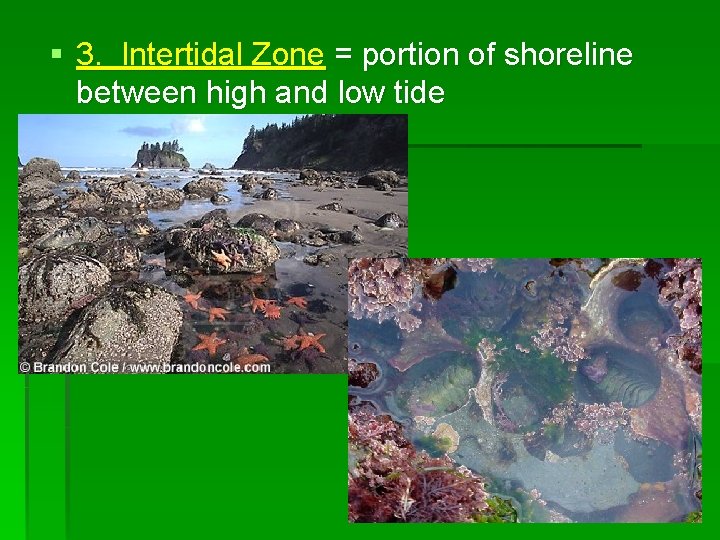
§ 3. Intertidal Zone = portion of shoreline between high and low tide
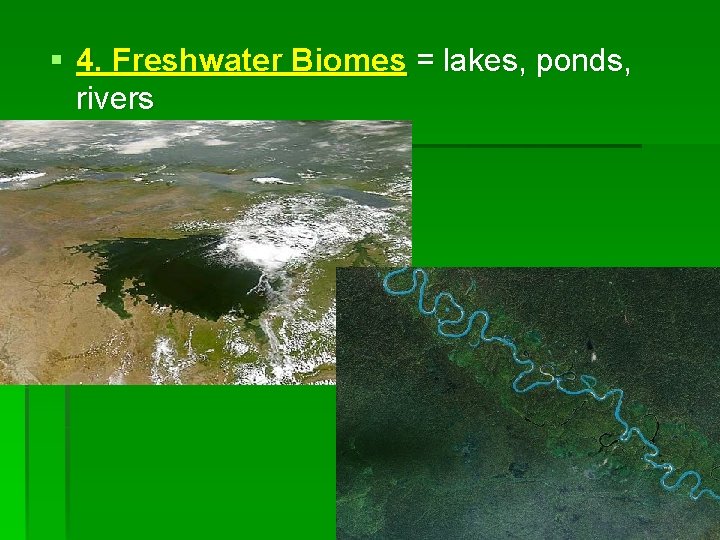
§ 4. Freshwater Biomes = lakes, ponds, rivers
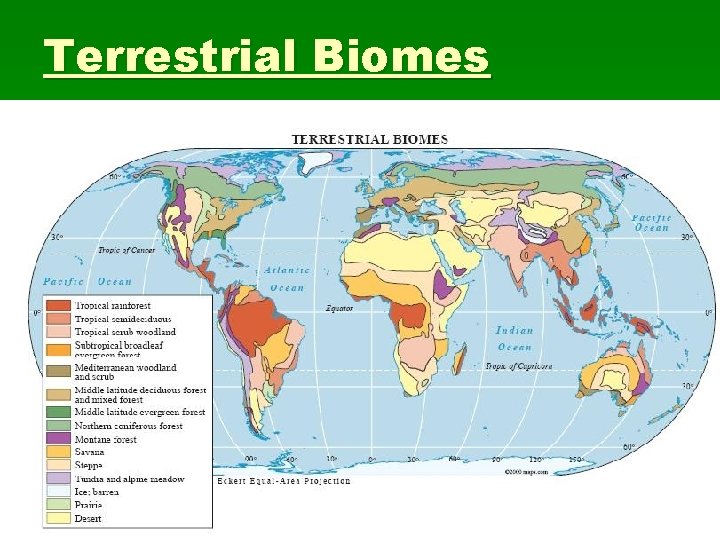
Terrestrial Biomes
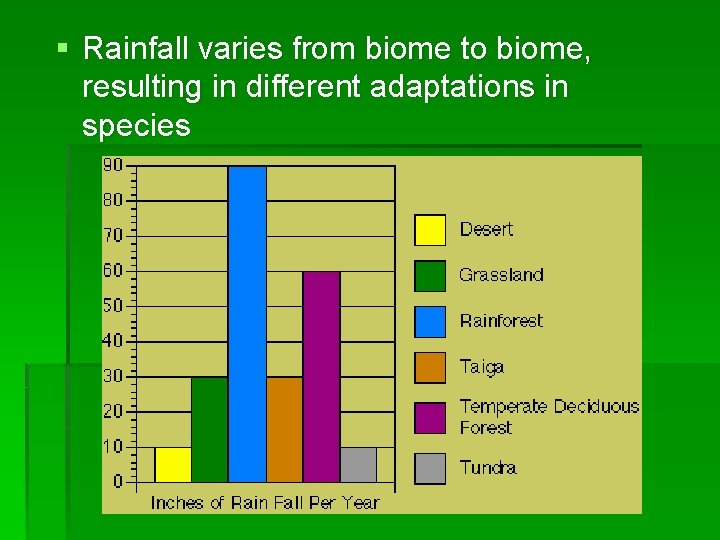
§ Rainfall varies from biome to biome, resulting in different adaptations in species
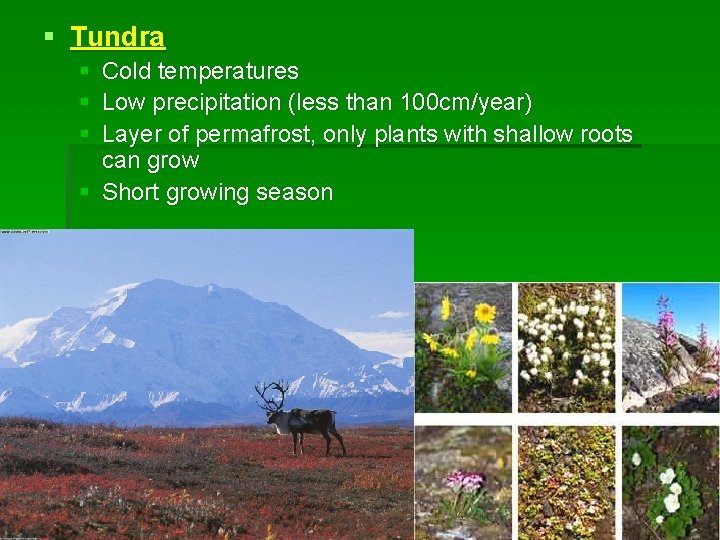
§ Tundra § Cold temperatures § Low precipitation (less than 100 cm/year) § Layer of permafrost, only plants with shallow roots can grow § Short growing season
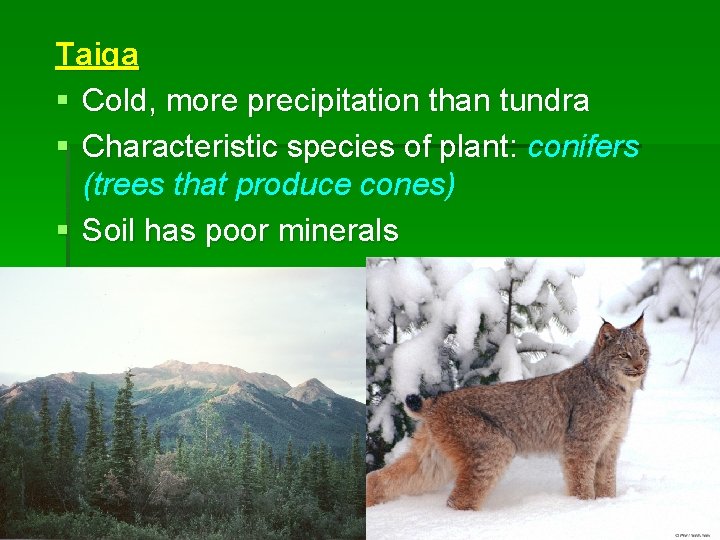
Taiga § Cold, more precipitation than tundra § Characteristic species of plant: conifers (trees that produce cones) § Soil has poor minerals
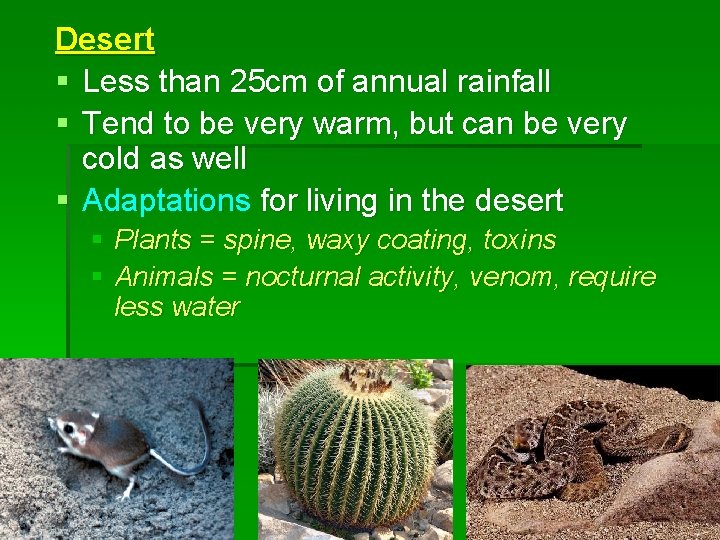
Desert § Less than 25 cm of annual rainfall § Tend to be very warm, but can be very cold as well § Adaptations for living in the desert § Plants = spine, waxy coating, toxins § Animals = nocturnal activity, venom, require less water
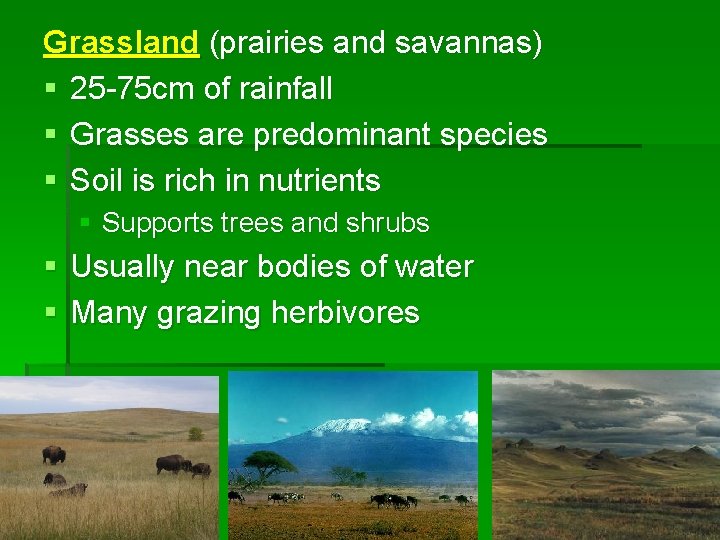
Grassland (prairies and savannas) § 25 -75 cm of rainfall § Grasses are predominant species § Soil is rich in nutrients § Supports trees and shrubs § Usually near bodies of water § Many grazing herbivores
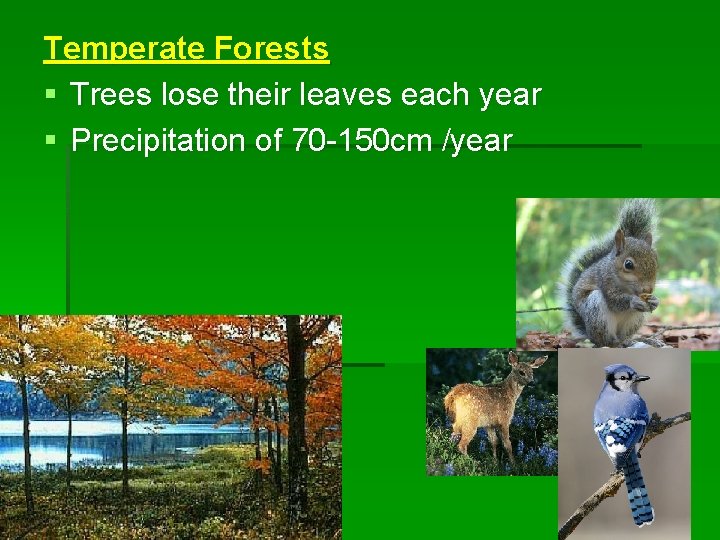
Temperate Forests § Trees lose their leaves each year § Precipitation of 70 -150 cm /year
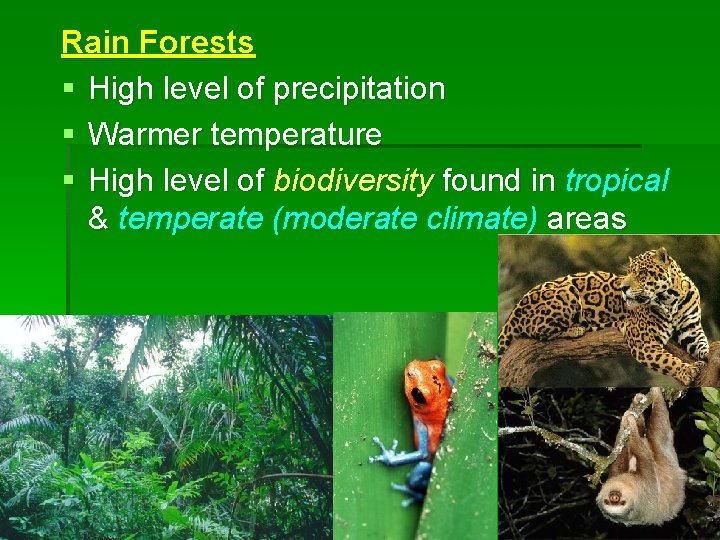
Rain Forests § High level of precipitation § Warmer temperature § High level of biodiversity found in tropical & temperate (moderate climate) areas
Practice § How are organisms in the photic zone and aphotic zone interdependent? § (Hint: Think about what grows in the photic zone, what supports the base of ecological pyramids? What happens if a population of one species grows out of control? )
- Slides: 26