
Communications 1010 Therapy Animals How they help humans




- Slides: 17
Communications 1010 Therapy Animals & How they help humans Public Presentation Martina Nelson Professor Johnston S. L. C. C. Spring Semester, 2013
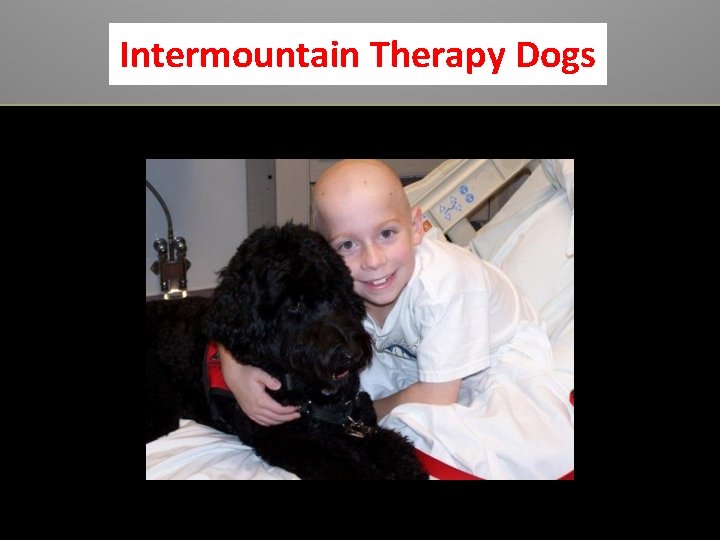
Intermountain Therapy Dogs
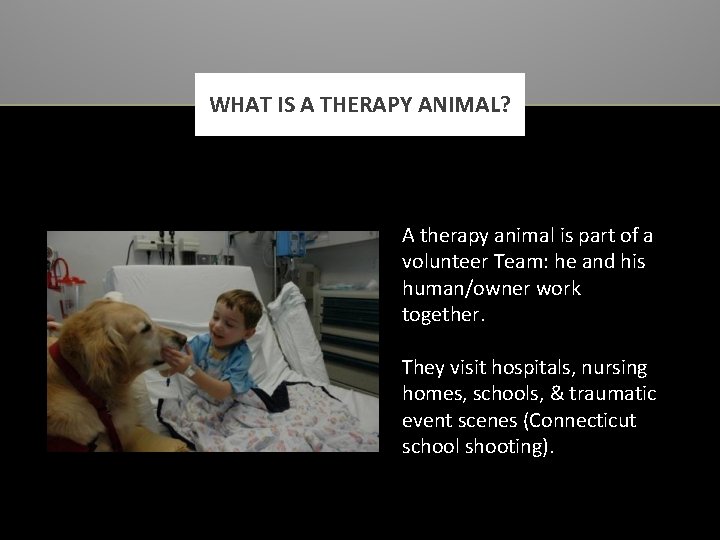
WHAT IS A THERAPY ANIMAL? A therapy animal is part of a volunteer Team: he and his human/owner work together. They visit hospitals, nursing homes, schools, & traumatic event scenes (Connecticut school shooting).
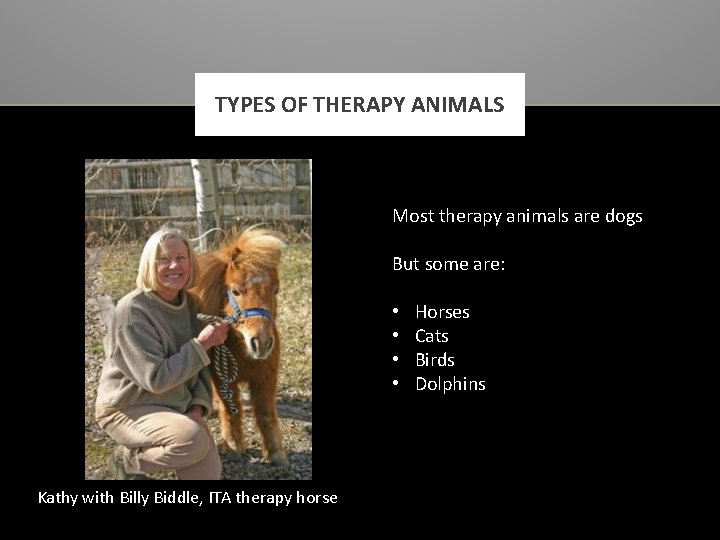
TYPES OF THERAPY ANIMALS Most therapy animals are dogs But some are: • • Kathy with Billy Biddle, ITA therapy horse Horses Cats Birds Dolphins
WHAT MAKES A PET OWNER A GOOD THERAPY TEAM CANDIDATE? My Credentials: Therapy: Animal Assisted Activity Certified Obedience: Dog obedience titles Dog show ring: Dog Obedience Judge’s Steward Empathy/Good judgment in sensitive situations
WHAT MAKES A DOG A GOOD THERAPY DOG CANDIDATE? My Credentials: Animal Assisted Activity Certified Dog obedience titles Dog Obedience Judge’s Steward Dog’s Credentials: Calm temperament Excellent health & energy Obedience trained Good cleanliness/grooming
WHAT MAKES A TEAM SAFE? Insurance! “ITA has never had a single claim, due to our intense screening and training efforts. ” Kathy Klotz, ITA
TWO MAIN TYPES OF THERAPY ANIMALS Animal Assisted Therapy: intricately involved in PT situations Animal Assisted Activity: more casual visitation with no PT regimen
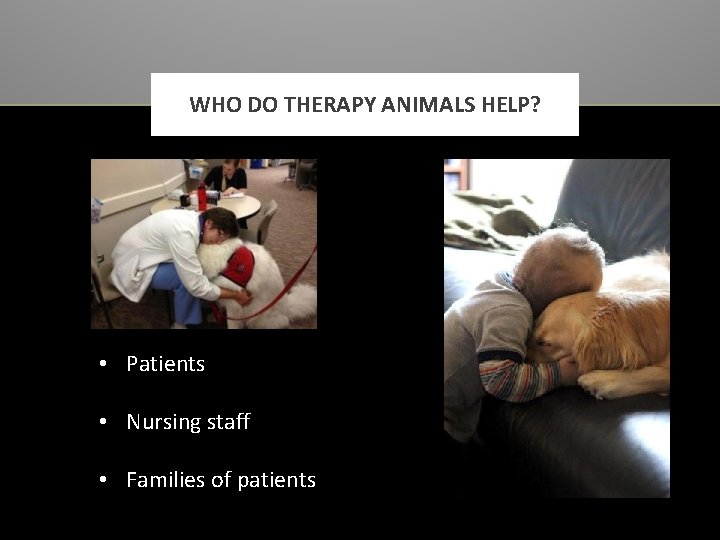
WHO DO THERAPY ANIMALS HELP? • Patients • Nursing staff • Families of patients
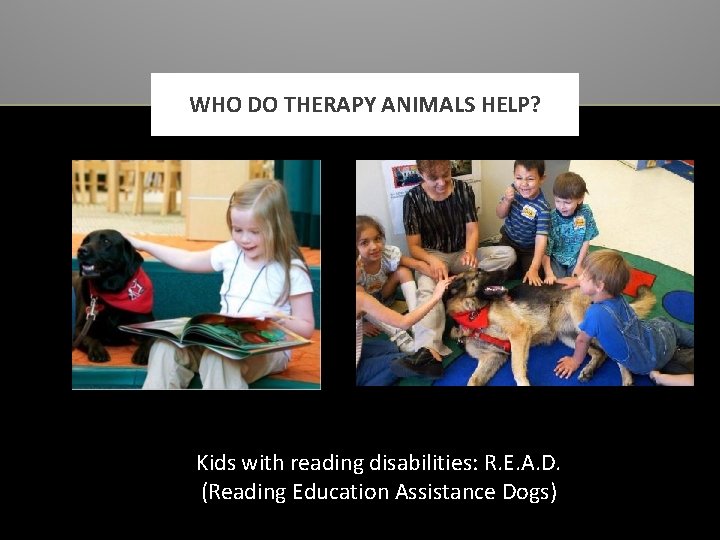
WHO DO THERAPY ANIMALS HELP? Kids with reading disabilities: R. E. A. D. (Reading Education Assistance Dogs)
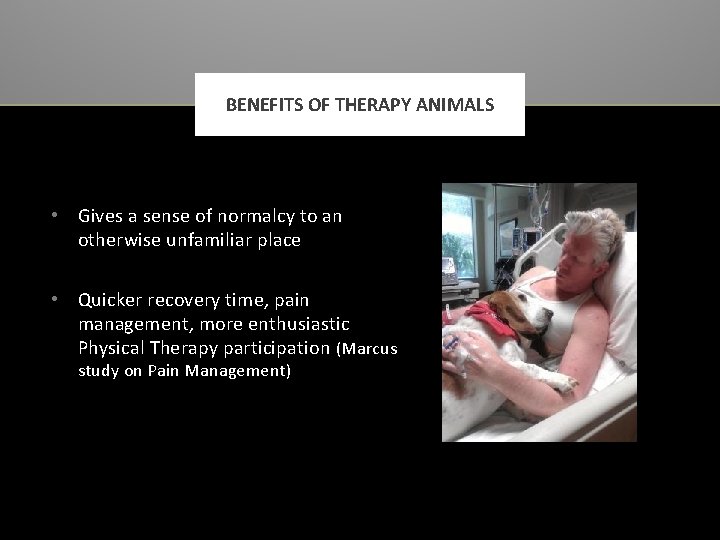
BENEFITS OF THERAPY ANIMALS • Gives a sense of normalcy to an otherwise unfamiliar place • Quicker recovery time, pain management, more enthusiastic Physical Therapy participation (Marcus study on Pain Management)
ANIMAL ASSISTED THERAPY WORKS For patients with psychotic disorders, those who participated in AAT had twice the reduction in anxiety scores as those who participated in some other form of recreational activity. (Barker study, 1998)
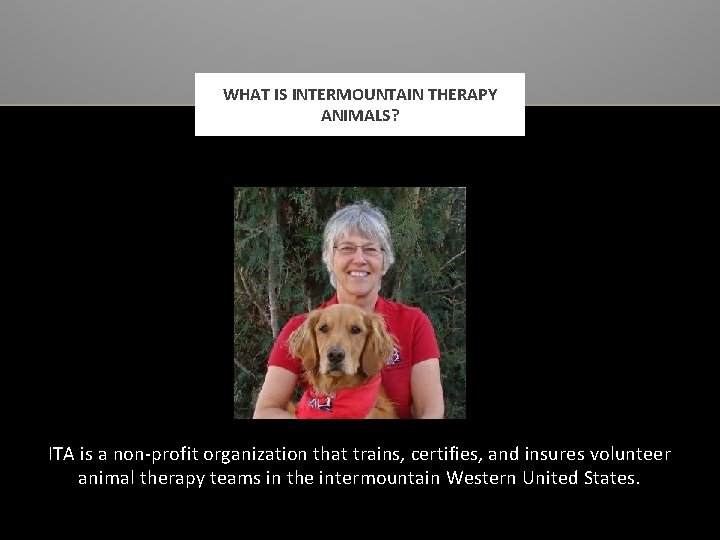
WHAT IS INTERMOUNTAIN THERAPY ANIMALS? ITA is a non-profit organization that trains, certifies, and insures volunteer animal therapy teams in the intermountain Western United States.
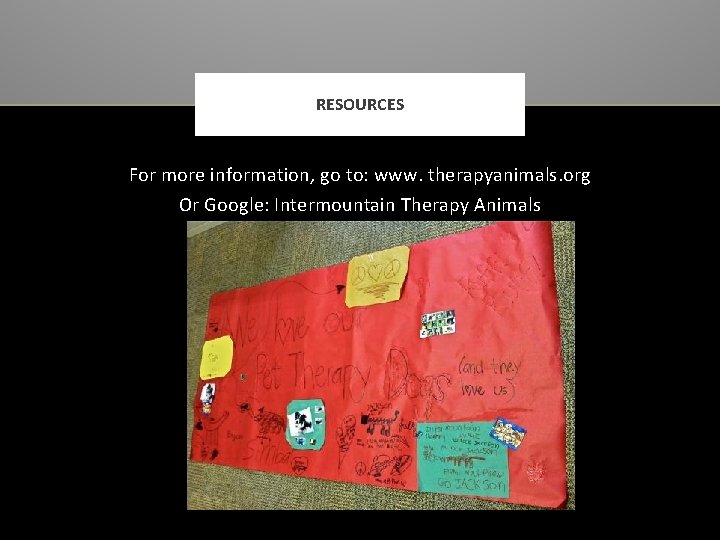
RESOURCES For more information, go to: www. therapyanimals. org Or Google: Intermountain Therapy Animals
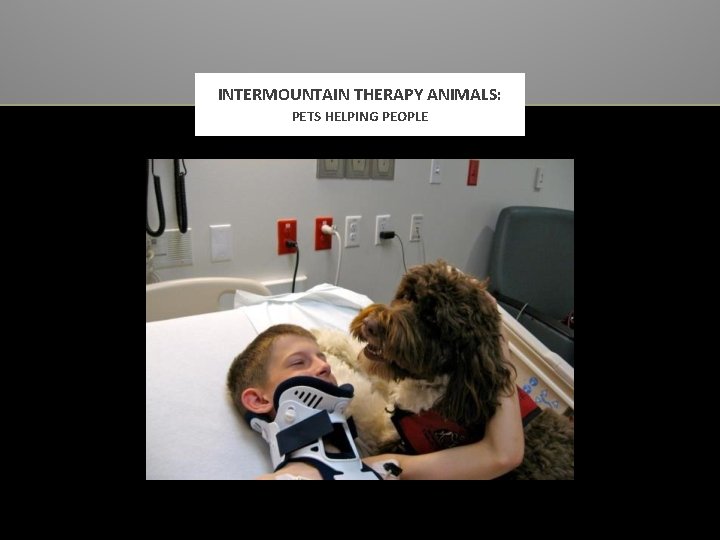
INTERMOUNTAIN THERAPY ANIMALS: PETS HELPING PEOPLE
CITATIONS Barker & Dawson 1998, pp. 797– 801. Psychotic patients show twice the improvement with AAT vs. other recreational activities. Klotz, Kathy, Executive Director Intermountain Therapy Animals. Personal Interview, May 02, 2013, Salt Lake City, Utah. Marcus, Dawn; Berstein. C. , Constantin. J. M. , Kunkel F. A. , Breuer P. , & Hanlon R. , (2012). "Animal-assisted therapy at an Outpatient Pain management clinic". Pain Medicine 13 (1): 45 – 57
THANK YOU FOR YOUR TIME!