
Communication Training Methods of Communicating and How to








- Slides: 27
Communication Training
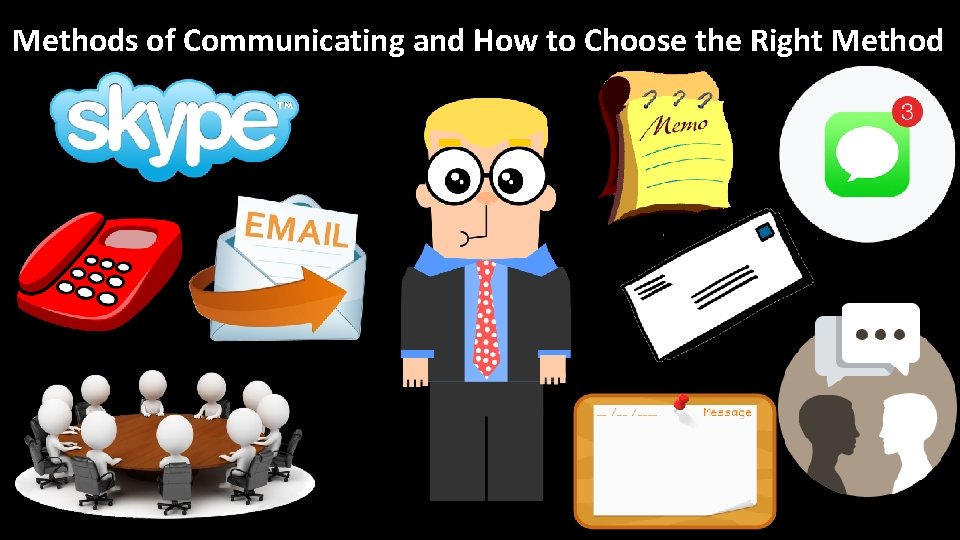
Methods of Communicating and How to Choose the Right Method
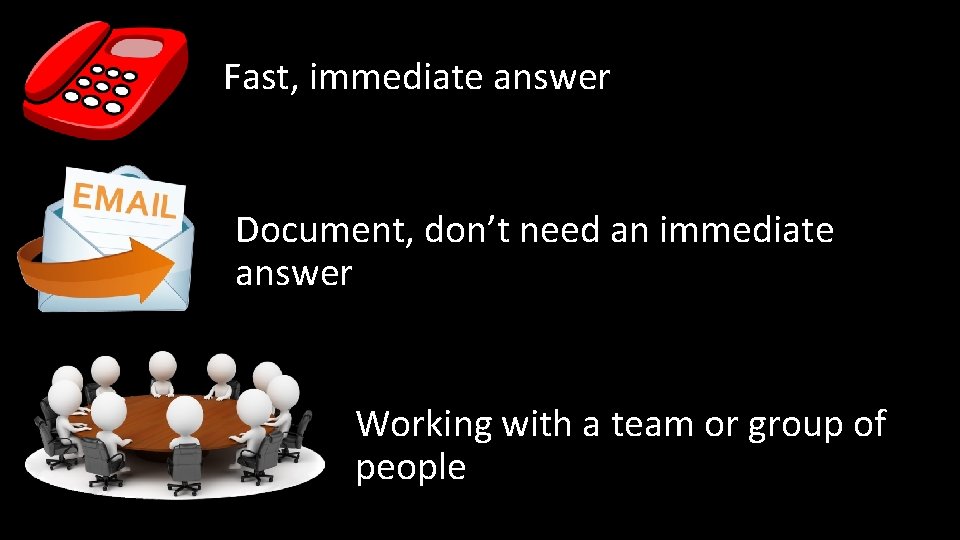
Fast, immediate answer Document, don’t need an immediate answer Working with a team or group of people
Communicating formally within the company Fast and concise Writing formally to someone outside the company, not needing a response, one way information
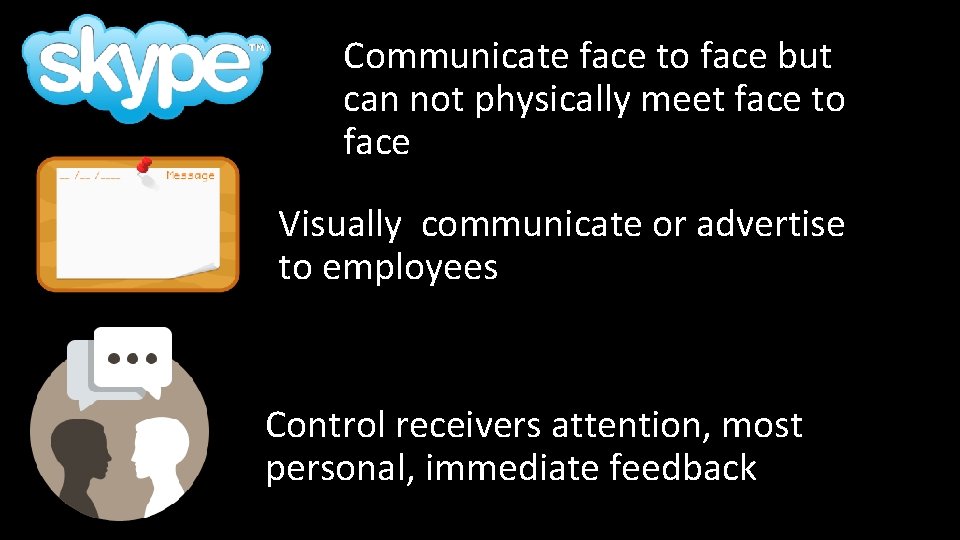
Communicate face to face but can not physically meet face to face Visually communicate or advertise to employees Control receivers attention, most personal, immediate feedback
Being Proactive When Communicating • Keep in touch with employees so they know the company vision and goals they are trying to reach • Keep in touch with customers so they are aware of updates or changes to products • Keep departments in touch with each other so changes or issues are known before they become a crisis and money is wasted
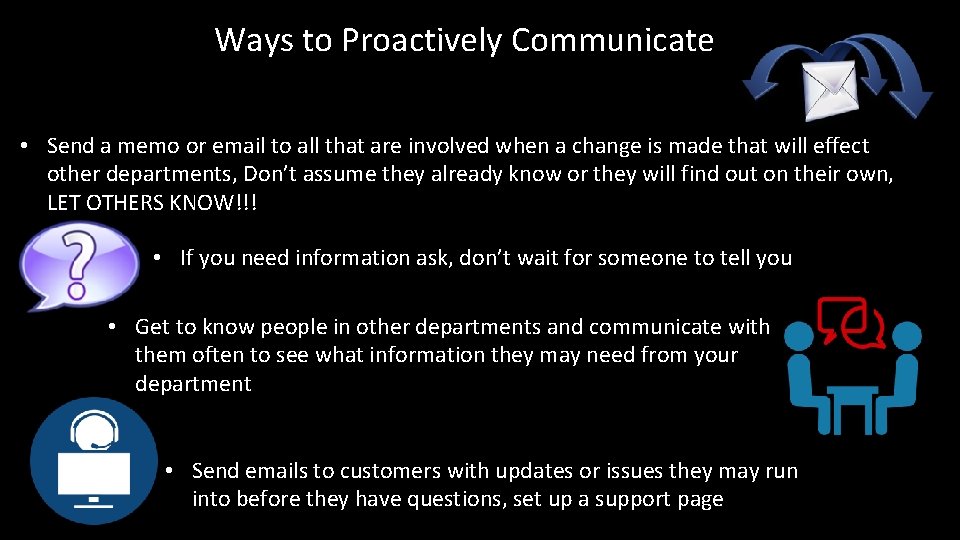
Ways to Proactively Communicate • Send a memo or email to all that are involved when a change is made that will effect other departments, Don’t assume they already know or they will find out on their own, LET OTHERS KNOW!!! • If you need information ask, don’t wait for someone to tell you • Get to know people in other departments and communicate with them often to see what information they may need from your department • Send emails to customers with updates or issues they may run into before they have questions, set up a support page
Written Communication in Business
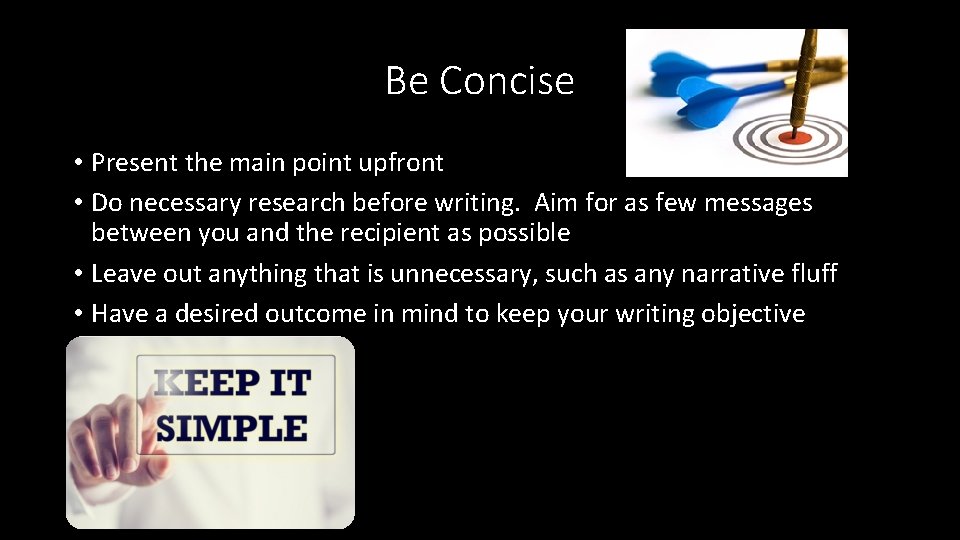
Be Concise • Present the main point upfront • Do necessary research before writing. Aim for as few messages between you and the recipient as possible • Leave out anything that is unnecessary, such as any narrative fluff • Have a desired outcome in mind to keep your writing objective
Know Your Audience • Use language and terms that your audience will understand • Use a style of writing that the audience is familiar with
Polish Your Writing • Proofread each message you send for grammar and spelling • Stay away from slang and shorthand (texting language) • Read your message out loud to yourself to check for readability and logic
Speaking to Groups
Preparation and Confidence Building • Practice your presentation multiple times out loud. Eliminate filler words and noises (um, ya, so) • Research your audience, adapt to them • Try to meet the people you will be speaking to before hand
Non-Verbal Communication • Be dressed appropriately for your audience • Use gestures to emphasize important topics • Project your voice to show confidence • Smile and maintain eye contact with audience • Use good posture • Do not fidget or use other body motion that will distract your audience
Do you know the barriers to effective communication? Well, let’s find out
1. Sematic Barriers § Badly Expressed Messages § Symbols or Words with Different Meaning § Faulty Translation § Unclarified Assumption § Technical Jargon § Body Language and Gesture Decoding
2. Psychological or Emotional Barriers § Premature Evaluation § Lack of Attention § Loss of Transmission and Poor Relation § Distrust
3. Organizational Barrier § Complexity in Organizational Structure § Organizational Policies § Rules and Regulation § Know Your Position § Organizational Facility
4. Personal Barrier § Fear to Challenge Authority § Lack of Confidence in Subordinates § Unwillingness to Communicate § Lack of Proper Incentive
How to overcome communication barriers
Clarify the idea before communicating
Consult Before Communication
Be aware of language, tone and content of message • The Power of words
Convey things of help and value to the listener
Consistency of message
Be a group listener