
Communication Skills for Leaders Delivering a clear and
- Slides: 18
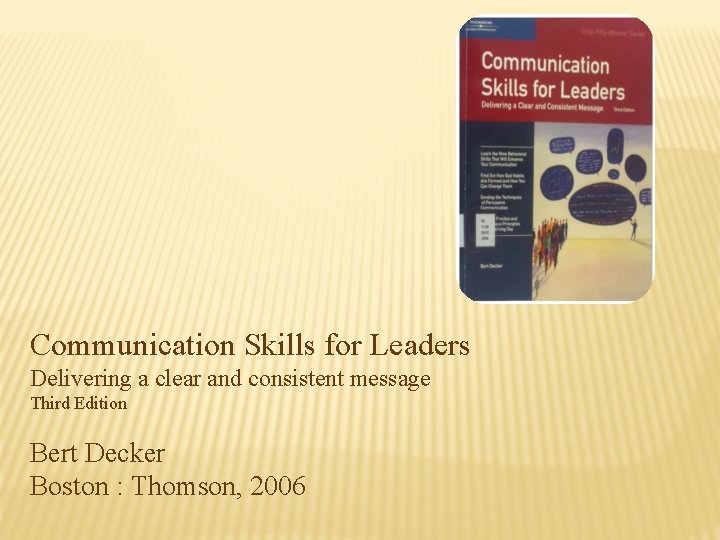
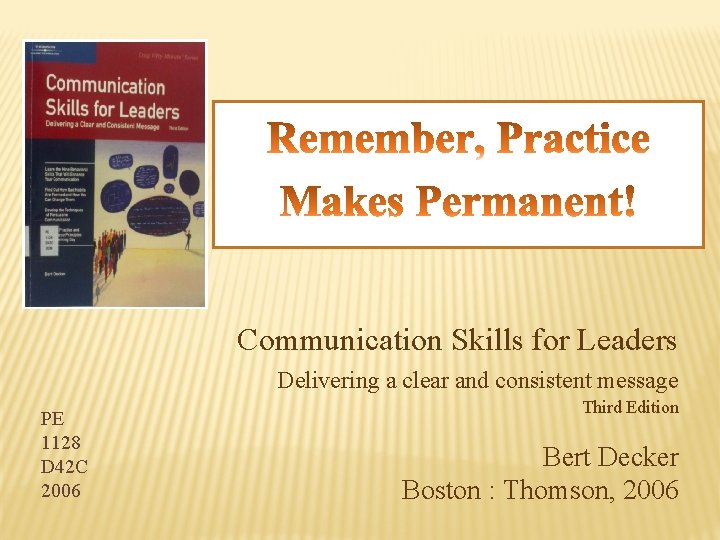
Communication Skills for Leaders Delivering a clear and consistent message Third Edition Bert Decker Boston : Thomson, 2006
THE OBJECTIVES OF THIS BOOK ARE TO HELP THE USER: 1. 2. 3. 4. 5. Understand the importance of interpersonal communication skills to becoming a leader Convey believability by ensuring the verbal, vocal, and visual elements of their communication deliver a consistent message Replace negative or habits with those that will improve their interpersonal effectiveness Develop and practice the nine behavioral skills of effective interpersonal communication Master the six skills of leadership
INTERPERSONAL COMMUNICATION DAILY LIFE o Within an Organization o o With Customers or the Public o o Interviews, meetings, coffee breaks, staff meetings, telephoning, … Customer service, selling, telemarketing, negotiating, … In Personal Life o Parties, PTA, sport events, counseling sessions, …
- PART 1 – Keys to Effective Interpersonal communication - PART 2 – Choosing Positive Communication Habits - PART 3 – Developing The Nine Behavioral Skills
- Part 1 – Keys to Effective Interpersonal communication
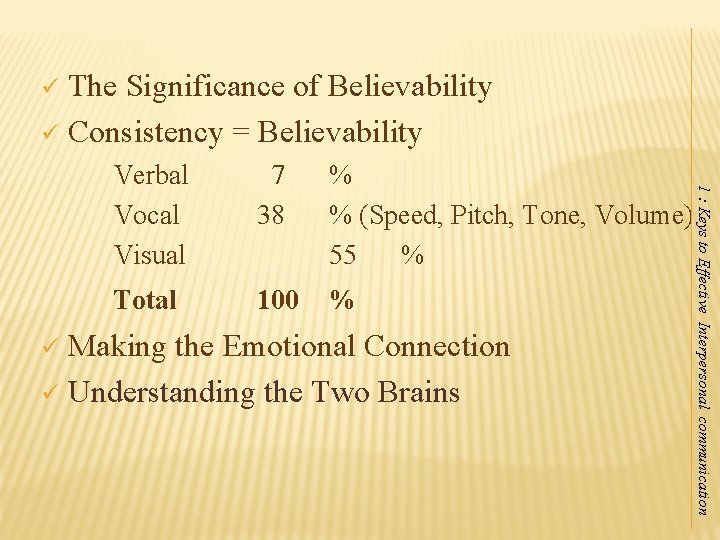
The Significance of Believability ü Consistency = Believability ü 7 38 % % (Speed, Pitch, Tone, Volume) 55 % Total 100 % Making the Emotional Connection ü Understanding the Two Brains ü 1 : Keys to Effective Interpersonal communication Verbal Vocal Visual
- Part 2 – Choosing Positive Communication Habits
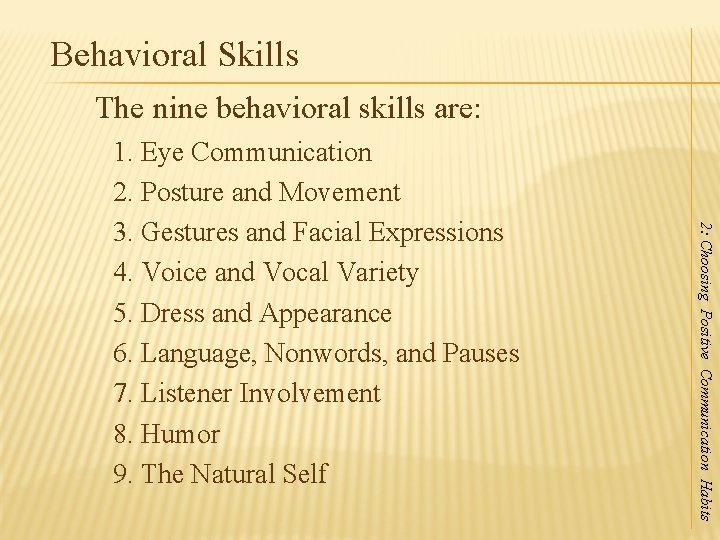
Behavioral Skills The nine behavioral skills are: 2: Choosing Positive Communication Habits 1. Eye Communication 2. Posture and Movement 3. Gestures and Facial Expressions 4. Voice and Vocal Variety 5. Dress and Appearance 6. Language, Nonwords, and Pauses 7. Listener Involvement 8. Humor 9. The Natural Self
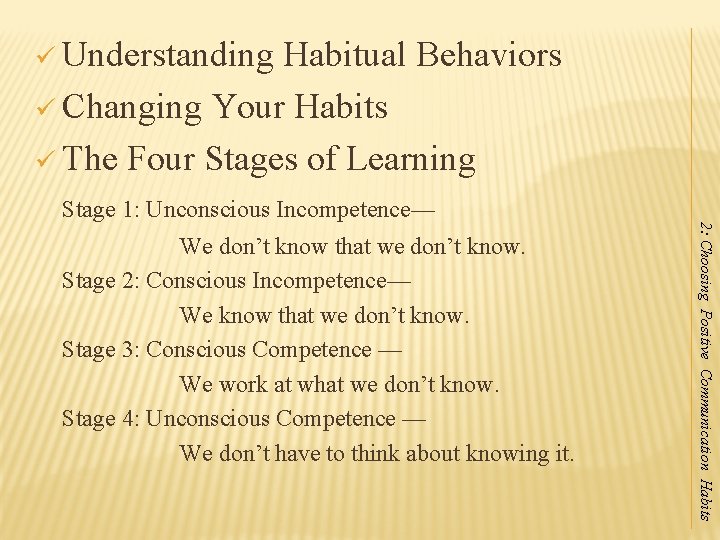
ü Understanding Habitual Behaviors ü Changing Your Habits ü The Four Stages of Learning Stage 1: Unconscious Incompetence— 2: Choosing Positive Communication Habits We don’t know that we don’t know. Stage 2: Conscious Incompetence— We know that we don’t know. Stage 3: Conscious Competence — We work at what we don’t know. Stage 4: Unconscious Competence — We don’t have to think about knowing it.
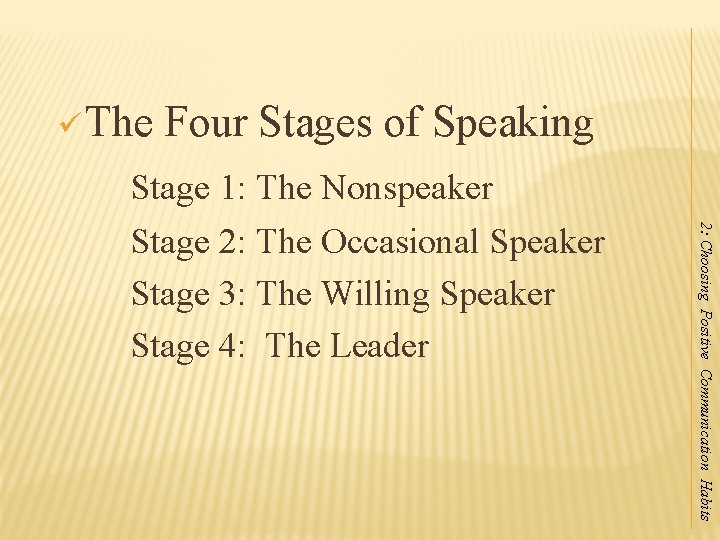
ü The Four Stages of Speaking 2: Choosing Positive Communication Habits Stage 1: The Nonspeaker Stage 2: The Occasional Speaker Stage 3: The Willing Speaker Stage 4: The Leader
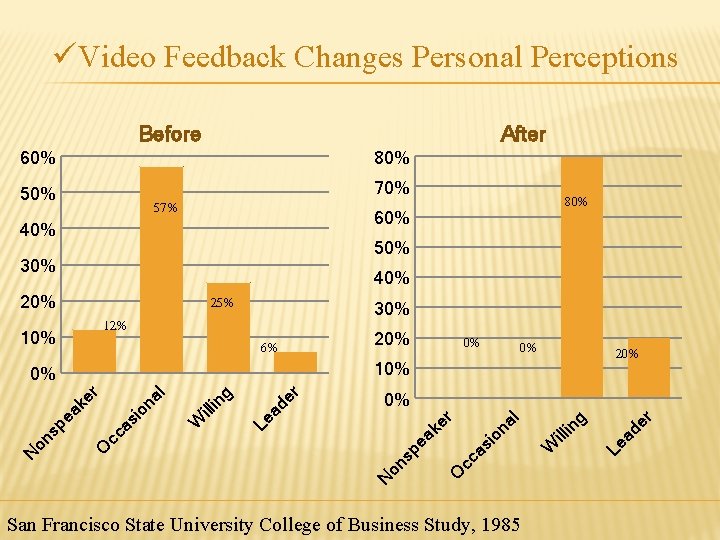
üVideo Feedback Changes Personal Perceptions Before After 60% 80% 50% 70% 57% 40% 60% 50% 30% 40% 25% 10% 0% 20% N San Francisco State University College of Business Study, 1985 er Le ad ng illi W cc a si on al 0% r er Le ad ng illi W si on al cc a O on sp e ak e r 0% 0% 20% O 6% ak e 12% 10% 30% on sp e 20% N 80%
- Part 3 – Developing The Nine Behavioral Skills
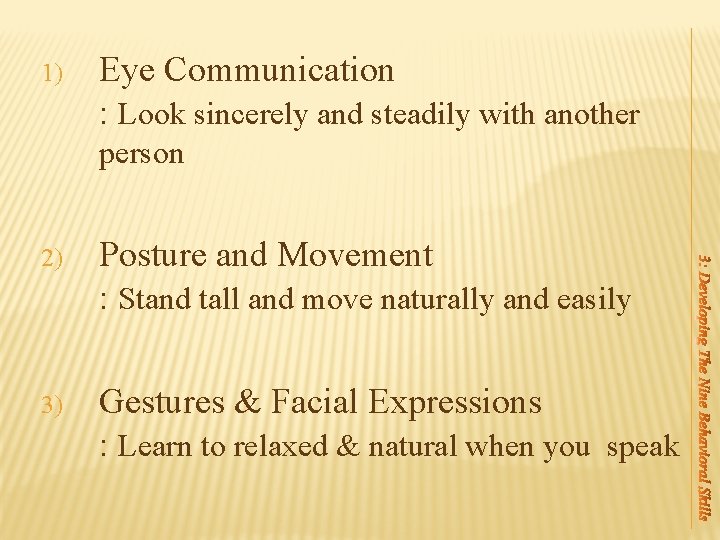
1) Eye Communication : Look sincerely and steadily with another person 2) Posture and Movement : Stand tall and move naturally and easily 3) Gestures & Facial Expressions : Learn to relaxed & natural when you speak
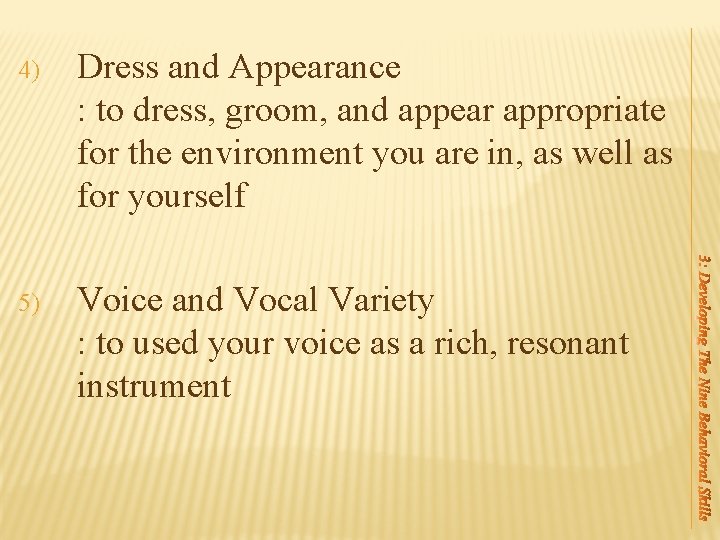
4) Dress and Appearance : to dress, groom, and appear appropriate for the environment you are in, as well as for yourself 5) Voice and Vocal Variety : to used your voice as a rich, resonant instrument
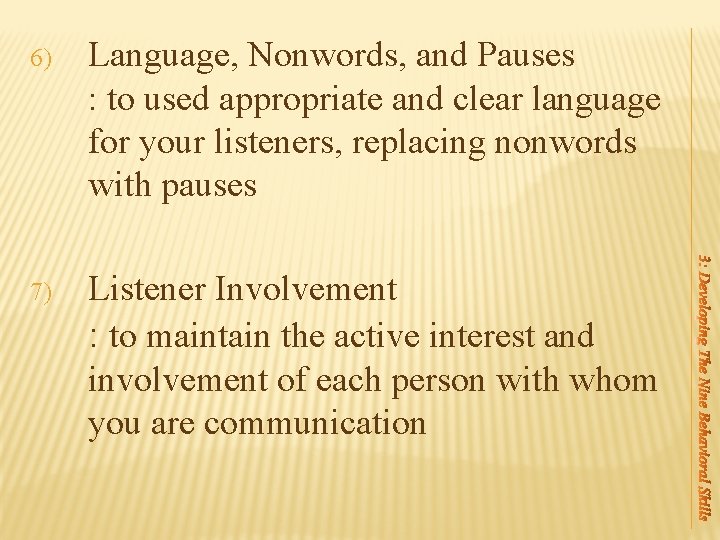
6) Language, Nonwords, and Pauses : to used appropriate and clear language for your listeners, replacing nonwords with pauses 7) Listener Involvement : to maintain the active interest and involvement of each person with whom you are communication
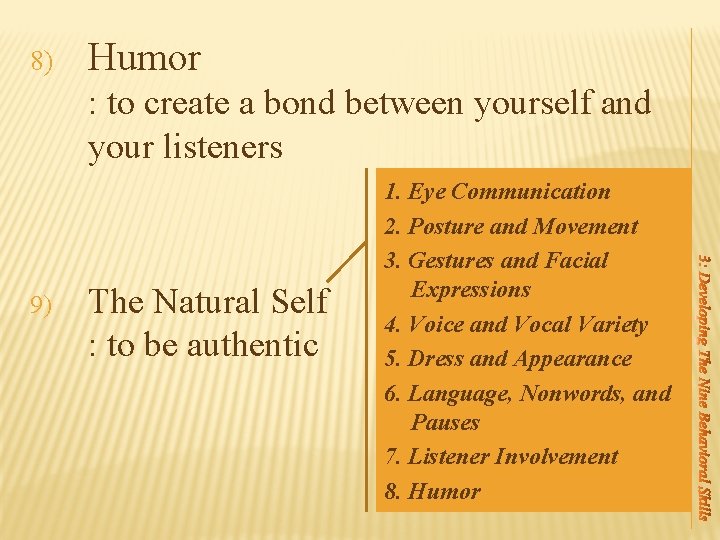
8) Humor : to create a bond between yourself and your listeners 9) The Natural Self : to be authentic 1. Eye Communication 2. Posture and Movement 3. Gestures and Facial Expressions 4. Voice and Vocal Variety 5. Dress and Appearance 6. Language, Nonwords, and Pauses 7. Listener Involvement 8. Humor
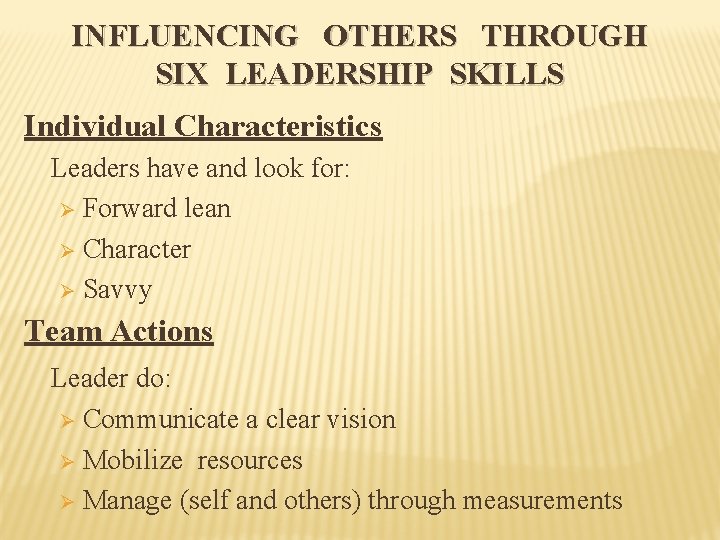
INFLUENCING OTHERS THROUGH SIX LEADERSHIP SKILLS Individual Characteristics Leaders have and look for: Ø Forward lean Ø Character Ø Savvy Team Actions Leader do: Ø Communicate a clear vision Ø Mobilize resources Ø Manage (self and others) through measurements
Communication Skills for Leaders Delivering a clear and consistent message PE 1128 D 42 C 2006 Third Edition Bert Decker Boston : Thomson, 2006