
Communication Planning The Planning Cycle Lets get there
- Slides: 22
Communication Planning
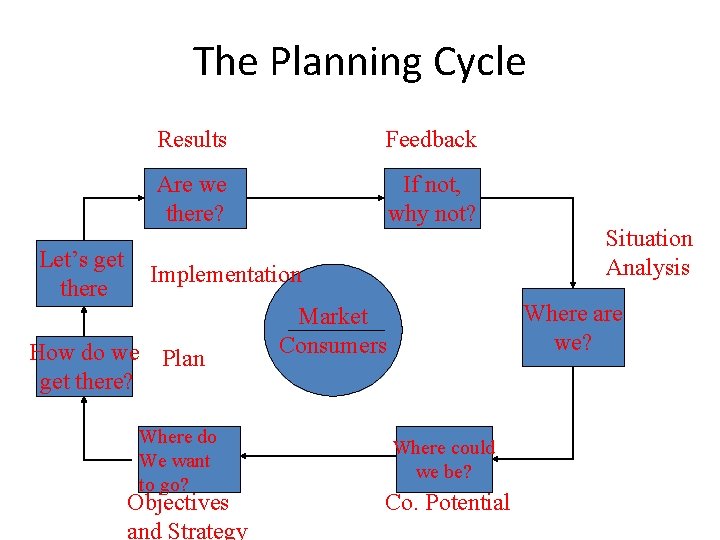
The Planning Cycle Let’s get there Results Feedback Are we there? If not, why not? Implementation How do we Plan get there? Where do We want to go? Objectives and Strategy Situation Analysis Where are we? Market Consumers Where could we be? Co. Potential
Whose job is it? • Normally the brand manager. • In some cases it could be the advertising manager, the marketing manager, the product manager and similar designations
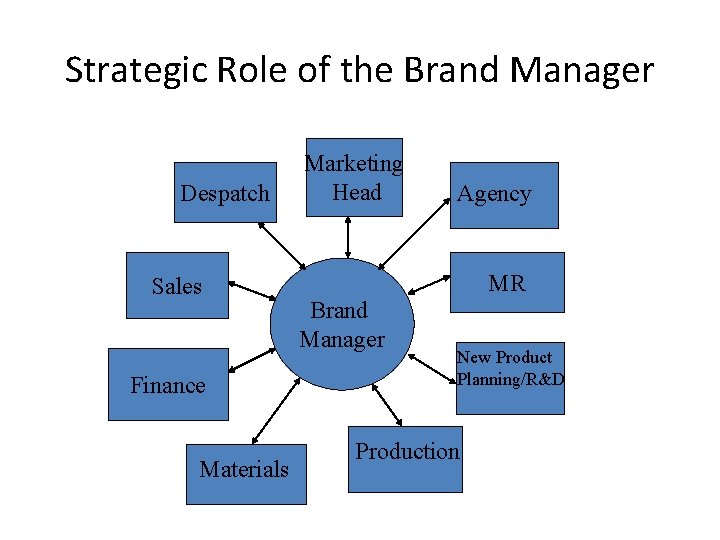
Role of the Brand Manager • CEO of the brand • Accountable for the sales, profits, contribution and fortunes of the brand • Needs to interact with all functionaries, internally and externally and do whatever it takes to ensure the progress of his brand
Strategic Role of the Brand Manager Despatch Sales Finance Materials Marketing Head Agency MR Brand Manager New Product Planning/R&D Production
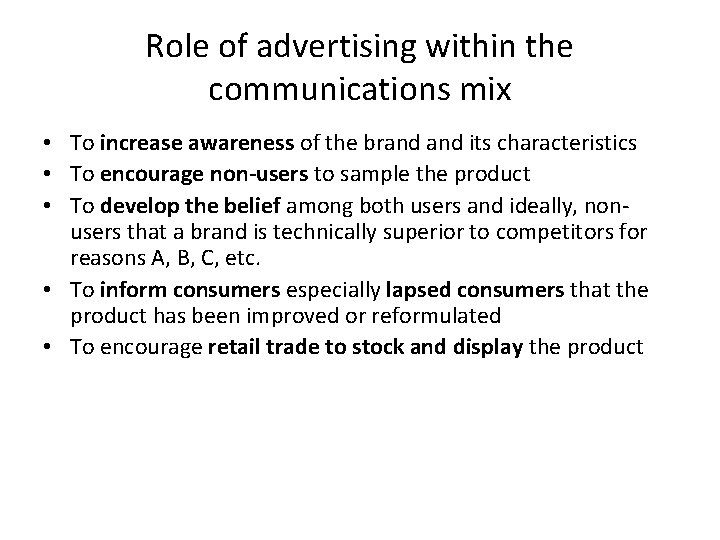
Role of advertising within the communications mix • To increase awareness of the brand its characteristics • To encourage non-users to sample the product • To develop the belief among both users and ideally, nonusers that a brand is technically superior to competitors for reasons A, B, C, etc. • To inform consumers especially lapsed consumers that the product has been improved or reformulated • To encourage retail trade to stock and display the product
Is it an investment or revenue expense ? Conservative accounting principles does not recognise the future positive effects of current advertising expenditure
Is advertising an expense or an investment? • How to treat it in the books? • Risk • Benefits obtained from the expenditure
Is advertising related to sales? Yes and No.
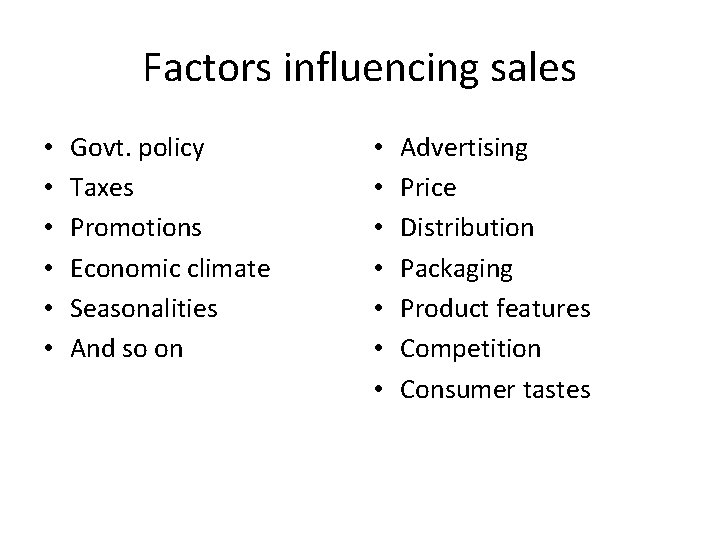
Factors influencing sales • • • Govt. policy Taxes Promotions Economic climate Seasonalities And so on • • Advertising Price Distribution Packaging Product features Competition Consumer tastes
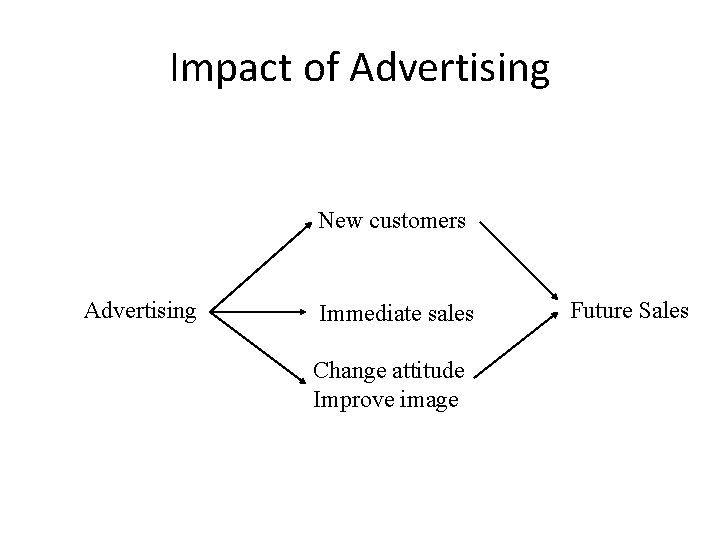
Impact of Advertising New customers Advertising Immediate sales Change attitude Improve image Future Sales
You can attain temporary share of the market with anew product or a smart promotion, but to enjoy a really healthy share of market (in three year’s time) you have to start now, to build a share of mind– Leo Burnett
“I am astonished to find how many manufacturers, on both sides of the Atlantic, still believe that women can be persuaded by logic and argument to buy one brand in preference to another. The greater the similarity between products, the less part reason plays in brand selection” – David Ogilvy
“Half my advertising is wasted, but the problem is I don’t know which half” - John Wanamaker
Demand stimulated by advertising not only increases sales but the value of the brand in the minds of the consumer Successful advertising helped increase prices by 22% than not so successful advertising
The average % increase in sales to be expected from 1 % reduction in price is 1. 8% The average % increase in sales to be expected by 1 % increase in adspend is 0. 2%
Advertising Objectives • Communication and coordination device • Criterion for decision making • Evaluating results
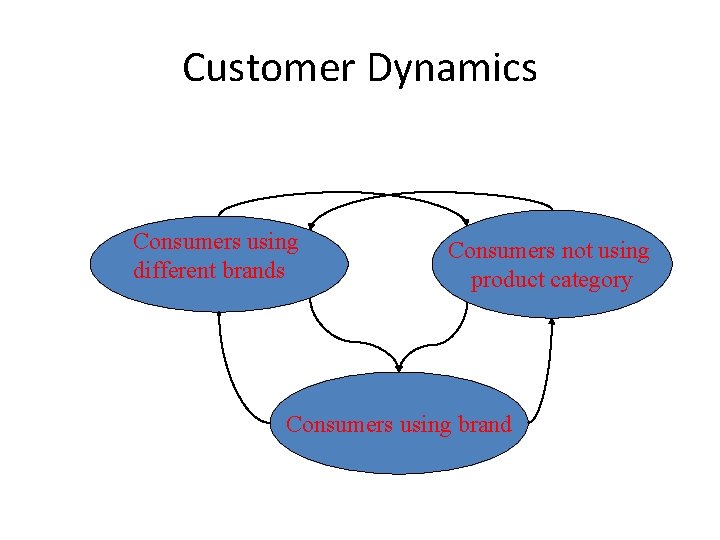
Customer Dynamics Consumers using different brands Consumers not using product category Consumers using brand
Targetting • Who is the target segment? • What is the behaviour within that segment that advertising is attempting? • What is the process that would lead to desired behaviour? • Is it necessary to create awareness, build attitudes/ brand equity/associated feelings/type of user personality ?
Increasing Turnover • Increasing customers • Increasing usage per customer • Reduce time between purchases
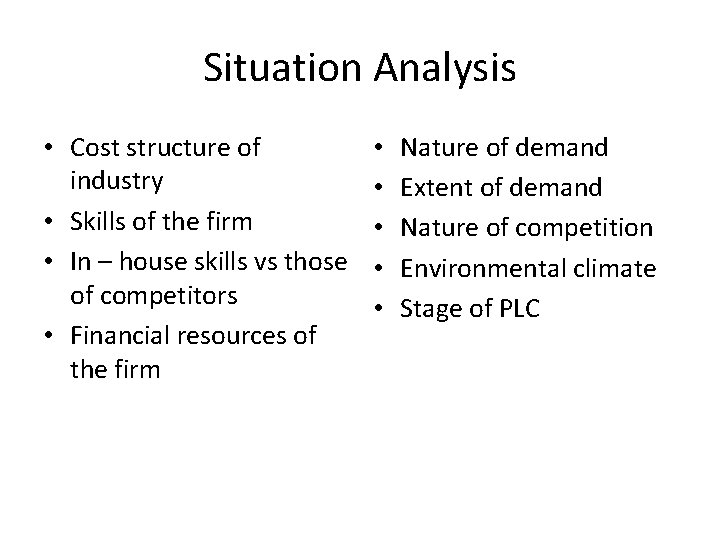
Situation Analysis • Cost structure of industry • Skills of the firm • In – house skills vs those of competitors • Financial resources of the firm • • • Nature of demand Extent of demand Nature of competition Environmental climate Stage of PLC
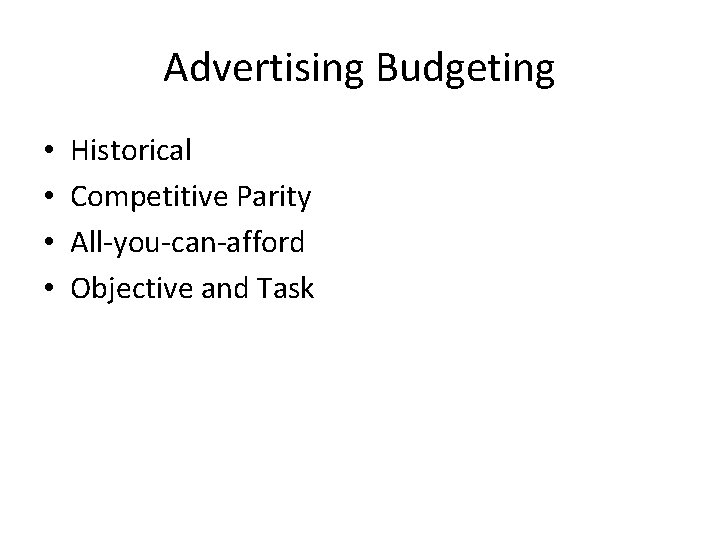
Advertising Budgeting • • Historical Competitive Parity All-you-can-afford Objective and Task