
Communication Plan Template and Example 321 Main Street
- Slides: 5
Communication Plan Template and Example 321 Main Street, Farmington, CT 06032 * 860. 678. 4407 * andy@ahscommunications. com * www. ahscommunications. com
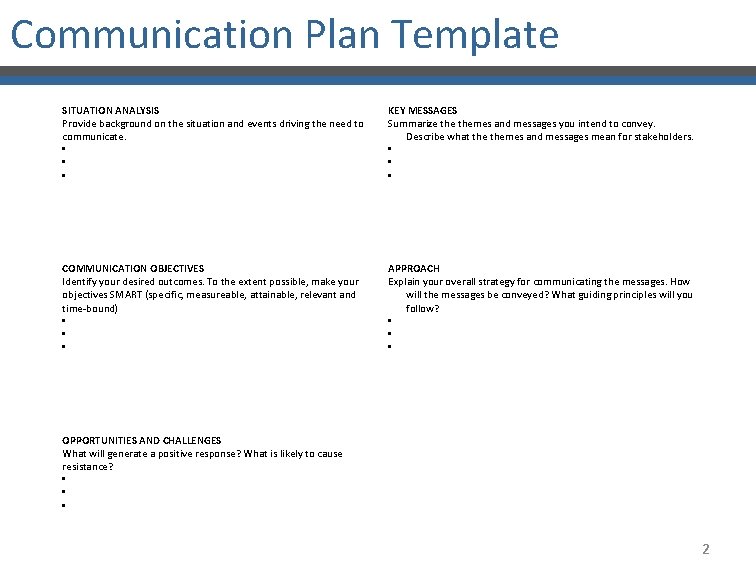
Communication Plan Template SITUATION ANALYSIS Provide background on the situation and events driving the need to communicate. • • • KEY MESSAGES Summarize themes and messages you intend to convey. Describe what themes and messages mean for stakeholders. • • • COMMUNICATION OBJECTIVES Identify your desired outcomes. To the extent possible, make your objectives SMART (specific, measureable, attainable, relevant and time-bound) • • • APPROACH Explain your overall strategy for communicating the messages. How will the messages be conveyed? What guiding principles will you follow? • • • OPPORTUNITIES AND CHALLENGES What will generate a positive response? What is likely to cause resistance? • • • 2
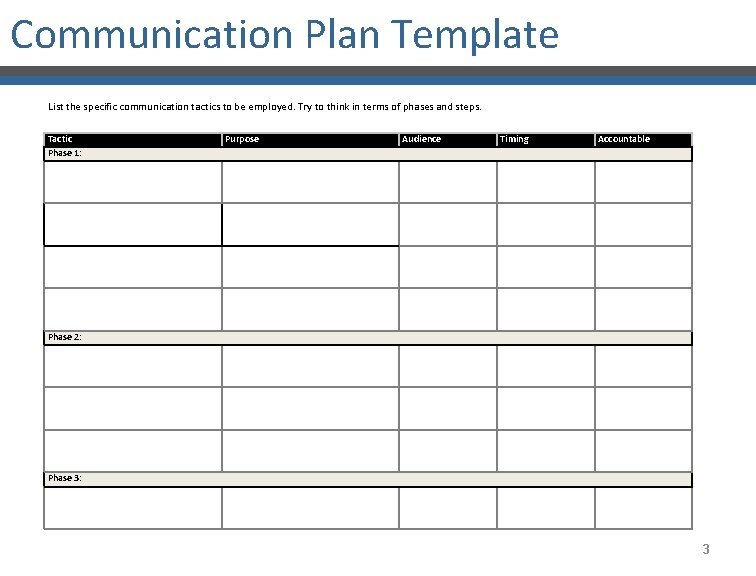
Communication Plan Template List the specific communication tactics to be employed. Try to think in terms of phases and steps. Tactic Phase 1: Purpose Audience Timing Accountable Phase 2: Phase 3: 3
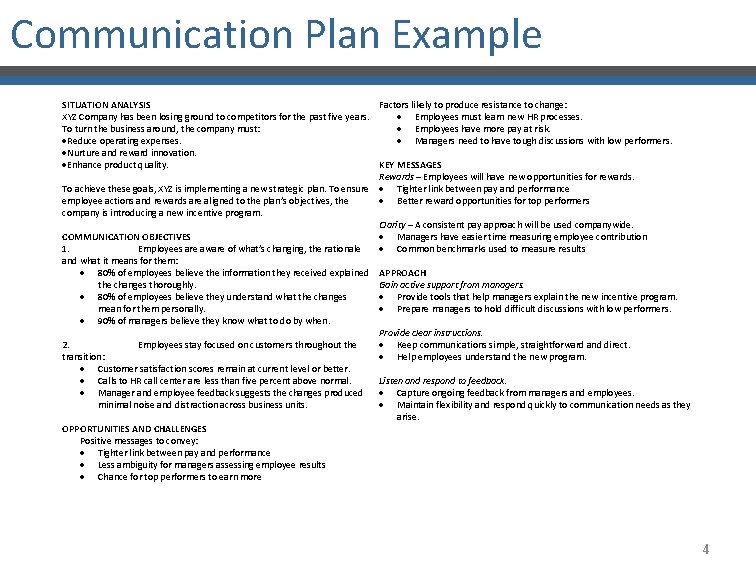
Communication Plan Example SITUATION ANALYSIS Factors likely to produce resistance to change: XYZ Company has been losing ground to competitors for the past five years. Employees must learn new HR processes. To turn the business around, the company must: Employees have more pay at risk. Reduce operating expenses. Managers need to have tough discussions with low performers. Nurture and reward innovation. Enhance product quality. KEY MESSAGES Rewards – Employees will have new opportunities for rewards. To achieve these goals, XYZ is implementing a new strategic plan. To ensure Tighter link between pay and performance employee actions and rewards are aligned to the plan’s objectives, the Better reward opportunities for top performers company is introducing a new incentive program. Clarity – A consistent pay approach will be used companywide. COMMUNICATION OBJECTIVES Managers have easier time measuring employee contribution 1. Employees are aware of what’s changing, the rationale Common benchmarks used to measure results and what it means for them: 80% of employees believe the information they received explained APPROACH the changes thoroughly. Gain active support from managers. 80% of employees believe they understand what the changes Provide tools that help managers explain the new incentive program. mean for them personally. Prepare managers to hold difficult discussions with low performers. 90% of managers believe they know what to do by when. Provide clear instructions. 2. Employees stay focused on customers throughout the Keep communications simple, straightforward and direct. transition: Help employees understand the new program. Customer satisfaction scores remain at current level or better. Calls to HR call center are less than five percent above normal. Listen and respond to feedback. Manager and employee feedback suggests the changes produced Capture ongoing feedback from managers and employees. minimal noise and distraction across business units. Maintain flexibility and respond quickly to communication needs as they arise. OPPORTUNITIES AND CHALLENGES Positive messages to convey: Tighter link between pay and performance Less ambiguity for managers assessing employee results Chance for top performers to earn more 4
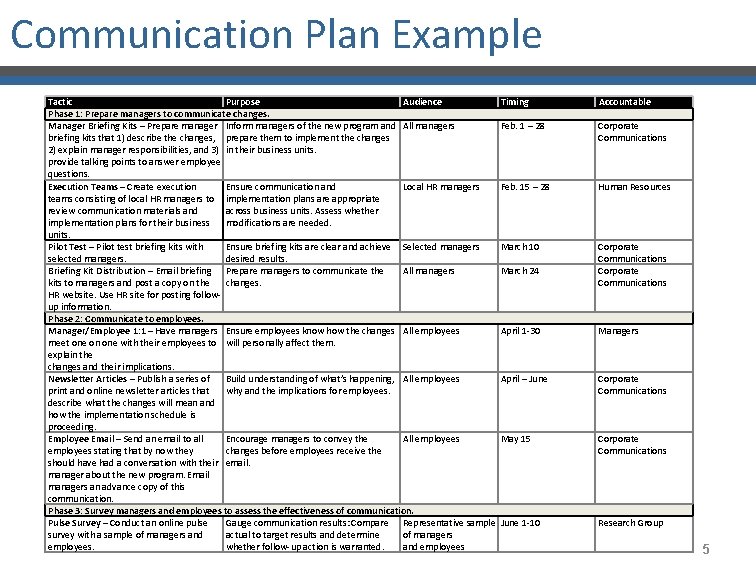
Communication Plan Example Tactic Purpose Audience Phase 1: Prepare managers to communicate changes. Manager Briefing Kits – Prepare manager Inform managers of the new program and All managers briefing kits that 1) describe the changes, prepare them to implement the changes 2) explain manager responsibilities, and 3) in their business units. provide talking points to answer employee questions. Execution Teams – Create execution Ensure communication and Local HR managers teams consisting of local HR managers to implementation plans are appropriate review communication materials and across business units. Assess whether implementation plans for their business modifications are needed. units. Pilot Test – Pilot test briefing kits with Ensure briefing kits are clear and achieve Selected managers selected managers. desired results. Briefing Kit Distribution – Email briefing Prepare managers to communicate the All managers kits to managers and post a copy on the changes. HR website. Use HR site for posting followup information. Phase 2: Communicate to employees. Manager/Employee 1: 1 – Have managers Ensure employees know how the changes All employees meet one on one with their employees to will personally affect them. explain the changes and their implications. Newsletter Articles – Publish a series of Build understanding of what’s happening, All employees print and online newsletter articles that why and the implications for employees. describe what the changes will mean and how the implementation schedule is proceeding. Employee Email – Send an email to all Encourage managers to convey the All employees stating that by now they changes before employees receive the should have had a conversation with their email. manager about the new program. Email managers an advance copy of this communication. Phase 3: Survey managers and employees to assess the effectiveness of communication. Pulse Survey – Conduct an online pulse Gauge communication results: Compare Representative sample survey with a sample of managers and actual to target results and determine of managers employees. whether follow-up action is warranted. and employees Timing Accountable Feb. 1 – 28 Corporate Communications Feb. 15 – 28 Human Resources March 10 Corporate Communications March 24 April 1 -30 Managers April – June Corporate Communications May 15 Corporate Communications June 1 -10 Research Group 5