
Communication models MEC 2 SUMMARY Communication Model R
- Slides: 13
Communication models MEC 2
SUMMARY Ø Communication Model (R. Mucchielli) Ø Process of Communication (Taibi Kahler) Ø Basic Communication model Ø Berlo´s SCMR model of communication Ø Audience analysys
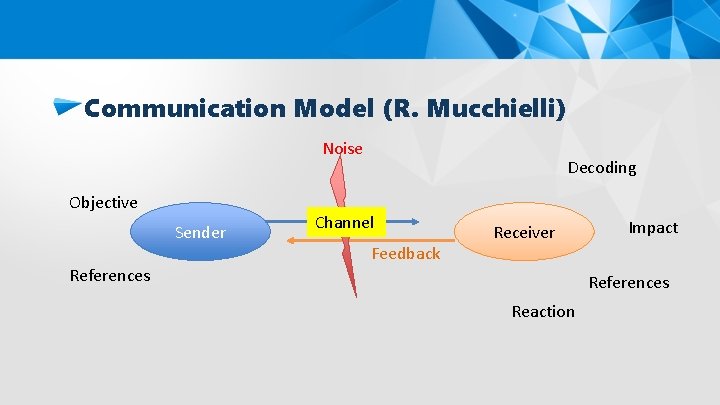
Communication Model (R. Mucchielli) Noise Objective Sender References Decoding Channel Feedback Receiver Impact References Reaction
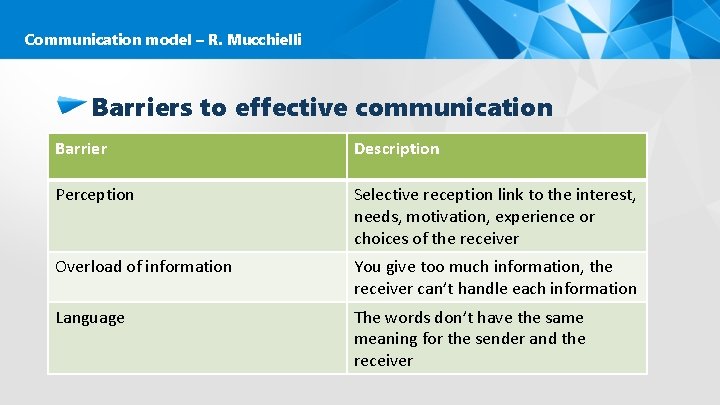
Communication model – R. Mucchielli Barriers to effective communication Barrier Description Perception Selective reception link to the interest, needs, motivation, experience or choices of the receiver Overload of information You give too much information, the receiver can’t handle each information Language The words don’t have the same meaning for the sender and the receiver
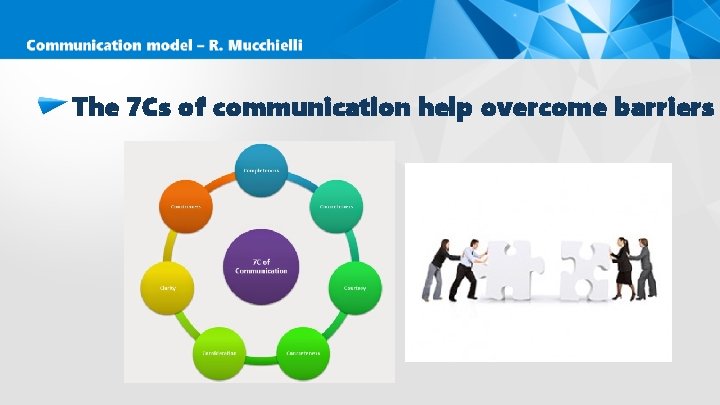
The 7 Cs of communication help overcome barriers
Process of Communication (Taibi Kahler) Ø Ø 6 types of personality Essential characteristics Channels Operation model
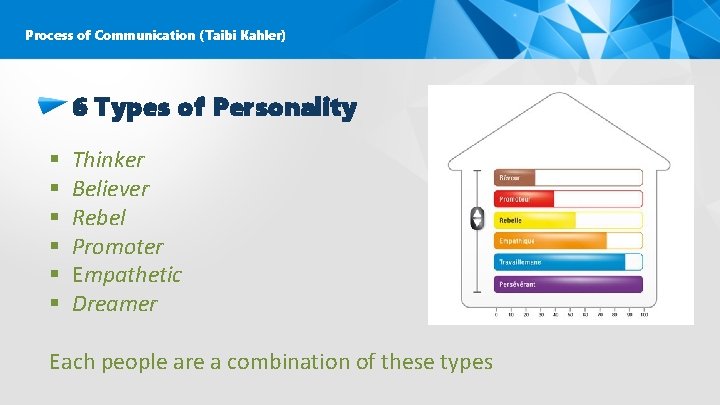
Process of Communication (Taibi Kahler) 6 Types of Personality § § § Thinker Believer Rebel Promoter Empathetic Dreamer Each people are a combination of these types
Process of Communication (Taibi Kahler) Essential characteristics Each personality is a combination of this characteristics: • Essential psychologic need: recognize as a person or accross his efforts, results or convictions, need time for himself, need action, time structuration or objectives. • Stress behaviour
Process of Communication (Taibi Kahler) Channels • Nutritive channel: Calm voice, smiling, relax, we speak with emotion and feelings. • Informative/interrogative channel: the purpose is focused on the facts and opinions. There are questions. It’s a calm voice but without special feelings. • Play channel: Enthusiastic voice and dynamic movements. • Directive channel: Calm voice and behaviour, no particular emotion. The sentences encourage people to do something.
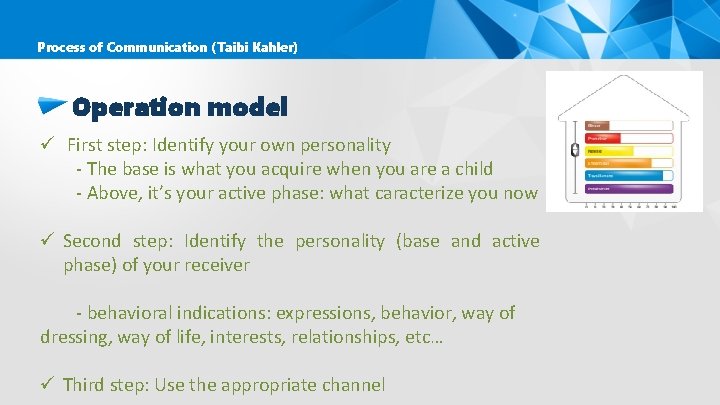
Process of Communication (Taibi Kahler) Operation model ü First step: Identify your own personality - The base is what you acquire when you are a child - Above, it’s your active phase: what caracterize you now ü Second step: Identify the personality (base and active phase) of your receiver - behavioral indications: expressions, behavior, way of dressing, way of life, interests, relationships, etc… ü Third step: Use the appropriate channel
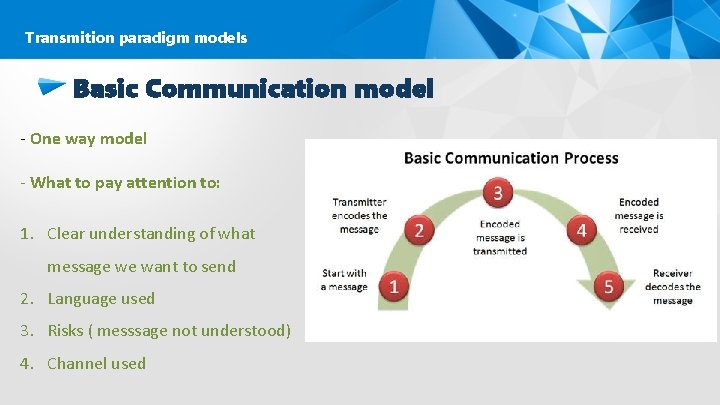
Transmition paradigm models Basic Communication model - One way model - What to pay attention to: 1. Clear understanding of what message we want to send 2. Language used 3. Risks ( messsage not understood) 4. Channel used
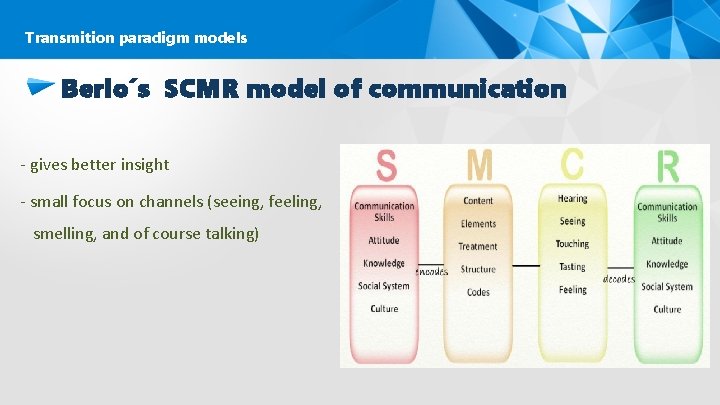
Transmition paradigm models Berlo´s SCMR model of communication - gives better insight - small focus on channels (seeing, feeling, smelling, and of course talking)
Audience analyses Ø Primary Ø Secondary Ø Initiate Ø Gatekeeper Ø Watchdog