
Communication Management and Processes Communication and Management Topics

- Slides: 76
Communication Management and Processes
Communication and Management • Topics Covered – – – – The Importance of Good Communication The Communication Process The Role of Perception in Communication The Dangers of Ineffective Communication Information Richness and Communication Media Face-to-Face Communication Spoken Communication Electronically Communicated Personally Addressed Written Communication
Communication and Management • Topics Covered (cont’d) – Impersonal Written Communication • Communication Networks – Communication Networks in Groups and Teams – Organizational Communication Networks – External Networks • Technological Advances in Communication – The Internet – Intranets – Groupware
Communication and Management • Topics Covered • Communication Skills for Managers – Communication Skills for Managers as Senders – Communication Skills for Managers as Receivers – Understanding Linguistic Styles
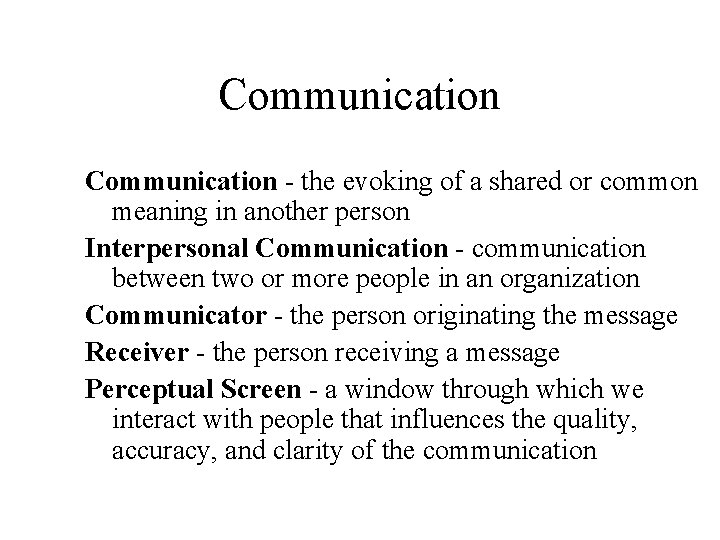
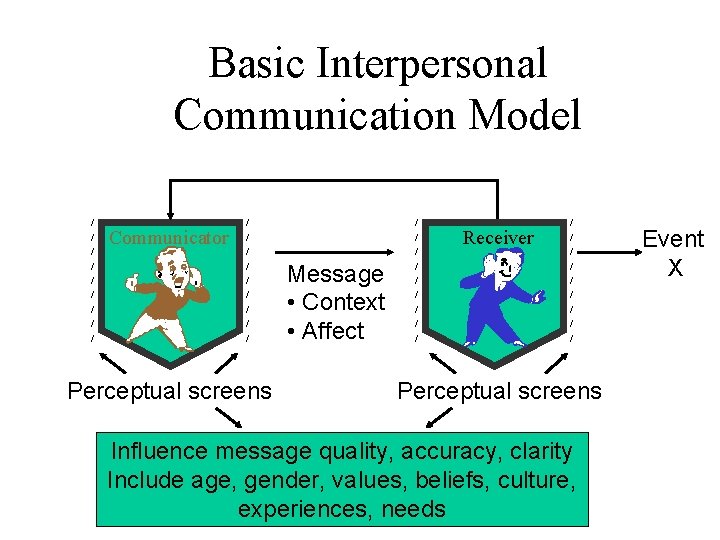
Communication - the evoking of a shared or common meaning in another person Interpersonal Communication - communication between two or more people in an organization Communicator - the person originating the message Receiver - the person receiving a message Perceptual Screen - a window through which we interact with people that influences the quality, accuracy, and clarity of the communication
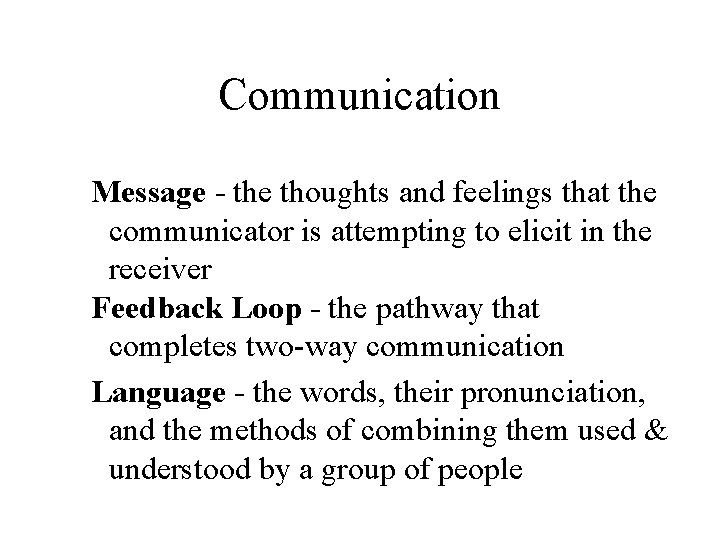
Communication Message - the thoughts and feelings that the communicator is attempting to elicit in the receiver Feedback Loop - the pathway that completes two-way communication Language - the words, their pronunciation, and the methods of combining them used & understood by a group of people
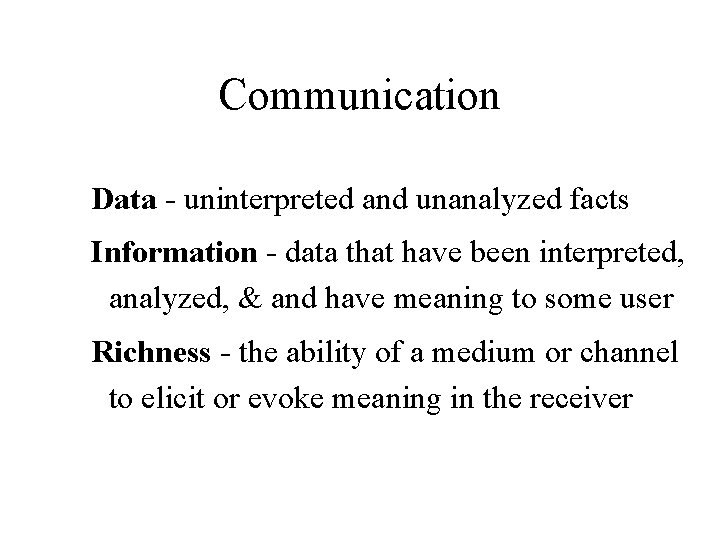
Communication Data - uninterpreted and unanalyzed facts Information - data that have been interpreted, analyzed, & and have meaning to some user Richness - the ability of a medium or channel to elicit or evoke meaning in the receiver
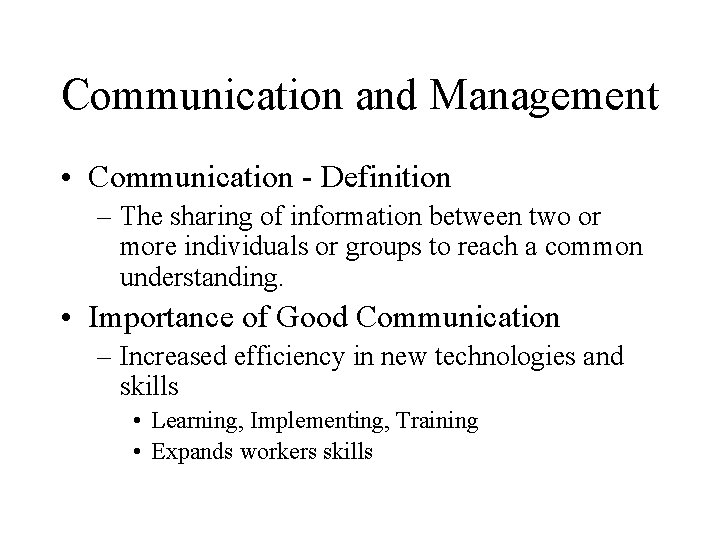
Communication and Management • Communication - Definition – The sharing of information between two or more individuals or groups to reach a common understanding. • Importance of Good Communication – Increased efficiency in new technologies and skills • Learning, Implementing, Training • Expands workers skills
Communication and Management • Importance of Good Communication – Improved quality of products and services Meaning and importance of quality How to attain quality – Subordinates communicate problems and solutions for increasing quality to superiors
Communication and Management • Importance of Good Communication – Increased responsiveness to customers • Empowered workers lower response time to satisfy customer wants and needs
Communication and Management • Importance of Good Communication – More innovation through communication • Cross-functional teams communicating effectively produce higher quality products more efficiently
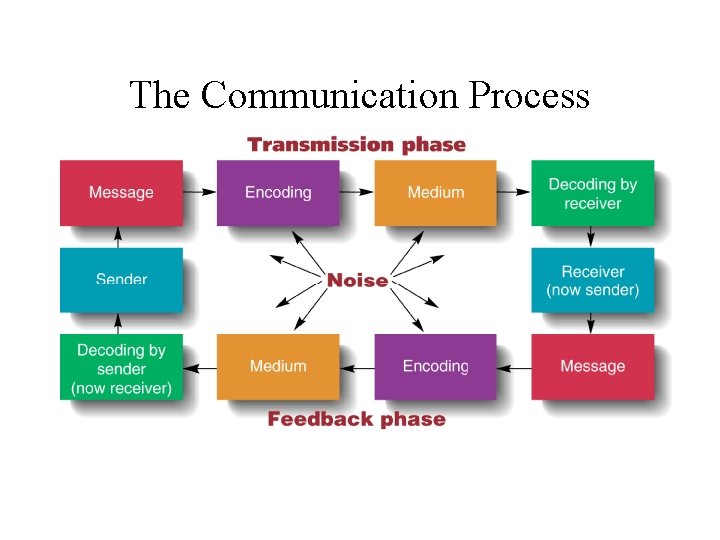
The Communication Process • Phases of the Communication Process: – Transmission phase in which information is shared by two or more people. – Feedback phase in which a common understanding is assured.
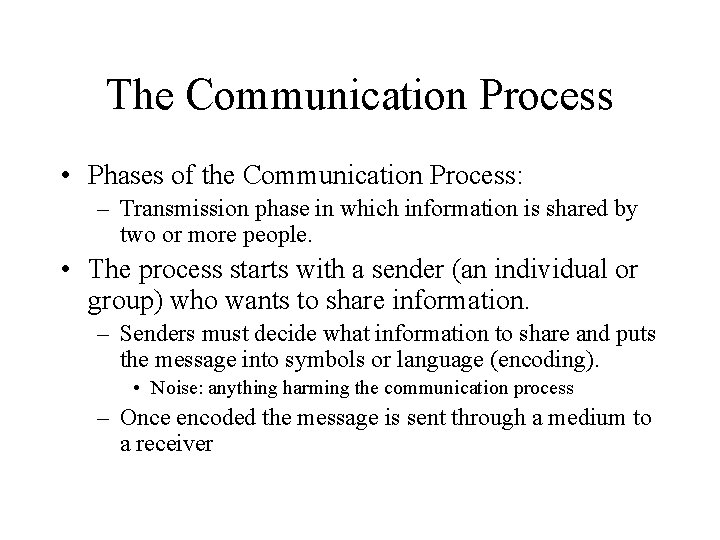
The Communication Process • Phases of the Communication Process: – Transmission phase in which information is shared by two or more people. • The process starts with a sender (an individual or group) who wants to share information. – Senders must decide what information to share and puts the message into symbols or language (encoding). • Noise: anything harming the communication process – Once encoded the message is sent through a medium to a receiver
The Communication Process • Phases of the Communication Process: • The receiver interprets or decodes the message
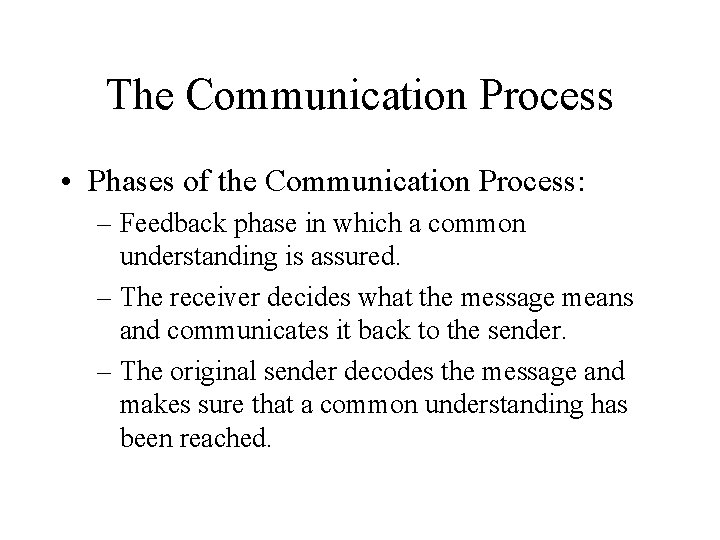
The Communication Process • Phases of the Communication Process: – Feedback phase in which a common understanding is assured. – The receiver decides what the message means and communicates it back to the sender. – The original sender decodes the message and makes sure that a common understanding has been reached.
The Communication Process
The Communication Process (cont’d) • Messages are transmitted over a medium to a receiver. – Medium: the pathway over which the message is transmitted (e. g. , telephone, written note, email). – Receiver: the person getting the message. • The receiver decodes (interprets) the message, allowing the receiver to understand the message. • This is a critical point: failure to properly decode the message can lead to a misunderstanding. – Feedback by receiver informs the sender that the message is understood or that it must be re-sent.
Communication Issues • Verbal Communication – The encoding of messages into words, either written or spoken • Nonverbal – The encoding of messages by means of facial expressions, body language, and styles of dress.
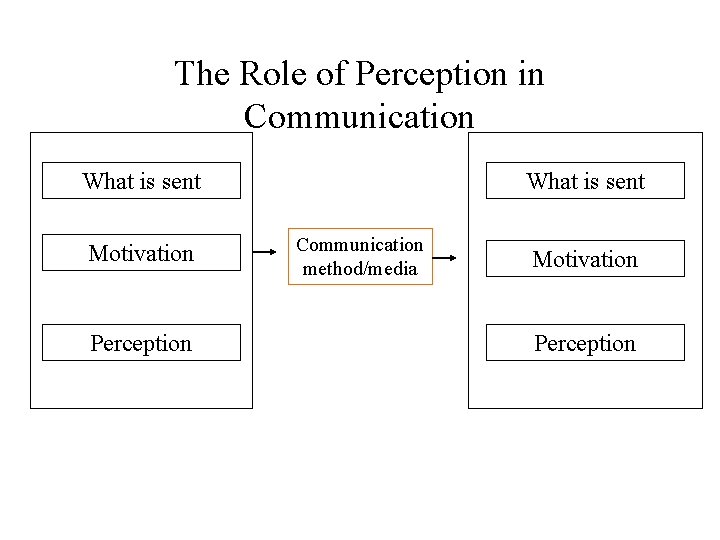
The Role of Perception in Communication • Senders and receivers communicate based on their subjective perceptions. – Subjective perception can lead to biases and stereotypes that can interfere with effective communication. – Effective managers avoid communications based on biases and stereotypes.
The Role of Perception in Communication • Communication relates to senders and receivers personality, perceptions, and motivations. – Example: A recently promoted manager communicates with a rival for the same promotion. The rival feels that the assignment is beneath them and was given as a power play by the newly promoted manager. The newly promoted manager feels that the rival is the only one capable of carrying out the project.
The Role of Perception in Communication What is sent Motivation Perception What is sent Communication method/media Motivation Perception
The Dangers of Ineffective Communication • Managers and their subordinates can become effective communicators by: – Selecting an appropriate medium for each message— there is no one “best” medium. – Considering information richness (the amount of information a medium can carry). • A medium with high richness can carry much more information to aid understanding. – Is there a need for a paper path or electronic trail to provide documentation of the communication?
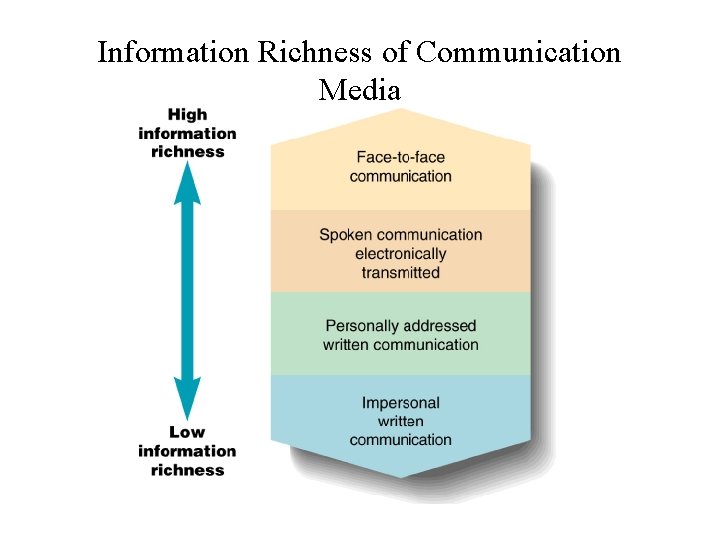
Information Richness of Communication Media
Communication Media • Face-to-Face – Has highest information richness. – Can take advantage of verbal and nonverbal signals. – Provides for instant feedback. • Management by wandering around takes advantage of this with informal talks to workers. • Video conferences provide much of this richness and reduce travel costs and meeting times.
Communication Media (cont’d) • Spoken Communication Electronically Transmitted – Has the second highest information richness. • Telephone conversations are information rich with tone of voice, sender’s emphasis, and quick feedback, but provide no visual nonverbal cues.
Communication Media (cont’d) • Personally Addressed Written Communication – Has a lower richness than the verbal forms of communication, but still is directed at a given person. • Personal addressing helps ensure receiver actually reads the message—personal letters and e-mail are common forms. • Does not provide instant feedback to the sender although sender may get feedback later. • Excellent media for complex messages requesting follow-up actions by receiver.
E-Mail Dos and Don’ts • E-mail allows telecommuting employees to work from home and keep in contact. • The use of e-mail is growing rapidly and e-mail etiquette is expected: – Typing messages in all CAPITALS is seen as “screaming” at the receiver. – Punctuate your messages for easy reading and don’t ramble on. – Pay attention to spelling and treat the message like a written letter.
Communication Media (cont’d) • Impersonal Written Communication – Has the lowest information richness. • Good for messages to many receivers where little or feedback is expected (e. g. , newsletters, reports)
Ten Commandments of Email • Don’t use your inbox as a catcall for everything you need to work on. Read items once, answer them immediately, delete them if possible or move them to another folder. • Set up a five weeks folder that deletes automatically. • Use common acronyms to identify important items • Send group mail only when it is important to all recipients
Ten Commandments of Email • Ask to be removed from distribution lists you do not need to be on. • To cut down on pile up, use out of office • Send messages that use only the subject line using EOM to signify end of message • Use graphics sparingly • Attachments over 5 mb to groups are better put on company website • Specify important parts of the attachment Pg 17 and 20
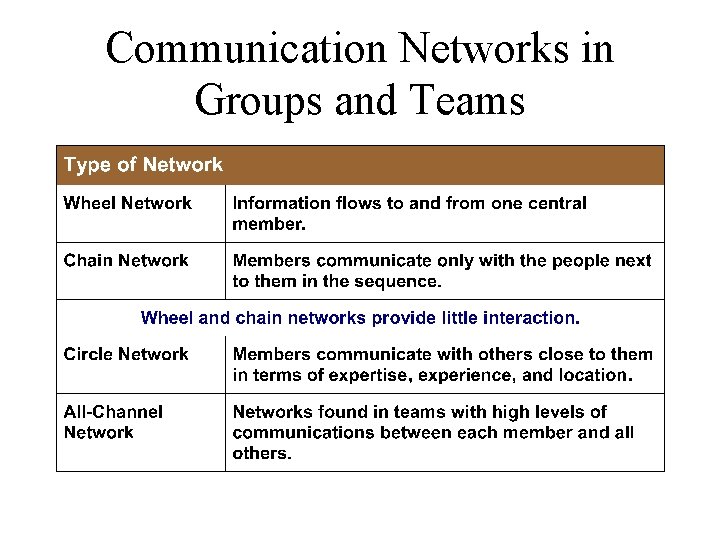
Communication Networks • Communication Networks – The pathways along which information flows in groups and teams and throughout the organization. – Choice of communication network depends on: • The nature of the group’s tasks • The extent to which group members need to communicate with each other to achieve group goals.
Communication Networks • Communication Networks Pathways – Vertical • Manager to upper level managers • Manager to subordinates (direct reports) – Lateral • Manager to other managers
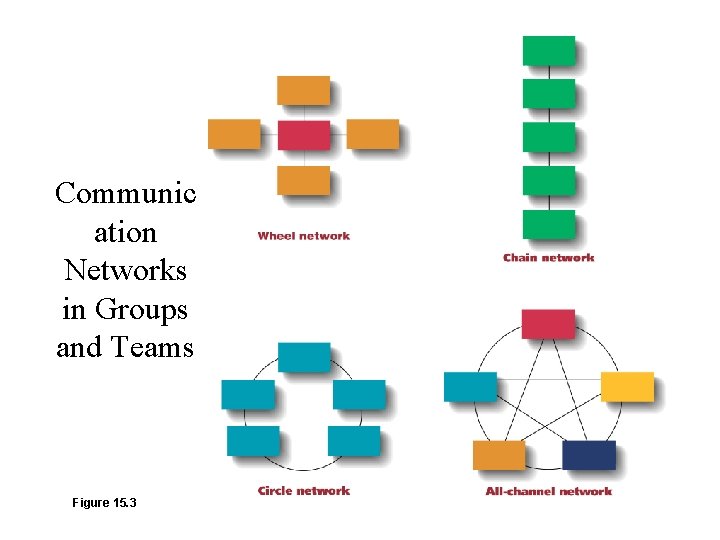
Communication Networks in Groups and Teams
Communic ation Networks in Groups and Teams Figure 15. 3
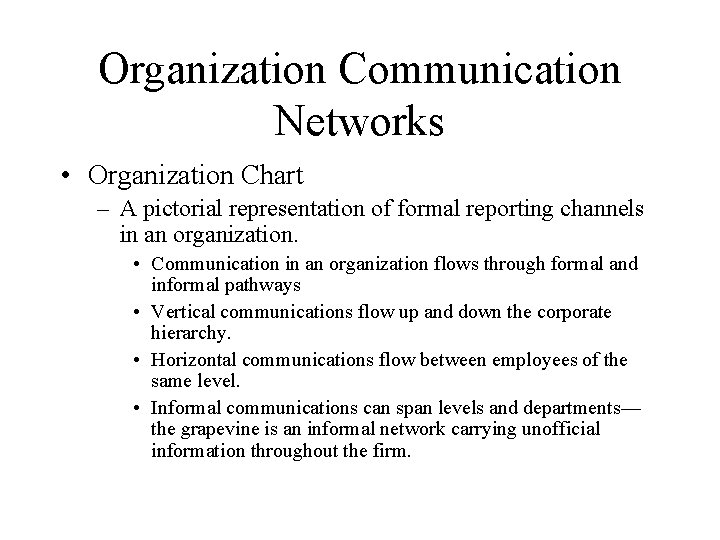
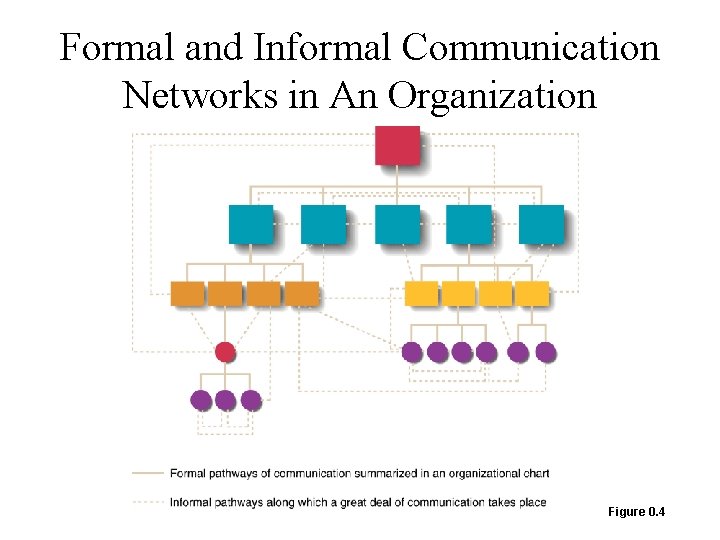
Organization Communication Networks • Organization Chart – A pictorial representation of formal reporting channels in an organization. • Communication in an organization flows through formal and informal pathways • Vertical communications flow up and down the corporate hierarchy. • Horizontal communications flow between employees of the same level. • Informal communications can span levels and departments— the grapevine is an informal network carrying unofficial information throughout the firm.
Formal and Informal Communication Networks in An Organization Figure 0. 4
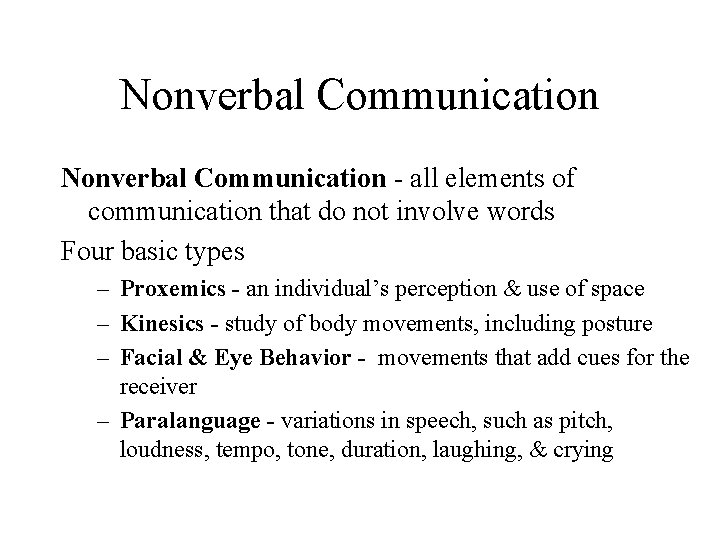
Nonverbal Communication - all elements of communication that do not involve words Four basic types – Proxemics - an individual’s perception & use of space – Kinesics - study of body movements, including posture – Facial & Eye Behavior - movements that add cues for the receiver – Paralanguage - variations in speech, such as pitch, loudness, tempo, tone, duration, laughing, & crying
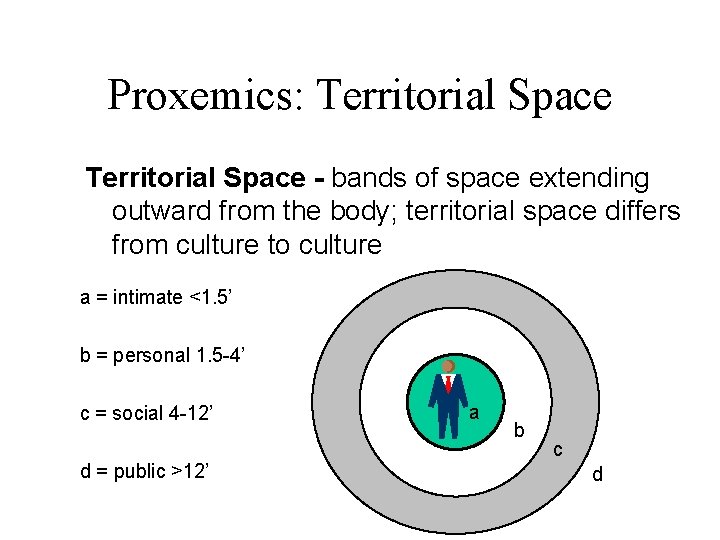
Proxemics: Territorial Space - bands of space extending outward from the body; territorial space differs from culture to culture a = intimate <1. 5’ b = personal 1. 5 -4’ c = social 4 -12’ d = public >12’ a b c d
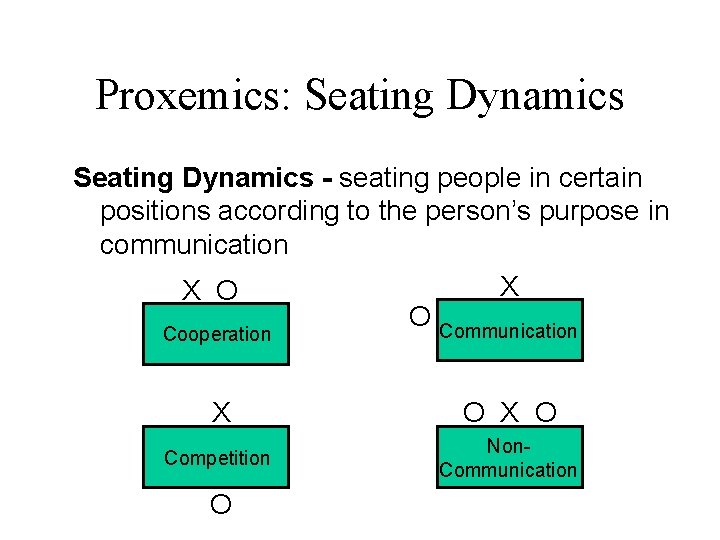
Proxemics: Seating Dynamics - seating people in certain positions according to the person’s purpose in communication X O Cooperation O X Communication X O Competition Non. Communication O
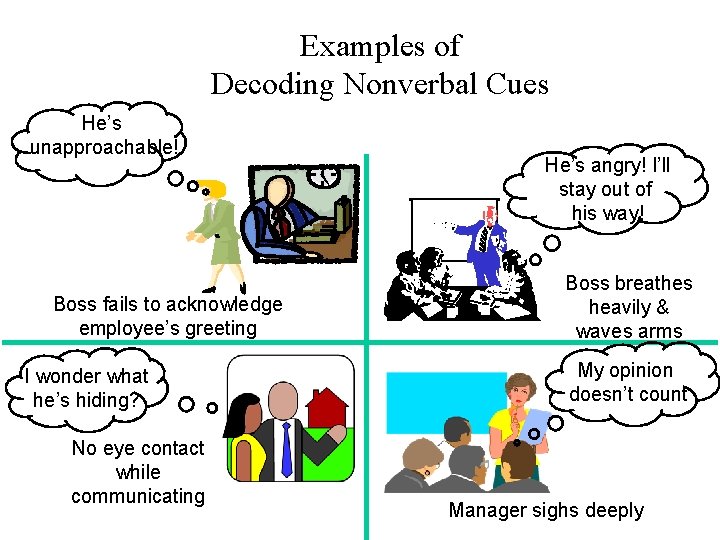
Examples of Decoding Nonverbal Cues He’s unapproachable! Boss fails to acknowledge employee’s greeting I wonder what he’s hiding? No eye contact while communicating He’s angry! I’ll stay out of his way! Boss breathes heavily & waves arms My opinion doesn’t count Manager sighs deeply
New Technologies for Communication • • • Informational databases Electronic mail systems Voice mail systems Fax machine systems Cellular phone systems
Technological Advances in Communication • Internet – Global system of computer networks used by many firms use it to communicate with their suppliers. • World Wide Web (WWW) – Provides multimedia access to the Internet. • Intranets – A company-wide system of computer networks for information sharing by employees inside the firm.
Technological Advances in Communication • Groupware – Computer software that enables members of groups and teams to share information with each other and improve communication. • Best used to support team-oriented working environments.
How Do New Technologies Affect Behavior? • Fast, immediate access to information • Immediate access to people in power • Instant information exchange across distance • Makes schedules & office hours irrelevant • May equalize group power • May equalize group participation
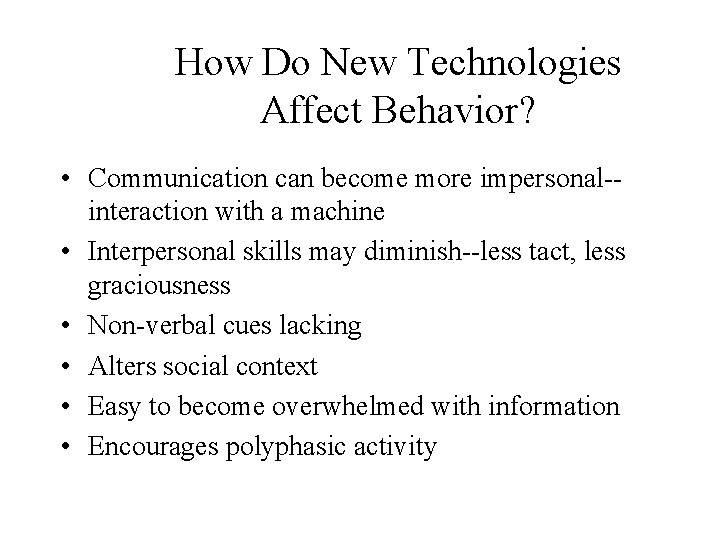
How Do New Technologies Affect Behavior? • Communication can become more impersonal-interaction with a machine • Interpersonal skills may diminish--less tact, less graciousness • Non-verbal cues lacking • Alters social context • Easy to become overwhelmed with information • Encourages polyphasic activity
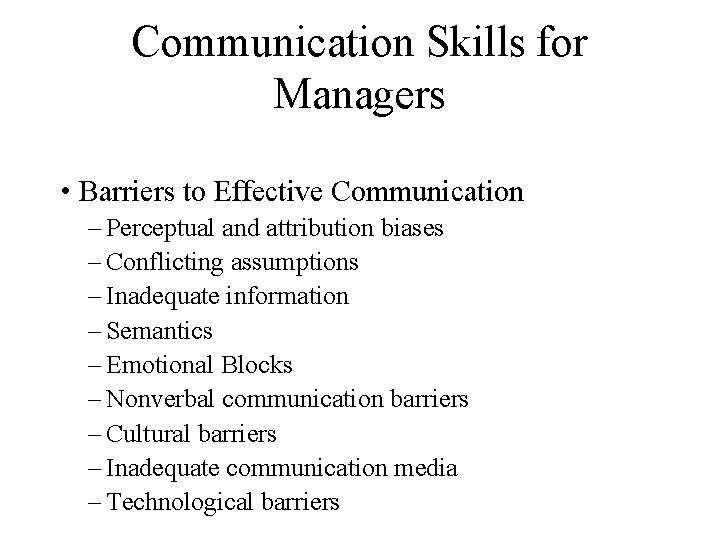
Communication Skills for Managers • Barriers to Effective Communication – Perceptual and attribution biases – Conflicting assumptions – Inadequate information – Semantics – Emotional Blocks – Nonverbal communication barriers – Cultural barriers – Inadequate communication media – Technological barriers
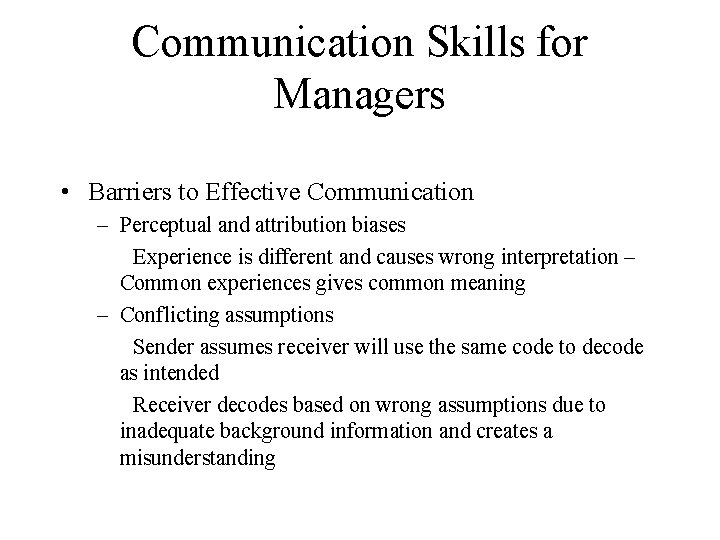
Communication Skills for Managers • Barriers to Effective Communication – Perceptual and attribution biases Experience is different and causes wrong interpretation – Common experiences gives common meaning – Conflicting assumptions Sender assumes receiver will use the same code to decode as intended Receiver decodes based on wrong assumptions due to inadequate background information and creates a misunderstanding
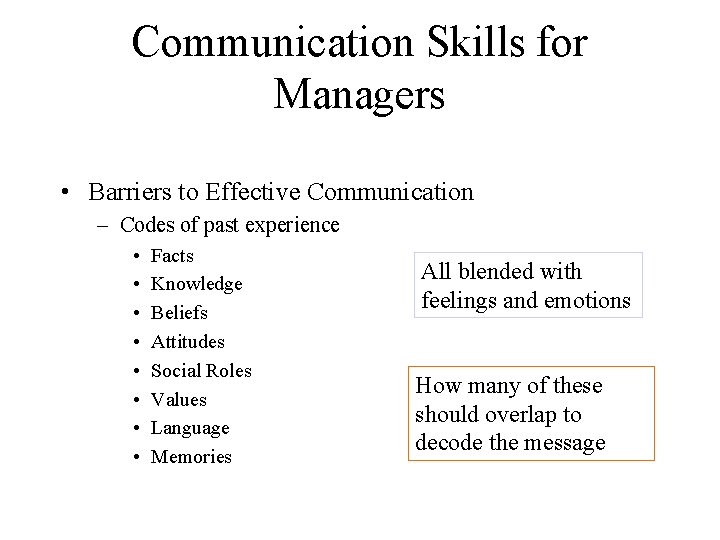
Communication Skills for Managers • Barriers to Effective Communication – Codes of past experience • • Facts Knowledge Beliefs Attitudes Social Roles Values Language Memories All blended with feelings and emotions How many of these should overlap to decode the message
Communication Skills for Managers • Barriers to Effective Communication – Inadequate information • Managers do not provide enough info to decode
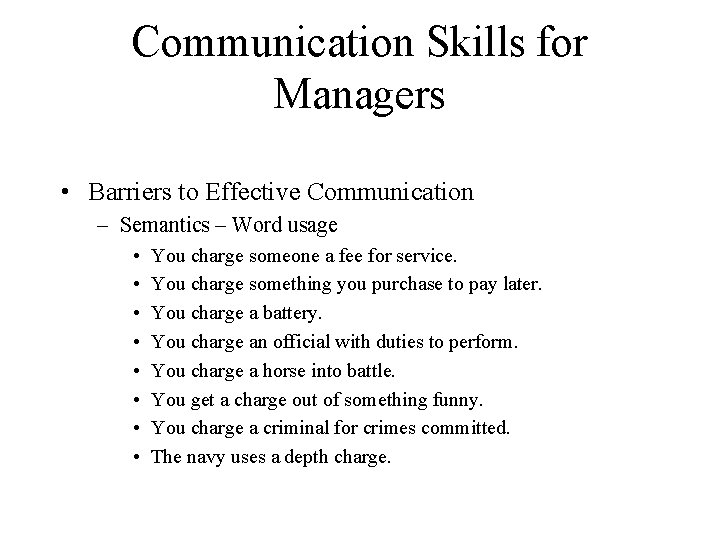
Communication Skills for Managers • Barriers to Effective Communication – Semantics – Word usage • • You charge someone a fee for service. You charge something you purchase to pay later. You charge a battery. You charge an official with duties to perform. You charge a horse into battle. You get a charge out of something funny. You charge a criminal for crimes committed. The navy uses a depth charge.
Communication Skills for Managers • Barriers to Effective Communication Emotional Blocks – Experiences have an emotional / feeling component. • A concert • Wedding Day • Movie
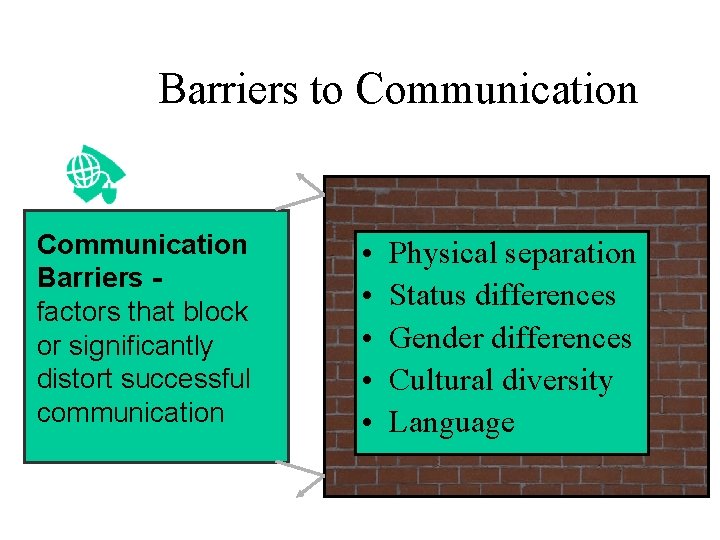
Barriers to Communication Barriers factors that block or significantly distort successful communication • • • Physical separation Status differences Gender differences Cultural diversity Language
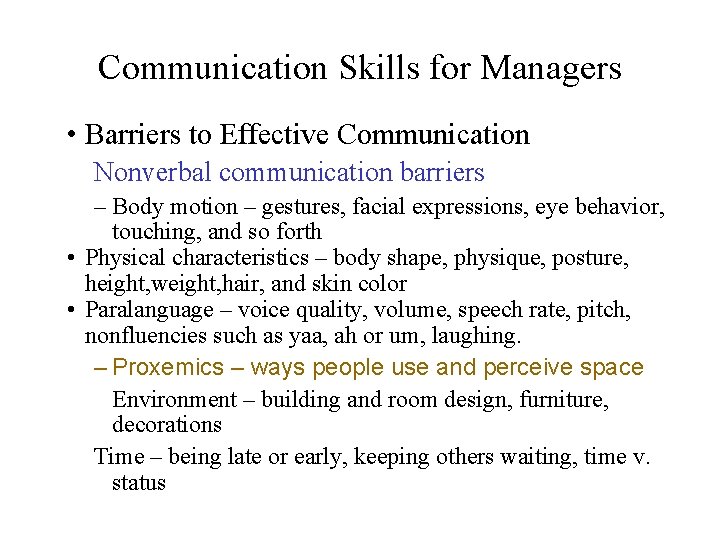
Communication Skills for Managers • Barriers to Effective Communication Nonverbal communication barriers – Body motion – gestures, facial expressions, eye behavior, touching, and so forth • Physical characteristics – body shape, physique, posture, height, weight, hair, and skin color • Paralanguage – voice quality, volume, speech rate, pitch, nonfluencies such as yaa, ah or um, laughing. – Proxemics – ways people use and perceive space Environment – building and room design, furniture, decorations Time – being late or early, keeping others waiting, time v. status
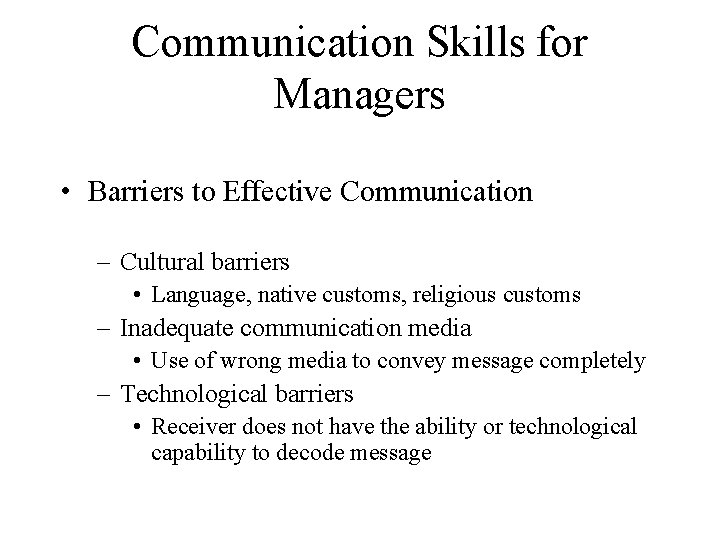
Communication Skills for Managers • Barriers to Effective Communication – Cultural barriers • Language, native customs, religious customs – Inadequate communication media • Use of wrong media to convey message completely – Technological barriers • Receiver does not have the ability or technological capability to decode message
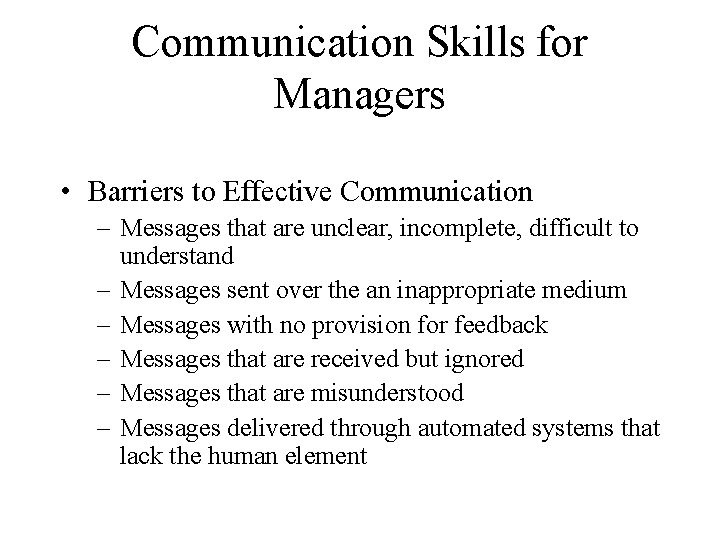
Communication Skills for Managers • Barriers to Effective Communication – Messages that are unclear, incomplete, difficult to understand – Messages sent over the an inappropriate medium – Messages with no provision for feedback – Messages that are received but ignored – Messages that are misunderstood – Messages delivered through automated systems that lack the human element
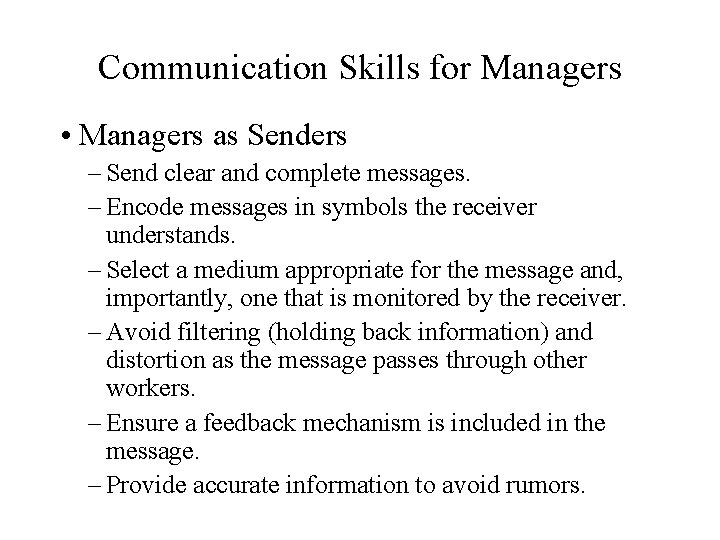
Communication Skills for Managers • Managers as Senders – Send clear and complete messages. – Encode messages in symbols the receiver understands. – Select a medium appropriate for the message and, importantly, one that is monitored by the receiver. – Avoid filtering (holding back information) and distortion as the message passes through other workers. – Ensure a feedback mechanism is included in the message. – Provide accurate information to avoid rumors.
Communication Skills For Managers • Managers as Receivers – – – Pay attention to what is sent as a message. Be a good listener: don’t interrupt. Ask questions to clarify your understanding. Be empathetic: try to understand what the sender feels. Understand linguistic styles: different people speak differently. – Speed, tone, pausing all impact communication. • This is particularly true across cultures and managers should expect and plan for this.
Basic Interpersonal Communication Model / / / / / Communicator / / / / / Perceptual screens Message • Context • Affect / / / / / Receiver / / / / / Perceptual screens Influence message quality, accuracy, clarity Include age, gender, values, beliefs, culture, experiences, needs Event X
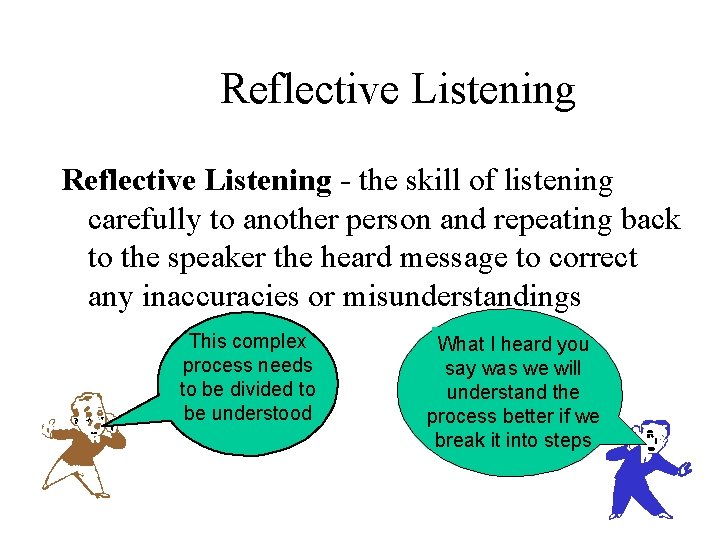
Reflective Listening - the skill of listening carefully to another person and repeating back to the speaker the heard message to correct any inaccuracies or misunderstandings This complex process needs to be divided to be understood What I heard you say was we will understand the process better if we break it into steps
Reflective Listening • Emphasizes receiver’s role • Helps the receiver & communicator clearly & fully understand the message sent • Useful in problem solving
Reflective Listening Reflective listening emphasizes • the personal elements of the communication process • the feelings communicated in the message • responding to the communicator, not leading the communicator • the role or receiver or audience • understanding people by reducing perceptual distortions and interpersonal barriers
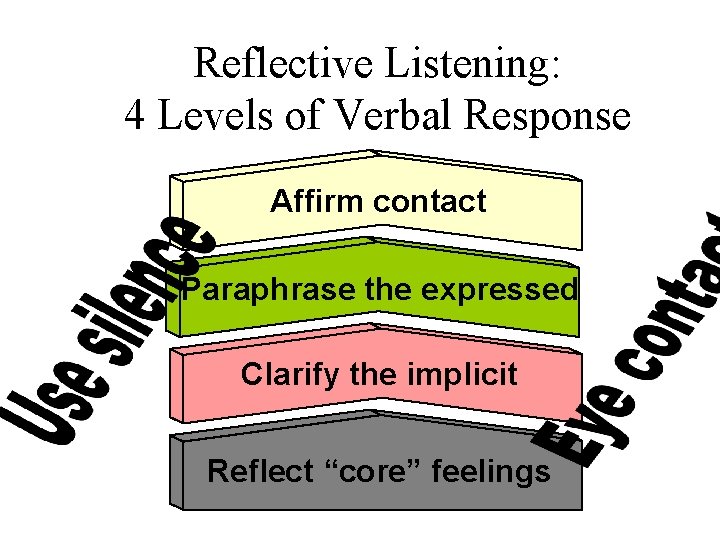
Reflective Listening: 4 Levels of Verbal Response Affirm contact Paraphrase the expressed Clarify the implicit Reflect “core” feelings
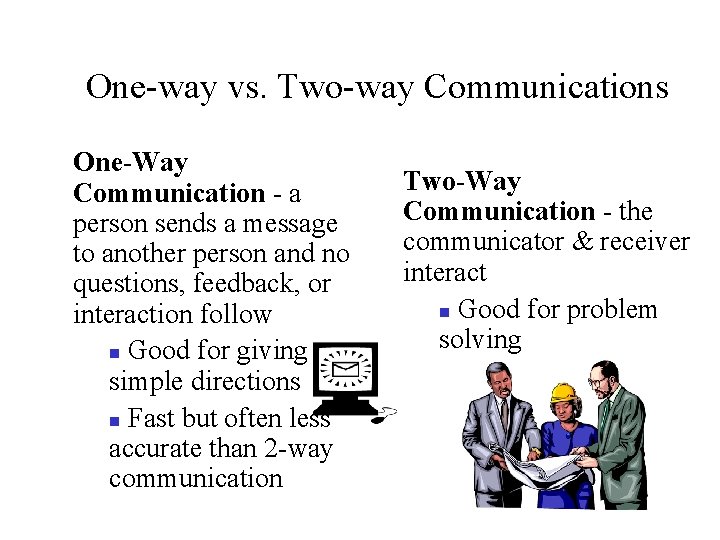
One-way vs. Two-way Communications One-Way Communication - a person sends a message to another person and no questions, feedback, or interaction follow n Good for giving simple directions n Fast but often less accurate than 2 -way communication Two-Way Communication - the communicator & receiver interact n Good for problem solving
Five Keys to Effective Supervisory Communication • Expressive speaking • Empathetic listening • Persuasive leadership • Sensitivity to feelings • Informative management
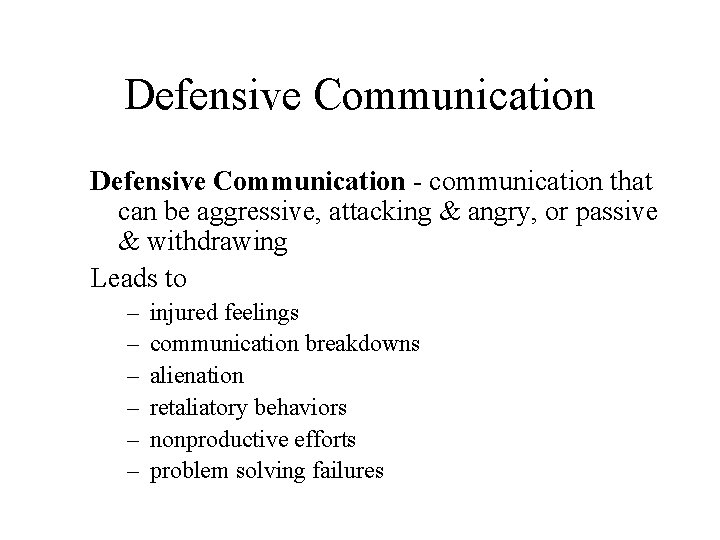
Defensive Communication - communication that can be aggressive, attacking & angry, or passive & withdrawing Leads to – – – injured feelings communication breakdowns alienation retaliatory behaviors nonproductive efforts problem solving failures
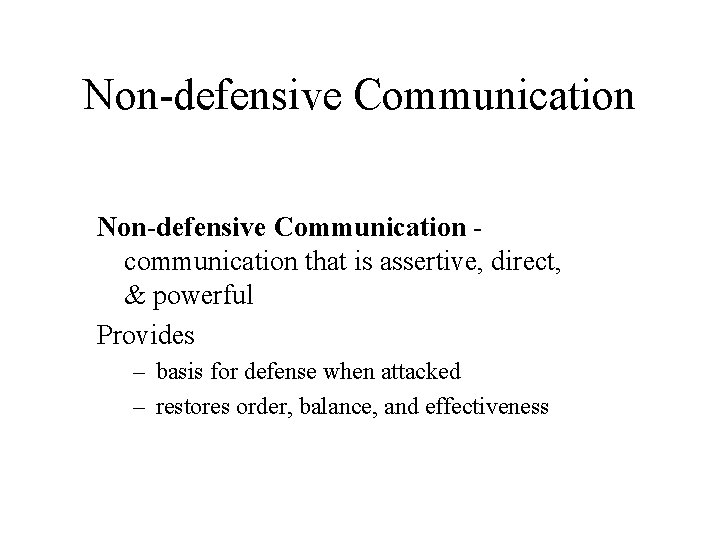
Non-defensive Communication communication that is assertive, direct, & powerful Provides – basis for defense when attacked – restores order, balance, and effectiveness
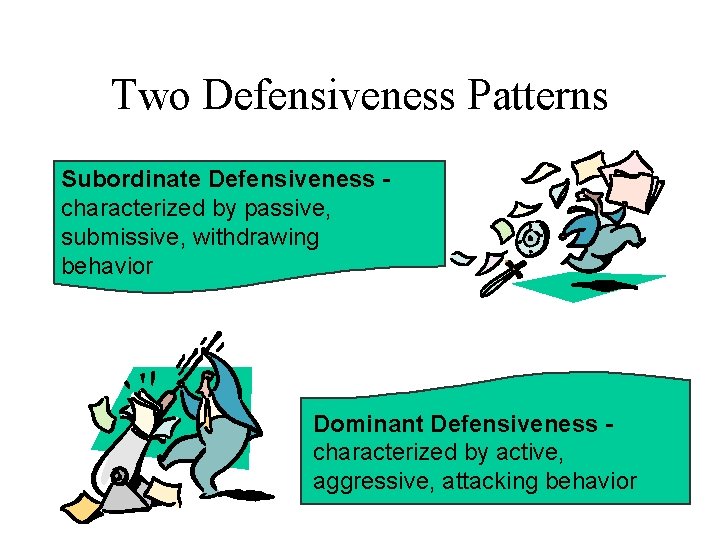
Two Defensiveness Patterns Subordinate Defensiveness characterized by passive, submissive, withdrawing behavior Dominant Defensiveness characterized by active, aggressive, attacking behavior
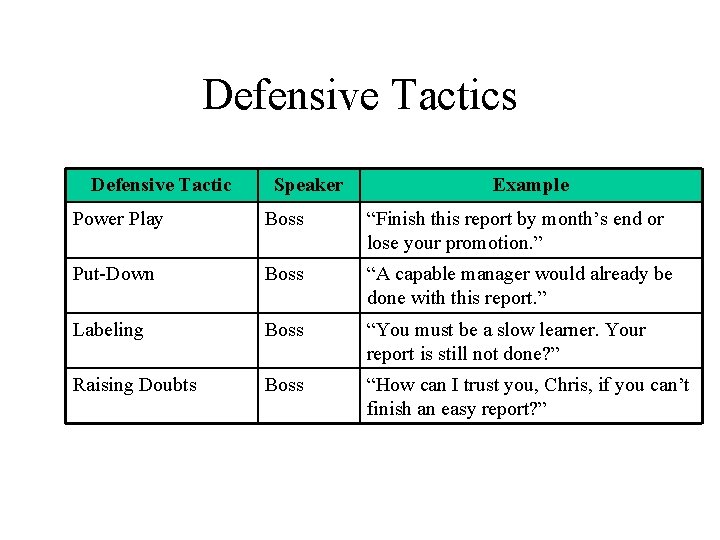
Defensive Tactics Defensive Tactic Speaker Example Power Play Boss “Finish this report by month’s end or lose your promotion. ” Put-Down Boss “A capable manager would already be done with this report. ” Labeling Boss “You must be a slow learner. Your report is still not done? ” Raising Doubts Boss “How can I trust you, Chris, if you can’t finish an easy report? ”
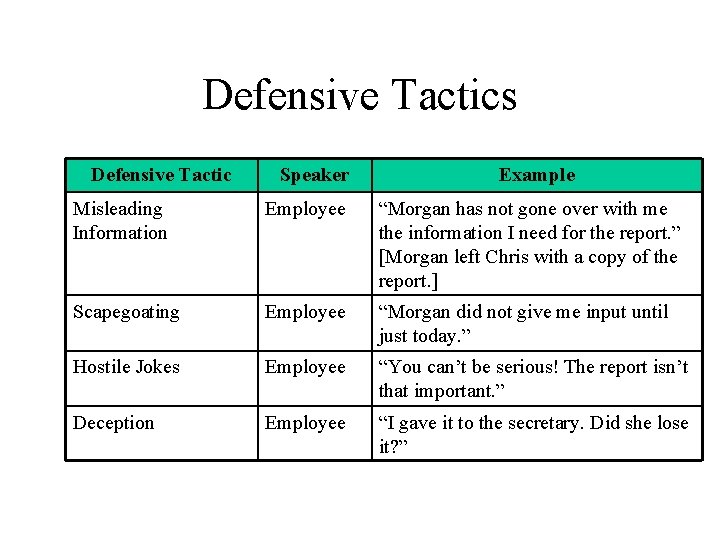
Defensive Tactics Defensive Tactic Speaker Example Misleading Information Employee “Morgan has not gone over with me the information I need for the report. ” [Morgan left Chris with a copy of the report. ] Scapegoating Employee “Morgan did not give me input until just today. ” Hostile Jokes Employee “You can’t be serious! The report isn’t that important. ” Deception Employee “I gave it to the secretary. Did she lose it? ”
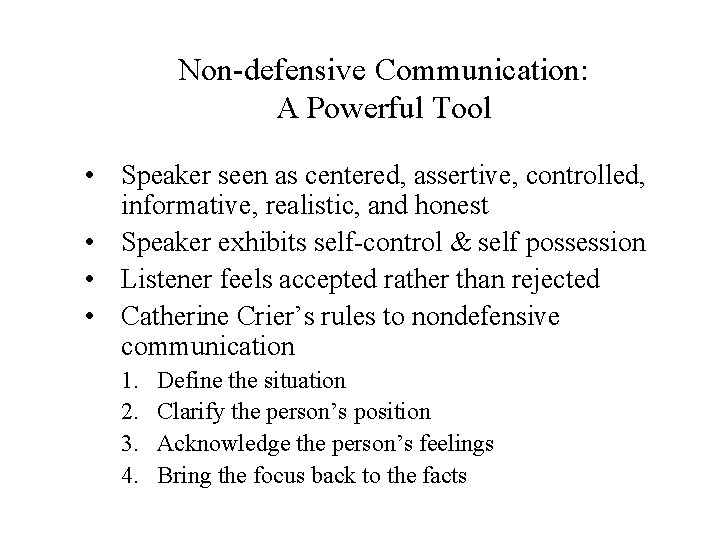
Non-defensive Communication: A Powerful Tool • Speaker seen as centered, assertive, controlled, informative, realistic, and honest • Speaker exhibits self-control & self possession • Listener feels accepted rather than rejected • Catherine Crier’s rules to nondefensive communication 1. 2. 3. 4. Define the situation Clarify the person’s position Acknowledge the person’s feelings Bring the focus back to the facts
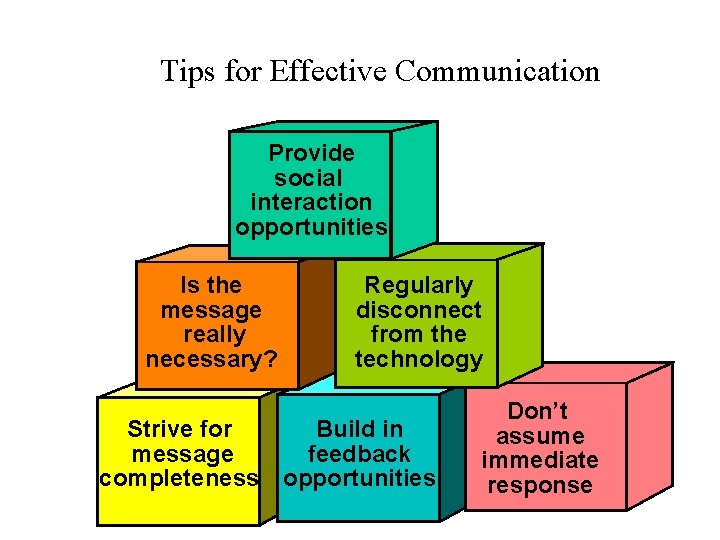
Tips for Effective Communication Provide social interaction opportunities Is the message really necessary? Regularly disconnect from the technology Strive for Build in message feedback completeness opportunities Provide Don’t social assume interaction immediate opportunities response
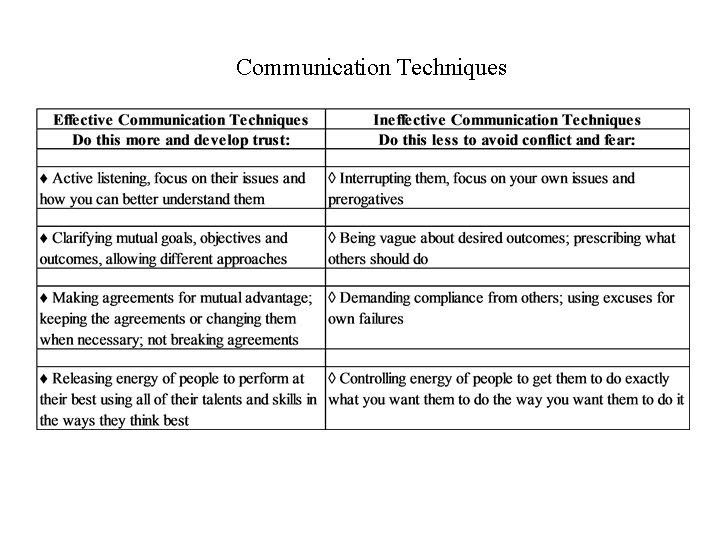
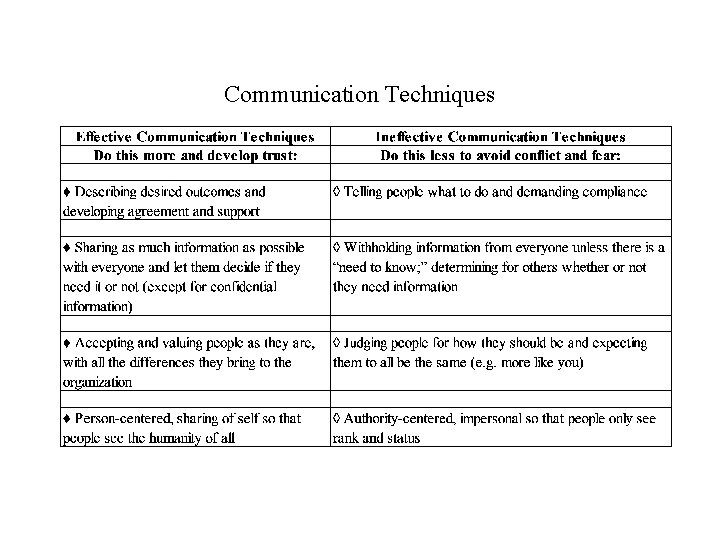
Communication Techniques
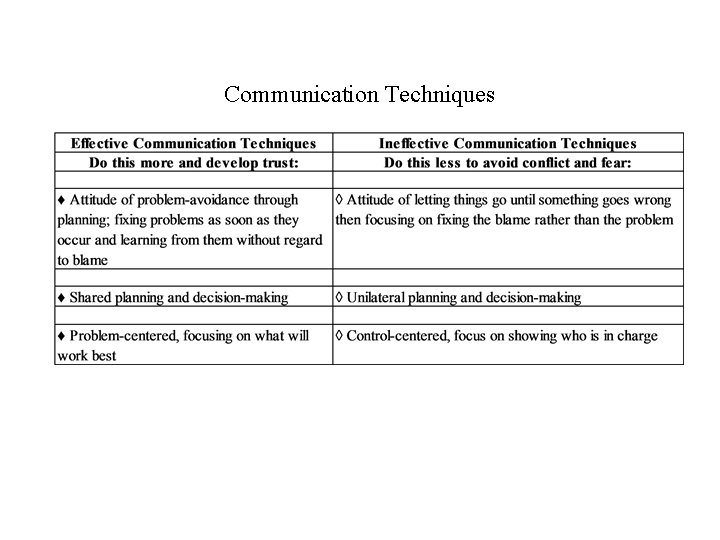
Communication Techniques
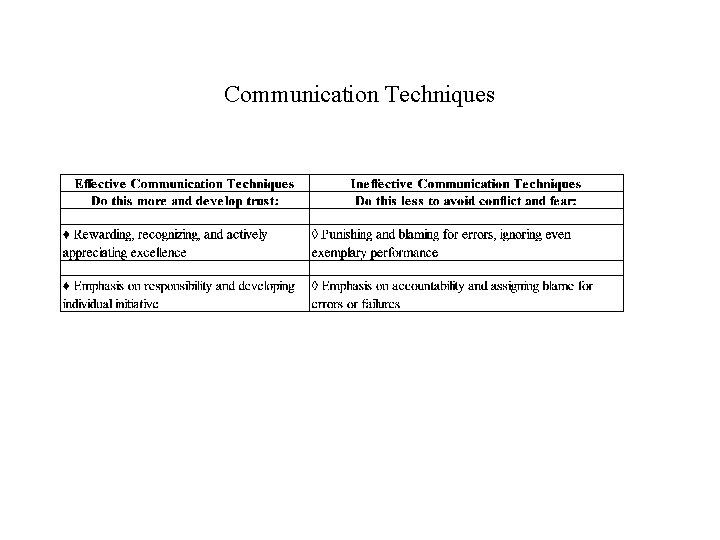
Communication Techniques
Communication Techniques
End