
Communication in the Classroom in the Workplace Types
- Slides: 12
Communication in the Classroom in the Workplace
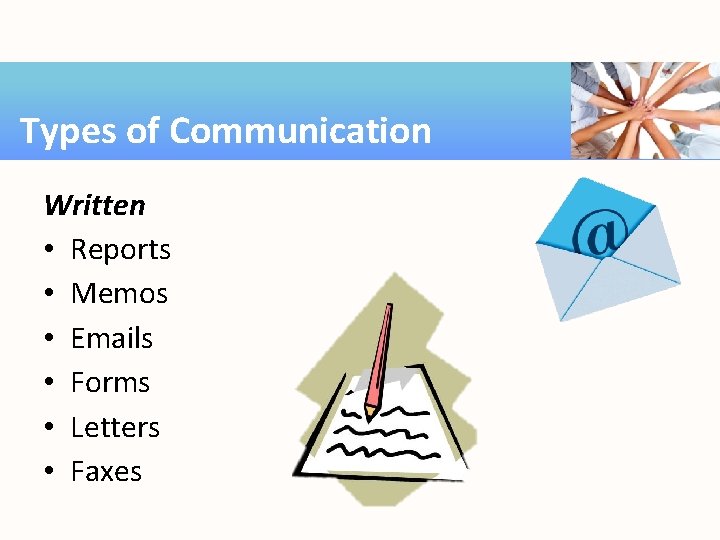
Types of Communication Written • Reports • Memos • Emails • Forms • Letters • Faxes
Types of Communication Oral • Phone calls • Discussions • Presentations • Interviews
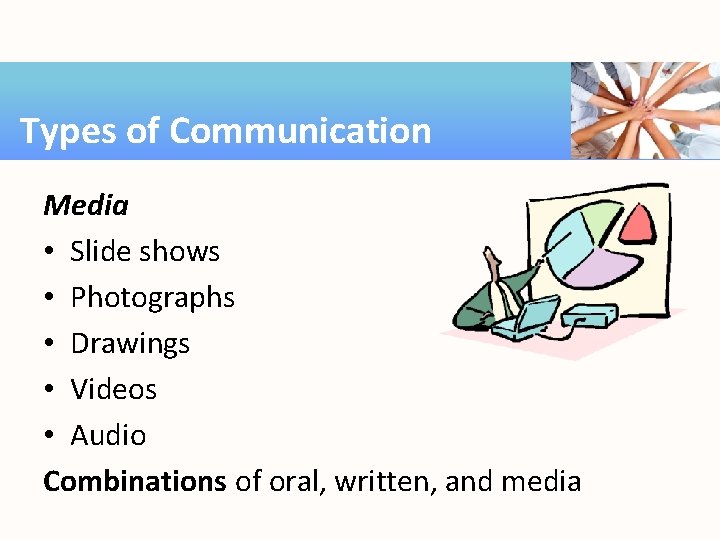
Types of Communication Media • Slide shows • Photographs • Drawings • Videos • Audio Combinations of oral, written, and media
Effective Communications Prepare! • Know your audience. • Know your subject matter. • Use the best delivery method.
Verbal and Nonverbal Signals Verbal Signals • • • Speech patterns Accents Dialects Vocabulary Acronyms Nonverbal Signals • • • Gestures Body language Emoticons and emojis Eye contact Dress
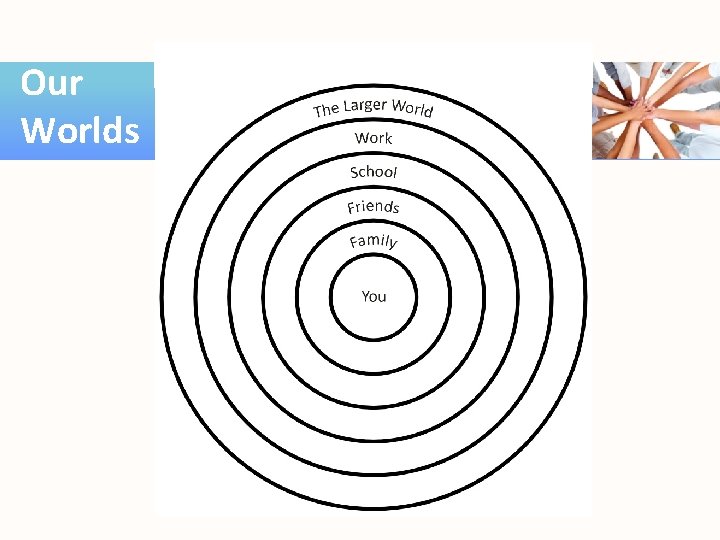
Our Worlds
Communication Styles • • • Cooperative or Competitive? Assertive or Meek? Individual or Team-focused? Optimistic or Pessimistic? Energetic or Apathetic?
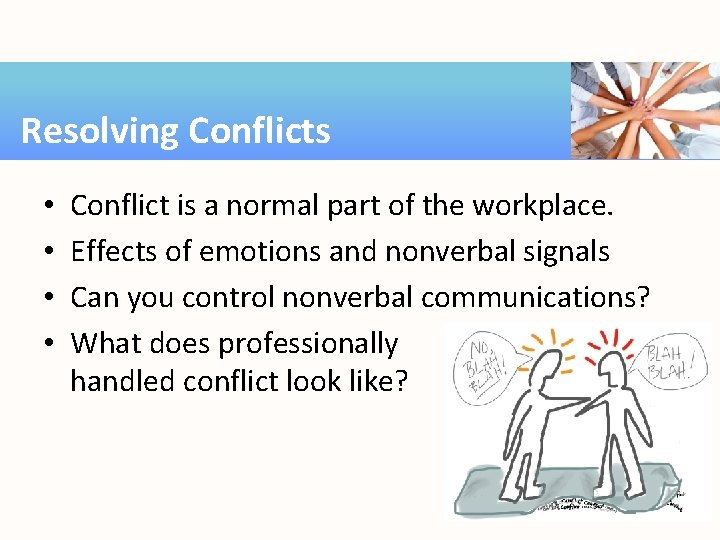
Resolving Conflicts • • Conflict is a normal part of the workplace. Effects of emotions and nonverbal signals Can you control nonverbal communications? What does professionally handled conflict look like?
Listening • • Hearing Tech support calls Customer complaints Telemarketing calls Medical lab report
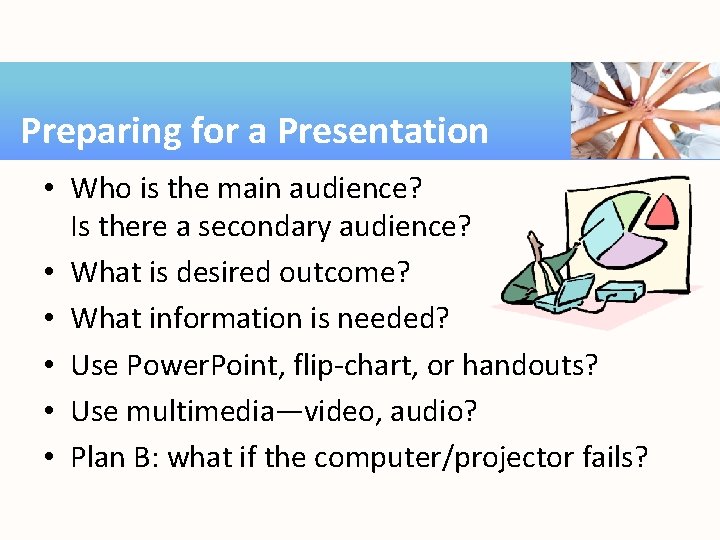
Preparing for a Presentation • Who is the main audience? Is there a secondary audience? • What is desired outcome? • What information is needed? • Use Power. Point, flip-chart, or handouts? • Use multimedia—video, audio? • Plan B: what if the computer/projector fails?
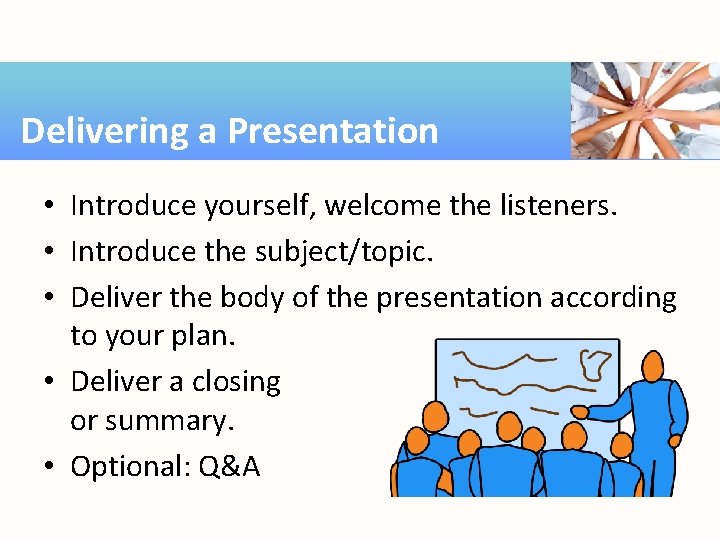
Delivering a Presentation • Introduce yourself, welcome the listeners. • Introduce the subject/topic. • Deliver the body of the presentation according to your plan. • Deliver a closing or summary. • Optional: Q&A