
Communication in Disaster Communicating in Disaster AHA Centre

- Slides: 38
Communication in Disaster Communicating in Disaster AHA Centre Executive (ACE) Programme 2015 Semarang, 29 April 2015 www. ifrc. org Saving lives, changing minds.
Communication in Disaster www. ifrc. org Saving lives, changing minds.
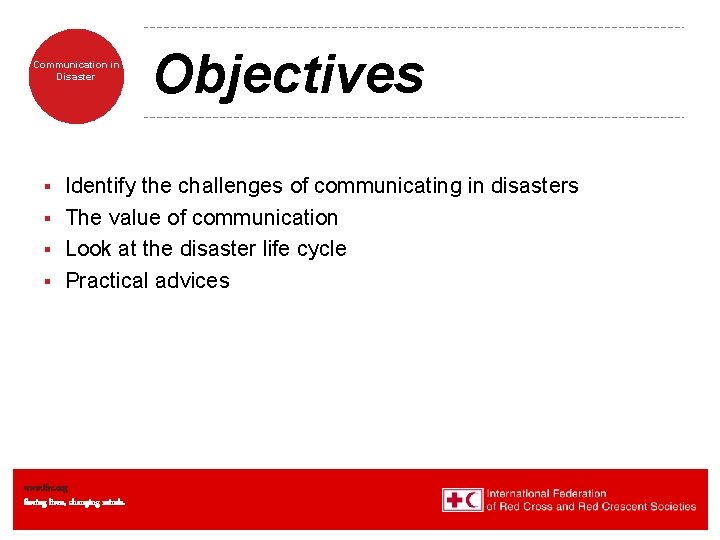
Communication in Disaster Objectives Identify the challenges of communicating in disasters § The value of communication § Look at the disaster life cycle § Practical advices § www. ifrc. org Saving lives, changing minds.
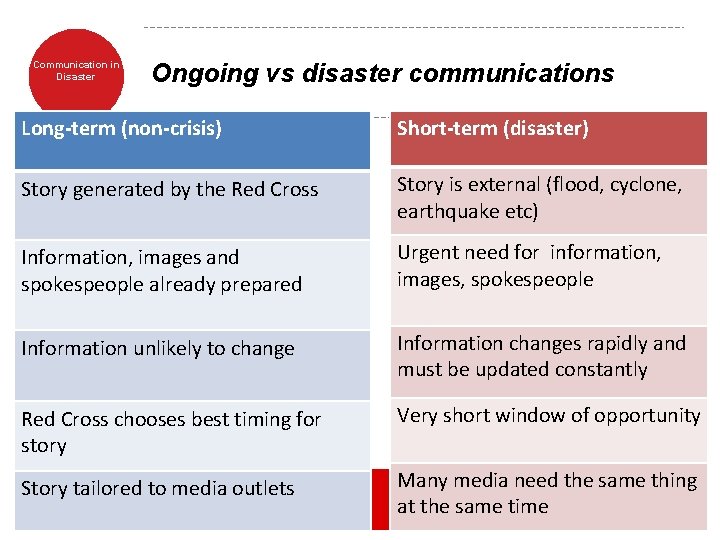
Communication in Disaster Ongoing vs disaster communications Long-term (non-crisis) Short-term (disaster) Story generated by the Red Cross Story is external (flood, cyclone, earthquake etc) Information, images and spokespeople already prepared Urgent need for information, images, spokespeople Information unlikely to change Information changes rapidly and must be updated constantly Red Cross chooses best timing for story Very short window of opportunity www. ifrc. org tailored to media outlets Story Saving lives, changing minds. Many media need the same thing at the same time
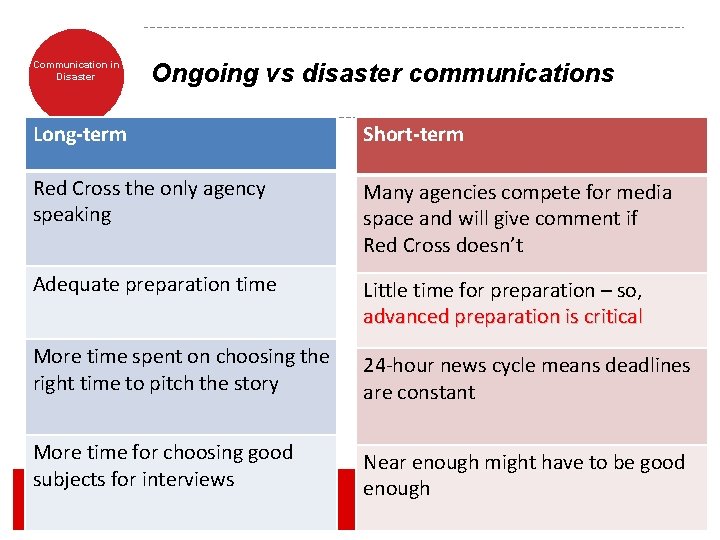
Communication in Disaster Ongoing vs disaster communications Long-term Short-term Red Cross the only agency speaking Many agencies compete for media space and will give comment if Red Cross doesn’t Adequate preparation time Little time for preparation – so, advanced preparation is critical More time spent on choosing the right time to pitch the story 24 -hour news cycle means deadlines are constant More time for choosing good subjects for interviews www. ifrc. org Saving lives, changing minds. Near enough might have to be good enough
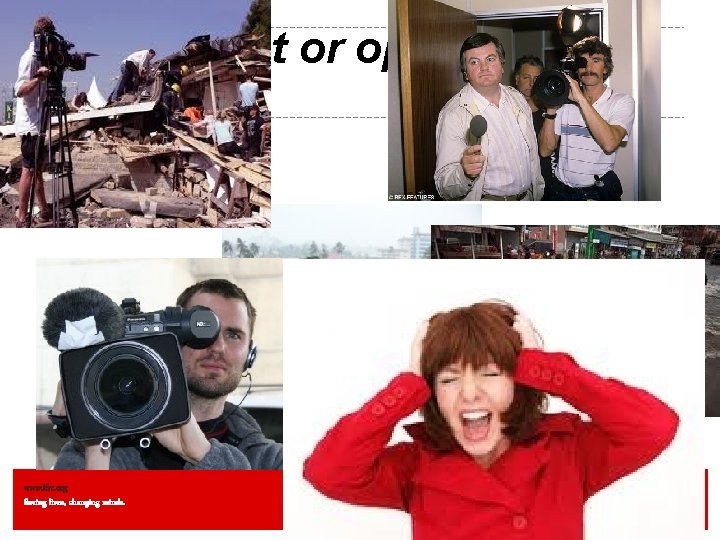
Communication in Disaster www. ifrc. org Saving lives, changing minds. Threat or opportunity?
Communication in Disaster www. ifrc. org Saving lives, changing minds. I’m too busy to do media
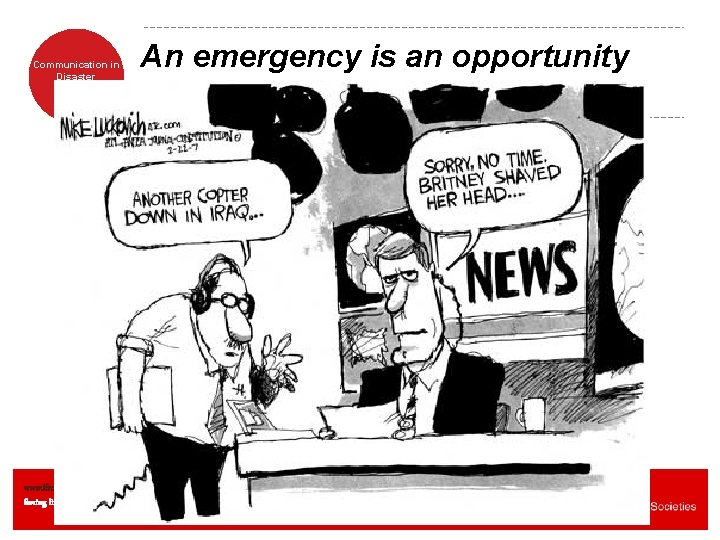
Communication in Disaster www. ifrc. org Saving lives, changing minds. An emergency is an opportunity
Communication in Disaster Sharing experiences § In your groups, spend 10 minutes discussing the most recent disaster you have worked on § In terms of communications: § § § • What are some of the unique challenges you faced? Were you able to overcome these challenges? What did you learn from the process which might be useful to share with the room? Have a member of your group provide a 3 -minute verbal summary on behalf of your group to the floor. www. ifrc. org Saving lives, changing minds.
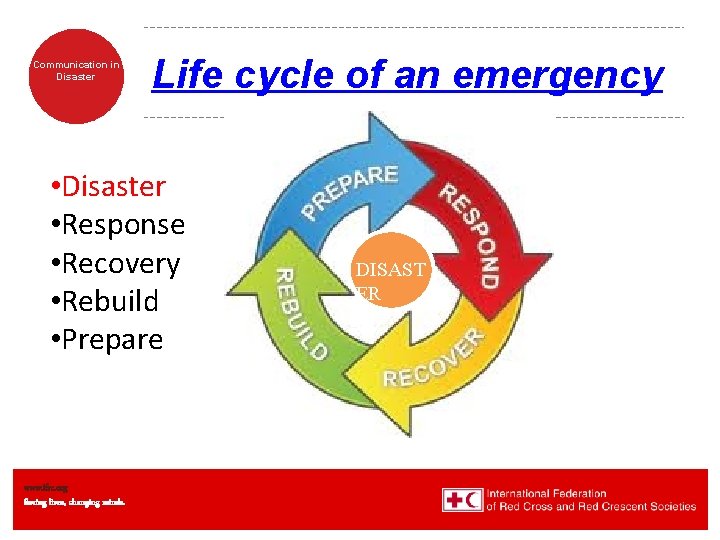
Communication in Disaster Life cycle of an emergency • Disaster • Response • Recovery • Rebuild • Prepare www. ifrc. org Saving lives, changing minds. DISAST ER
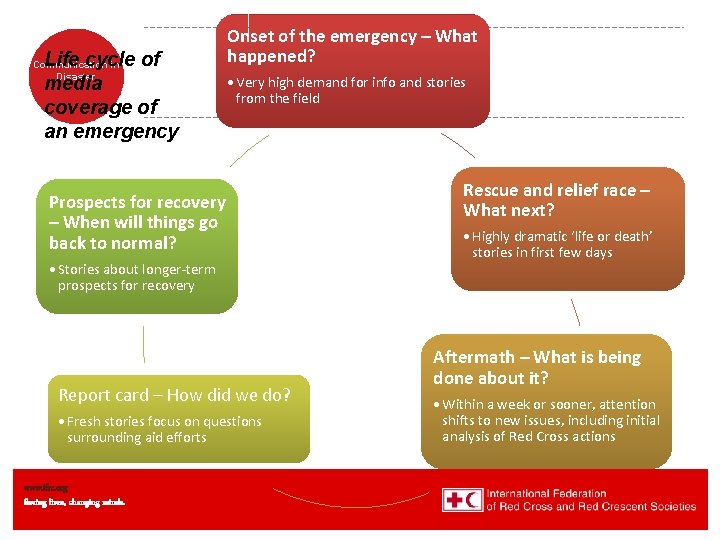
Life cycle of media coverage of an emergency Communication in Disaster Onset of the emergency – What happened? • Very high demand for info and stories from the field Prospects for recovery – When will things go back to normal? • Stories about longer-term prospects for recovery Report card – How did we do? • Fresh stories focus on questions surrounding aid efforts www. ifrc. org Saving lives, changing minds. Rescue and relief race – What next? • Highly dramatic ‘life or death’ stories in first few days Aftermath – What is being done about it? • Within a week or sooner, attention shifts to new issues, including initial analysis of Red Cross actions
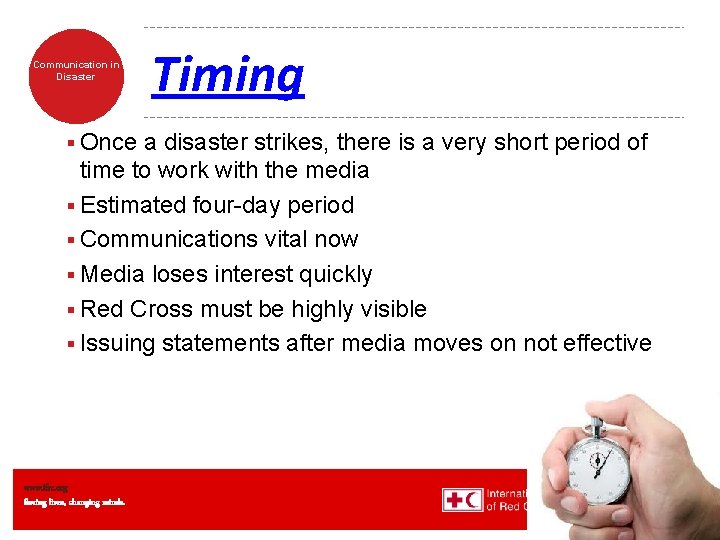
Communication in Disaster § Once Timing a disaster strikes, there is a very short period of time to work with the media § Estimated four-day period § Communications vital now § Media loses interest quickly § Red Cross must be highly visible § Issuing statements after media moves on not effective www. ifrc. org Saving lives, changing minds.
Communication in Disaster • • Timing Do not wait for the media to contact you Nominate and prepare a spokesperson Source information from the field (stories, images, people for interviews) Develop key messages Write media releases based on key messages Call journalists daily with updates, especially photographs and offer to take into the field Do not call them if you have nothing to offer www. ifrc. org Saving lives, changing minds.
Communication in Disaster RC Communicators as journalists § During emergencies, Red Cross Communicators are essentially working as journalists or “Journalist Facilitators” – except they are “reporting” from the point of view of the Red Cross § § Travel to the field Interview disaster victims Take photographs or video footage Gather information from a variety of sources… AND Provide this in a filtered form to the media www. ifrc. org Saving lives, changing minds.
Communication in Disaster The process for developing stories Before writing a story, we have a basic idea of what it’s about, but need more information § Interview RC personnel § Find good interviewees in the field § § At the same time, seek permission from survivors to be interviewed (again) by a journalist www. ifrc. org Saving lives, changing minds.
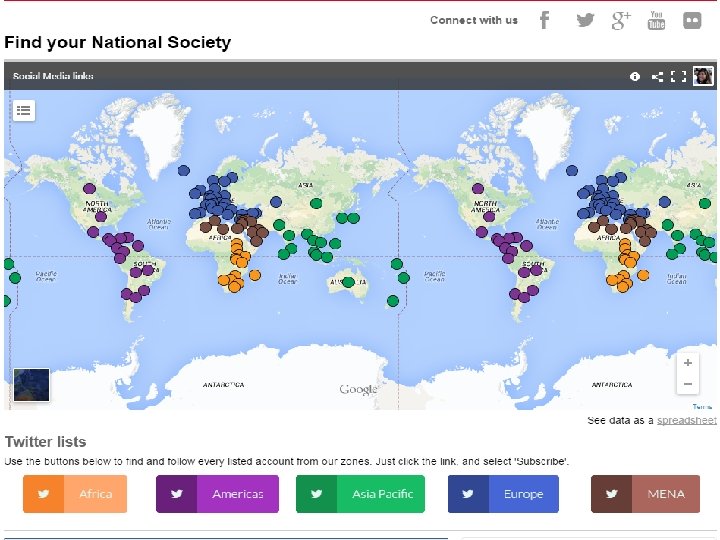
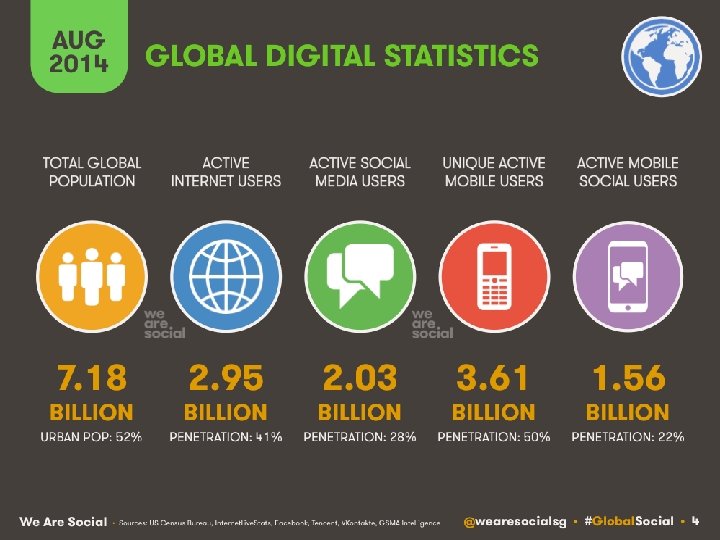
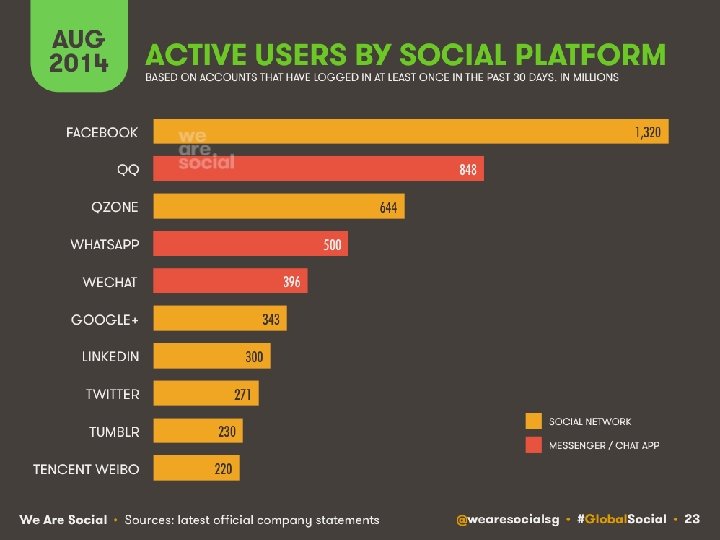
Communication in Disaster The power of new media Social media platform Facebook, Twitter, Youtube § How Red Cross Red Crescent reach more public support using the platforms § Understanding characteristics of each platform § Good practices, lessons learned from emergencies from different countries in different disasters § www. ifrc. org Saving lives, changing minds.
Communication in Disaster www. ifrc. org Saving lives, changing minds.
Communication in Disaster www. ifrc. org Saving lives, changing minds.
Communication in Disaster www. ifrc. org Saving lives, changing minds.
Communication in Disaster www. ifrc. org Saving lives, changing minds.
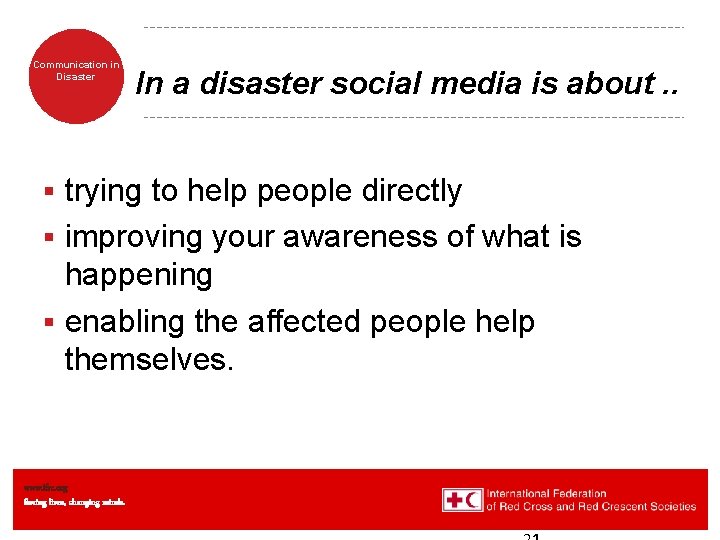
Communication in Disaster In a disaster social media is about. . trying to help people directly § improving your awareness of what is happening § enabling the affected people help themselves. § www. ifrc. org Saving lives, changing minds.
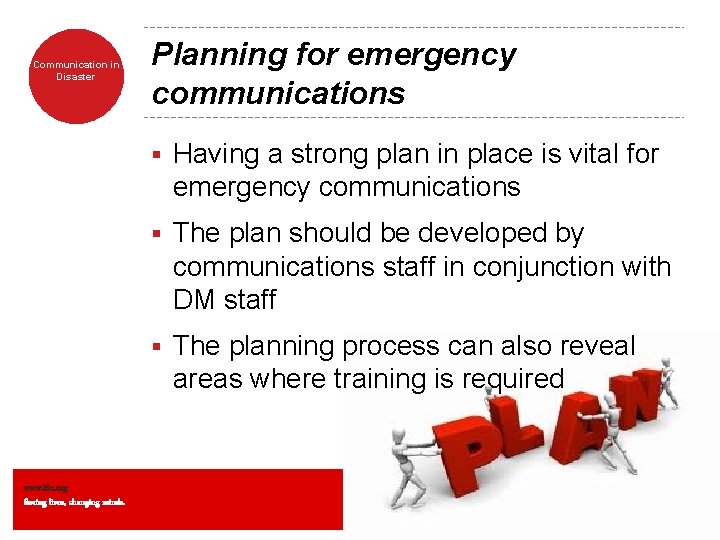
Communication in Disaster www. ifrc. org Saving lives, changing minds. Planning for emergency communications § Having a strong plan in place is vital for emergency communications § The plan should be developed by communications staff in conjunction with DM staff § The planning process can also reveal areas where training is required
Communication in Disaster Planning for emergency communications § The plan should at least cover: § § § www. ifrc. org Saving lives, changing minds. Agreed roles and emergency roster (possibly including volunteers) Tasks, timing and who is responsible Primary and secondary spokespeople (and their languages) Approvals process for media materials Contact information Once a plan has been developed, it must be communicated to all relevant people so that it will be useful during the emergency
Communication in Disaster RCRC communications and Govt RCRC and its auxiliary role to the Government § HOW to synergy: § Cooperation and resource sharing § Join work – training, capacity building § …? ? § www. ifrc. org Saving lives, changing minds.
Communication in Disaster Activities during disaster (response – recovery) Interview § Field trip § Producing IEC materials § Humanitarian Diplomacy §… § www. ifrc. org Saving lives, changing minds.
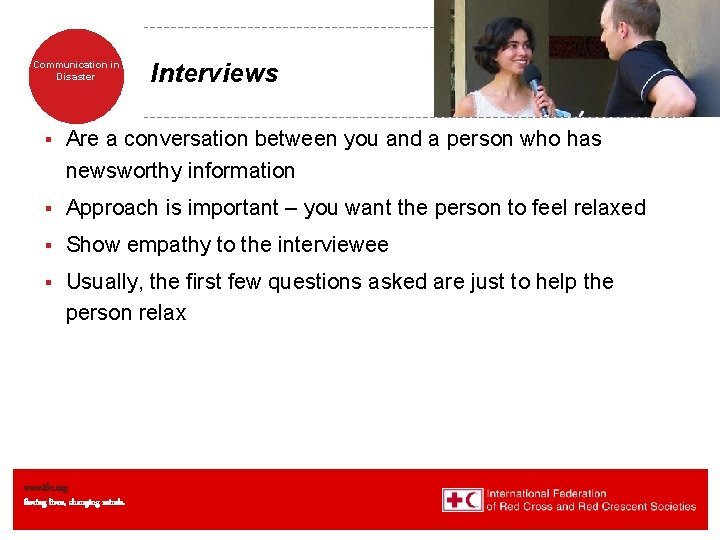
Communication in Disaster Interviews § Are a conversation between you and a person who has newsworthy information § Approach is important – you want the person to feel relaxed § Show empathy to the interviewee § Usually, the first few questions asked are just to help the person relax www. ifrc. org Saving lives, changing minds.
Communication in Disaster Open questions and accuracy Ask “open” questions § The ideal first question is something like: § “What actually happened? ” or § “Could you tell me about. . ? ” § Listen and make sure you understand what the person is saying § You might have to ask more questions to check what has been said § www. ifrc. org Saving lives, changing minds.
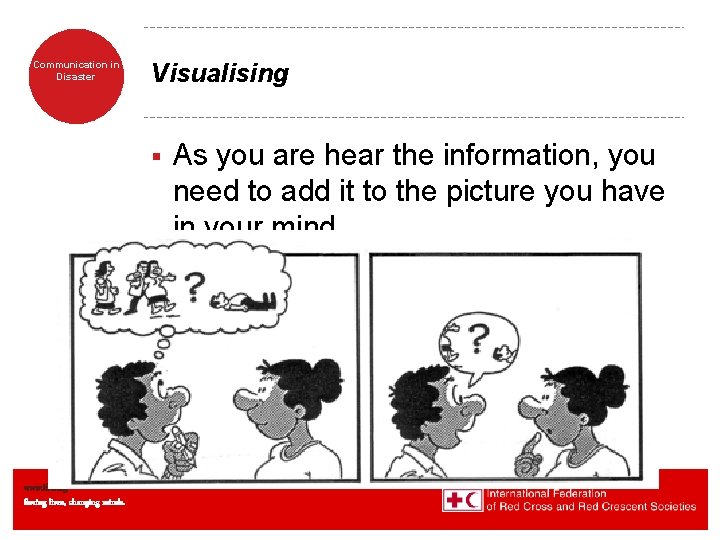
Communication in Disaster Visualising § www. ifrc. org Saving lives, changing minds. As you are hear the information, you need to add it to the picture you have in your mind.
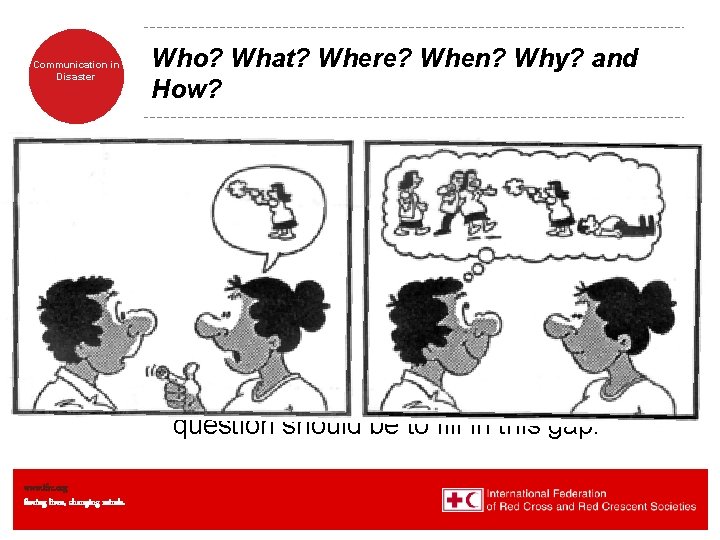
Communication in Disaster www. ifrc. org Saving lives, changing minds. Who? What? Where? When? Why? and How? § Can you now visualise the whole story? Could you answer any question about this story if it was put to you - Who? What? Where? When? and especially Why? and How? § If there are gaps in your understanding, it means you lack information. Your next question should be to fill in this gap.
Communication in Disaster Ask again and listen Sometimes a person’s reply does not answer the question. Ask again – or ask the question in another way. § Listening is very important § Final question: § § "Is there anything else I should know? “ Record interviews and take notes for accuracy § Check spellings of names of people and places § Exchange contact details § www. ifrc. org Saving lives, changing minds.
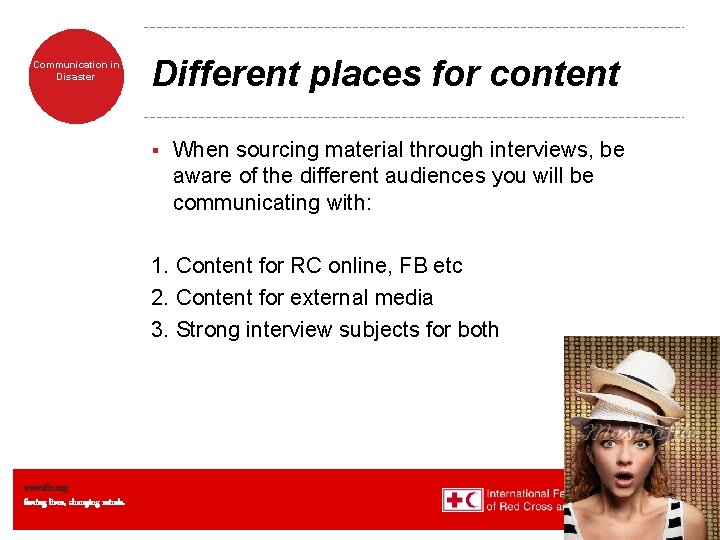
Communication in Disaster Different places for content § When sourcing material through interviews, be aware of the different audiences you will be communicating with: 1. Content for RC online, FB etc 2. Content for external media 3. Strong interview subjects for both www. ifrc. org Saving lives, changing minds.
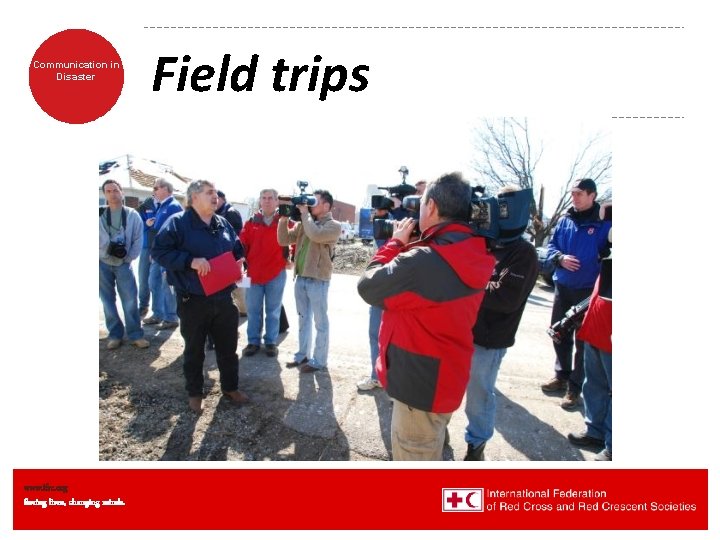
Communication in Disaster www. ifrc. org Saving lives, changing minds. Field trips
Communication in Disaster Preparation is crucial Three things to remember when preparing for field trips: Red Cross/Crescent key messages 2. What does the journalist need? 3. Advanced preparation 1. www. ifrc. org Saving lives, changing minds.
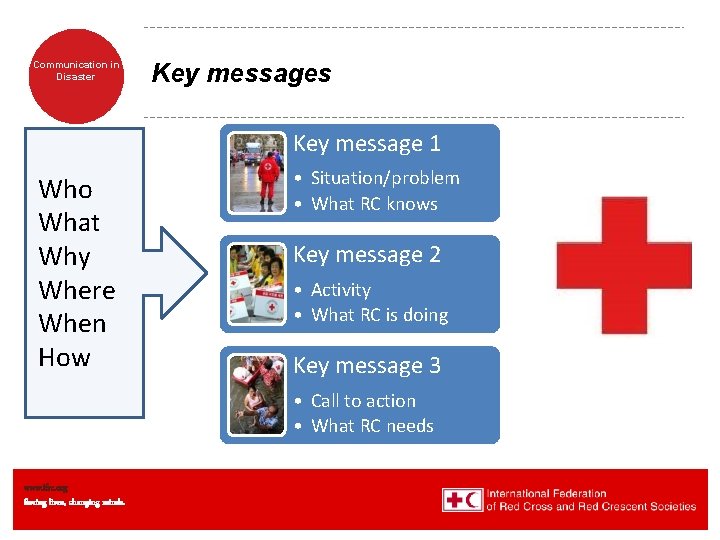
Communication in Disaster Key messages Key message 1 Who What Why Where When How • Situation/problem • What RC knows Key message 2 • Activity • What RC is doing Key message 3 • Call to action • What RC needs www. ifrc. org Saving lives, changing minds.
Communication in Disaster Field trips Key messages What do you want the journalist to see? § If the key message is “The situation is severe and there is not enough support. ” Show the severity of the situation. § A journalist (especially for TV) needs a lot of elements to make a story. It’s not enough to just take them to a Red Cross distribution point. § www. ifrc. org Saving lives, changing minds.
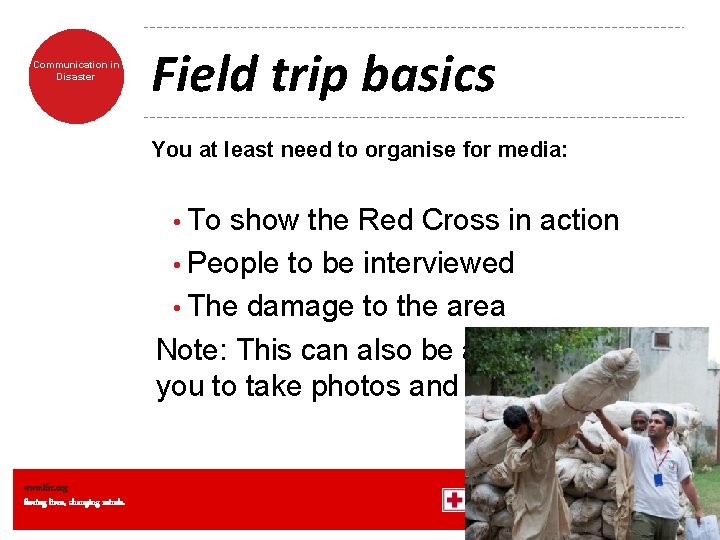
Communication in Disaster Field trip basics You at least need to organise for media: • To show the Red Cross in action • People to be interviewed • The damage to the area Note: This can also be a time for you to take photos and report www. ifrc. org Saving lives, changing minds.
Communication in Disaster www. ifrc. org Saving lives, changing minds. Field trips – Dos and Don’ts § Do go the day before to check access and to make sure that there are going to be interesting pictures. § NEVER tell beneficiaries what to say, BUT… § Check beneficiaries are happy with the help they are receiving and seek their permission to speak with journalists and have photos taken. § Give journalists clear information about travel times – you do not want them to miss their deadline because they are stuck in the field.
Communication in Disaster www. ifrc. org Saving lives, changing minds. After media attention has shifted § Update media contact lists § Contact journalists with news about arrival of new supplies, handover of new housing, other stories relating to the relief effort § Continue updating information on web and social media § Consider an event to thank volunteers § Keep in touch with journalists by feeding them regular stories