
Communication Decision Making and Relationships Health Education Unit
- Slides: 36
Communication Decision Making and Relationships Health Education Unit # 1
OBJECTIVES: �Students will learn and develop: �Skills necessary for effective communication �Three communication styles �The use of active listening skills and “I” messages
Most popular forms of communication today:
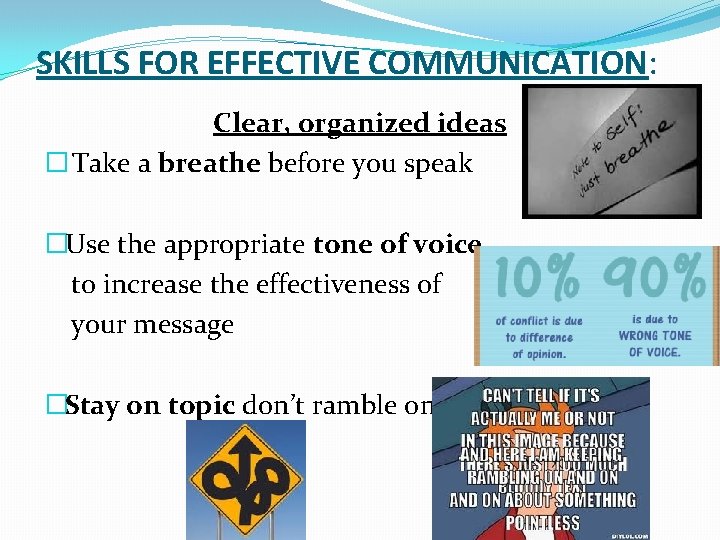
SKILLS FOR EFFECTIVE COMMUNICATION: �Word selection �Active listening skills �Assertiveness �Body Language �Clear, organized ideas
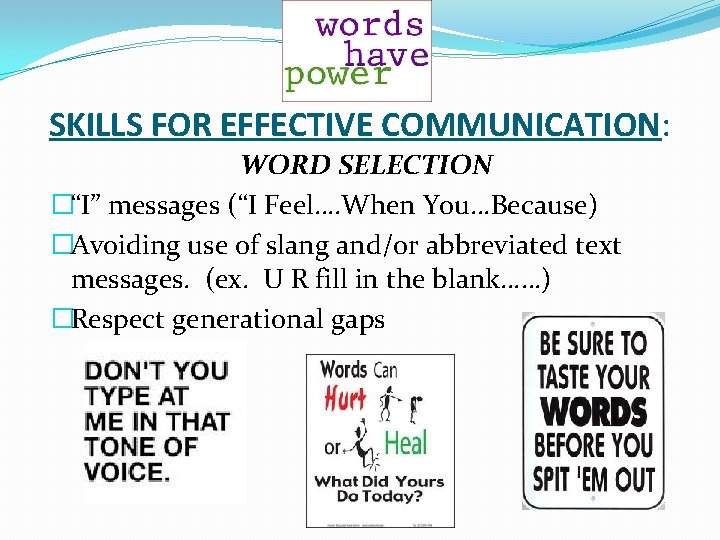
SKILLS FOR EFFECTIVE COMMUNICATION: WORD SELECTION �“I” messages (“I Feel…. When You…Because) �Avoiding use of slang and/or abbreviated text messages. (ex. U R fill in the blank……) �Respect generational gaps
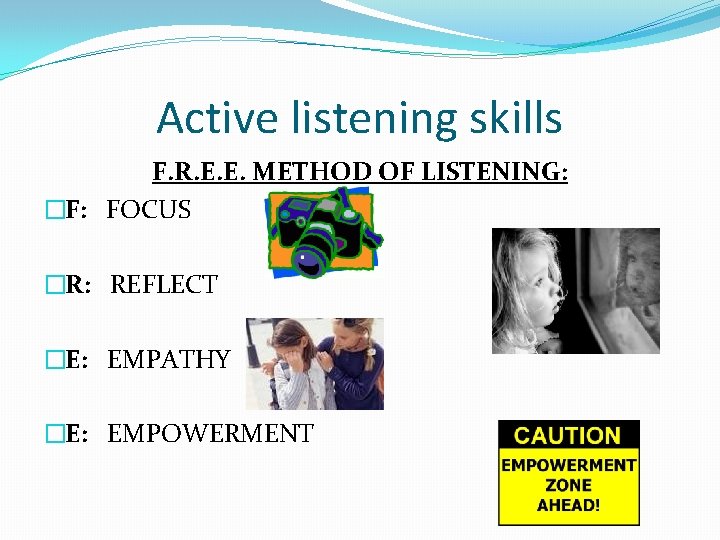
Active listening skills F. R. E. E. METHOD OF LISTENING: �F: FOCUS �R: REFLECT �E: EMPATHY �E: EMPOWERMENT
SKILLS FOR EFFECTIVE COMMUNICATION: Assertiveness �Assertive – standing up for oneself. Ex. assertive people will say what they think and stand up for their beliefs without hurting others. �Passive – inability or unwillingness to express thoughts and feelings. Ex. passive people will do something they don’t want to do or make up an excuse rather than say how they feel. �Aggressive – overreaction, blaming and criticizing. Ex. aggressive people try to get their way through bullying, intimidation or even physical violence.
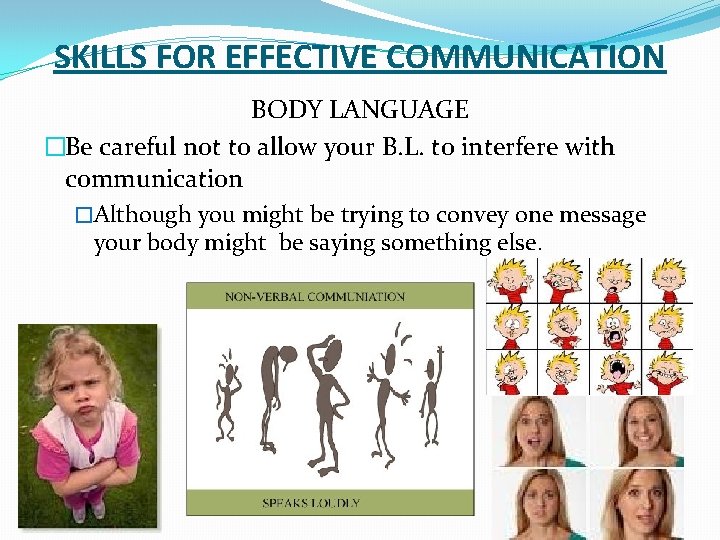
SKILLS FOR EFFECTIVE COMMUNICATION BODY LANGUAGE �Be careful not to allow your B. L. to interfere with communication �Although you might be trying to convey one message your body might be saying something else.
SKILLS FOR EFFECTIVE COMMUNICATION: Clear, organized ideas � Take a breathe before you speak �Use the appropriate tone of voice to increase the effectiveness of your message �Stay on topic don’t ramble on
DECISION MAKING Health Education Unit # 1
DECISION MAKING �Objectives: �Students will know and understand: �Explain positive and negative influences on decision making �H. E. L. P. Strategy �Apply the decision making model to make healthy decisions
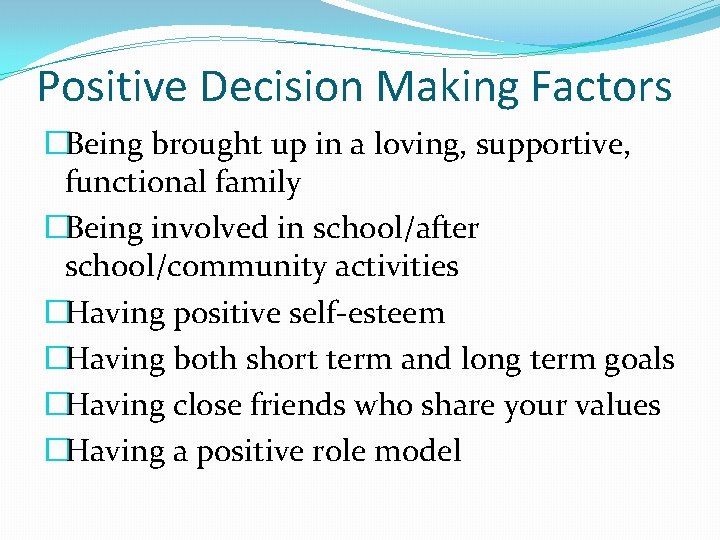
Positive Decision Making Factors �Being brought up in a loving, supportive, functional family �Being involved in school/after school/community activities �Having positive self-esteem �Having both short term and long term goals �Having close friends who share your values �Having a positive role model
Negative Decision Making Factors �Dysfunctional Family �Low self-esteem �Unable to resist peer pressure �Experiencing family disruptions �Depression �Academic and/or athletic pressure
DECISION MAKING H. E. L. P Strategy �H (Healthful) – Does this choice present any health risks? �E (Ethical) – Does this choice reflect what you value? �L (Legal) - Does this violate any local, state or federal laws? �P (Parent Approval) – Would your parent/ guardian approve of this choice?
DECISION MAKING MODEL: �D = Define the problem/State the situation �E = Explore the Alternatives/List the options �C = Consider the consequences/Weigh the possible outcomes �I = Identify values/Responsible decision will reflect your values �D = Decide/ Make a decision and act on it �E = Evaluate your decision
RELATIONSHIPS Health Education Unit # 1
RELATIONSHIPS �Lesson # 1 �Objectives: �Students will know and understand: �Three components of a relationship �The model of a healthy relationship �Warning signs common to abusive and battering personalities
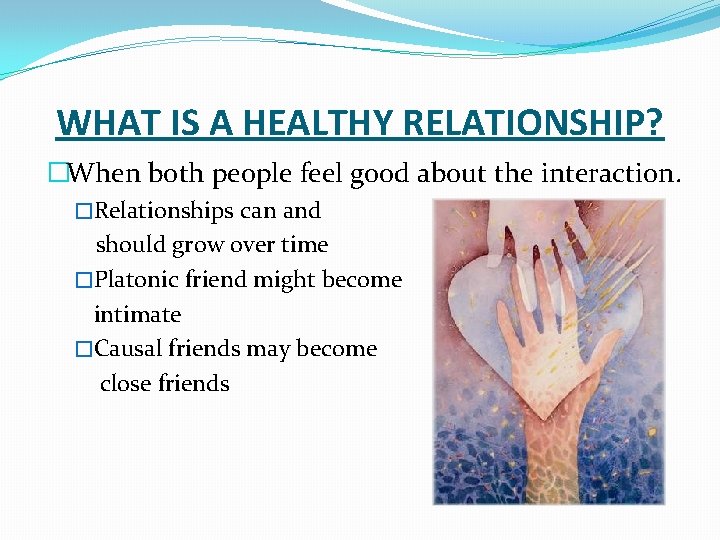
WHAT IS A HEALTHY RELATIONSHIP? �When both people feel good about the interaction. �Relationships can and should grow over time �Platonic friend might become intimate �Causal friends may become close friends
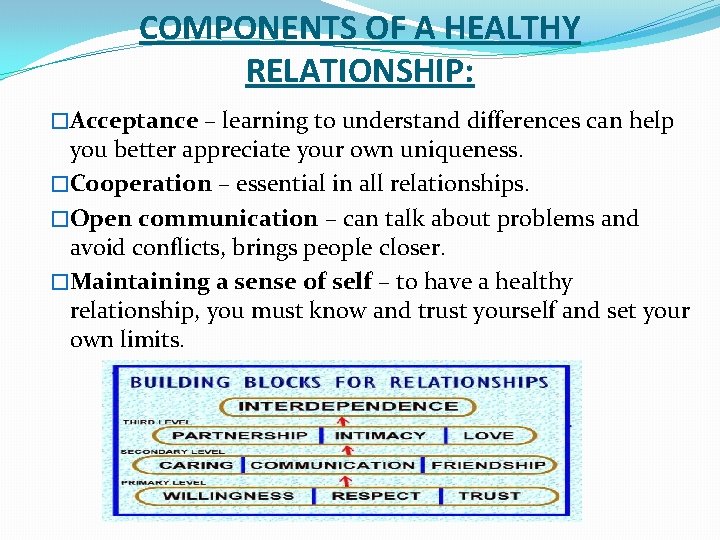
COMPONENTS OF A HEALTHY RELATIONSHIP: �Acceptance – learning to understand differences can help you better appreciate your own uniqueness. �Cooperation – essential in all relationships. �Open communication – can talk about problems and avoid conflicts, brings people closer. �Maintaining a sense of self – to have a healthy relationship, you must know and trust yourself and set your own limits.
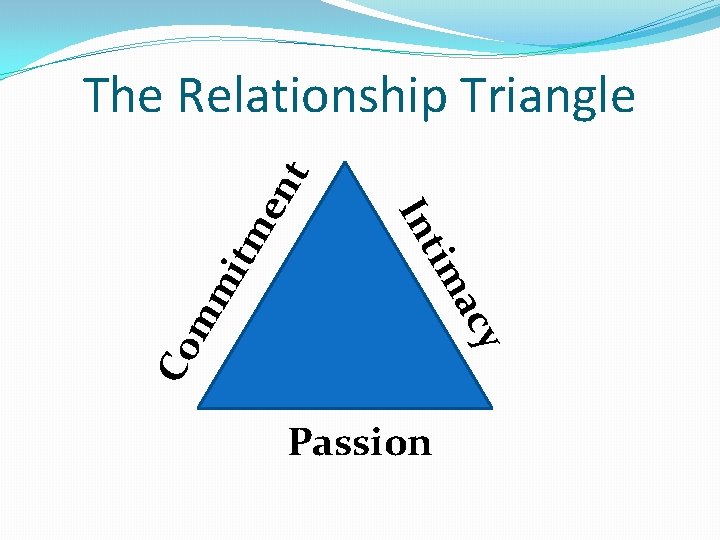
Co mm y ac im t In itm en t The Relationship Triangle Passion
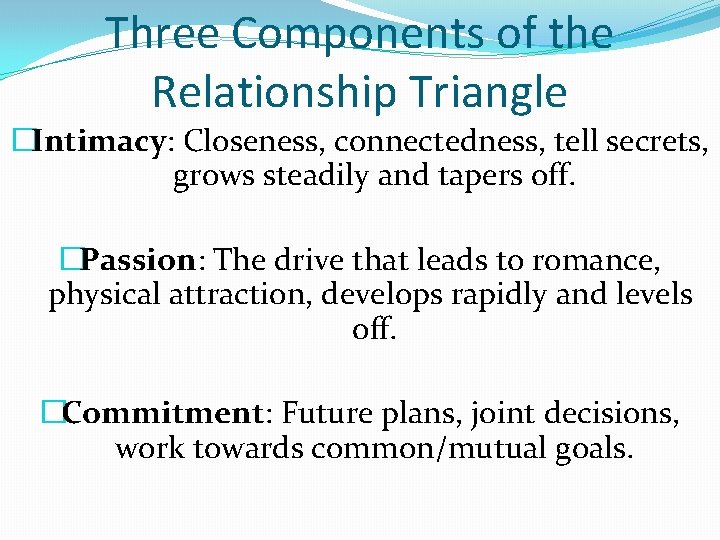
Three Components of the Relationship Triangle �Intimacy: Closeness, connectedness, tell secrets, grows steadily and tapers off. �Passion: The drive that leads to romance, physical attraction, develops rapidly and levels off. �Commitment: Future plans, joint decisions, work towards common/mutual goals.
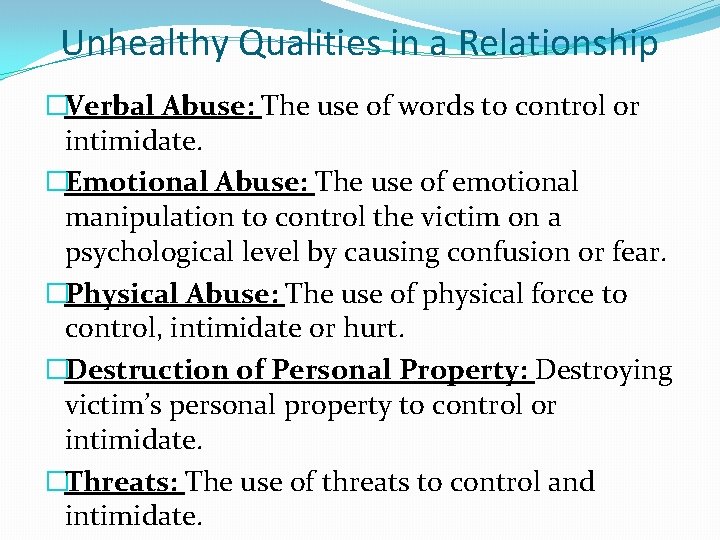
Unhealthy Qualities in a Relationship �Verbal Abuse: The use of words to control or intimidate. �Emotional Abuse: The use of emotional manipulation to control the victim on a psychological level by causing confusion or fear. �Physical Abuse: The use of physical force to control, intimidate or hurt. �Destruction of Personal Property: Destroying victim’s personal property to control or intimidate. �Threats: The use of threats to control and intimidate.
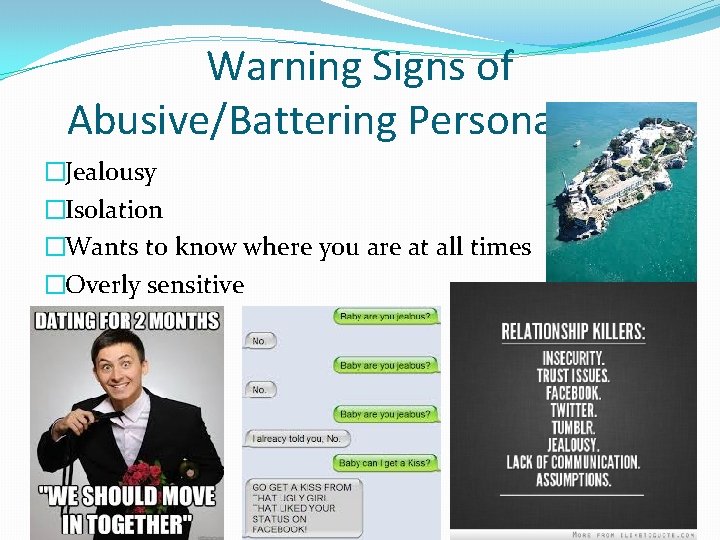
Warning Signs of Abusive/Battering Personalities: �Jealousy �Isolation �Wants to know where you are at all times �Overly sensitive
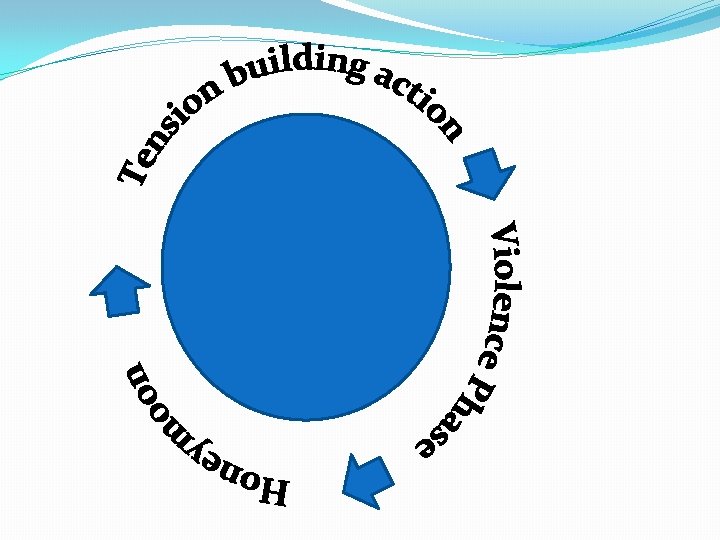
The Circle of Violence �Tension-building phase: Begins to blame you for things that go wrong in the relationship, and tries to control what you do. �Violent and abusive phase: Becomes physically violent and/or emotionally abusive. You are afraid for your safety. �Honeymoon phase: Apologizes and promises that the violence and abuse will never happen again.
Sexual Harassment Health Education Unit # 1
Sexual Harassment �Objectives: �Students will know and understand: �The definition of sexual harassment �How to recognize when it occurs and what to do if it does occur �Resources in Erie County
Definition of Sexual Harassment �Unwelcome sexual advances, requests for sexual favors, and other verbal or physical conduct of a sexual nature that tends to create a hostile or offensive work environment. �Sexual Harassment is about POWER & CONTROL
Examples of Sexual Harassment: �Touching inappropriately �Verbal comments �Name calling �Sexual rumors �Leers or stares �Dirty jokes �Rating �Howling, catcalls, whistles �Pantsing
Why Victims Don’t Report Sexual Harassment: �They feel embarrassed �They blame themselves �They don’t trust “the system” �They don’t want to “rock the boat” �They are afraid of the harasser or others �They don’t want to get the harasser into trouble �They don’t know how to report the harassment
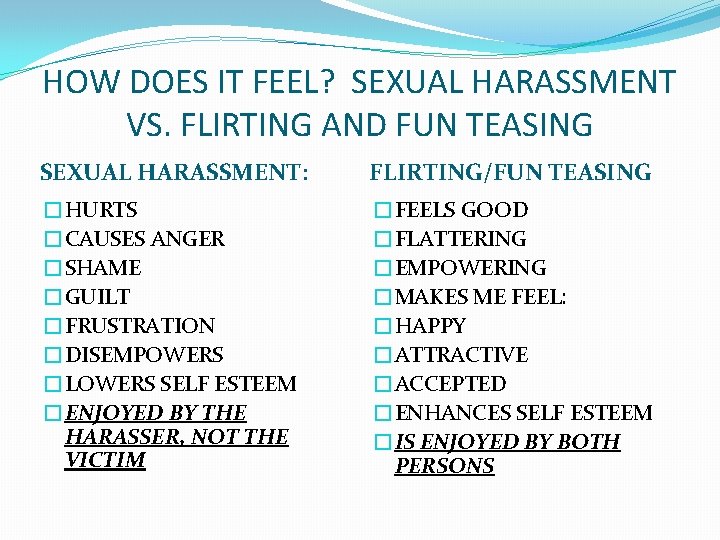
HOW DOES IT FEEL? SEXUAL HARASSMENT VS. FLIRTING AND FUN TEASING SEXUAL HARASSMENT: FLIRTING/FUN TEASING �HURTS �CAUSES ANGER �SHAME �GUILT �FRUSTRATION �DISEMPOWERS �LOWERS SELF ESTEEM �ENJOYED BY THE HARASSER, NOT THE VICTIM �FEELS GOOD �FLATTERING �EMPOWERING �MAKES ME FEEL: �HAPPY �ATTRACTIVE �ACCEPTED �ENHANCES SELF ESTEEM �IS ENJOYED BY BOTH PERSONS
EFFECTS OF SEXUAL HARASSMENT: GROUP WORK �In four different groups, explain how sexual harassment can effect someone � EMOTIONALLY, � PHYSICALLY, � SOCIALLY � EDUCATIONAL /PROFESSIONAL. �YOUR GROUP IS ONLY RESPONSIBLE FOR THE CATEGORY ASSIGNED BY THE TEACHER!
EFFECTS OF SEXUAL HARASSMENT: EMOTIONAL: �ANXIETY �FEAR �ANGER �CONFUSION �DEPRESSION �EMBARRASSMENT �GUILT �SHAME �LOWER SELF ESTEEM PHYSICAL: �ILLNESS �WEIGHT GAIN/LOSS �DRUG/ALCOHOL USE �SLEEPLESSNESS �POOR HYGIENE OR SELF CARE
EFFECTS OF SEXUAL HARASSMENT: SOCIAL: EDUCATIONAL/FUTURE �ISOLATION �LOSS OF FRIENDS �AGGRESSIVE BEHAVIOR �DAMAGED REPRUTATION �ANXIOUS IN OTHER SOCIAL SETTINGS �POOR GRADES �ABSENTEEISM �TARDINESS �UNFILLED GOALS �LOSS OF EARNING POWER �POSSIBLE FIRING �BAD REPUTATION AS A WHISTLE BLOWER OR NOT A TEAM PLAYER
WHAT TO DO IF YOU ARE BEING SEXUALLY HARASSED: �Tell the person to stop! – They may not know their actions are not wanted by you or that they have even offended you �Try to use Buddy System or stay in group setting to decrease the opportunities of the harasser �Document the occurrences – Keep all text messages, facebook entries, tweets, letters or any other interaction to support your claim �Confide in a trusted coworker or friend – Let people you trust know your situation for support and assistance
WHAT TO DO IF YOU ARE BEING SEXUALLY HARASSED: �Tell someone you trust in higher authority – At school your teacher, principal or superintendent; in bigger companies there is a Human Resource Department which is responsible for employee safety and/or assistance �File a police report or restraining order – Remember this only provide you the ability to impose consequences later in the court of law; IT DOES NOT ALWAYS PROTECT OR STOP ACTIONS, you still need to take precautions for your safety