
Communication Consumer Behavior 1 Goals of Marketing Communications
Communication Consumer Behavior 1
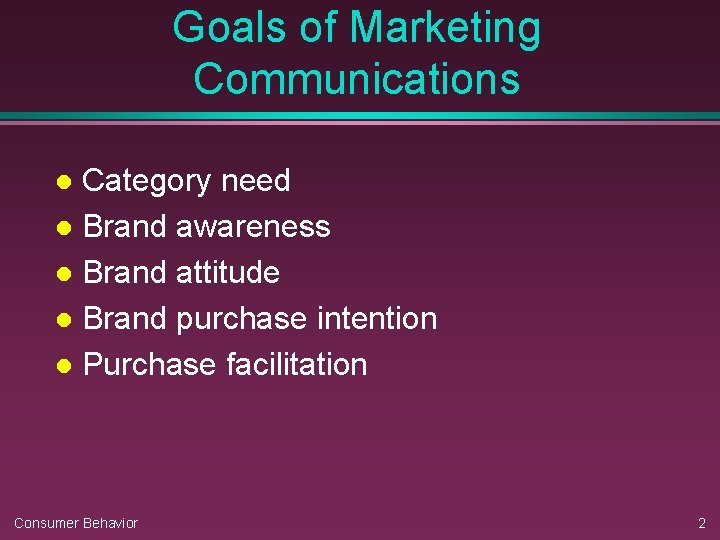
Goals of Marketing Communications Category need l Brand awareness l Brand attitude l Brand purchase intention l Purchase facilitation l Consumer Behavior 2
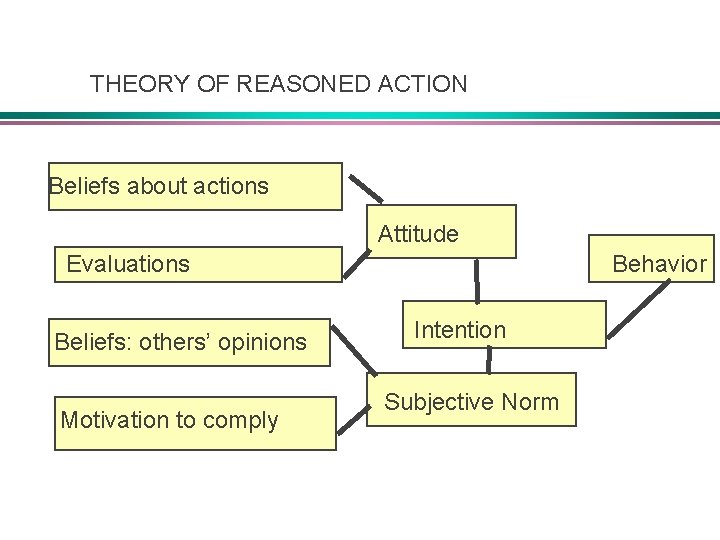
THEORY OF REASONED ACTION Beliefs about actions Attitude Evaluations Beliefs: others’ opinions Motivation to comply Consumer Behavior Intention Subjective Norm 3
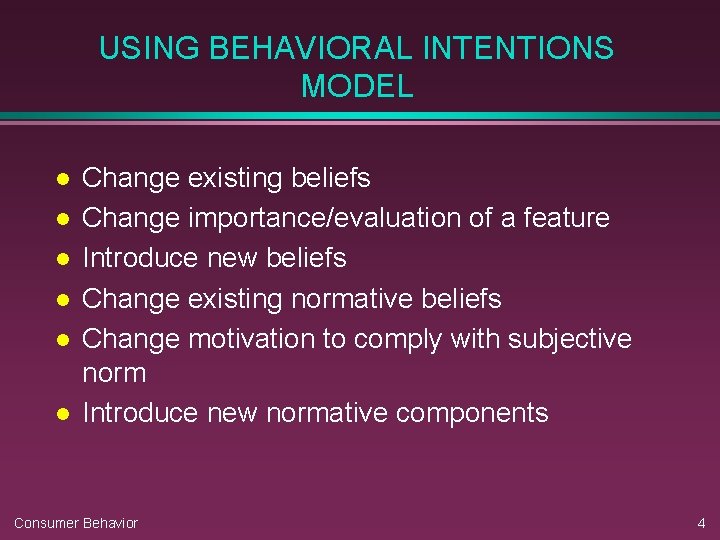
USING BEHAVIORAL INTENTIONS MODEL l l l Change existing beliefs Change importance/evaluation of a feature Introduce new beliefs Change existing normative beliefs Change motivation to comply with subjective norm Introduce new normative components Consumer Behavior 4
Elaboration Likelihood Model l l l l Central Path Listen to reasons Think about message Motivated Able Enduring attitude change Strong arguments convince; weak do not Quality of argument Consumer Behavior l l l l Peripheral Path How is message presented? Little effort to think about message Not motivated Not able Temporary attitude shift Number of arguments Often first path taken 5
BEHAVIORAL PERSUASION STRATEGIES l l l Foot-in-the-door Door-in-the-face Low balling Consumer Behavior 6
COMMUNICATION Source l Message l Medium l Receiver l Feedback l Consumer Behavior 7
SOURCE EFFECTS l Power l Attractiveness l Creditibility: Knowledge Trust Consumer Behavior 8
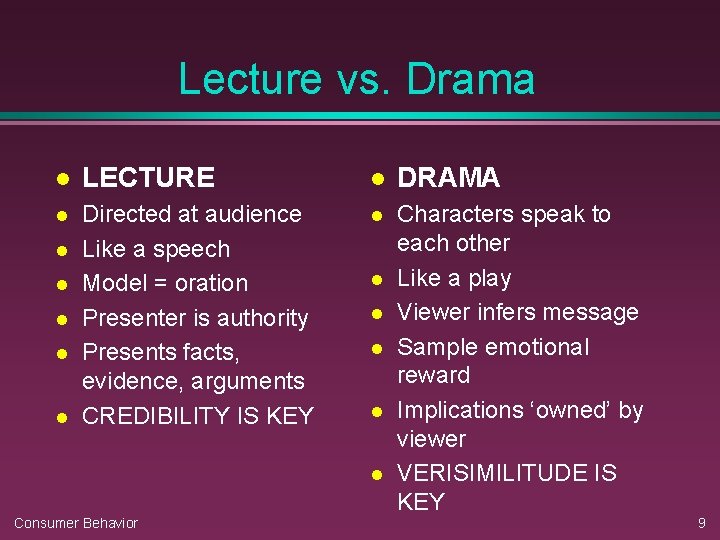
Lecture vs. Drama l LECTURE l DRAMA l Directed at audience Like a speech Model = oration Presenter is authority Presents facts, evidence, arguments CREDIBILITY IS KEY l Characters speak to each other Like a play Viewer infers message Sample emotional reward Implications ‘owned’ by viewer VERISIMILITUDE IS KEY l l l l l Consumer Behavior 9
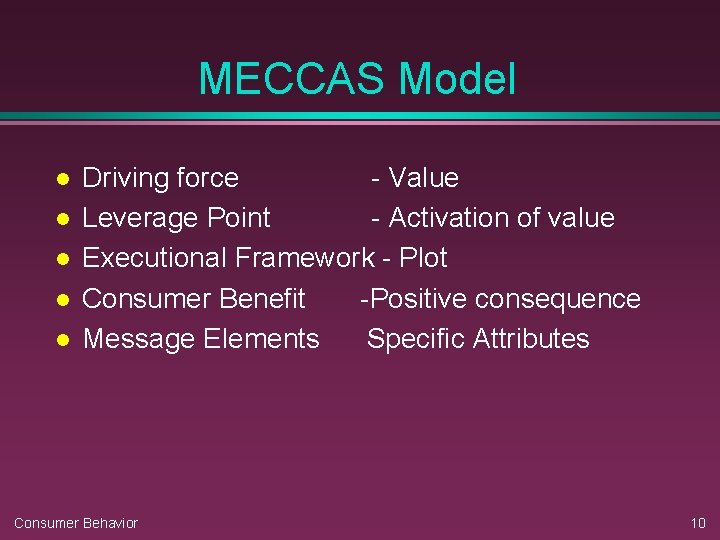
MECCAS Model l l Driving force - Value Leverage Point - Activation of value Executional Framework - Plot Consumer Benefit -Positive consequence Message Elements Specific Attributes Consumer Behavior 10
- Slides: 10