
Communication Brygida GwiazdaRzepecka b gwiazdarzepeckawso wroc pl Communication
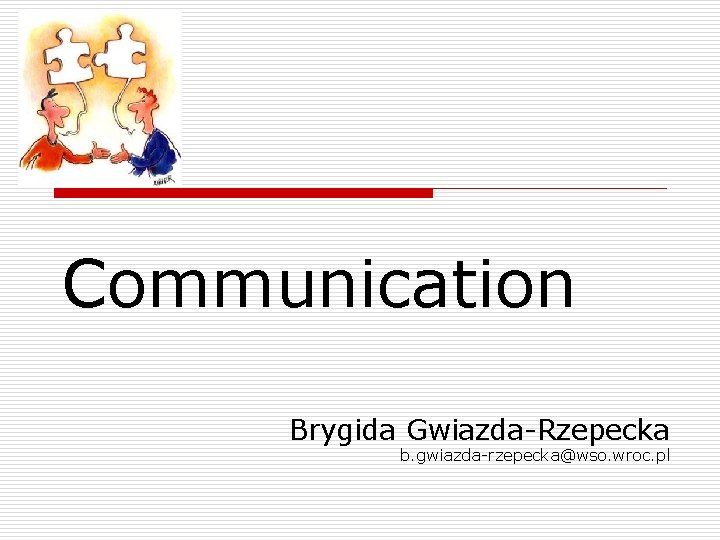
Communication Brygida Gwiazda-Rzepecka b. gwiazda-rzepecka@wso. wroc. pl
Communication Plan o. Communication o. Listening BGR 2
Communication o Why do we communicate? BGR 3
Communication o Is communication an easy process? BGR 4
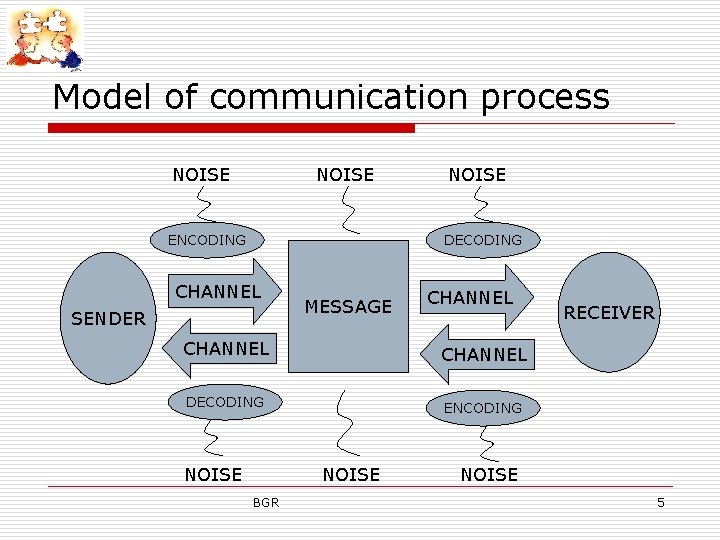
Model of communication process NOISE ENCODING NOISE DECODING CHANNEL SENDER MESSAGE CHANNEL DECODING ENCODING NOISE BGR RECEIVER NOISE 5
Components o o o o Source – sb who creates a message; Receiver; Message; Channel; Noise; Feedback; . . . BGR 6
Context o. Physical aspect; o. Historical aspect; o. Psychological aspect; o. Cultural aspect. BGR 7
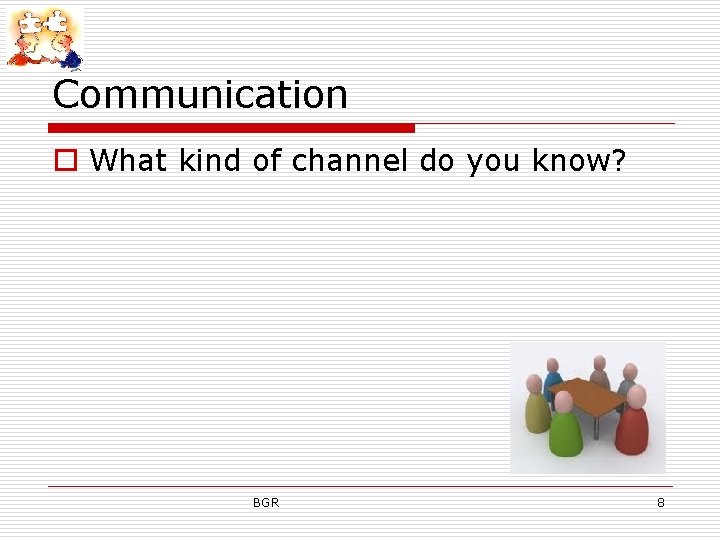
Communication o What kind of channel do you know? BGR 8
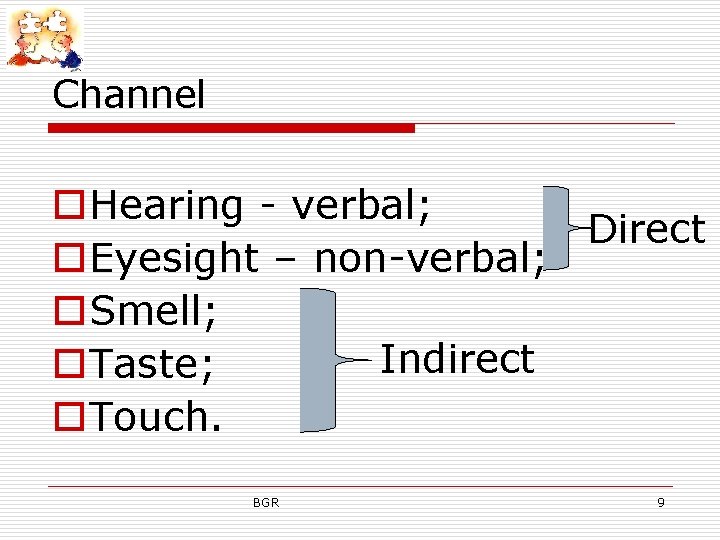
Channel o. Hearing - verbal; Direct o. Eyesight – non-verbal; o. Smell; Indirect o. Taste; o. Touch. BGR 9
Communication o What kind of noise do you know? BGR 10
Noise o. External noise; o. Internal noise; o. Semantic noise. BGR 11
Communication o What kind of feedback do you know? BGR 12
Feedback o. Direct feedback; o. Indirect feedback. BGR 13
Listening o What do you do / say when you do not listen to somebody? BGR 14
Listening o Hearing vs listening BGR 15
Hearing vs listening o hearing – a natural, passive process; a physiological process; o listening – a skill; an active, hard, learned process; a mental, psychological process. BGR 16
Listening process o To have ears does not mean to understand; o You must choose to participate in the process of listening. BGR 17
Listening process o „Listening is the process of receiving, constructing meaning from and responding to spoken and/or nonverbal messages (International Listening Association, 1996). o Stages: Ø Receiving; Ø Constructing meaning; Ø Responding. BGR 18
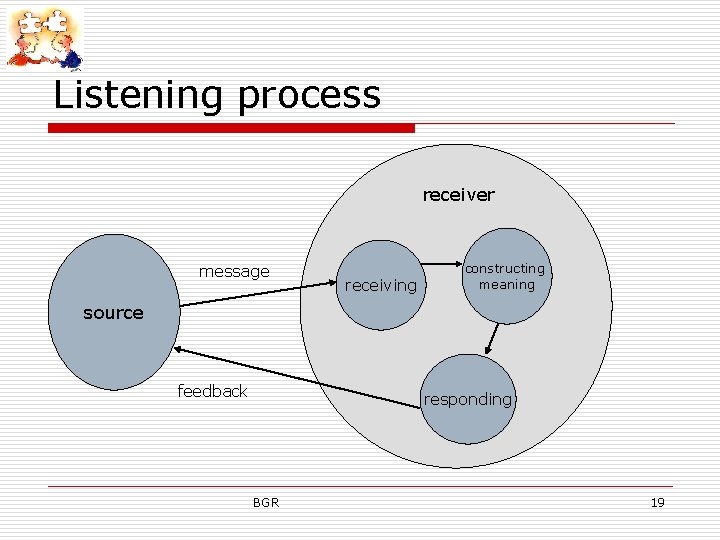
Listening process receiver message receiving constructing meaning source feedback responding BGR 19
Effective Listener o An effective / active listener vs a good listener BGR 20
Effective listening o Why is effective listening important? BGR 21
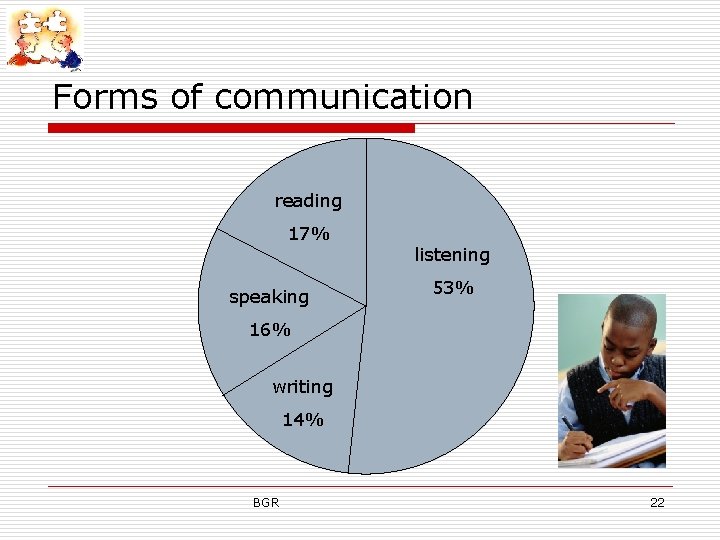
Forms of communication reading 17% speaking listening 53% 16% writing 14% BGR 22
More facts o 85% of what we know is from listening; o 45% of our time is spent on listening; o A person recalls 50% of what they have just heard; o Only 20% is remembered. BGR 23
Kinds of listening o What kinds of listening do you know? o Why do we listen? BGR 24
Kinds of listening o To learn; o To assess (judge); o To sympathize; o We combine all kinds. BGR 25
Effective listening o What threats of effective listening do you know? BGR 26
Threats o Physical barriers; o Psychological barriers; o Interactive barriers. BGR 27
Communication situations 1. Listening to somebody from different culture. 2. Listening to an unknown cousin at a wedding party. 3. Visiting grandma & spending an evening with her & her friends. 4. Taking part in a new computer programme course, which you are not going to use. 5. Taking part in a lecture at your friend’s faculty. 6. Taking part in a long group discussion on the group project. 7. Visiting an art gallery with a guide. BGR 28
Communication Thank you Brygida Gwiazda-Rzepecka b. gwiazda-rzepecka@wso. wroc. pl BGR 29
- Slides: 29