
Communication Anger Management and Conflict Resolution Communication helps
- Slides: 34
Communication, Anger Management, and Conflict Resolution
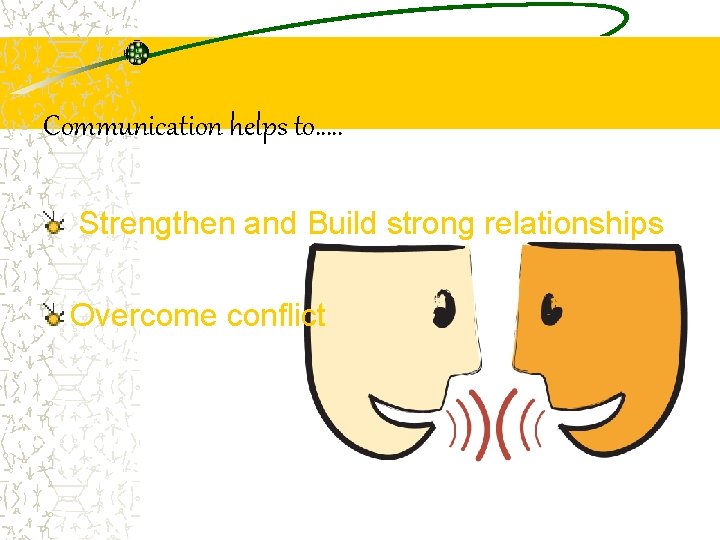
Communication helps to…. . Strengthen and Build strong relationships Overcome conflict
Three types of Communication Aggressive- overly forceful, pushy, or hostile. People with Styles an aggressive style may not pay attention to others’ thoughts, feelings, or needs Passive- unwilling or unable to express thoughts and feelings in a direct or firm manner. People may adopt this kind of communication because they dislike conflict and will go out of their way to avoid an argument. Assertive- expressing your views clearly and respectfully. Using assertive communication will improve your relationships with others. it will help ensure that your own needs are met, along with the others.
Speaking Skills A key to good communication is to SAY what you mean! We can’t read minds! If someone has hurt your feelings, you need to let them know. Being clear and direct doesn’t mean being disrespectful. One way to make sure you don’t sound disrespectful is to use “I” messages.
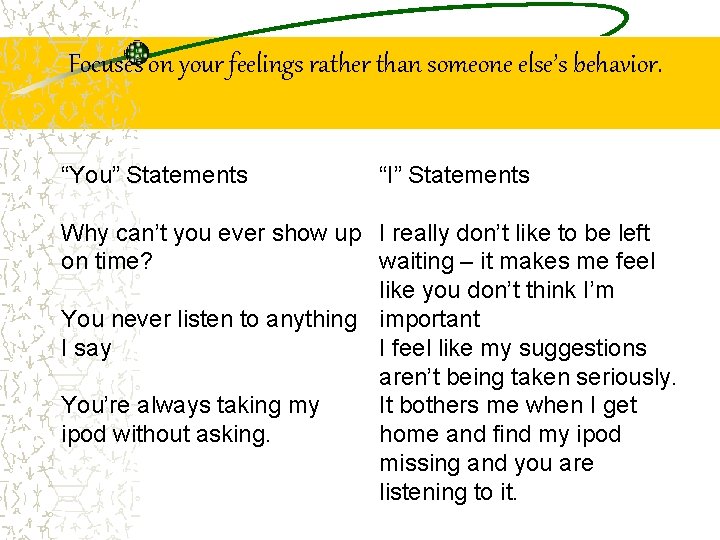
Focuses on your feelings rather than someone else’s behavior. “I” Messages “You” Statements “I” Statements Why can’t you ever show up I really don’t like to be left on time? waiting – it makes me feel like you don’t think I’m You never listen to anything important I say I feel like my suggestions aren’t being taken seriously. You’re always taking my It bothers me when I get ipod without asking. home and find my ipod missing and you are listening to it.
TELEPHONE
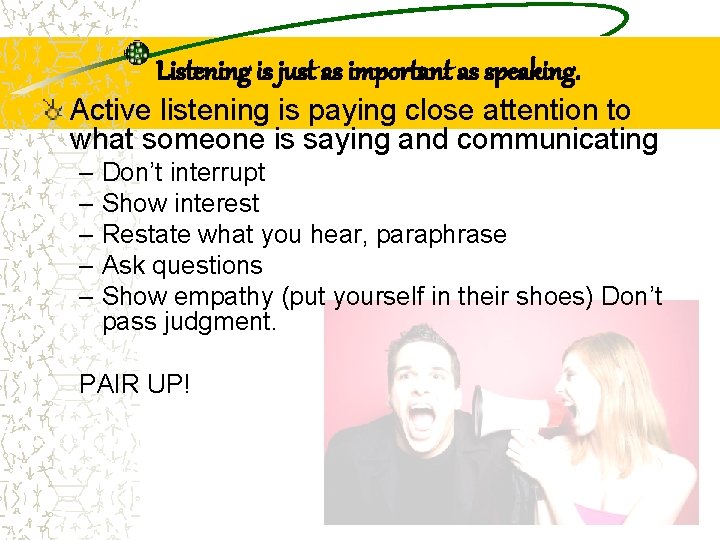
Listening is just as important as speaking. Listening Active listening is paying Skills close attention to what someone is saying and communicating – Don’t interrupt – Show interest – Restate what you hear, paraphrase – Ask questions – Show empathy (put yourself in their shoes) Don’t pass judgment. PAIR UP!
Wright Family Back to Back
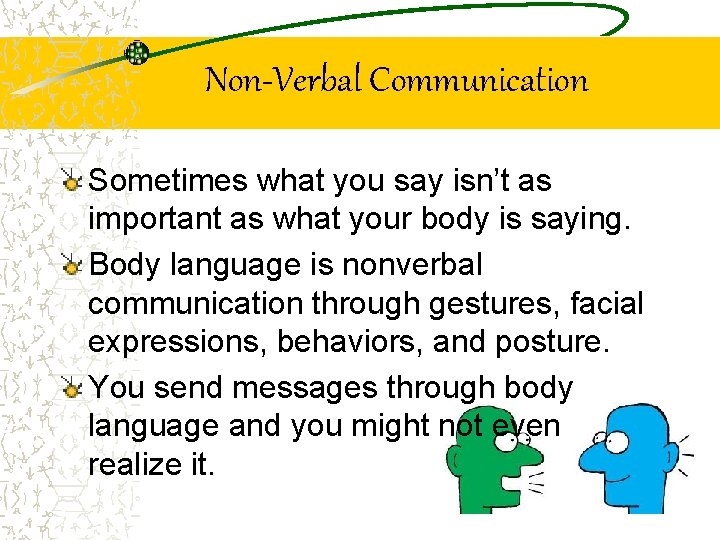
Non-Verbal Communication Sometimes what you say isn’t as important as what your body is saying. Body language is nonverbal communication through gestures, facial expressions, behaviors, and posture. You send messages through body language and you might not even realize it.
Silent Movie Wordless Acting
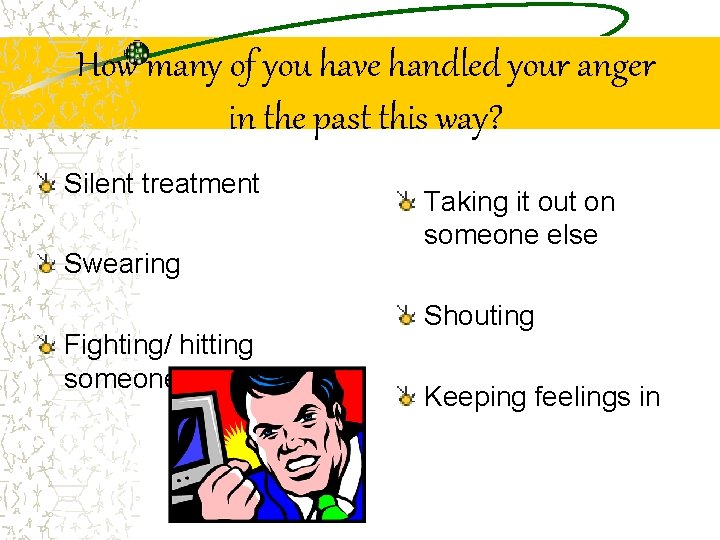
How many of you have handled your anger in the past this way? Silent treatment Swearing Fighting/ hitting someone Taking it out on someone else Shouting Keeping feelings in
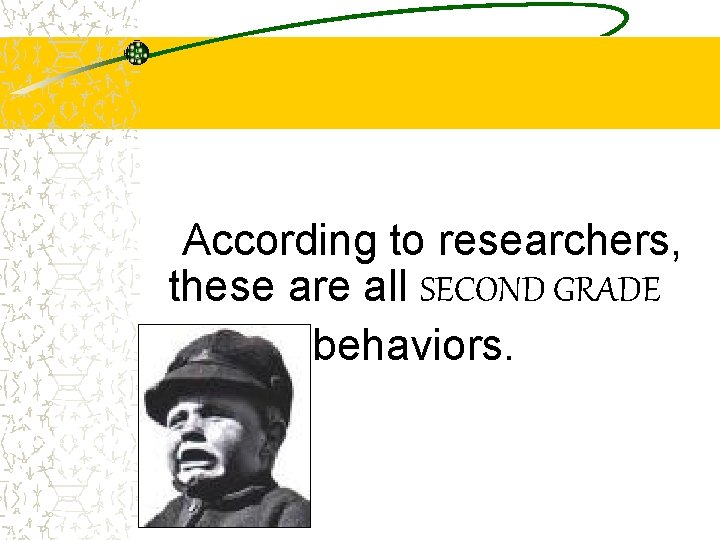
According to researchers, these are all SECOND GRADE behaviors.
Most mature high schooler’s NEED to learn new ways to handle their anger or resolve their arguments.
You need to Take control before you Lose control.
Here are the ten most effective ways, teens your age DEAL WITH THEIR ANGER in a more positive way:
1. Calm Down- Take three big deep breaths as you count to ten. 2. Communicate! Try and talk it out in a low voice! Say how you feel and use the “I”
3. Cool off and see if you can discuss it later. 4. Do something physical to release anger. ( Remember: soft and lifeless
5. Try to compromise and make it a win-win situation. 6. Consider the consequences of your choice.
7. Do something positive /fun/etc. to get your mind off your angry feelings. 8. Sort things out.
9. Stop and think of why you are angry. 10. Admit you are angry and think of a positive and healthy way to deal with your anger.
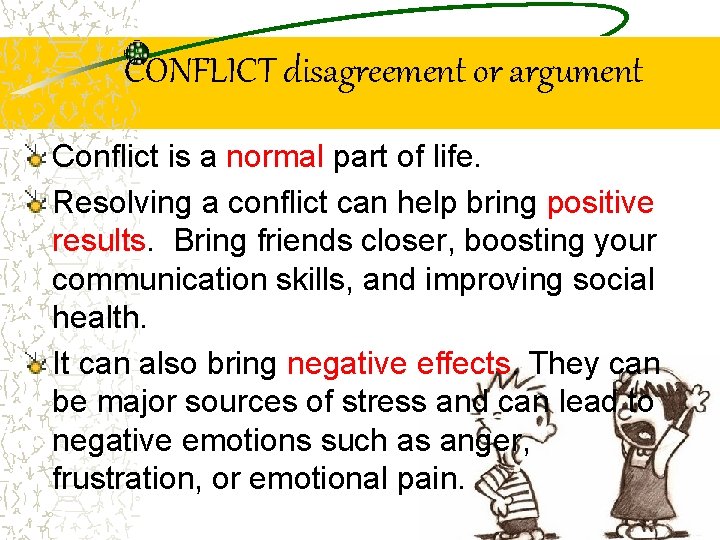
CONFLICT disagreement or argument Conflict is a normal part of life. Resolving a conflict can help bring positive results. Bring friends closer, boosting your communication skills, and improving social health. It can also bring negative effects. They can be major sources of stress and can lead to negative emotions such as anger, frustration, or emotional pain.
Preventing is easier than resolving If you know someone that is continually trying to get in an argument with you, avoid them. If you have a friend who constantly forget their lunch money, remind them before hand to stop by an atm. You can adjust your attitude. Try not to be bothered by what others say.
CONFLICT http: //www. youtube. com/watch? v=Lov. JTO n. OQ 3 g
Common Causes of Conflict Misinterpretation! Power struggles (teen and parent conflict over curfew) Personal loyalties (angry bec friend took another person’s side) Jealously and envy (upset bec went out with her ex boyfriend) Lack of respect (prejudice against a student’s ethnic group)
These are top ten most effective ways teens your age DEAL WITH CONFLICT OR BEING IN AN ARGUMENT!
1. Agree to disagree 2. Communicate - “I” statement– low voices
3. Skip It. (Ask yourself of its even worth it. ) 4. Walk away. Cool off. (if appropriate. )
5. Give a little get a little. Compromise. ( Split the difference. ) 6. Ask if you can deal with it later.
7. Say, “ You’re probably right but”… 8. Apologize and be a more mature person.
9. Laugh it off respectfully 10. Flip a coin to determine who wins!
Handling your anger/resolving your conflicts will help:
Physically Lower your blood pressure Keep your heart rate low Reduces ulcers(holes in your stomach/intestines) Reduces migraine and headaches
Mentally Reduce your stress/ frustration levels Allows you to get your emotions/feelings out Clears your mind- no worries about the fights and the guilt feeling that goes with it
Socially Allows you more friends Gives you a better reputation Adults trust you more