
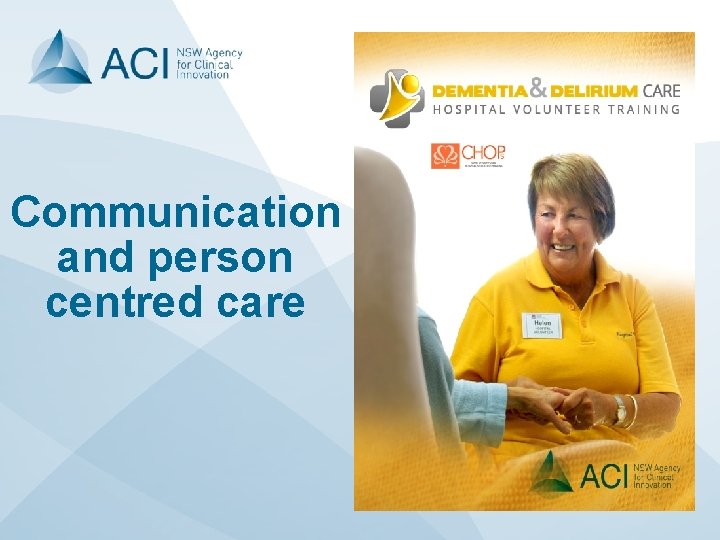
Communication and person centred care Learning outcomes Understand
- Slides: 21
Communication and person centred care
Learning outcomes • • Understand how dementia can affect the persons language and communication Recognise the importance of tone and body language in communication Learn some tips to assist in communicating with the person with dementia Learn about person centred care Understand the personal profile and how it can assist with communication and person centred care How important family carers are in gaining a patients personal profile information What to do if carers disclose important information that staff should know
Why do we communicate?
Why do we communicate? • To express our needs or wants • To respond to the needs of others • To be part of social interaction with others
Is Communication more than words?
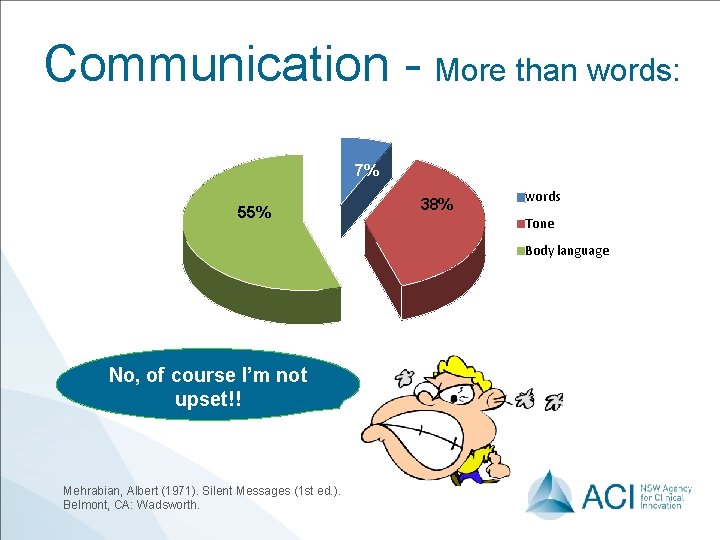
Communication - More than words: 7% 55% 38% words Tone Body language No, of course I’m not upset!! Mehrabian, Albert (1971). Silent Messages (1 st ed. ). Belmont, CA: Wadsworth.
Common effects of dementia over time ¡Progressive loss of memory ¡Reduced ability to concentrate ¡Inability to recognise or name familiar objects ¡Difficulty completing multistep tasks ¡Difficulty expressing themselves ¡Easily overwhelmed
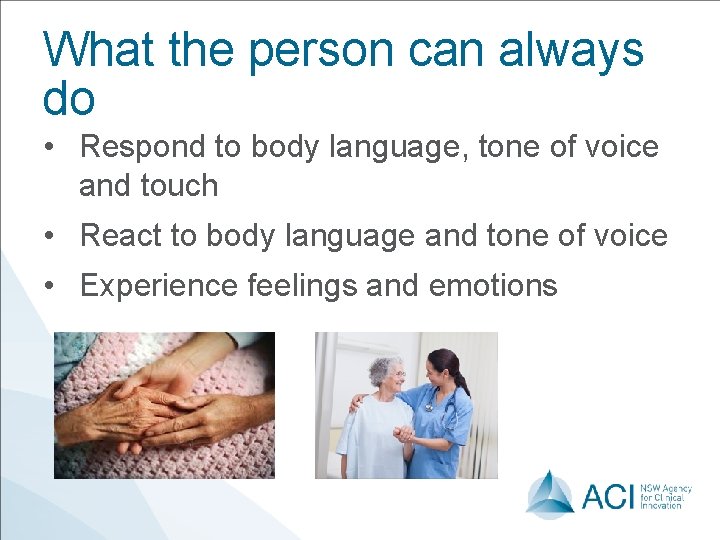
What the person can always do • Respond to body language, tone of voice and touch • React to body language and tone of voice • Experience feelings and emotions
Communication Tips • Speak slowly and clearly • Always introduce yourself • Use clear simple language • Don’t ask complex questions. • Be calm and patient and allow time for a response • Reduce competing noises such at TV
Communication tips cont: • Have a caring approach & use gentle touch where appropriate • Be aware of your tone and body language • Don’t argue even if the person is wrong • Try and understand what the person might be experiencing or feeling • Communicate at eye level Alzheimer’s Australia Communication Help sheet
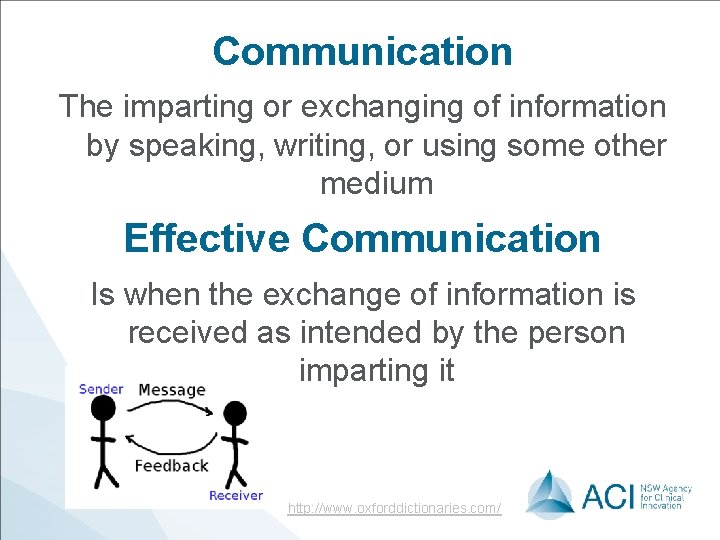
Communication The imparting or exchanging of information by speaking, writing, or using some other medium Effective Communication Is when the exchange of information is received as intended by the person imparting it http: //www. oxforddictionaries. com/
Communication exercise
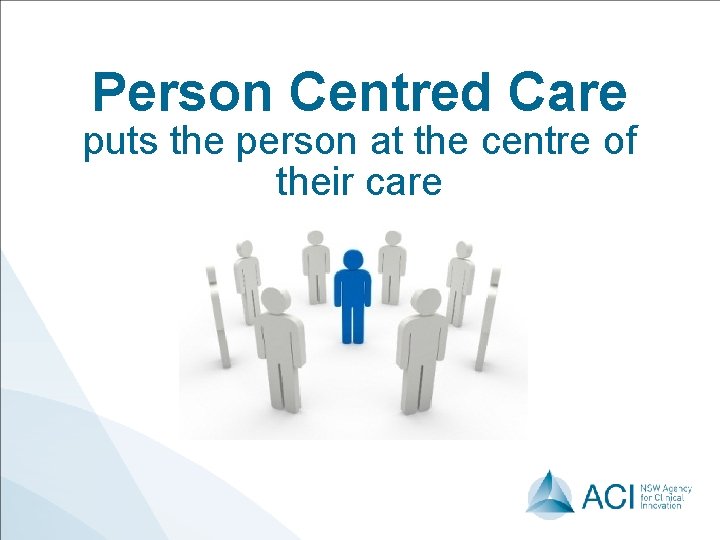
Person Centred Care puts the person at the centre of their care
Personhood “A standing or status that is bestowed on one human being by another in the context of a relationship and social being. It implies recognition, respect and trust” (Kitwood 1997).
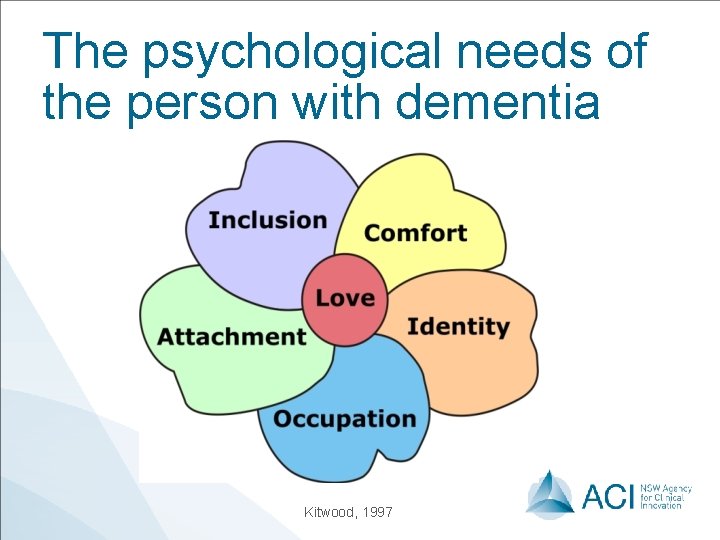
The psychological needs of the person with dementia Kitwood, 1997
Principles of Person Centred care ¡Respect for uniqueness of person ¡Knowledge and value of persons past history ¡A focus on abilities ¡Supporting choice ¡Enhancing Communication ¡Valuing attachments they may have ¡Maintaining social environment
The personal profile ¡Gaining an understanding of the person ¡Their background ¡Personal preferences ¡What is important to the person ¡Activities or other things which give the person meaning and enjoyment The personal profile
The importance of family carers ¡Carers can provide essential information to support person centred care ¡The family or carers are often the people who know the person best ¡They can provide important information about the persons personality and what is important to them
Other family carer considerations ¡The caring role can be very demanding and exhausting ¡Carers may feel confused and not have received information about the effects of dementia and delirium ¡Carers may sometimes disclose to a volunteer that they are having difficulties in caring for the person with dementia
In summary ¡ Dementia can progressively affect the person’s language and communication ¡ Tone and body language are important in the way we communicate ¡ Person centred care is based on gaining an understanding of the person and their preferences ¡ The personal profile can positively support communication and person centred care ¡ Family carers are important in gaining a patient’s personal profile information ¡ Communicating to staff issues that family members may disclose to a volunteer
Time for a break and stretch