
Communication and Optimal Resolution CANDOR Toolkit Module 6
- Slides: 24
Communication and Optimal Resolution (CANDOR) Toolkit Module 6: Care for the Caregiver
Objectives • Describe how caring for the caregiver is a key component of the CANDOR process. • Identify the steps for developing a Care for the Caregiver team and program. • Define the second-victim phenomenon and the stages of healing and recovery for secondvictims. • Describe the peer support challenges, strategies and interventions. Module 6 2
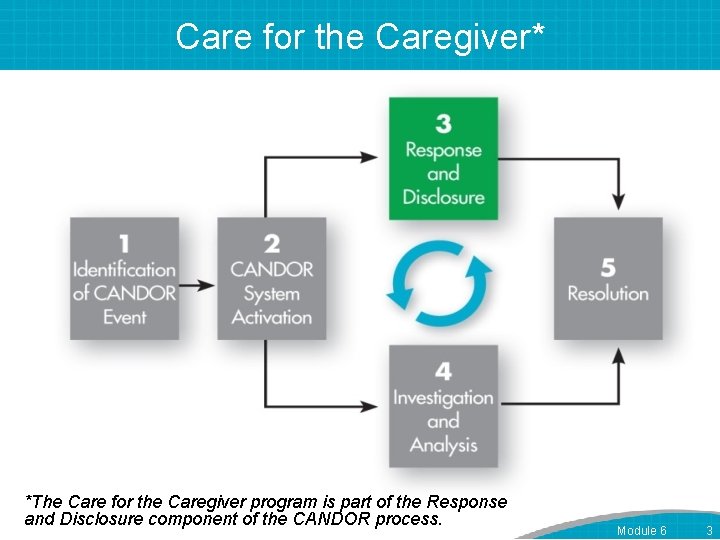
Care for the Caregiver* *The Care for the Caregiver program is part of the Response and Disclosure component of the CANDOR process. Module 6 3
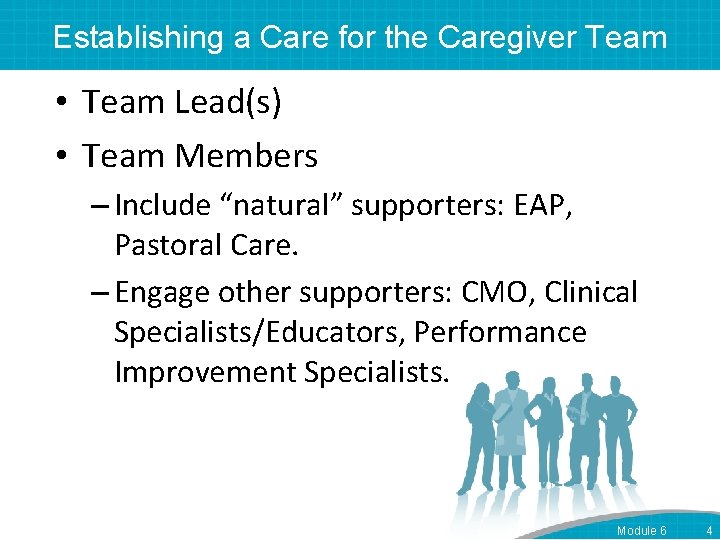
Establishing a Care for the Caregiver Team • Team Lead(s) • Team Members – Include “natural” supporters: EAP, Pastoral Care. – Engage other supporters: CMO, Clinical Specialists/Educators, Performance Improvement Specialists. Module 6 4
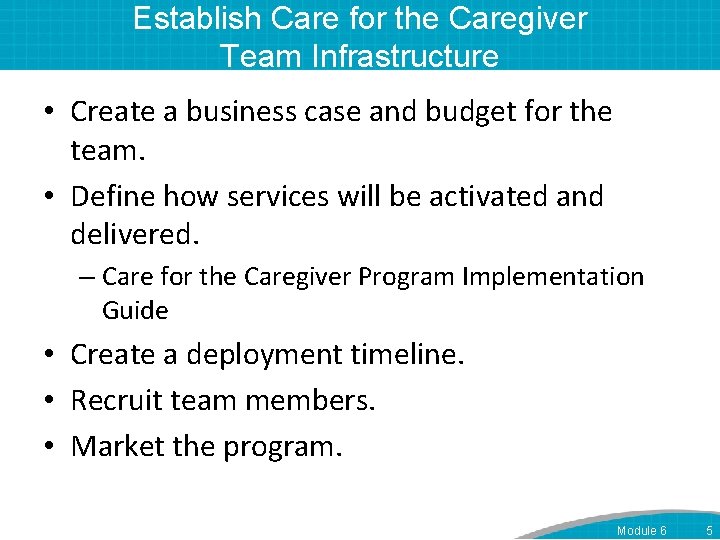
Establish Care for the Caregiver Team Infrastructure • Create a business case and budget for the team. • Define how services will be activated and delivered. – Care for the Caregiver Program Implementation Guide • Create a deployment timeline. • Recruit team members. • Market the program. Module 6 5
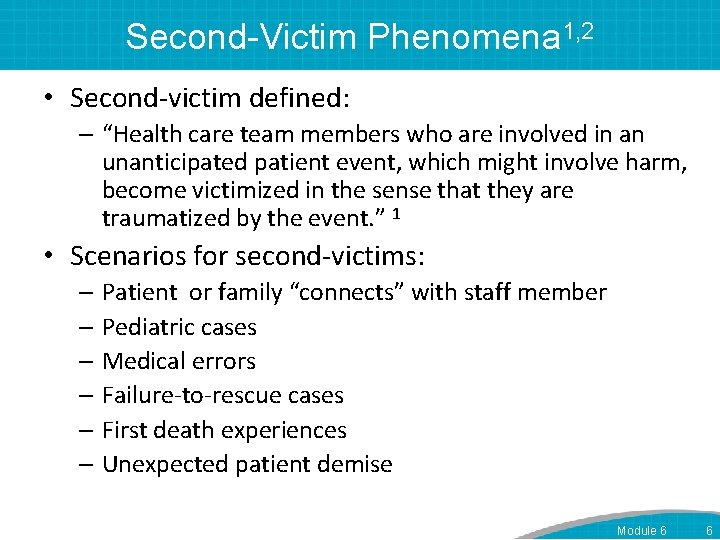
Second-Victim Phenomena 1, 2 • Second-victim defined: – “Health care team members who are involved in an unanticipated patient event, which might involve harm, become victimized in the sense that they are traumatized by the event. ” 1 • Scenarios for second-victims: – Patient or family “connects” with staff member – Pediatric cases – Medical errors – Failure-to-rescue cases – First death experiences – Unexpected patient demise Module 6 6
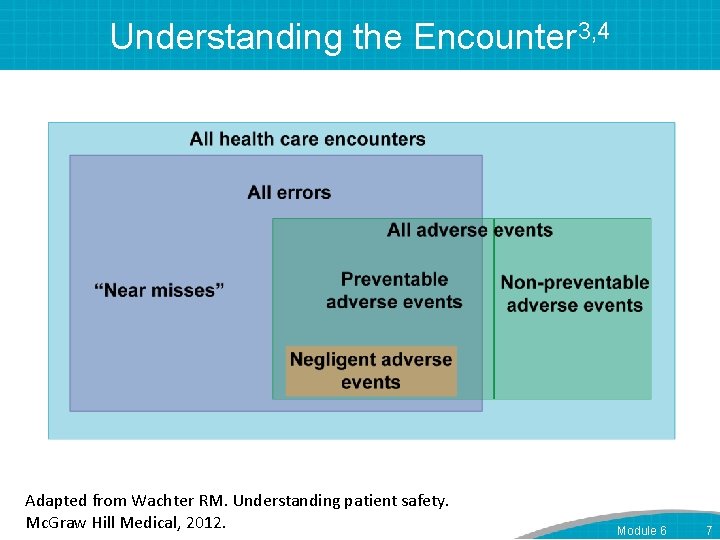
Understanding the Encounter 3, 4 Adapted from Wachter RM. Understanding patient safety. Mc. Graw Hill Medical, 2012. Module 6 7
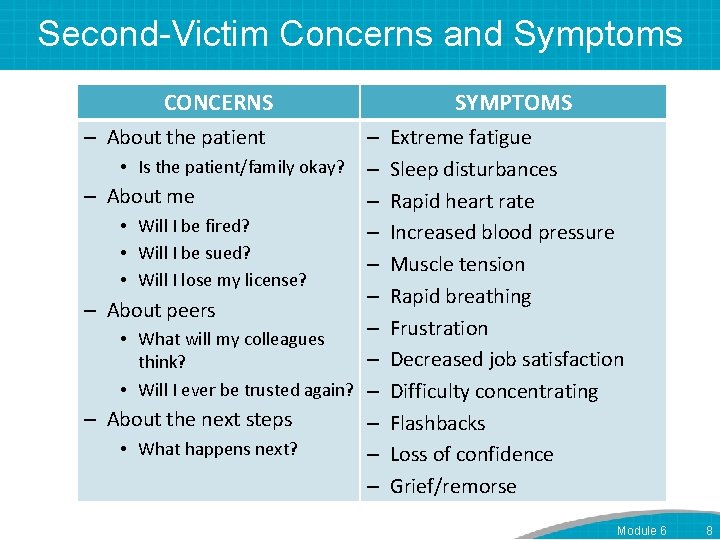
Second-Victim Concerns and Symptoms CONCERNS – About the patient – • Is the patient/family okay? – – About me – • Will I be fired? – • Will I be sued? – • Will I lose my license? – – About peers – • What will my colleagues – think? • Will I ever be trusted again? – – About the next steps – • What happens next? – – SYMPTOMS Extreme fatigue Sleep disturbances Rapid heart rate Increased blood pressure Muscle tension Rapid breathing Frustration Decreased job satisfaction Difficulty concentrating Flashbacks Loss of confidence Grief/remorse Module 6 8
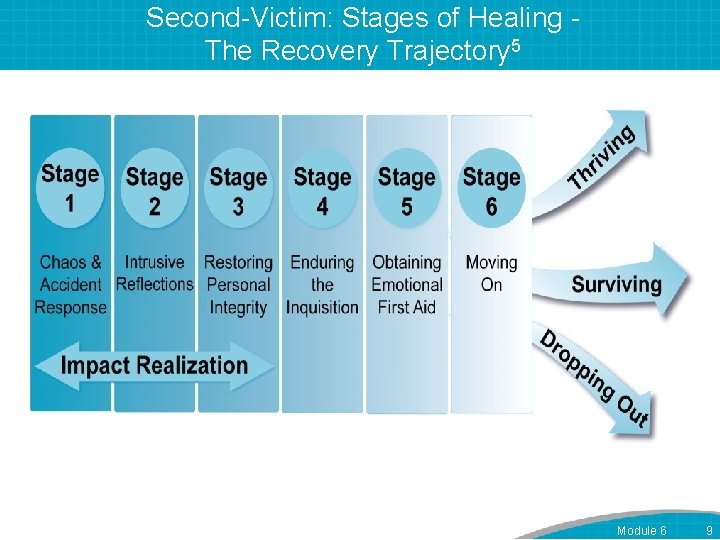
Second-Victim: Stages of Healing The Recovery Trajectory 5 Module 6 9
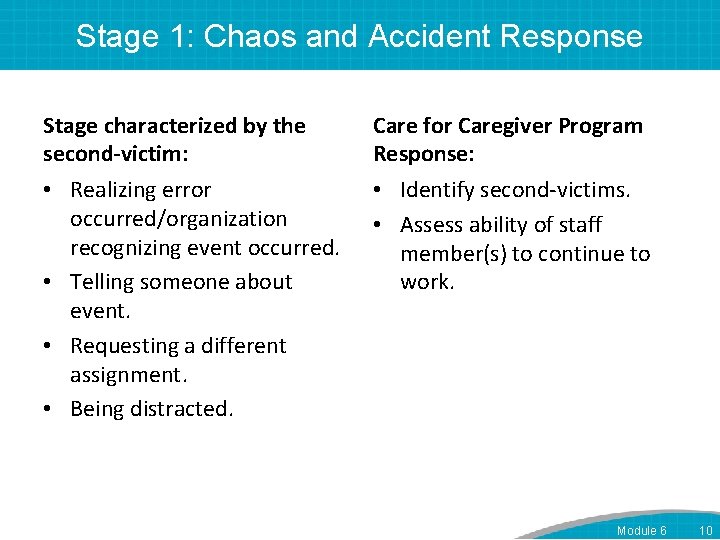
Stage 1: Chaos and Accident Response Stage characterized by the second-victim: • Realizing error occurred/organization recognizing event occurred. • Telling someone about event. • Requesting a different assignment. • Being distracted. Care for Caregiver Program Response: • Identify second-victims. • Assess ability of staff member(s) to continue to work. Module 6 10
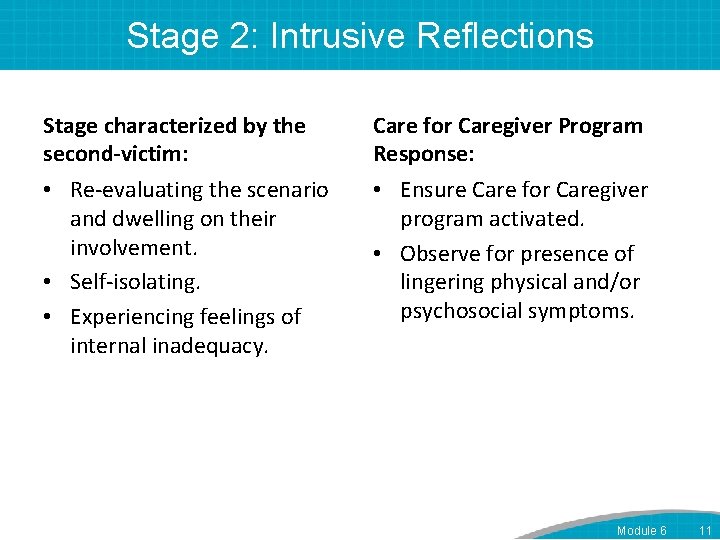
Stage 2: Intrusive Reflections Stage characterized by the second-victim: • Re-evaluating the scenario and dwelling on their involvement. • Self-isolating. • Experiencing feelings of internal inadequacy. Care for Caregiver Program Response: • Ensure Care for Caregiver program activated. • Observe for presence of lingering physical and/or psychosocial symptoms. Module 6 11
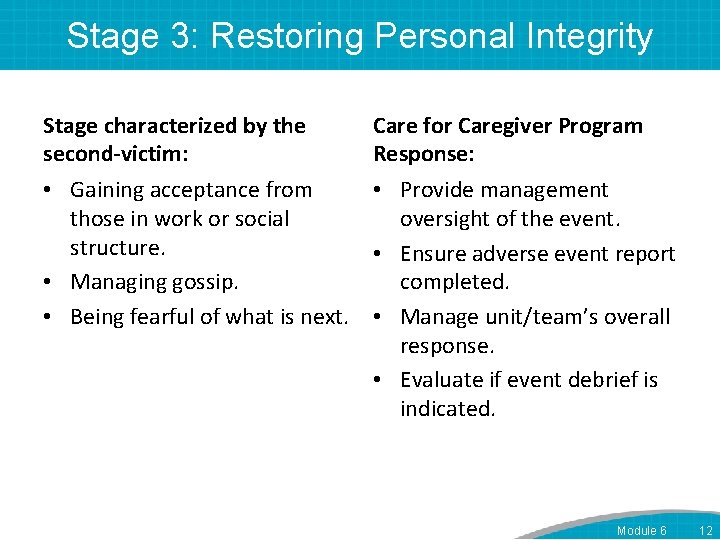
Stage 3: Restoring Personal Integrity Stage characterized by the second-victim: • Gaining acceptance from those in work or social structure. • Managing gossip. • Being fearful of what is next. Care for Caregiver Program Response: • Provide management oversight of the event. • Ensure adverse event report completed. • Manage unit/team’s overall response. • Evaluate if event debrief is indicated. Module 6 12
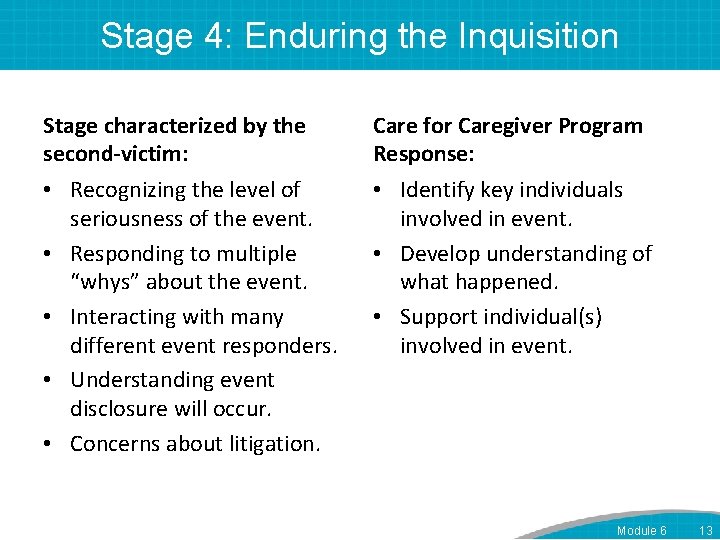
Stage 4: Enduring the Inquisition Stage characterized by the second-victim: • Recognizing the level of seriousness of the event. • Responding to multiple “whys” about the event. • Interacting with many different event responders. • Understanding event disclosure will occur. • Concerns about litigation. Care for Caregiver Program Response: • Identify key individuals involved in event. • Develop understanding of what happened. • Support individual(s) involved in event. Module 6 13
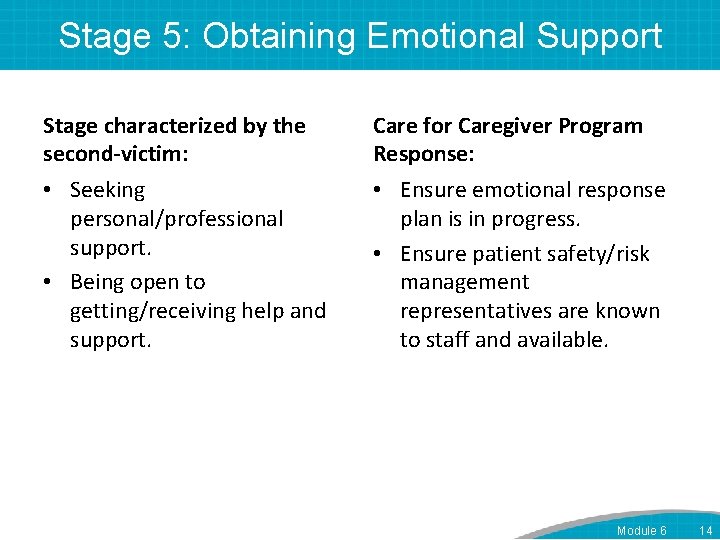
Stage 5: Obtaining Emotional Support Stage characterized by the second-victim: • Seeking personal/professional support. • Being open to getting/receiving help and support. Care for Caregiver Program Response: • Ensure emotional response plan is in progress. • Ensure patient safety/risk management representatives are known to staff and available. Module 6 14
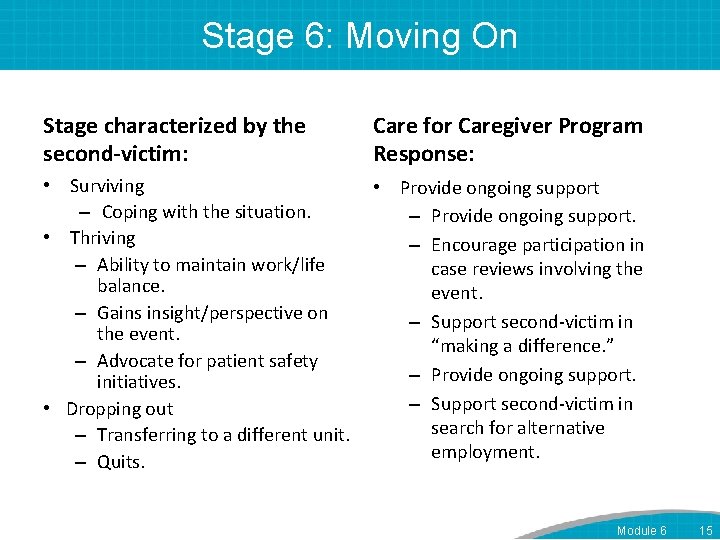
Stage 6: Moving On Stage characterized by the second-victim: Care for Caregiver Program Response: • Surviving – Coping with the situation. • Thriving – Ability to maintain work/life balance. – Gains insight/perspective on the event. – Advocate for patient safety initiatives. • Dropping out – Transferring to a different unit. – Quits. • Provide ongoing support – Provide ongoing support. – Encourage participation in case reviews involving the event. – Support second-victim in “making a difference. ” – Provide ongoing support. – Support second-victim in search for alternative employment. Module 6 15
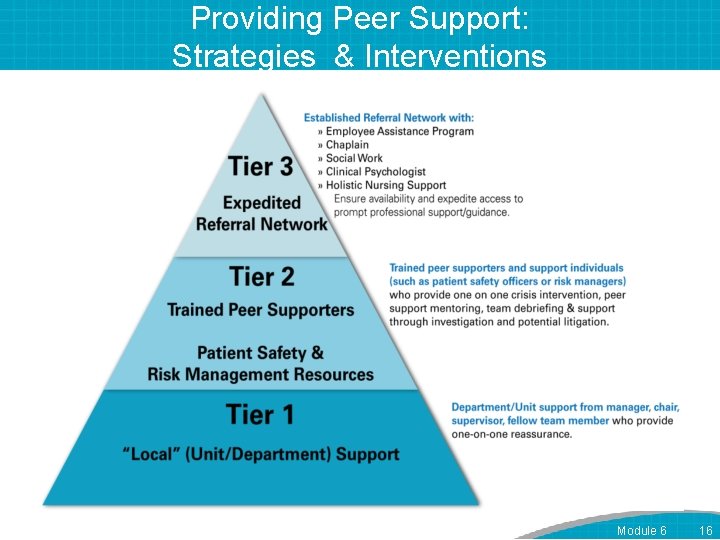
Providing Peer Support: Strategies & Interventions Module 6 16
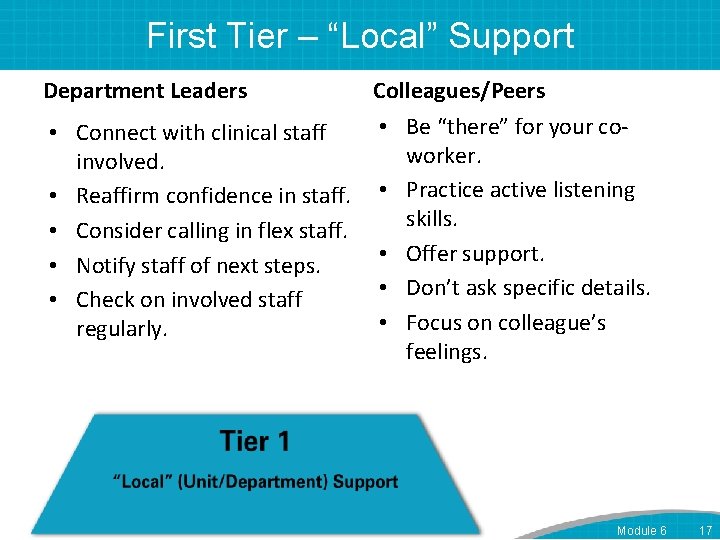
First Tier – “Local” Support Department Leaders Colleagues/Peers • Be “there” for your co • Connect with clinical staff worker. involved. • Reaffirm confidence in staff. • Practice active listening skills. • Consider calling in flex staff. • Offer support. • Notify staff of next steps. • Don’t ask specific details. • Check on involved staff • Focus on colleague’s regularly. feelings. Module 6 17
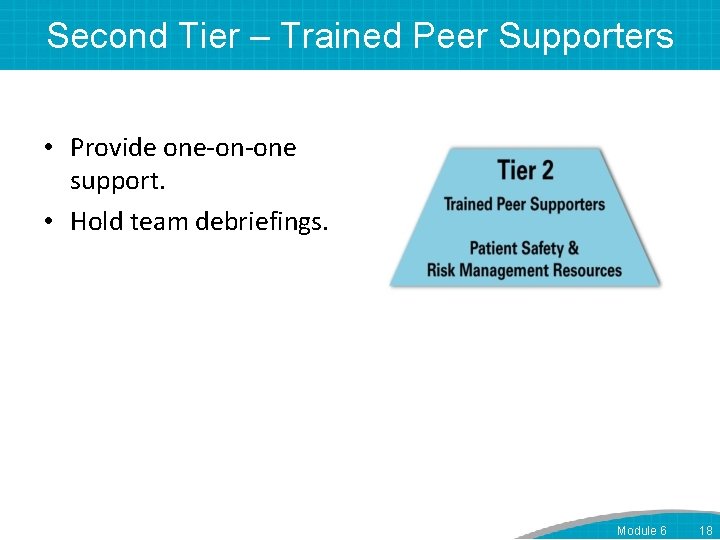
Second Tier – Trained Peer Supporters • Provide one-on-one support. • Hold team debriefings. Module 6 18
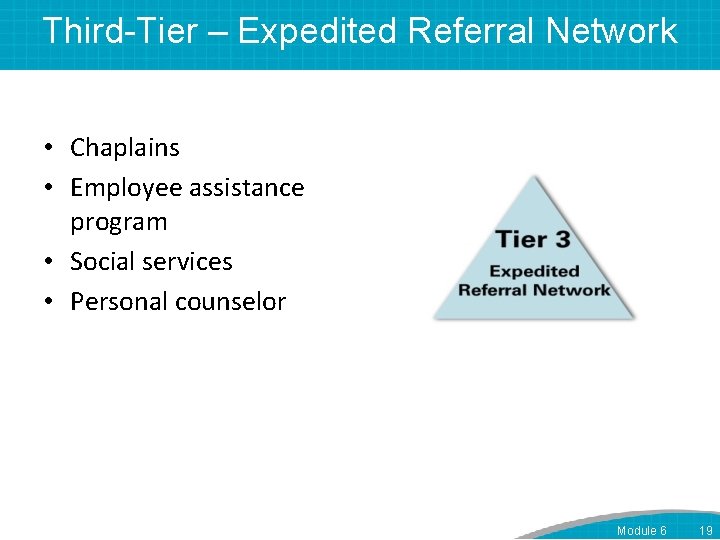
Third-Tier – Expedited Referral Network • Chaplains • Employee assistance program • Social services • Personal counselor Module 6 19
Challenges to Providing Peer Support • Stigma to reaching out for help. • High-acuity areas have little time to integrate what has happened. • Intense fear of the unknown. • Fear of compromising collegial relationships because of the event. • Fear of future legal issues. Module 6 20
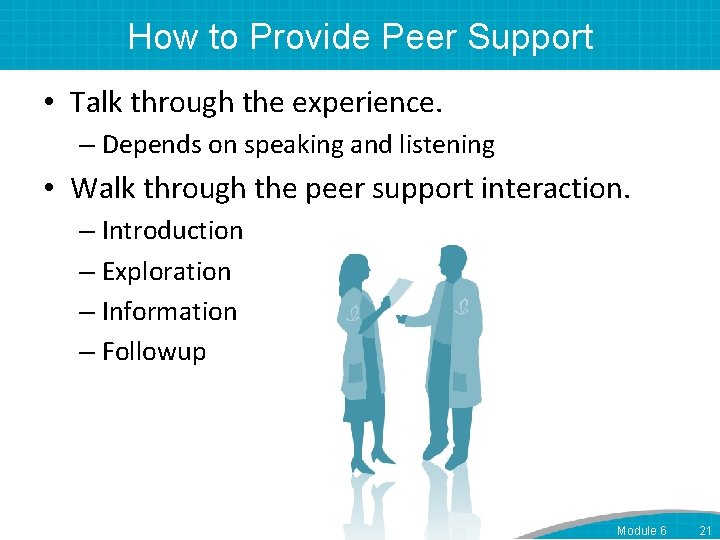
How to Provide Peer Support • Talk through the experience. – Depends on speaking and listening • Walk through the peer support interaction. – Introduction – Exploration – Information – Followup Module 6 21
Peer Support Demonstration Physician Demonstration Nurse Demonstration Module 6 22
Emotional Group Debriefing • Peer support for a team. • Led by trained facilitators. • Involve additional peer supporters, known as “lifeguards. ” – Provide support during debrief. – Facilitate followup. Module 6 23
References 1. Scott SD, Hirschinger LE, Cox KR, Mc. Coig M, Brandt J, and Hall LW. The natural history of recovery for the health care provider “second victim” after adverse patient events. Quality and Safety in Health Care. 2009: 18; 325330. 2. Wu AW. Medical error: the second victim. The doctor who makes the mistake needs help too. BMJ 2000; 320: 726– 7. 3. AHRQ Primer: Support for Clinicians Involved in Errors and Adverse Events (Second Victims) 4. Wachter RM. Understanding patient safety. Mc. Graw Hill Medical, 2012. 5. The Second Victim Phenomenon: A Harsh Reality of Health Care Professions, Perspective, May 2011, http: //webmm. ahrq. gov/perspective. aspx? perspective. ID= 102 Module 6 24