
Communication and Optimal Resolution CANDOR Toolkit Module 3
- Slides: 16
Communication and Optimal Resolution (CANDOR) Toolkit Module 3 – Preparing for Implementation: Change Readiness and Gap Analysis
Objectives • Develop an action plan for implementing the CANDOR Process. • Outline the steps involved in completing a Gap Analysis. Module 3 2
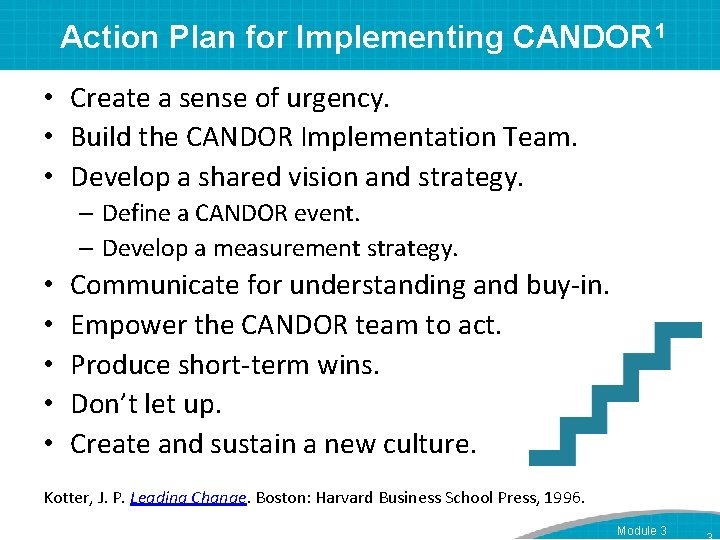
Action Plan for Implementing CANDOR 1 • Create a sense of urgency. • Build the CANDOR Implementation Team. • Develop a shared vision and strategy. – Define a CANDOR event. – Develop a measurement strategy. • • • Communicate for understanding and buy-in. Empower the CANDOR team to act. Produce short-term wins. Don’t let up. Create and sustain a new culture. Kotter, J. P. Leading Change. Boston: Harvard Business School Press, 1996. Module 3
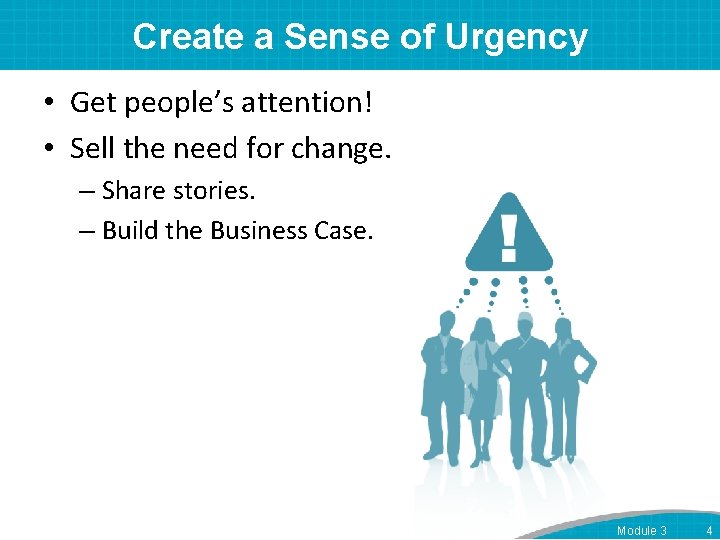
Create a Sense of Urgency • Get people’s attention! • Sell the need for change. – Share stories. – Build the Business Case. Module 3 4
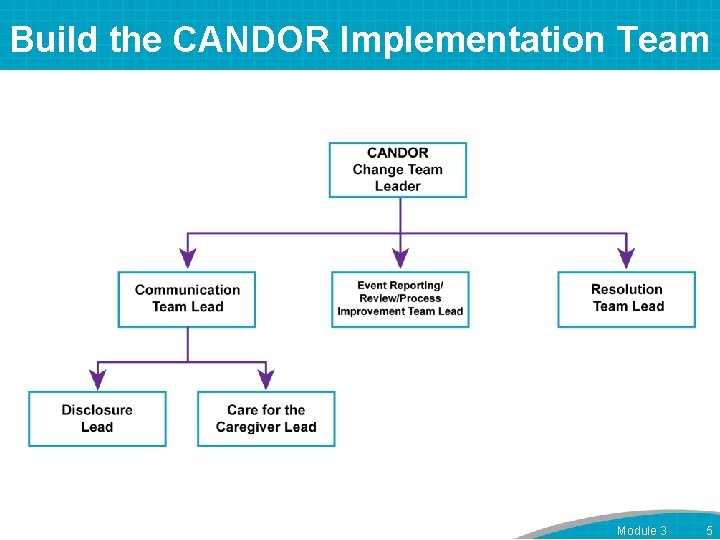
Build the CANDOR Implementation Team Module 3 5
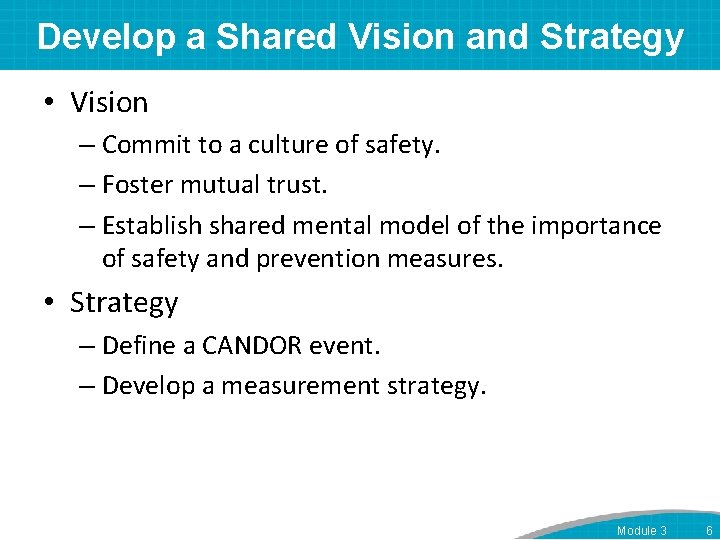
Develop a Shared Vision and Strategy • Vision – Commit to a culture of safety. – Foster mutual trust. – Establish shared mental model of the importance of safety and prevention measures. • Strategy – Define a CANDOR event. – Develop a measurement strategy. Module 3 6
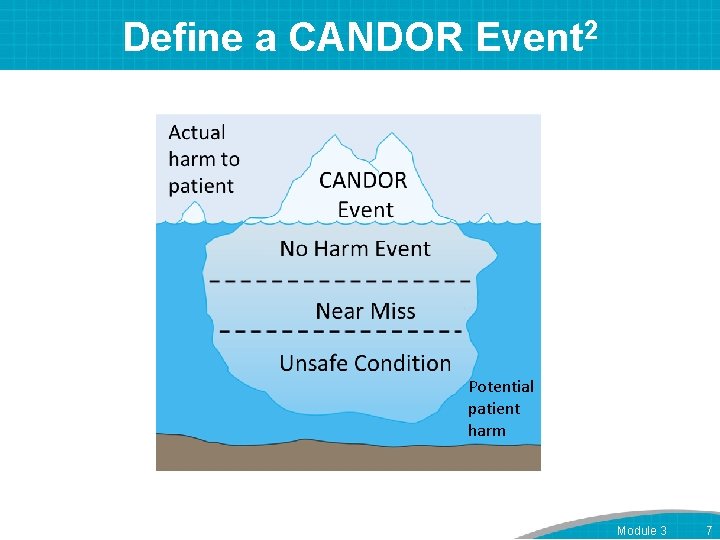
Define a CANDOR Event 2 Potential patient harm Module 3 7
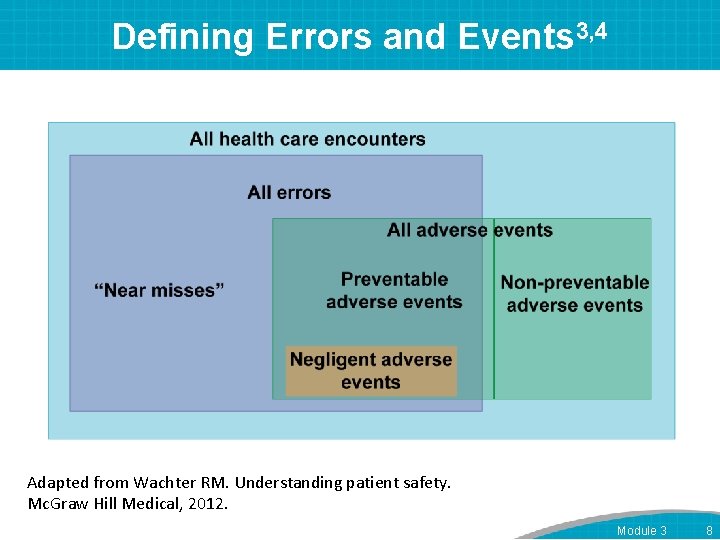
Defining Errors and Events 3, 4 Adapted from Wachter RM. Understanding patient safety. Mc. Graw Hill Medical, 2012. Module 3 8
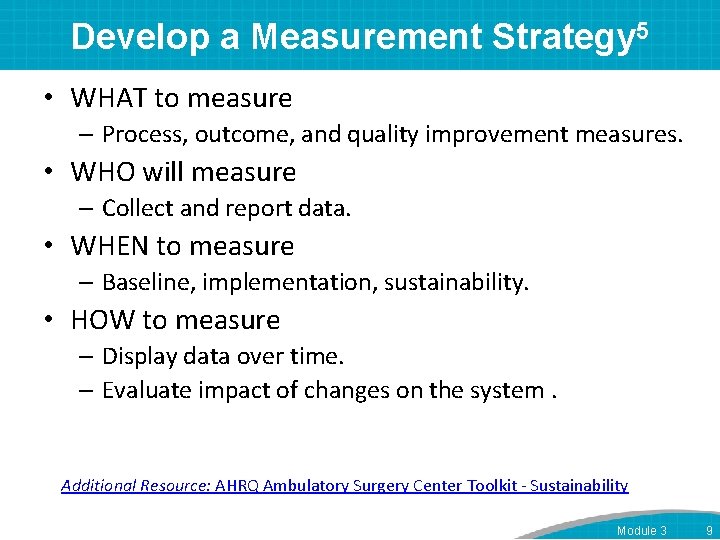
Develop a Measurement Strategy 5 • WHAT to measure – Process, outcome, and quality improvement measures. • WHO will measure – Collect and report data. • WHEN to measure – Baseline, implementation, sustainability. • HOW to measure – Display data over time. – Evaluate impact of changes on the system. Additional Resource: AHRQ Ambulatory Surgery Center Toolkit - Sustainability Module 3 9
Communicate for Understanding and Buy-In • Communicate the shared vision to all staff. • Use personal stories to help others understand the reason for change. • Create and disseminate materials that reinforce the different components of CANDOR. – Create “marketing” materials. Module 3 10
Empower the CANDOR Team to Act • Develop a shared sense of purpose. • Train staff so they have the desired skills and attitudes. • Remove obstacles to change. Module 3 11
Produce Short-Term Wins • Identify visible and clear successes. • Recognize and reward people. Module 3 12
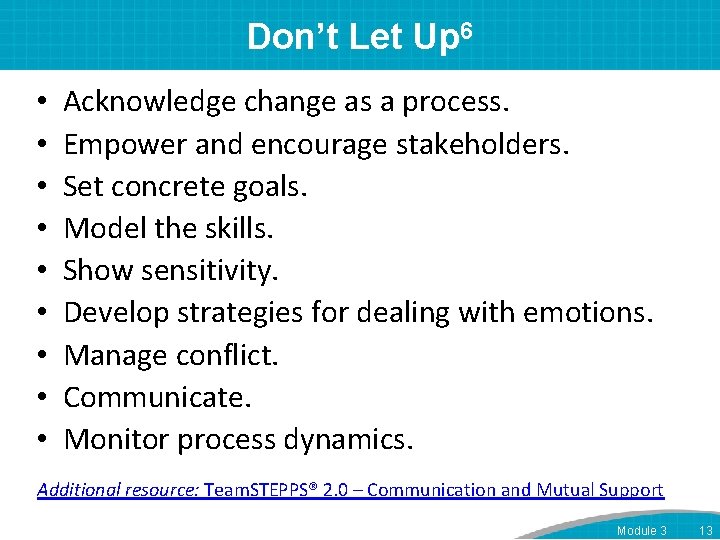
Don’t Let Up 6 • • • Acknowledge change as a process. Empower and encourage stakeholders. Set concrete goals. Model the skills. Show sensitivity. Develop strategies for dealing with emotions. Manage conflict. Communicate. Monitor process dynamics. Additional resource: Team. STEPPS® 2. 0 – Communication and Mutual Support Module 3 13
Create and Sustain the New Culture • Set goals to continue building on the momentum you’ve achieved. • Develop action steps for stabilizing, reinforcing, sustaining the change. • Talk about the progress every chance you get. Module 3 14
Assess Gaps Prior to Implementation • Perform a Gap Analysis to assess: – Processes – Policies – Systems • Tools provided: – Gap Analysis Facilitator’s Guide Module 3 15
References 1. 2. 3. 4. 5. 6. 7. Kotter J. Leading Change. Harvard Business School Press, Boston, MA, 1996, as cited in Team. STEPPS Fundamentals Course: Module 8. Change Management: Instructor's Slides: Team. STEPPS Fundamentals Course. November 2008. Agency for Healthcare Research and Quality, Rockville, MD. http: //www. ahrq. gov/professionals/education/curriculumtools/teamstepps/instructor/fundamentals/module 8/igchangemgmt. html. Accessed on August 8, 2015. Hoppes M, Mitchell J. White Paper Series: Serious Safety Events: A Focus on Harm Classification: Deviation in Care as Link. American Society for Healthcare Risk Management. Chicago, IL; 2014. http: //www. ashrm. org/pubs/files/white_papers/SSE-2_getting_to_zero-9 -30 -14. pdf Error. AHRQ Patient Safety Network Glossary. Rockville, MD: Agency for Healthcare Research and Quality. http: //psnet. ahrq. gov/popup_glossary. aspx? name=error. Accessed on August 25, 2015. Wachter RM. Understanding patient safety. Mc. Graw Hill Medical, 2012. Sustainability module, Ambulatory Surgery Center Toolkit. Rockville, MD: Agency for Healthcare Research and Quality; 2015. http: //www. ahrq. gov/professionals/quality-patientsafety/patientsafetyculture/asc/index. html. Accessed August 19, 2015. Team. STEPPS®: Strategies and Tools to Enhance Performance and Patient Safety. Rockville, MD: Agency for Healthcare Research and Quality. http: //www. ahrq. gov/professionals/education/curriculum-tools/teamstepps/index. html. Accessed August 8, 2015. Preventing Falls in Hospitals: A Toolkit for Improving Quality of Care. Rockville, MD: Agency for Healthcare Research and Quality. http: //www. ahrq. gov/professionals/systems/hospital/fallpxtoolkit/fallpxtk 1. html. Accessed August 22, 2015. Module 3 16