
Communication and Optimal Resolution CANDOR Toolkit Module 1
- Slides: 15
Communication and Optimal Resolution (CANDOR) Toolkit Module 1: An Overview of the CANDOR Process
Objectives • Define the CANDOR process • Define a CANDOR event • Describe the goals of the CANDOR process • Examine the steps in the CANDOR process • Review how to use the CANDOR toolkit to educate health care organizations on how to implement the CANDOR process Module 1 2
What Is the CANDOR Process? Communication and Optimal Resolution Process The CANDOR process is an approach that health care institutions and practitioners can use to respond in a timely, thorough, and just way to unexpected patient harm events. Module 1 3
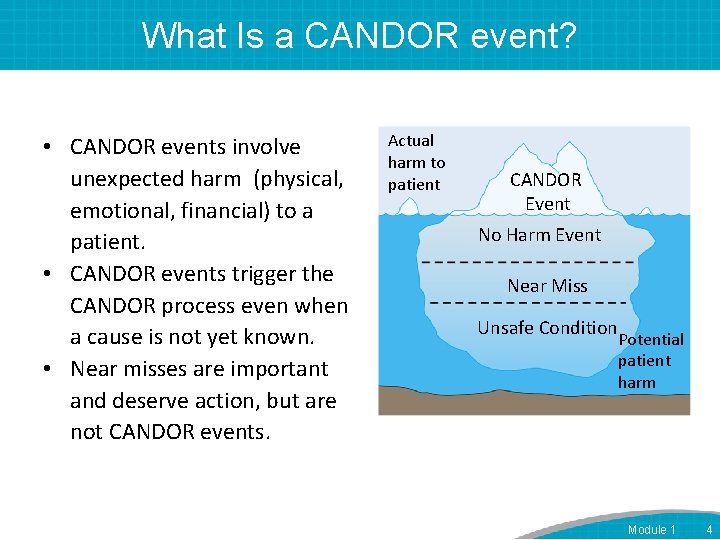
What Is a CANDOR event? • CANDOR events involve unexpected harm (physical, emotional, financial) to a patient. • CANDOR events trigger the CANDOR process even when a cause is not yet known. • Near misses are important and deserve action, but are not CANDOR events. Actual harm to patient CANDOR Event No Harm Event Near Miss Unsafe Condition Potential patient harm Module 1 4
CANDOR Process Goals • Improve safety and quality, prevent patient harm. • Support patients, families, and caregivers. • Reduce litigation frequency and costs. Module 1 5
Introduction to Communication and Optimal Resolution (CANDOR) - Video Module 1 6
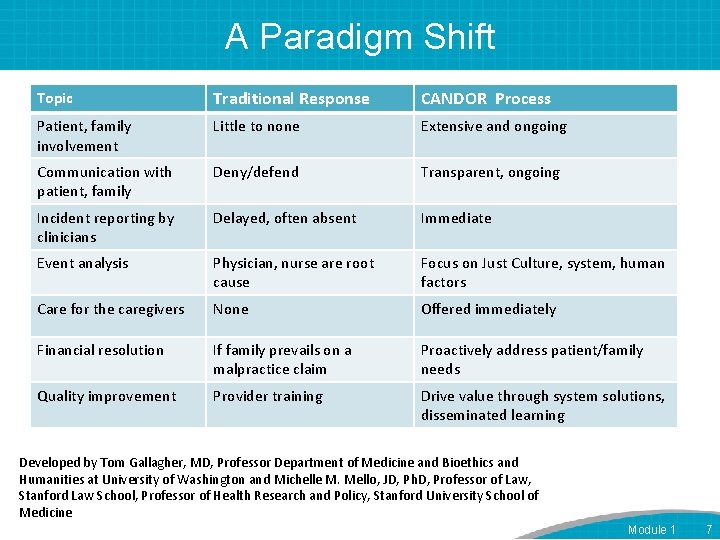
A Paradigm Shift Topic Traditional Response CANDOR Process Patient, family involvement Little to none Extensive and ongoing Communication with patient, family Deny/defend Transparent, ongoing Incident reporting by clinicians Delayed, often absent Immediate Event analysis Physician, nurse are root cause Focus on Just Culture, system, human factors Care for the caregivers None Offered immediately Financial resolution If family prevails on a malpractice claim Proactively address patient/family needs Quality improvement Provider training Drive value through system solutions, disseminated learning Developed by Tom Gallagher, MD, Professor Department of Medicine and Bioethics and Humanities at University of Washington and Michelle M. Mello, JD, Ph. D, Professor of Law, Stanford Law School, Professor of Health Research and Policy, Stanford University School of Medicine Module 1 7
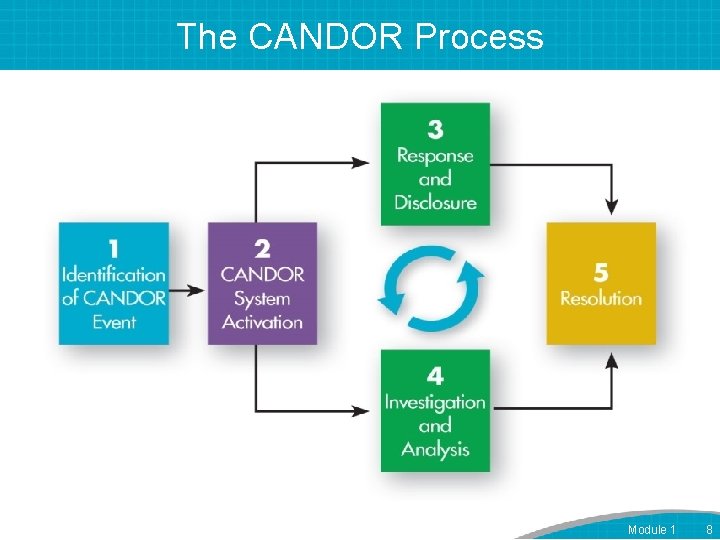
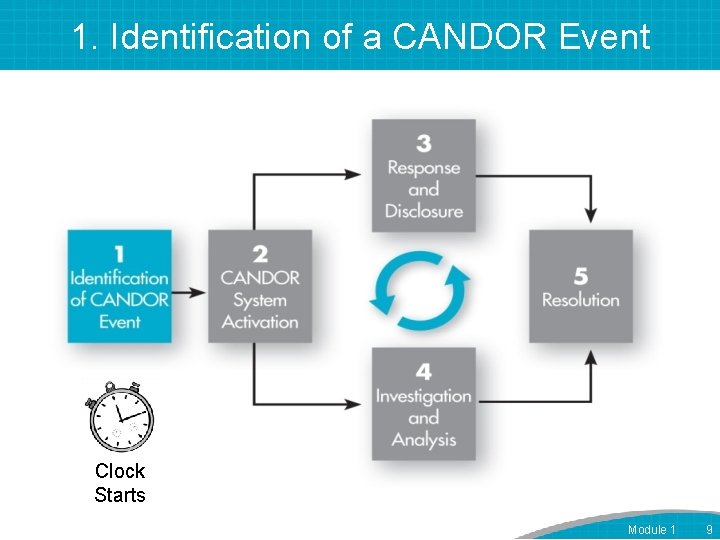
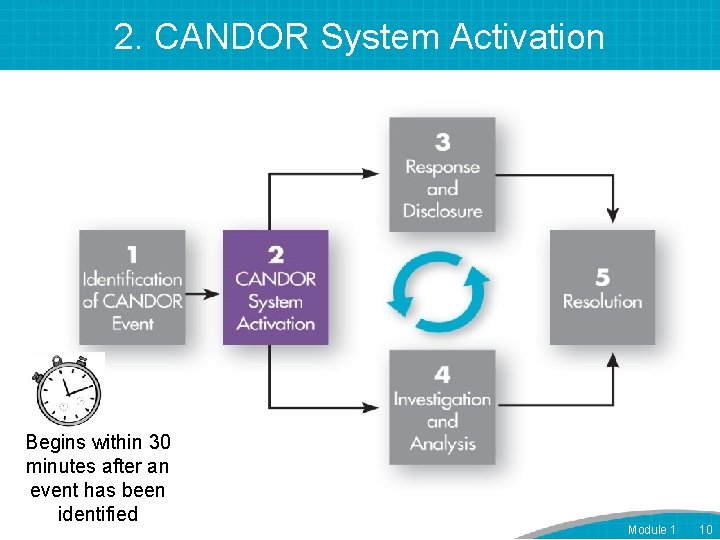
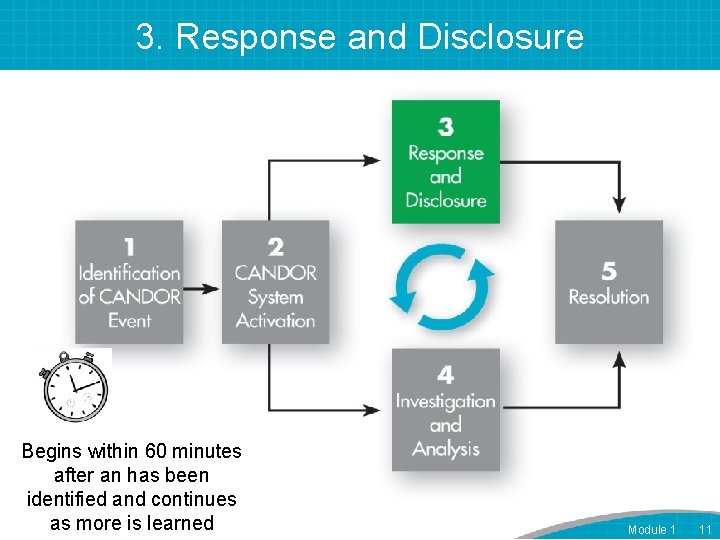
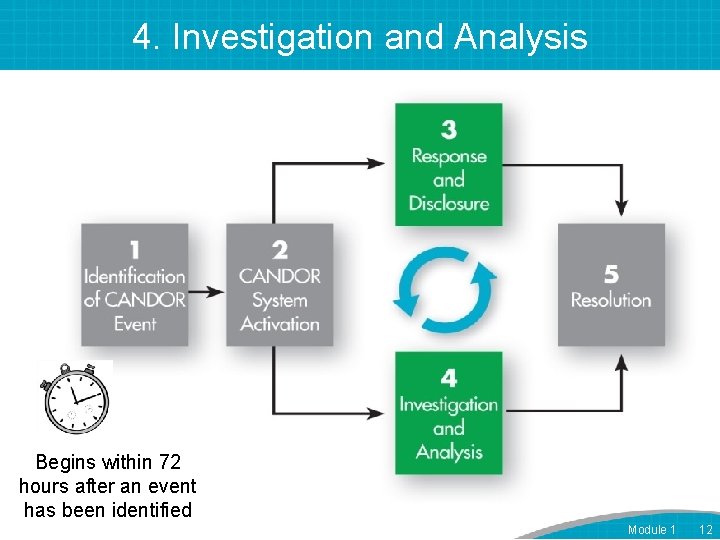
The CANDOR Process Module 1 8
1. Identification of a CANDOR Event Clock Starts Module 1 9
2. CANDOR System Activation Begins within 30 minutes after an event has been identified Module 1 10
3. Response and Disclosure Begins within 60 minutes after an has been identified and continues as more is learned Module 1 11
4. Investigation and Analysis Begins within 72 hours after an event has been identified Module 1 12
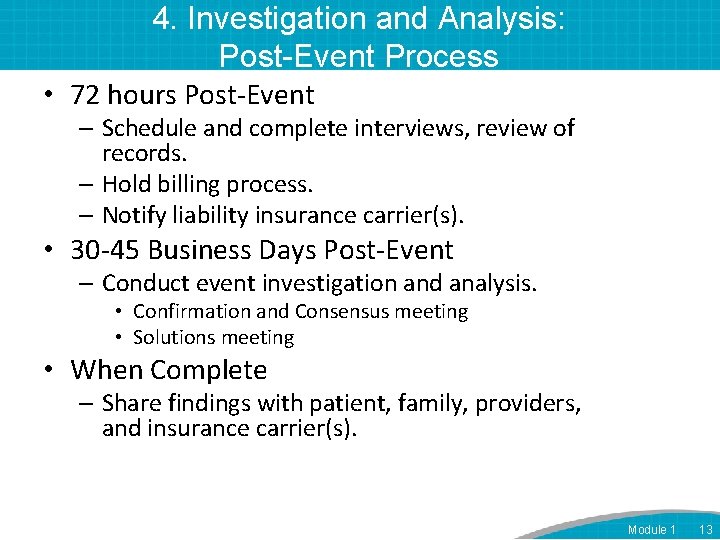
4. Investigation and Analysis: Post-Event Process • 72 hours Post-Event – Schedule and complete interviews, review of records. – Hold billing process. – Notify liability insurance carrier(s). • 30 -45 Business Days Post-Event – Conduct event investigation and analysis. • Confirmation and Consensus meeting • Solutions meeting • When Complete – Share findings with patient, family, providers, and insurance carrier(s). Module 1 13
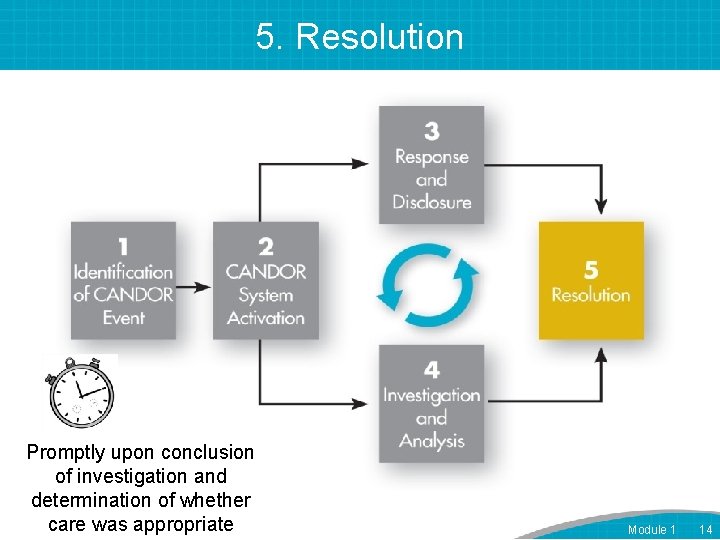
5. Resolution Promptly upon conclusion of investigation and determination of whether care was appropriate Module 1 14
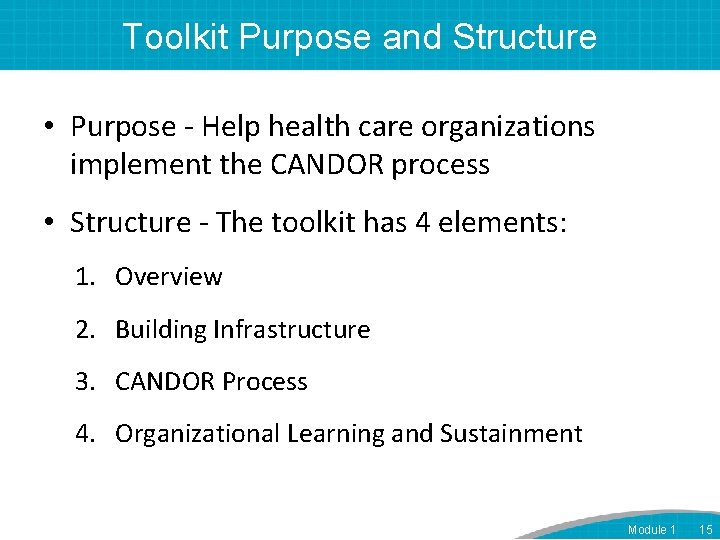
Toolkit Purpose and Structure • Purpose - Help health care organizations implement the CANDOR process • Structure - The toolkit has 4 elements: 1. Overview 2. Building Infrastructure 3. CANDOR Process 4. Organizational Learning and Sustainment Module 1 15