
COMMUNICATION 2 HIF 1 O Ms Gray WHAT
- Slides: 12
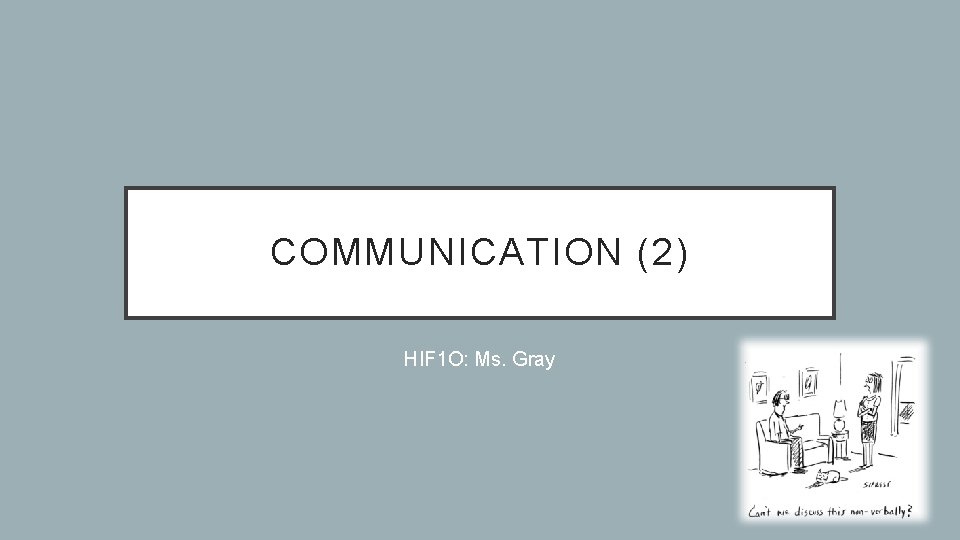
COMMUNICATION (2) HIF 1 O: Ms. Gray
WHAT TYPE OF COMMUNICATION ARE WE TALKING ABOUT TODAY? • 2 Babies • What do you think they are trying to communicate?
HOW DO WE COMMUNICATE WITHOUT WORDS? • With a partner, or on your own, come up with as many non-verbal gestures as you can within 2 minutes.
REMEMBER • Communication is the act of transferring information from one place to another. • 4 Types: • 1. Verbal • 2. Non Verbal • 3. Written • 4. Group
NON-VERBAL COMMUNICATION • Non-verbal communications include facial expressions, the tone and pitch of the voice, gestures displayed through body language (kinesics) and the physical distance between the communicators (proxemics). • Over 70% of all communication is nonverbal
TYPES OF NON-VERBAL COMMUNICATION • Body Language • Eye Contact • Gestures • Facial Expression • Presentation
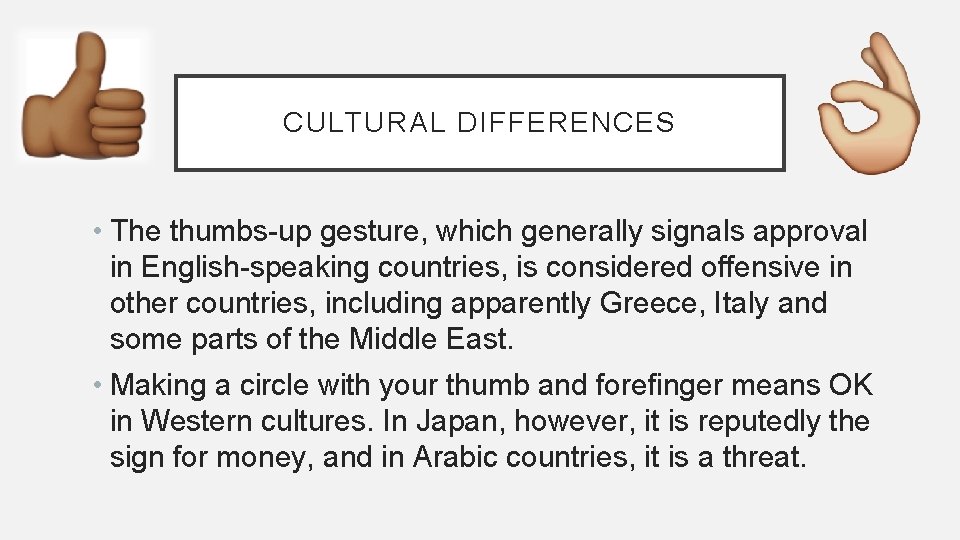
CULTURAL DIFFERENCES • The thumbs-up gesture, which generally signals approval in English-speaking countries, is considered offensive in other countries, including apparently Greece, Italy and some parts of the Middle East. • Making a circle with your thumb and forefinger means OK in Western cultures. In Japan, however, it is reputedly the sign for money, and in Arabic countries, it is a threat.
LET’S PRACTICE! • 1. Go away! • 2. Good job. • 3. Will you marry me? • 4. I have something to say! • 5. Turn left. • 6. Mister, can you help me? • 7. You must be quiet. • 8. Don’t interrupt me! • 9. I’m so excited! • 10. That’s too bad
WE HAVE TO MOVE NOW! • 6 Volunteers • You will choose a piece of paper with an emotion on it. • While using the emotion and the types of non-verbal communication we spoke about – you will read the following sentence to the class. • "We all need to gather our possessions and move to another building as soon as possible!" • The class will guess what emotion you chose
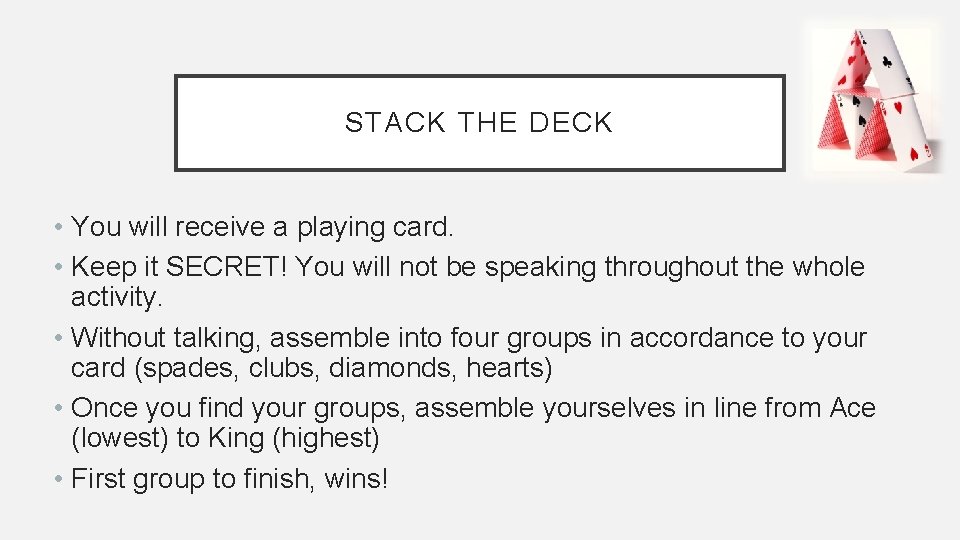
STACK THE DECK • You will receive a playing card. • Keep it SECRET! You will not be speaking throughout the whole activity. • Without talking, assemble into four groups in accordance to your card (spades, clubs, diamonds, hearts) • Once you find your groups, assemble yourselves in line from Ace (lowest) to King (highest) • First group to finish, wins!
SILENT TELEPHONE
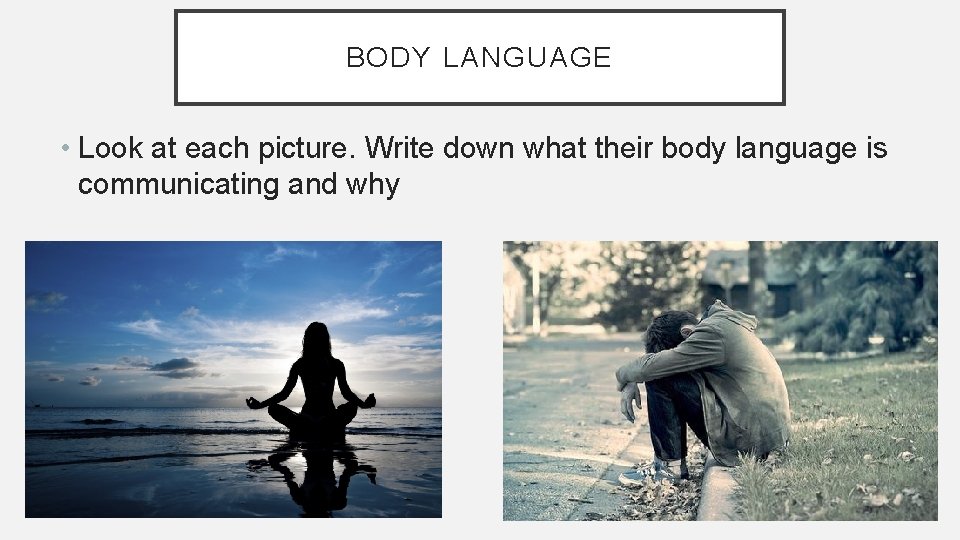
BODY LANGUAGE • Look at each picture. Write down what their body language is communicating and why