
Communicating with Others Communication Exchange of thoughts feelings



- Slides: 46
Communicating with Others
Communication • Exchange of thoughts, feelings, and information by verbal or nonverbal messages
Vocabulary
Feedback • Checking out the meaning of a message by responding to the sender
Observe • To note a fact of occurrence
Verbal • Relating to or consisting of words
Nonverbal • Using forms of communication other than words
Empathy • Ability to share in another’s emotions or feelings
Jargon • Word usage characterized by long words or terms understood only by a particular group
Colloquialism • Local or regional informal speech.
Purpose of Communication
• Be social • Build relationships • Exchange information • Furnish knowledge
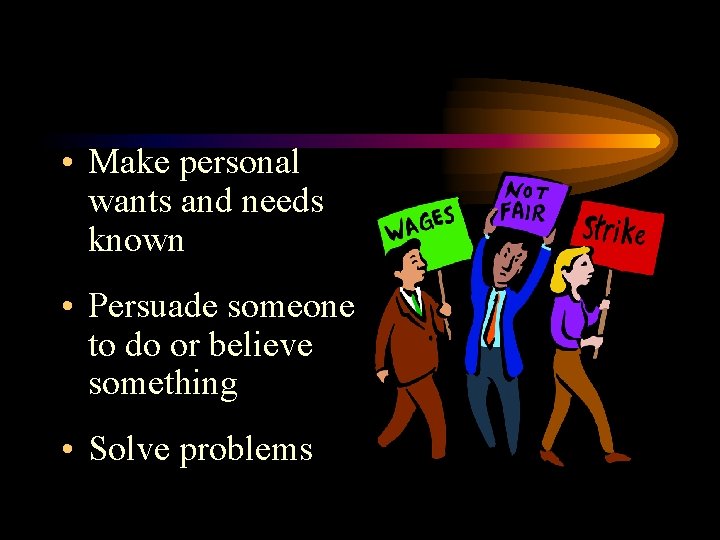
• Make personal wants and needs known • Persuade someone to do or believe something • Solve problems
Methods of Communication • • Cellular phone E-mail Fax Telephone Video phone Voice mail Written letter
LEVELS OF COMMUNICATION
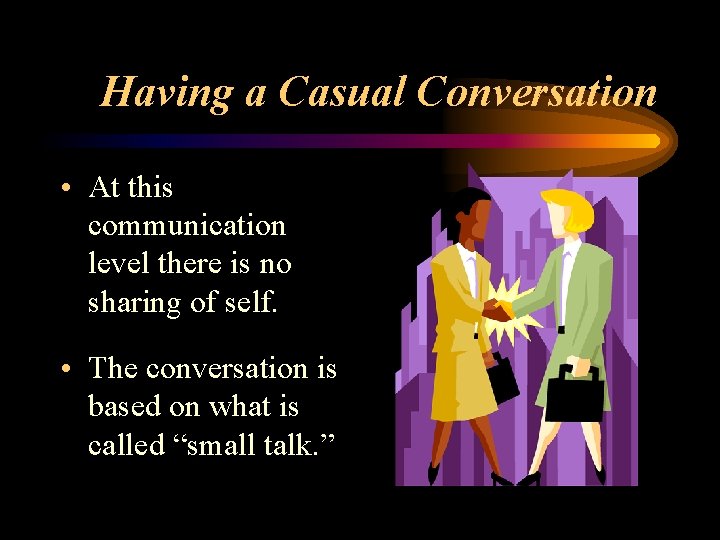
Having a Casual Conversation • At this communication level there is no sharing of self. • The conversation is based on what is called “small talk. ”
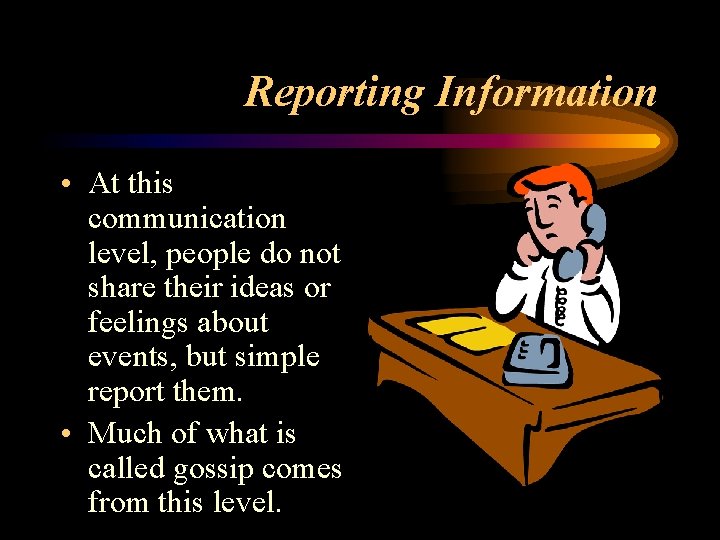
Reporting Information • At this communication level, people do not share their ideas or feelings about events, but simple report them. • Much of what is called gossip comes from this level.
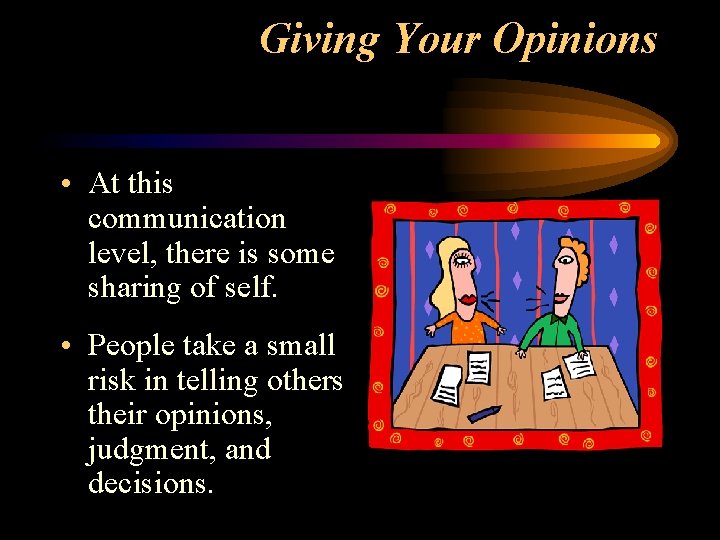
Giving Your Opinions • At this communication level, there is some sharing of self. • People take a small risk in telling others their opinions, judgment, and decisions.
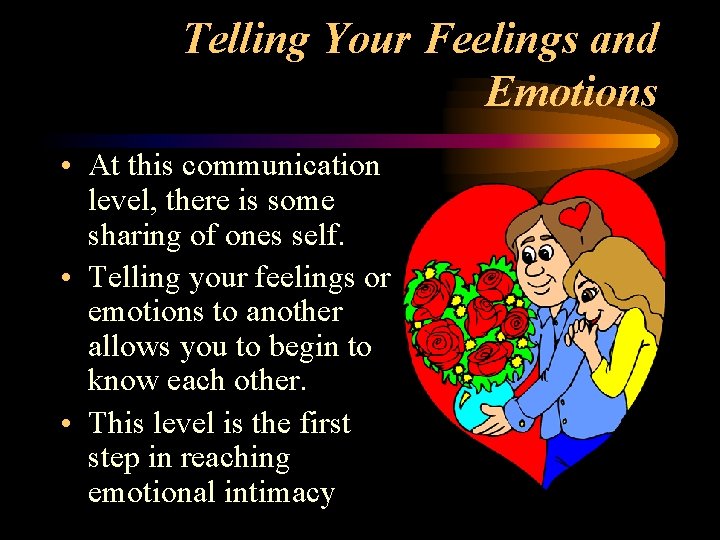
Telling Your Feelings and Emotions • At this communication level, there is some sharing of ones self. • Telling your feelings or emotions to another allows you to begin to know each other. • This level is the first step in reaching emotional intimacy
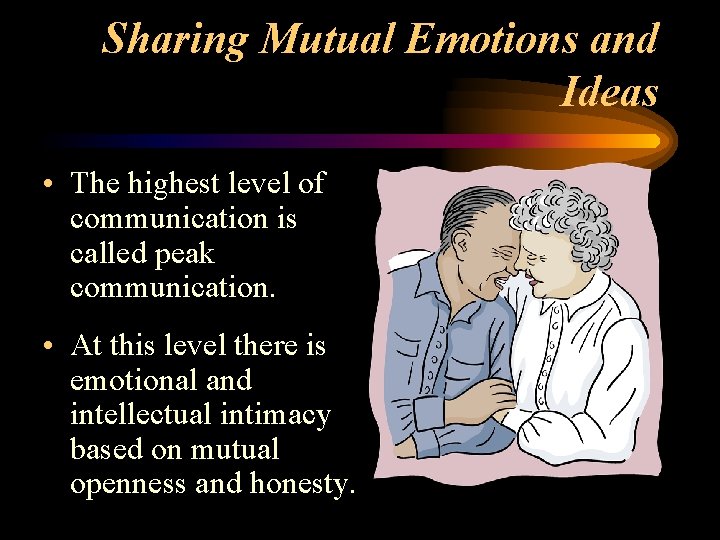
Sharing Mutual Emotions and Ideas • The highest level of communication is called peak communication. • At this level there is emotional and intellectual intimacy based on mutual openness and honesty.
Types of Communication
Destructive • Includes those messages that cause people to feel judged or guilty.
Constructive • Includes those messages that make people feel good about themselves and that give them a chance to talk and express their feelings
Methods of Communication
Verbal: Speaking • One danger in spoken communication is that the message may be communicated before the speaker fully grasps the impact on the listener. • Tone of voice plays an important part in delivering a message.
Verbal: Writing • Written communication allows the communicator a longer period in which to consider the impact of the message.
Nonverbal • Using body language • Touching • Having periods of silence • Appearance (clothing & grooming) • Using facial expressions
Listening • Ignoring • Pretending • Selective • Attentive • Empathetic
Causes of Communication Problems
• Failure to listen • Use of clichés, automatic responses, jargon, and colloquialisms • Interruptions
• Failure to clarify comments • Use of limited vocabulary • False assumptions • Lack of self confidence
• Unawareness of how we are perceived by others • Childhood teachings • Failure to see a person as an individual
Results of Poor Communication • Most of these results are self destructive. People who use these are afraid of conflict.
• Overindulgence • Gossip or “Talking about” others
• Use of silent treatment • Depression • Physical illnessrelated to or aggravated by emotional stress
Ways to Overcome Communication Problems
• Acknowledge the existence of a problem. • Set up an appropriate time and place for your discussion.
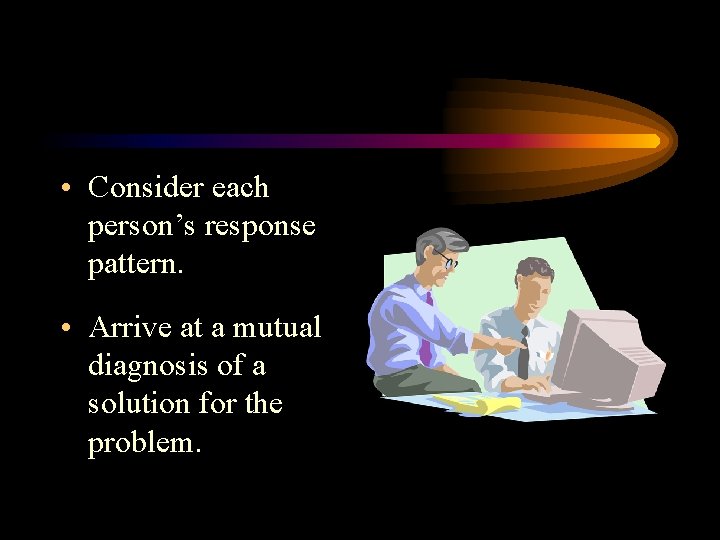
• Consider each person’s response pattern. • Arrive at a mutual diagnosis of a solution for the problem.
Ways to Improve Communication
• Maintain a pleasant tone of voice • Avoid critical or sarcastic remarks • Use questions wisely. Think before responding to a question.
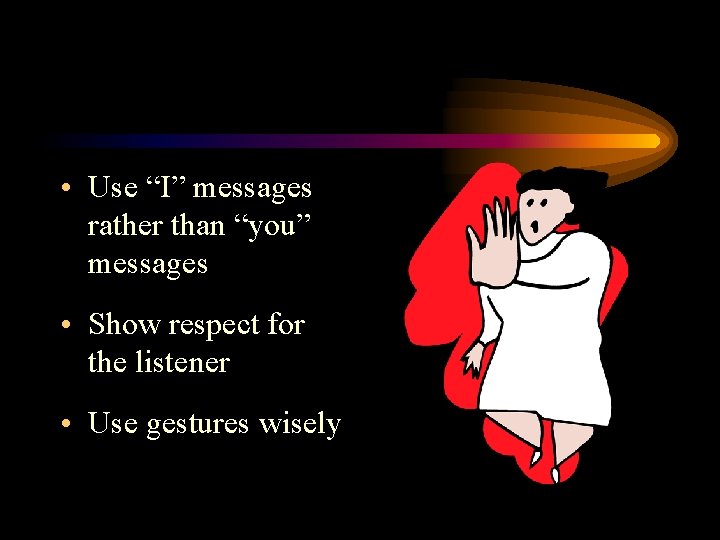
• Use “I” messages rather than “you” messages • Show respect for the listener • Use gestures wisely
• Indicate your honest wish to talk • Choose an appropriate time for communicating • Maintain eye contact, and build trust
Constructive Ways to Argue • Arguments are reality. Effective use of arguments can prevent destructive conflicts.
• Be sure that you understand the other person’s point of view. • Look for all possible points of agreement. • Be sure that what you are in conflict about is worth discussing.
• Avoid all forms of negative pressure tactics. • Consider alternatives. • Be optimistic about reaching a solution.