
Communicating Effectively Communication The exchange of information thoughts

- Slides: 17
Communicating Effectively
Communication The exchange of information, thoughts, and feelings. Sender-provides information Receiver-listens to information Understandable message
Verbal Communication that uses spoken or written words. Includes speaking, listening, writing & reading. Words communicate facts, points of view, feelings, & explanations
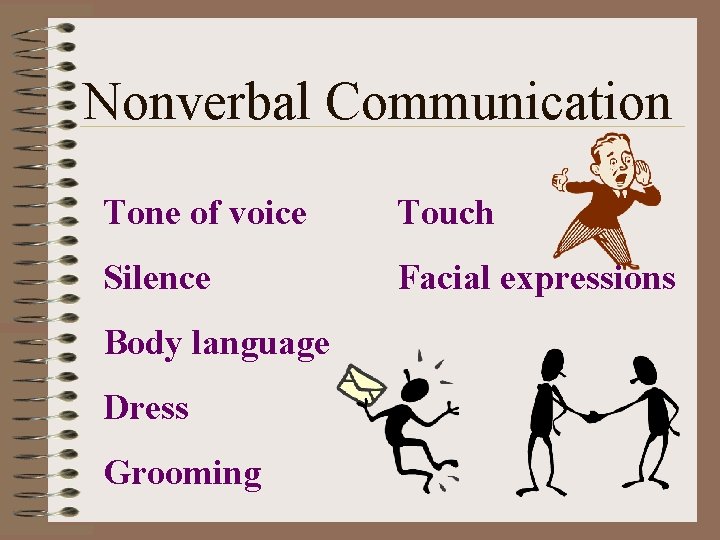
Nonverbal Communication Tone of voice Touch Silence Facial expressions Body language Dress Grooming
Barriers to Communication • • Avoiding an issue Blaming and accusing Hiding behind silence Giving no response to the speaker • Interrupting • A wandering mind
Barriers continued • Negative body language • Listener’s attitudes • Message itself may be unclear • Different perceptions • Distractions
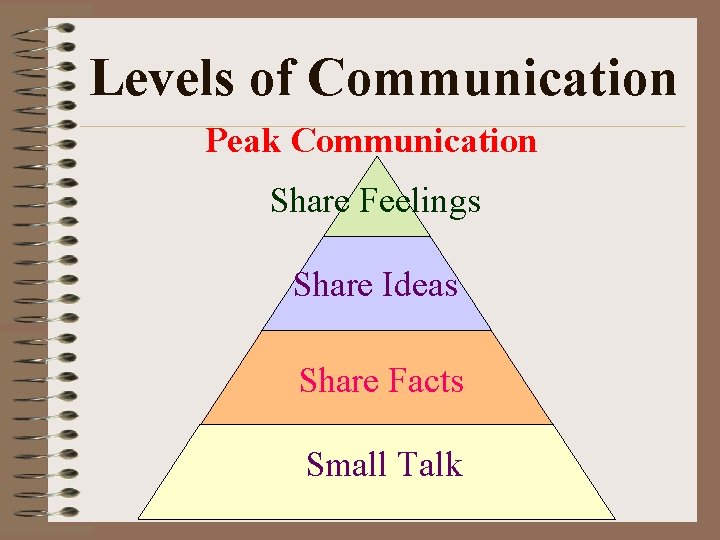
Levels of Communication Peak Communication Share Feelings Share Ideas Share Facts Small Talk
Attitudes for Effective Communication
Sense of Responsibility Accept responsibility for your own ideas and feelings.
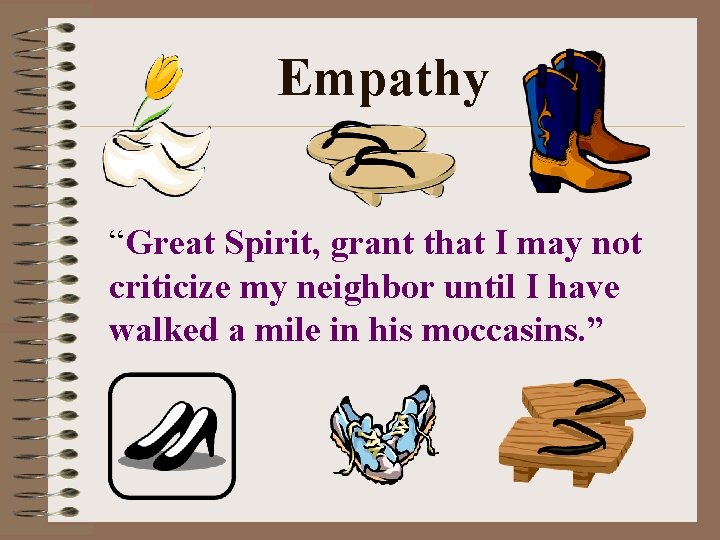
Empathy “Great Spirit, grant that I may not criticize my neighbor until I have walked a mile in his moccasins. ”
Skills for Effective Communication • Choose an appropriate time & place • Use straight talk • Use active listening • Give meaningful feedback
Good communication is the key to getting along in life. It is a skill that is learned and can be improved with effort.
In summary: • Verbal communication is both spoken and written • Nonverbal communication is visible and includes posture, facial expression, eye contact, gestures, touch, dress, and grooming • The process of communication consists of a two way exchange of messages
• Individual perceptions of events differ from person to person because of past experiences and current interests • Barriers to communication exist because of negative attitudes of the message sender, ineffective behaviors of the message receiver, and messages which are not clear
• Five levels of communication (lowest to highest): – – – small talk sharing facts sharing ideas sharing emotions peak communication • Skills in straight talk, timing, and active listening promote good communication