
Communicating Ecosystem Services Using Collaborative Learning and Mental
Communicating Ecosystem Services Using Collaborative Learning and Mental Models Christine Feurt Ph. D. Director, Center for Sustainable Communities University of New England, Biddeford, Maine Director, Coastal Training Program Wells National Estuarine Research Reserve, Wells, Maine Membership Meeting Washington, D. C. September 23, 2015
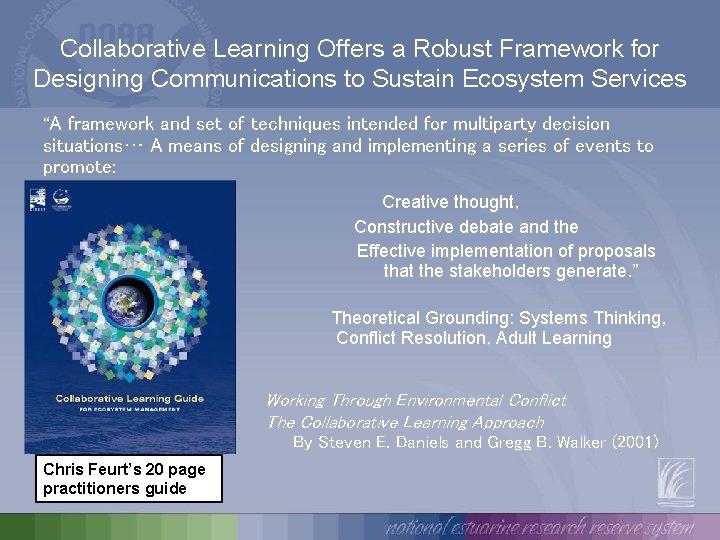
Collaborative Learning Offers a Robust Framework for Designing Communications to Sustain Ecosystem Services “A framework and set of techniques intended for multiparty decision situations… A means of designing and implementing a series of events to promote: Creative thought, Constructive debate and the Effective implementation of proposals that the stakeholders generate. ” Theoretical Grounding: Systems Thinking, Conflict Resolution, Adult Learning Working Through Environmental Conflict The Collaborative Learning Approach By Steven E. Daniels and Gregg B. Walker (2001) Chris Feurt’s 20 page practitioners guide
Mental Models It ain't what you don't know that gets you into trouble. It's what you know for sure that just ain't so. Mark Twain
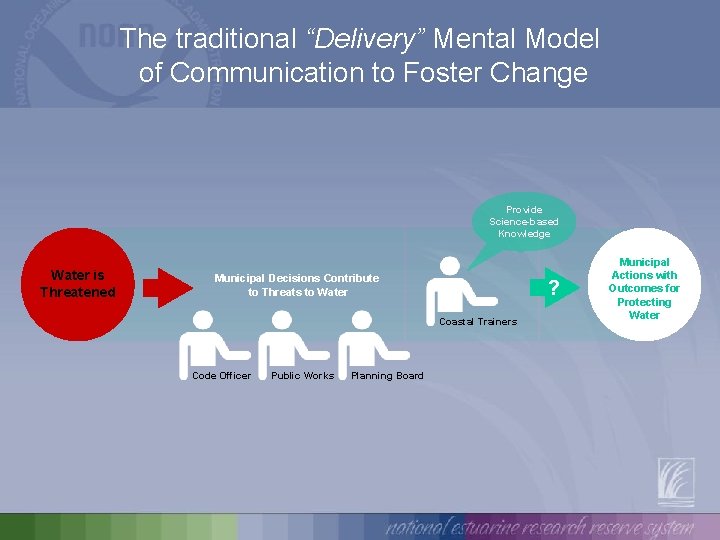
The traditional “Delivery” Mental Model of Communication to Foster Change Provide Science-based Knowledge Water is Threatened Municipal Decisions Contribute to Threats to Water ? Coastal Trainers Code Officer Public Works Planning Board Municipal Actions with Outcomes for Protecting Water
Mental Models are a Double Edged Sword Mental models are a simplified representation of the world used by people to interpret observations, infer from what is known to unknown and solve problems. Mental models are implicit and operate below the level of consciousness. Mental models that are shared within a culture or social group are cultural models. People organize their culture’s beliefs and values with cultural models. They facilitate within group communication but can act as barriers to intergroup communication.

Three Mental Models to Guide Communication about Ecosystem Services
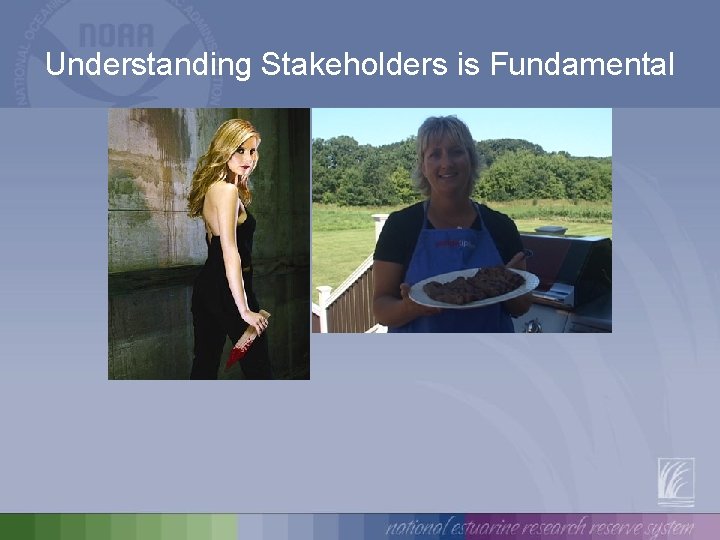
Understanding Stakeholders is Fundamental
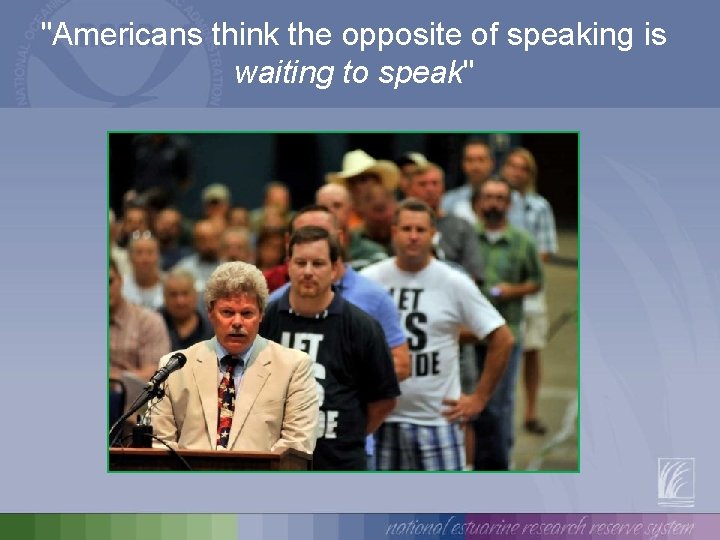
"Americans think the opposite of speaking is waiting to speak"
What I learned from listening to water managers in southern Maine § Why is water important? § What are threats to water? § What can be done to protect water?
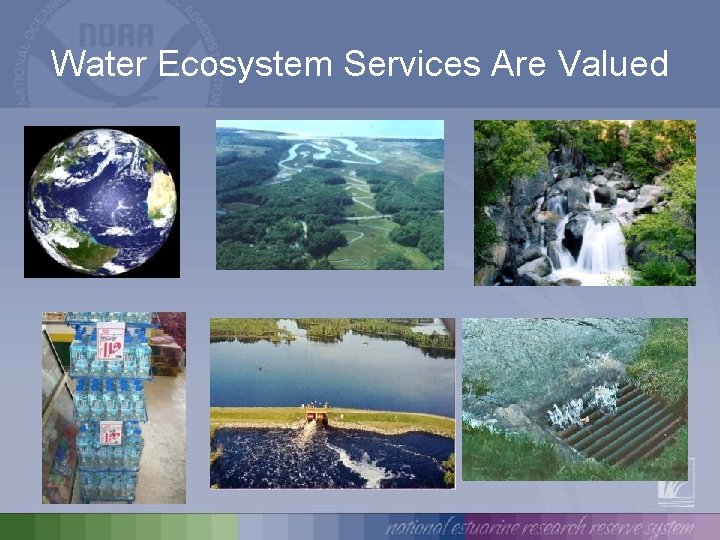
Water Ecosystem Services Are Valued
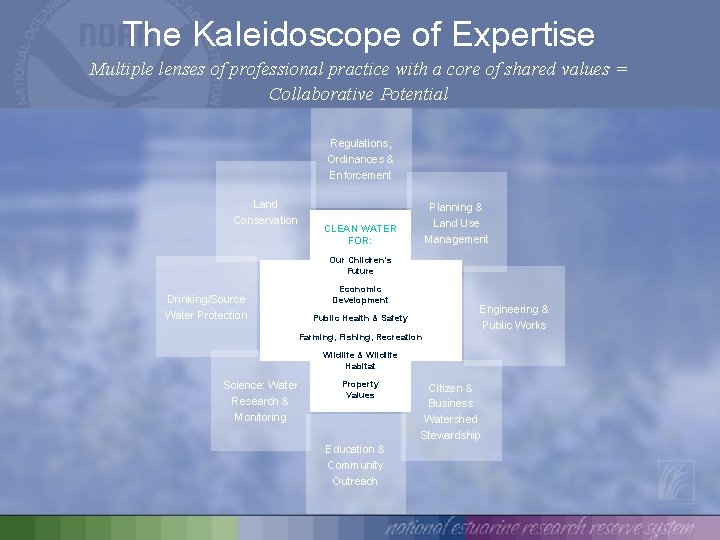
The Kaleidoscope of Expertise Multiple lenses of professional practice with a core of shared values = Collaborative Potential Regulations, Ordinances & Enforcement Land Conservation Planning & Land Use Management CLEAN WATER FOR: Our Children’s Future Drinking/Source Water Protection Economic Development Engineering & Public Works Public Health & Safety Farming, Fishing, Recreation Wildlife & Wildlife Habitat Science: Water Research & Monitoring Property Values Education & Community Outreach Citizen & Business Watershed Stewardship

7 Ways of Knowing A Knowledge Resource for Collaborative Learning Science Local (SCI) (LOC) Governance Ecological (GOV) (ECO) Knowledge Educational Practices Land Use (LAN) (EDU) Technological (TEC)
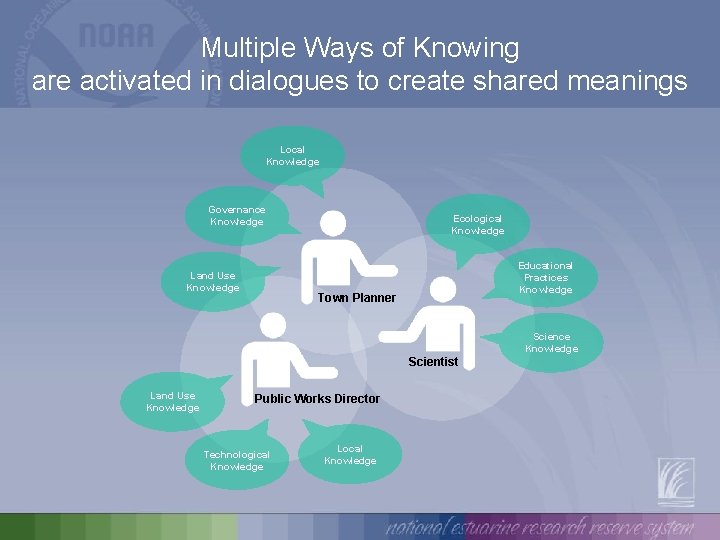
Multiple Ways of Knowing are activated in dialogues to create shared meanings Local Knowledge Governance Knowledge Land Use Knowledge Ecological Knowledge Educational Practices Knowledge Town Planner Science Knowledge Scientist Land Use Knowledge Public Works Director Technological Knowledge Local Knowledge
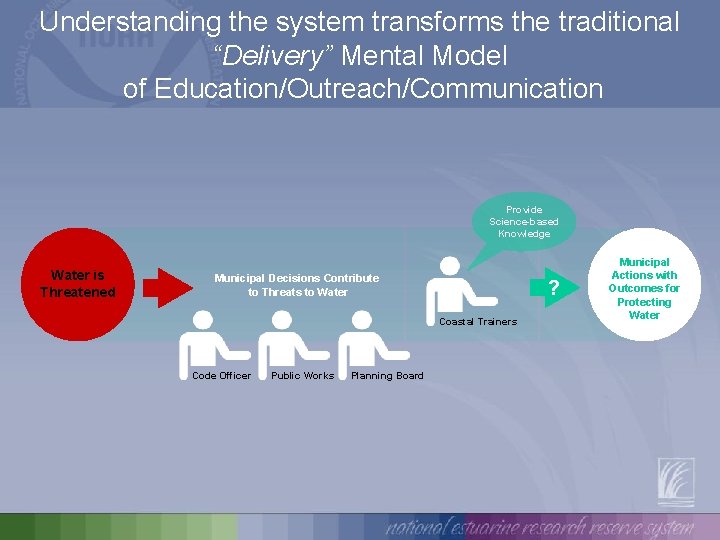
Understanding the system transforms the traditional “Delivery” Mental Model of Education/Outreach/Communication Provide Science-based Knowledge Water is Threatened Municipal Decisions Contribute to Threats to Water ? Coastal Trainers Code Officer Public Works Planning Board Municipal Actions with Outcomes for Protecting Water
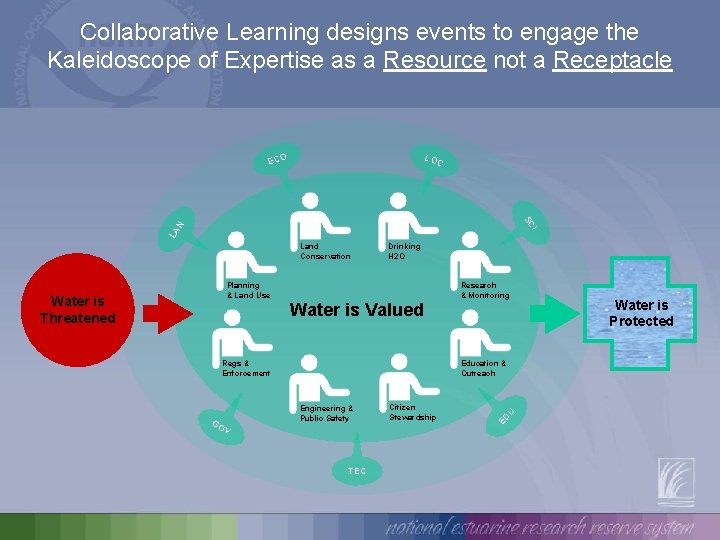
Collaborative Learning designs events to engage the Kaleidoscope of Expertise as a Resource not a Receptacle LOC ECO LA I N SC Land Conservation Drinking H 2 O Research & Monitoring Planning & Land Use Water is Threatened Water is Valued Regs & Enforcement V TEC Citizen Stewardship ED GO Engineering & Public Safety U Education & Outreach Water is Protected
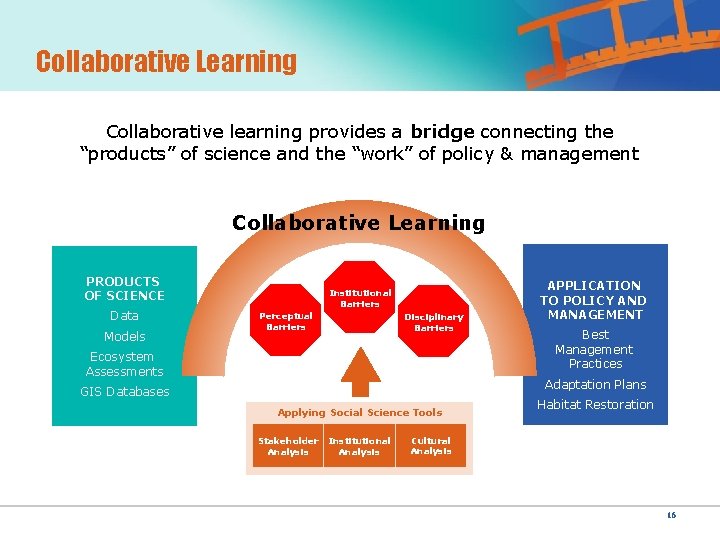
Collaborative Learning Collaborative learning provides a bridge connecting the “products” of science and the “work” of policy & management Collaborative Learning PRODUCTS OF SCIENCE Data Models Institutional Barriers Perceptual Barriers Disciplinary Barriers Ecosystem Assessments APPLICATION TO POLICY AND MANAGEMENT Best Management Practices Adaptation Plans GIS Databases Applying Social Science Tools Stakeholder Analysis Institutional Analysis Habitat Restoration Cultural Analysis 16
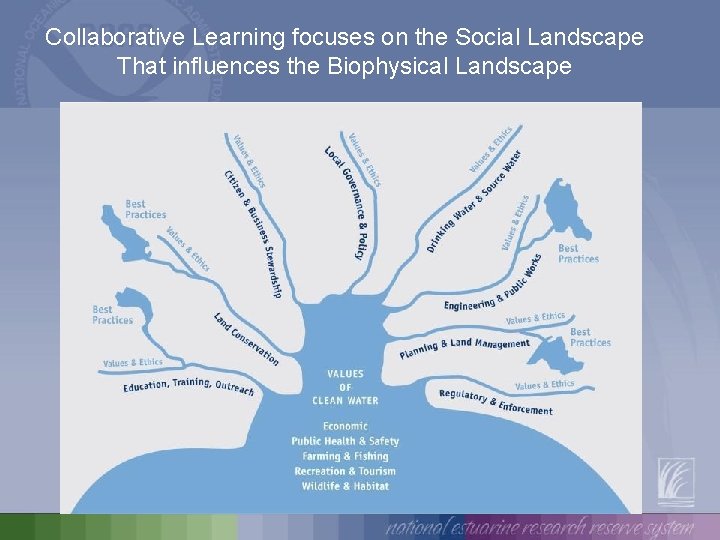
Collaborative Learning focuses on the Social Landscape That influences the Biophysical Landscape
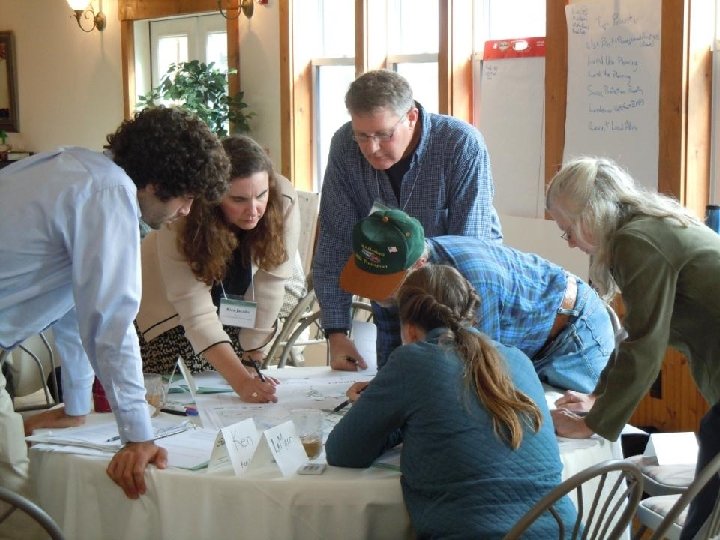
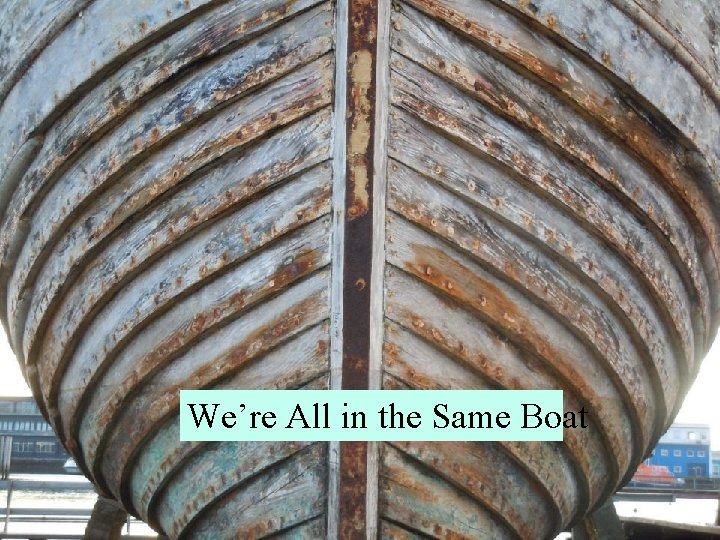
We’re All in the Same Boat
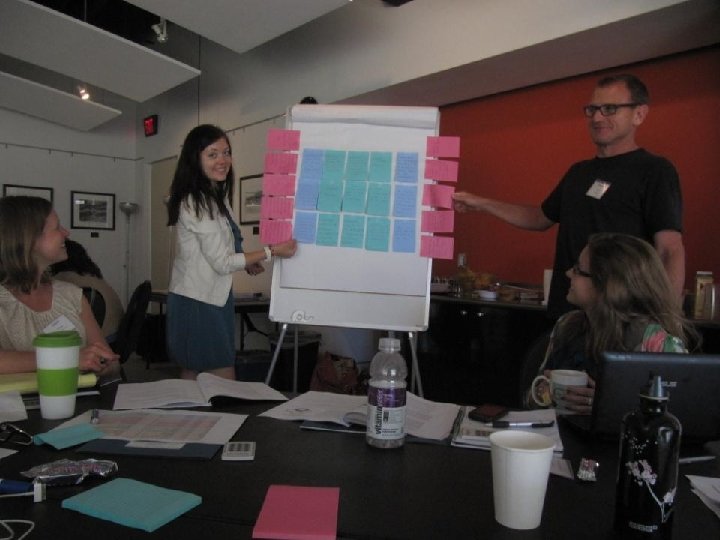
Collaborative Learning Trainings Developed for Practitioners Working Together to Get Things Done Trainings delivered nationwide to NERRS 2012 -2015 Graduate Research Seminars Undergraduate Courses Qualitative Research Methods Course Webinar Archived on Wells NERR website Communicating Ecosystem Services ACES Conference December 2014 Bridging the Gulfs Two-day Stakeholder Engagement training:
To Learn More about Ecosystem Services Collaborative Learning Projects Wells National Estuarine Research Reserve Coastal Training Program www. wellsreserve. org National Estuarine Research Reserve Association http: //www. nerra. org/how-we-work/collaborative-research/ Salmon Falls Watershed Collaborative http: //www. prep. unh. edu/sfwc. htm University of New England Center for Sustainable Communities Saco River Estuary Project http: //www. une. edu/sacoriver wellsreserve. org/saco Collaborative Learning Guide and Training Workbook https: //www. researchgate. net/profile/Christine_Feurt
“Do not try to satisfy your vanity by teaching a great many things. Awaken people's curiosity. It is enough to open minds; do not overload them. Put there just a spark. If there is some good inflammable stuff, it will catch fire. ” Rachel Carson
- Slides: 23