
Communicating Color Courtesy of XRite Inc 4300 44
- Slides: 70
Communicating Color Courtesy of: X-Rite Inc 4300 44 Street SE Grand Rapids MI (616) 803 -2000
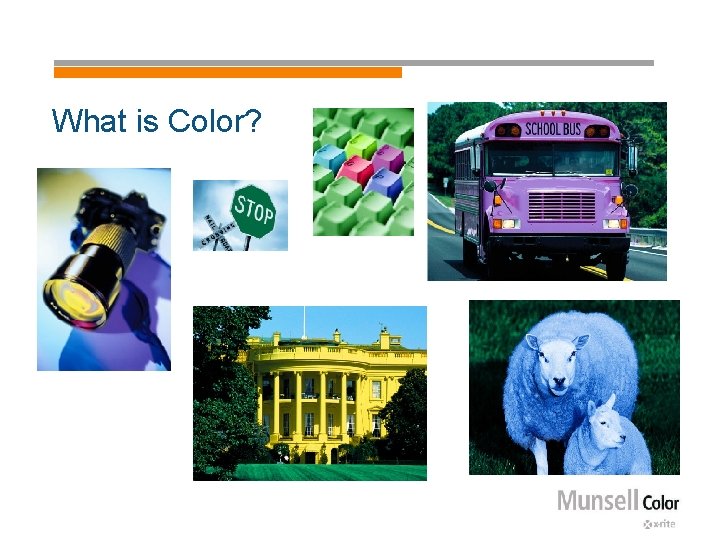
What is Color?
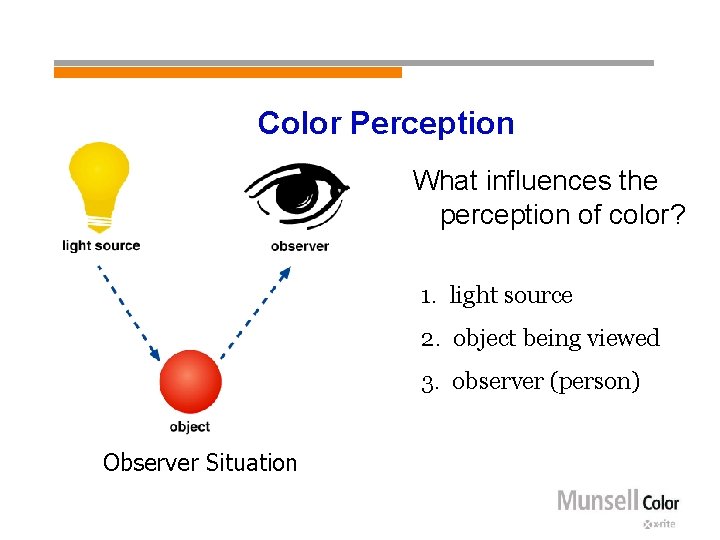
Color Perception What influences the perception of color? 1. light source 2. object being viewed 3. observer (person) Observer Situation
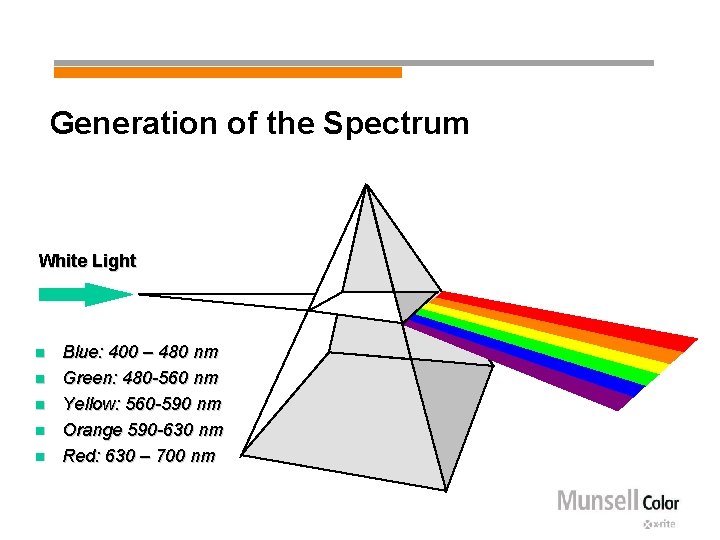
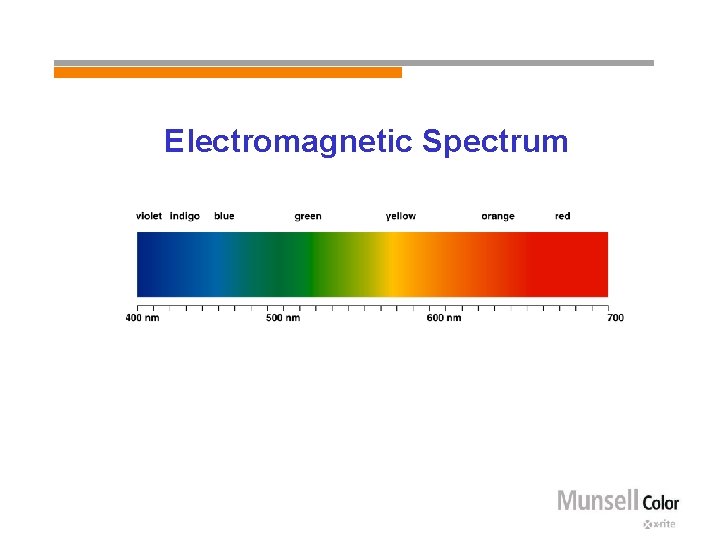
Generation of the Spectrum White Light n n n Blue: 400 – 480 nm Green: 480 -560 nm Yellow: 560 -590 nm Orange 590 -630 nm Red: 630 – 700 nm
Electromagnetic Spectrum
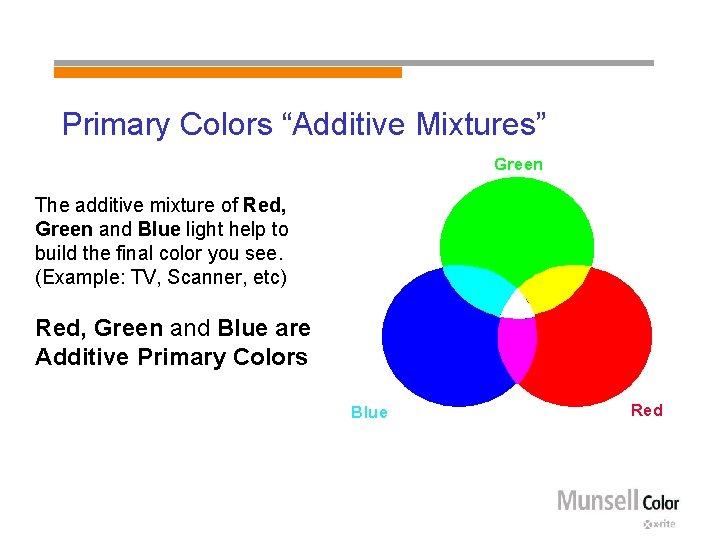
Primary Colors “Additive Mixtures” Green The additive mixture of Red, Green and Blue light help to build the final color you see. (Example: TV, Scanner, etc) Red, Green and Blue are Additive Primary Colors Blue Red
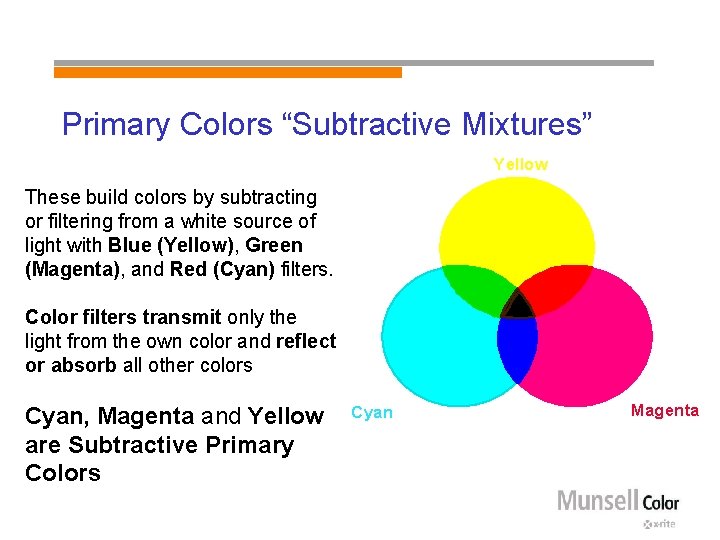
Primary Colors “Subtractive Mixtures” Yellow These build colors by subtracting or filtering from a white source of light with Blue (Yellow), Green (Magenta), and Red (Cyan) filters. Color filters transmit only the light from the own color and reflect or absorb all other colors Cyan, Magenta and Yellow are Subtractive Primary Colors Cyan Magenta
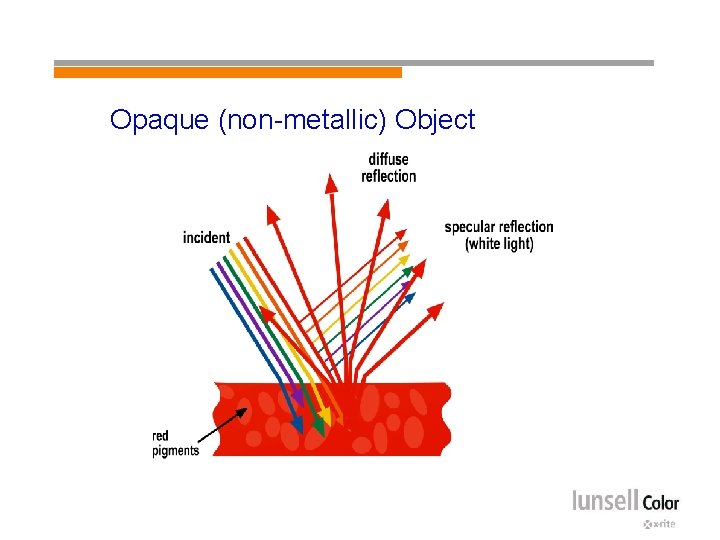
Opaque (non-metallic) Object
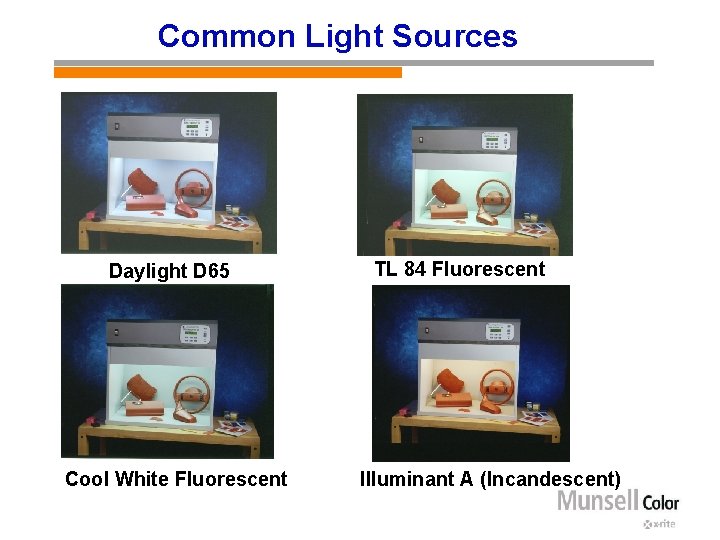
Common Light Sources Daylight D 65 Cool White Fluorescent TL 84 Fluorescent Illuminant A (Incandescent)
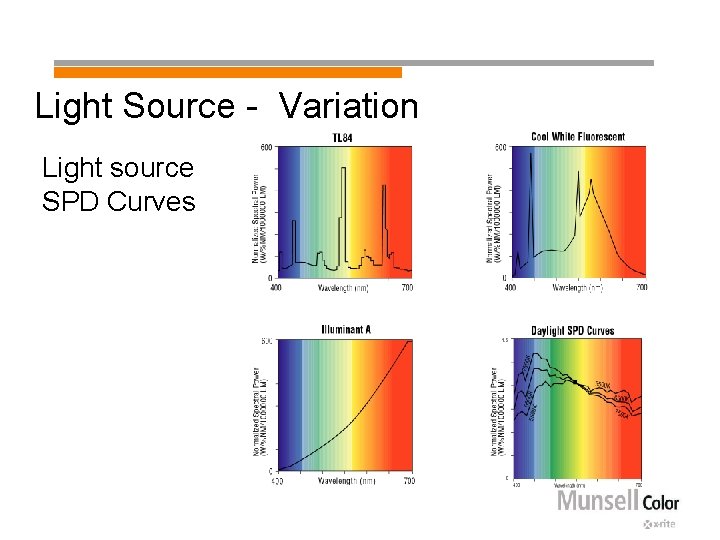
Light Source - Variation Light source SPD Curves
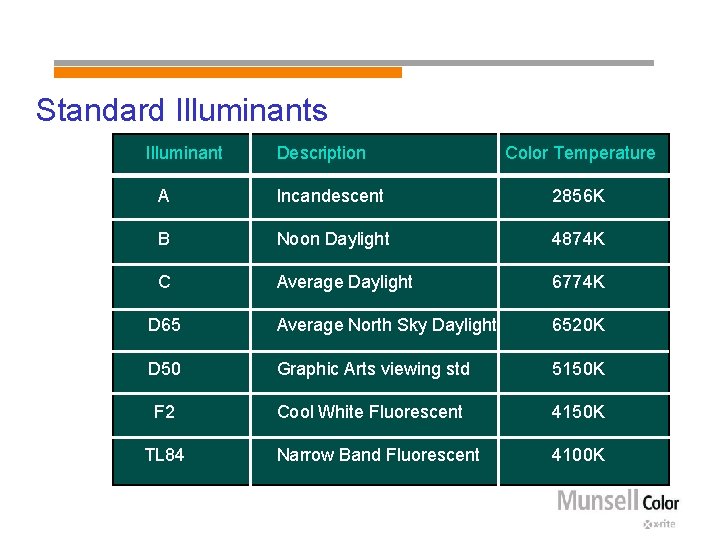
Standard Illuminants Illuminant Description Color Temperature A Incandescent 2856 K B Noon Daylight 4874 K C Average Daylight 6774 K D 65 Average North Sky Daylight 6520 K D 50 Graphic Arts viewing std 5150 K F 2 Cool White Fluorescent 4150 K Narrow Band Fluorescent 4100 K TL 84
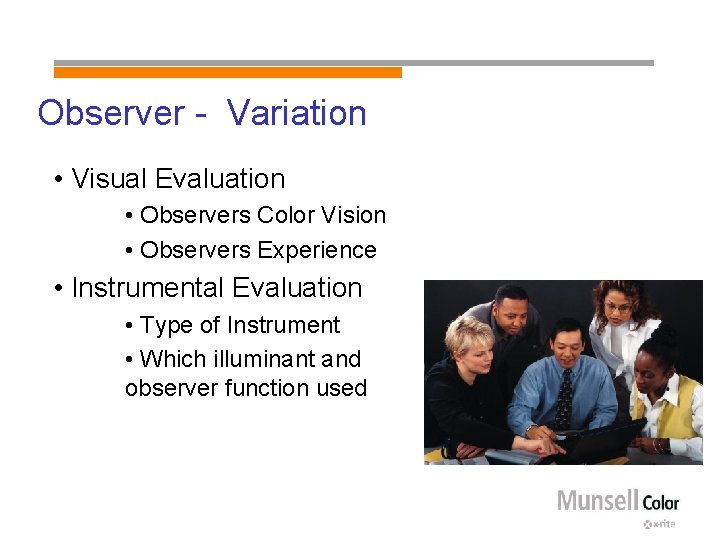
Observer - Variation • Visual Evaluation • Observers Color Vision • Observers Experience • Instrumental Evaluation • Type of Instrument • Which illuminant and observer function used
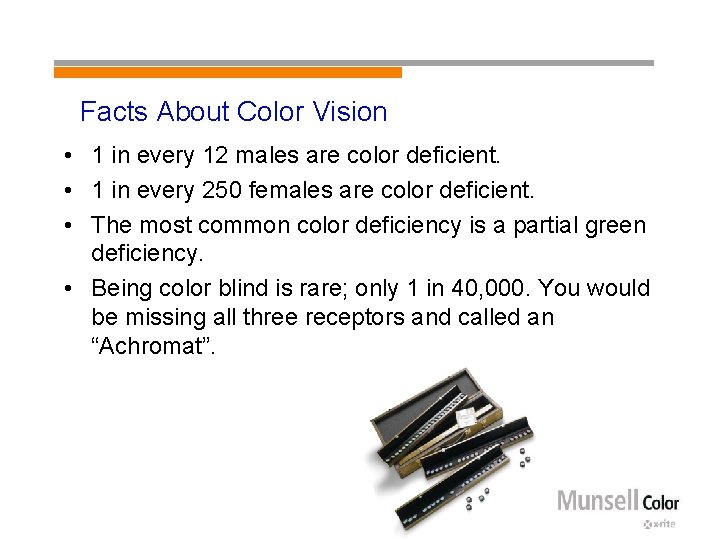
Facts About Color Vision • 1 in every 12 males are color deficient. • 1 in every 250 females are color deficient. • The most common color deficiency is a partial green deficiency. • Being color blind is rare; only 1 in 40, 000. You would be missing all three receptors and called an “Achromat”.
Things that effect our color vision • • • Tiredness: time of day color is viewed. Age: causes discoloration of lens and cornea Stress: Hypertension (high blood pressure) Hunger: Color assessment is effected by hunger Medication: Viagra and Digitalis both effect blue color vision. • Disease: Diabetes, Retina Pigmentosis and Cataracts effect color vision. • UV: exposure to ultraviolet, can cause retina damage and yellowing of lens and cornea.
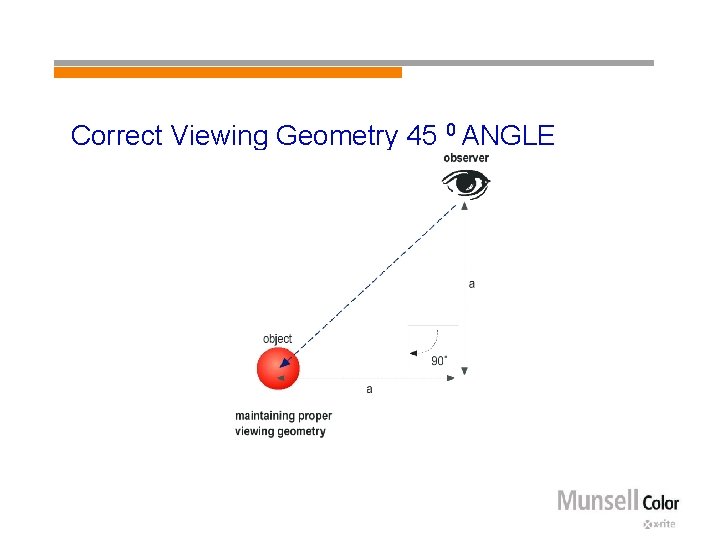
Correct Viewing Geometry 45 0 ANGLE
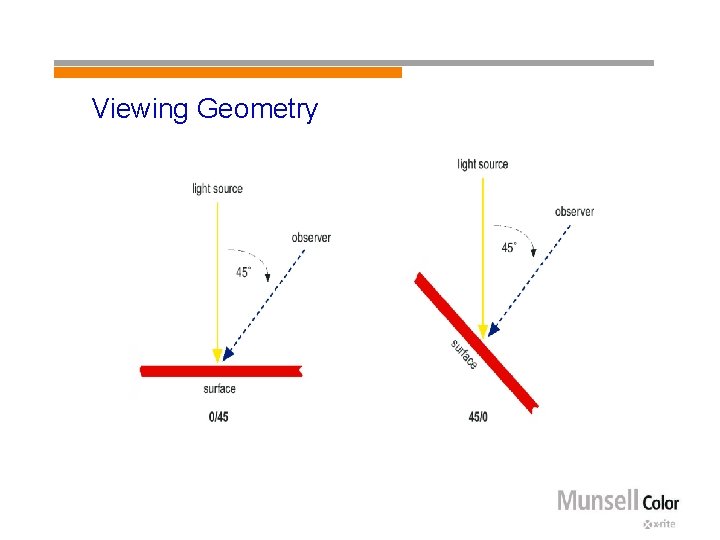
Viewing Geometry
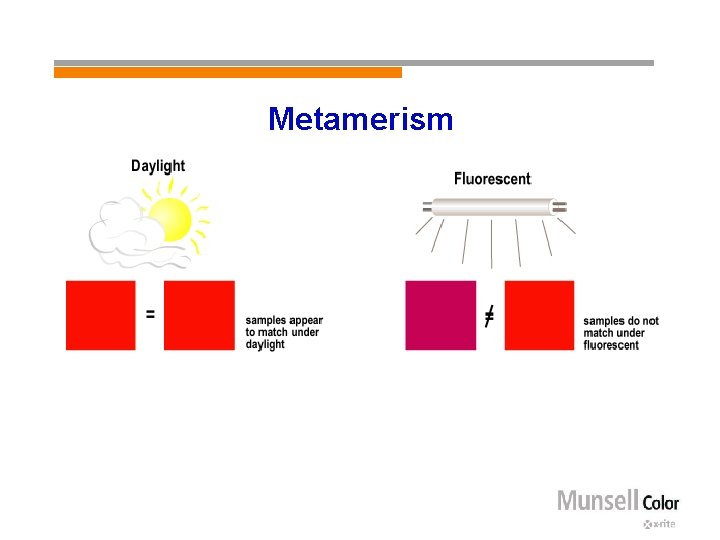
Metamerism
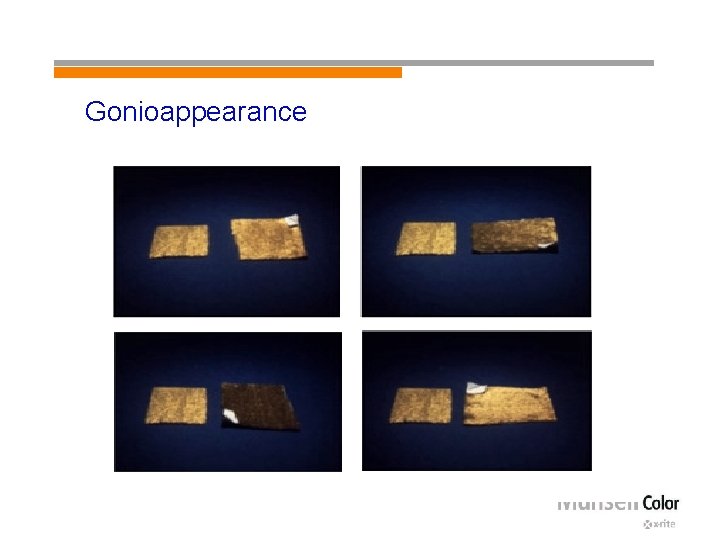
Gonioappearance (Geometric Metamerism) • Samples that match at one angle of illumination, but do not match when the angle of illumination or viewing angle is changed. • Often occurs with materials such as pile fabrics, satins, velvets, suedes, broadlooms, textured extruded plastics or Special Effect Paints (metallic, Pearlescent)
Gonioappearance
Observer Metamerism • When samples appear to match to a group of observers, but do not match to an individual observer. • This individual could have slightly inferior color vision. • Color Vision and Discrimination (Munsell / Farnsworth) tests provide some insight into the differences between observers and the areas of color that presents difficulty for the observer to discriminate.
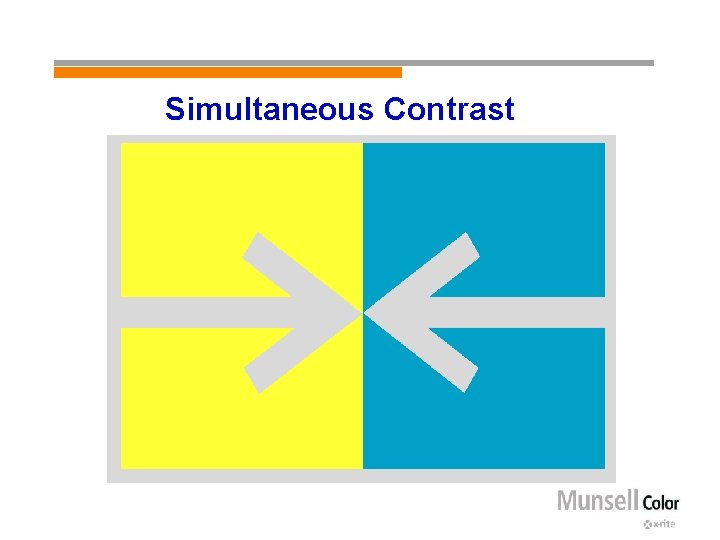
Simultaneous Contrast
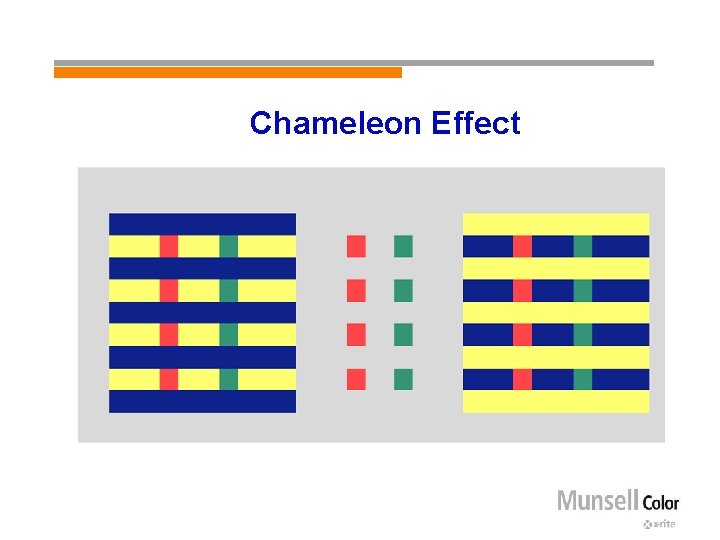
Chameleon Effect
Light Source Selection • Use established industry procedures or standards that specify specific light sources and viewing practices, (ASTM, AATCC). • Choose light sources that do not hinder your ability to make good color decisions. • Specify color temperature, SPD, CRI, CIE Assessment and lamp technology. • Everyone must agree to use the same light sources and procedures.
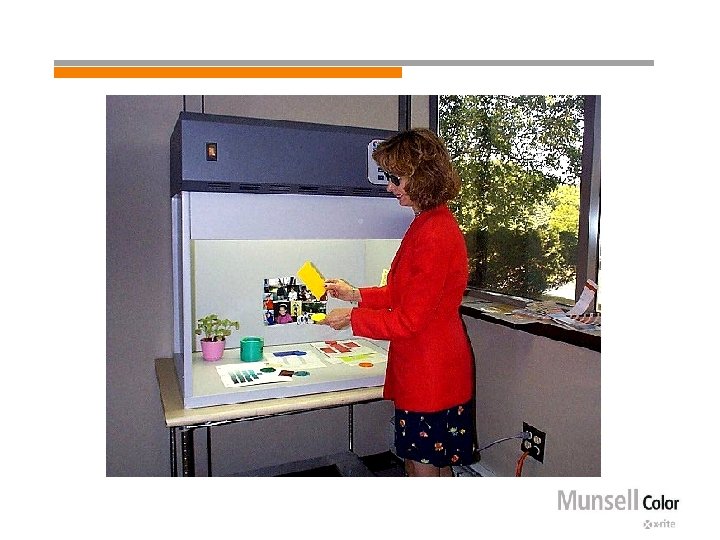
Proper Technique • • Select the correct light source(s). Viewing booth should be kept clear of extra samples. Samples should be placed inside the light booth. Orient Standard and Sample in same direction, side by side, touching. Same size samples are best. Align standard and sample at 450 degree angle as standard viewing geometry. Limit the amount of ambient light flooding the viewing booth. Evaluator is should not be wearing brightly colored clothing. No tinted glasses.
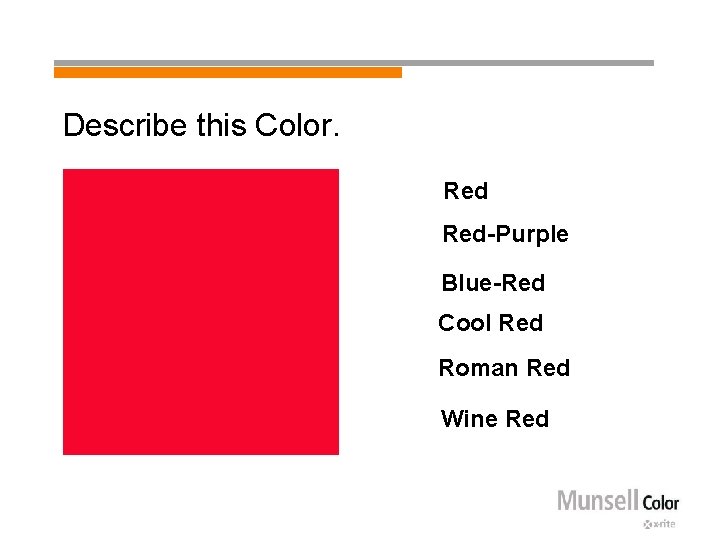
Describe this Color. Red-Purple Blue-Red Cool Red Roman Red Wine Red
Two things that are definite when talking about color: 1) Rarely does anyone agree on color 2) Everyone can tell you when the color is wrong
Color Anarchy? Color Order/Description System: • Allows for the specification of a color as it relates to its place in color space. • Allows for easy understanding of what the color is. • Provides a controlled method for specifying colors.
They are several types of systems or languages • Munsell • Lab • Lch • XYZ Essentially the perform the same task
Color systems or languages • Provide means for communicating color effectively • Similar to a map a providing an effective way to find a location
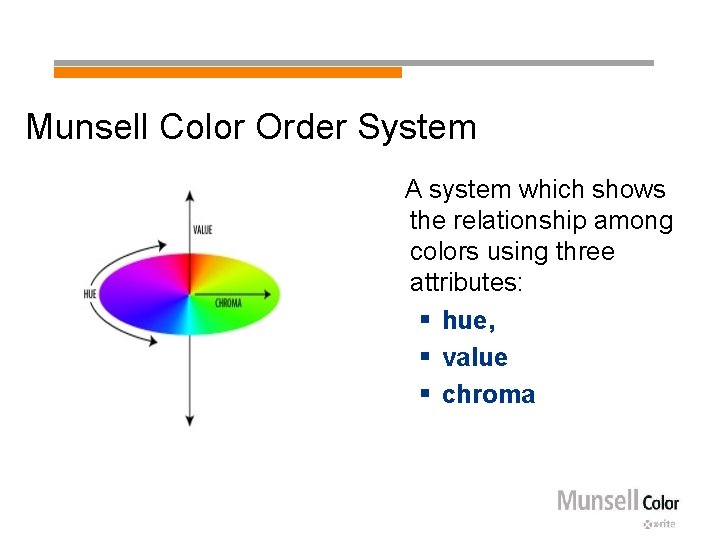
Munsell Color Order System A system which shows the relationship among colors using three attributes: § hue, § value § chroma
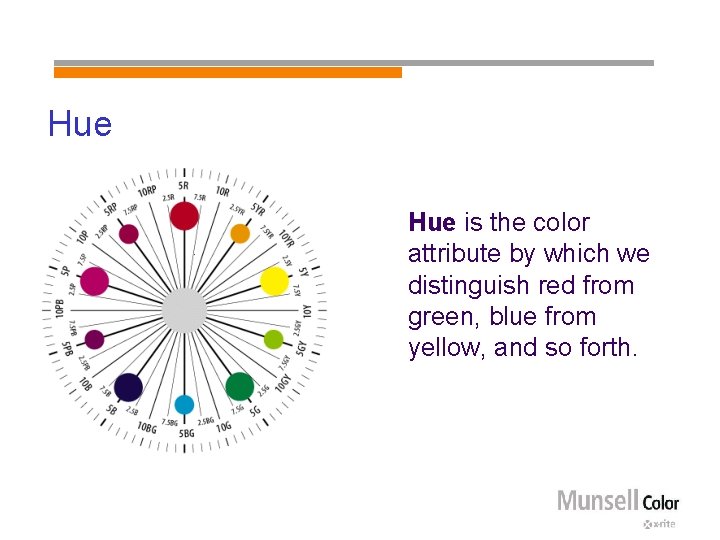
Hue is the color attribute by which we distinguish red from green, blue from yellow, and so forth.
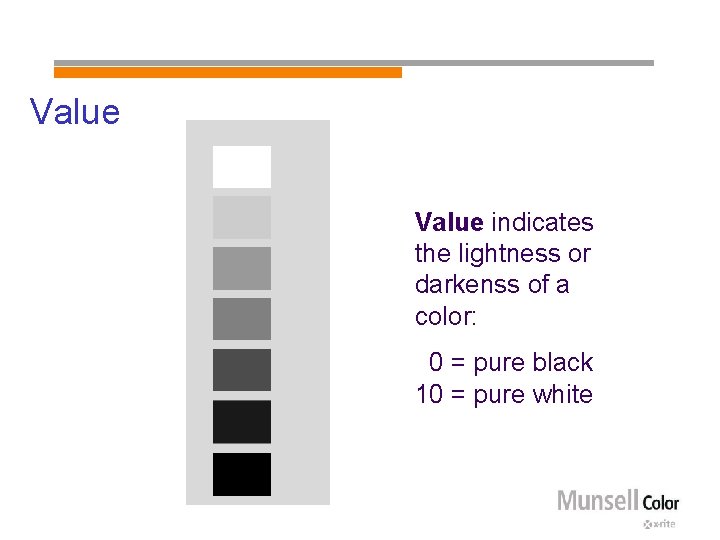
Value indicates the lightness or darkenss of a color: 0 = pure black 10 = pure white
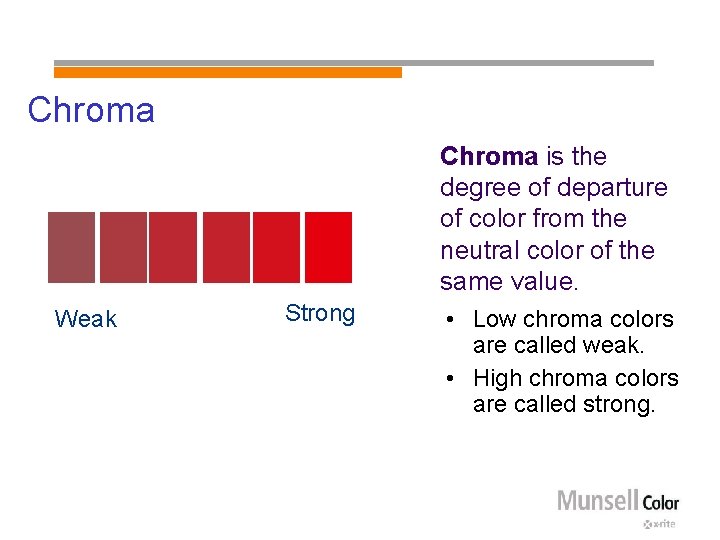
Chroma is the degree of departure of color from the neutral color of the same value. Weak Strong • Low chroma colors are called weak. • High chroma colors are called strong.
How can a color standard be quantified and communicated? • By defining ways to describe a color • By defining the Illuminate to use • By defining the Observer Conditions • By using a controlled Color Standard
Color Measurement and Specification • Communicating and achieving accurate color is a process which begins with measuring. Knowing the who, what, where and why we measure is critical to your success.
Sources of Visual Assessment Difference Human Observer • Acuity, color discrimination § Use FM Test to assess observers’ strengths and limitations • Age, meds, mood, fatigue, etc • Colored glasses or contacts? • Colored apparel? § Best Practice: wear white or gray lab coat
Keys to a Successful Color Program • Use consistent, standard Best Practices • Identify assessments which are “borderline” § Pass/fail judgment depends on business issues, in addition to color • Rigorous visual program will correlate well with instrumental program • Control the use of color standards
Best Practice for Physical Color Standards • Control your standards – do not let them travel! • Create or select color constant standards whenever possible. • Do not cut them into successively smaller pieces. • Use consistent, controlled procedures for any critical viewing of color or color match. • There will be changes over time and between different pieces.
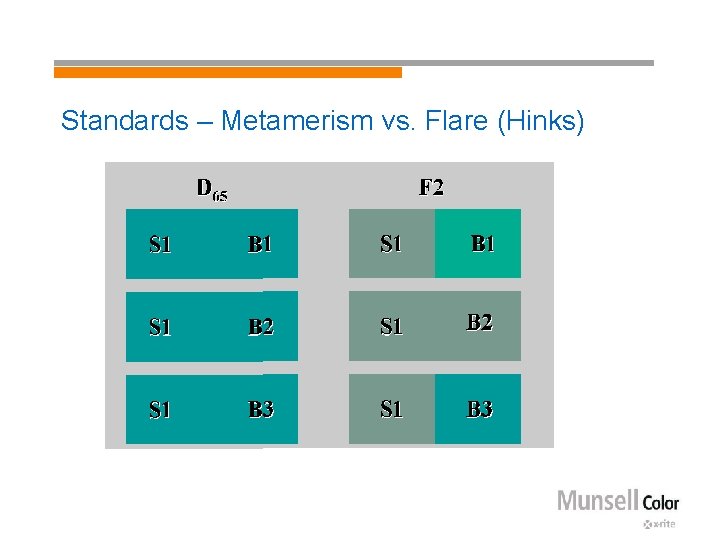
Standards – Metamerism vs. Flare (Hinks)
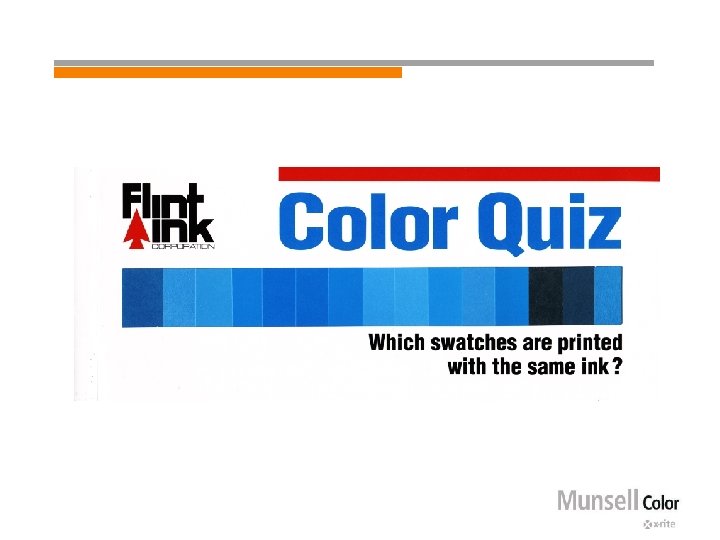
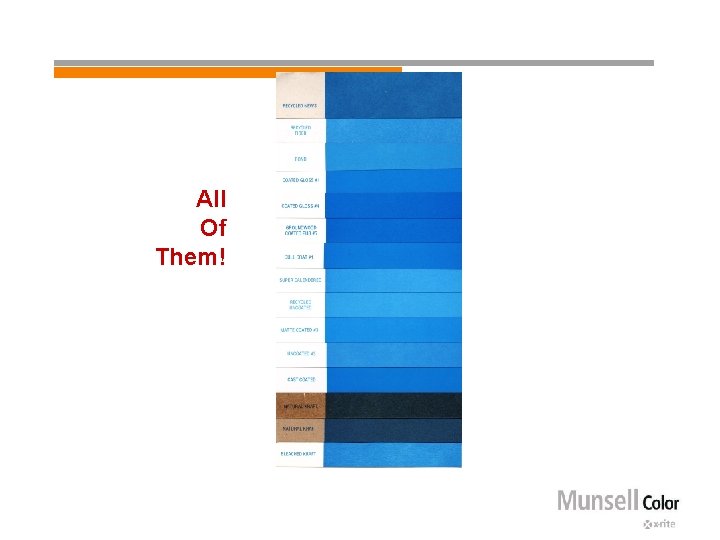
All Of Them!
Why Do We Need Instruments? • Communication of Color • Limitations of the Human Eye
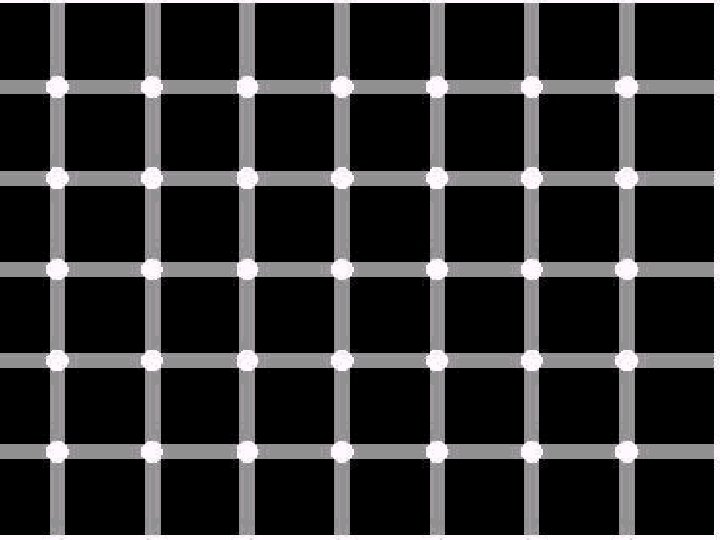
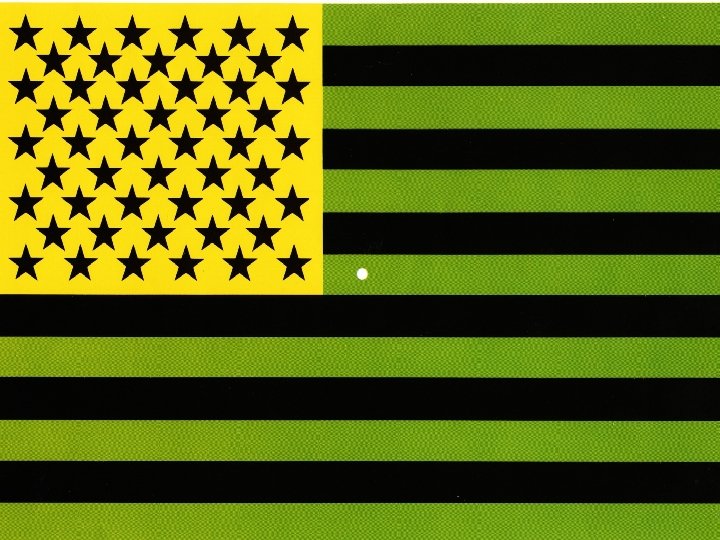
Limitations of the Human Eye • Visual Phenomena
Limitations of the Human Eye • Visual Phenomena • Fatigue
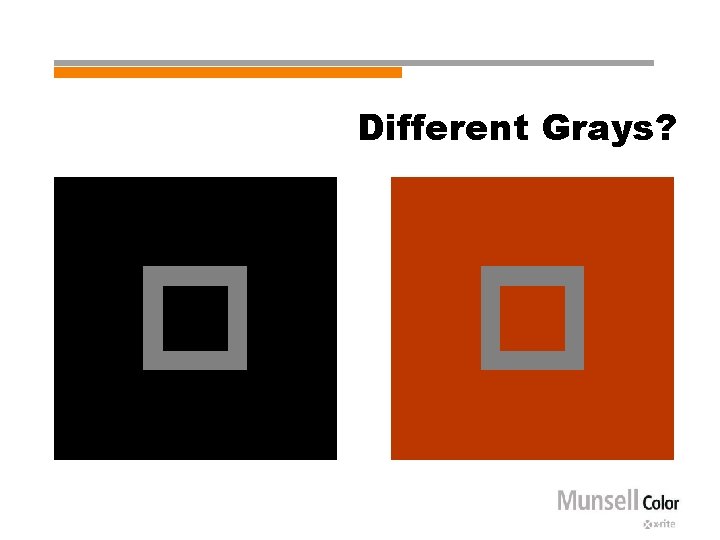
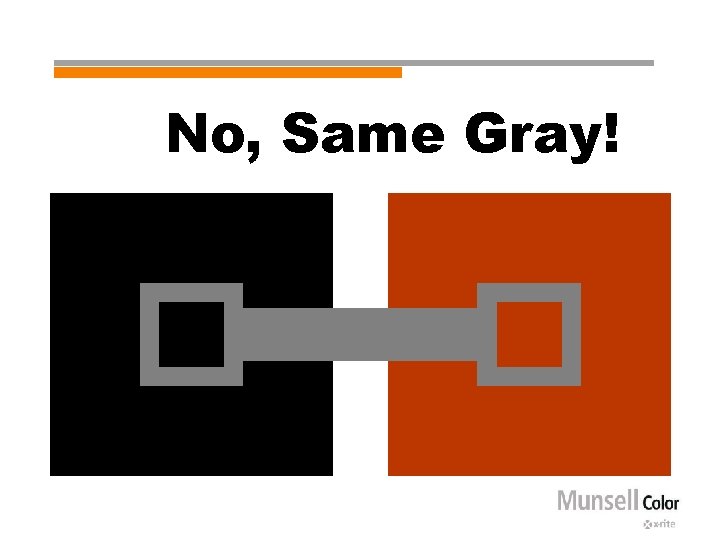
Different Grays?
No, Same Gray!
• Visual Phenomena • Fatigue • Surround Color
Limitations of the Human Eye • • Visual Phenomena Fatigue Surround Color No Memory Color Deficiency Recordabilty Age Viewing Conditions
What’s Wrong with This Picture?
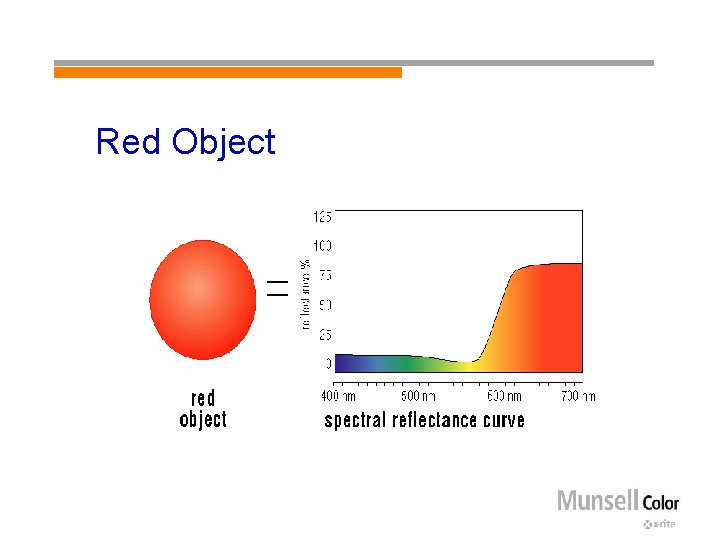
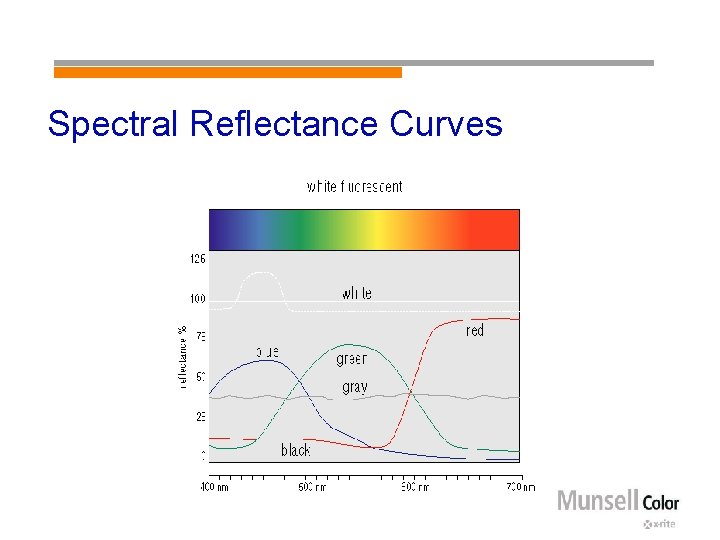
Instrumentally Quantifying Objects • Spectral characteristics are specified by reflectance (or transmittance) as a function of wavelength • Spectral data are measured with a spectrophotometer
Red Object
Spectral Reflectance Curves
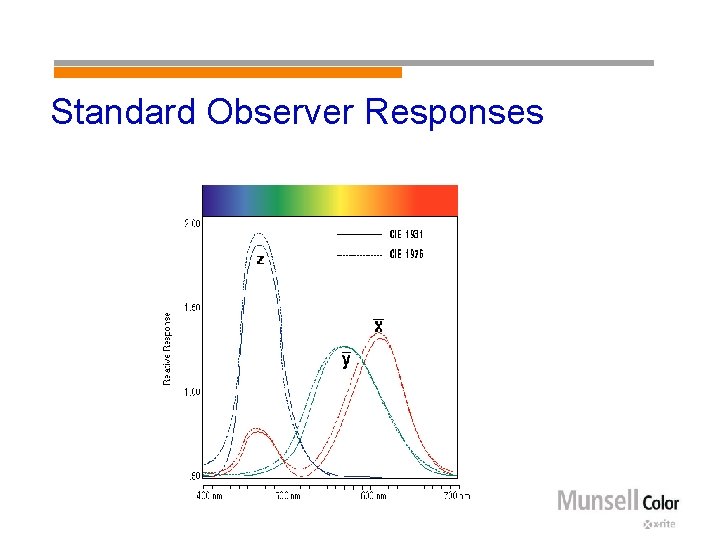
Standard Observer Responses
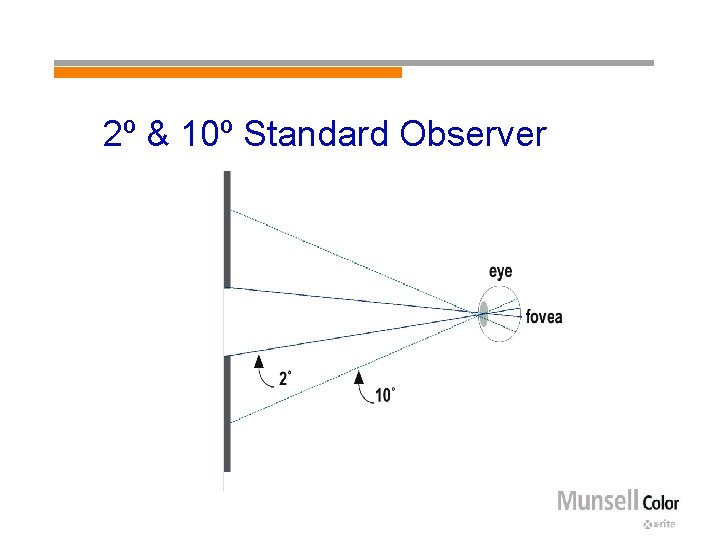
2º & 10º Standard Observer
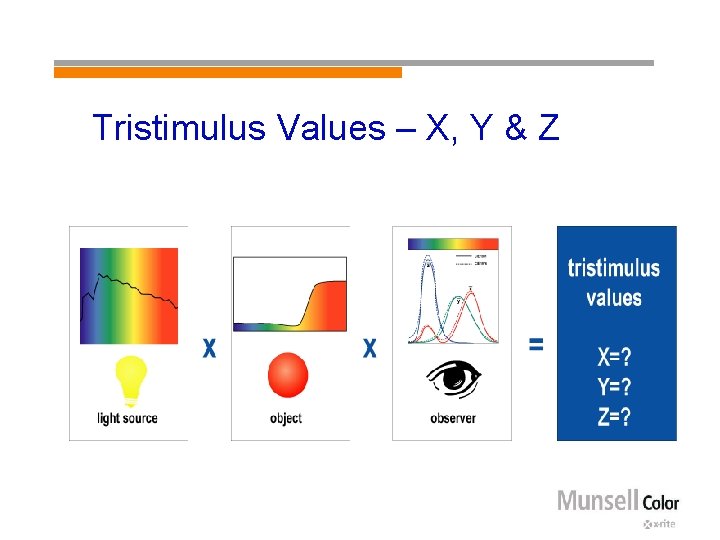
Tristimulus Values – X, Y & Z
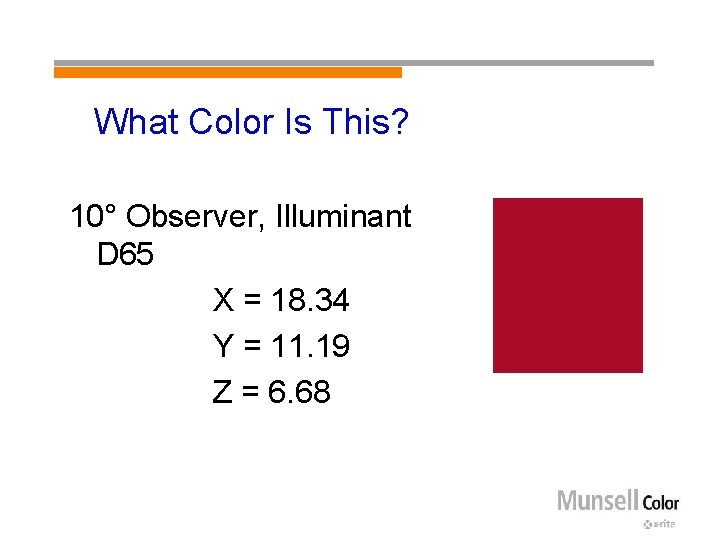
What Color Is This? 10° Observer, Illuminant D 65 X = 18. 34 Y = 11. 19 Z = 6. 68
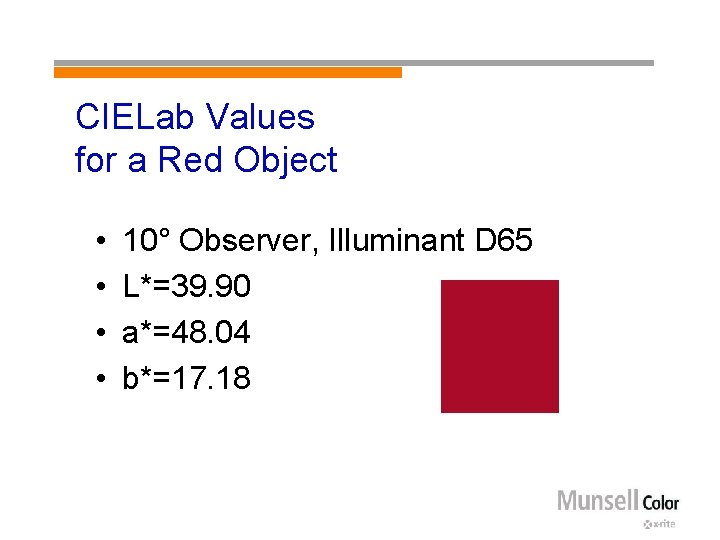
CIELab Values for a Red Object • • 10° Observer, Illuminant D 65 L*=39. 90 a*=48. 04 b*=17. 18
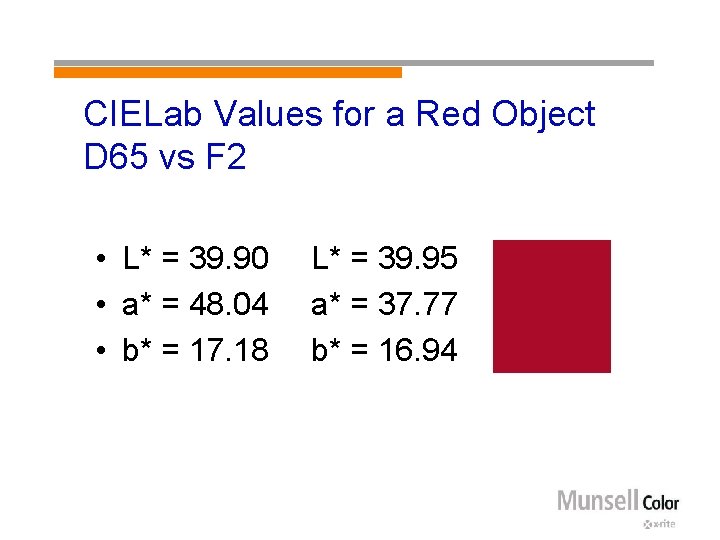
CIELab Values for a Red Object D 65 vs F 2 • L* = 39. 90 • a* = 48. 04 • b* = 17. 18 L* = 39. 95 a* = 37. 77 b* = 16. 94
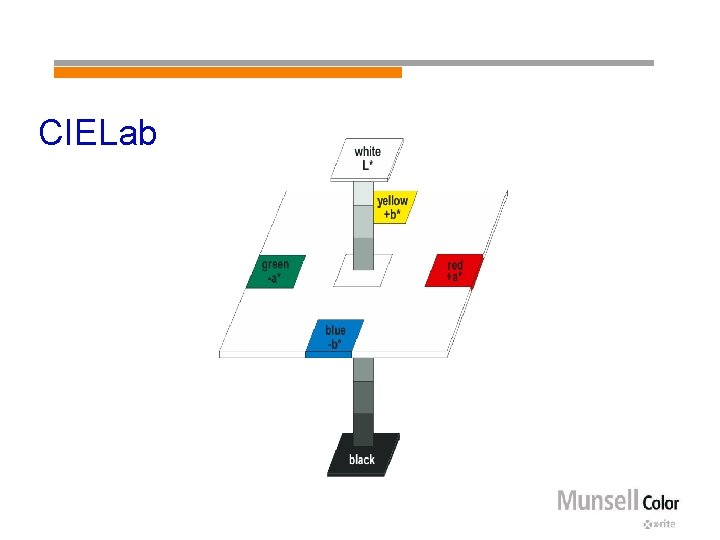
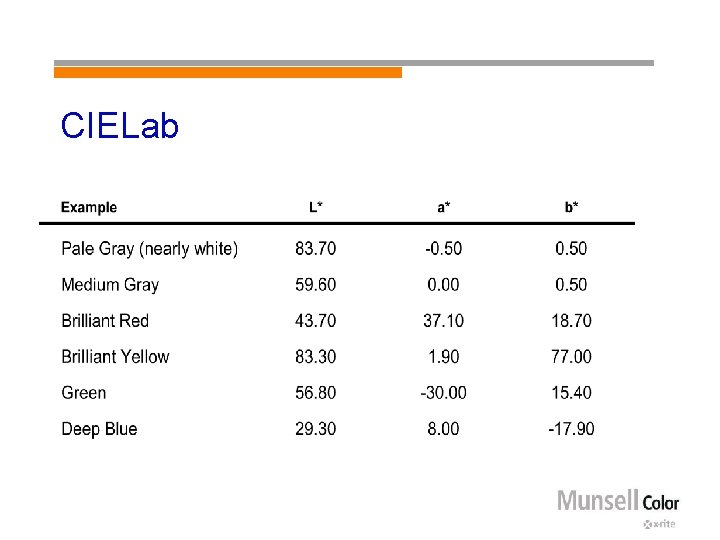
CIELab
CIELab
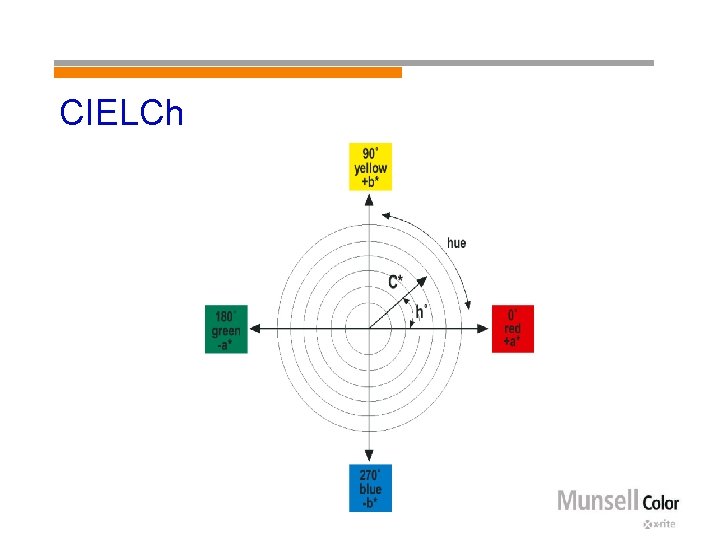
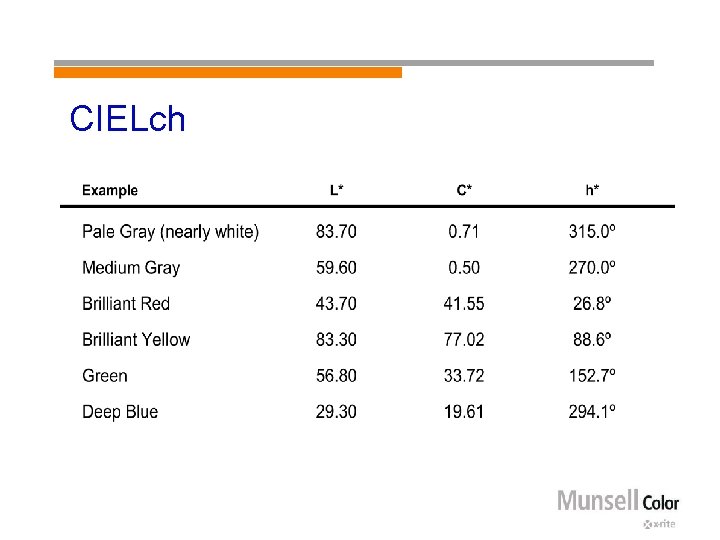
CIELCh
CIELch
In Conclusion