
Communicable Diseases Between Animals and Humans Whats Zoonosis
Communicable Diseases Between Animals and Humans

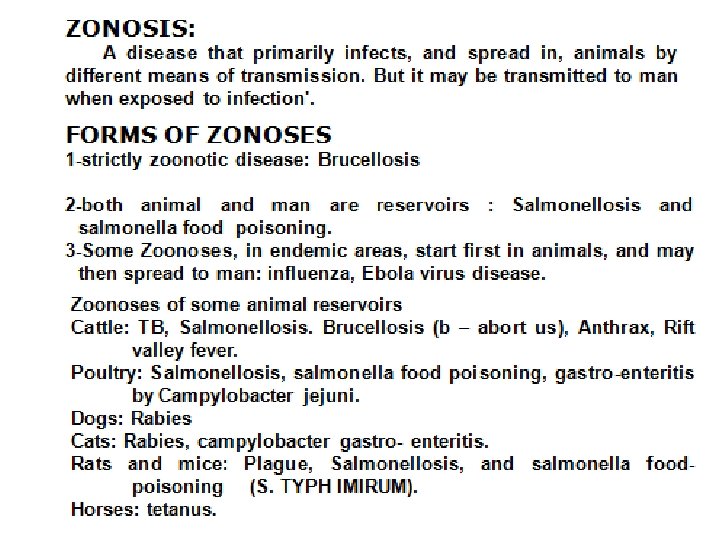
What’s Zoonosis ? Zoonosis is an infection or infestation shared in nature by humans and animals. Animals raised on farms that are well managed (good housing, hygienic conditions , and balanced diet) on most occasions are free of zoonotic diseases that occur naturally in animals
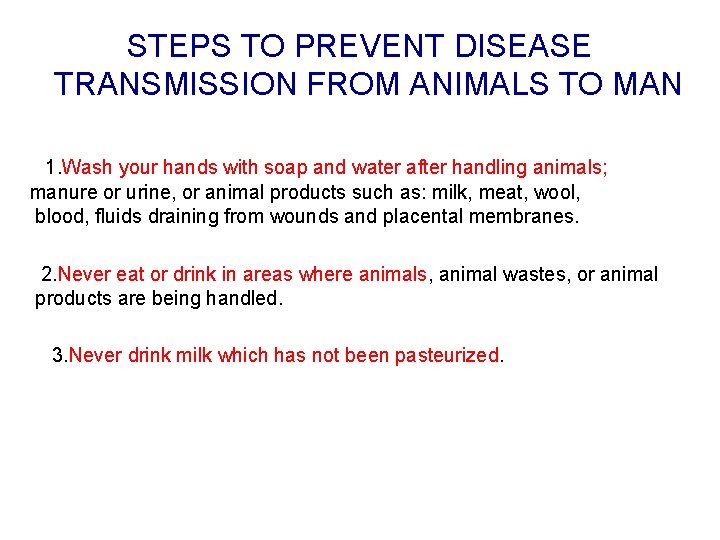
STEPS TO PREVENT DISEASE TRANSMISSION FROM ANIMALS TO MAN 1. Wash your hands with soap and water after handling animals; manure or urine, or animal products such as: milk, meat, wool, blood, fluids draining from wounds and placental membranes. 2. Never eat or drink in areas where animals, animal wastes, or animal products are being handled. 3. Never drink milk which has not been pasteurized.
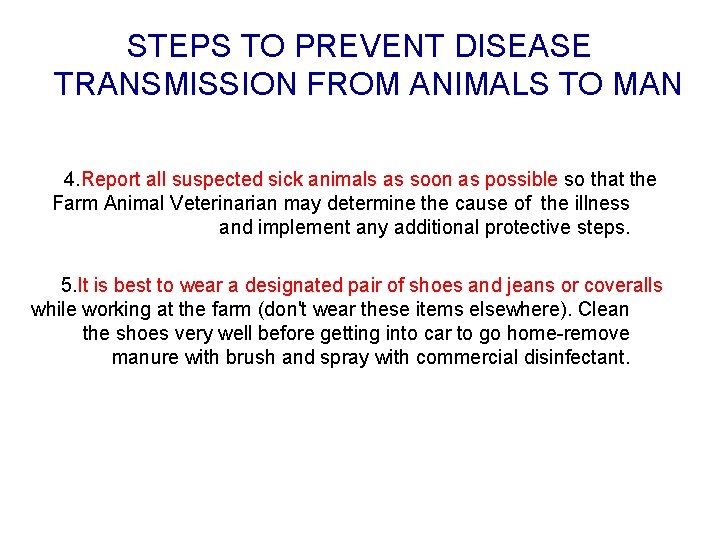
STEPS TO PREVENT DISEASE TRANSMISSION FROM ANIMALS TO MAN 4. Report all suspected sick animals as soon as possible so that the Farm Animal Veterinarian may determine the cause of the illness and implement any additional protective steps. 5. It is best to wear a designated pair of shoes and jeans or coveralls while working at the farm (don't wear these items elsewhere). Clean the shoes very well before getting into car to go home-remove manure with brush and spray with commercial disinfectant.
Good Personal Hygiene -If your hands have been contaminated by touching something loaded with bacteria or viral particles (feces, urine, saliva) and you do not wash your hands, you can accidently introduce the bacteria or viral particles into – your own mouth when you do things such as: -touch food as you put it into your mouth, -rub the corner of your mouth, • -smoke your cigarette. • •
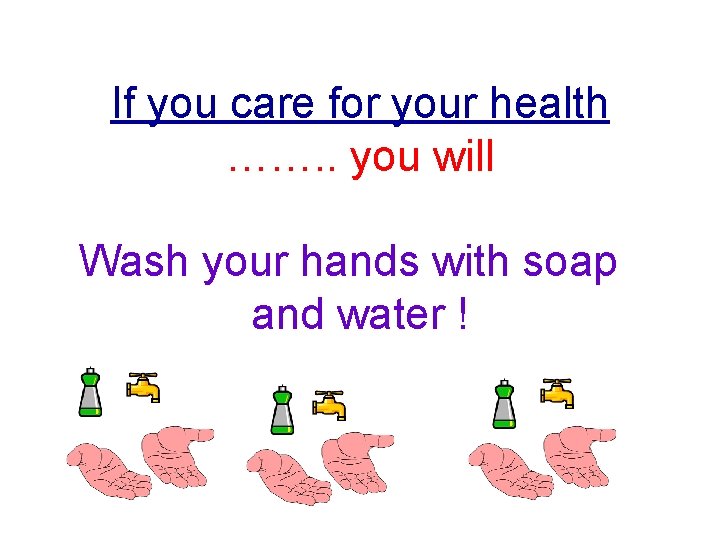
If you care for your health ……. . you will Wash your hands with soap and water !
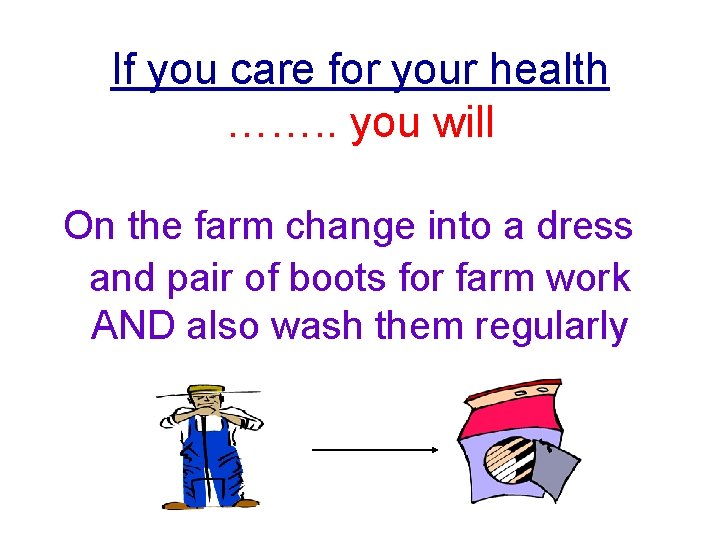
If you care for your health ……. . you will On the farm change into a dress and pair of boots for farm work AND also wash them regularly
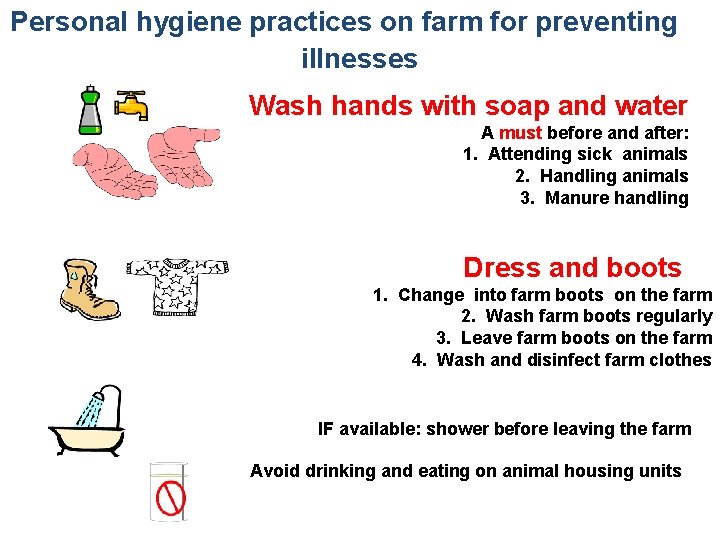
Personal hygiene practices on farm for preventing illnesses Wash hands with soap and water A must before and after: 1. Attending sick animals 2. Handling animals 3. Manure handling Dress and boots 1. Change into farm boots on the farm 2. Wash farm boots regularly 3. Leave farm boots on the farm 4. Wash and disinfect farm clothes IF available: shower before leaving the farm Avoid drinking and eating on animal housing units
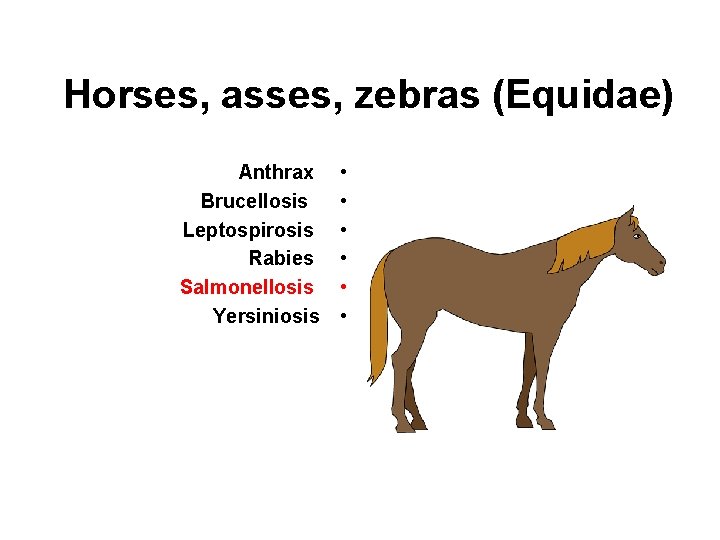
Horses, asses, zebras (Equidae) Anthrax Brucellosis Leptospirosis Rabies Salmonellosis Yersiniosis • • •
Cats Anthrax Brucella suis Campylobacteriosis Chlamydia psittaci Cowpox Dermatophytosis • • • Plague Q-fever Rabies Rickettsia felis Salmonellosis Scabies Toxoplasmosis • •
Sheep and Goats Leptospirosis Q-fever Rabies Salmonellosis Yersinia enterocolitica • • • Anthrax Brucellosis Chlamydia trachomatis (ovine) Giardiasis • •
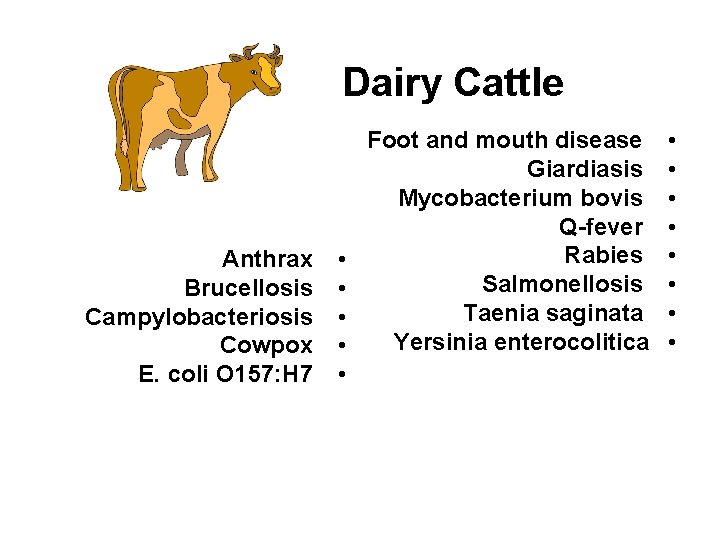
Dairy Cattle Anthrax Brucellosis Campylobacteriosis Cowpox E. coli O 157: H 7 • • • Foot and mouth disease Giardiasis Mycobacterium bovis Q-fever Rabies Salmonellosis Taenia saginata Yersinia enterocolitica • •
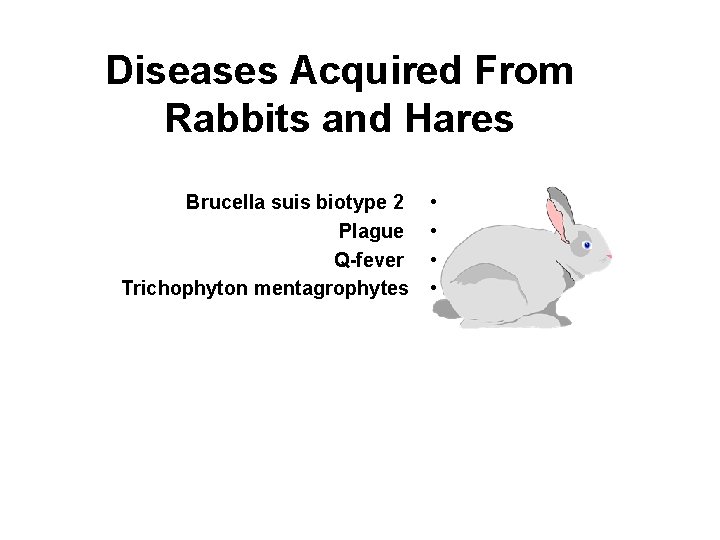
Diseases Acquired From Rabbits and Hares Brucella suis biotype 2 Plague Q-fever Trichophyton mentagrophytes • •
leishmaniasis • Can be classified into three types: • 1 - Visceral L. (kala-azar) caused by L. donovani • 2 - Cutaneous L. (old world L. ) cuased by L. Tropica. (both above are present in Iraq). • 3 - Mucocutaneous L. (New world L. ) cuased by L. Brazliensis, L. Aethiopica.
Cutaneous Leishmaniasis (Baghdad boil or Button) (Delhi Boil or Button, Aleppo sore & oriental sore, Tropical sore) Definition: It is insect born infections disease caused by a flagellated protozoan called Leishmania, many different species exist causing different clinical features of the disease in different part o the world, in our country, it is caused by L. Tropica which exit in two type ( L. Tropica major & minor)
Epidemiology • Widely distributed in India, Middle east, Mediterranean countries, central & south America. • Mostly in children, & in high endemic areas, most of the adult population have been infected in childhood;
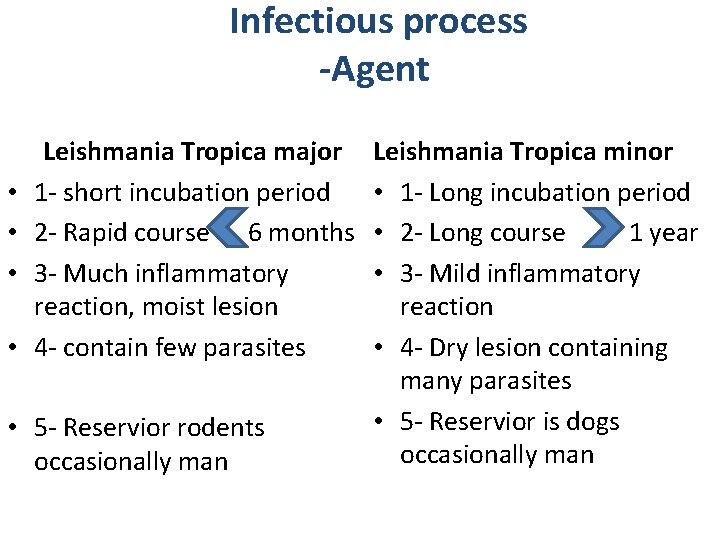
Infectious process -Agent • • Leishmania Tropica major 1 - short incubation period 2 - Rapid course 6 months 3 - Much inflammatory reaction, moist lesion 4 - contain few parasites • 5 - Reservior rodents occasionally man Leishmania Tropica minor • 1 - Long incubation period • 2 - Long course 1 year • 3 - Mild inflammatory reaction • 4 - Dry lesion containing many parasites • 5 - Reservior is dogs occasionally man
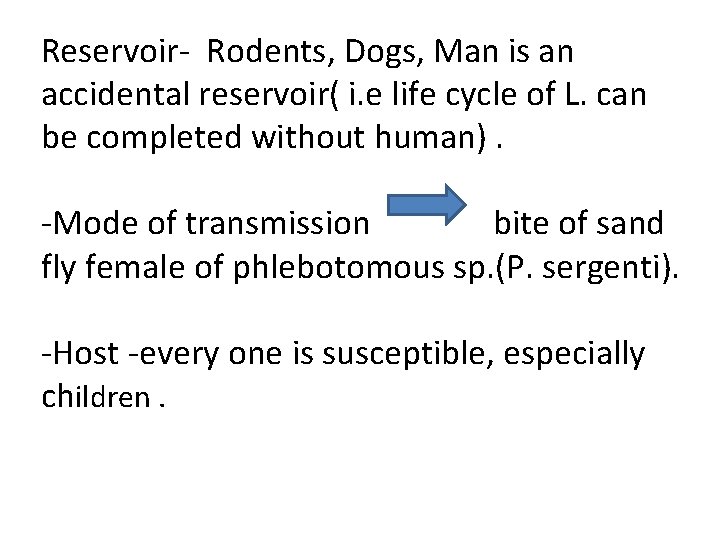
Reservoir- Rodents, Dogs, Man is an accidental reservoir( i. e life cycle of L. can be completed without human). -Mode of transmission bite of sand fly female of phlebotomous sp. (P. sergenti). -Host -every one is susceptible, especially children.
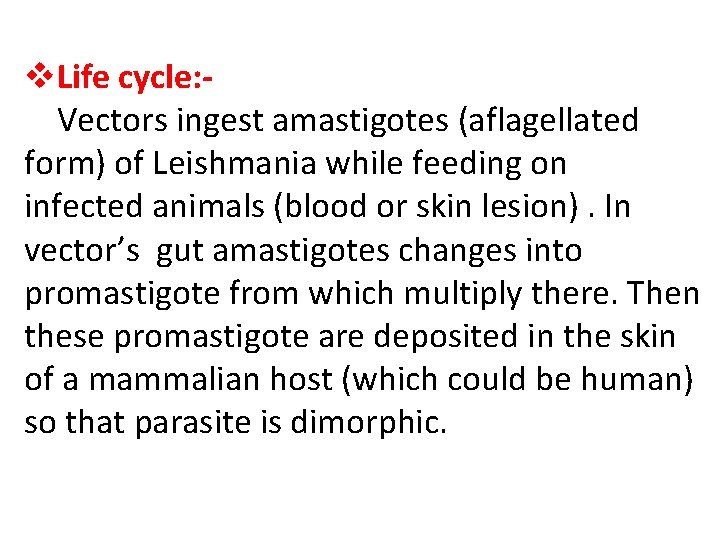
v. Life cycle: Vectors ingest amastigotes (aflagellated form) of Leishmania while feeding on infected animals (blood or skin lesion). In vector’s gut amastigotes changes into promastigote from which multiply there. Then these promastigote are deposited in the skin of a mammalian host (which could be human) so that parasite is dimorphic.
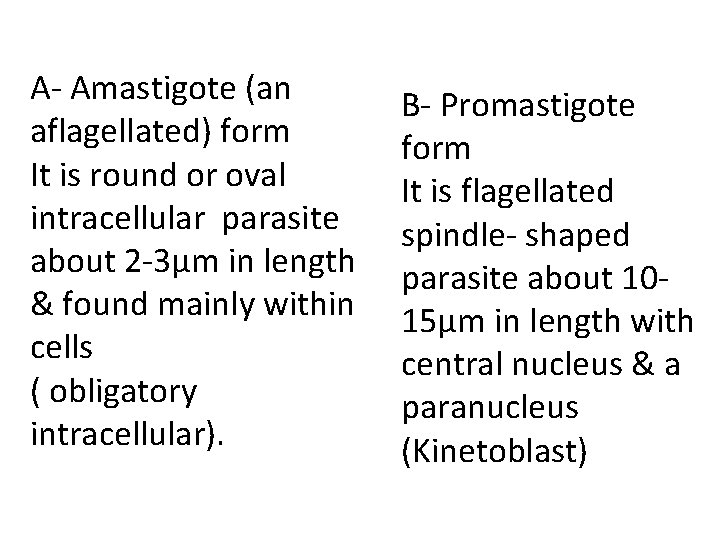
A- Amastigote (an aflagellated) form It is round or oval intracellular parasite about 2 -3µm in length & found mainly within cells ( obligatory intracellular). B- Promastigote form It is flagellated spindle- shaped parasite about 1015µm in length with central nucleus & a paranucleus (Kinetoblast)
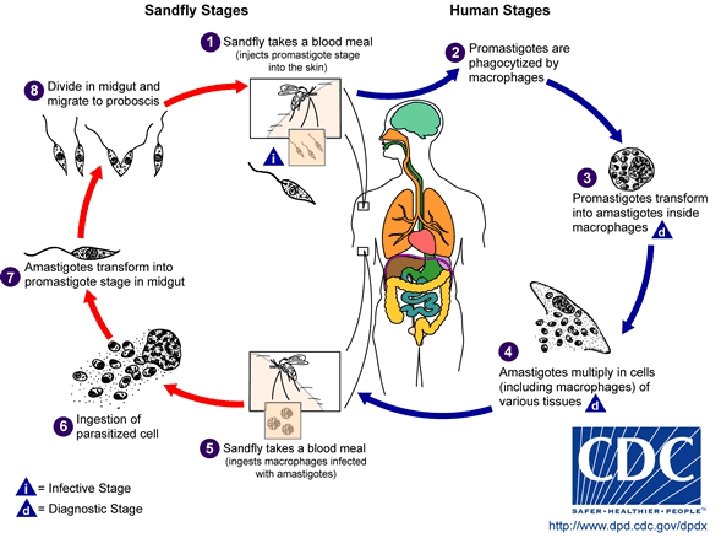
Promastigote form Is found extracellularly in the salivary glands of gut of sand fly which is a flying insect, but this vector is a weak fly, flying near the ground especially in watery districts. It is active in summer months & so bites human at summer, then the parasite passes into an incubation period lasting usually for a few month, therefore producing a clinical lesion in cold months.
Promastigote form The incubation period is variable according to a size of inoculum, immunological status of host & spp. Of Leishmania (it is usually shorter in visitors of endemic areas)
Clinical picture The number of the lesions depend on the number of bites & on the number of parasites in each sand fly bite. Clinically & immunologically four types of Cutaneous Leishmaniasis exist: 1 - Dry type 2 - Wet type 3 - Chronic lupoid L. 4 - Diffuse L.
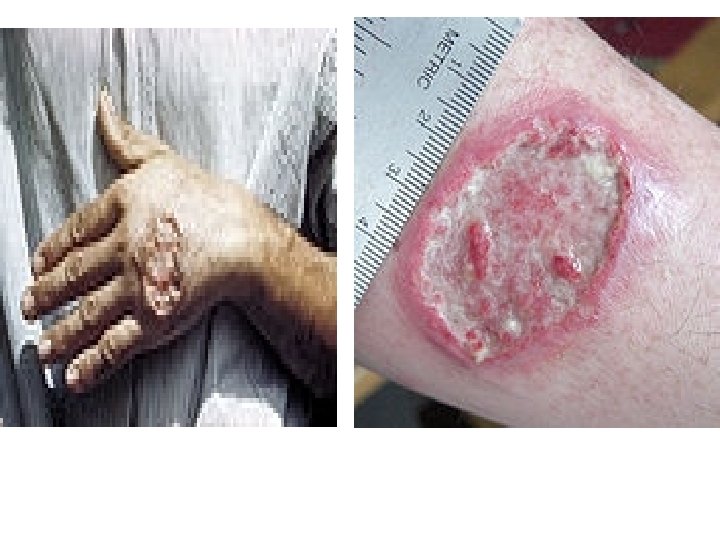
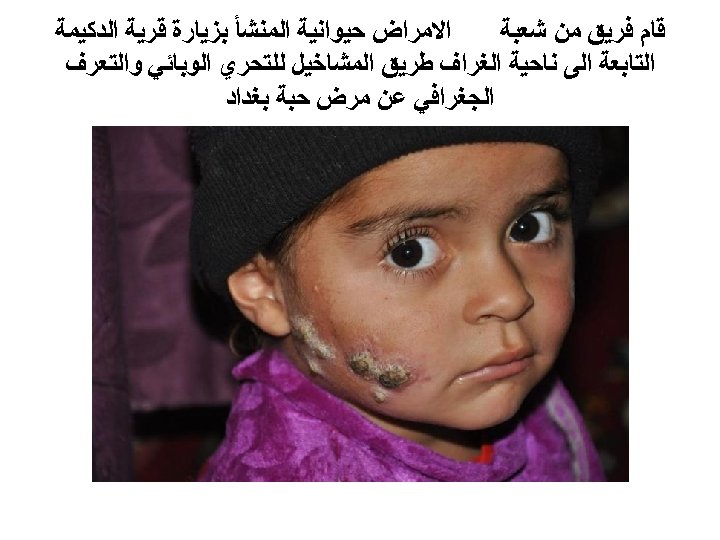
Primary lesions in Cutaneous leishmaniasis usually starts as a small erythematous macule at the site of sand fly bite which develop papule plaque or nodule then Ulceration at its summit to heal spontaneously with an irregular atrophic scar which can be ugly in appearance.
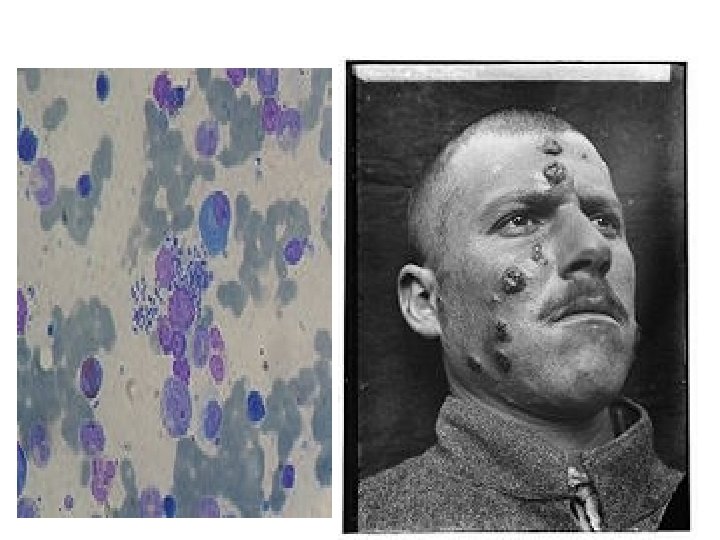
Lesions can be single or multiple, usually affects exposed parts of the body especially ankles , lower leg and hand in children only the face may be affected especially nose and cheek , forehead and ears. It rarely affects hidden area (trunk and genitalia) lesions may even destroy underlying structures e. g. cartilage of auricle resulting in ugly abnormality.
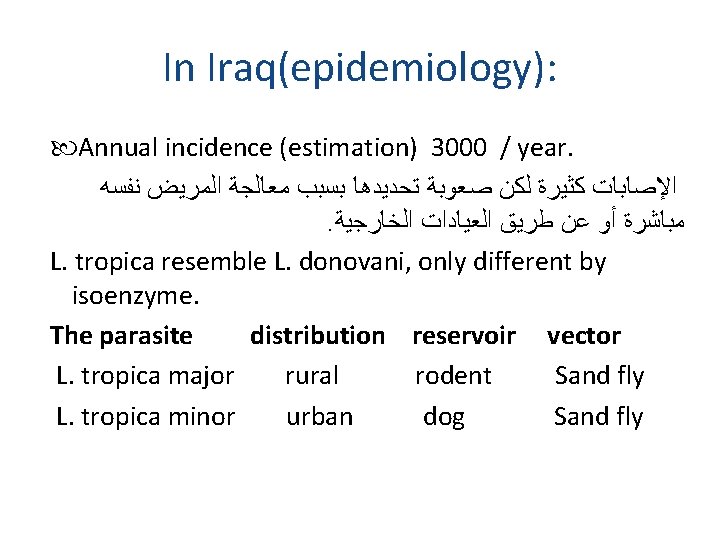
In Iraq(epidemiology): Annual incidence (estimation) 3000 / year. ﺍﻹﺻﺎﺑﺎﺕ ﻛﺜﻴﺮﺓ ﻟﻜﻦ ﺻﻌﻮﺑﺔ ﺗﺤﺪﻳﺪﻫﺎ ﺑﺴﺒﺐ ﻣﻌﺎﻟﺠﺔ ﺍﻟﻤﺮﻳﺾ ﻧﻔﺴﻪ . ﻣﺒﺎﺷﺮﺓ ﺃﻮ ﻋﻦ ﻃﺮﻳﻖ ﺍﻟﻌﻴﺎﺩﺍﺕ ﺍﻟﺨﺎﺭﺟﻴﺔ L. tropica resemble L. donovani, only different by isoenzyme. The parasite distribution reservoir vector L. tropica major rural rodent Sand fly L. tropica minor urban dog Sand fly
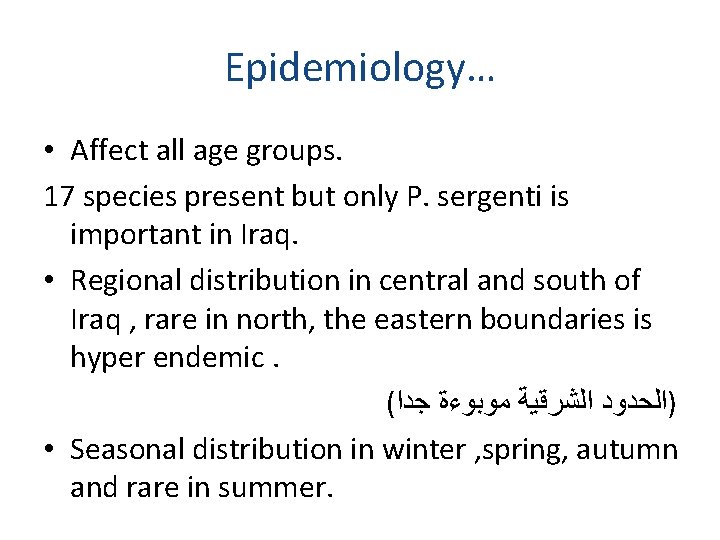
Epidemiology… • Affect all age groups. 17 species present but only P. sergenti is important in Iraq. • Regional distribution in central and south of Iraq , rare in north, the eastern boundaries is hyper endemic. ( )ﺍﻟﺤﺪﻭﺩ ﺍﻟﺸﺮﻗﻴﺔ ﻣﻮﺑﻮﺀﺓ ﺟﺪﺍ • Seasonal distribution in winter , spring, autumn and rare in summer.
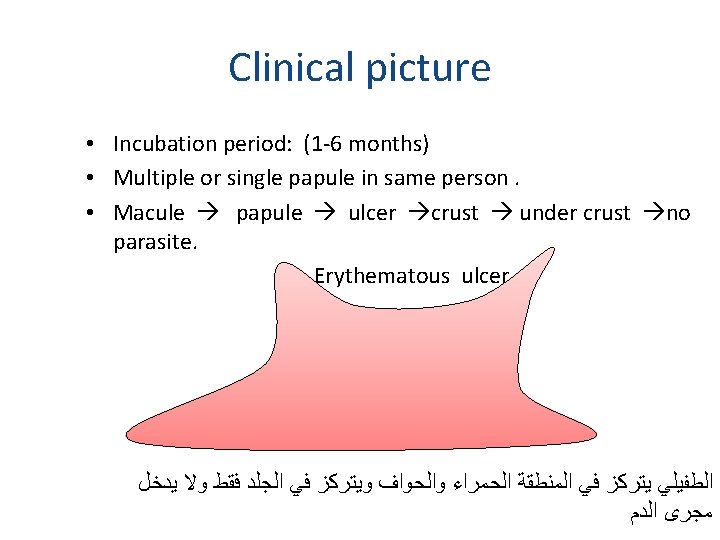
Clinical picture • Incubation period: (1 -6 months) • Multiple or single papule in same person. • Macule papule ulcer crust under crust no parasite. Erythematous ulcer ﺍﻟﻄﻔﻴﻠﻲ ﻳﺘﺮﻛﺰ ﻓﻲ ﺍﻟﻤﻨﻄﻘﺔ ﺍﻟﺤﻤﺮﺍﺀ ﻭﺍﻟﺤﻮﺍﻑ ﻭﻳﺘﺮﻛﺰ ﻓﻲ ﺍﻟﺠﻠﺪ ﻓﻘﻂ ﻭﻻ ﻳﺪﺧﻞ ﻣﺠﺮﻯ ﺍﻟﺪﻡ
lab. Investigations: • Direct from margin and stain by giemsa stain and lieshman to see amastigoite form. • Culture.
Treatment : • By Pentostam locally or IM. • Immunity of T. major permanent for both. • While T. minor only for T. minor infection.
Differences between L. major & minor
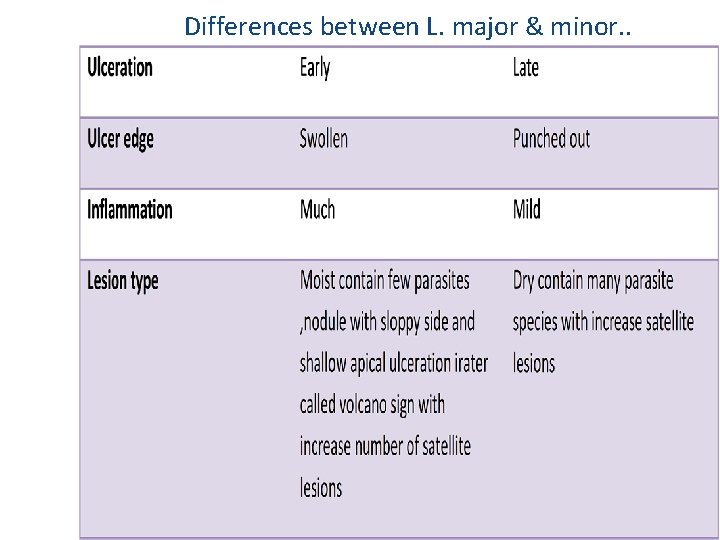
Differences between L. major & minor. .
Differences between L. major & minor. .
Prevention and control: v Human control: § 1 - Treatment of infected individuals Aim of treatment: ØTo prevent scar complications. ØTo decrease spread to community.
Prevention and control: v Human control: § 2 -Personal protection by: §a-Sand fly bites can be partially avoided by sleeping on the upper floors of the houses and using repellents since sand flies don't readily move above the ground floor.
Prevention and control: v Human control: § 2 -Personal protection by: §-b-Avoid walking in the night in endemic areas. §c-Put screen on the windows.
Human control… 4 -Active immunization by a vaccine prepared from L. tropica major, it needs 4 million parasites injected intradermally in a hidden area (may cause anaphylaxis in some subjects).
v. Vector control: 2 -Elimination of stagnated watery areas which is the breeding places of sand flies. . ﺭﺩﻡ ﺍﻟﺒﺮﻙ ﻭﺍﻟﻤﺴﺘﻨﻘﻌﺎﺕ ﻭﺍﻟﻤﻴﺎﻩ ﺍﻵﺴﻨﺔ 3 - Modern building and the rubble of broken down houses cleared away. . ﻣﻨﻊ ﺗﻜﺎﺛﺮ ﺍﻟﺒﺮ ﻏﺶ ﺑﻮﺍﺳﻄﺔ ﺍﻟﺒﻨﺎﺀ ﺍﻟﺤﺪﻳﺚ
v. Reservoir (animal) control: • -Attack animal reservoir of infection , removing all infected dogs from the community also rodent destruction must done. ﺍﻟﻘﻀﺎﺀ ﻋﻠﻰ ﺍﻟﻘﻮﺍﺭﺽ ﻭﺍﻟﻜﻼﺏ ﺍﻟﺴﺎﺋﺒﺔ )ﻣﻜﺎﻓﺤﺔ . ( ﺍﻟﻘﻮﺍﺭﺽ ﻫﻨﺎ ﻣﻬﻤﺔ ﺟﺪﺍ

Thank you
- Slides: 51