
Communicable Diseases Alan J Parkinson Deputy Director Arctic

Communicable Diseases Alan J. Parkinson, Deputy Director Arctic Investigations Program, Centers for Disease Control & Prevention, USA

Arctic Investigations Program Mission • Prevention of morbidity & mortality in Arctic and sub. Arctic populations • Focus on indigenous peoples • Focus on infectious diseases

The US Arctic (Alaska) Total Population 614, 180 Alaska Native /American Indian 120, 494 246 tribal governments 22 tribal health organizations 176 health aid clinics 24 health centers 7 regional hospitals 1 tertiary care hospital Anchorage 266, 155 of which 36, 148 are Alaska Native
Challenges to Health & Wellness-Alaska Natives • Health impacts of: – Environmental contaminants • Impact on the traditional food supply – Rapid economic change and modernization-“the modern diseases” • • • Obesity Diabetes Cancer Suicides Cardiovascular diseases – Climate change
Challenges to Health & Wellness-Alaska Natives • Health Disparities – Life expectancy 64. 9 years vs 76. 7 years for US – Unintentional injury mortality 3. 3 times US rate – Suicide 4. 2 times rate for US all races – Cancer mortality is 1. 5 times US all races – Infant mortality 8. 7/1000 vs 7. 2/1000 for US – Higher rates of some infectious diseases:
Challenges to Health & Wellness-Alaska • Health Disparities-Infectious Diseases – Invasive bacterial diseases (pneumonia; meningitis) – Tuberculosis – Influenza and other respiratory viruses – Infections resistant to antimicrobials – Food borne diseases – Parasitic diseases – Some sexually transmitted infections
HIV-Alaska • Rates of HIV and AIDS diagnosed in Alaska residents Alaska are lower than are found in the rest of the US. – HIV 5. 1 vs 20. 7/100, 000 – AIDS 1. 9 vs 14. 1/100, 000
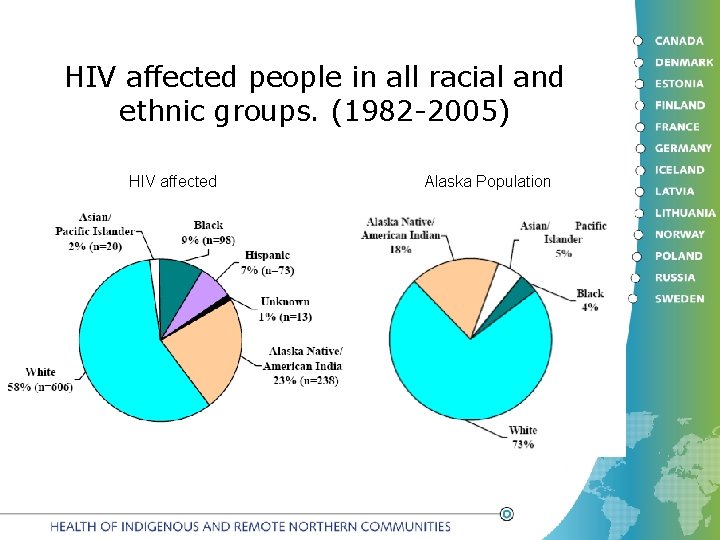
HIV affected people in all racial and ethnic groups. (1982 -2005) HIV affected Alaska Population
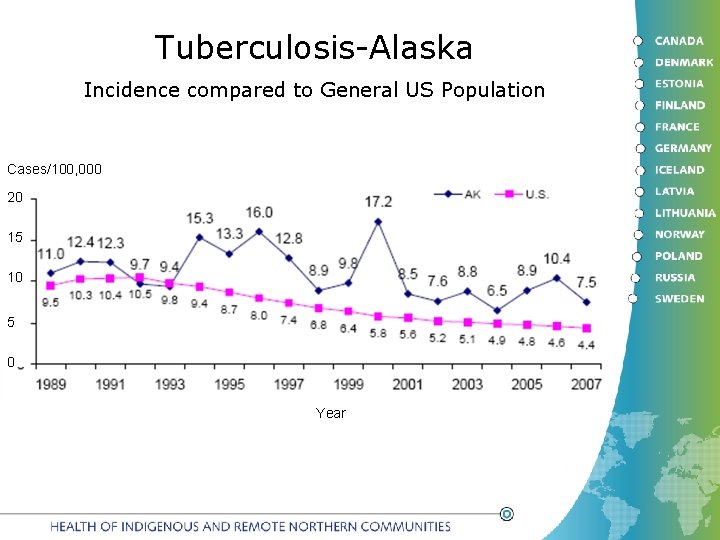
Tuberculosis-Alaska Incidence compared to General US Population Cases/100, 000 20 15 10 5 0 Year
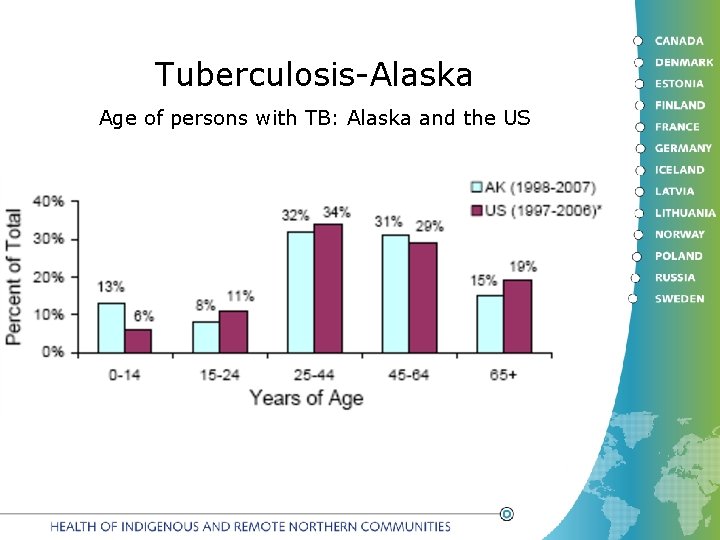
Tuberculosis-Alaska Age of persons with TB: Alaska and the US
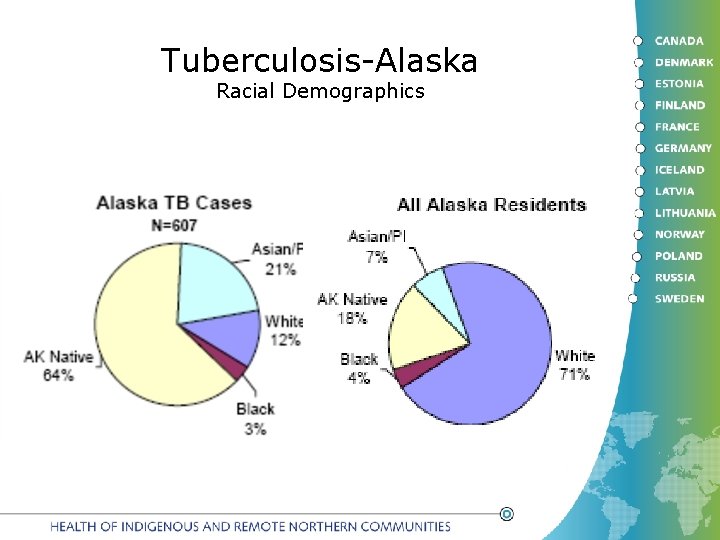
Tuberculosis-Alaska Racial Demographics
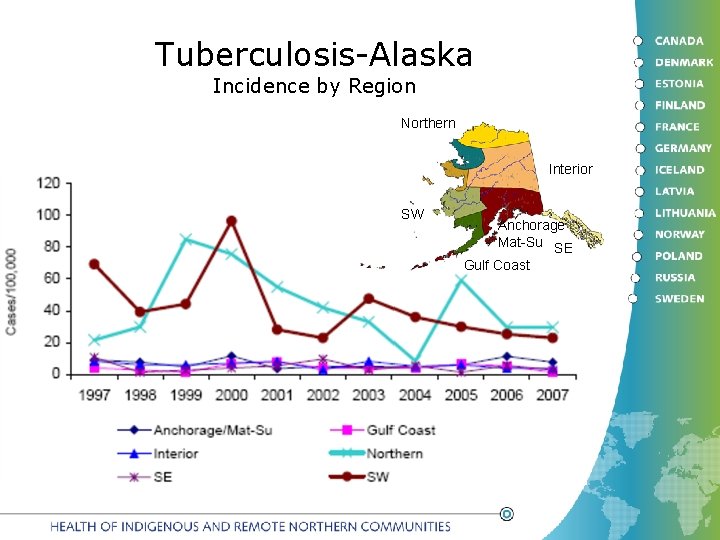
Tuberculosis-Alaska Incidence by Region Northern Interior SW Anchorage Mat-Su SE Gulf Coast
Infectious Disease Challenges. Alaska • Geography – Sparse population, large area, few roads – Climate • Poverty – Household crowding – Lack of adequate sanitation services • High prevalence of some infectious diseases – Invasive Bacterial Diseases, Respiratory Diseases, TB, STI’s • Public Health Capacity – Staffing remote sites, training
Opportunities • Well established public health infrastructures – disease surveillance, prevention programs • Linkage with national public health/research organizations – International Union for Circumpolar Health • Arctic Cooperation – Arctic Council • AMAP • SDWG – Existing Multi National Cooperatives in infectious disease control • US/Canada • Nordic/Russian Federation • EU networks (EARSS, ENTERNET EU Surveillance) • WHO • ECDC • NDPHS
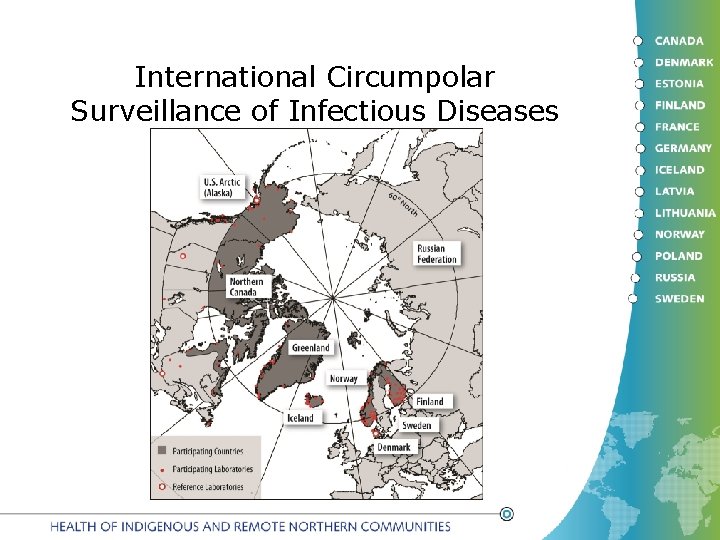
International Circumpolar Surveillance of Infectious Diseases
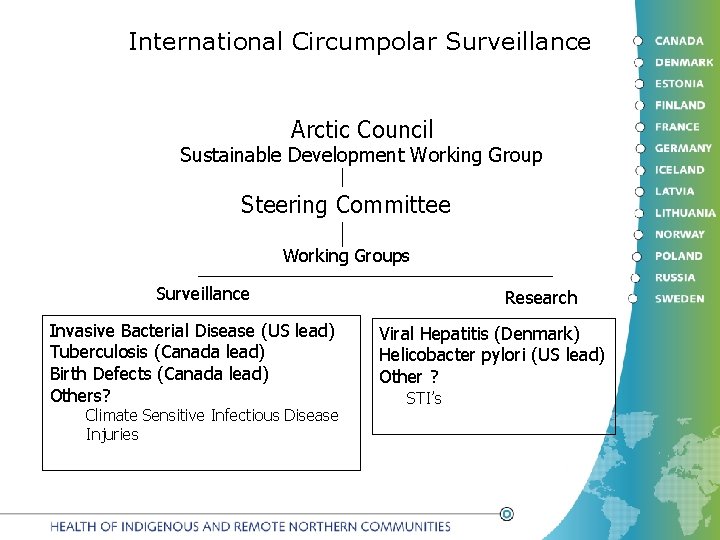
International Circumpolar Surveillance Arctic Council Sustainable Development Working Group Steering Committee Working Groups Surveillance Invasive Bacterial Disease (US lead) Tuberculosis (Canada lead) Birth Defects (Canada lead) Others? Climate Sensitive Infectious Disease Injuries Research Viral Hepatitis (Denmark) Helicobacter pylori (US lead) Other ? STI’s
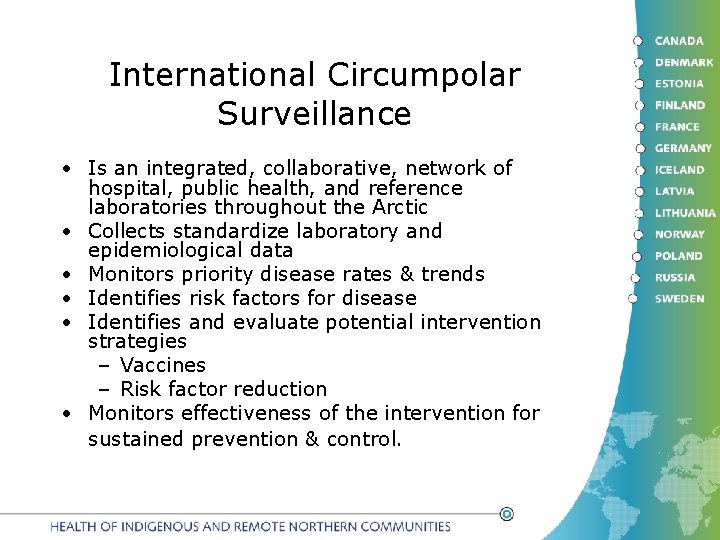
International Circumpolar Surveillance • Is an integrated, collaborative, network of hospital, public health, and reference laboratories throughout the Arctic • Collects standardize laboratory and epidemiological data • Monitors priority disease rates & trends • Identifies risk factors for disease • Identifies and evaluate potential intervention strategies – Vaccines – Risk factor reduction • Monitors effectiveness of the intervention for sustained prevention & control.
Thank you! Contact Information: Alan J. Parkinson, Ph. D Deputy Director Arctic Investigations Program, Centers for Disease Control & Prevention, Anchorage, Alaska, USA 907 729 3407 ajp 1@cdc. gov
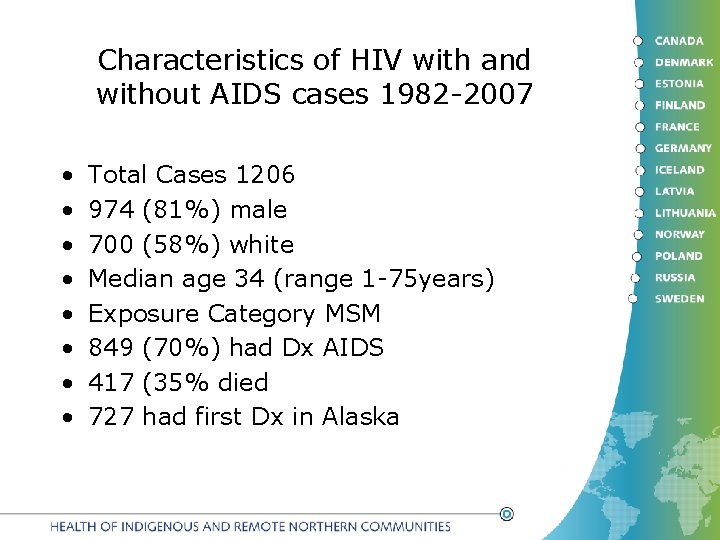
Characteristics of HIV with and without AIDS cases 1982 -2007 • • Total Cases 1206 974 (81%) male 700 (58%) white Median age 34 (range 1 -75 years) Exposure Category MSM 849 (70%) had Dx AIDS 417 (35% died 727 had first Dx in Alaska
- Slides: 19