
Communicable disease surveillance Robert Allard MDCM MSc FRCPC
Communicable disease surveillance Robert Allard MDCM MSc FRCPC October 2004
Infectious disease surveillance designs Ø Ø Ø Traditional disease notification Outbreak investigation Cluster investigation Enhanced surveillance Sentinel surveillance Emerging infectious diseases § § Ø diagnosis-based surveillance syndromic surveillance Molecular biology and surveillance
Definition “Surveillance, when applied to a disease, means § the continued watchfulness over the distribution and trends of incidence § through the systematic collection, consolidation and evaluation of morbidity and mortality reports and other relevant data. § Intrinsic in the concept is the regular dissemination of the basic data and interpretation to all who have contributed and to all others who need to know. § The concept, however, does not encompass direct responsibility for control activities. ” A. D. Langmuir, 1963
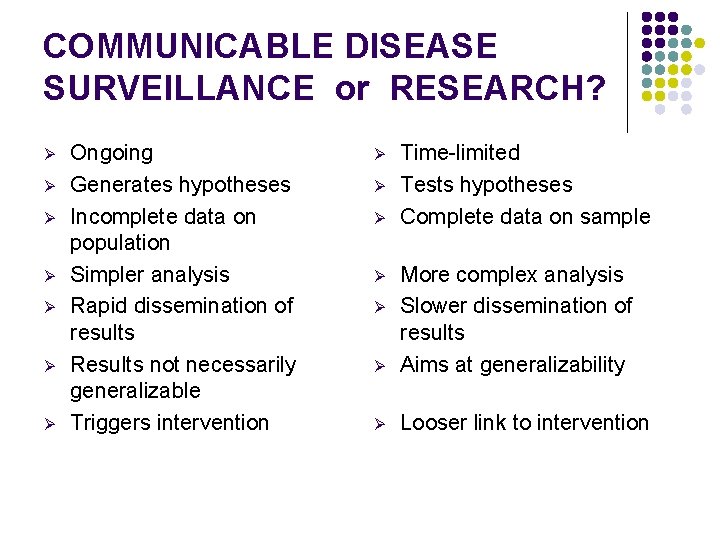
COMMUNICABLE DISEASE SURVEILLANCE or RESEARCH? Ø Ø Ø Ø Ongoing Generates hypotheses Incomplete data on population Simpler analysis Rapid dissemination of results Results not necessarily generalizable Triggers intervention Ø Ø Ø Time-limited Tests hypotheses Complete data on sample Ø More complex analysis Slower dissemination of results Aims at generalizability Ø Looser link to intervention Ø Ø
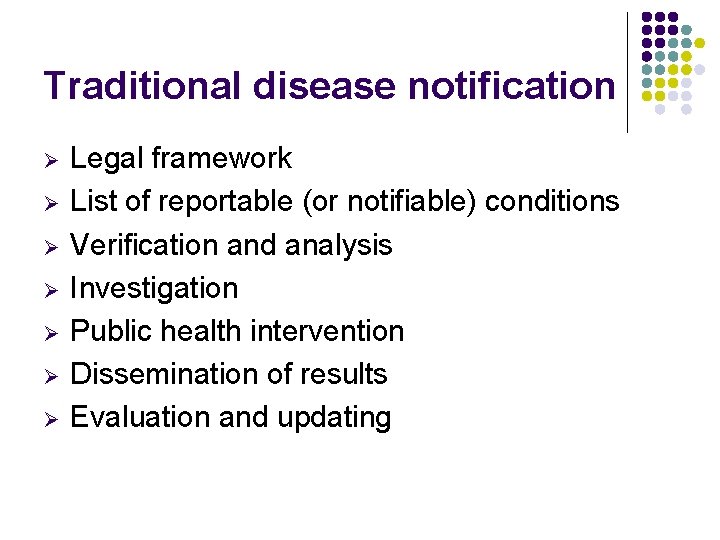
Traditional disease notification Ø Ø Ø Ø Legal framework List of reportable (or notifiable) conditions Verification and analysis Investigation Public health intervention Dissemination of results Evaluation and updating
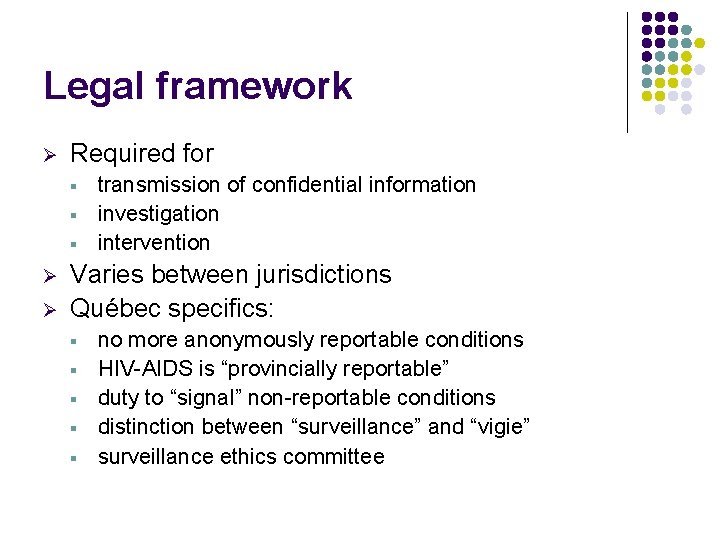
Legal framework Ø Required for § § § Ø Ø transmission of confidential information investigation intervention Varies between jurisdictions Québec specifics: § § § no more anonymously reportable conditions HIV-AIDS is “provincially reportable” duty to “signal” non-reportable conditions distinction between “surveillance” and “vigie” surveillance ethics committee
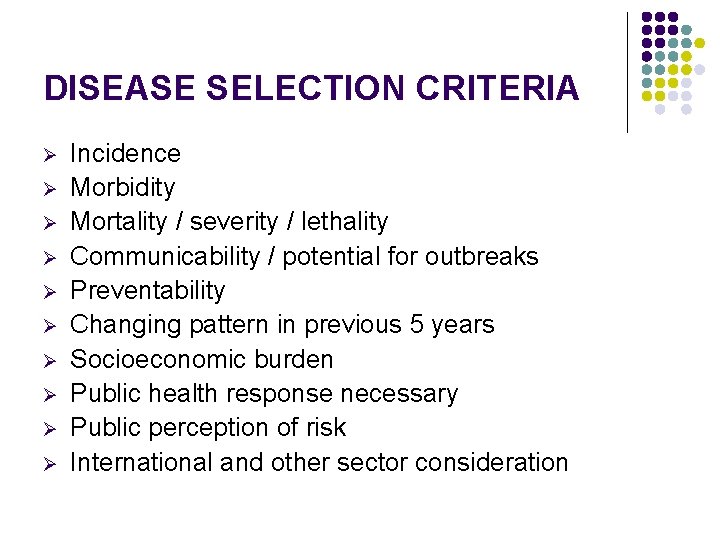
DISEASE SELECTION CRITERIA Ø Ø Ø Ø Ø Incidence Morbidity Mortality / severity / lethality Communicability / potential for outbreaks Preventability Changing pattern in previous 5 years Socioeconomic burden Public health response necessary Public perception of risk International and other sector consideration
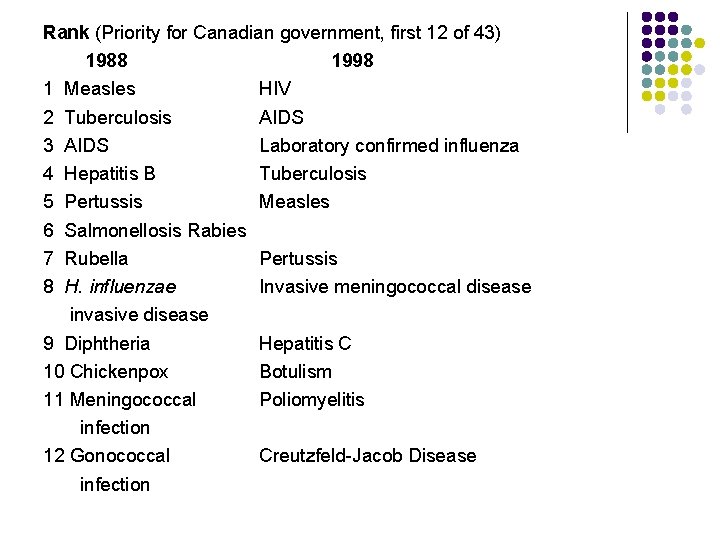
Rank (Priority for Canadian government, first 12 of 43) 1988 1998 1 Measles HIV 2 Tuberculosis AIDS 3 AIDS Laboratory confirmed influenza 4 Hepatitis B Tuberculosis 5 Pertussis Measles 6 Salmonellosis Rabies 7 Rubella Pertussis 8 H. influenzae Invasive meningococcal disease invasive disease 9 Diphtheria Hepatitis C 10 Chickenpox Botulism 11 Meningococcal Poliomyelitis infection 12 Gonococcal Creutzfeld-Jacob Disease infection
VALIDITY OF REPORTS (False positives) Ø Surveillance definitions § Ø Ø May be different from clinical definitions Laboratory confirmation The problem of nearly eliminated diseases § Most positives are false positives • • Ø Poor clinical diagnostic accuracy Importance of eliminating alternate Dx Only confirmed cases enter statistics
COMPLETENESS OF REPORTING (False negatives) Ø Varies by § § § Ø Ø Type of reporting (active, passive) Source of reports Disease Need not be high, provided it is stable More important if intervention is possible
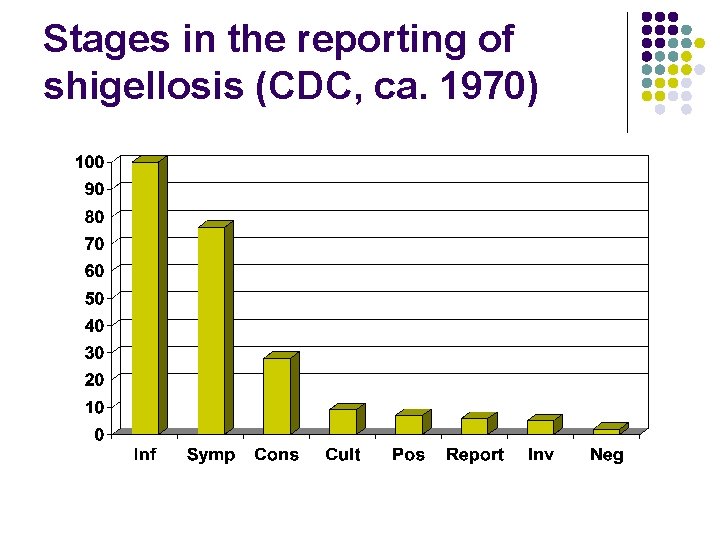
Stages in the reporting of shigellosis (CDC, ca. 1970)
ROUTINE INVESTIGATION OF REPORTED CASES Ø Ø MD, patient and/or relative are interviewed Not all cases can be investigated § § Intervention possible Transmissibility is high Case is unusual Outbreak is suspected
ANALYSIS OF SURVEILLANCE DATA “Monitoring trends is the cornerstone objective of most surveillance systems. ” Buehler, Modern Epidemiology (1998), p. 438
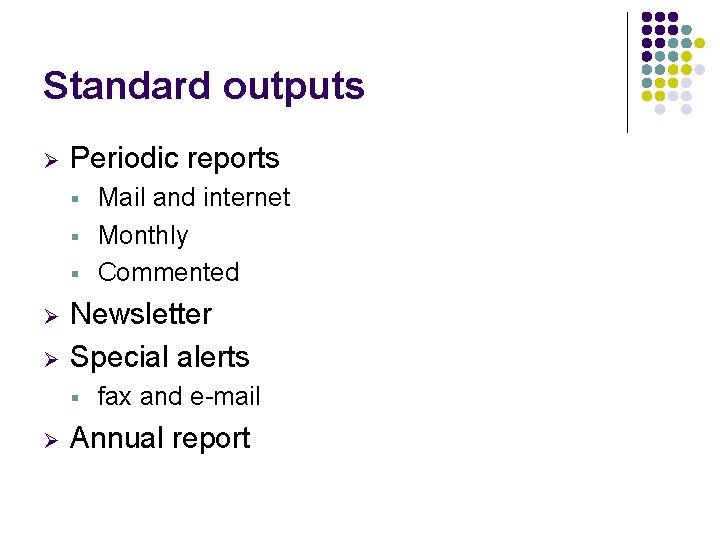
Standard outputs Ø Periodic reports § § § Ø Ø Newsletter Special alerts § Ø Mail and internet Monthly Commented fax and e-mail Annual report
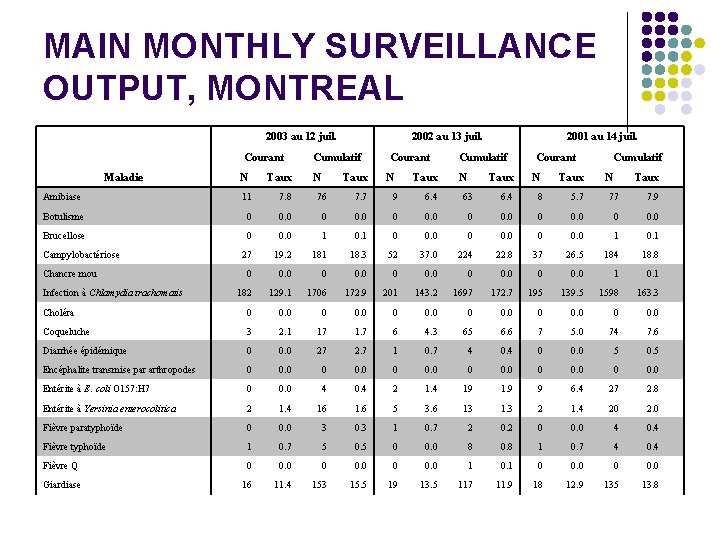
MAIN MONTHLY SURVEILLANCE OUTPUT, MONTREAL Maladie 2003 au 12 juil. Courant Taux 2002 au 13 juil. Cumulatif N Taux Courant N Taux 2001 au 14 juil. Cumulatif N Taux Courant N N Taux Amibiase 11 7. 8 76 7. 7 9 6. 4 63 6. 4 8 5. 7 Botulisme 0 0 Brucellose 0 0. 0 1 0 0. 0 Campylobactériose 27 19. 2 181 18. 3 52 37. 0 224 Chancre mou 0 0. 0 Infection à Chlamydia trachomatis 182 129. 1 1706 172. 9 201 Choléra 0 0. 0 Coqueluche 3 2. 1 17 Diarrhée épidémique 0 0. 0 Encéphalite transmise par arthropodes 0 Entérite à E. coli O 157: H 7 Entérite à Yersinia enterocolitica Cumulatif N Taux 77 7. 9 0. 0 0 0. 0 1 0. 1 22. 8 37 26. 5 184 18. 8 0 0. 0 1 0. 1 143. 2 1697 172. 7 195 139. 5 1598 163. 3 0 0. 0 1. 7 6 4. 3 65 6. 6 7 5. 0 74 7. 6 27 2. 7 1 0. 7 4 0 0. 0 5 0. 0 0 0. 0 4 0. 4 2 1. 4 19 1. 9 9 6. 4 27 2. 8 2 1. 4 16 1. 6 5 3. 6 13 1. 3 2 1. 4 20 2. 0 Fièvre paratyphoïde 0 0. 0 3 0. 3 1 0. 7 2 0 0. 0 4 0. 4 Fièvre typhoïde 1 0. 7 5 0 0. 0 8 0. 8 1 0. 7 4 0. 4 Fièvre Q 0 0. 0 1 0 0. 0 Giardiase 16 11. 4 153 15. 5 19 13. 5 117 11. 9 18 12. 9 135 13. 8
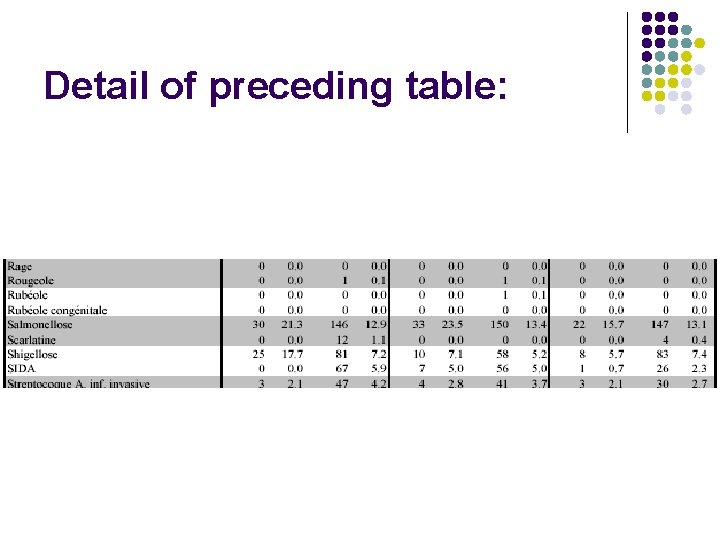
Detail of preceding table:
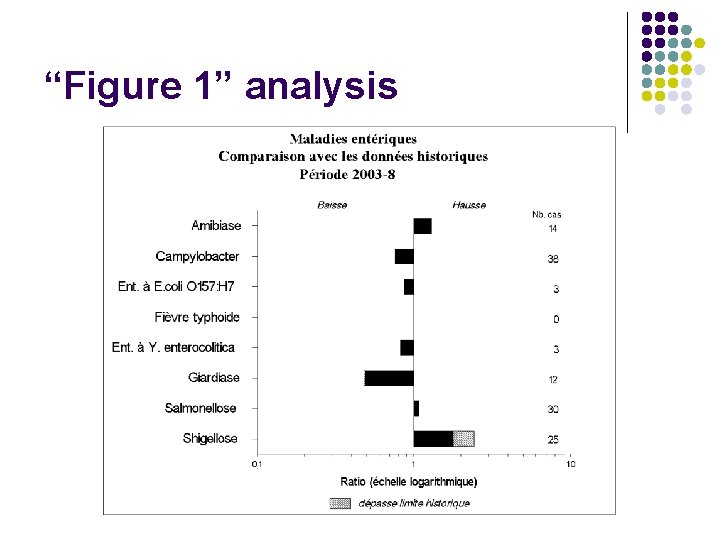
“Figure 1” analysis
ANNUAL FORECASTS
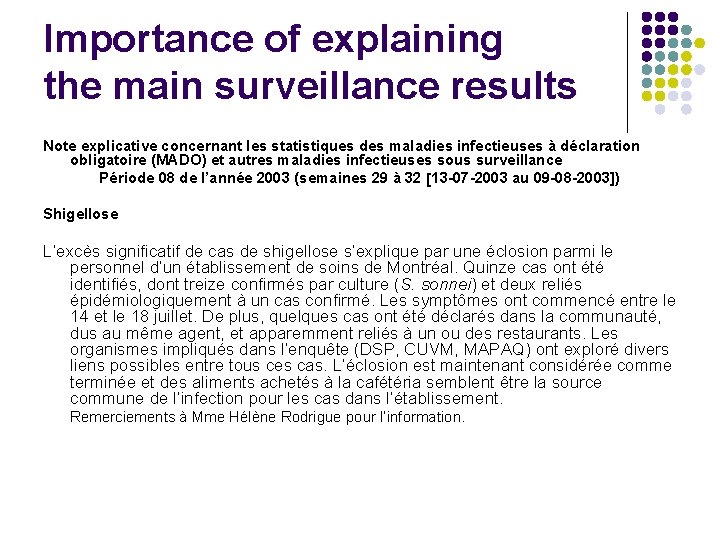
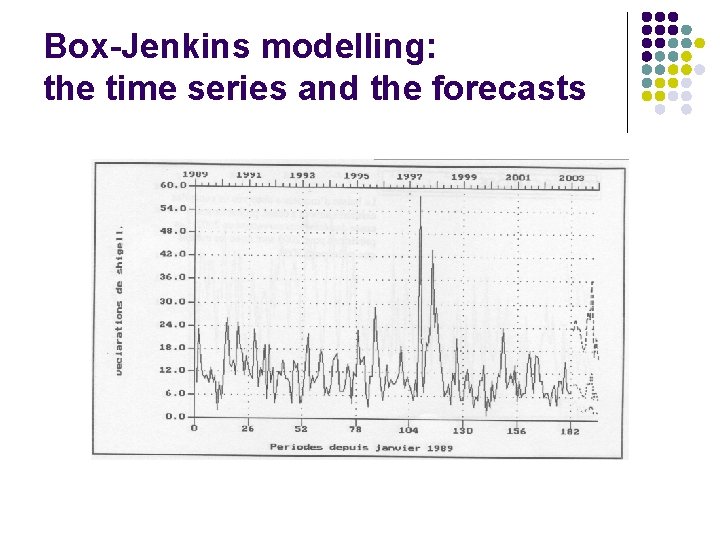
Importance of explaining the main surveillance results Note explicative concernant les statistiques des maladies infectieuses à déclaration obligatoire (MADO) et autres maladies infectieuses sous surveillance Période 08 de l’année 2003 (semaines 29 à 32 13 -07 -2003 au 09 -08 -2003]) Shigellose L’excès significatif de cas de shigellose s’explique par une éclosion parmi le personnel d’un établissement de soins de Montréal. Quinze cas ont été identifiés, dont treize confirmés par culture (S. sonnei) et deux reliés épidémiologiquement à un cas confirmé. Les symptômes ont commencé entre le 14 et le 18 juillet. De plus, quelques cas ont été déclarés dans la communauté, dus au même agent, et apparemment reliés à un ou des restaurants. Les organismes impliqués dans l’enquête (DSP, CUVM, MAPAQ) ont exploré divers liens possibles entre tous ces cas. L’éclosion est maintenant considérée comme terminée et des aliments achetés à la cafétéria semblent être la source commune de l’infection pour les cas dans l’établissement. Remerciements à Mme Hélène Rodrigue pour l’information.
Outbreak investigation Ø Ø Time, place, person or Who, what, where, when, why (how)? How = by what mode of transmission? Three basic modes: § § § Person-to-person Common source Vector-borne
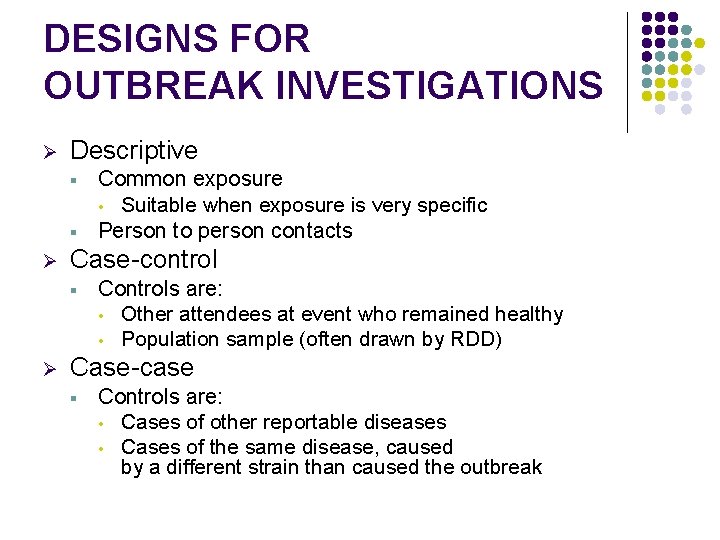
DESIGNS FOR OUTBREAK INVESTIGATIONS Ø Descriptive § § Ø Case-control § Ø Common exposure • Suitable when exposure is very specific Person to person contacts Controls are: • Other attendees at event who remained healthy • Population sample (often drawn by RDD) Case-case § Controls are: • Cases of other reportable diseases • Cases of the same disease, caused by a different strain than caused the outbreak
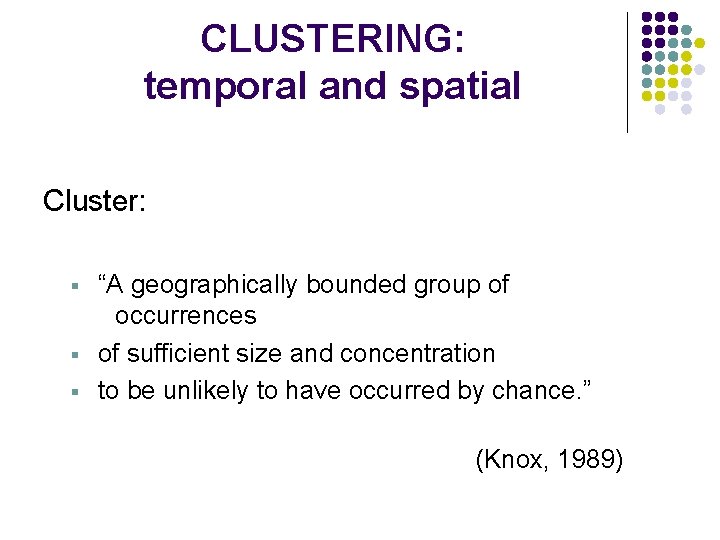
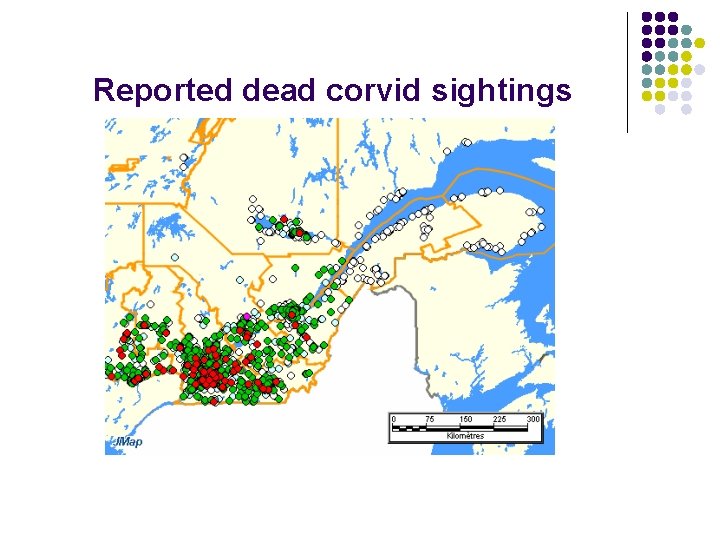
CLUSTERING: temporal and spatial Cluster: § § § “A geographically bounded group of occurrences of sufficient size and concentration to be unlikely to have occurred by chance. ” (Knox, 1989)
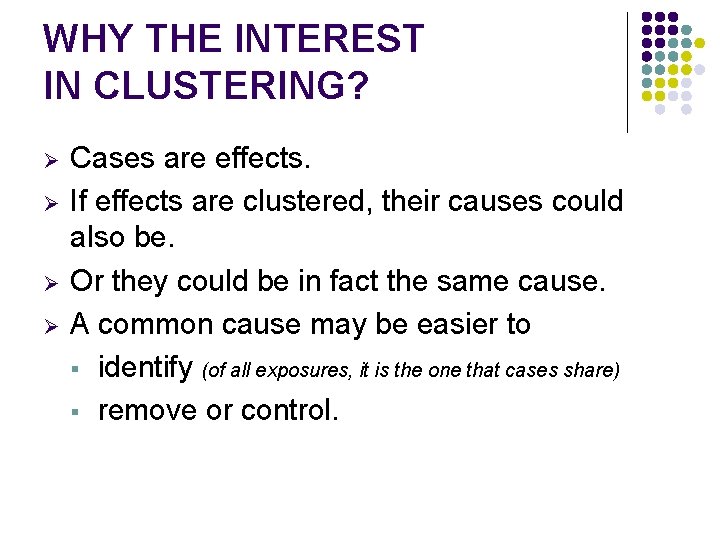
WHY THE INTEREST IN CLUSTERING? Ø Ø Cases are effects. If effects are clustered, their causes could also be. Or they could be in fact the same cause. A common cause may be easier to § identify (of all exposures, it is the one that cases share) § remove or control.
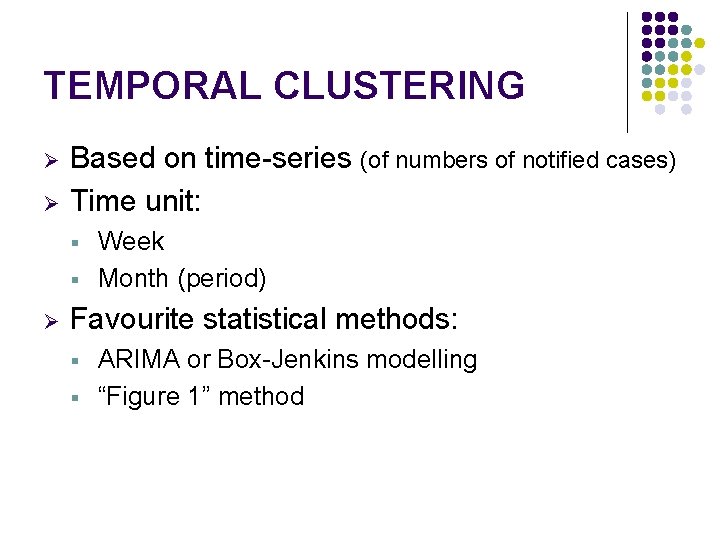
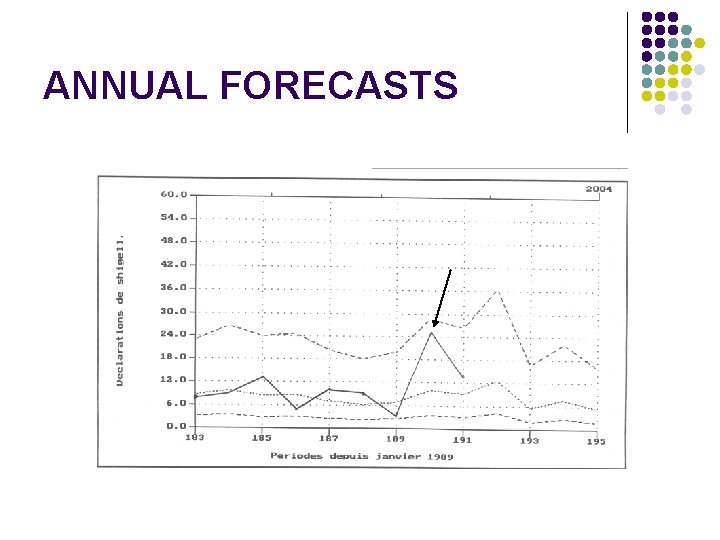
TEMPORAL CLUSTERING Ø Ø Based on time-series (of numbers of notified cases) Time unit: § § Ø Week Month (period) Favourite statistical methods: § § ARIMA or Box-Jenkins modelling “Figure 1” method
Box-Jenkins modelling: the time series and the forecasts
SPATIAL CLUSTERING Ø Ø Less useful for surveillance in urban compared to rural environments Very many methods exist Most require more or less unrealistic assumptions Most promising: Sa. TScan (see satscan. org)
Reported dead corvid sightings
WNV-INFECTED CORVIDS (red)
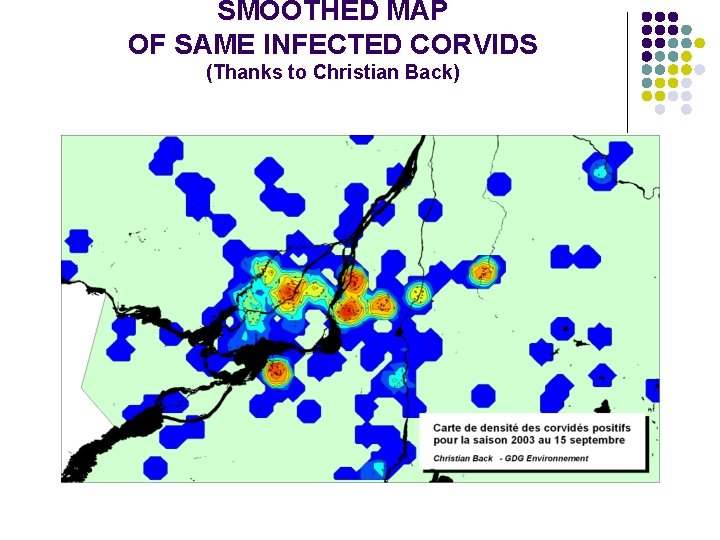
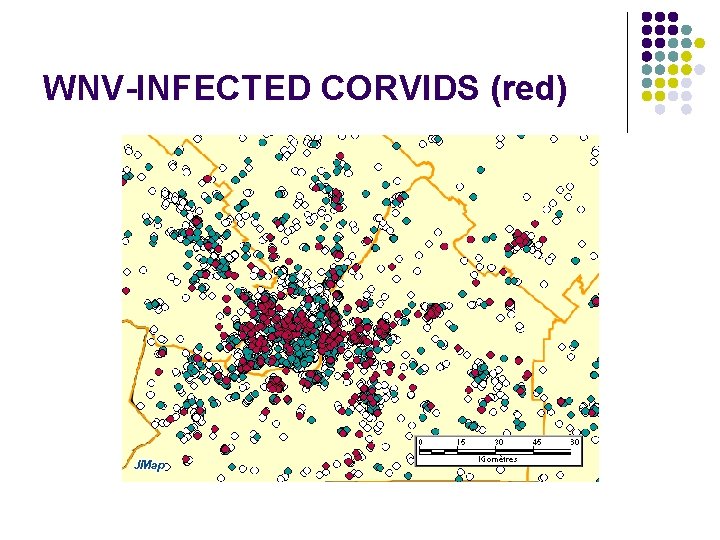
SMOOTHED MAP OF SAME INFECTED CORVIDS (Thanks to Christian Back)
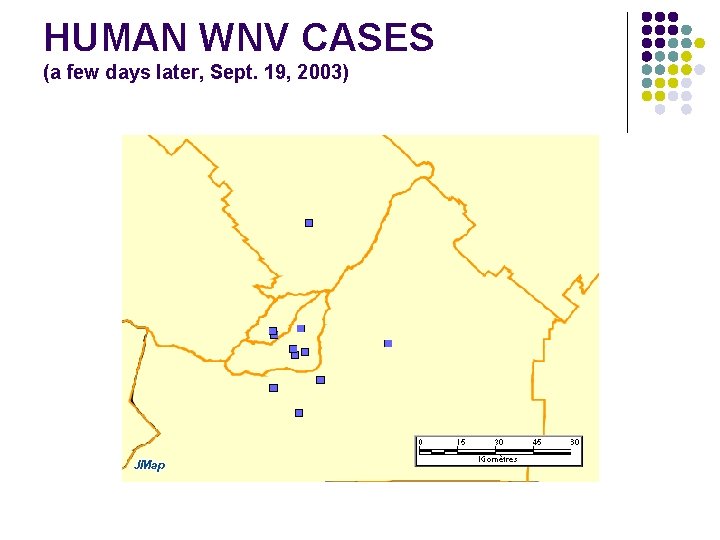
HUMAN WNV CASES (a few days later, Sept. 19, 2003)
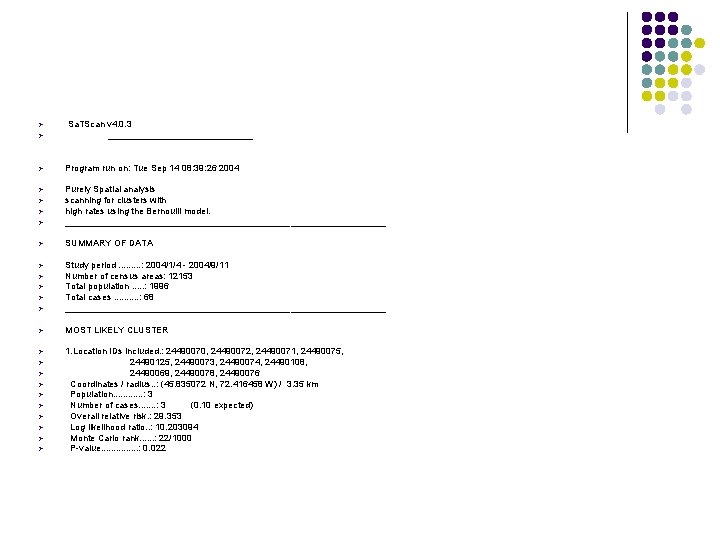
Ø Ø Sa. TScan v 4. 0. 3 _______________ Ø Program run on: Tue Sep 14 08: 39: 26 2004 Ø Ø Purely Spatial analysis scanning for clusters with high rates using the Bernoulli model. ________________________________ Ø SUMMARY OF DATA Ø Ø Study period. . : 2004/1/4 - 2004/9/11 Number of census areas: 12153 Total population. . . : 1996 Total cases. . : 68 ________________________________ Ø MOST LIKELY CLUSTER Ø 1. Location IDs included. : 24490070, 24490072, 24490071, 24490075, 24490125, 24490073, 24490074, 24490108, 24490069, 24490078, 24490076 Coordinates / radius. . : (45. 835072 N, 72. 416458 W) / 3. 35 km Population. . . : 3 Number of cases. . . . : 3 (0. 10 expected) Overall relative risk. : 29. 353 Log likelihood ratio. . : 10. 203094 Monte Carlo rank. . . : 22/1000 P-value. . . . : 0. 022 Ø Ø Ø Ø
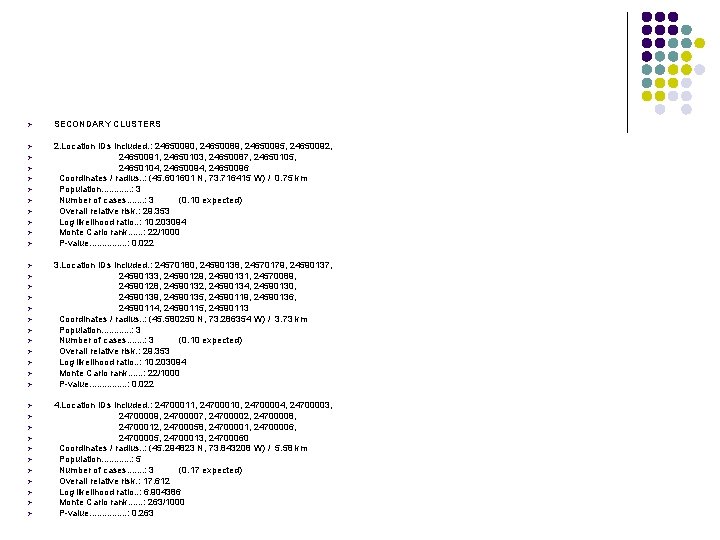
Ø SECONDARY CLUSTERS Ø 2. Location IDs included. : 24650090, 24650089, 24650095, 24650092, 24650091, 24650103, 24650087, 24650105, 24650104, 24650096 Coordinates / radius. . : (45. 601601 N, 73. 716415 W) / 0. 75 km Population. . . : 3 Number of cases. . . . : 3 (0. 10 expected) Overall relative risk. : 29. 353 Log likelihood ratio. . : 10. 203094 Monte Carlo rank. . . : 22/1000 P-value. . . . : 0. 022 Ø Ø Ø Ø Ø Ø Ø Ø 3. Location IDs included. : 24570180, 24590138, 24570179, 24590137, 24590133, 24590129, 24590131, 24570089, 24590128, 24590132, 24590134, 24590130, 24590139, 24590135, 24590119, 24590136, 24590114, 24590115, 24590113 Coordinates / radius. . : (45. 580250 N, 73. 286354 W) / 3. 73 km Population. . . : 3 Number of cases. . . . : 3 (0. 10 expected) Overall relative risk. : 29. 353 Log likelihood ratio. . : 10. 203094 Monte Carlo rank. . . : 22/1000 P-value. . . . : 0. 022 4. Location IDs included. : 24700011, 24700010, 24700004, 24700003, 24700009, 24700007, 24700002, 24700008, 24700012, 24700058, 24700001, 24700006, 24700005, 24700013, 24700060 Coordinates / radius. . : (45. 294823 N, 73. 843208 W) / 5. 58 km Population. . . : 5 Number of cases. . . . : 3 (0. 17 expected) Overall relative risk. : 17. 612 Log likelihood ratio. . : 6. 904386 Monte Carlo rank. . . : 263/1000 P-value. . . . : 0. 263
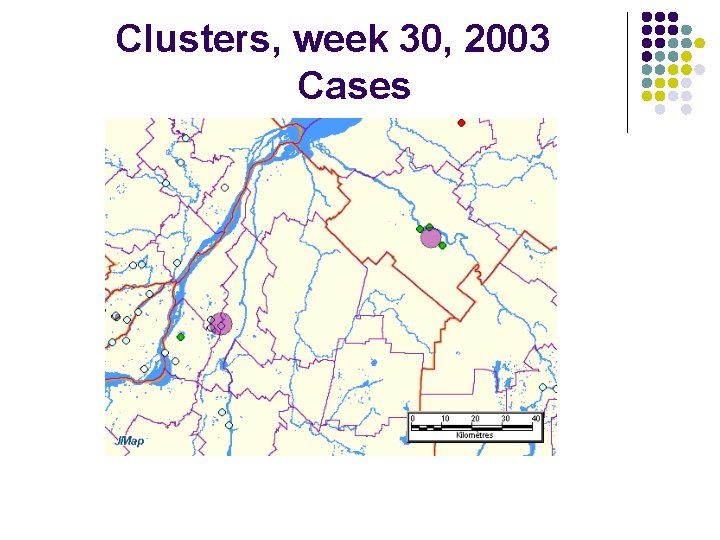
Clusters, week 30, 2003 Cases
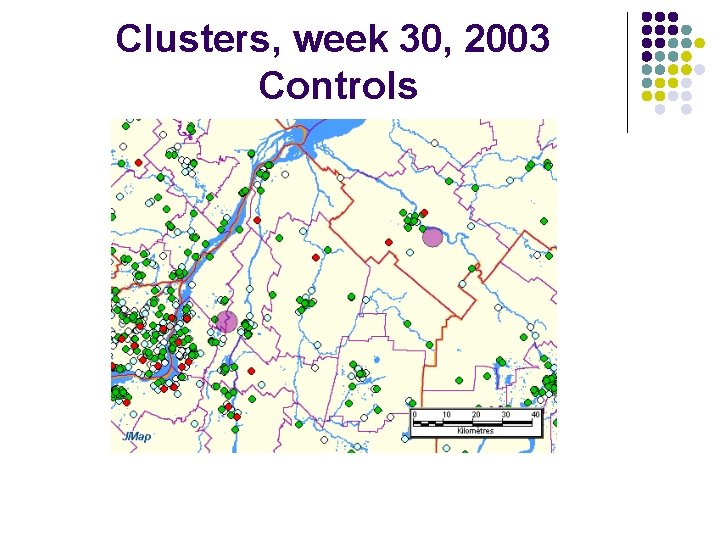
Clusters, week 30, 2003 Controls
GROWING IMPORTANCE OF ZOONOSES Ø Ø v. CJD, SARS, WNV, avian influenza, monkeypox, rabies etc. Disease trends in other species have to be followed and related to trends in humans Interdisciplinary collaboration essential Worrisome development, but very stimulating work
ENHANCED SURVEILLANCE Ø Ø Priority problem identified Concept is elastic: traditional surveillance plus any combination of § § § § Ø Extra resources allocated Increased collaboration between government levels Standardized data collection Increased data quality control Access to better laboratory tests Increased analytic possibilities Other surveillance methods Greater potential to guide policy making?
SENTINEL SURVEILLANCE Ø Ø Ø Does not seek completeness Uses purposely selected sources of information Prefers sources likely to observe earliest occurrence of phenomenon under surveillance May be active or passive Relies heavily on real-time communication Positive findings often trigger other forms of surveillance
CHOICE OF SENTINELS Ø Ø Ø Physicians Pharmacies Laboratories Hospitals Public health Units, etc. Combination of sources (see http: //www. cdc. gov/foodnet/surveys. htm)
SUCCESS FACTORS (? ) Ø Ø Link to professional organizations Keep it passive Provide feedback and other benefits Surveillance objectives must be § § § Relevant Flexible Suggested by participants
IMPORTED FALCIPARUM MALARIA IN EUROPE Ø Ø European Network on Surveillance of Imported Infectious Diseases About 45 hospital departments of infectious diseases 1659 patients seen in 1999 -2000 About 10% of all patients with malaria seen in Europe
Ø Results: § § Ø European travellers 48% Immigrants 52% Country of infection: West Africa for 63% Chemoprophylaxis had been taken by • 40% of travellers • 28% of immigrants Lethality: 5 patients (all travellers) Useful results, but is it surveillance? § § Continuous collection, analysis, reporting? No denominators or analysis of trends
EMERGING INFECTIOUS DISEASES Ø Ø Strategic/political aspects of the concept “Emerging infections are those diseases whose incidence has increased within the past two decades or … threatens to increase in the near future. ” (NY ACAD SCI) Ø An emerging infection can be due to an agent § § § previously unknown in humans previously unknown in a given area previously non pathogenic or less pathogenic previously non resistant to antibiotics previously controlled by preventive measures
SOME EMERGING AGENTS Ø Ø Ø Ø 1973 Rotavirus 1977 Ebola virus 1977 Legionellosis 1981 HIV 1982 E. coli O 157: H 7 1982 Lyme disease 1983 H. pylori Ø Ø Ø Ø 1986 BSE, v. CJD (prions) 1989 Hepatitis C 1992 Cholera O 139 1995 HHV-8 1999 WNV 2001 Anthrax 2002 SARS Co. V
FACTORS IN EMERGENCE Ø Microbial adaptation and change § § Ø Environmental changes § § Ø Drug resistance New virulence or toxin production Global warming Deforestation Societal events § § § Impoverishment War Immigration
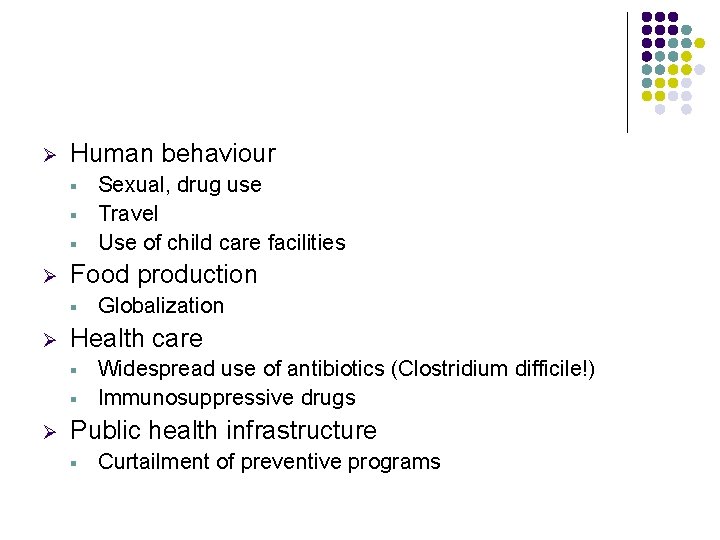
Ø Human behaviour § § § Ø Food production § Ø Globalization Health care § § Ø Sexual, drug use Travel Use of child care facilities Widespread use of antibiotics (Clostridium difficile!) Immunosuppressive drugs Public health infrastructure § Curtailment of preventive programs
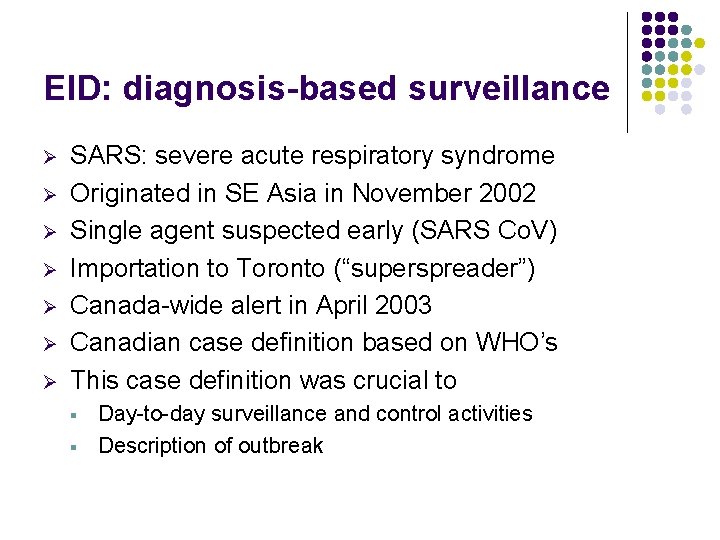
EID: diagnosis-based surveillance Ø Ø Ø Ø SARS: severe acute respiratory syndrome Originated in SE Asia in November 2002 Single agent suspected early (SARS Co. V) Importation to Toronto (“superspreader”) Canada-wide alert in April 2003 Canadian case definition based on WHO’s This case definition was crucial to § § Day-to-day surveillance and control activities Description of outbreak
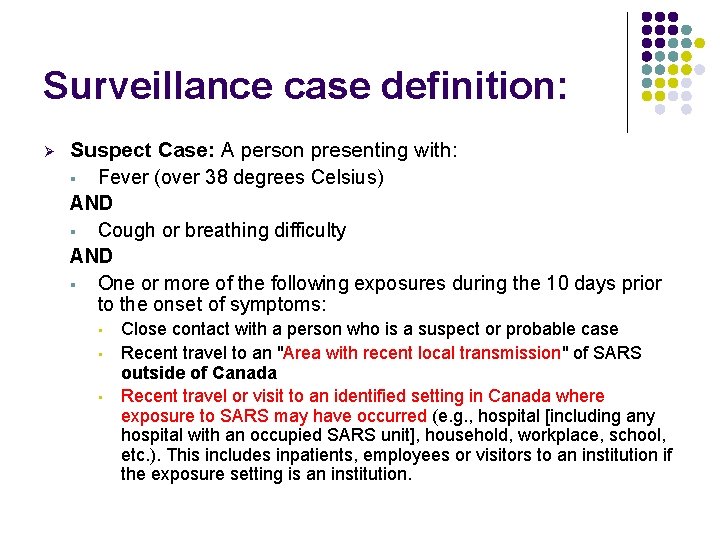
Surveillance case definition: Ø Suspect Case: A person presenting with: § Fever (over 38 degrees Celsius) AND § Cough or breathing difficulty AND § One or more of the following exposures during the 10 days prior to the onset of symptoms: • • • Close contact with a person who is a suspect or probable case Recent travel to an "Area with recent local transmission" of SARS outside of Canada Recent travel or visit to an identified setting in Canada where exposure to SARS may have occurred (e. g. , hospital [including any hospital with an occupied SARS unit], household, workplace, school, etc. ). This includes inpatients, employees or visitors to an institution if the exposure setting is an institution.
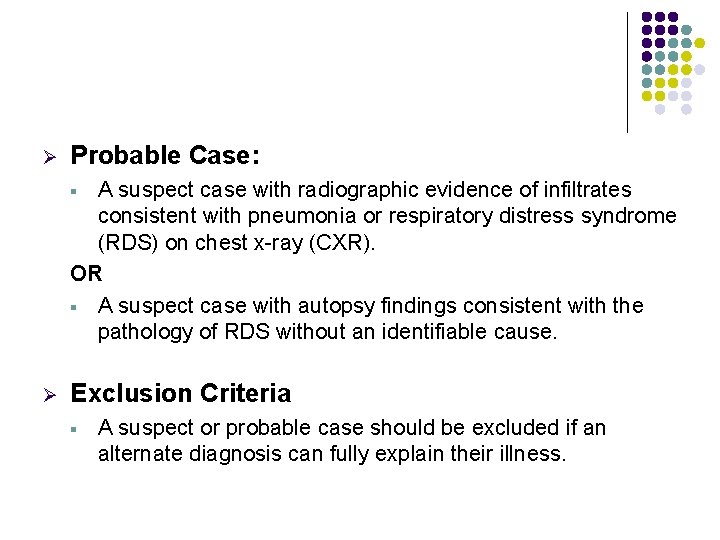
Ø Probable Case: A suspect case with radiographic evidence of infiltrates consistent with pneumonia or respiratory distress syndrome (RDS) on chest x-ray (CXR). OR § A suspect case with autopsy findings consistent with the pathology of RDS without an identifiable cause. § Ø Exclusion Criteria § A suspect or probable case should be excluded if an alternate diagnosis can fully explain their illness.
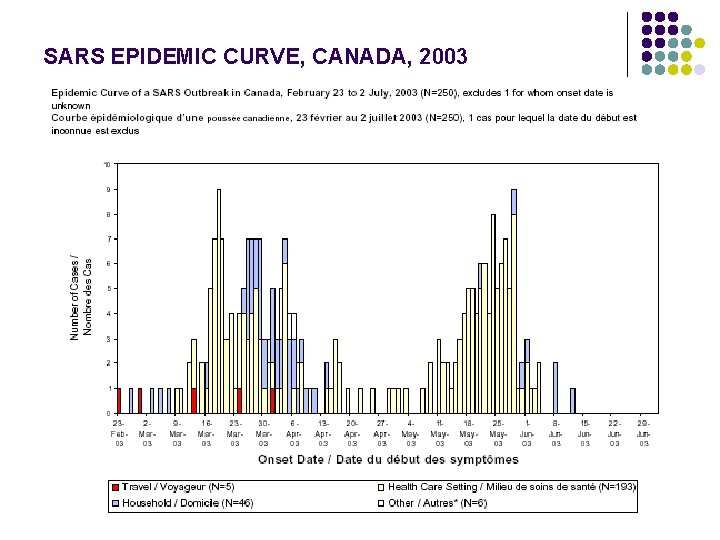
SARS EPIDEMIC CURVE, CANADA, 2003
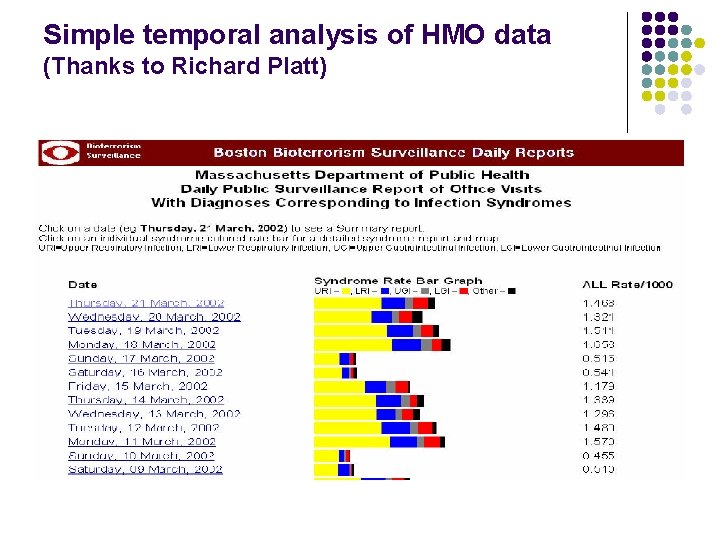
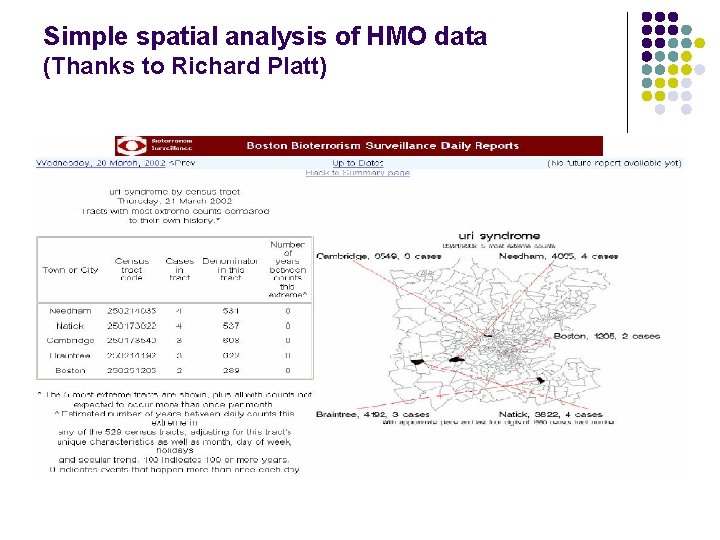
EID: syndromic surveillance Ø Ø Observes the occurrence not of diagnosed disease but of a pre-defined syndrome Syndrome = “a pattern of symptoms indicative of some disease”, usually unidentified The syndrome may be associated with one or more disease entities A diagnosis is sought (for surveillance) only when a cluster of the syndrome is detected
EXAMPLES OF SYNDROMES FOR SURVEILLANCE Ø Ø Ø Fever + upper or lower respiratory signs or symptoms (plague, anthrax, ricin, staph. toxin or …) Fever + rash (smallpox or …) Fever + hemorrhages (Ebola, Marburg or …) Fever + GI symptoms (salmonellosis or …) Cranial-nerve impairment (botulism or …) Fever + unexplained death
OPERATIONALIZATION OF SYNDROMIC SURVEILLANCE Ø Ø Most promising general source of information: emergency department (or other primary care source) presenting complaints (PC) Information is § § § Ø Ø Ø computerized on site transmitted periodically to central server scanned to extract PCs and other information PCs are synthesized into syndromes if possible Clusters of syndromes are tested for Significant clusters flagged for further investigation
Simple temporal analysis of HMO data (Thanks to Richard Platt)
Simple spatial analysis of HMO data (Thanks to Richard Platt)
MOLECULAR BIOLOGY AND SURVEILLANCE Ø Ø Ø Based on ability to distinguish different strains of same agent, based on its nucleic acid (genotype) Different methods, short of sequencing, can be used Must be able to detect mutations that are § § Frequent enough to have produced many different strains over the years Rare enough not to occur during an outbreak
DNA electrophoretic pattern
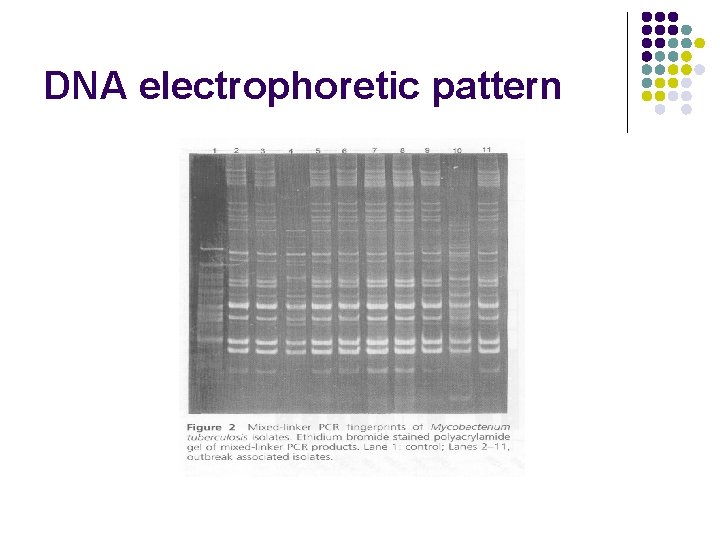
Uses of DNA “fingerprinting” Ø Ø Ø Prove that cases in an outbreak are related Prove that suspected vehicle is the true common source Identify outbreaks missed by traditional methods § Ø TB in chronic care hospitals for old people Help select cases and controls in a case-case study § § § Cases: cases caused by the outbreak strain Controls: cases caused by non outbreak strains Goal: identify mode(s) of transmission specific to this outbreak
Example of case-case study Ø Ø Ø Listeriosis outbreak (meningitis, sepsis, especially in pregnant women) in France Positive L. monocytogenes culture from normally sterile site between 99/11/12 and 00/02/28 Cases: 29 strain-associated cases § Ø Excluded were: • 2 deaths • 1 case whose status (as case) was known before interview Controls: 32 non strain-associated cases
Ø Results: § § Ø Ø Adjusted ORs and 95% CI • Jellied pork tongue: 75. 5 (4. 7 - 1216) • Pâté de campagne: 8. 9 (1. 7 - 46. 1) • Cooked ham: 7. 1 (0. 7 - 71. 8) All cases had eaten at least one of the above Recommendation against eating the pork tongue made on Feb. 22, 2000 Outbreak strain in foodstuffs § § Identified in some (rillettes: OR = 1. 1 [0. 3 – 3. 8]) Not identified in jellied pork tongue • No recall, as specific brand could not be incriminated
CONCLUSION: research vs surveillance Ø Ø Ø Collaboration between the research and public health communities is increasing Research and surveillance methodologies are converging The objectives of each remain different: is one trying to answer questions § § of local interest, as rapidly as possible of general interest, as validly as possible
- Slides: 60