
Commonly Used Aerospace Materials Wood Steel Aluminum alloys
- Slides: 27
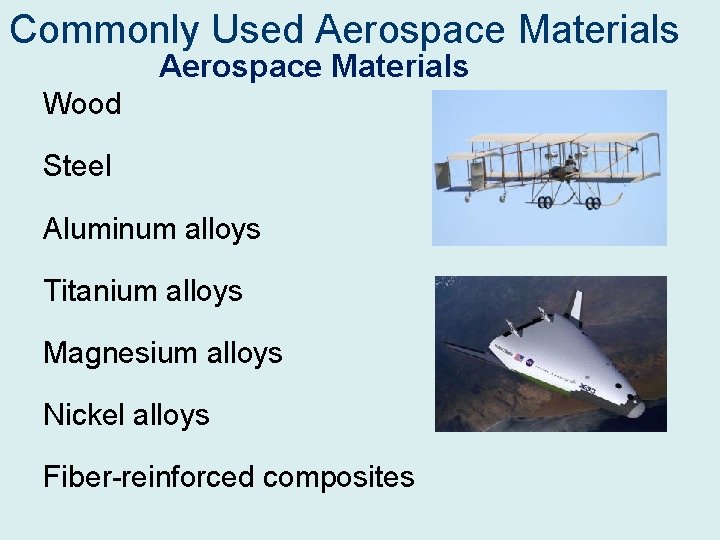
Commonly Used Aerospace Materials Wood Steel Aluminum alloys Titanium alloys Magnesium alloys Nickel alloys Fiber-reinforced composites
Factors for Selecting Materials Function What is the component used for? Material Properties Strength to weight ratio Stiffness Toughness Resistance to corrosion Fatigue and effects of environmental heating Production Machinability Availability and consistency of material
Cyclic Stresses Average commercial aircraft 30 year life cycle 60, 000 Hours 2, 500 Days – 357 weeks – 6. 85 Years 20, 000 Flights 667 flights per year 100, 000 miles of taxiing 4 times around the Earth’s circumference Total average maintenance and service cost are double the original purchase price
Flight Stresses Pressure differential fuselage to outside 0 k. Pa to 60 k. Pa (8. 6 psi) Temperature differential ground to cruise Ground temp to -56 o. C (-69 o. F) Impact load of landing Landing gear now supports aircraft Wings flex from upward lift force to downward force of their own weight Tires accelerate from 0 kph to 400 kmph (this creates a puff of smoke)
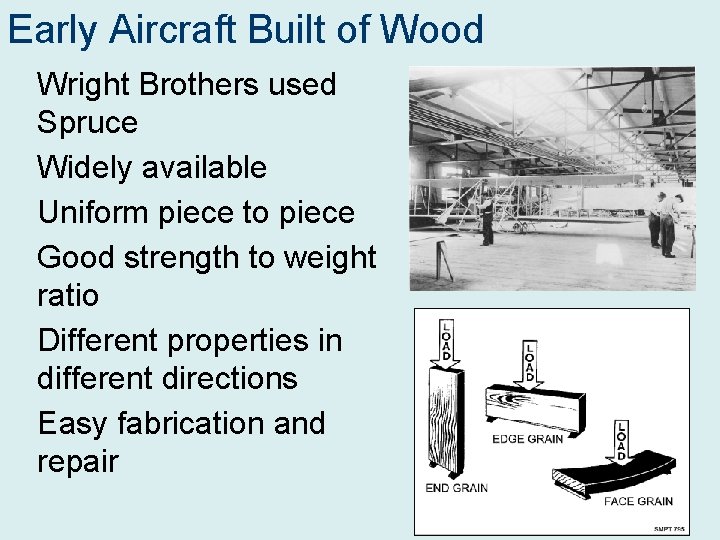
Early Aircraft Built of Wood Wright Brothers used Spruce Widely available Uniform piece to piece Good strength to weight ratio Different properties in different directions Easy fabrication and repair
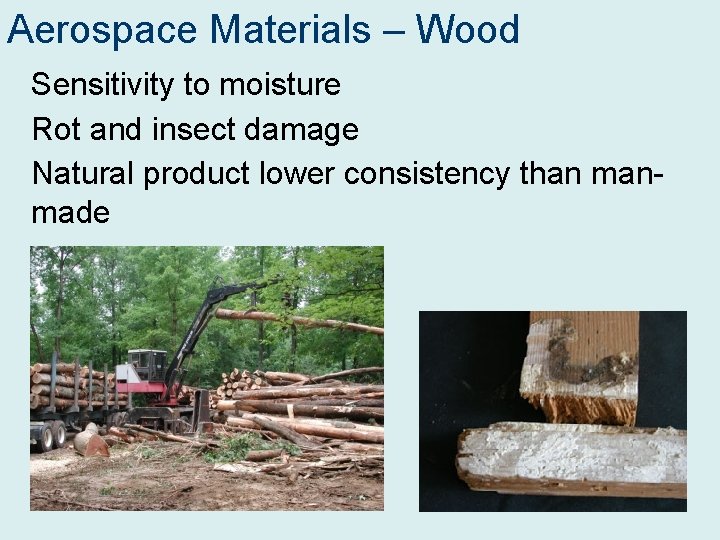
Aerospace Materials – Wood Sensitivity to moisture Rot and insect damage Natural product lower consistency than manmade
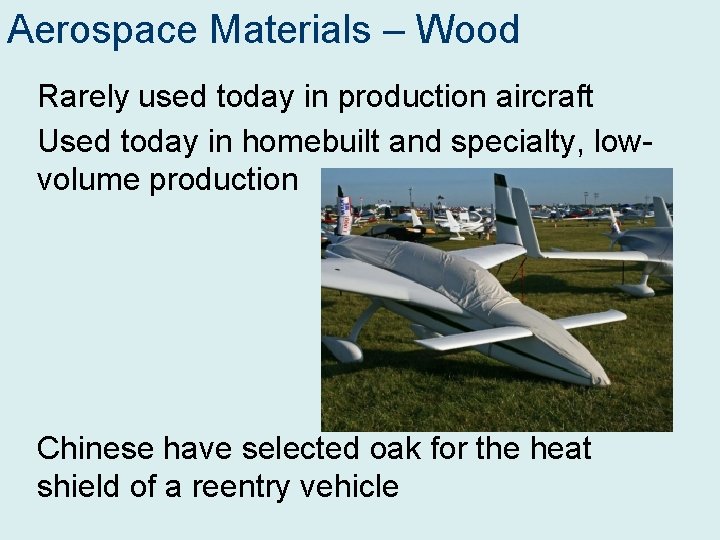
Aerospace Materials – Wood Rarely used today in production aircraft Used today in homebuilt and specialty, lowvolume production Chinese have selected oak for the heat shield of a reentry vehicle
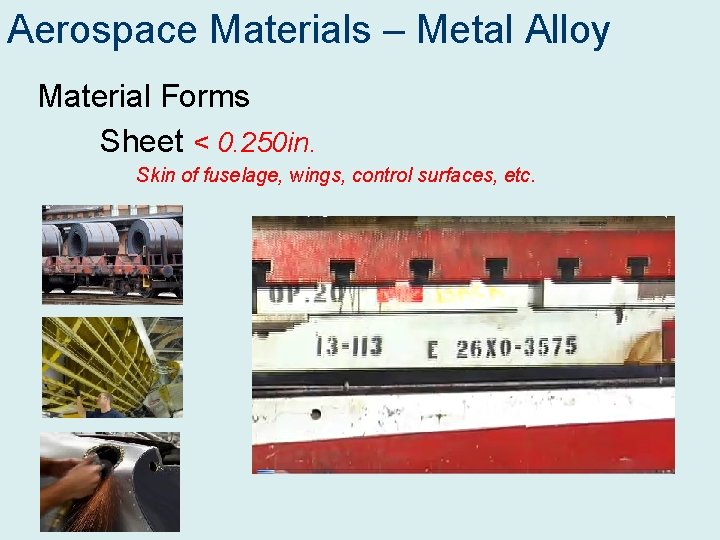
Aerospace Materials – Metal Alloy Material Forms Sheet ˂ 0. 250 in. Skin of fuselage, wings, control surfaces, etc.
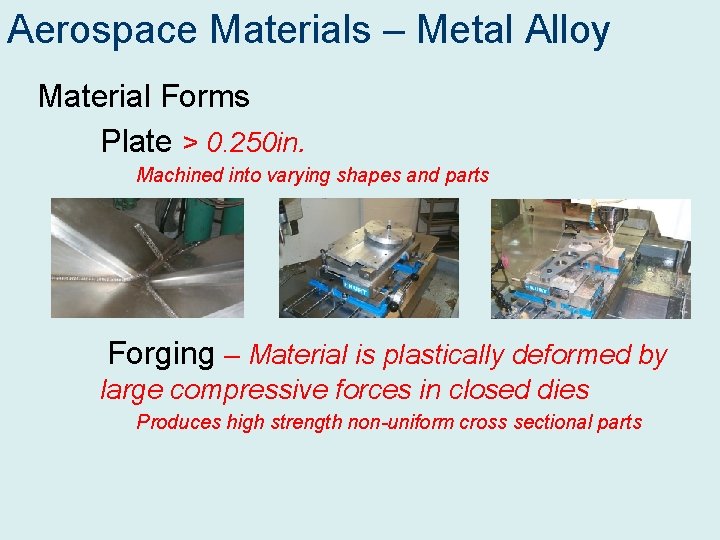
Aerospace Materials – Metal Alloy Material Forms Plate ˃ 0. 250 in. Machined into varying shapes and parts Forging – Material is plastically deformed by large compressive forces in closed dies Produces high strength non-uniform cross sectional parts
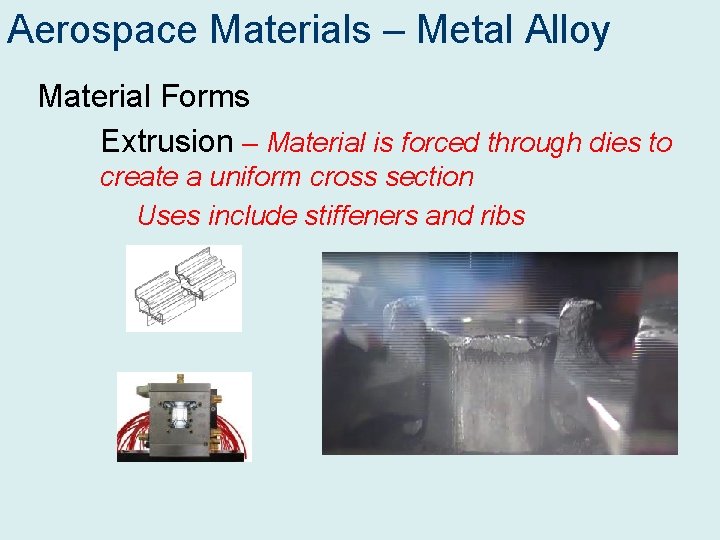
Aerospace Materials – Metal Alloy Material Forms Extrusion – Material is forced through dies to create a uniform cross section Uses include stiffeners and ribs
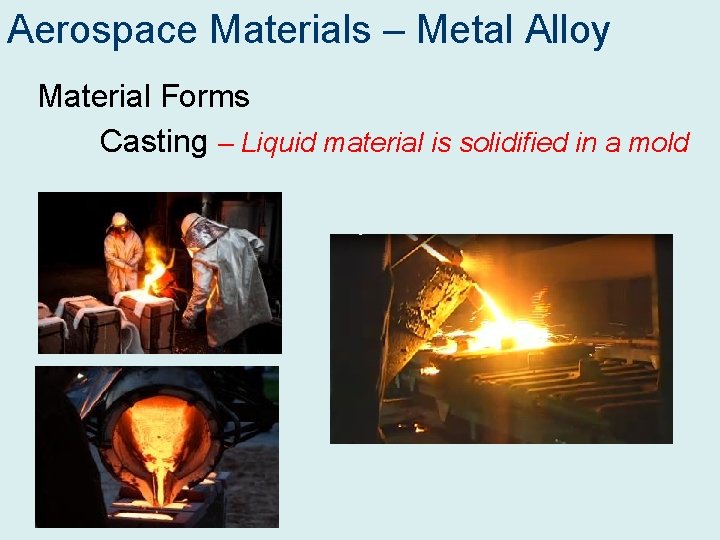
Aerospace Materials – Metal Alloy Material Forms Casting – Liquid material is solidified in a mold
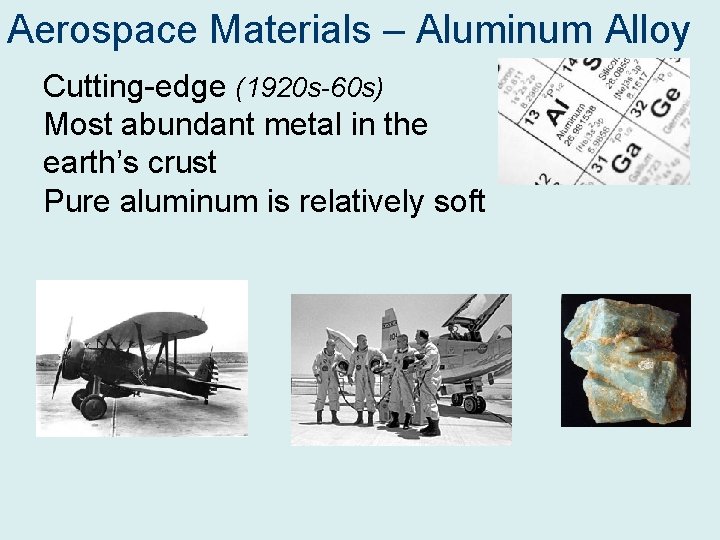
Aerospace Materials – Aluminum Alloy Cutting-edge (1920 s-60 s) Most abundant metal in the earth’s crust Pure aluminum is relatively soft
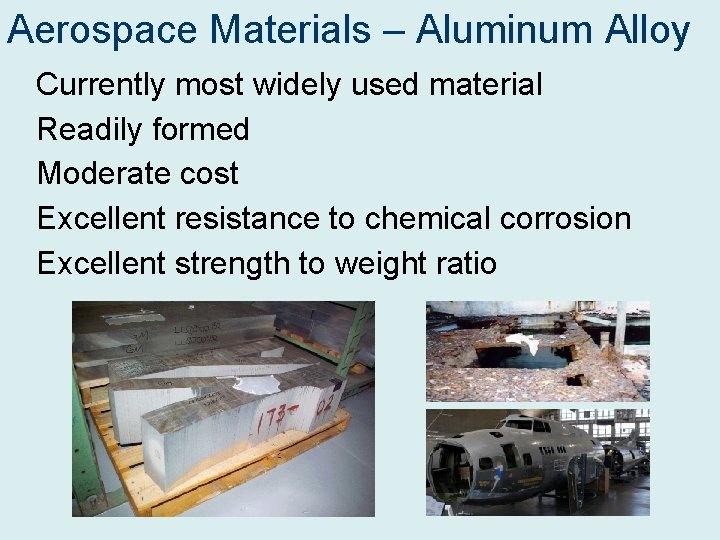
Aerospace Materials – Aluminum Alloy Currently most widely used material Readily formed Moderate cost Excellent resistance to chemical corrosion Excellent strength to weight ratio
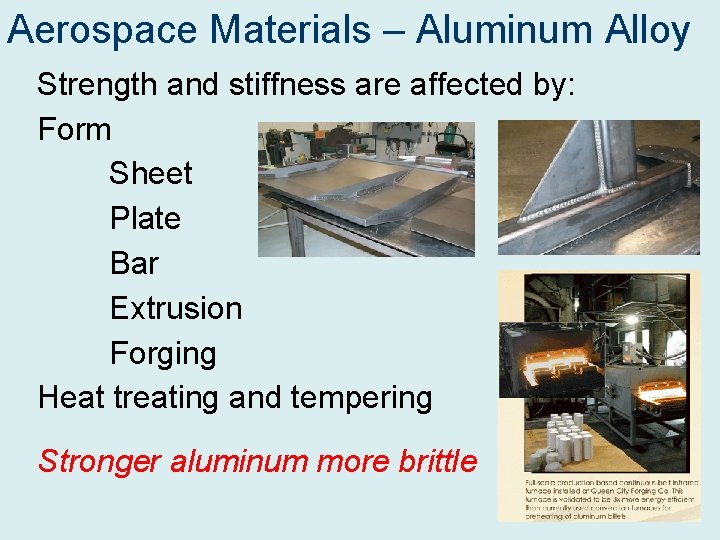
Aerospace Materials – Aluminum Alloy Strength and stiffness are affected by: Form Sheet Plate Bar Extrusion Forging Heat treating and tempering Stronger aluminum more brittle
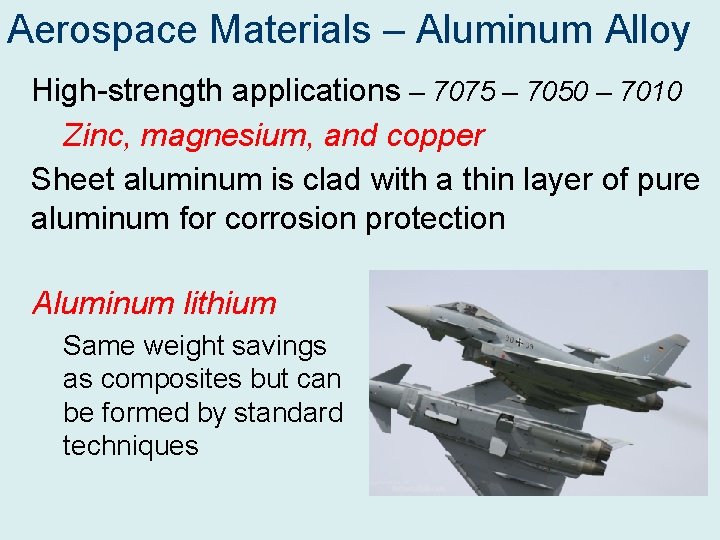
Aerospace Materials – Aluminum Alloy High-strength applications – 7075 – 7050 – 7010 Zinc, magnesium, and copper Sheet aluminum is clad with a thin layer of pure aluminum for corrosion protection Aluminum lithium Same weight savings as composites but can be formed by standard techniques
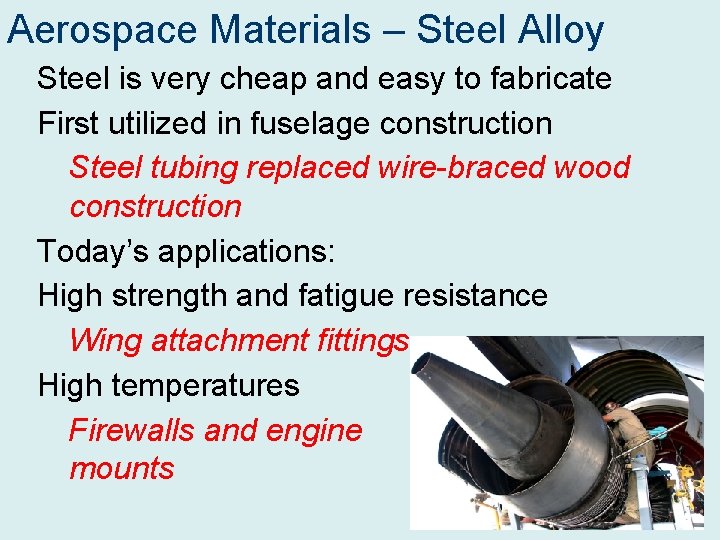
Aerospace Materials – Steel Alloy Steel is very cheap and easy to fabricate First utilized in fuselage construction Steel tubing replaced wire-braced wood construction Today’s applications: High strength and fatigue resistance Wing attachment fittings High temperatures Firewalls and engine mounts
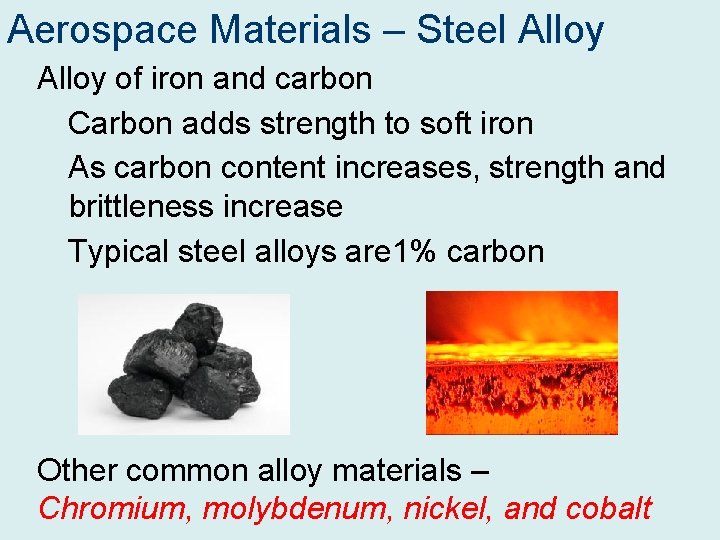
Aerospace Materials – Steel Alloy of iron and carbon Carbon adds strength to soft iron As carbon content increases, strength and brittleness increase Typical steel alloys are 1% carbon Other common alloy materials – Chromium, molybdenum, nickel, and cobalt
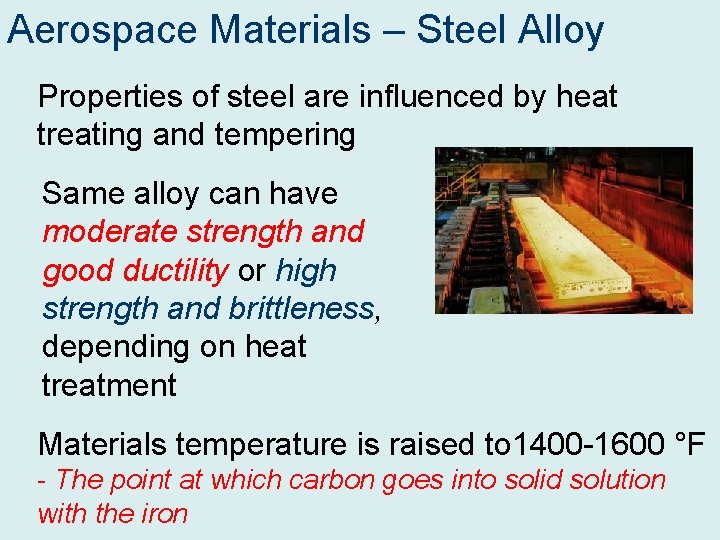
Aerospace Materials – Steel Alloy Properties of steel are influenced by heat treating and tempering Same alloy can have moderate strength and good ductility or high strength and brittleness, depending on heat treatment Materials temperature is raised to 1400 -1600 °F - The point at which carbon goes into solid solution with the iron
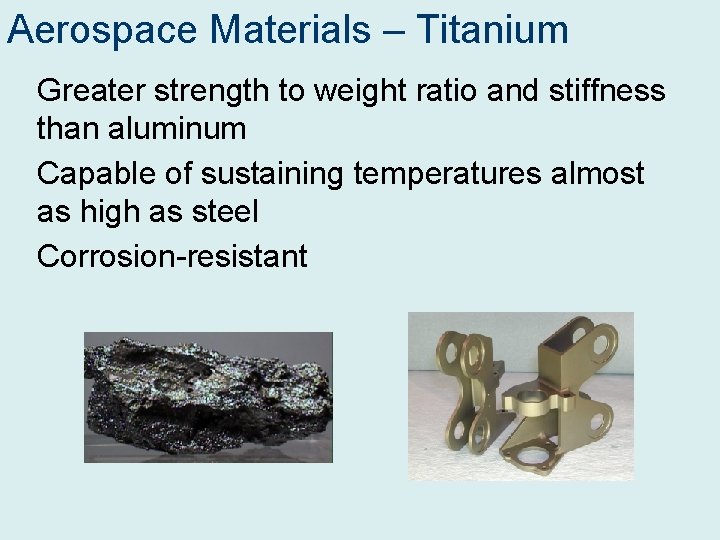
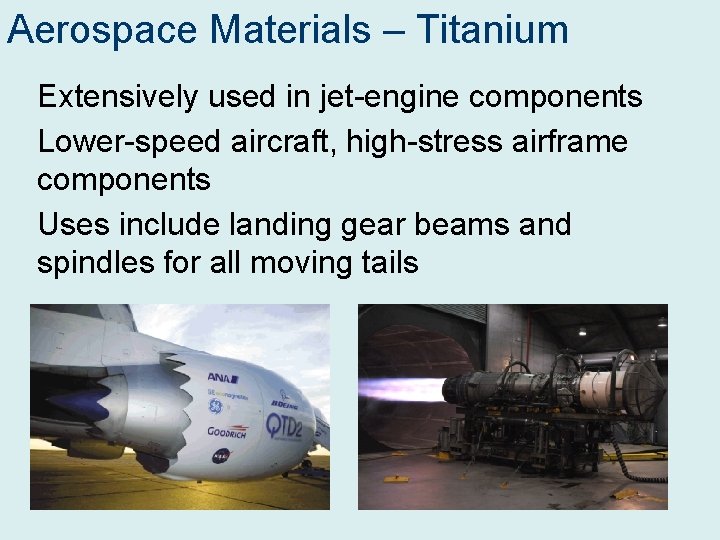
Aerospace Materials – Titanium Greater strength to weight ratio and stiffness than aluminum Capable of sustaining temperatures almost as high as steel Corrosion-resistant
Aerospace Materials – Titanium Difficult to form High forming temperatures and stresses Seriously affected by any impurities Most impurity elements – Hydrogen, oxygen, and nitrogen Higher fabrication cost Expensive – 5 to 10 times as much as aluminum
Aerospace Materials – Titanium Extensively used in jet-engine components Lower-speed aircraft, high-stress airframe components Uses include landing gear beams and spindles for all moving tails
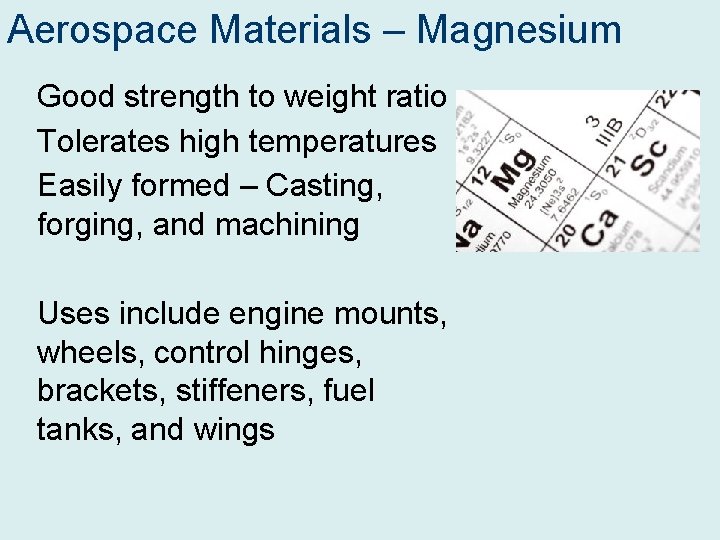
Aerospace Materials – Magnesium Good strength to weight ratio Tolerates high temperatures Easily formed – Casting, forging, and machining Uses include engine mounts, wheels, control hinges, brackets, stiffeners, fuel tanks, and wings
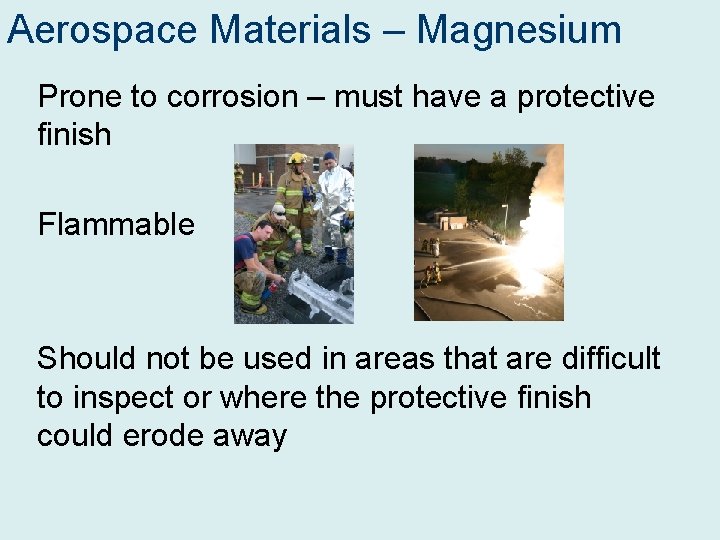
Aerospace Materials – Magnesium Prone to corrosion – must have a protective finish Flammable Should not be used in areas that are difficult to inspect or where the protective finish could erode away
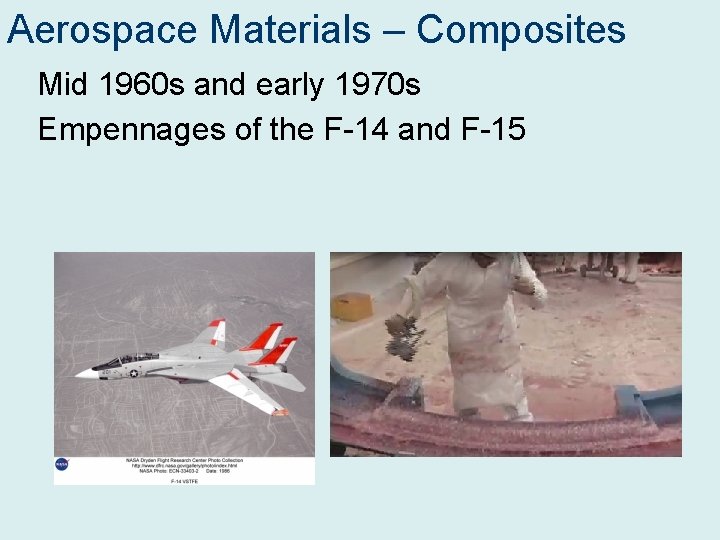
Aerospace Materials – Composites Mid 1960 s and early 1970 s Empennages of the F-14 and F-15
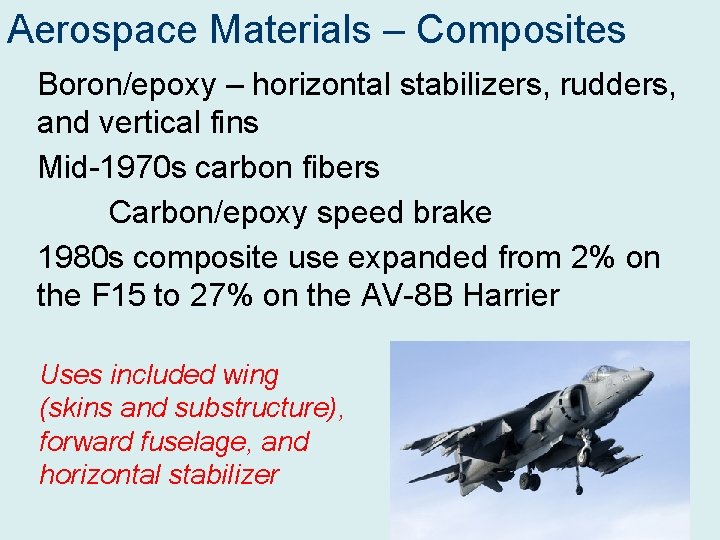
Aerospace Materials – Composites Boron/epoxy – horizontal stabilizers, rudders, and vertical fins Mid-1970 s carbon fibers Carbon/epoxy speed brake 1980 s composite use expanded from 2% on the F 15 to 27% on the AV-8 B Harrier Uses included wing (skins and substructure), forward fuselage, and horizontal stabilizer
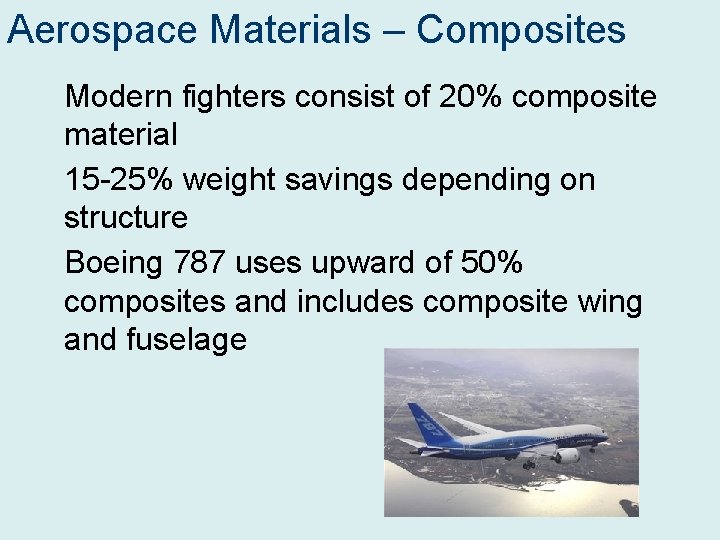
Aerospace Materials – Composites Modern fighters consist of 20% composite material 15 -25% weight savings depending on structure Boeing 787 uses upward of 50% composites and includes composite wing and fuselage
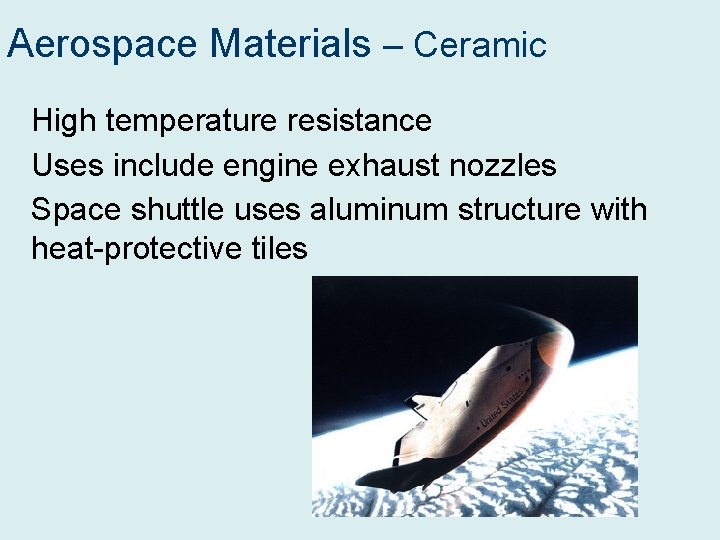
Aerospace Materials – Ceramic High temperature resistance Uses include engine exhaust nozzles Space shuttle uses aluminum structure with heat-protective tiles