
Common Trees Species of the Bruce Peninsula PART
Common Trees Species of the Bruce Peninsula PART 2
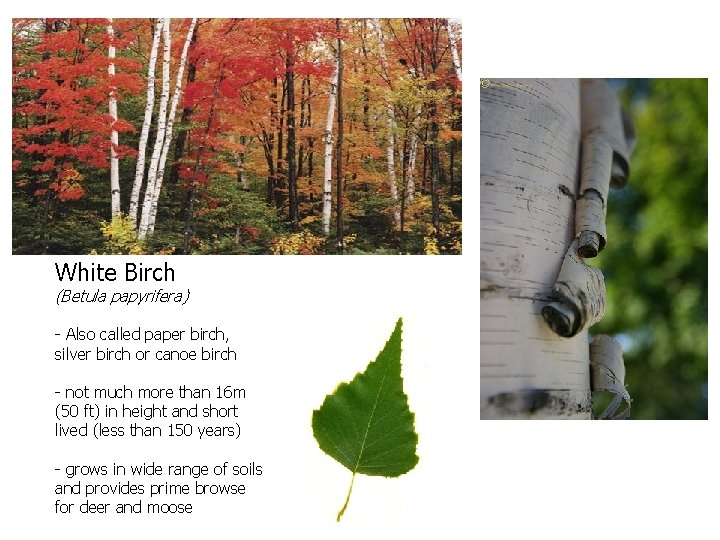
White Birch (Betula papyrifera) - Also called paper birch, silver birch or canoe birch - not much more than 16 m (50 ft) in height and short lived (less than 150 years) - grows in wide range of soils and provides prime browse for deer and moose
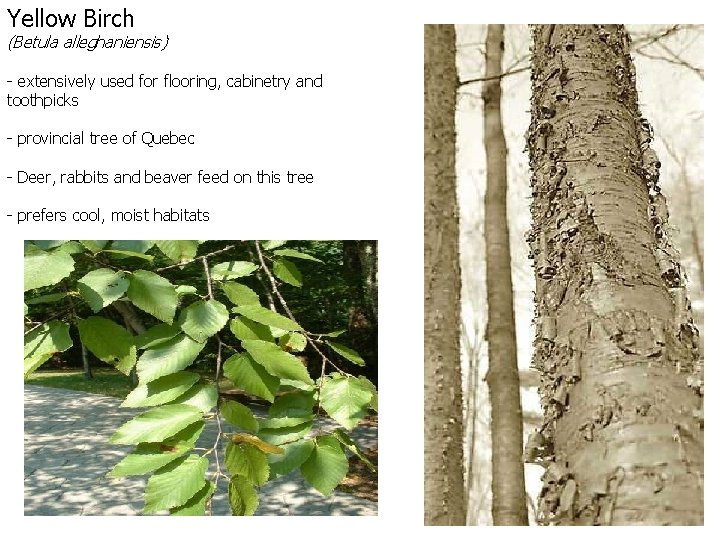
Yellow Birch (Betula alleghaniensis) - extensively used for flooring, cabinetry and toothpicks - provincial tree of Quebec - Deer, rabbits and beaver feed on this tree - prefers cool, moist habitats
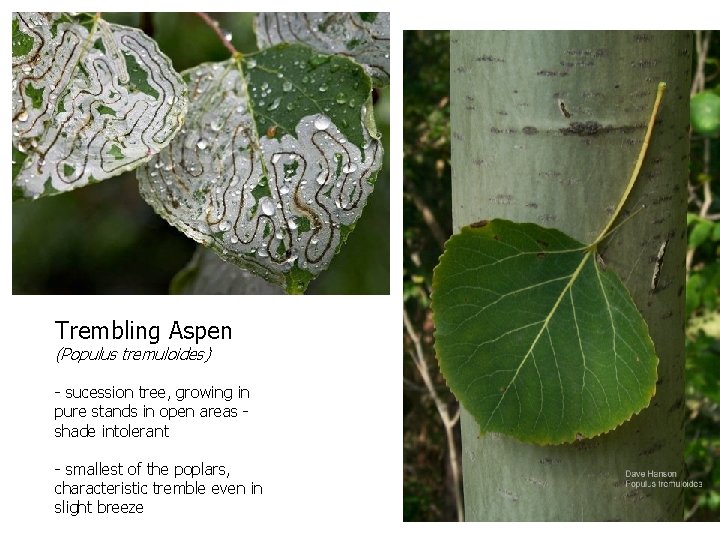
Trembling Aspen (Populus tremuloides) - sucession tree, growing in pure stands in open areas shade intolerant - smallest of the poplars, characteristic tremble even in slight breeze
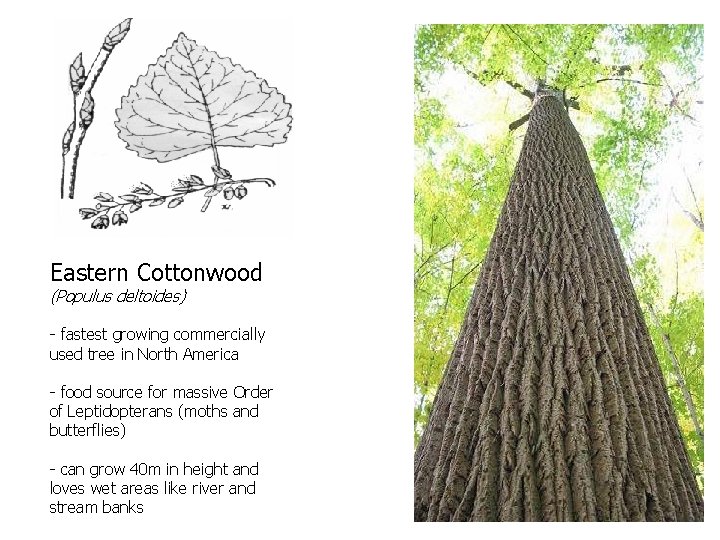
Eastern Cottonwood (Populus deltoides) - fastest growing commercially used tree in North America - food source for massive Order of Leptidopterans (moths and butterflies) - can grow 40 m in height and loves wet areas like river and stream banks
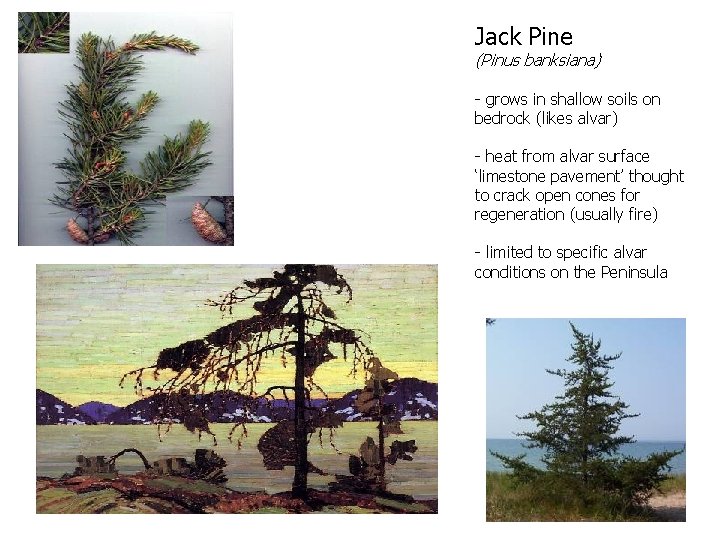
Jack Pine (Pinus banksiana) - grows in shallow soils on bedrock (likes alvar) - heat from alvar surface ‘limestone pavement’ thought to crack open cones for regeneration (usually fire) - limited to specific alvar conditions on the Peninsula
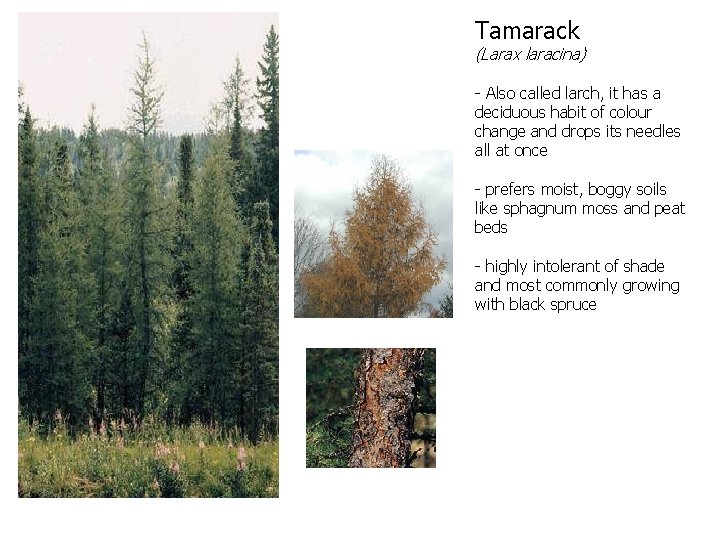
Tamarack (Larax laracina) - Also called larch, it has a deciduous habit of colour change and drops its needles all at once - prefers moist, boggy soils like sphagnum moss and peat beds - highly intolerant of shade and most commonly growing with black spruce
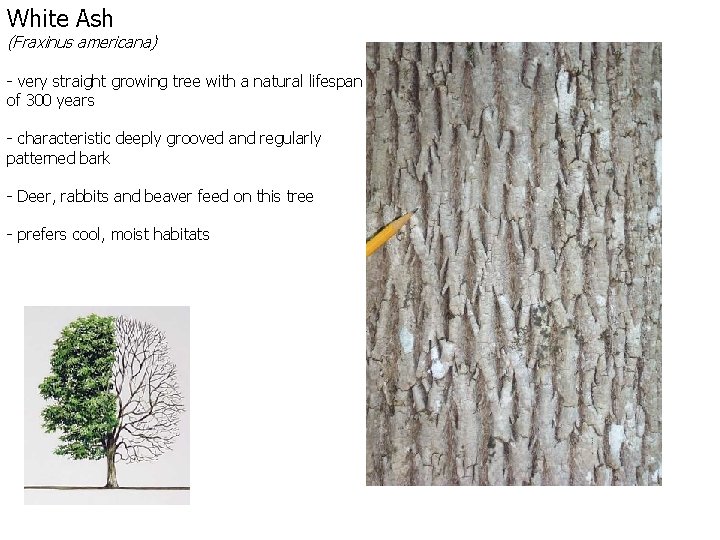
White Ash (Fraxinus americana) - very straight growing tree with a natural lifespan of 300 years - characteristic deeply grooved and regularly patterned bark - Deer, rabbits and beaver feed on this tree - prefers cool, moist habitats
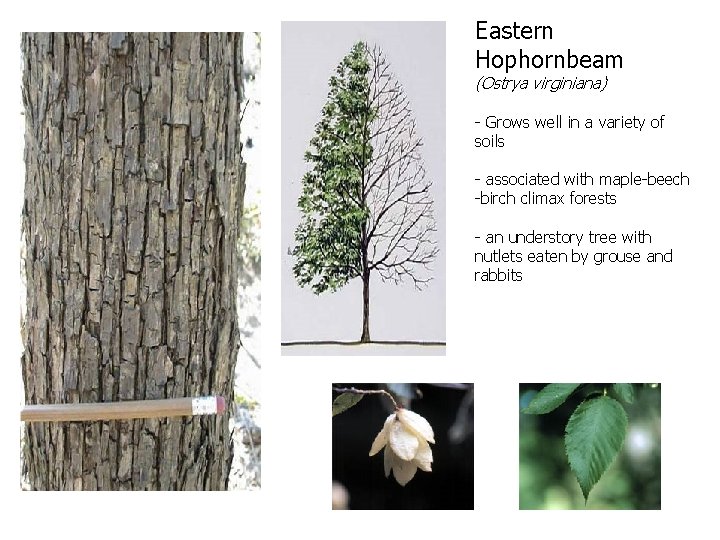
Eastern Hophornbeam (Ostrya virginiana) - Grows well in a variety of soils - associated with maple-beech -birch climax forests - an understory tree with nutlets eaten by grouse and rabbits
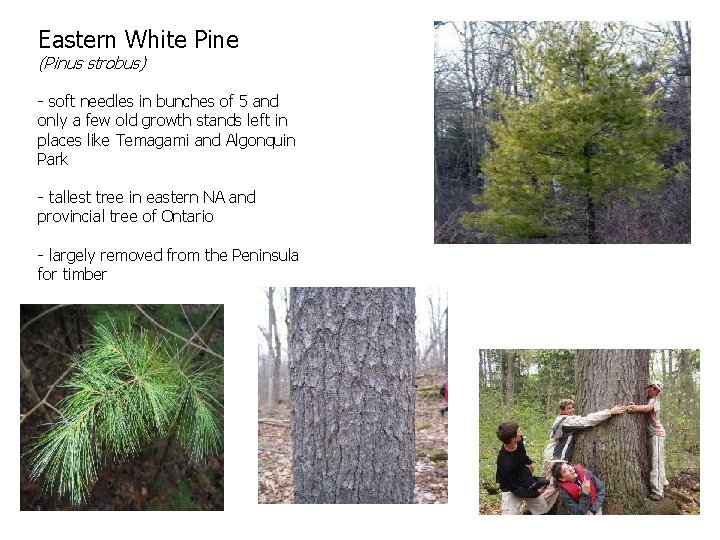
Eastern White Pine (Pinus strobus) - soft needles in bunches of 5 and only a few old growth stands left in places like Temagami and Algonquin Park - tallest tree in eastern NA and provincial tree of Ontario - largely removed from the Peninsula for timber
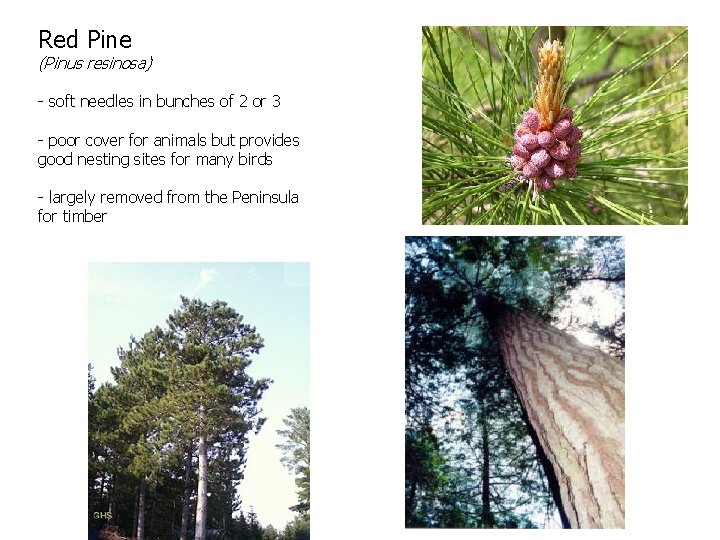
Red Pine (Pinus resinosa) - soft needles in bunches of 2 or 3 - poor cover for animals but provides good nesting sites for many birds - largely removed from the Peninsula for timber
- Slides: 11