
Common Thyroid Disorders in Children Dr Sarar Mohamed

- Slides: 42
. Common Thyroid Disorders in Children Dr Sarar Mohamed FRCPCH (UK), MRCP (UK), CCST (Ire), CPT (Ire), DCH (Ire), MD Consultant Paediatric Endocrinologist & Metabolic Physician Associate Professor of Pediatrics King Saud University
Agenda • Thyroid Function Test • Congenital Hypothyroidism coommon in peds. • Newborn screening for congenital hypothyroidism • Acquired hypothyroidism e. g. hashimoto thyroditis. • Hyperthyroidism • Causes of goiter .
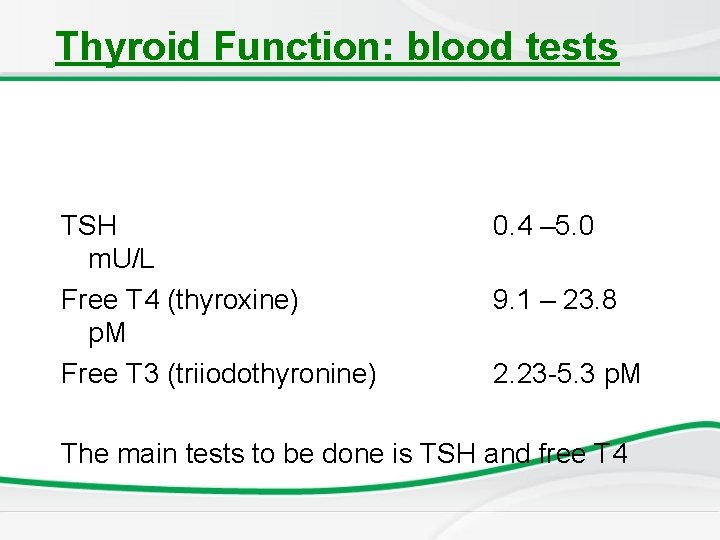
Thyroid Function: blood tests TSH m. U/L Free T 4 (thyroxine) p. M Free T 3 (triiodothyronine) 0. 4 – 5. 0 9. 1 – 23. 8 2. 23 -5. 3 p. M The main tests to be done is TSH and free T 4
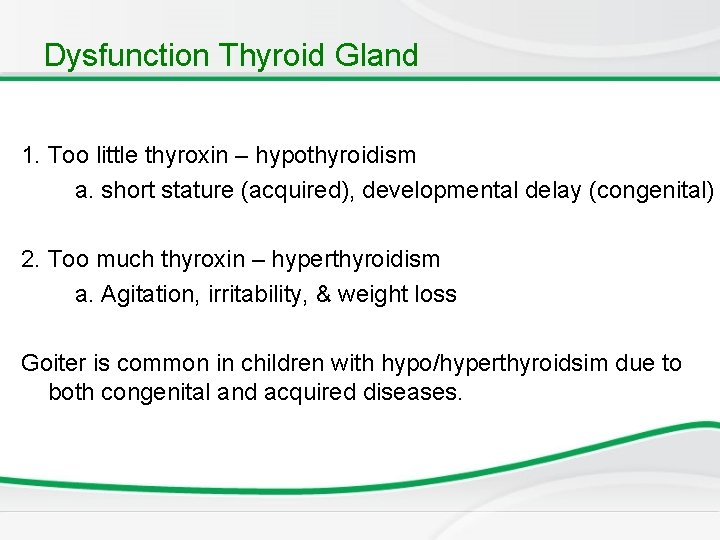
Dysfunction Thyroid Gland 1. Too little thyroxin – hypothyroidism a. short stature (acquired), developmental delay (congenital) 2. Too much thyroxin – hyperthyroidism a. Agitation, irritability, & weight loss Goiter is common in children with hypo/hyperthyroidsim due to both congenital and acquired diseases.
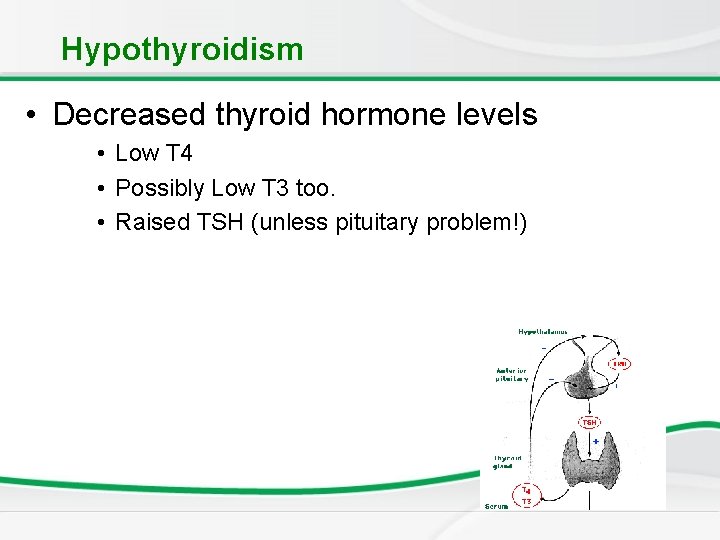
Hypothyroidism • Decreased thyroid hormone levels • Low T 4 • Possibly Low T 3 too. • Raised TSH (unless pituitary problem!)
Causes of hypothyroidism 1. Congenital 2. Autoimmune (Hashimoto) 1 st two are the main causes. 1. Iodine deficiency 2. Subacute thyroiditis usually viral infection. 3. Drugs (amiodarone) 4. Irradiation 5. Thyroid surgery 6. Central hypothyroidism (radiotherapy, surgery, tumor) secondary to any pituitary disease. 7. Any disease of the pituitary can lead to hypothyroidism. .
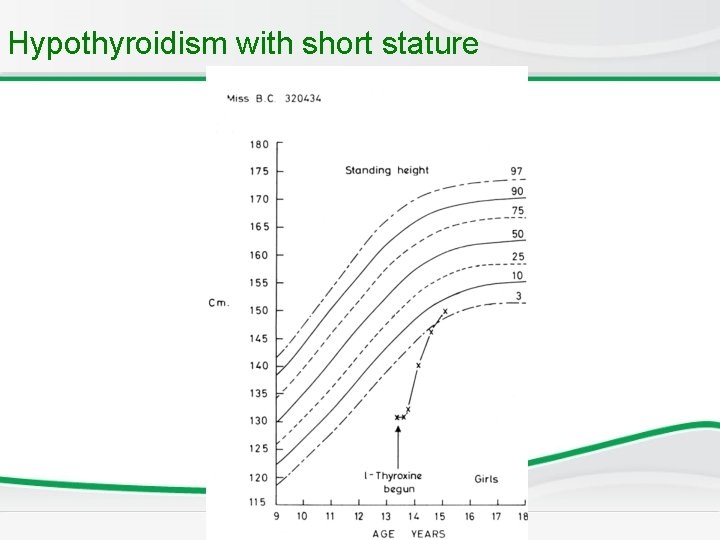
Clinical features of Acquired hypothyroidism 1. Weight gain 2. Goitre 3. Short stature: any child with short stature should be worked up for hypothyrodism because it responds dramatically to thyroxin) 4. Fatigue 5. Constipation 6. Dry skin 7. Cold Intolerance 8. Hoarseness 9. Sinus Bradycardia .
Hypothyroidism with short stature
Diagnosis • High TSH, low T 4 • Thyroid antibodies .
Hashimoto’s Disease • Most common cause of acquired hypothyroidism • Autoimmune lymphocytic thyroiditis • Antithyroid antibodies: • Thyroglobulin Ab • Microsomal Ab • TSH-R Ab (block) • Females > Males • Runs in Families!
Subacute (de Quervain’s) Thyroiditis • • Preceding viral infection Infiltration of the gland with granulomas Painful goitre Hyperthyroid phase Hypothyroid phase
Treatment of Hypothyroidism • • Replacement of thyroid hormone medication: Thyroxine Daily thyroxine with follow up with thyroid function test. If congenital, treatment is needed for life. In acquired, you may stop the treatment when thyroid function test is back to normal but 50% will require treatment for life.
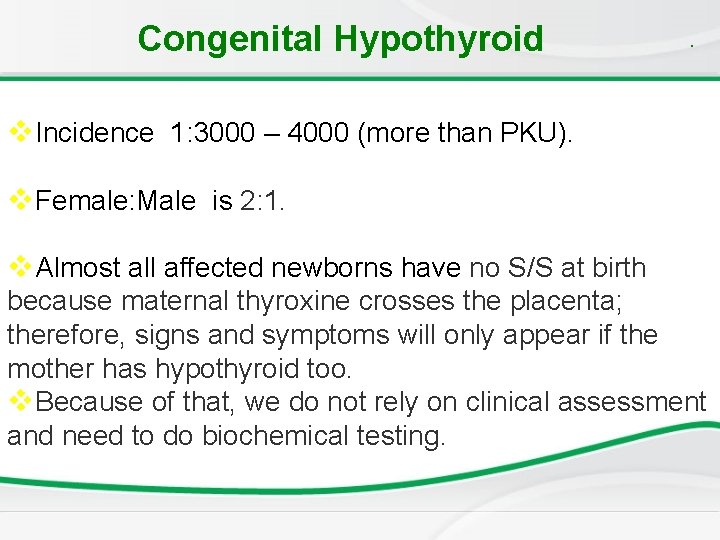
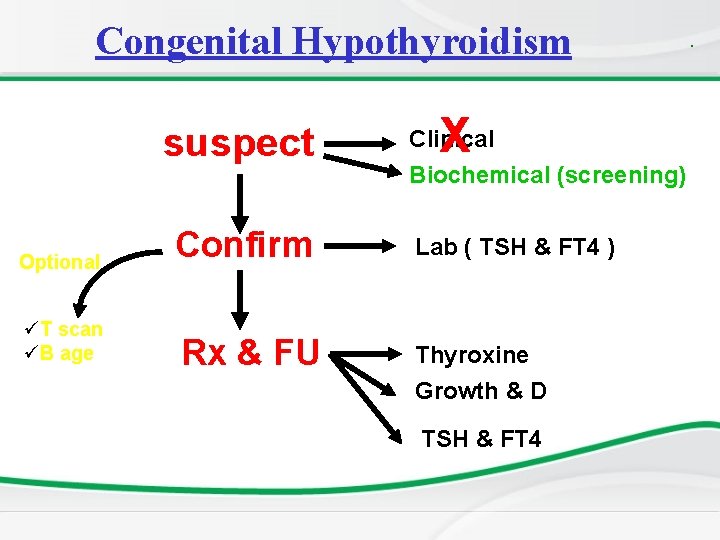
Congenital Hypothyroid . v. Incidence 1: 3000 – 4000 (more than PKU). v. Female: Male is 2: 1. v. Almost all affected newborns have no S/S at birth because maternal thyroxine crosses the placenta; therefore, signs and symptoms will only appear if the mother has hypothyroid too. v. Because of that, we do not rely on clinical assessment and need to do biochemical testing.
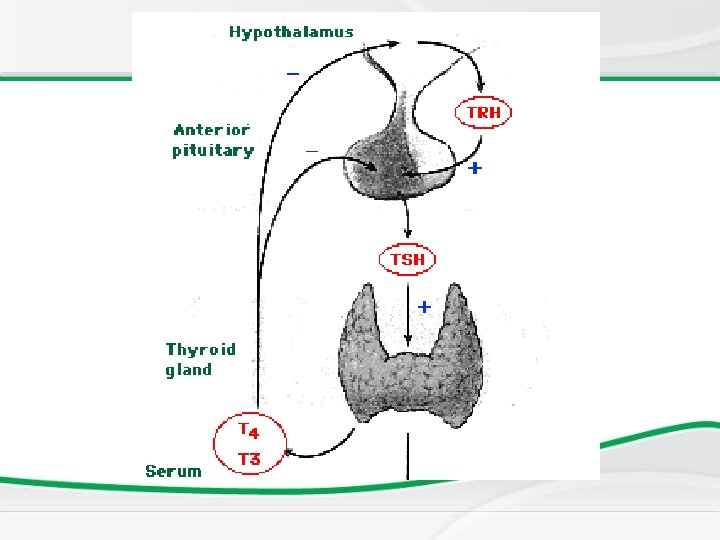
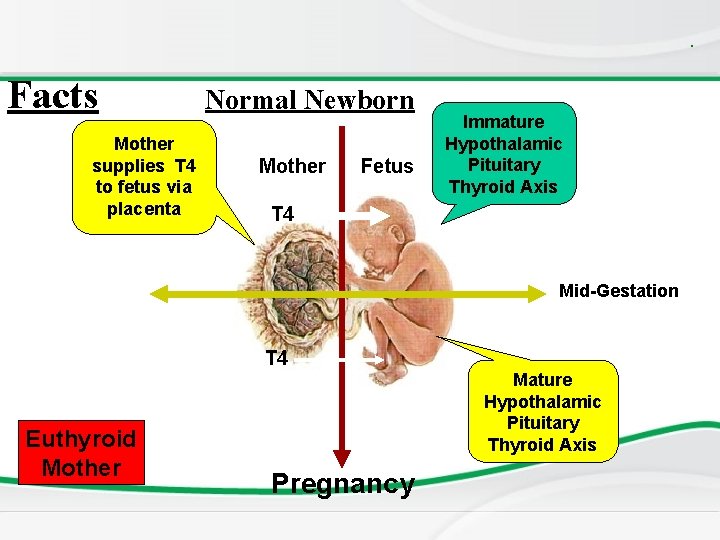
. Facts Mother supplies T 4 to fetus via placenta Normal Newborn Mother Fetus Immature Hypothalamic Pituitary Thyroid Axis T 4 Mid-Gestation T 4 Euthyroid Mother Mature Hypothalamic Pituitary Thyroid Axis Pregnancy
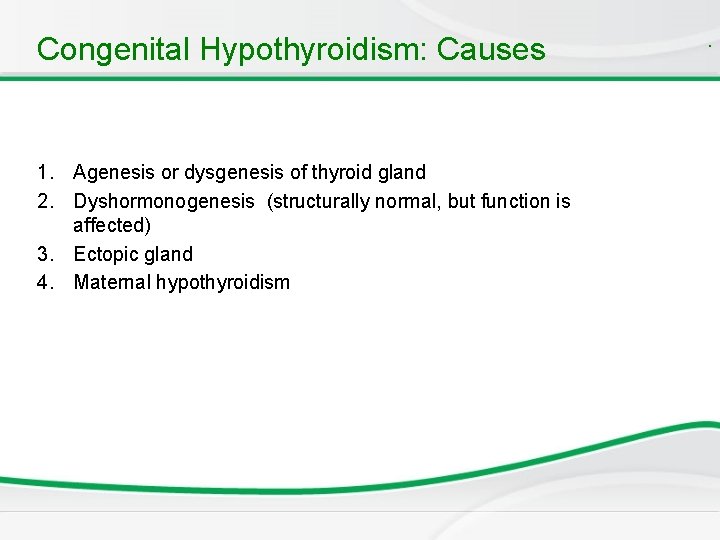
Congenital Hypothyroidism: Causes 1. Agenesis or dysgenesis of thyroid gland 2. Dyshormonogenesis (structurally normal, but function is affected) 3. Ectopic gland 4. Maternal hypothyroidism .
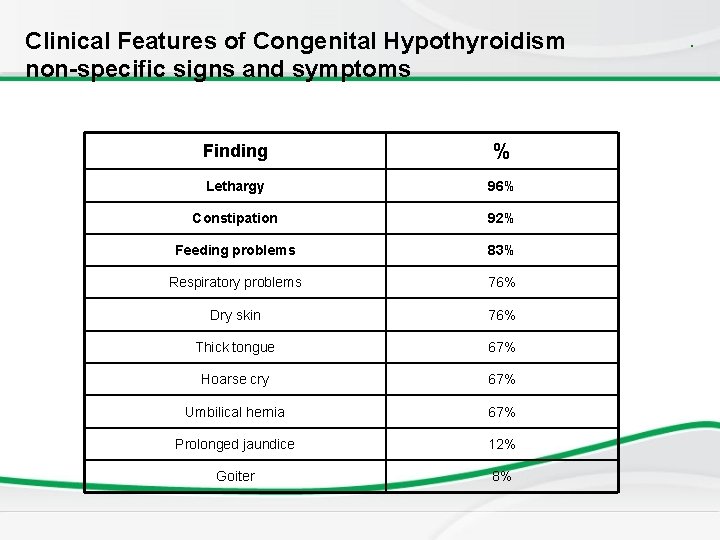
Clinical Features of Congenital Hypothyroidism non-specific signs and symptoms Finding % Lethargy 96% Constipation 92% Feeding problems 83% Respiratory problems 76% Dry skin 76% Thick tongue 67% Hoarse cry 67% Umbilical hernia 67% Prolonged jaundice 12% Goiter 8% .
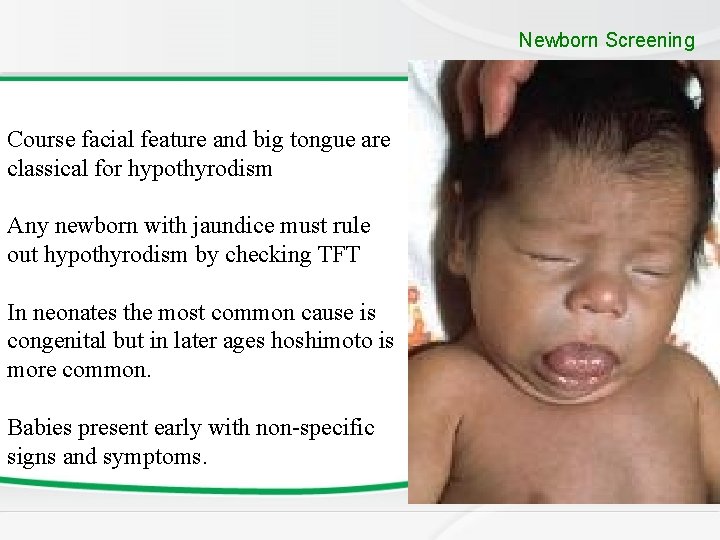
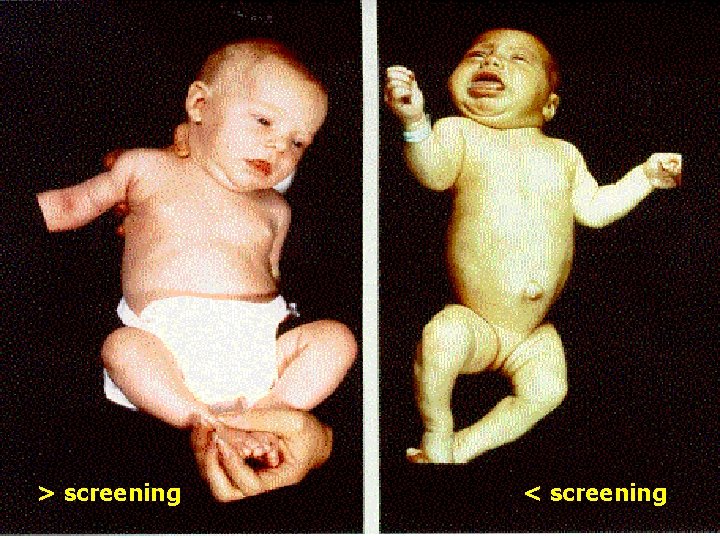
Newborn Screening Course facial feature and big tongue are classical for hypothyrodism Any newborn with jaundice must rule out hypothyrodism by checking TFT In neonates the most common cause is congenital but in later ages hoshimoto is more common. Babies present early with non-specific signs and symptoms.
Congenital Hypothyroidism suspect X Clinical Biochemical (screening) Optional Confirm Lab ( TSH & FT 4 ) üT scan üB age Rx & FU Thyroxine Growth & D TSH & FT 4 .
Newborn Screening Definitions Every new born baby has hypothyroidism until proven otherwise, which is tested by umbilical cord sampling (showing high TSH and low T 4). The treatment is usually thyroxine for life. Screening: search for a disease in a large unselected population PKU Congenital hypothyroidism Method: If umbilical cord blood TSH is high then you should do thyroid function test and other imaging studies if necessary
Principal of newborn screening • Aim is to identify affected infants before development of clinical signs • Objective : Eradication of MR (mental retardation) secondary to CH (congenital hypothyroidism). • The earlier dx the better IQ .
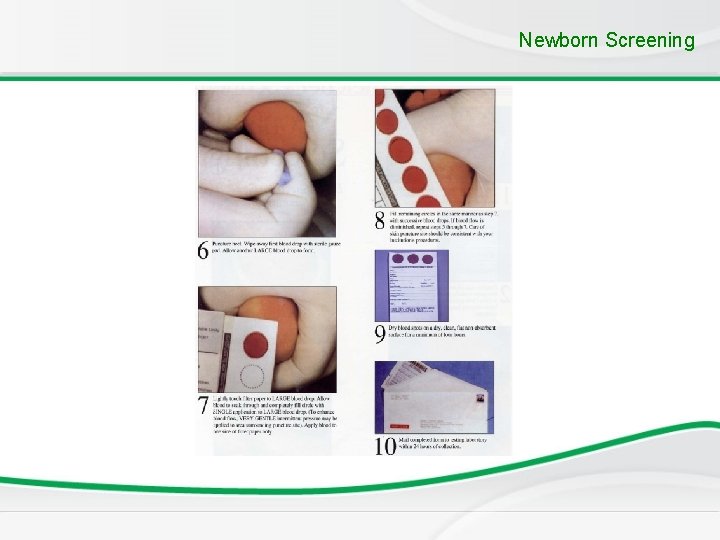
Screening Technique • cord blood TSH at birth • blood spot in a filter paper obtained by heel prick for TSH /T 4 at 3 - 5 days (because thyroxine reaches a rise in these days) to check peripheral blood. The test is called “Guthrie” test. .
Newborn Screening
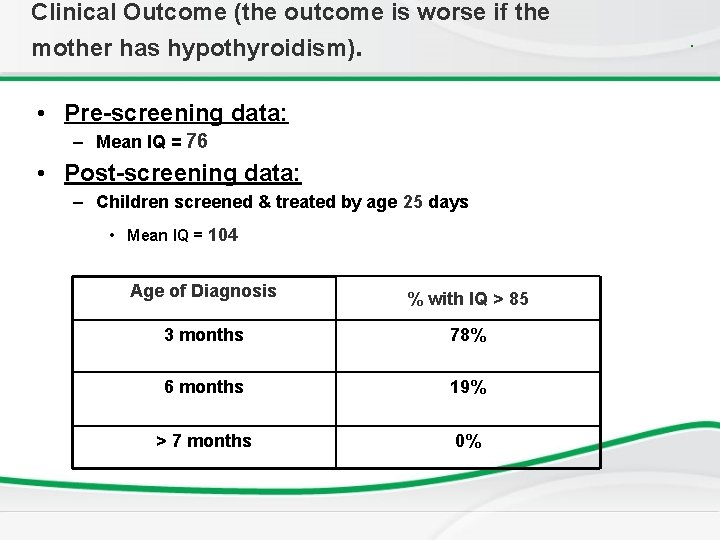
Clinical Outcome (the outcome is worse if the mother has hypothyroidism). . • Pre-screening data: – Mean IQ = 76 • Post-screening data: – Children screened & treated by age 25 days • Mean IQ = 104 Age of Diagnosis % with IQ > 85 3 months 78% 6 months 19% > 7 months 0%
Newborn Screening > screening < screening
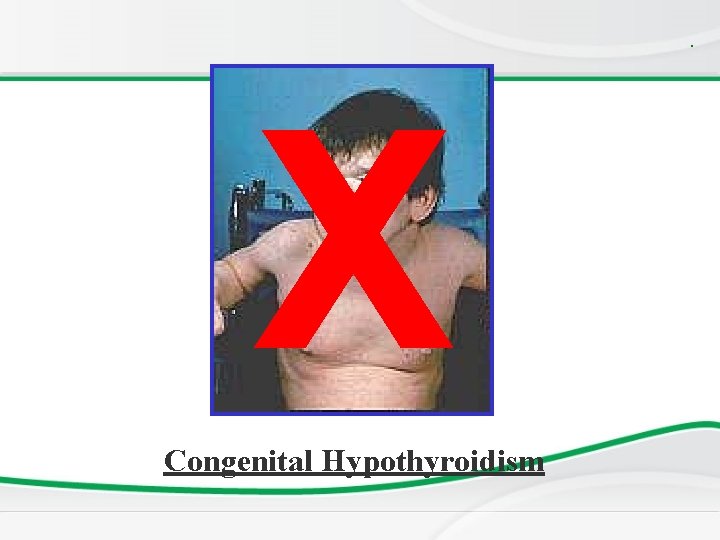
. X Congenital Hypothyroidism
Newborn Screening • In the congenital cause of hypothyroidism, some babies do not have the symptoms because they get the thyroxine from the mother in the first and half of the second trimester and so there is no diseases manifestation. • If the child presents with symptoms, this means that the mother is hypothyroid and that is difficult to treat.
Newborn Screening • Follow-up (TSH) should be done every 2 months for the first year because it takes 2 months to reflect the change in TSH, then every 6 months with growth assessment every 3 -6 months. • If TSH is elevated increase the dose of thyroxine.
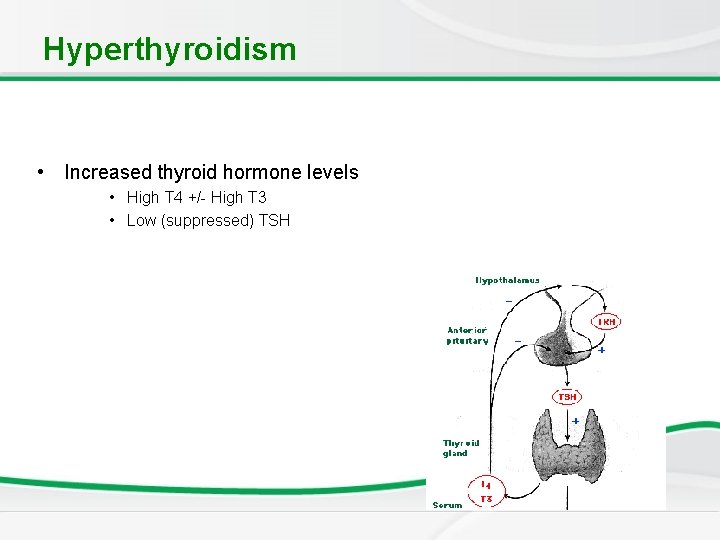
Hyperthyroidism • Increased thyroid hormone levels • High T 4 +/- High T 3 • Low (suppressed) TSH
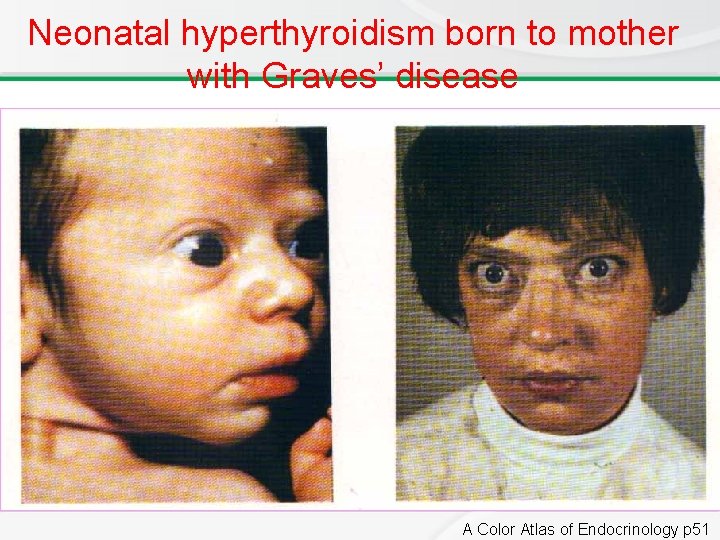
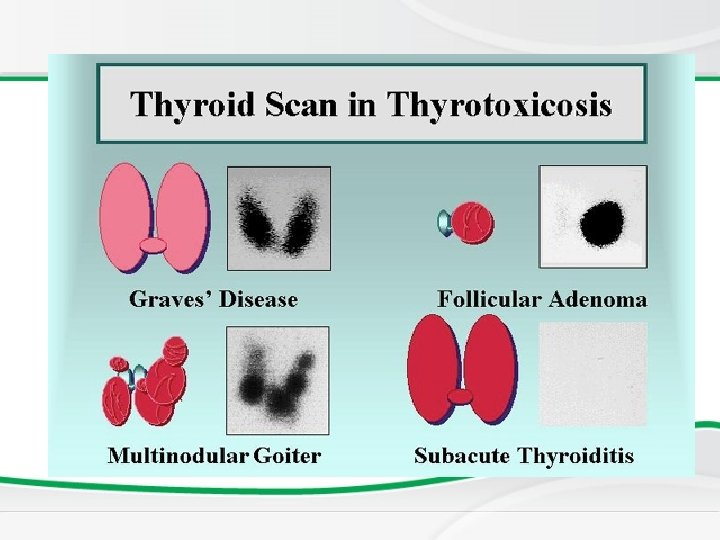
Causes of hyperthyroidism • Graves Disease most common where they present very similarly to adults. • Overtreatment with thyroxin; therefore, close monitoring of dosage in hypothyroidism. • Thyroid adenoma (rare) • Transient neonatal thyrotoxicosis: when the mother has graves disease her antibodies might cross the placenta and stimulate thyroid function but at the age of 4 -6 months it disappears alone without treatment. .
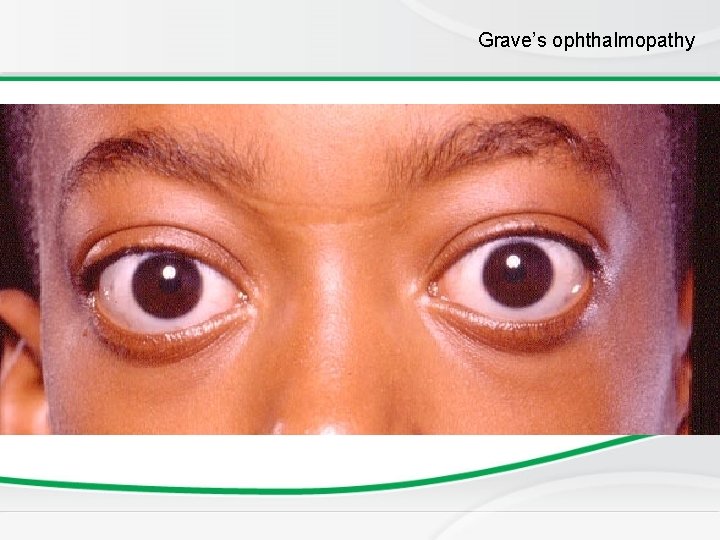
Graves’ Disease • Most common cause of hyperthyroidism • TSH-R antibody (stimulating) • Main presentation: Goitre, proptosis
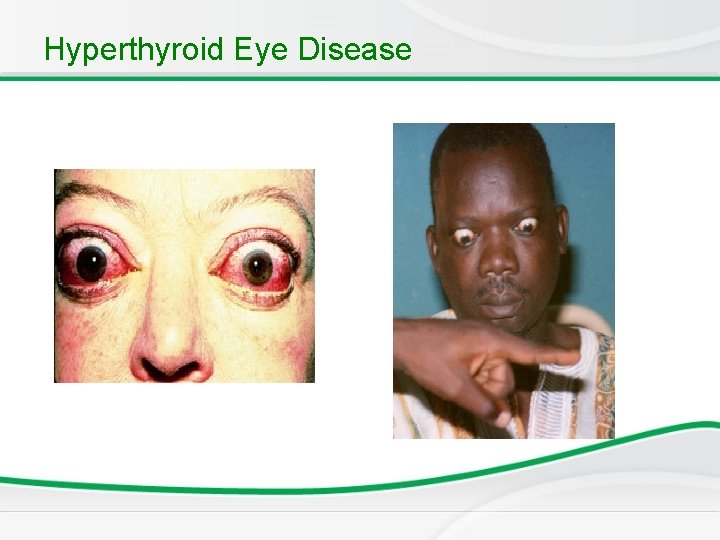
Hyperthyroidism S&S • • • Heat intolerance Hyperactivity, irritability Weight loss (normal to increased appetite) diarrhea Tremor, Palpitations Diaphoresis (sweating) Lid retraction & Lid Lag (thyroid stare) Proptosis Menstrual irregularity Goitre Tachcardia
Neonatal hyperthyroidism born to mother with Graves’ disease A Color Atlas of Endocrinology p 51
Grave’s ophthalmopathy
Hyperthyroid Eye Disease
Investigations • TSH, free T 3&T 4 • Thyroid antibodies (TSH receptors antibodies) • Radionucleotide thyroid scan (incease uptake) .
Hyperthyroidism • Treatment – Beta-blockers – Carbimazole is the most commonly used drug in children – PTU (propylthiouracil) is avoided because it causes liver failure (commonest cause) and requires LFT follow up. Usually used in adolescents. If medical treatment fails we start radioactive iodine if it fails surgery is last line. – Radioactive iodine (in adults); enough to keep the person on thyroxine for life. – Surgery (rare) Radioactive therapy and surgery are usually avoided in children and only used in case medical therapy
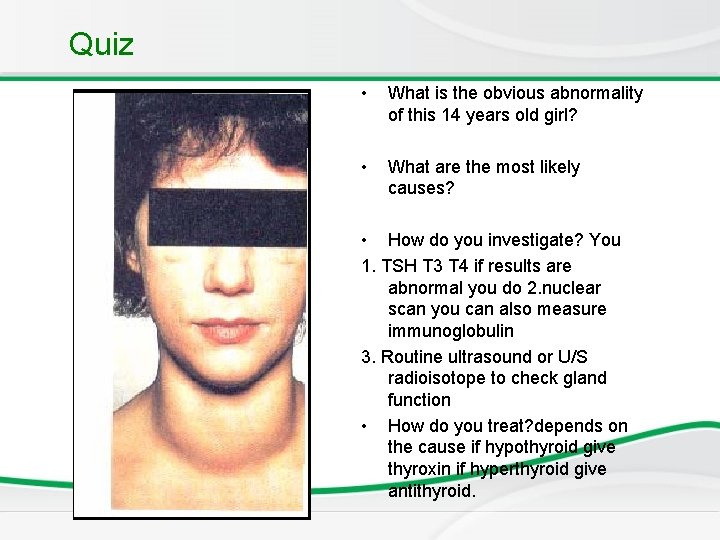
Quiz • What is the obvious abnormality of this 14 years old girl? • What are the most likely causes? • How do you investigate? You 1. TSH T 3 T 4 if results are abnormal you do 2. nuclear scan you can also measure immunoglobulin 3. Routine ultrasound or U/S radioisotope to check gland function • How do you treat? depends on the cause if hypothyroid give thyroxin if hyperthyroid give antithyroid.
Causes of goiter • Physiological (puberty) is the commonest in adolescents its an euthyroid state, you don’t treat it and it resolves by itself. • Secondary to Iodine deficiency (fourth commonest cause) • Hashimoto thyroiditis (hypothyroidism is the second commonest cause) • Graves disease (3 rd commonest cause) • Tumor (very rare) • Congenital (maternal antithyroid drugs, maternal hyperthyroidism, dyshormonogenesis) .
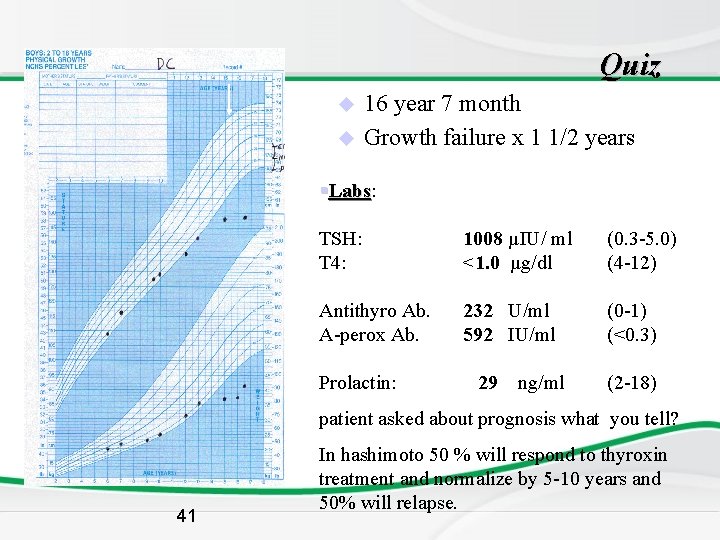
Quiz u u 16 year 7 month Growth failure x 1 1/2 years §Labs: Labs TSH: T 4: 1008 µIU/ ml <1. 0 µg/dl (0. 3 -5. 0) (4 -12) Antithyro Ab. A-perox Ab. 232 U/ml 592 IU/ml (0 -1) (<0. 3) Prolactin: 29 ng/ml (2 -18) patient asked about prognosis what you tell? 41 In hashimoto 50 % will respond to thyroxin treatment and normalize by 5 -10 years and 50% will relapse.
Newborn Screening