
Common Stock Valuation Lecture 20 Dividend Discount Models

- Slides: 13
Common Stock Valuation Lecture 20 Dividend Discount Models
Common stock valuation • In common stock valuation, we try to find out the answers to questions like: – What determines the value of a common stock? – What approaches are commonly used by investors in valuing stocks • Using fundamental analysis, there are two techniques – Discounted cash flow techniques – Relative Valuation technique
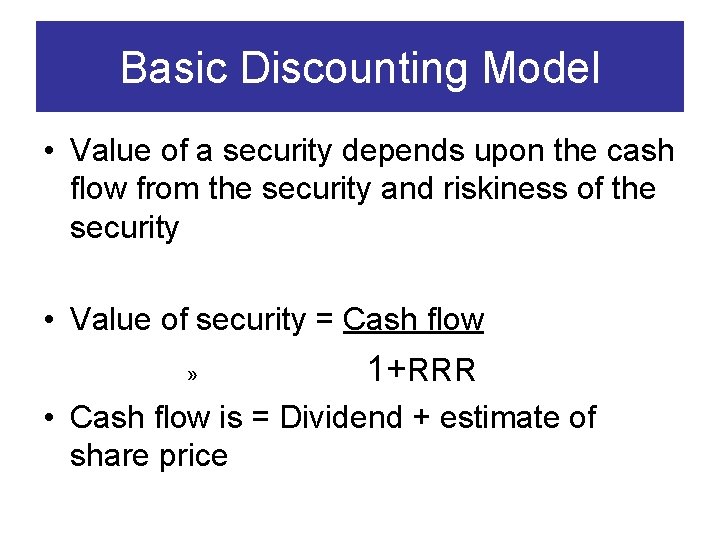
Basic Discounting Model • Value of a security depends upon the cash flow from the security and riskiness of the security • Value of security = Cash flow » 1+RRR • Cash flow is = Dividend + estimate of share price
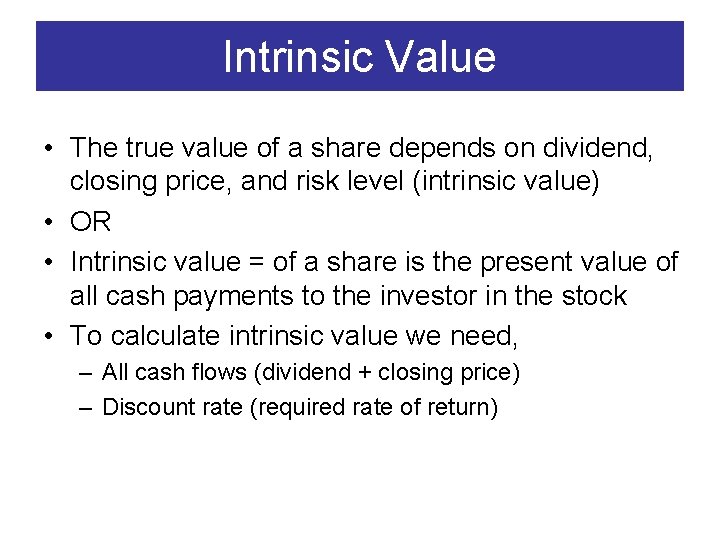
Intrinsic Value • The true value of a share depends on dividend, closing price, and risk level (intrinsic value) • OR • Intrinsic value = of a share is the present value of all cash payments to the investor in the stock • To calculate intrinsic value we need, – All cash flows (dividend + closing price) – Discount rate (required rate of return)
Dividend Discount Model • • Models 1. Zero Growth Model 2. Constant Growth Model 3. Multi-growth rate model
Zero Growth Model • IF share kept for ever and shareholder receive only fixed periodic dividend, then the cash flow becomes perpetuity
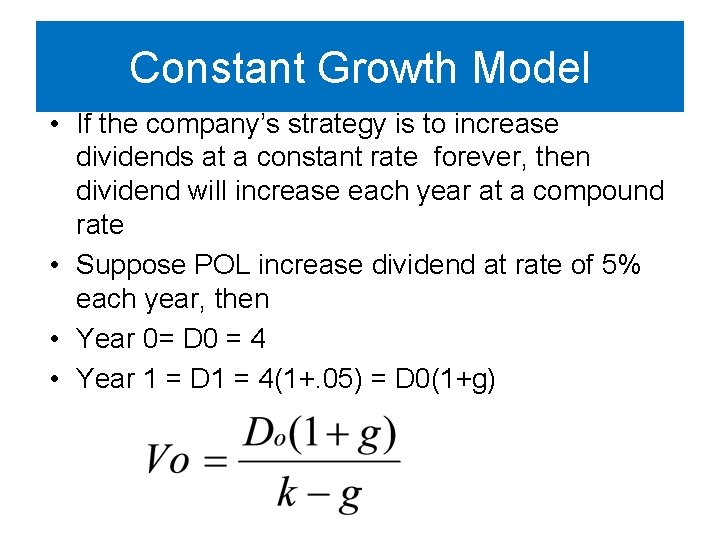
Constant Growth Model • If the company’s strategy is to increase dividends at a constant rate forever, then dividend will increase each year at a compound rate • Suppose POL increase dividend at rate of 5% each year, then • Year 0= D 0 = 4 • Year 1 = D 1 = 4(1+. 05) = D 0(1+g)
The Multi growth rate model • Many firms grow at a faster rate for a number of years and then growth rate slows down to normal • Dividends may also follow the firm growth rate pattern • If a firm increases dividend at a faster rate in some period and then reduces the rate of increase, how can we calculate the IV
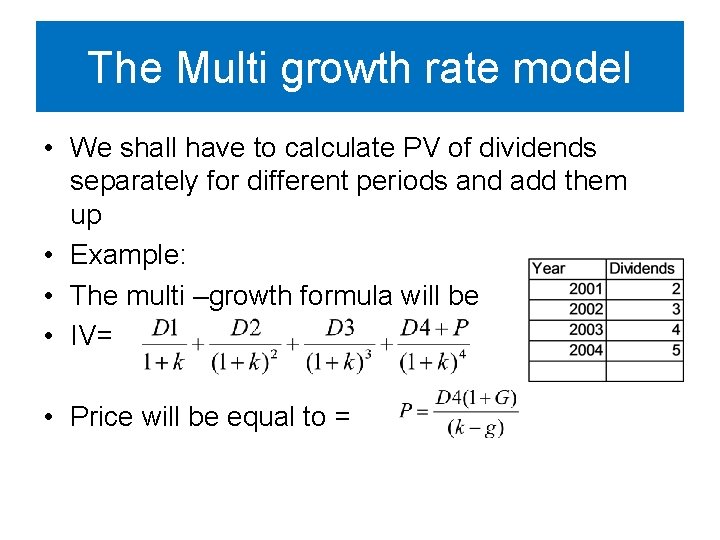
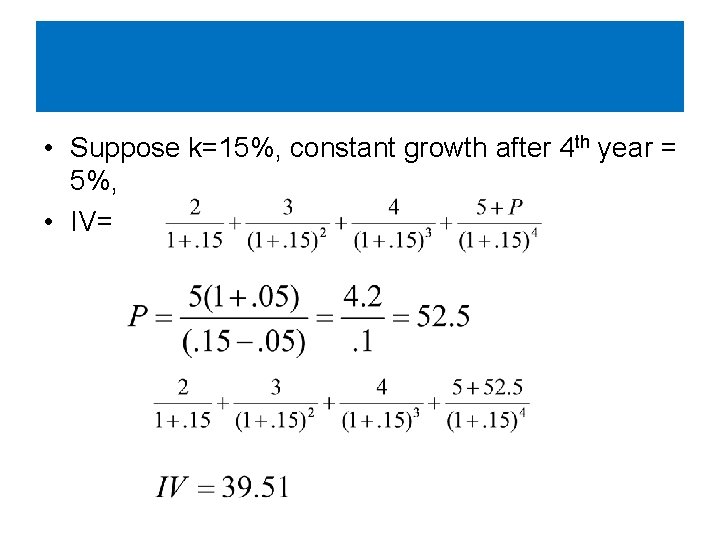
The Multi growth rate model • We shall have to calculate PV of dividends separately for different periods and add them up • Example: • The multi –growth formula will be • IV= • Price will be equal to =
• Suppose k=15%, constant growth after 4 th year = 5%, • IV=
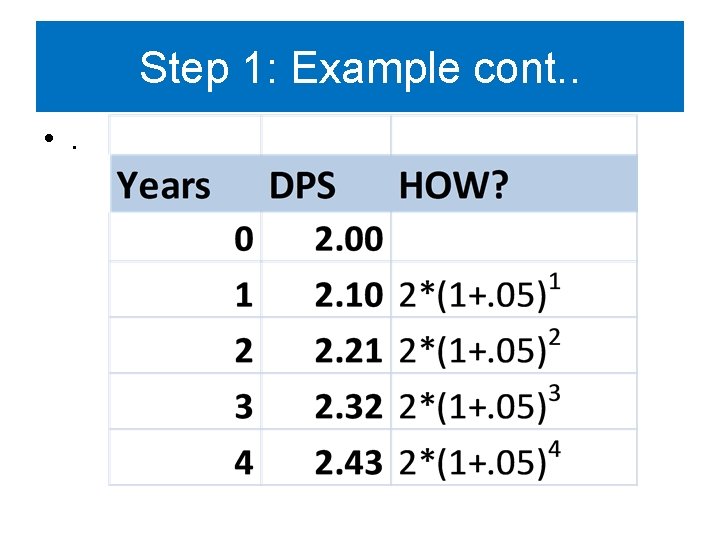
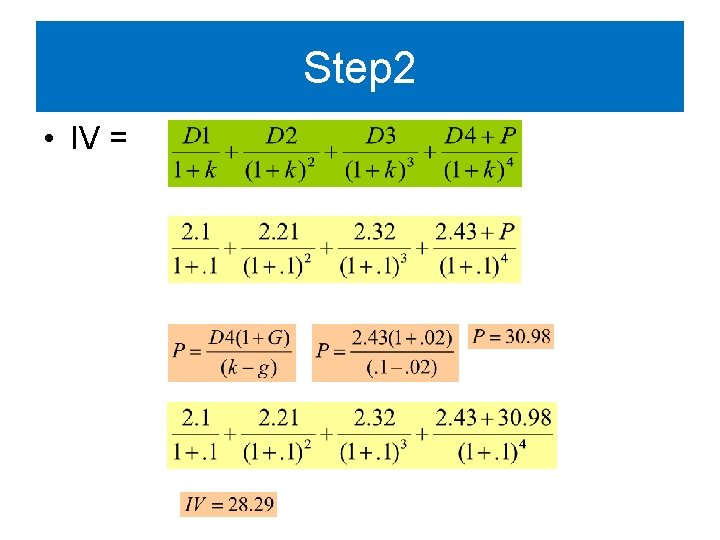
Another Example • Suppose current dividend is Rs. 2 per share, the dividend increases at 5% in the first stage for 4 years and grows at a constant growth of 2% thereafter, required rate of return is 12%, what is the intrinsic value? • Step 1: Find dividends in year 1 through 4 • Step 2: apply multi-growth stage formula • Step 3: Find intrinsic value
Step 1: Example cont. . • .
Step 2 • IV =