
Common Severe Weather Soundings Severe Weather Soundings Type
- Slides: 35
Common Severe Weather Soundings
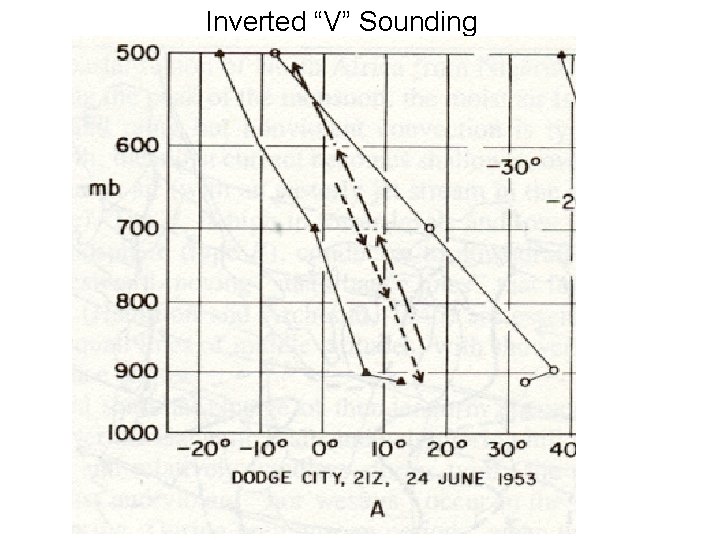
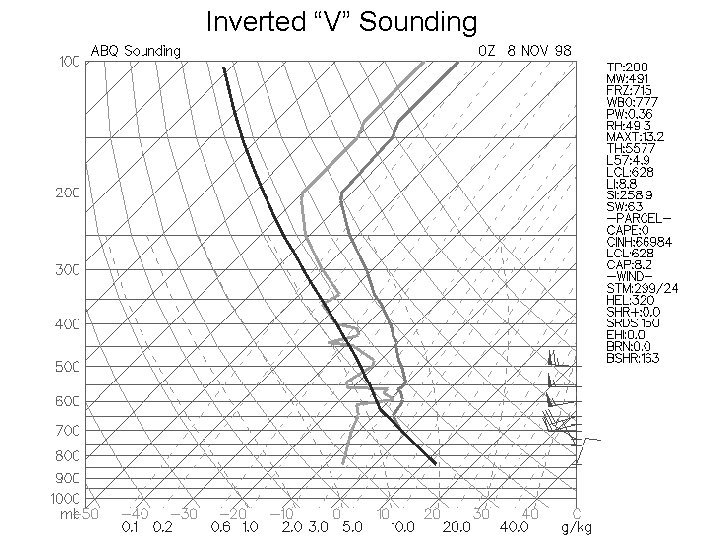
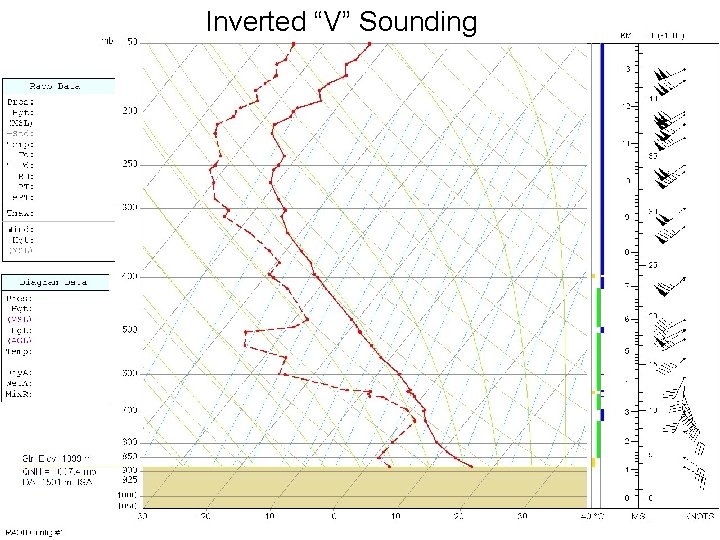
Severe Weather Soundings • Type “A” or Inverted “V” Sounding – Most commonly found in the High Plains, Great Basin, and Desert SW – Low Humidity at most levels, but especially at lower levels – Produces Storms with very high cloud bases • Mostly Virga – Largest Severe Weather Threat: • Severe Straight-Line Winds • Dry Microbursts • Due to evaporational cooling of precipitation falling out of the cloud base
Severe Weather Soundings • Type “A” Sounding Cont. – Downdrafts are normally much colder than the environment and therefore more dense through a deep layer of the atmosphere – Rate of cold air production is proportional to the amount of evaporation taking place – Ratio of evaporated rain (Virga) to rain reaching the surface increases with the increasing height of the cloud bases
Inverted “V” Sounding
Inverted “V” Sounding
Inverted “V” Sounding
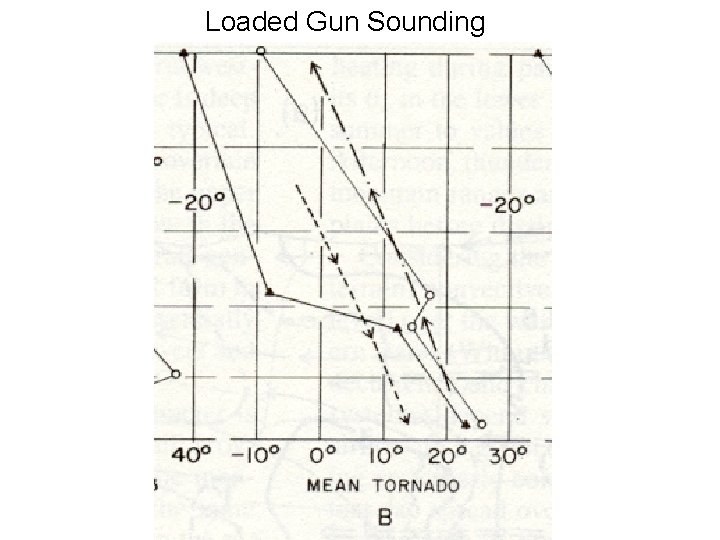
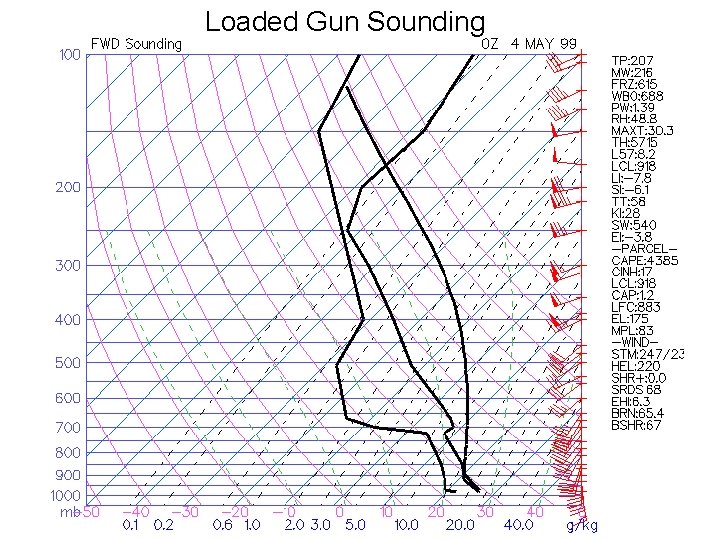
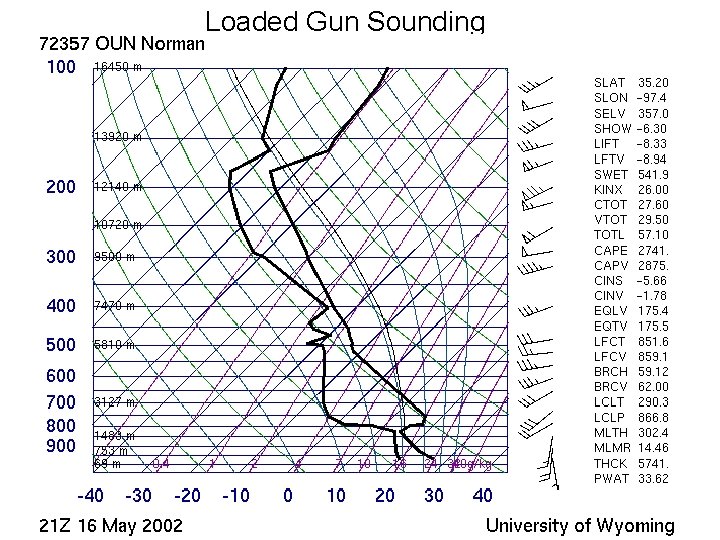
Severe Weather Soundings • Type “B” or Loaded Gun / Goalpost Sounding – Moist air in the boundary layer with dry air aloft – Typically found in the Central & Southern Plains – Large supply of moisture in the boundary layer provided by a low-level southerly flow (m. T air) – Low-level moist convergence on the nose of a low-level jet (LLJ) (850 mb)
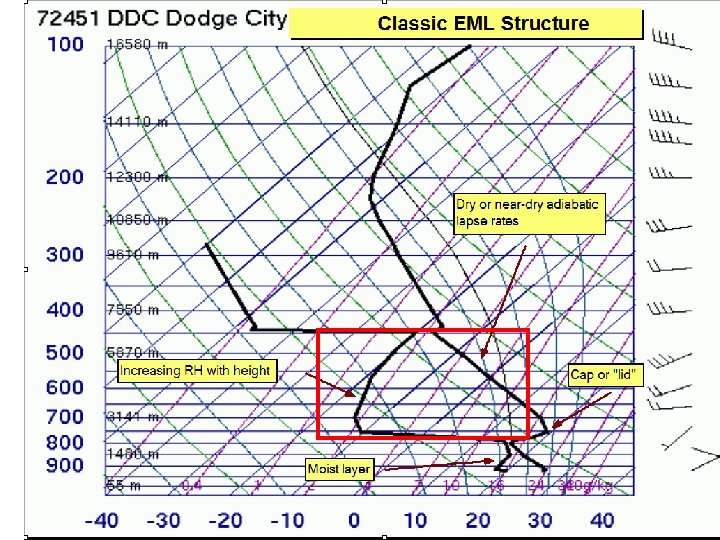
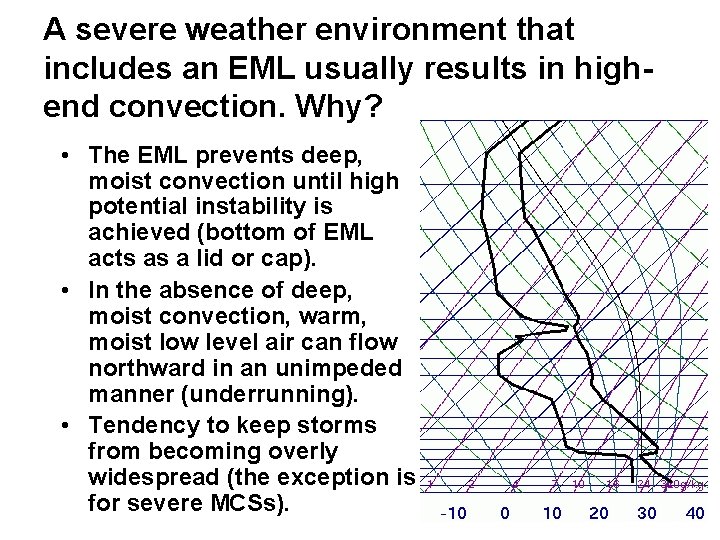
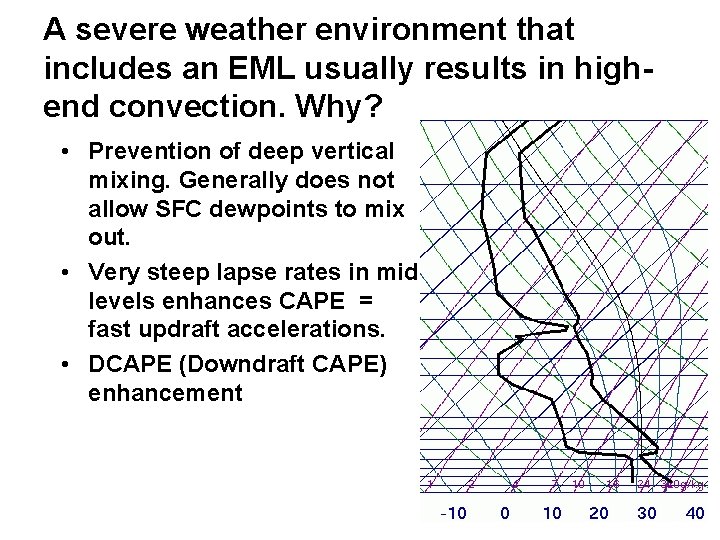
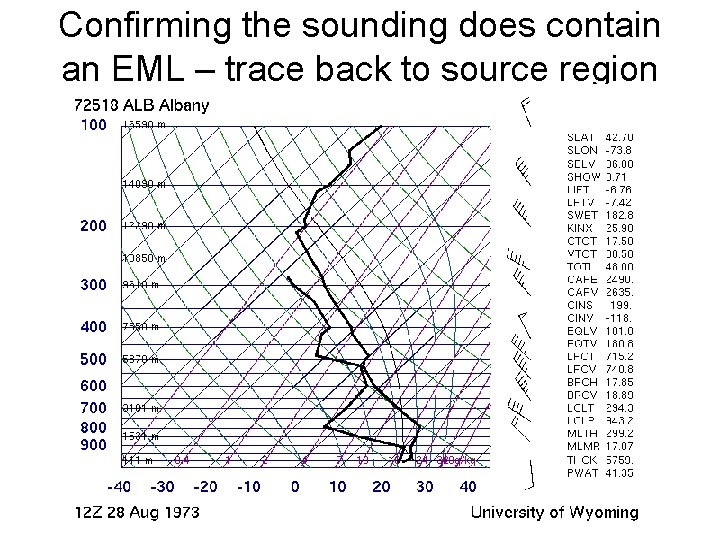
Severe Weather Soundings – Very warm and dry air at mid-levels (c. T air) off of the Mexican Plateau from an elevated region known as the EML or Elevated Mixed Layer – Provides a strong capping inversion which will inhibit the premature release of the convective instability – Most commonly associated with the warm sector of Spring & Fall mid-latitude cyclones
Loaded Gun Sounding
Loaded Gun Sounding
Loaded Gun Sounding
A severe weather environment that includes an EML usually results in highend convection. Why? • The EML prevents deep, moist convection until high potential instability is achieved (bottom of EML acts as a lid or cap). • In the absence of deep, moist convection, warm, moist low level air can flow northward in an unimpeded manner (underrunning). • Tendency to keep storms from becoming overly widespread (the exception is for severe MCSs).
A severe weather environment that includes an EML usually results in highend convection. Why? • Prevention of deep vertical mixing. Generally does not allow SFC dewpoints to mix out. • Very steep lapse rates in mid levels enhances CAPE = fast updraft accelerations. • DCAPE (Downdraft CAPE) enhancement
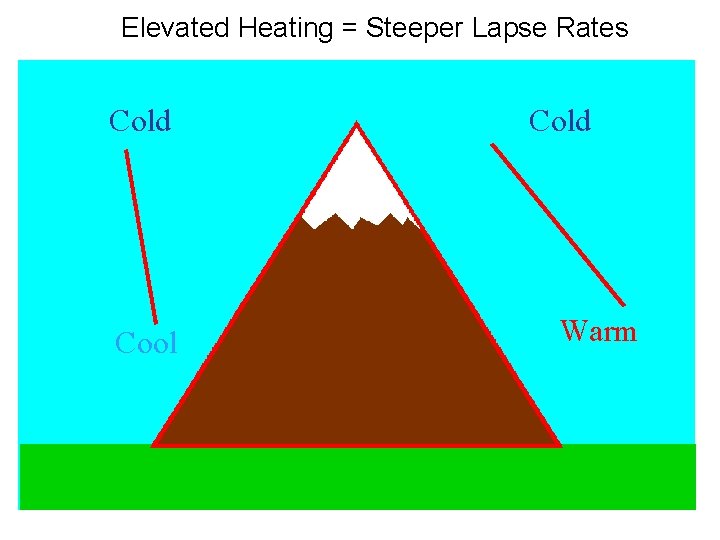
Elevated Heating = Steeper Lapse Rates Cold Cool Cold Warm
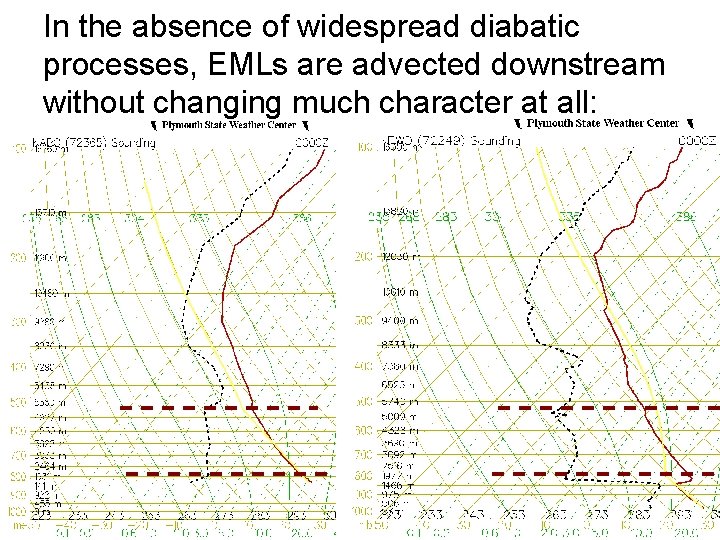
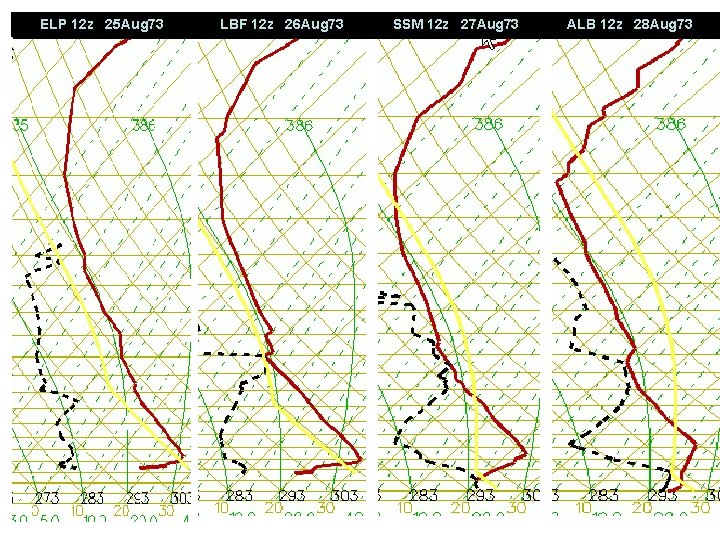
In the absence of widespread diabatic processes, EMLs are advected downstream without changing much character at all:
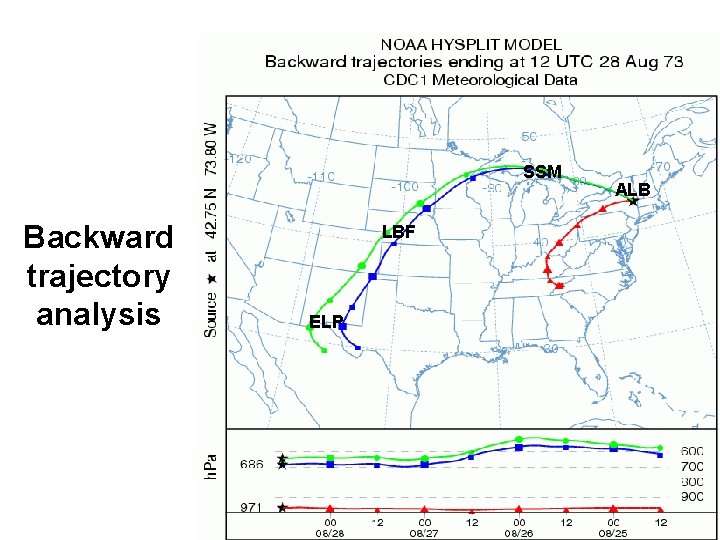
Confirming the sounding does contain an EML – trace back to source region
SSM Backward trajectory analysis LBF ELP ALB
ELP 12 z 25 Aug 73 LBF 12 z 26 Aug 73 SSM 12 z 27 Aug 73 ALB 12 z 28 Aug 73
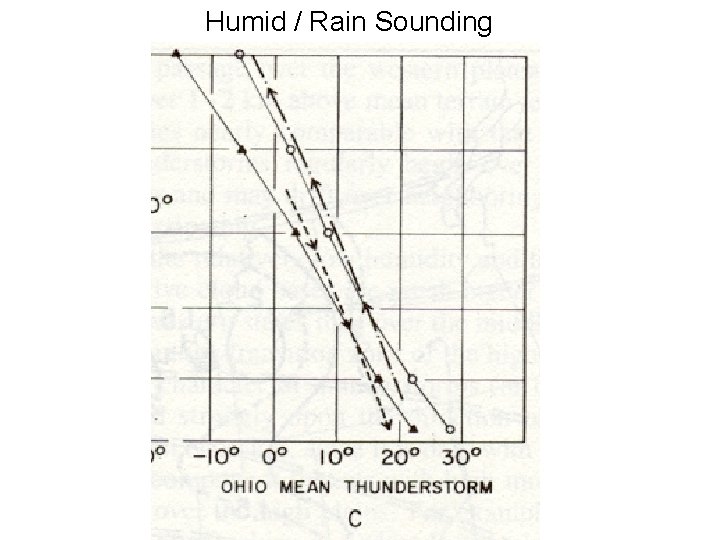
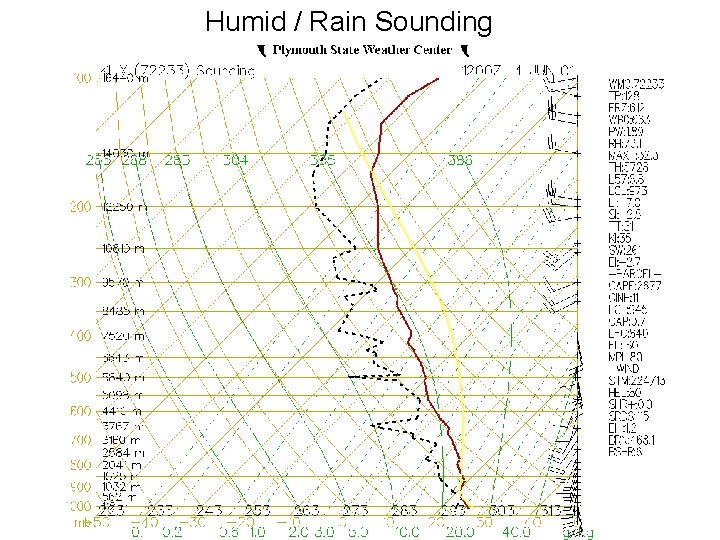
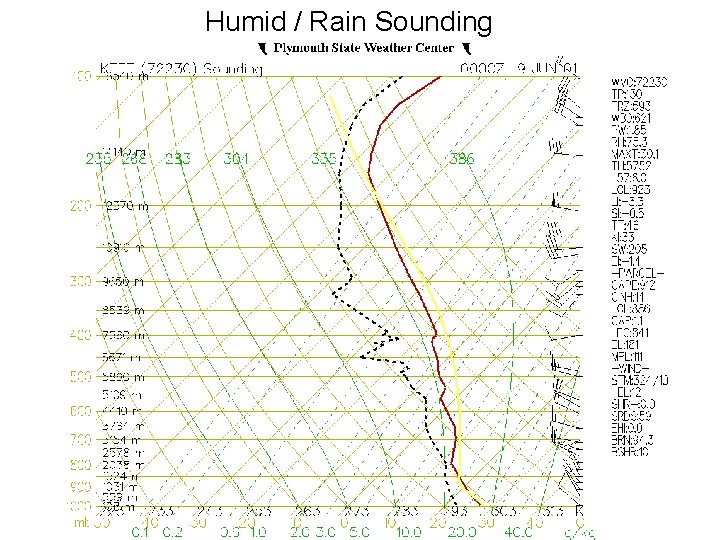
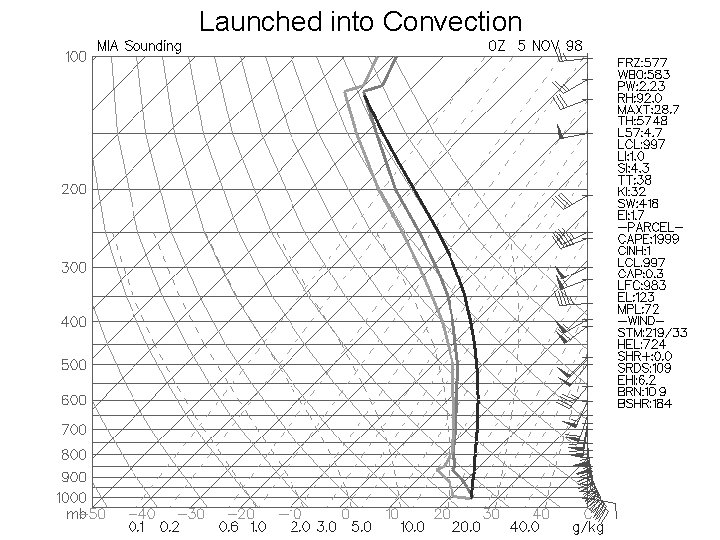
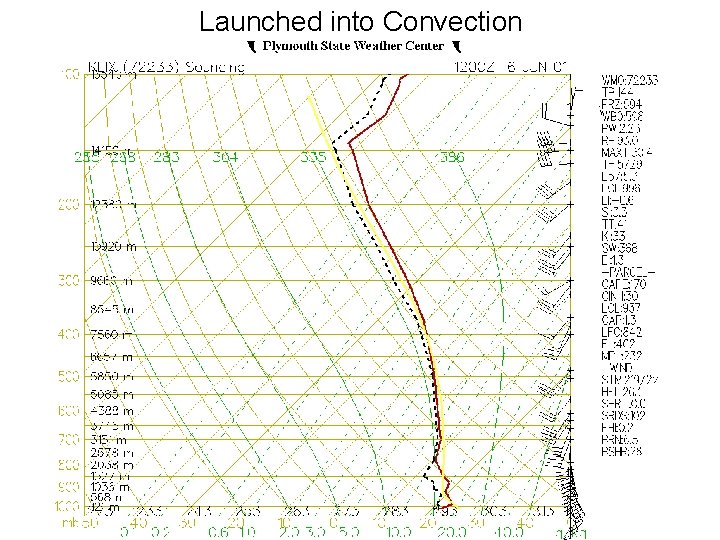
Severe Weather Soundings • Type “C” or Humid/SE Sounding – Found in Midwest & SE U. S. in the late Spring and Summer – Associated with a barotropic environment • Non-advection environment in which isotherms parallel isoheights/isobars – Very deep layer of moist air (m. T), generally extends from sfc to at least 700 mb – Very small amount of evaporation, so generally light to only moderate downdrafts – Greatest Threat: Heavy/Flooding Rains – Convection is initiated from differential surface heating and a lack of a capping inversion
Humid / Rain Sounding
Humid / Rain Sounding
Humid / Rain Sounding
Launched into Convection
Launched into Convection
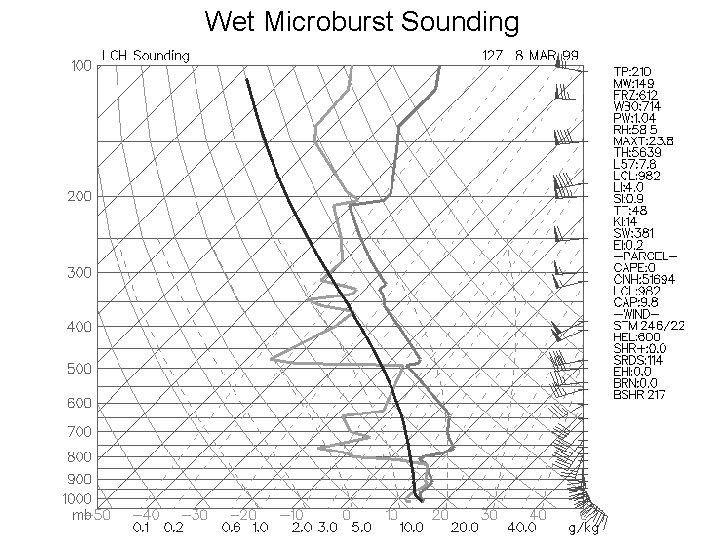
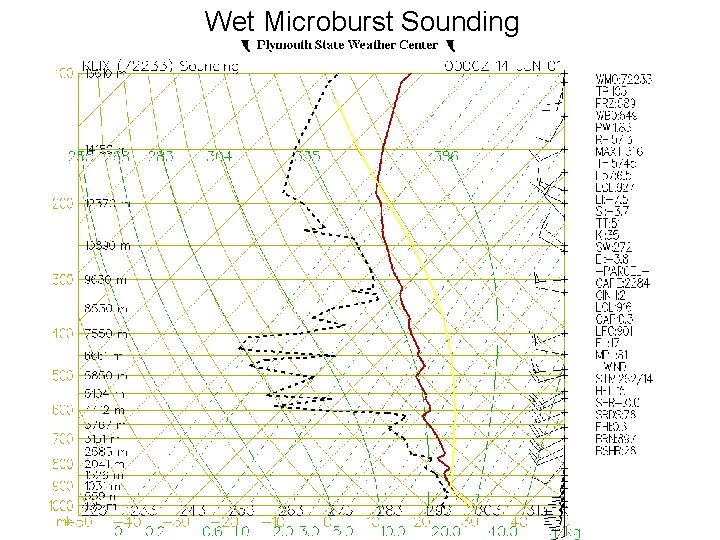
Severe Weather Soundings • Wet Microburst Sounding – Similar to Type “C” sounding in that there is a deep layer of moist air – However, there is significant drying aloft – Most common in the Southern Plains, Midwest, and Southeastern U. S. – Deep layer of moisture begins at sfc and extends to approximately 700 mb – Moist air is capped by a dry layer that begins at 700 mb – 600 mb – Dry air provides evaporative power • Get the production of negative CAPE (B-)or Downdraft CAPE (DCAPE) • This leads to intense downdrafts and downbursts
Wet Microburst Sounding
Wet Microburst Sounding
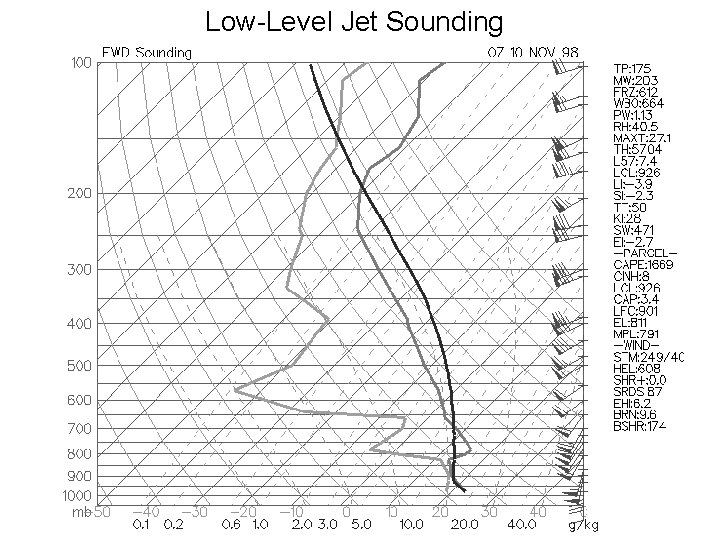
Severe Weather Soundings • Low-Level Jet Sounding – The low level jet is a high speed return of warm and moist air from the south or southeast; moisture source is the Gulf of Mexico – Most common and intense over the Plains states and Southeast states – The low level jet occurs in the warm sector of a developing mid-latitude cyclone in the Central and Eastern U. S. ; occurs generally ahead of the cold front boundary – Intensity of low level jet is increased due to temperature gradient between cooler high elevations in the high plains compared to warmer East Great Plains at night. Can also intensify by the warm sector of a mid-latitude cyclone being east of the cold sector.
Severe Weather Soundings • Low-Level Jet Sounding Cont. – Low level jet adds heat, mass and momentum to developing thunderstorm and produces low level speed and directional shear (results in very high Helicity values) – Produces abundant WAA (warm air advection) that may break a weak to moderate cap. WAA produces broad synoptic scale uplift – Strongest low level jet winds are generally at the top of Planetary Boundary Layer due to less friction than at the surface – Advection may well be over 65 miles per hour
Low-Level Jet Sounding
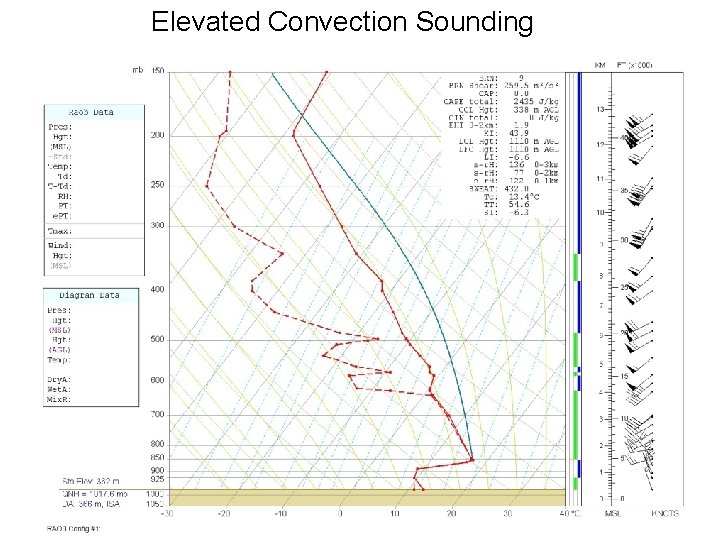
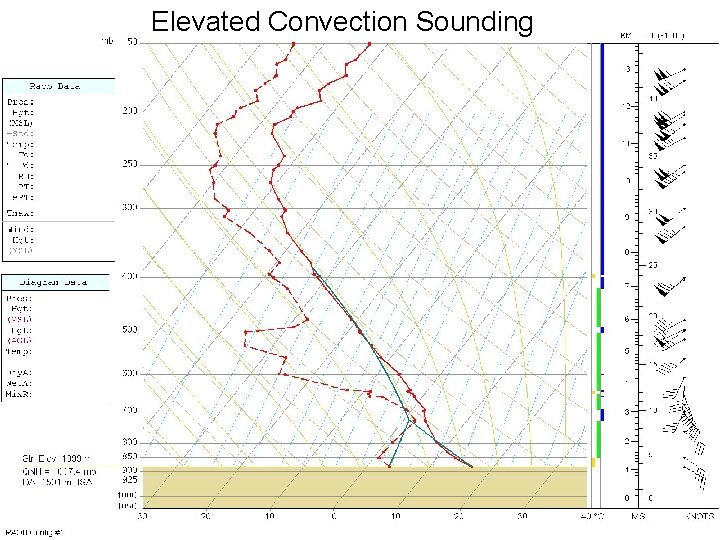
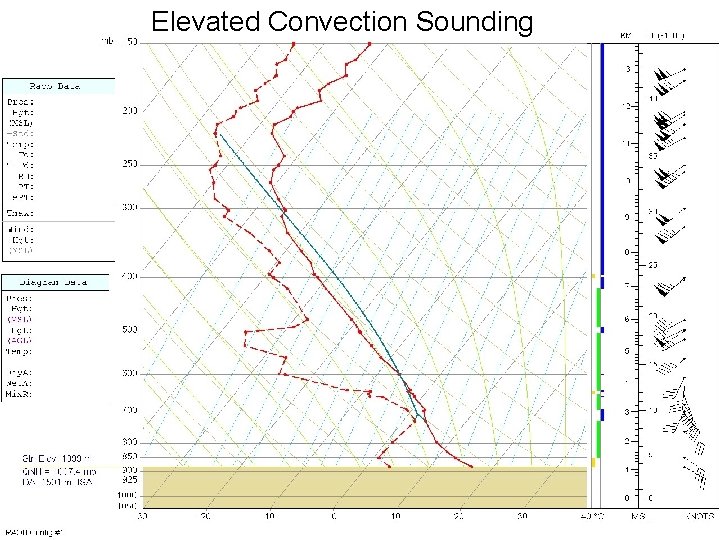
Severe Weather Soundings • Elevated Convection Sounding – Most common in the cool season on the north side of a frontal boundary (in the cool air) – Parcels do not rise from surface during elevated convection. Parcel lapse rate on skew-T from surface is useless when the boundary layer is very stable. – Parcel will generally rise from top of temperature inversion during elevated convection. On the sounding below, a parcel rising from the 700 -mb level will be much less stable than a parcel rising from the surface.
Elevated Convection Sounding
Elevated Convection Sounding
Elevated Convection Sounding