
Common Sense Learning Objectives Identify important arguments for
Common Sense
Learning Objectives Identify important arguments for independence made in Thomas Paine's Common Sense and explain why these arguments helped persuade American colonists that independence was necessary Identify the key ideas in the Preamble to the Declaration of Independence: natural rights, the social contract, the right to revolution, popular sovereignty, and the right of self-determination
Unique to the 13 British Colonies Why were thirteen colonies ready to revolt? What was unique to the 13 British Colonies compared to French or Spanish Colonies (163 -166)?
The 13 colonies were Locally rooted elites Centers of diverse economic activity Unlimited immigration (large populations) Separate political Identity
Compare and contrast “elite protest” vs. “popular protest” (183 -190)
What was the “Boston Tea Party” and why is it important (192)?
Describe what the author means by “two meanings of Radicalism” (200 -203)
For fire and water are not more heterogeneous than the different colonies in North America. Nothing can exceed the jealousy and emulation which they possess in regard to each other. . In short. . . were they left to themselves there would soon be a civil war from one end of the continent to the other, while the Indians and Negroes would. . . impatiently watch the opportunity of exterminating them all together. —Rev. Andrew Burnaby, 1760
A colonist cannot make a button, a horseshoe, nor a hobnail, but some snootly ironmonger or respectable buttonmaker of England shall bawl and squall that his honor’s worship is most egregiously maltreated, injured, cheated, and robbed by the rascally American republicans. —Boston Gazette, 1765
The New Englanders by their canting, whinings, insinuating tricks have persuaded the rest of the Colonies that the Government is going to make absolute slaves of them. —Nicholas Cresswell, a Tory, 1774
Two Secondary Sources What were some of the consequences of the war? Stamp Act of 1765
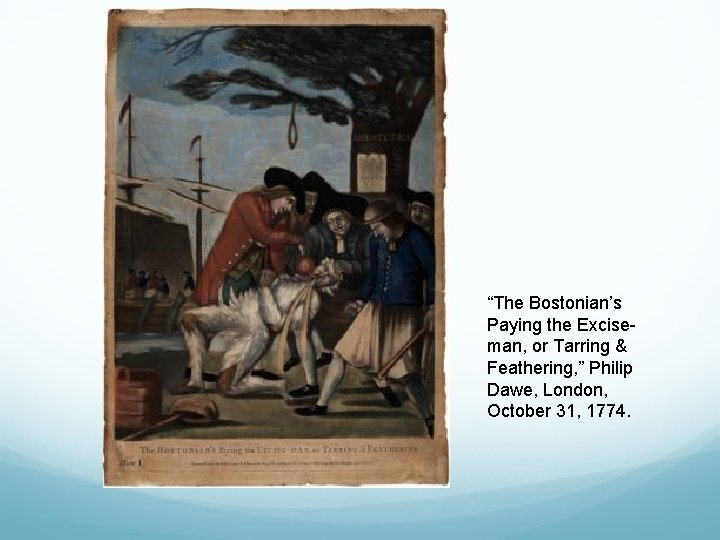
“The Bostonian’s Paying the Exciseman, or Tarring & Feathering, ” Philip Dawe, London, October 31, 1774.
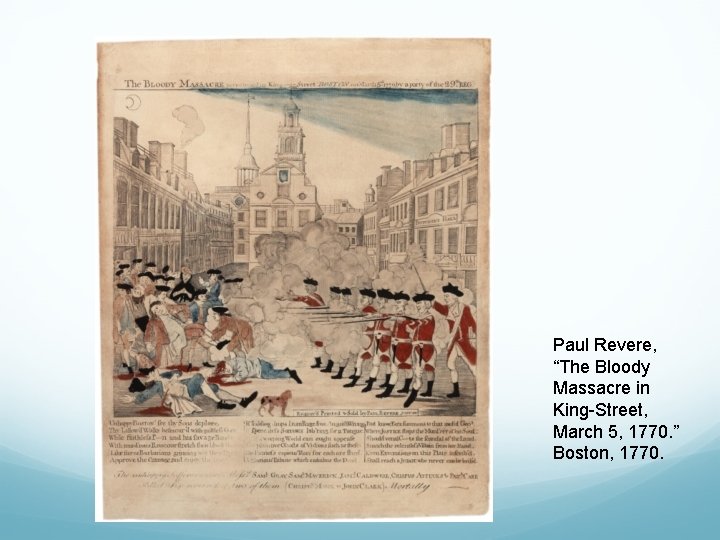
Paul Revere, “The Bloody Massacre in King-Street, March 5, 1770. ” Boston, 1770.
Describe the political and constitutional views of the colonists. What was their view of Parliament’s right to tax the colonies? Do you think colonists from different sections and different social classes shared the same political ideas? Would you describe the colonists’ grievances as calm and carefully reasoned or as exaggerated and paranoid?
Key Events 1754 -1763 French- Indian War (Seven Years War) 1763 - Proclamation line 1764 - Sugar Act 1765 Stamp Act and Quartering Act 1766 - Stamp act Repealed but Declaratory Act passed The new law made Parliament’s laws binding “in all cases whatsoever. ” 1767 - Townshend Duties 1768 - American Assemblies Dissolved
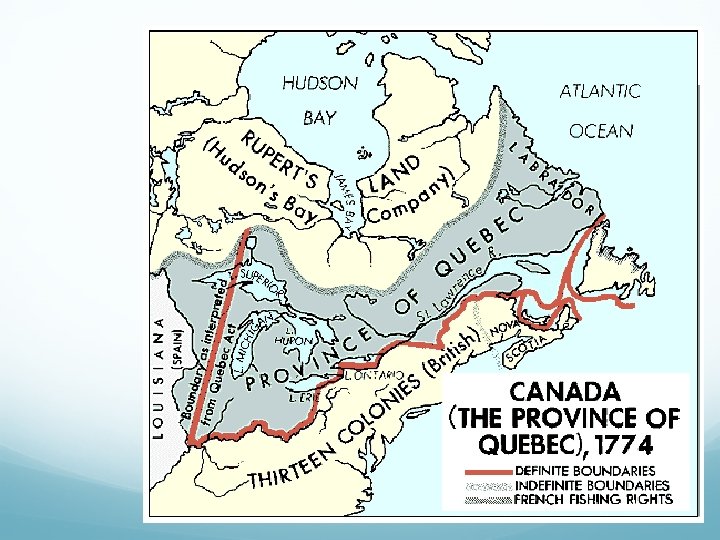
Road to Revolution 1770 Boston Massacre 1773 - Tea Act Passes Dec 16 th 1773 - Boston Tea Party 1774 Britain responded with the Coercive or Intolerable Acts in Closed Boston Harbor 1. Altered the MA government 2. Allowed British officers to be tried outside the colony 3. Made it easy to quarter British troops 1774 - Quebec Act- enlarged French Quebec to cover the area as far west as the Mississippi River and as far south as the Ohio River, Catholic Church had a privileged status there.
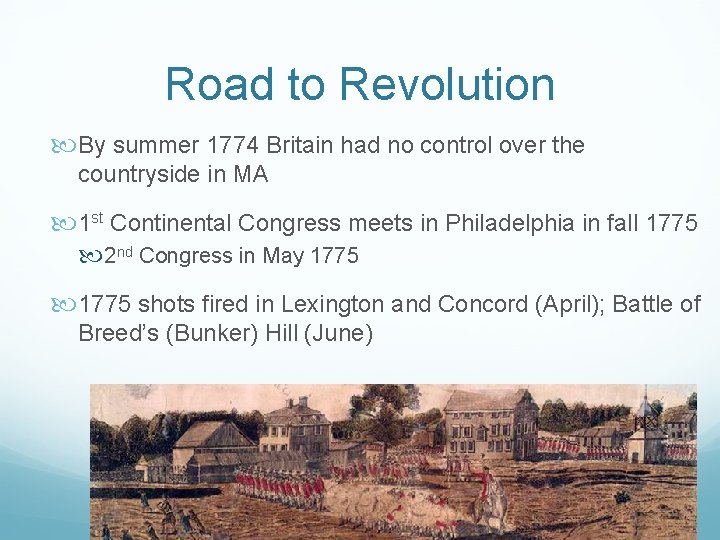
Road to Revolution By summer 1774 Britain had no control over the countryside in MA 1 st Continental Congress meets in Philadelphia in fall 1775 2 nd Congress in May 1775 shots fired in Lexington and Concord (April); Battle of Breed’s (Bunker) Hill (June)
Road to Revolution At the 2 nd Continental Congress the colonists still hoped King George III would intervene Olive Branch Petition was adopted by the Second Continental Congress on July 5, 1775, attempted to avoid a full-on war affirmed American loyalty to Great Britain and asked the king to prevent further conflict. August 1775 the King declares the colonies in a state of rebellion January 1776 Common Sense Published February 1776 the Prohibitory Act is passes Blockade of American ports, declaration of American ships as enemy vessels
Common Sense Primary Source How does Paine think the distinction between KING and SUBJECT is different from the other societal distinctions among people? Based on Paine's arguments, why did people at this time support the monarchy? Which of the reasons you've identified in your answer to this question do you find persuasive? Why or why not? What are the advantages of a monarchy over a democratic republic? Why might these apparent advantages have been persuasive to some of the North American colonists in 1776?
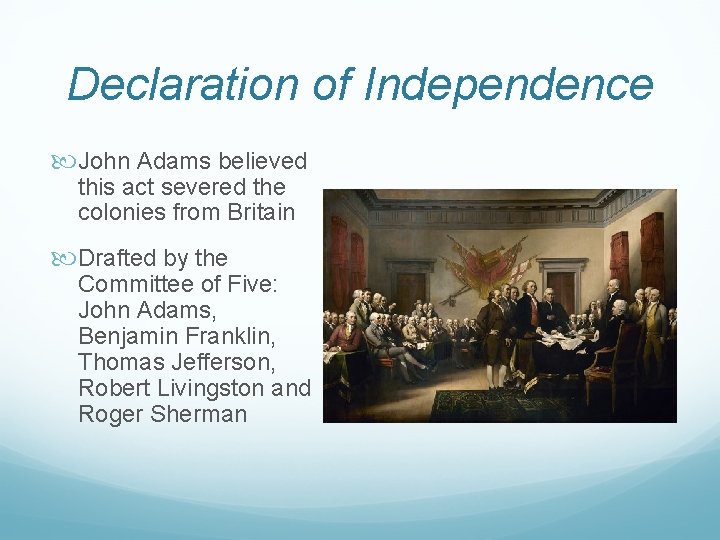
Declaration of Independence John Adams believed this act severed the colonies from Britain Drafted by the Committee of Five: John Adams, Benjamin Franklin, Thomas Jefferson, Robert Livingston and Roger Sherman
Declaration of Independence July 4 1776 Declaration of Independence Published Please Provide 5 annotations on the declaration of Independence explaining how the colonists justified independence. Explain what event(s) the grievance is referring to
- Slides: 22