
COMMON RHEUMATIC DISEASES Dr Abdullah Al Mazyad Consultant
COMMON RHEUMATIC DISEASES Dr. Abdullah Al Mazyad Consultant Pediatric Rheumatologist Department of Pediatrics King saud University
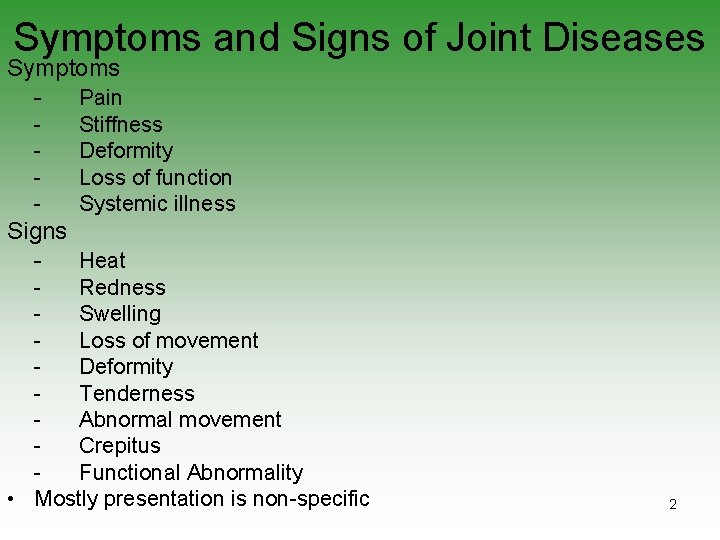
Symptoms and Signs of Joint Diseases Symptoms Pain - Stiffness Deformity Loss of function Systemic illness Signs Heat Redness Swelling Loss of movement Deformity Tenderness Abnormal movement Crepitus Functional Abnormality • Mostly presentation is non-specific 2
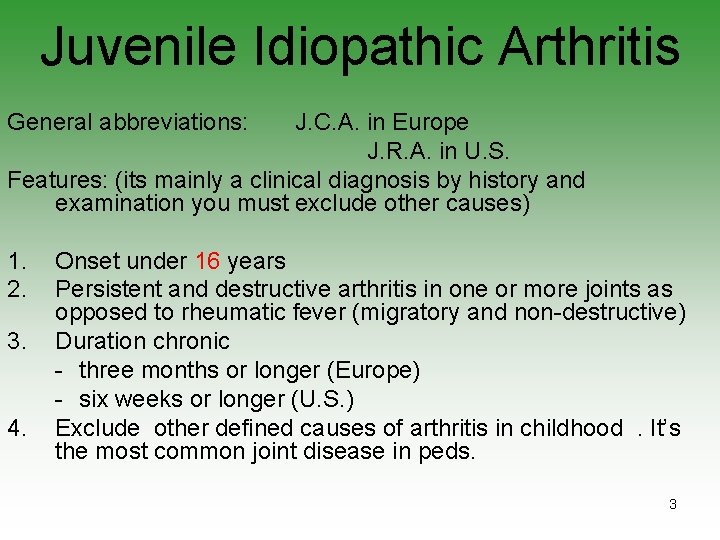
Juvenile Idiopathic Arthritis General abbreviations: J. C. A. in Europe J. R. A. in U. S. Features: (its mainly a clinical diagnosis by history and examination you must exclude other causes) 1. 2. 3. 4. Onset under 16 years Persistent and destructive arthritis in one or more joints as opposed to rheumatic fever (migratory and non-destructive) Duration chronic - three months or longer (Europe) - six weeks or longer (U. S. ) Exclude other defined causes of arthritis in childhood. It’s the most common joint disease in peds. 3
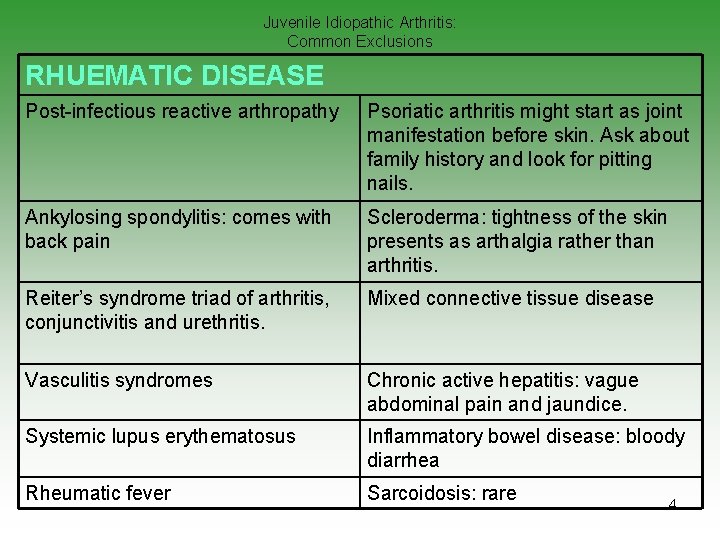
Juvenile Idiopathic Arthritis: Common Exclusions RHUEMATIC DISEASE Post-infectious reactive arthropathy Psoriatic arthritis might start as joint manifestation before skin. Ask about family history and look for pitting nails. Ankylosing spondylitis: comes with back pain Scleroderma: tightness of the skin presents as arthalgia rather than arthritis. Reiter’s syndrome triad of arthritis, conjunctivitis and urethritis. Mixed connective tissue disease Vasculitis syndromes Chronic active hepatitis: vague abdominal pain and jaundice. Systemic lupus erythematosus Inflammatory bowel disease: bloody diarrhea . Rheumatic fever Sarcoidosis: rare 4
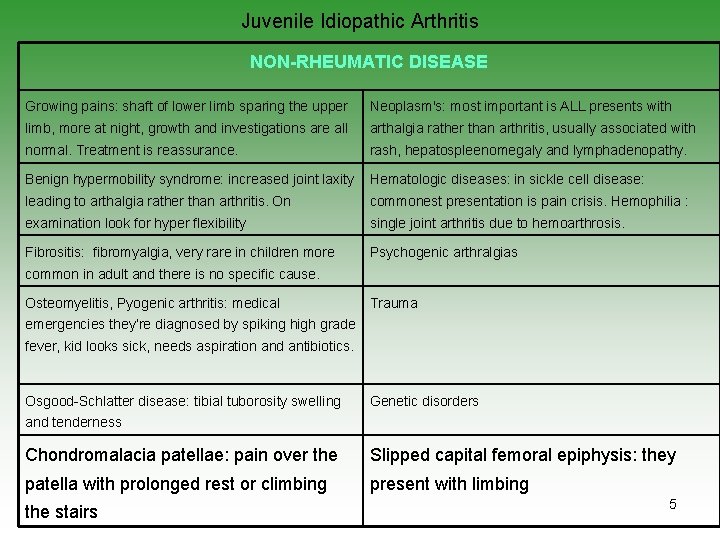
Juvenile Idiopathic Arthritis NON-RHEUMATIC DISEASE Growing pains: shaft of lower limb sparing the upper Neoplasm's: most important is ALL presents with limb, more at night, growth and investigations are all arthalgia rather than arthritis, usually associated with normal. Treatment is reassurance. rash, hepatospleenomegaly and lymphadenopathy. Benign hypermobility syndrome: increased joint laxity Hematologic diseases: in sickle cell disease: leading to arthalgia rather than arthritis. On commonest presentation is pain crisis. Hemophilia : examination look for hyper flexibility single joint arthritis due to hemoarthrosis. Fibrositis: fibromyalgia, very rare in children more Psychogenic arthralgias common in adult and there is no specific cause. Osteomyelitis, Pyogenic arthritis: medical Trauma emergencies they’re diagnosed by spiking high grade fever, kid looks sick, needs aspiration and antibiotics. Osgood-Schlatter disease: tibial tuborosity swelling Genetic disorders and tenderness Chondromalacia patellae: pain over the Slipped capital femoral epiphysis: they patella with prolonged rest or climbing present with limbing the stairs 5

Pathology Serositis (RA) 1. Synovitis 2. Tendenitis 3. Bursae Serositis of pleura and pericardium Nodules Vasculitis: in the tip of the finger 6
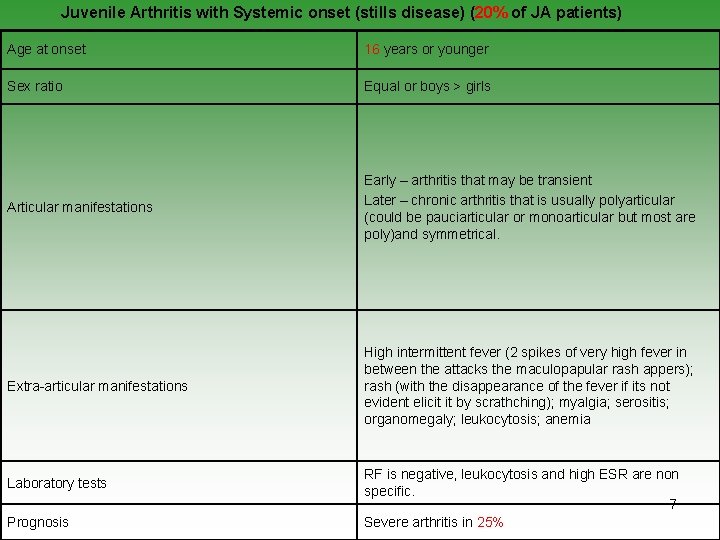
Juvenile Arthritis with Systemic onset (stills disease) (20% of JA patients) Age at onset 16 years or younger Sex ratio Equal or boys > girls Articular manifestations Early – arthritis that may be transient Later – chronic arthritis that is usually polyarticular (could be pauciarticular or monoarticular but most are poly)and symmetrical. Extra-articular manifestations High intermittent fever (2 spikes of very high fever in between the attacks the maculopapular rash appers); rash (with the disappearance of the fever if its not evident elicit it by scrathching); myalgia; serositis; organomegaly; leukocytosis; anemia Laboratory tests Prognosis RF is negative, leukocytosis and high ESR are non specific. 7 Severe arthritis in 25%
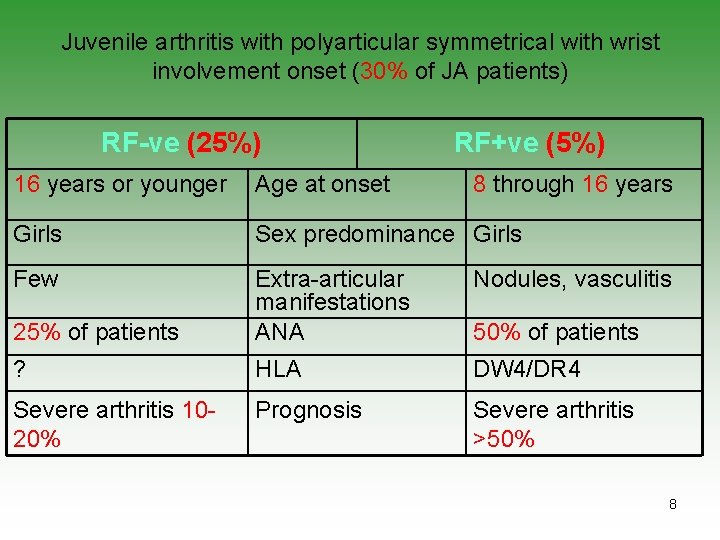
Juvenile arthritis with polyarticular symmetrical with wrist involvement onset (30% of JA patients) RF-ve (25%) RF+ve (5%) 16 years or younger Age at onset 8 through 16 years Girls Sex predominance Girls Few Nodules, vasculitis 25% of patients Extra-articular manifestations ANA ? HLA DW 4/DR 4 Severe arthritis 1020% Prognosis Severe arthritis >50% of patients 8
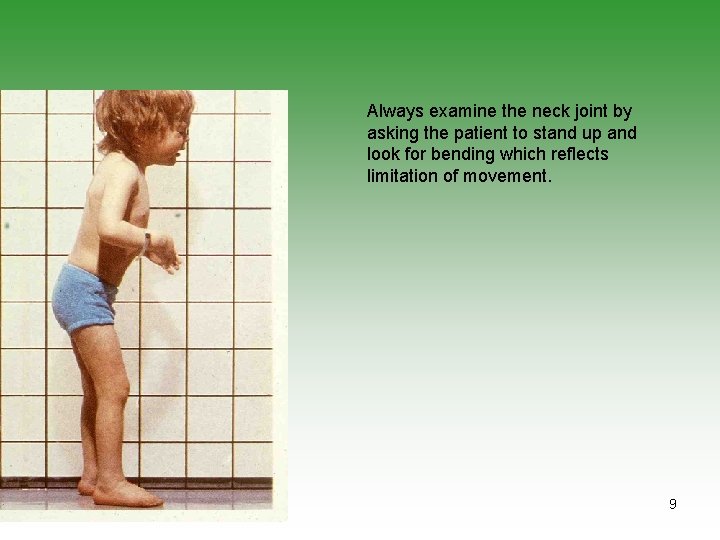
Always examine the neck joint by asking the patient to stand up and look for bending which reflects limitation of movement. 9

You put both hands together normally there is no gap, if a gap is present this reflects limitation of movement. 10
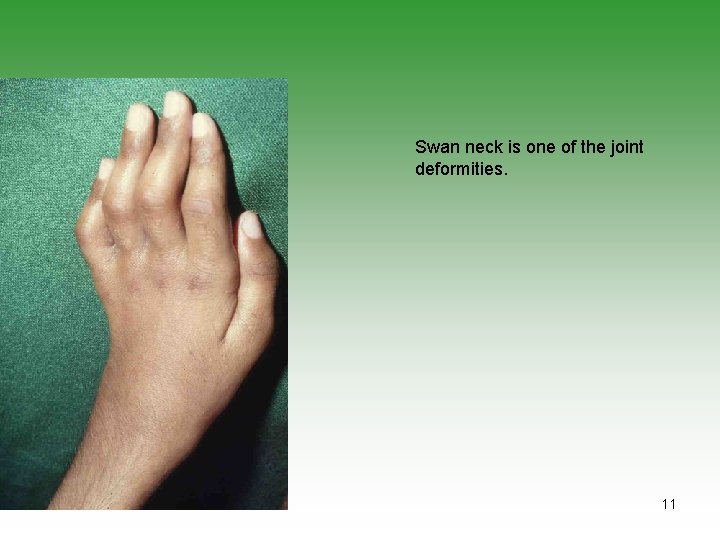
Swan neck is one of the joint deformities. 11
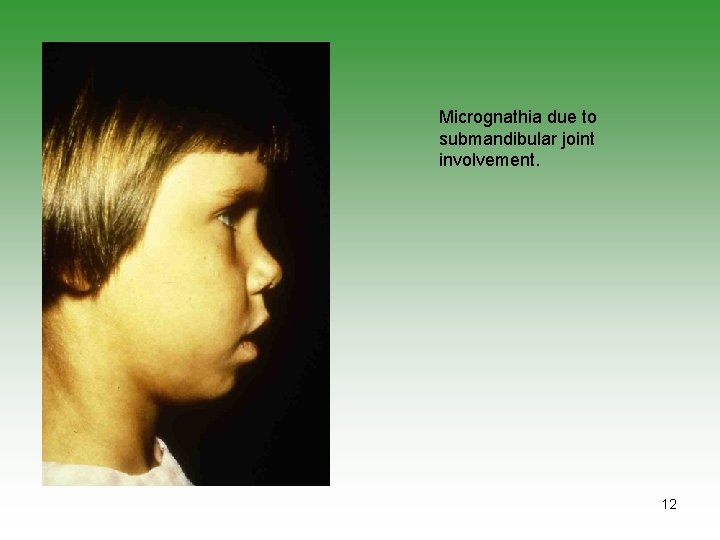
Micrognathia due to submandibular joint involvement. 12
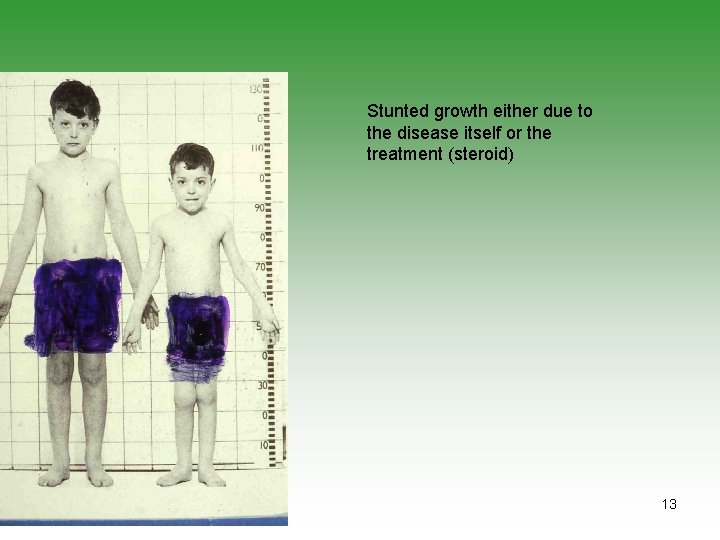
Stunted growth either due to the disease itself or the treatment (steroid) 13
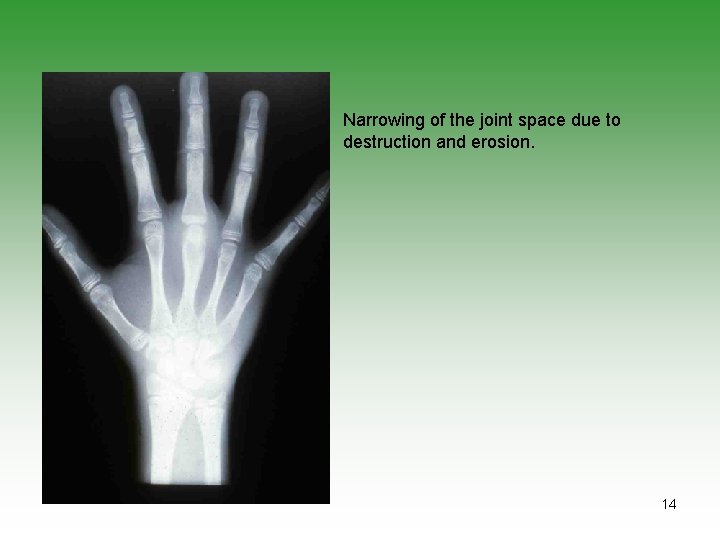
Narrowing of the joint space due to destruction and erosion. 14
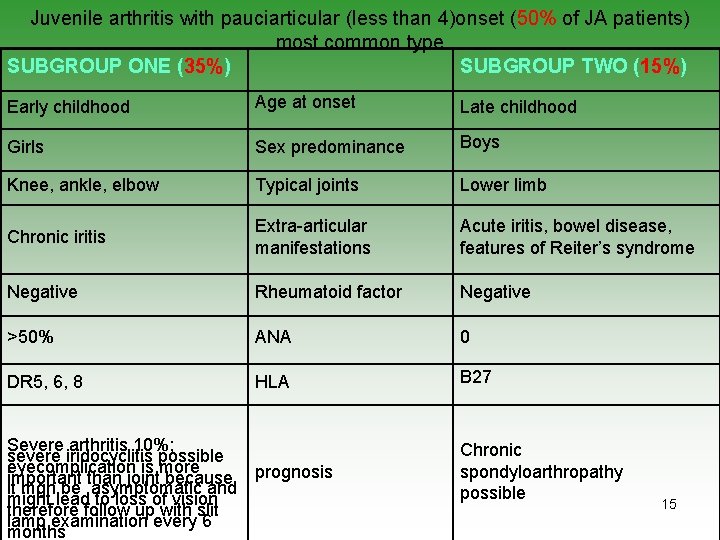
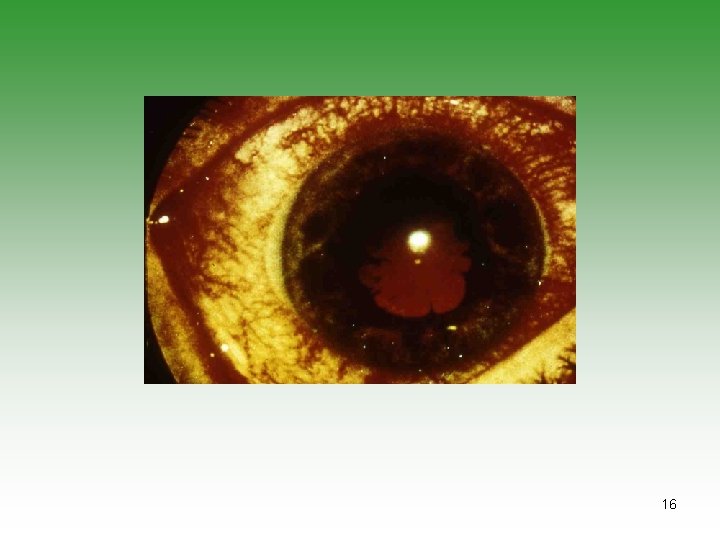
Juvenile arthritis with pauciarticular (less than 4)onset (50% of JA patients) most common type SUBGROUP ONE (35%) SUBGROUP TWO (15%) Early childhood Age at onset Late childhood Girls Sex predominance Boys Knee, ankle, elbow Typical joints Lower limb Chronic iritis Extra-articular manifestations Acute iritis, bowel disease, features of Reiter’s syndrome Negative Rheumatoid factor Negative >50% ANA 0 DR 5, 6, 8 HLA B 27 prognosis Chronic spondyloarthropathy possible Severe arthritis 10%; severe iridocyclitis possible eyecomplication is more important than joint because it mgh be asymptomatic and might lead to loss of vision therefore follow up with slit lamp examination every 6 months 15
16
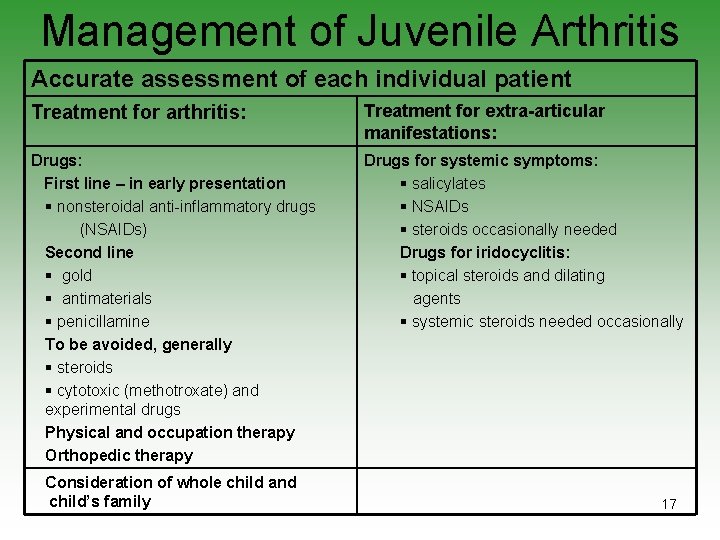
Management of Juvenile Arthritis Accurate assessment of each individual patient Treatment for arthritis: Treatment for extra-articular manifestations: Drugs: First line – in early presentation § nonsteroidal anti-inflammatory drugs (NSAIDs) Second line § gold § antimaterials § penicillamine To be avoided, generally § steroids § cytotoxic (methotroxate) and experimental drugs Physical and occupation therapy Orthopedic therapy Drugs for systemic symptoms: § salicylates § NSAIDs § steroids occasionally needed Drugs for iridocyclitis: § topical steroids and dilating agents § systemic steroids needed occasionally Consideration of whole child and child’s family 17
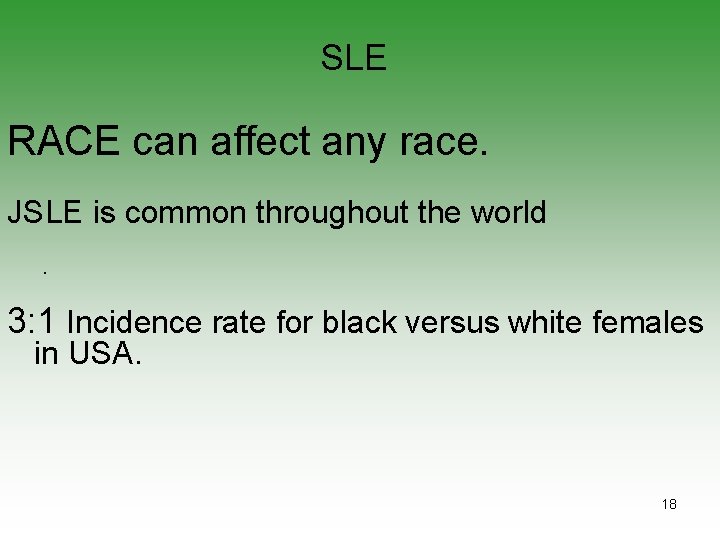
SLE RACE can affect any race. JSLE is common throughout the world. 3: 1 Incidence rate for black versus white females in USA. 18
AGE AT ONSET IN JSLE Ø Rare before 5 years can be found in neonates Ø Increasingly more common in adolescence commonest from 10 -14. Ø JSLE in the first decade: 3. 5 – 15% of all cases Ø More renal involvement in JSLE Ø JSLE in the first decade is a more severe disease. Wide variation of presentation could be with thrombocytopenia as the only presentation or skin manifestation alone. Its an autoimmune disease. 19
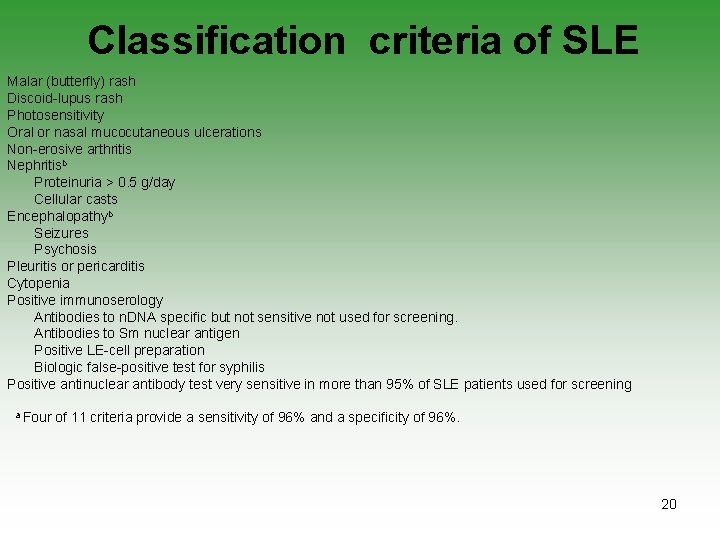
Classification criteria of SLE Malar (butterfly) rash Discoid-lupus rash Photosensitivity Oral or nasal mucocutaneous ulcerations Non-erosive arthritis Nephritisb Proteinuria > 0. 5 g/day Cellular casts Encephalopathyb Seizures Psychosis Pleuritis or pericarditis Cytopenia Positive immunoserology Antibodies to n. DNA specific but not sensitive not used for screening. Antibodies to Sm nuclear antigen Positive LE-cell preparation Biologic false-positive test for syphilis Positive antinuclear antibody test very sensitive in more than 95% of SLE patients used for screening a Four of 11 criteria provide a sensitivity of 96% and a specificity of 96%. 20
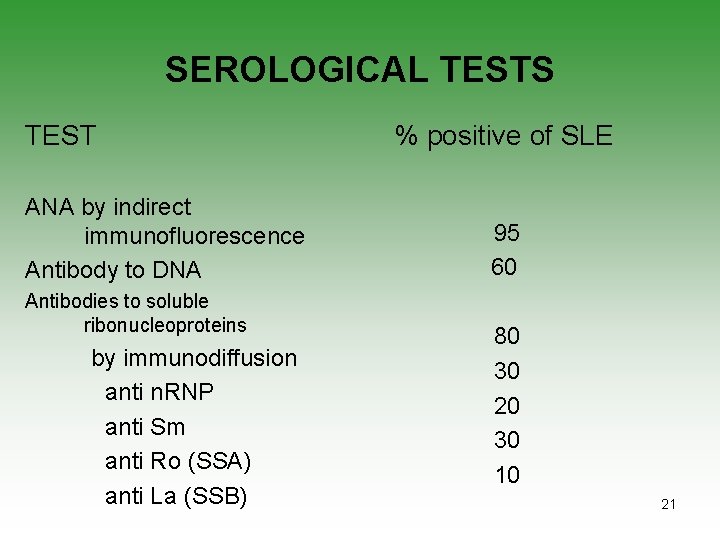
SEROLOGICAL TESTS TEST ANA by indirect immunofluorescence Antibody to DNA Antibodies to soluble ribonucleoproteins by immunodiffusion anti n. RNP anti Sm anti Ro (SSA) anti La (SSB) % positive of SLE 95 60 80 30 20 30 10 21
CLINICAL PRESENTATION MUCOCUTANEOUS INVOLVEMENT Ø Malar erythematous rash: Butterfly distribution. 25% of cases of onset and 50% of cases by 3 years follow-up. Ø Abrupt onset and usually have systemic disease. Ø Neonatal Lupus Erythematous: Lesions similar to seborrheic dermatitis, photosensitive and disappear spontaneously in 4 -6 months. . In SLE +ve moms therefore you have to screen the mom. Ø Discoid lupus: Discret, round, erythematous scaly patches with minimal systemic involment 22
MUCOCUTANEOUS INVOLVEMENT Ø Oral and nasal ulcerations: Nasal & palatal ulcerations in 50% cases + perforation Ø Alopecia: Generalized thinning with frontal hair. Britle and kinky changes occur frequently in active disease. Ø Raynanud’s phenomenon: It may precede the diagnosis by many years. Mostly in the fingers but can affect the tongue. 23
CARDIOVASCULAR INVOLVEMENT CARDIAC all layers may be involved Ø Pericarditis Ø Myocarditis Ø Endocarditis (Libman-Sacks) Ø Conduction abnormalities especially in neonates. CORONARY ARTERY DISEASE OTHER VASCULAR MANIFESTATIONS Ø Raynaud’s phenomenon Ø Hypertension Ø Arteritis Ø Venous disease 24
VASCULITIS IN SLE Ø SIZE Small Vessel Vasculitis Ø CLINICAL PRESENTATION: Lupus Crisis (wide spread vasculitis + polyserositis) Raynaud’s phenomenon Digital involvement Recurrent thrombophlebitis Livedo reticularis 25
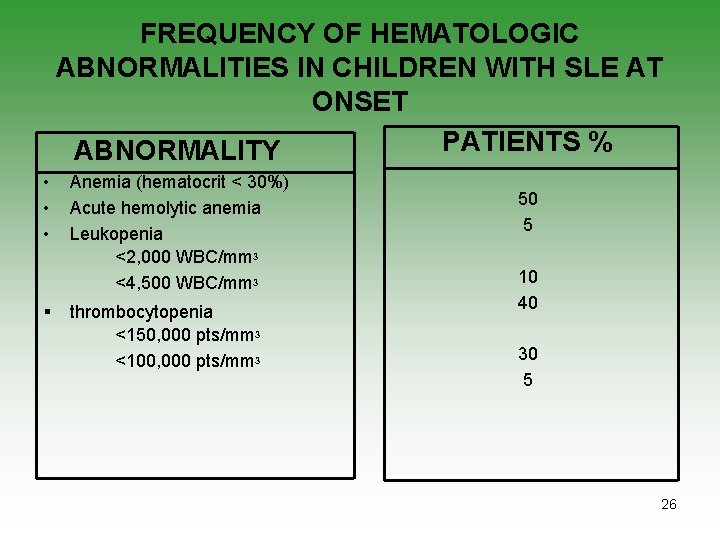
FREQUENCY OF HEMATOLOGIC ABNORMALITIES IN CHILDREN WITH SLE AT ONSET PATIENTS % ABNORMALITY • • • § Anemia (hematocrit < 30%) Acute hemolytic anemia Leukopenia <2, 000 WBC/mm³ <4, 500 WBC/mm³ thrombocytopenia <150, 000 pts/mm³ <100, 000 pts/mm³ 50 5 10 40 30 5 26
G. I. MANIFESTATIONS Ø 31% of cases have abdominal pain. Ø Abnormal esophageal motility. Ø Ascitis and pertonitis: 8 -11%, peritoneal fluid shows high DNA, low component. Ø Acute pancreatitis: de novo or steroids related. Ø Mesentric artery thrombosis Ø Malabsorption Ø GI vasculitis: Edema, ulceration, gangrene , perforation 27
NEUROPSYCHIATRIC MANIFESTATIONS Ø Non-Focal Cerebral Dysfunction (35 -60%) organic brain syndrome Psychosis Neurosis Ø Movement Disorders (10 -35%) Ø Seizures (15 -35%) Ø Focal Deficits (10 -35%) Ø Peripheral Neuropathies (10 -25%) Ø Others: e. g. headache , aseptic meningitis, mysthenia gravis 28
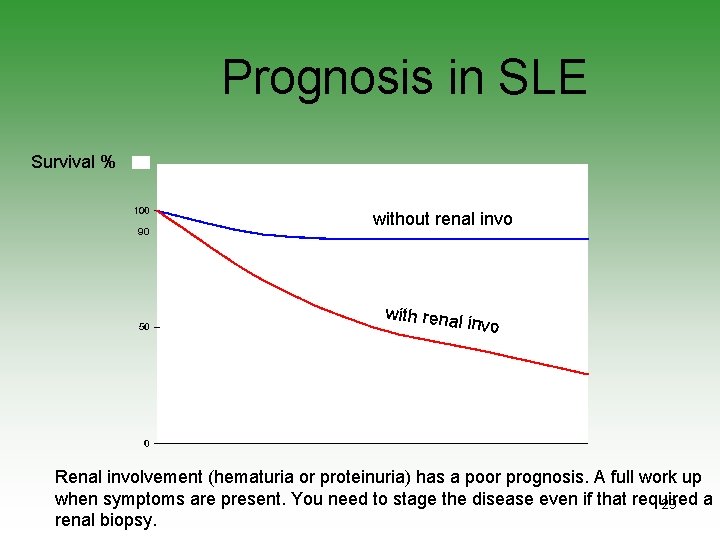
Prognosis in SLE Survival % 90 without renal invo with renal invo Renal involvement (hematuria or proteinuria) has a poor prognosis. A full work up when symptoms are present. You need to stage the disease even if that required a 29 renal biopsy.
DERMATOMYOSITIS AND POLYMYOSITIS Ø Ø Ø Symmetrical progressive proximal weakness (difficulty in standing or climbing the stairs) Muscle biopsy showing inflammatory changes not required for diagnosis usually diagnosed clinically. Raised muscle enzymes ( CPK, AST, Aldolase) Electromyography abnormalities (e. g. polyphasic potentials) Characteristic dermatological changes: heliotrope (eye rash), gottrons rash (red and scaly) over the knuckles. Treatment is with high doses of long term steroids with clinical and muscle enzymes follow up. In vasculitis we give cytotoxic drugs. 30
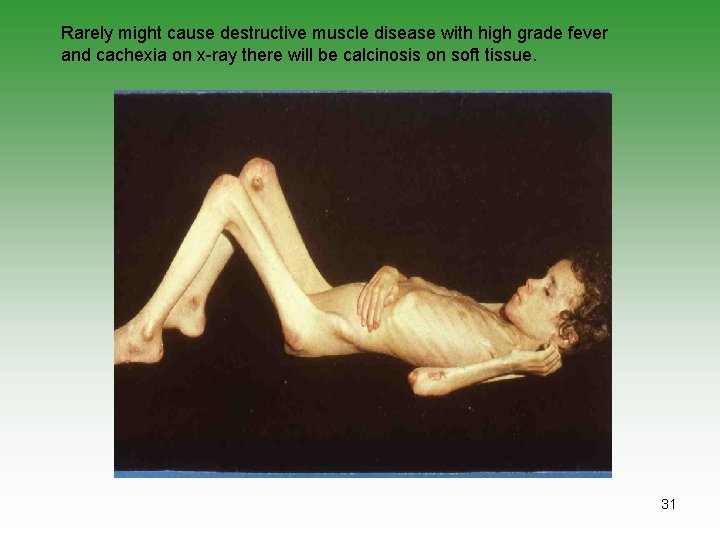
Rarely might cause destructive muscle disease with high grade fever and cachexia on x-ray there will be calcinosis on soft tissue. 31
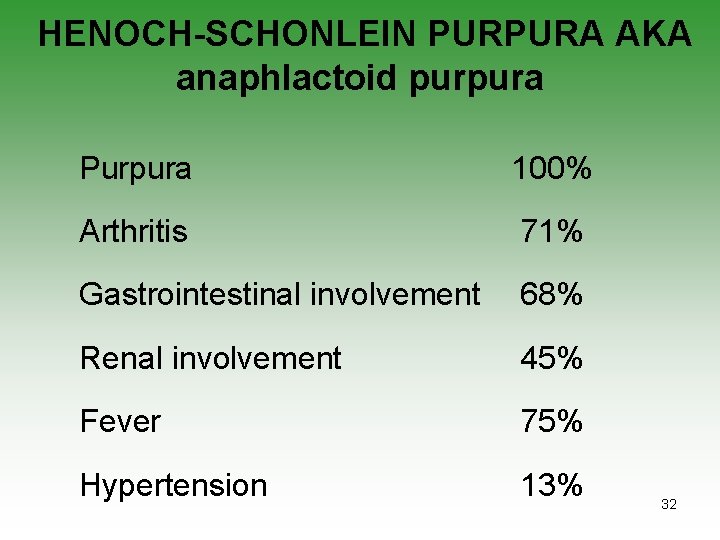
HENOCH-SCHONLEIN PURPURA AKA anaphlactoid purpura Purpura 100% Arthritis 71% Gastrointestinal involvement 68% Renal involvement 45% Fever 75% Hypertension 13% 32
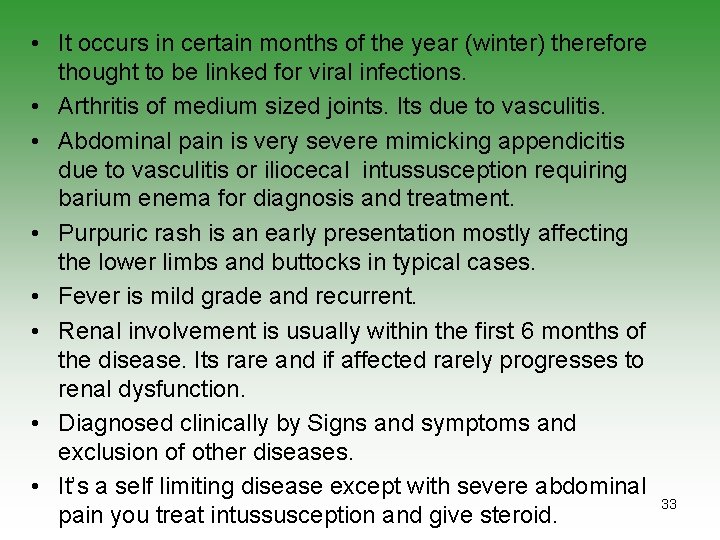
• It occurs in certain months of the year (winter) therefore thought to be linked for viral infections. • Arthritis of medium sized joints. Its due to vasculitis. • Abdominal pain is very severe mimicking appendicitis due to vasculitis or iliocecal intussusception requiring barium enema for diagnosis and treatment. • Purpuric rash is an early presentation mostly affecting the lower limbs and buttocks in typical cases. • Fever is mild grade and recurrent. • Renal involvement is usually within the first 6 months of the disease. Its rare and if affected rarely progresses to renal dysfunction. • Diagnosed clinically by Signs and symptoms and exclusion of other diseases. • It’s a self limiting disease except with severe abdominal pain you treat intussusception and give steroid. 33
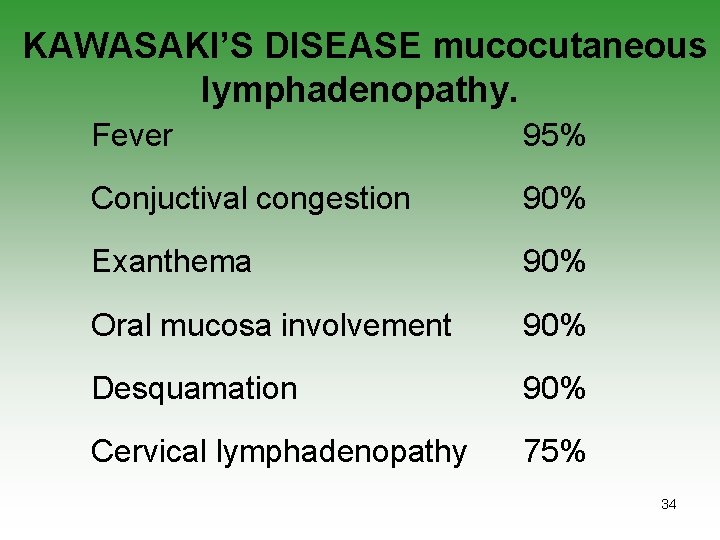
KAWASAKI’S DISEASE mucocutaneous lymphadenopathy. Fever 95% Conjuctival congestion 90% Exanthema 90% Oral mucosa involvement 90% Desquamation 90% Cervical lymphadenopathy 75% 34
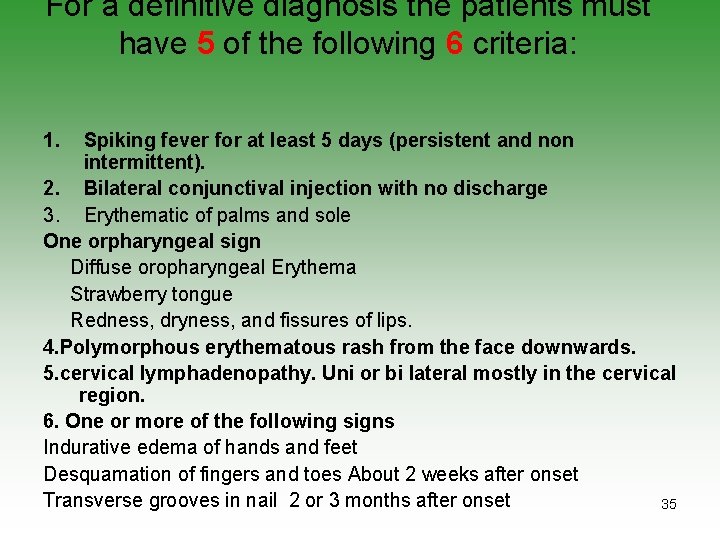
For a definitive diagnosis the patients must have 5 of the following 6 criteria: 1. Spiking fever for at least 5 days (persistent and non intermittent). 2. Bilateral conjunctival injection with no discharge 3. Erythematic of palms and sole One orpharyngeal sign Diffuse oropharyngeal Erythema Strawberry tongue Redness, dryness, and fissures of lips. 4. Polymorphous erythematous rash from the face downwards. 5. cervical lymphadenopathy. Uni or bi lateral mostly in the cervical region. 6. One or more of the following signs Indurative edema of hands and feet Desquamation of fingers and toes About 2 weeks after onset Transverse grooves in nail 2 or 3 months after onset 35
• It might affect the coronaries causing aneurysm and dilatation treatment is by IVIG first few weeks of life it’s the drug of the choice after that no benefit you need to give I>V methyl predinisilone. Always keep that on mind. 36
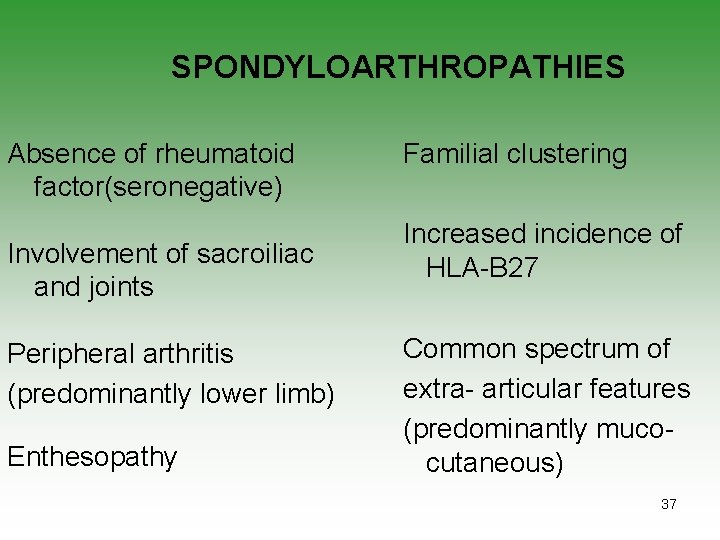
SPONDYLOARTHROPATHIES Absence of rheumatoid factor(seronegative) Involvement of sacroiliac and joints Peripheral arthritis (predominantly lower limb) Enthesopathy Familial clustering Increased incidence of HLA-B 27 Common spectrum of extra- articular features (predominantly mucocutaneous) 37
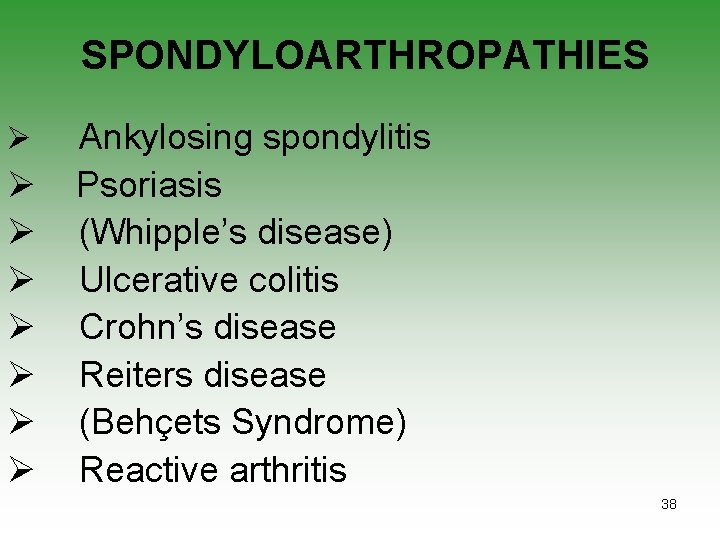
SPONDYLOARTHROPATHIES Ø Ø Ø Ø Ankylosing spondylitis Psoriasis (Whipple’s disease) Ulcerative colitis Crohn’s disease Reiters disease (Behçets Syndrome) Reactive arthritis 38
- Slides: 38