
Common Resources Public vs Private Goods Chapter 11
Common Resources & Public vs. Private Goods Chapter 11
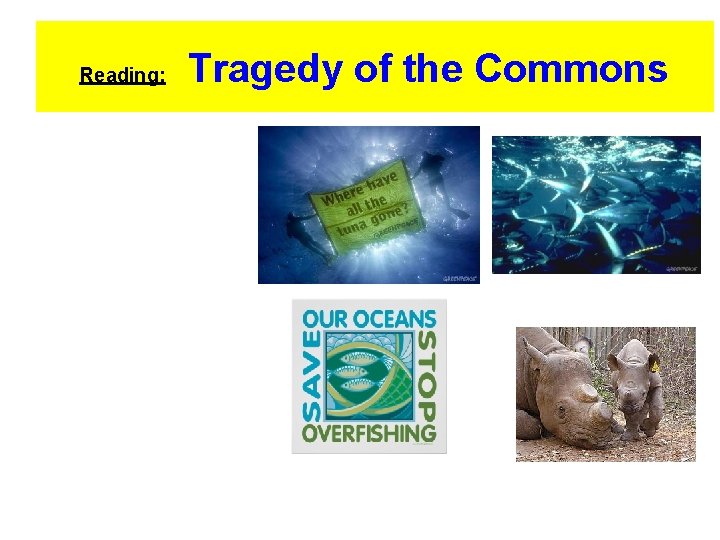
Reading: Tragedy of the Commons
Excludable & Rival Goods Excludable Goods- consumer who can not pay are excluded from consuming/using it…. . Rival Goods- consumption by one person reduces quantity available for others consumers

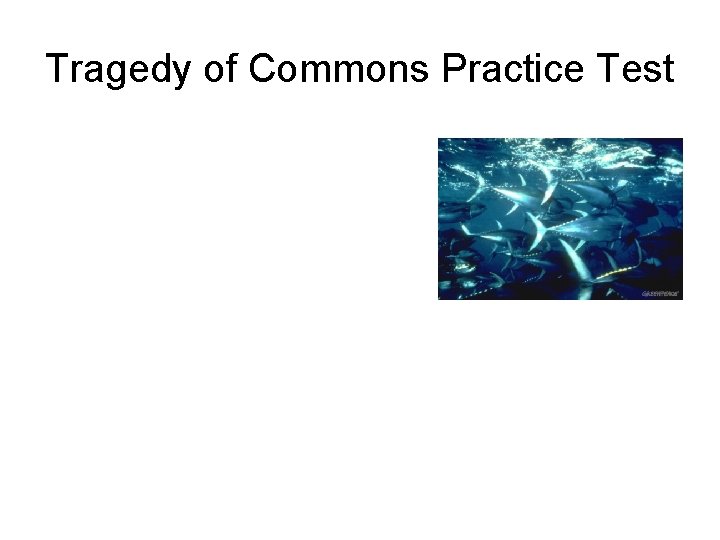
Common Resources • Common Resources – are commonly owned resources fish in ocean, the environment – They are non-excludable & rival in consumption – Example: • Tragedy of the Commons- the absence of incentives to prevent “overuse” & depletion of a common resource

Private Goods • Goods that are both excludable & rival in consumption Private Goods: Food, Coffee, airline tickets, automobiles, etc… End Result: Goods/Services are allocated efficiently based on MB ≥ MC

Public Goods • Goods that are neither excludable nor rival in consumption Public Goods: police protection, radio signals, national defense, public roads, Fireworks, etc…. End Result: many consumers get public goods without paying for them…
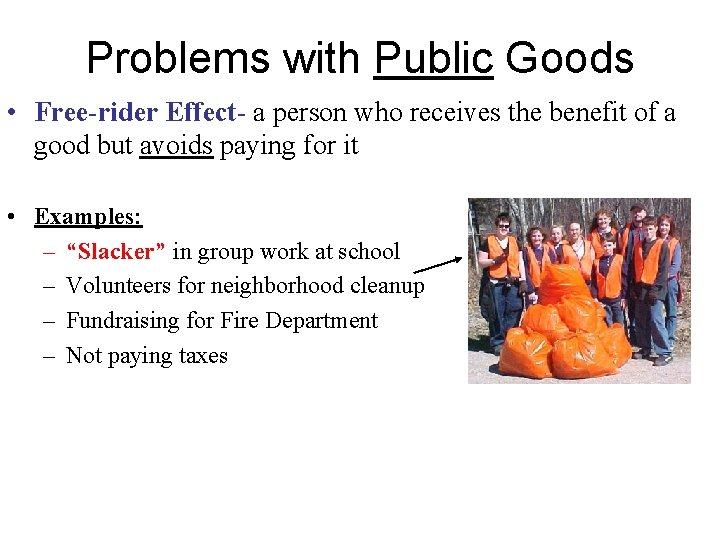
Problems with Public Goods • Free-rider Effect- a person who receives the benefit of a good but avoids paying for it • Examples: – “Slacker” in group work at school – Volunteers for neighborhood cleanup – Fundraising for Fire Department – Not paying taxes
Public Good Efficiency • When goods are available free of charge => market forces will not allocate resources efficiently • Government should collect taxes & provide public goods whenever Total Benefits ≥ Total Costs • Examples: – National Defense – Basic Research – Fighting Poverty – Fireworks on 4 th of July

Private Goods, Public Goods & Common Resources Allocated Efficiently: MB ≥ MC Leads to overuse/depletion . . Gov’t should provide if TB ≥ TC leads to “free rider” problem
Tragedy of Commons Practice Test
- Slides: 10