
Common Regional Names Clinical terminology based on a
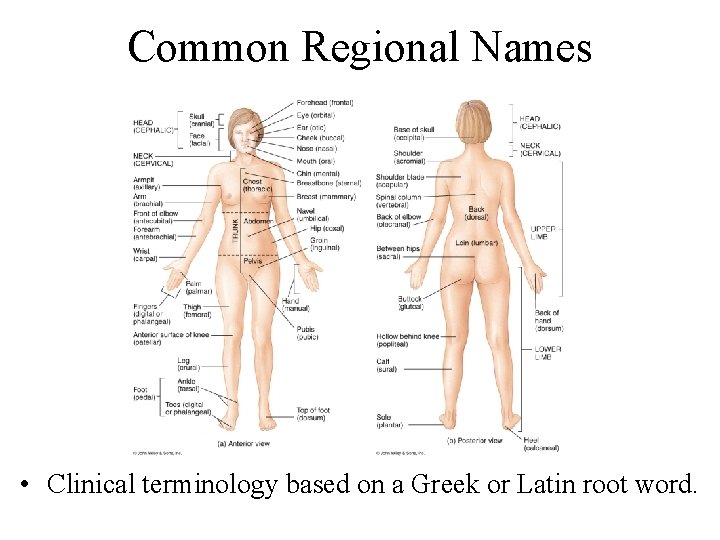
Common Regional Names • Clinical terminology based on a Greek or Latin root word.
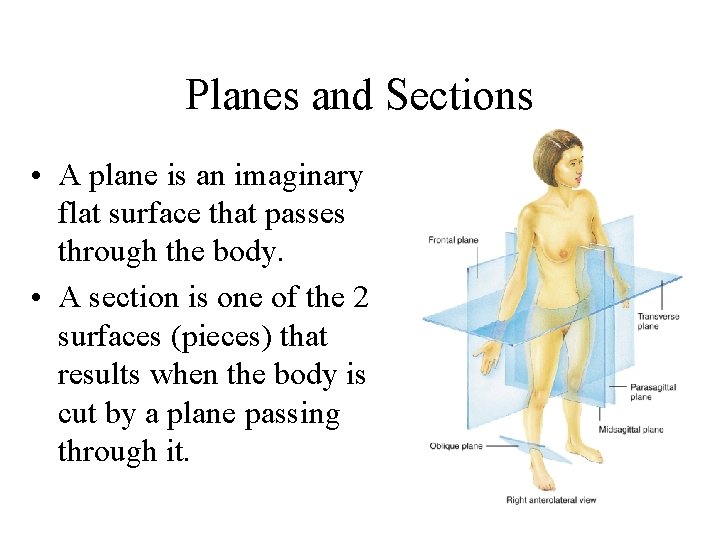
Planes and Sections • A plane is an imaginary flat surface that passes through the body. • A section is one of the 2 surfaces (pieces) that results when the body is cut by a plane passing through it.
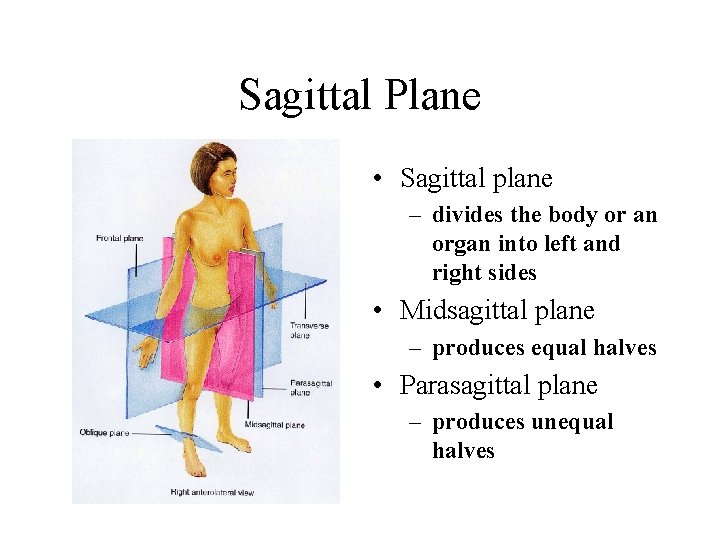
Sagittal Plane • Sagittal plane – divides the body or an organ into left and right sides • Midsagittal plane – produces equal halves • Parasagittal plane – produces unequal halves
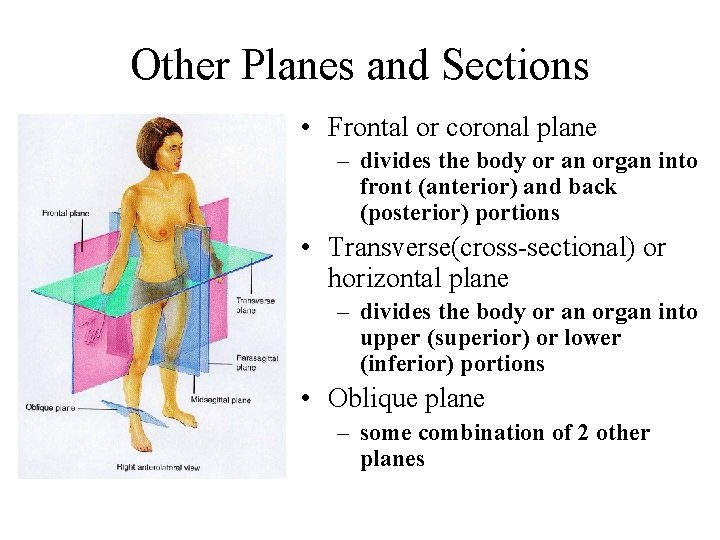
Other Planes and Sections • Frontal or coronal plane – divides the body or an organ into front (anterior) and back (posterior) portions • Transverse(cross-sectional) or horizontal plane – divides the body or an organ into upper (superior) or lower (inferior) portions • Oblique plane – some combination of 2 other planes
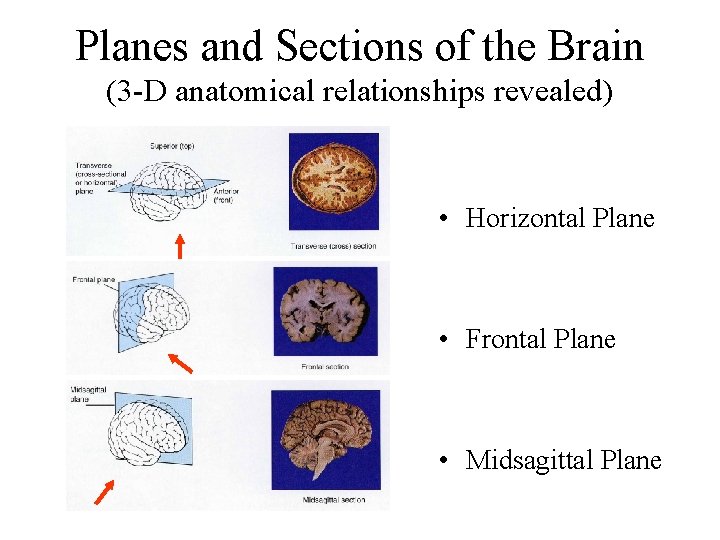
Planes and Sections of the Brain (3 -D anatomical relationships revealed) • Horizontal Plane • Frontal Plane • Midsagittal Plane
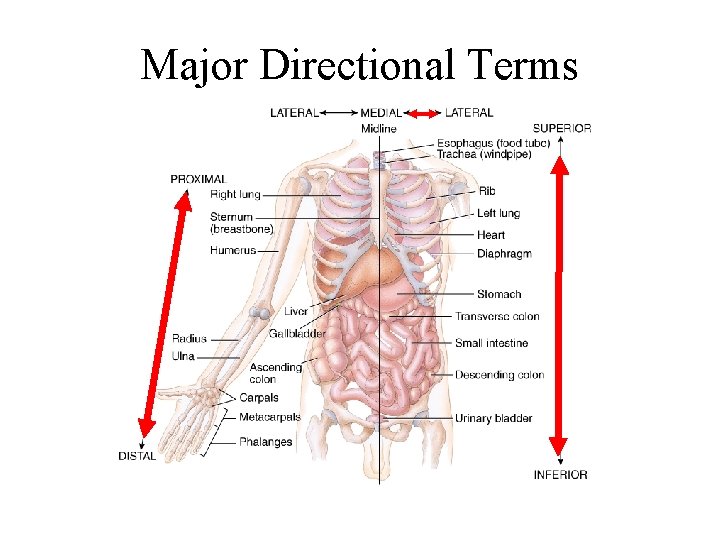
Major Directional Terms
Superior or Inferior • Superior – towards the head – The eyes are superior to the mouth. • Inferior – away from the head – The stomach is inferior to the heart.
Dorsal or Ventral • Dorsal or Posterior – at the back of the body – The brain is posterior to the forehead. • Ventral or Anterior – at the front of the body – The sternum is anterior to the heart.
Medial or Lateral • Medial – nearer to the midline of the body – The heart lies medial to the lungs. • Lateral – farther from the midline of the body – The thumb is on the lateral side of the hand.
Proximal or Distal • Proximal – nearer to the attachment of the limb to the trunk – The knee is proximal to the ankle. • Distal – farther from the attachment of the limb to the trunk – The wrist is distal to the elbow.
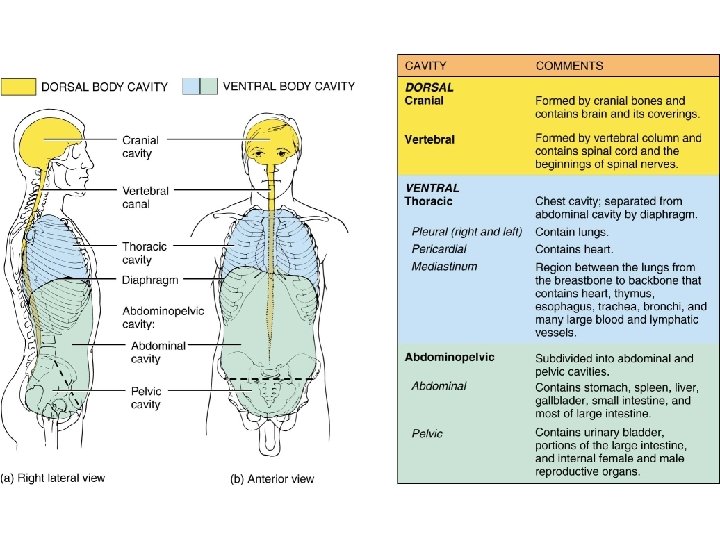
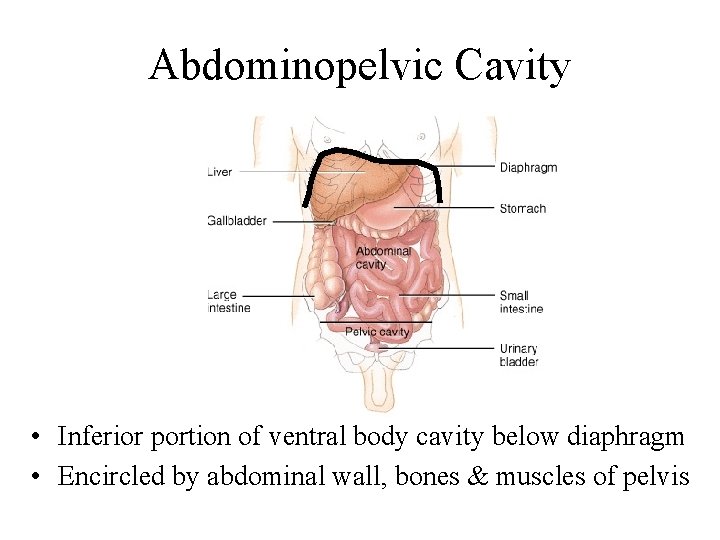
Abdominopelvic Cavity • Inferior portion of ventral body cavity below diaphragm • Encircled by abdominal wall, bones & muscles of pelvis
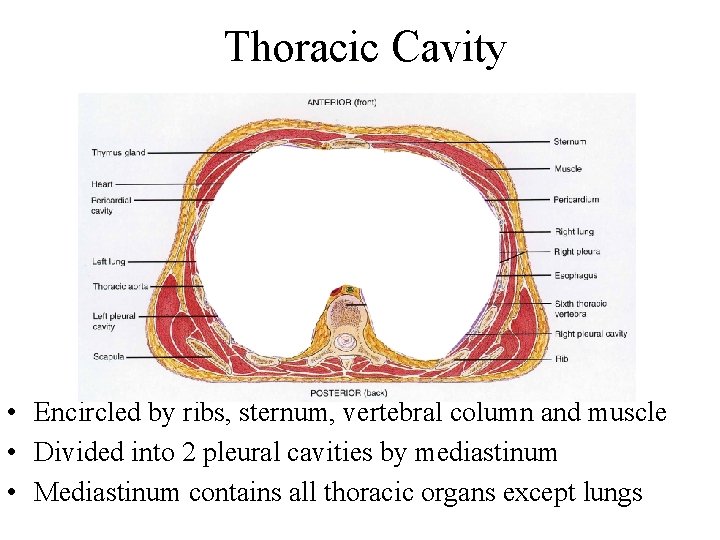
Thoracic Cavity • Encircled by ribs, sternum, vertebral column and muscle • Divided into 2 pleural cavities by mediastinum • Mediastinum contains all thoracic organs except lungs
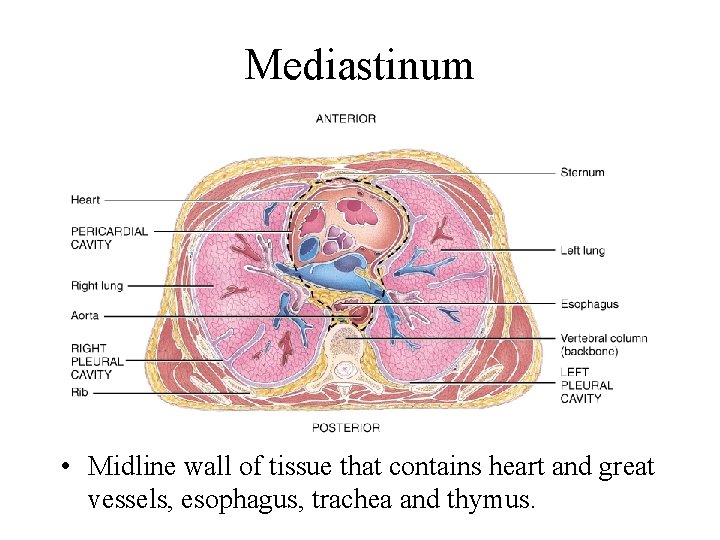
Mediastinum • Midline wall of tissue that contains heart and great vessels, esophagus, trachea and thymus.
Serous Membranes • Thin slippery membrane lines body cavities not open to the outside – parietal layer lines walls of cavities – visceral layer covers viscera within the cavities • Serous fluid reduces friction
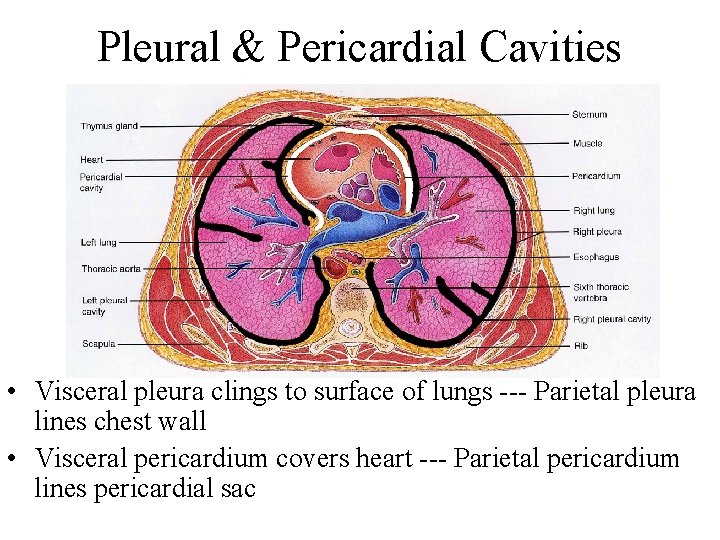
Pleural & Pericardial Cavities • Visceral pleura clings to surface of lungs --- Parietal pleura lines chest wall • Visceral pericardium covers heart --- Parietal pericardium lines pericardial sac
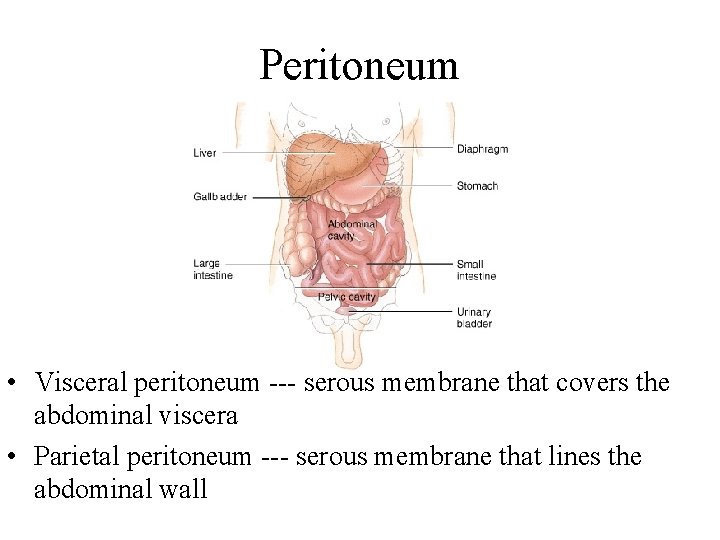
Peritoneum • Visceral peritoneum --- serous membrane that covers the abdominal viscera • Parietal peritoneum --- serous membrane that lines the abdominal wall
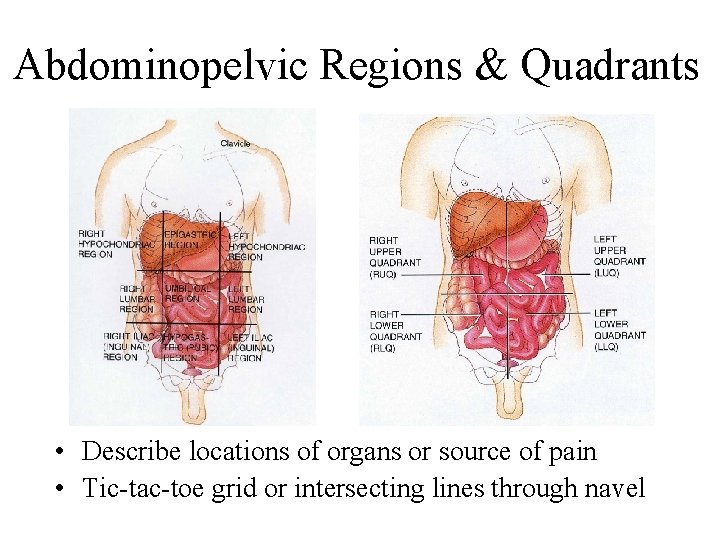
Abdominopelvic Regions & Quadrants • Describe locations of organs or source of pain • Tic-tac-toe grid or intersecting lines through navel
- Slides: 18