
Common Phoenix Area Birds House Finch A small

Common Phoenix Area Birds
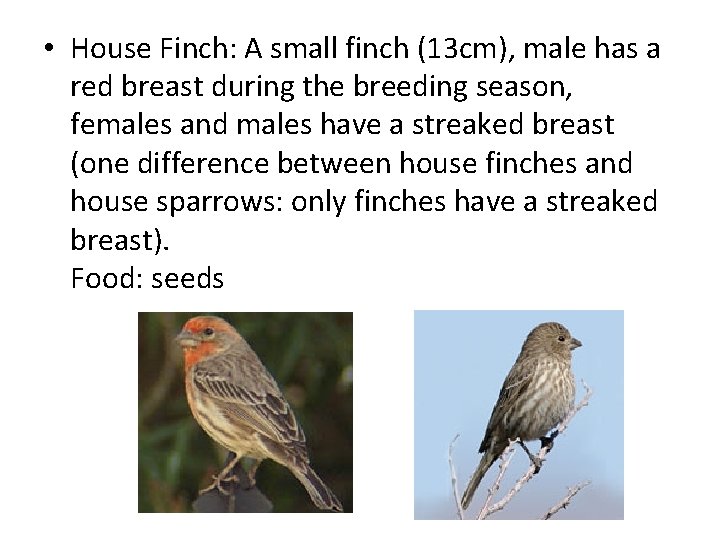
• House Finch: A small finch (13 cm), male has a red breast during the breeding season, females and males have a streaked breast (one difference between house finches and house sparrows: only finches have a streaked breast). Food: seeds
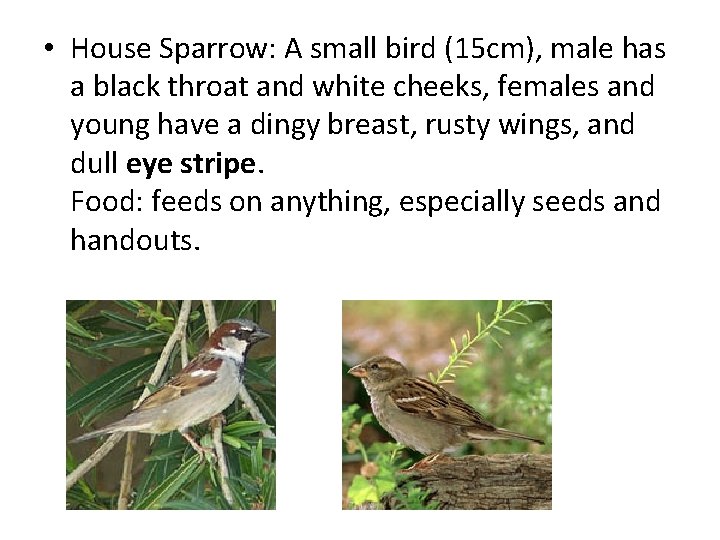
• House Sparrow: A small bird (15 cm), male has a black throat and white cheeks, females and young have a dingy breast, rusty wings, and dull eye stripe. Food: feeds on anything, especially seeds and handouts.
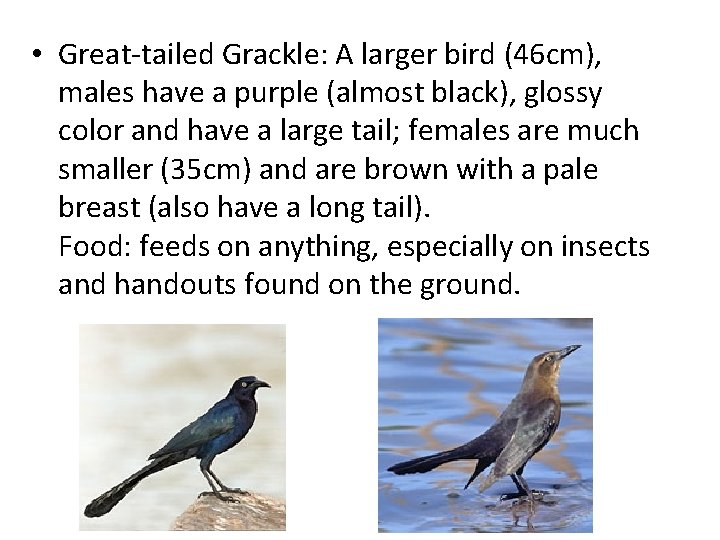
• Great-tailed Grackle: A larger bird (46 cm), males have a purple (almost black), glossy color and have a large tail; females are much smaller (35 cm) and are brown with a pale breast (also have a long tail). Food: feeds on anything, especially on insects and handouts found on the ground.
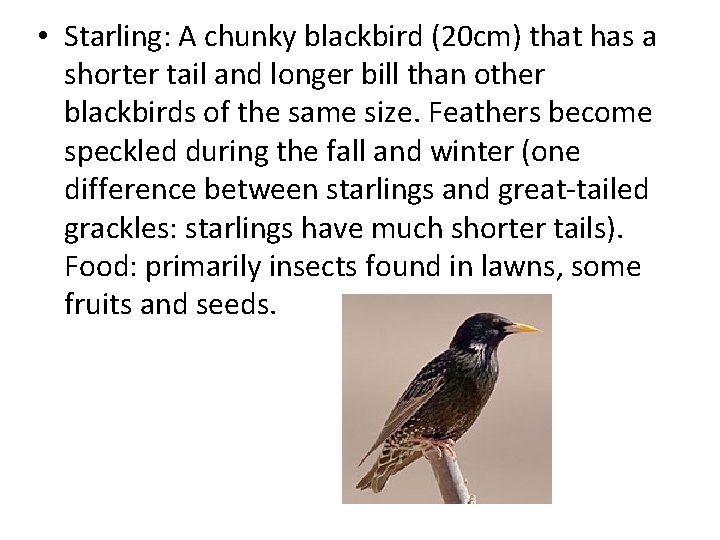
• Starling: A chunky blackbird (20 cm) that has a shorter tail and longer bill than other blackbirds of the same size. Feathers become speckled during the fall and winter (one difference between starlings and great-tailed grackles: starlings have much shorter tails). Food: primarily insects found in lawns, some fruits and seeds.
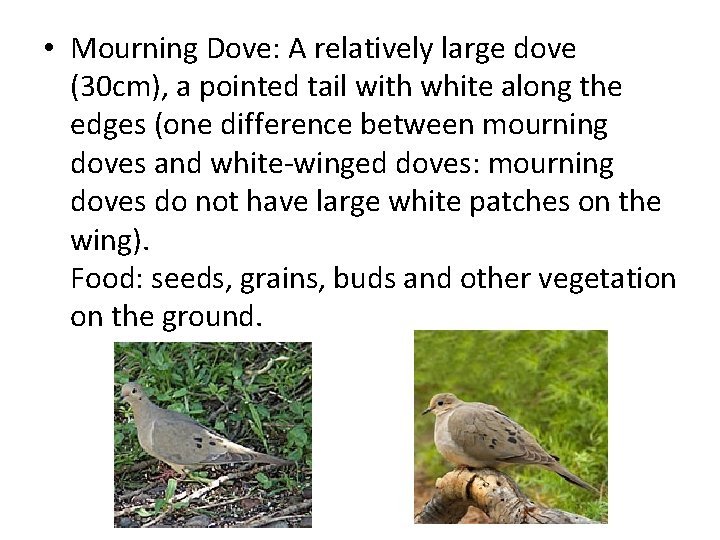
• Mourning Dove: A relatively large dove (30 cm), a pointed tail with white along the edges (one difference between mourning doves and white-winged doves: mourning doves do not have large white patches on the wing). Food: seeds, grains, buds and other vegetation on the ground.
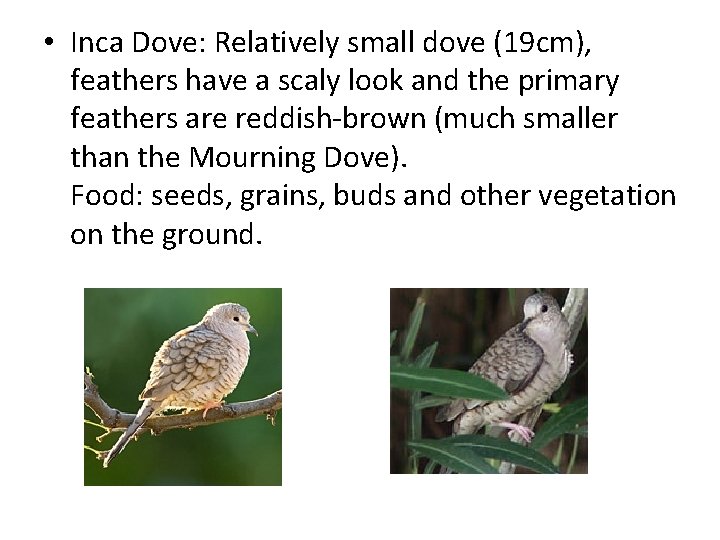
• Inca Dove: Relatively small dove (19 cm), feathers have a scaly look and the primary feathers are reddish-brown (much smaller than the Mourning Dove). Food: seeds, grains, buds and other vegetation on the ground.
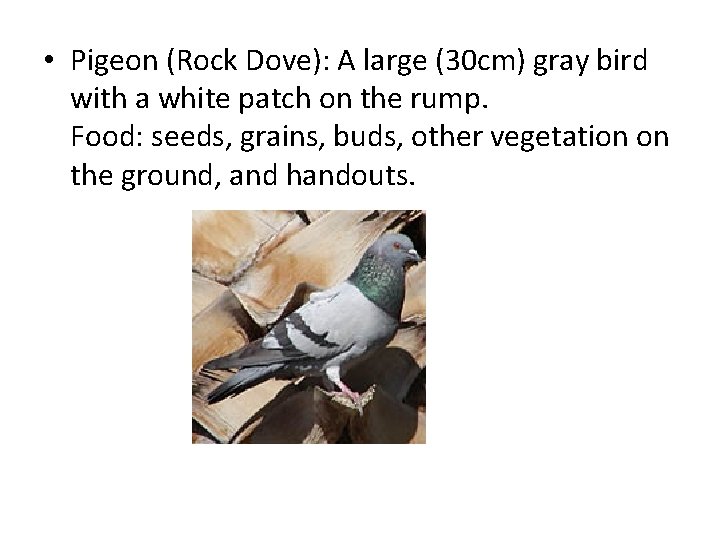
• Pigeon (Rock Dove): A large (30 cm) gray bird with a white patch on the rump. Food: seeds, grains, buds, other vegetation on the ground, and handouts.
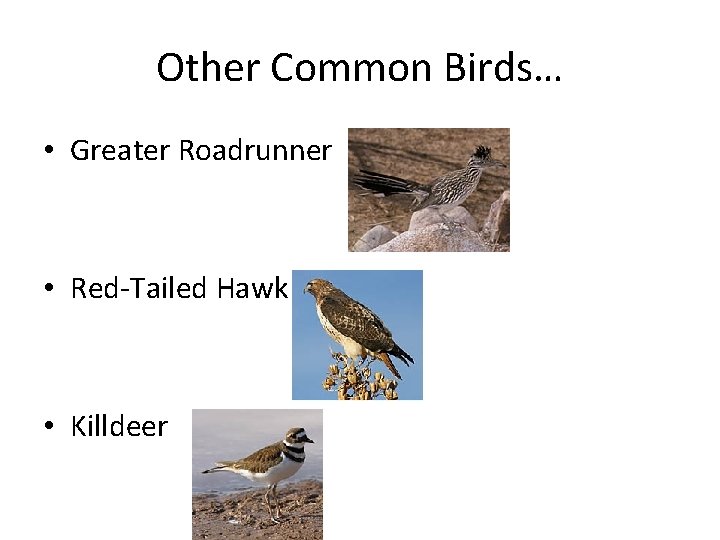
Other Common Birds… • Greater Roadrunner • Red-Tailed Hawk • Killdeer
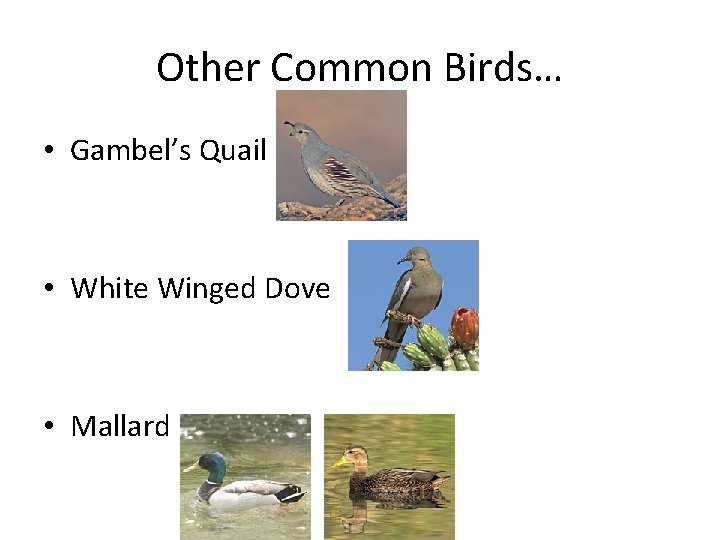
Other Common Birds… • Gambel’s Quail • White Winged Dove • Mallard

For more pictures, to hear bird calls… • Visit: – http: //askabiologist. asu. edu/browse-birds (Link is on my webpage!)
Warm Up: 5 -1 -13 • If there about 3. 28 feet in one meter, how many feet are in 20 meters? – Answer: 3. 28 ● 20 = 65. 6 feet
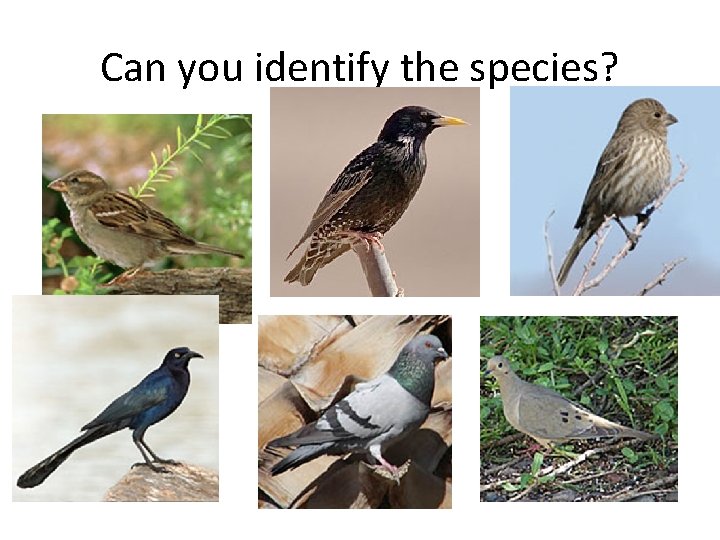
Can you identify the species?
Point Counting Bird Species • To discover how different bird species respond to the Urban Heat Island, we must determine how many of which species are living in different microclimates.

How it Works • Ecologists use Point Counts as one method for surveying birds. • In a Point Count, one person counts all the birds located within a circle with a diameter of 20 meters for 10 minutes – Count every bird as it enters the circle, even if it flies out and comes back in!
How Will We Do This Here? • Three Counters: will record data • One Time Keeper: takes timer outside, watches for 10 minutes • Temperature Checker: determine temperature in Fahrenheit • Rest of class spread out among Counters, pointing out birds and helping to identify species – It’s important to be EXTREMELY still and quiet!!!
Where Will We Go? • Cactus Garden • Fire Road (behind Griffin’s room)
Homework: • You will begin a Point Count of bird species at your home for three consecutive days. • Bring home your project folder, use same spot and same time all three days. • Bring folder back to school each day to get homework stamps! – Mornings will likely be better! – Look up temperature!
- Slides: 18