
common Pediatric diseases Prepared by Dr Latifa Marie
common Pediatric diseases Prepared by Dr. Latifa Mari’e
Characteristics in infants and children n n Neonates, infants: non-specific initial symptoms (irritability, lethargy, poor feeding) Specific rashes Sites of infection Prevention: vaccination/ immunization

Erysipelas n n n Superficial inflammation of the skin Streptococcus pyogenes, Staphylococcus aureus Complication/ infants: sepsis
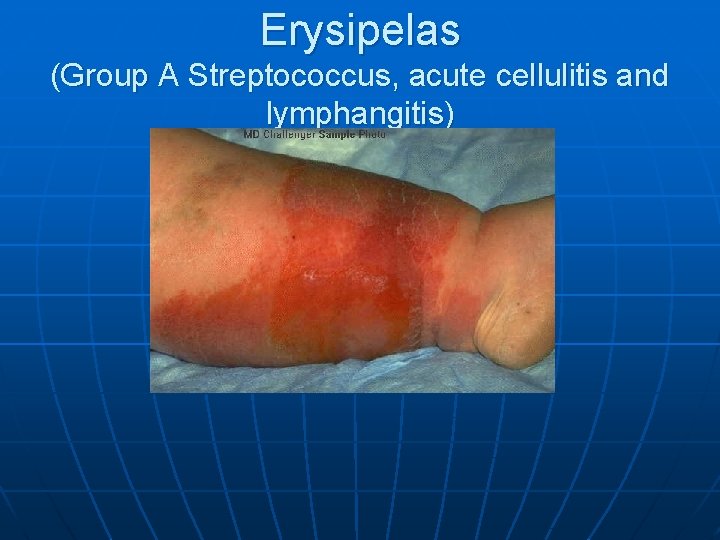
Erysipelas (Group A Streptococcus, acute cellulitis and lymphangitis)
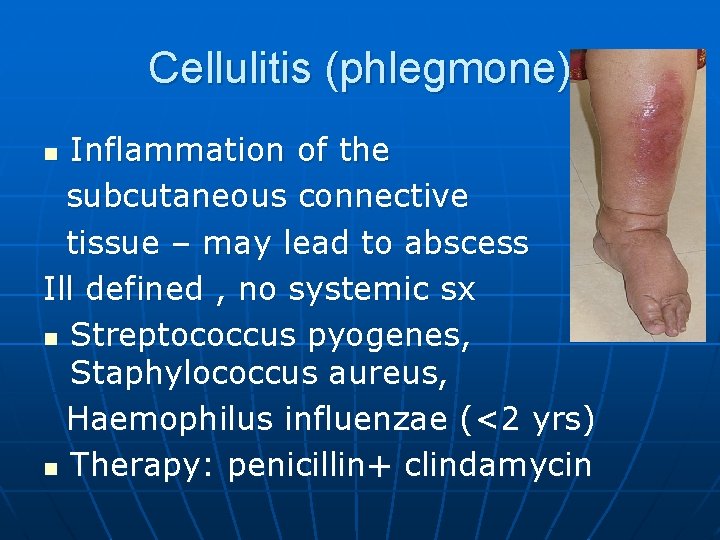
Cellulitis (phlegmone) Inflammation of the subcutaneous connective tissue – may lead to abscess Ill defined , no systemic sx n Streptococcus pyogenes, Staphylococcus aureus, Haemophilus influenzae (<2 yrs) n Therapy: penicillin+ clindamycin n
Measles (Rubeola, Morbilli, Nine. Day Measles) n n n n Paramyxovirus, RNA virus 7 -14 days incubation, prodromal fever Coryza, hacking cough, conjunctivitis Koplik’s spots 2 -4 days later Rash: retroauricular, temporal region, then on the face - maculo-papulous exanthemes Photophobia, high fever Complications: bacterial superinfections, encephalitis, cerebellitis, subacute sclerotizing panencephalitis
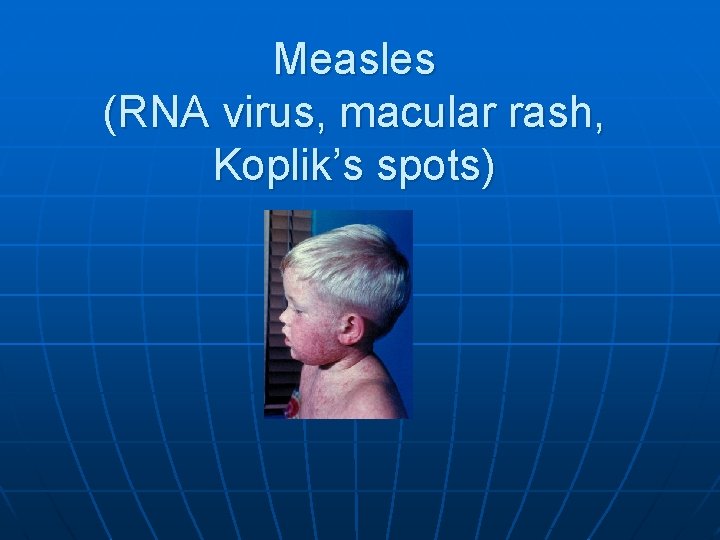
Measles (RNA virus, macular rash, Koplik’s spots)

Koplik’s spots n n Resembling tiny grains of white sand surrounded by inflammatory areolae Buccal mucosa opposite the 1 st and 2 nd upper molars
Rubella (German Measles, Three. Day Measles) n n n Togavirus, RNA 14 -21 days incubation Painful lymphadenopathy: retroauricular, cervical, occipital Peeling Congenital rubella syndrome
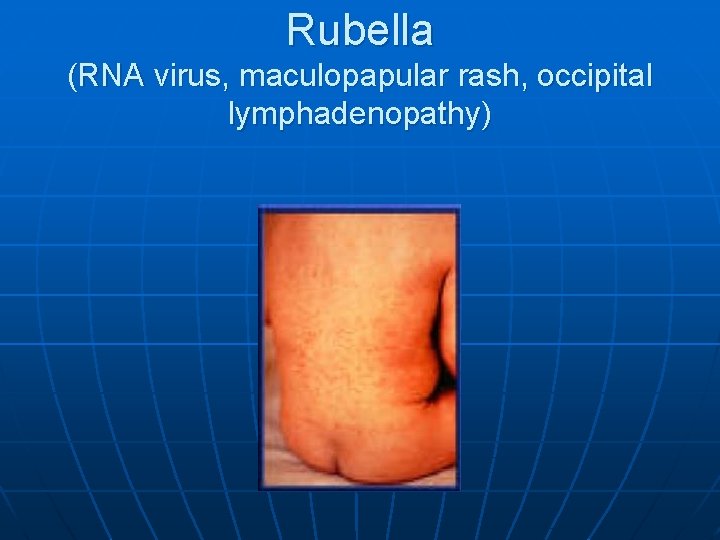
Rubella (RNA virus, maculopapular rash, occipital lymphadenopathy)
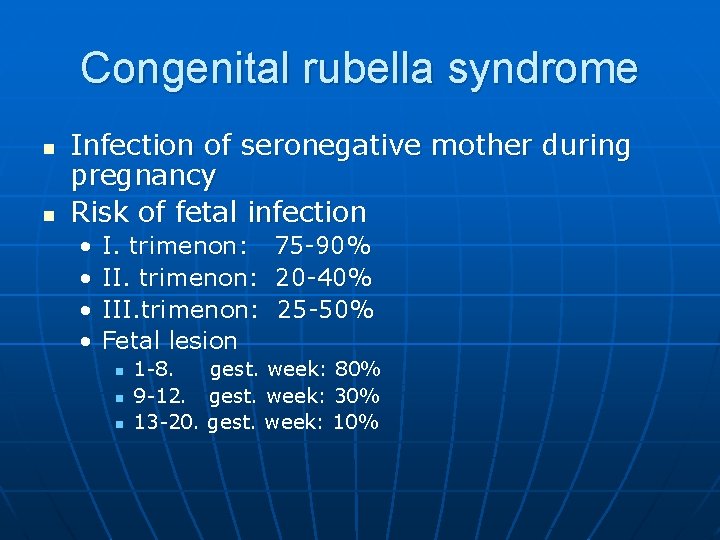
Congenital rubella syndrome n n Infection of seronegative mother during pregnancy Risk of fetal infection • • I. trimenon: 75 -90% II. trimenon: 20 -40% III. trimenon: 25 -50% Fetal lesion n 1 -8. gest. week: 80% 9 -12. gest. week: 30% 13 -20. gest. week: 10%
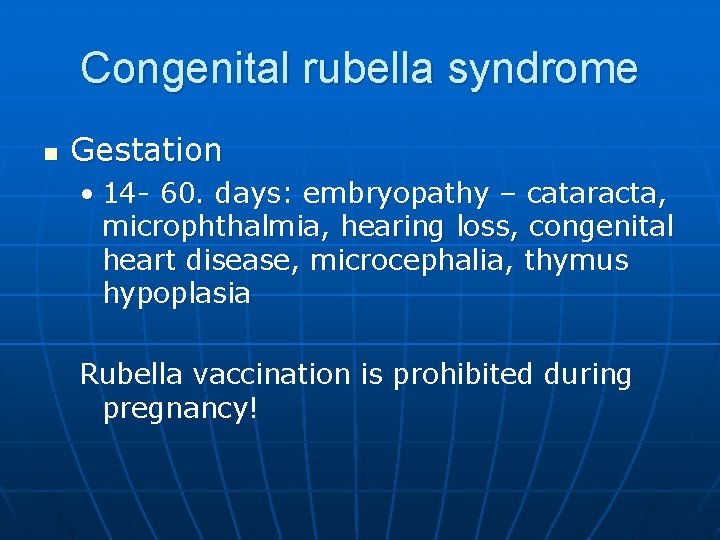
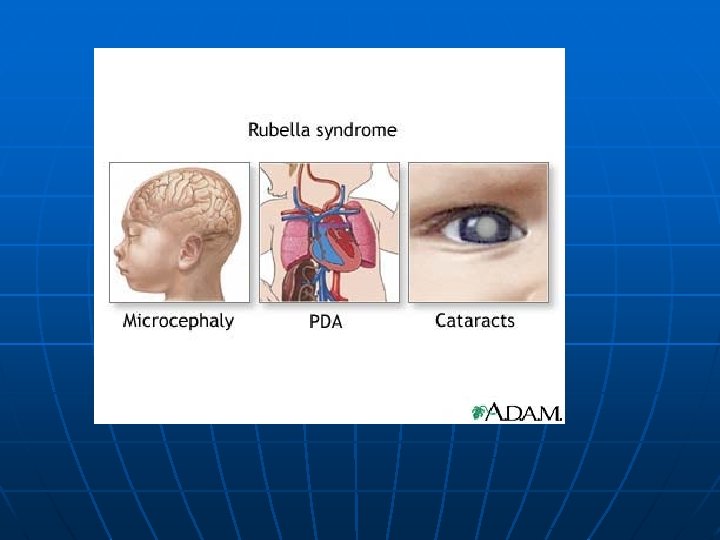
Congenital rubella syndrome n Gestation • 14 - 60. days: embryopathy – cataracta, microphthalmia, hearing loss, congenital heart disease, microcephalia, thymus hypoplasia Rubella vaccination is prohibited during pregnancy!
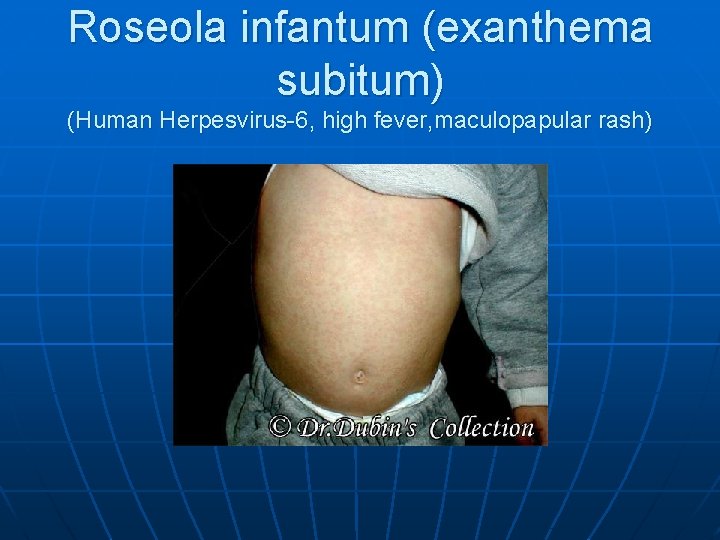
Roseola infantum (exanthema subitum) (Human Herpesvirus-6, high fever, maculopapular rash)

n Fever appears suddenly, lasting 3 - 4 days, followed by a raised rash on the trunk, later spreading to the rest of the body, lasting 1 - 2 days. Most common in infants and preschoolers
n n Incubation 5 - 15 days from date of contact. Suggested treatment : Control fever with acetaminophen.
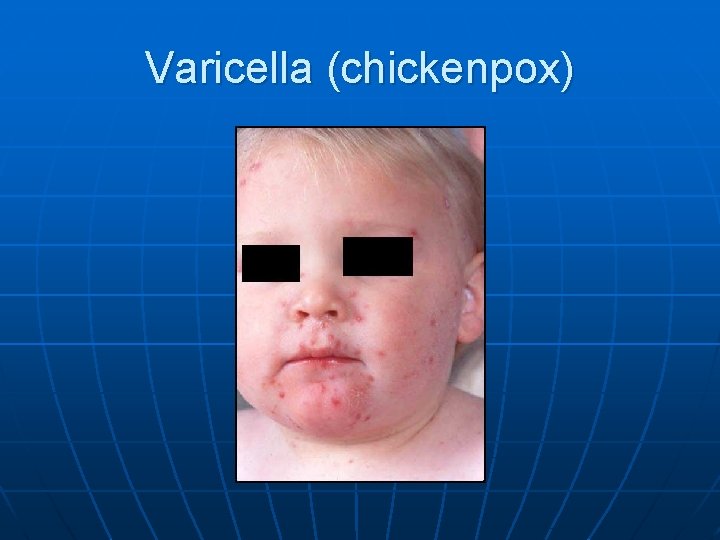
Varicella (chickenpox)
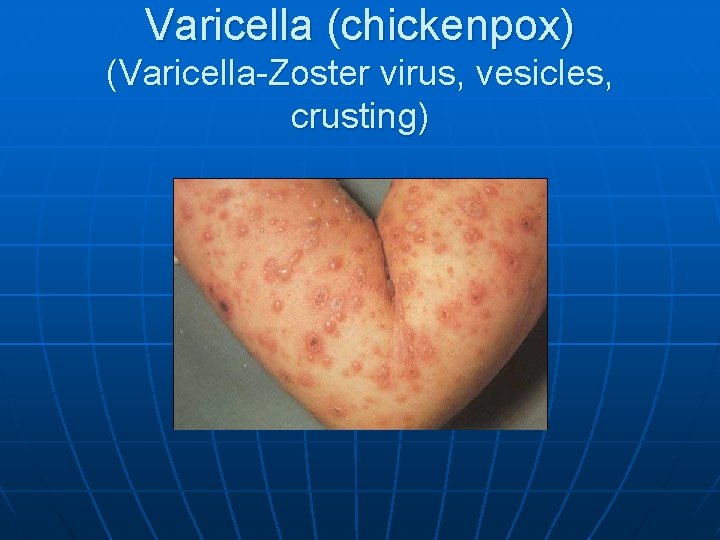
Varicella (chickenpox) (Varicella-Zoster virus, vesicles, crusting)
Chickenpox n n Extremely contagious 14 -16 days incubation, communicability is possible from 10 to 21 days after exposure Rash begins on trunk then spreads allover but sparing palms and soles Vesicles, crusted lesions variable stages
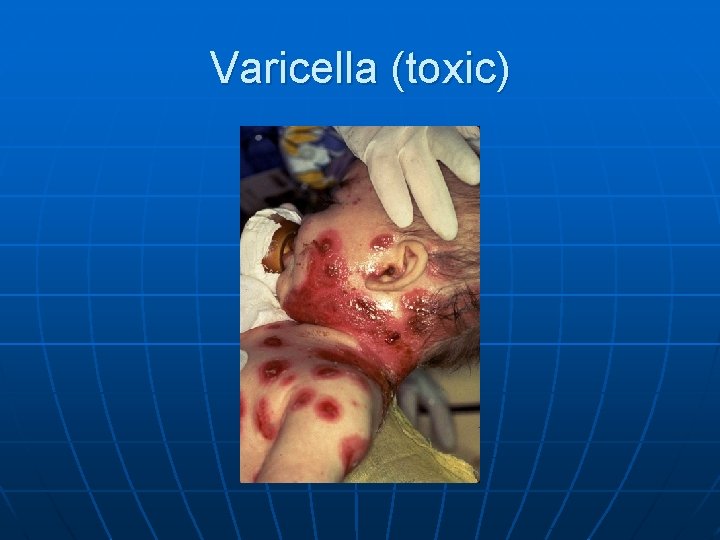
Varicella (toxic)
n n n Serious complications include: Bacterial infections of the skin and soft tissues in children, including Group A streptococcal infections Infection of the lungs (pneumonia) Infection or inflammation of the brain (encephalitis, cerebellar ataxia) Bleeding problems Bloodstream infections (sepsis)
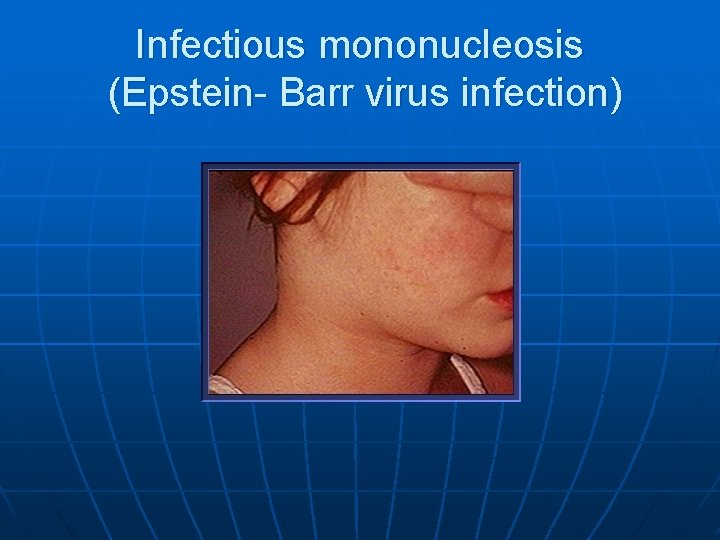
Infectious mononucleosis (Epstein- Barr virus infection)
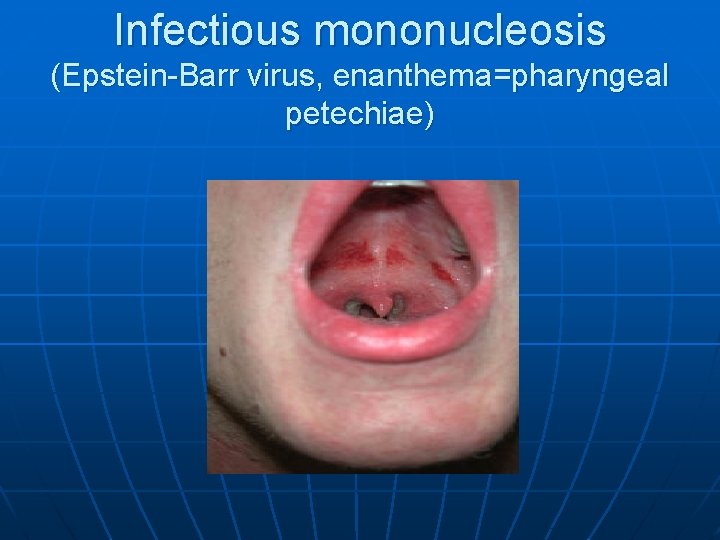
Infectious mononucleosis (Epstein-Barr virus, enanthema=pharyngeal petechiae)
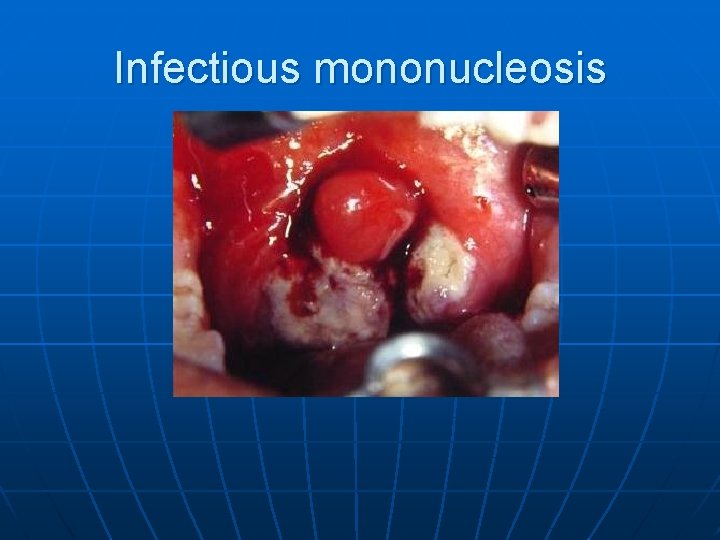
Infectious mononucleosis

Scarlat fever (Group A Streptococcus, erythrogenic toxin, fine papular exanthem, palmar/ plantar peeling, sandpaper rash )
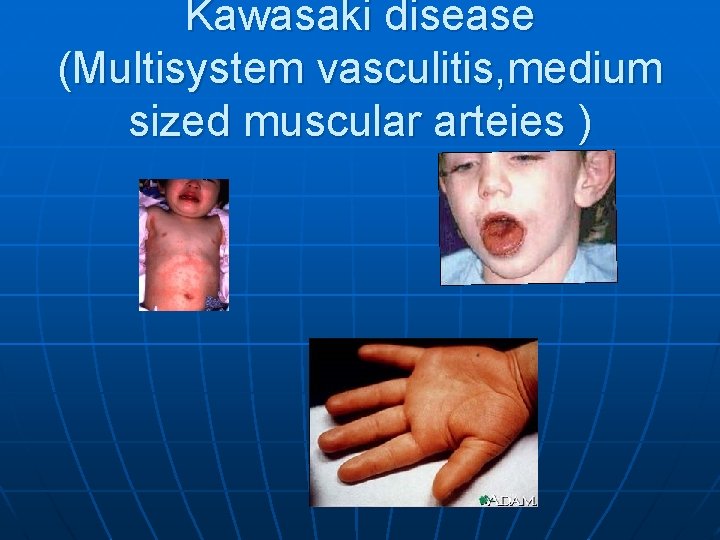
Kawasaki disease (Multisystem vasculitis, medium sized muscular arteies )
n n Kawasaki disease is characterized by fever high grade for 5 days, bilateral nonexudative conjunctivitis, erythema of the lips and oral mucosa, changes in the extremities, rash, and unilateral cervical lymphadenopathy Usually affect children <5 years old
n Coronary artery aneurysms or ectasia develop in ≈15% to 25% of untreated children with the disease and may lead to myocardial infarction (MI), sudden death, or ischemic heart disease.
treatment n n n Aspirin IVIG Corticosteroids
Mumps
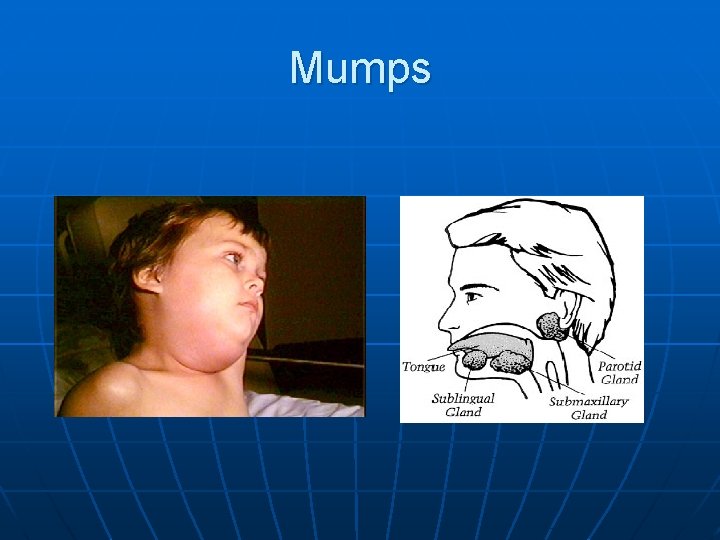
Mumps (Epidemic Parotitis) n n n Paramyxovirus, infected salivary glands mainly parotids Headache, anorexia, malaise, fever Pain on chewing or swallowing acidic liquids Parotid and other salivary glands are tender, tissue edema The oral duct openings of the glands are „pouting” and inflamed
n n Fever, headache and inflammation of the salivary glands causing the cheeks to swell painfully. Sometimes there is no swelling. Method of Spread by sneezing or coughing, or by direct contact with Spread nose and throat secretions
n n n Incubation Usually 16 - 18 days mumps can lead to viral meningitis if the virus moves into the outer layer of the brain. Other complications include swelling of the testicles or ovaries (if the affected person has gone through puberty). It may lead to type 1 dm

Hand foot mouth diseas n n Hand / Foot / Mouth Disease (Coxsackie virus) Symptoms Sudden onset. Fever, sore throat, small greyish blisters in mouth lasting 4 - 6 days. Blisters may also appear on palms, fingers and soles for 7 - 10 days.
n Method of Spread by coughing and sneezing. Direct contact with nose Spread and throat secretions and feces of infected persons. Incubation 3 - 5 days from date of contact.
n n Control: Avoid close contact. Careful disposal of articles soiled with discharge. Careful hand-washing, especially after toileting. Isolation of case and children with fever. Control fever with acetaminophen. Treatment Prevention Promote handwashing and hygiene measures
Influenza Viral Infection n n RNA orthomyxoviruses, types A, B, C Young children: bronchiolitis, pneumonia, myositis Secondary bacterial infection of the respiratory tract Salicylates should be avoided (risk of Reye syndrome) Th: oral oseltamivir (Tamiflu)
n Bronchiolitis is blockage of the small airways in the lungs due to a viral infection. It usually only occurs in children less than two years of age
n n n n Some signs of severe disease include: poor feeding significantly decreased activity history of stopping breathing respiratory rate >70/min presence of nasal flaring and/or grunting severe chest wall recession hoover’s sign
n n most commonly caused by respiratory syncytial virus Treatment: nebulized epinephrine, nas al suction Treatments which the evidence does not support include salbutamol, steroids, antibioti cs, antivirals, continuous positive airway pressure(CPAP), chest physiotherapy, and cool mist Ribavirin is an antiviral drug which does not appear to be effective
- Slides: 42