
Common Pediatric Congenital Heart Diseases Yuttapong Wongswadiwat M
- Slides: 75
Common Pediatric Congenital Heart Diseases Yuttapong Wongswadiwat, M. D. Assistant professor Division of Pediatric Cardiology Department of Pediatrics 6/8/2021 Faculty of Medicine, Khon Kaen University 1
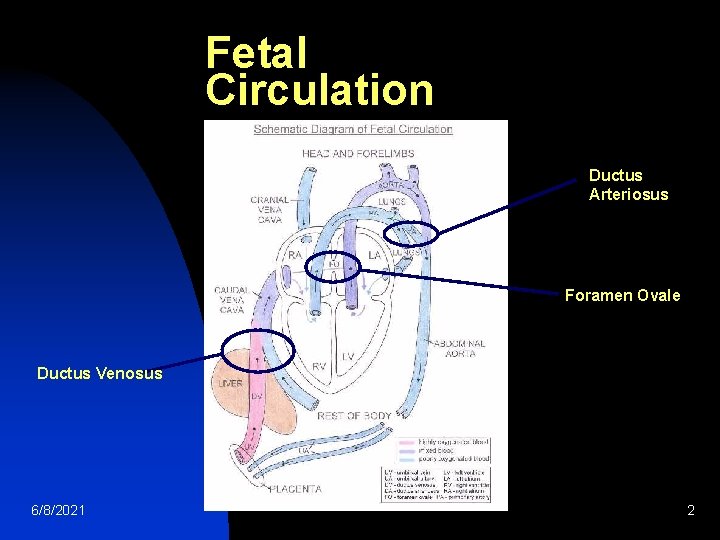
Fetal Circulation Ductus Arteriosus Foramen Ovale Ductus Venosus 6/8/2021 2
Three Shunts of Fetal Circulation n Ductus Arteriosus u u n Ductus Venosus u u u n Connects umbilical vein to IVC Flow regulated via sphincter Conducts highly oxygenated blood Foramen Ovale u 6/8/2021 Protects lungs against circulatory overload Allows RV to strengthen High pulmonary vascular resistance, low pulmonary blood flow Carries moderately saturated blood Shunts highly oxygenated blood from RA to LA 3
Circulatory Changes at Birth n Aeration of Lungs at Birth Decreased pulmonary vascular resistance secondary to lung expansion u Increase in pulmonary blood flowraising LA pressure to higher than that of the IVC u Thinning of walls of PA secondary to stretch as lungs increase in size with first few breaths u 6/8/2021 4
Changes Associated with First Breath n n 6/8/2021 Alveoli open Pressure in pulmonary tissues decrease Pressure in R. heart decreases Pressure in the L. heart increases as blood returns from highly vascularized pulmonary tissue to the LA 5
Fate of the shunts… n n n 6/8/2021 Foramen Ovale: u Closes at birth due to decreased flow from placenta and IVC u Pulmonary venous return causes pressure in LA to be higher than that in RA Ductus Arteriosus: u Due to decreased pulmonary vascular resistance, PA pressure falls below systemic pressure and blood flow through DA is diminished u Closure mediated by bradykinin u Prostaglandin E 2 may reopen DA Umbilical Vessels u Constrict at birth and are then tied and cut 6
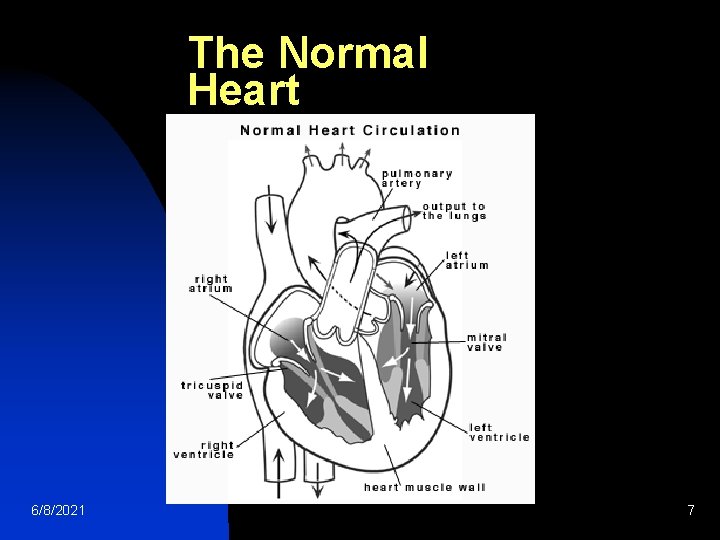
The Normal Heart 6/8/2021 7
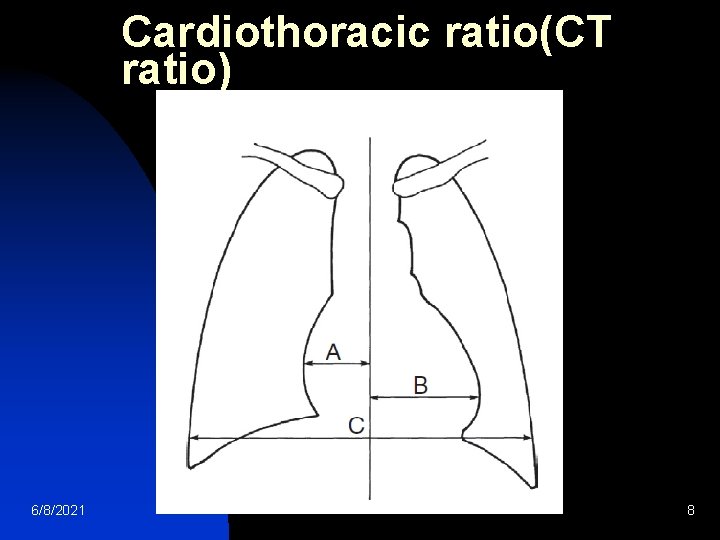
Cardiothoracic ratio(CT ratio) 6/8/2021 8
6/8/2021 9
6/8/2021 10
6/8/2021 11
สาเหตของโรคหวใจพการแตกำเนด n ไมทราบสาเหตทแนนอน 90 % สงแวดลอม 5% Genetic-environment interaction n u u u n การตดเชอ u n Maternal DM Maternal lupus Maternal medications Rubella พนธกรรม u u 6/8/2021 Chromosome เชน Down syndrome Heritable Syndrome เชน Williams syndrome 12
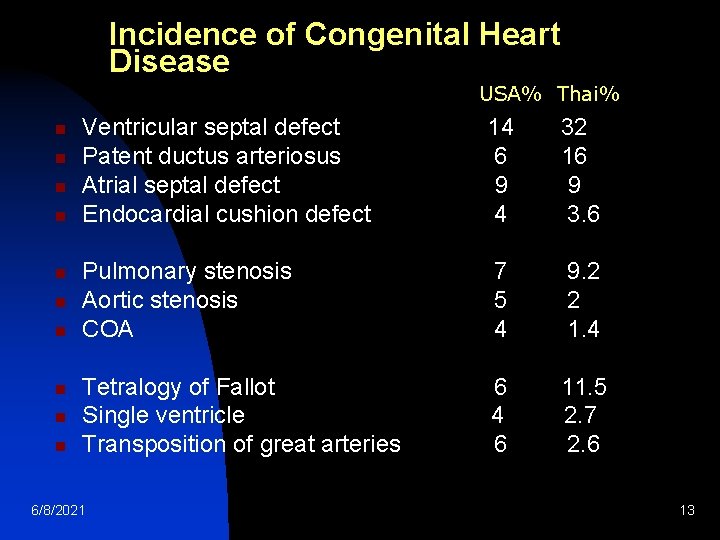
Incidence of Congenital Heart Disease USA% Thai% n n n n n Ventricular septal defect Patent ductus arteriosus Atrial septal defect Endocardial cushion defect 14 6 9 4 32 16 9 3. 6 Pulmonary stenosis Aortic stenosis COA 7 5 4 9. 2 2 1. 4 Tetralogy of Fallot Single ventricle Transposition of great arteries 6 4 6 11. 5 2. 7 2. 6 6/8/2021 13
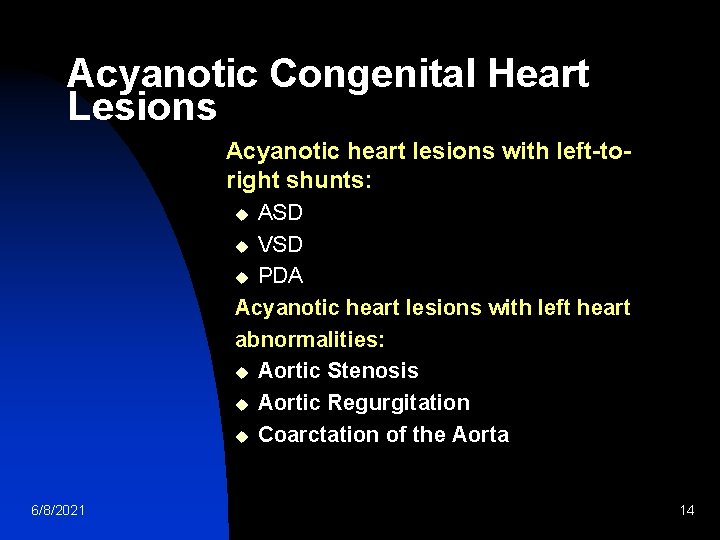
Acyanotic Congenital Heart Lesions Acyanotic heart lesions with left-toright shunts: ASD u VSD u PDA Acyanotic heart lesions with left heart abnormalities: u Aortic Stenosis u Aortic Regurgitation u Coarctation of the Aorta u 6/8/2021 14
Pathophysiology n n 6/8/2021 Left to right shunt Outflow tract obstruction 15
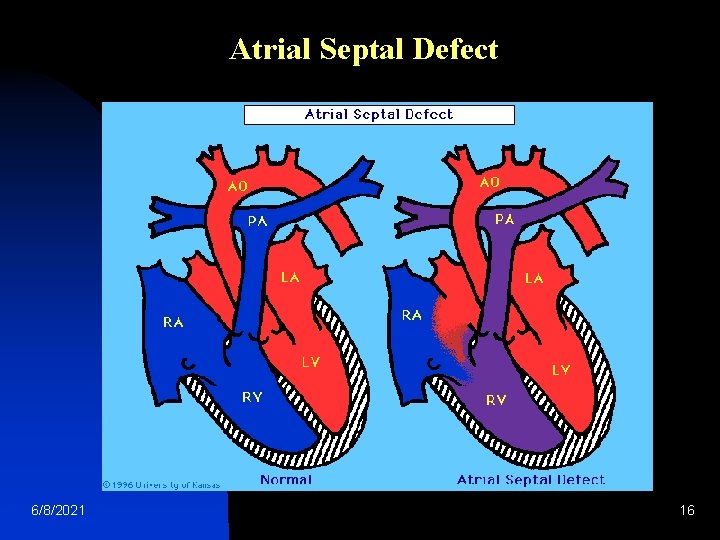
Atrial Septal Defect 6/8/2021 16
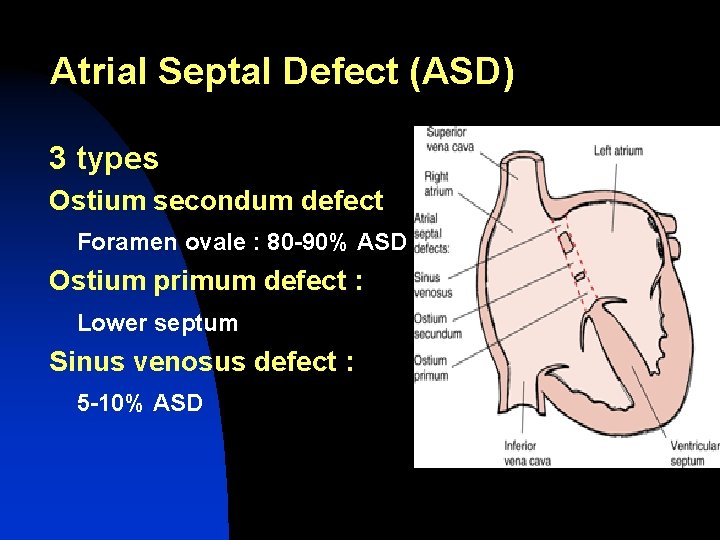
Atrial Septal Defect (ASD) 3 types Ostium secondum defect Foramen ovale : 80 -90% ASD Ostium primum defect : Lower septum Sinus venosus defect : 5 -10% ASD 17
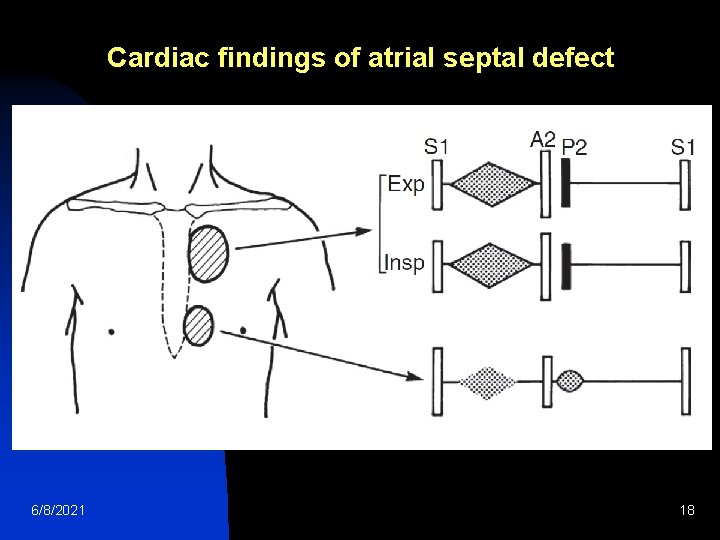
Cardiac findings of atrial septal defect 6/8/2021 18
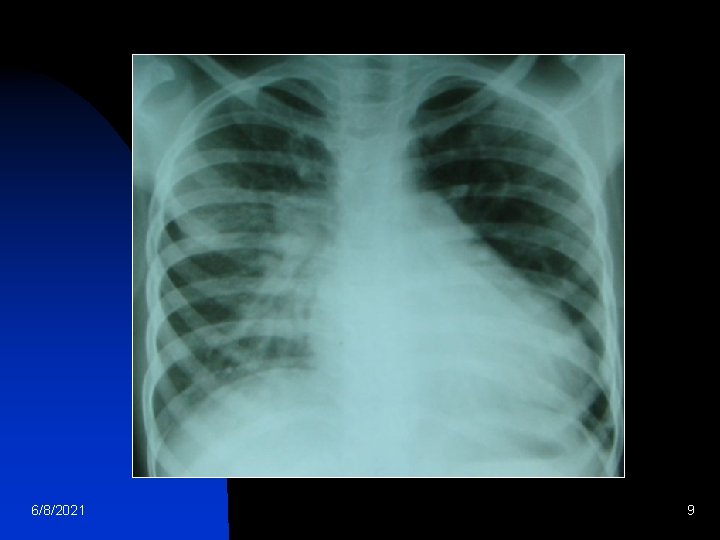
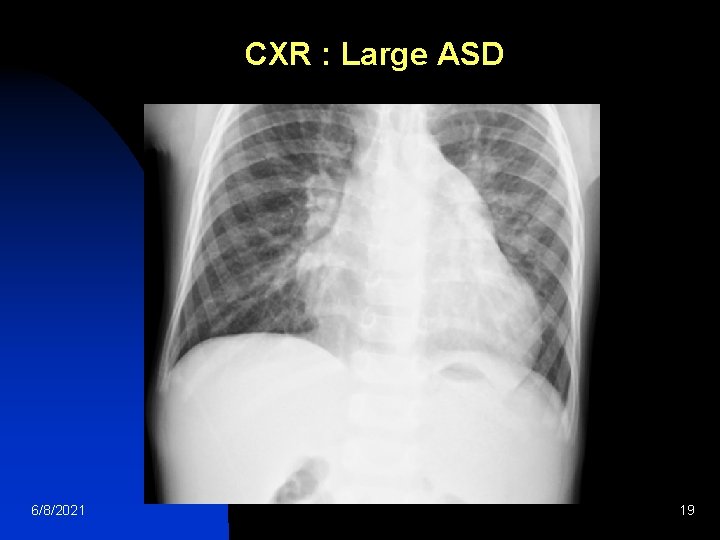
CXR : Large ASD 6/8/2021 19
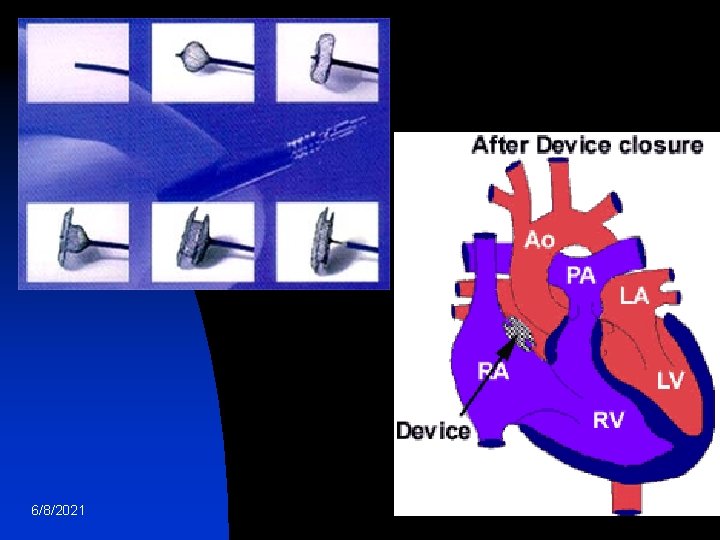
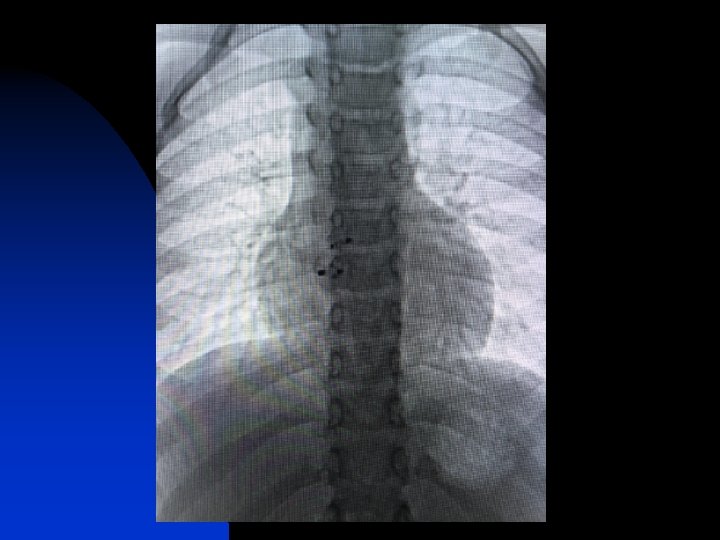
Atrial Septal Defects n n n 6/8/2021 The decision to close and ASD is based on the size of the shunt and the presence or absence of symptoms. Closure is indicated in patients who are symptomatic or who have systemic embolization. Smaller defects may be closed using trans-catheter techniques, thus avoiding sternotomy and bypass 20
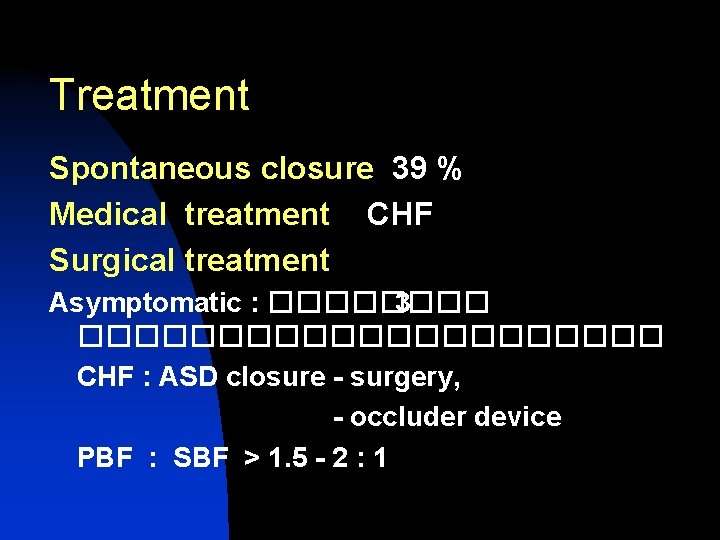
Treatment Spontaneous closure 39 % Medical treatment - CHF Surgical treatment Asymptomatic : ���� 3 ����������� CHF : ASD closure - surgery, - occluder device PBF : SBF > 1. 5 - 2 : 1 21
6/8/2021 22
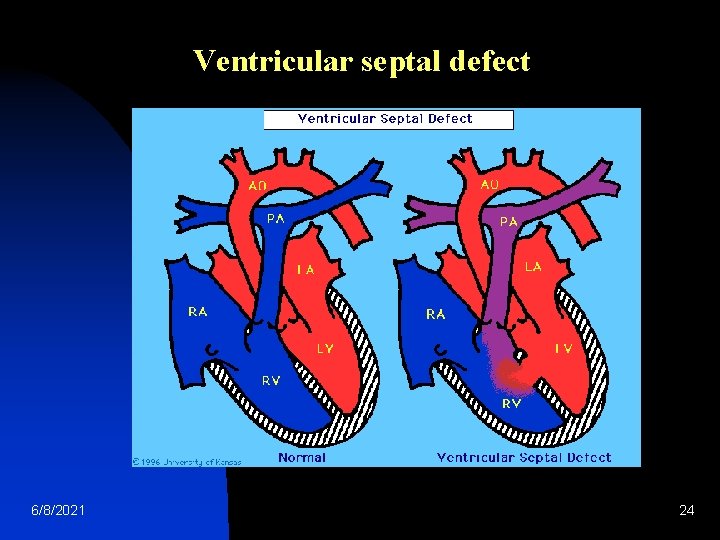
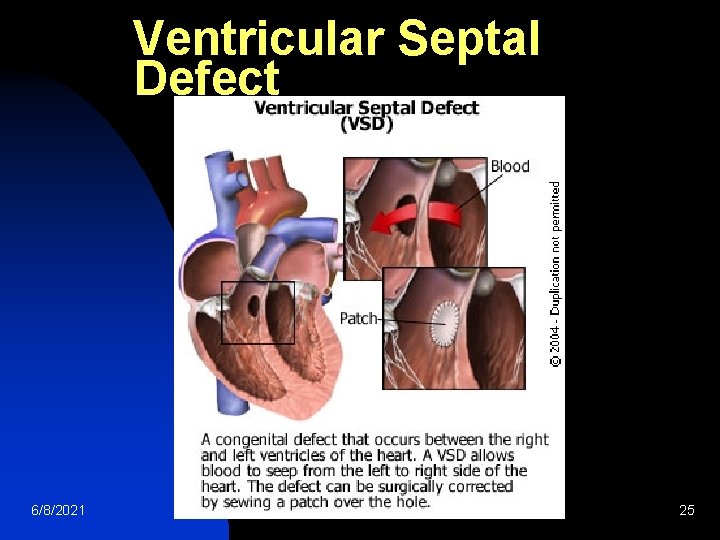
Ventricular septal defect 6/8/2021 24
Ventricular Septal Defect 6/8/2021 25
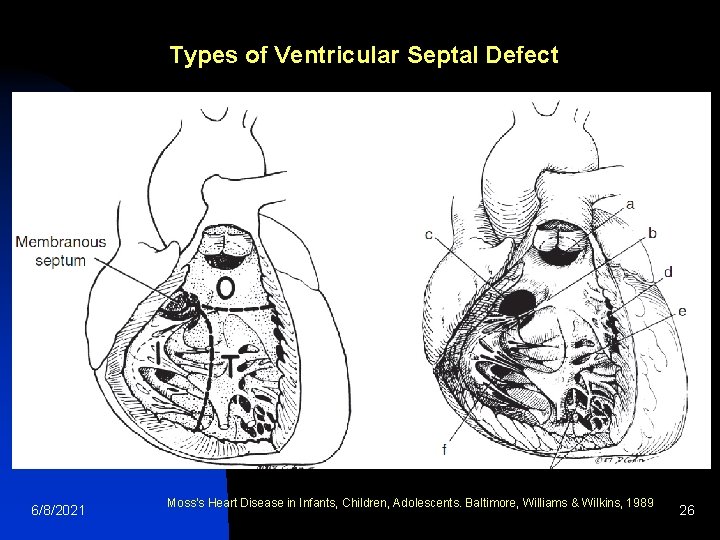
Types of Ventricular Septal Defect 6/8/2021 Moss’s Heart Disease in Infants, Children, Adolescents. Baltimore, Williams & Wilkins, 1989 26
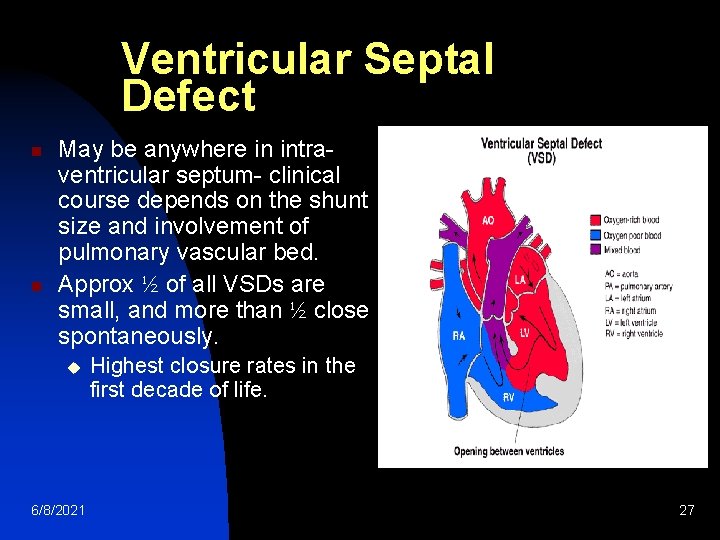
Ventricular Septal Defect n n May be anywhere in intraventricular septum- clinical course depends on the shunt size and involvement of pulmonary vascular bed. Approx ½ of all VSDs are small, and more than ½ close spontaneously. u 6/8/2021 Highest closure rates in the first decade of life. 27
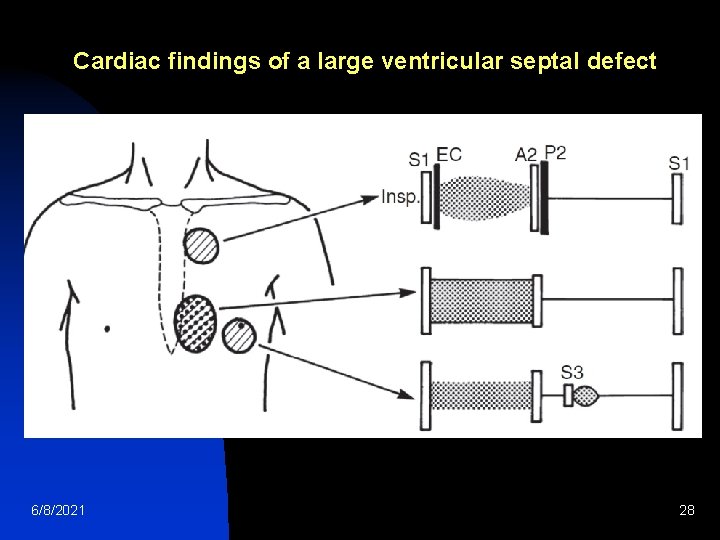
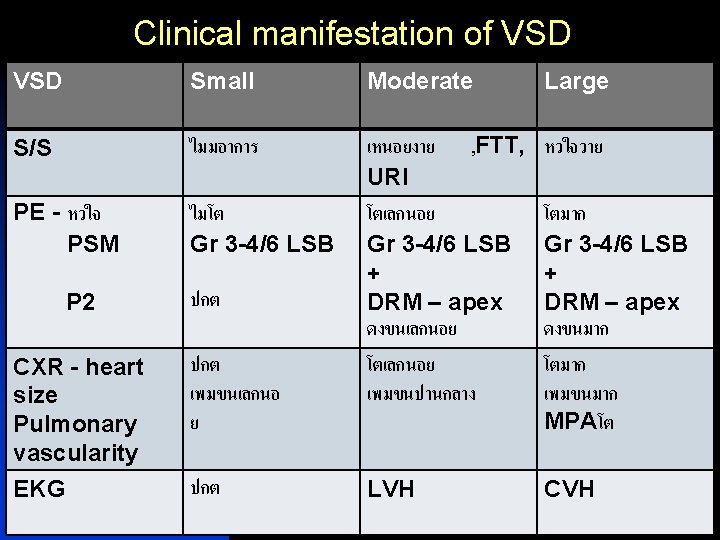
Cardiac findings of a large ventricular septal defect 6/8/2021 28
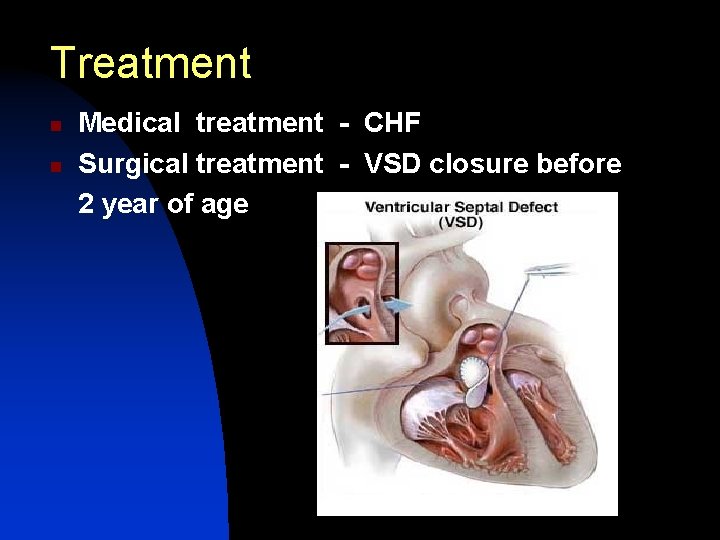
Treatment n n Medical treatment - CHF Surgical treatment - VSD closure before 2 year of age 30
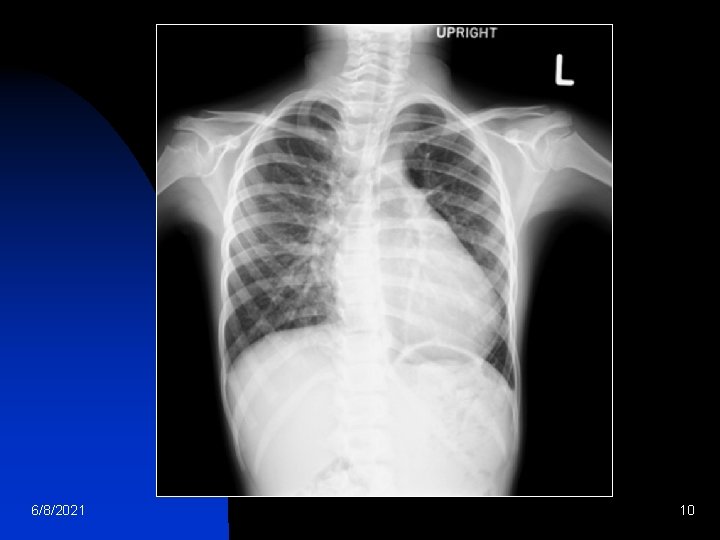
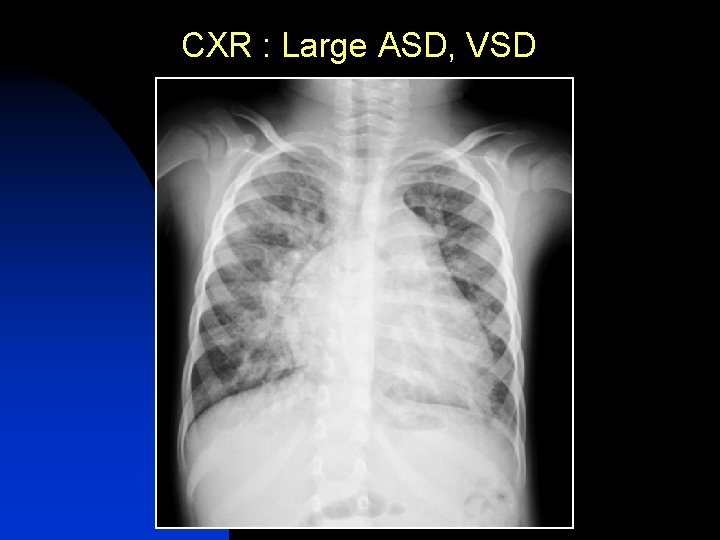
CXR : Large ASD, VSD 31
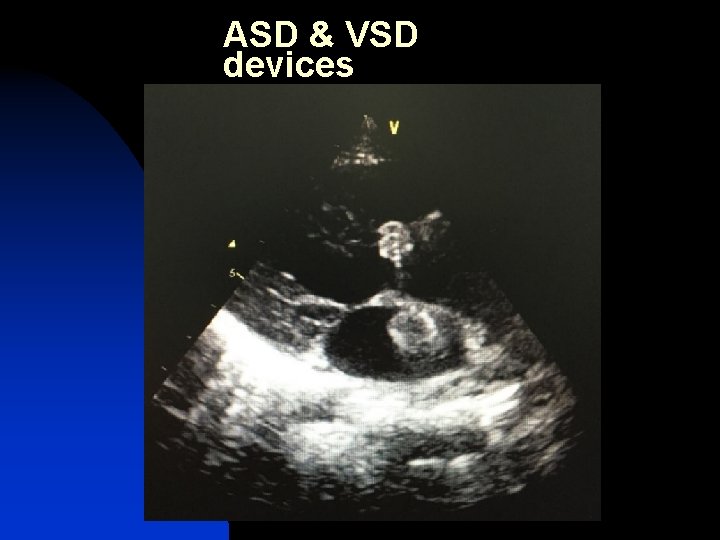
ASD & VSD devices
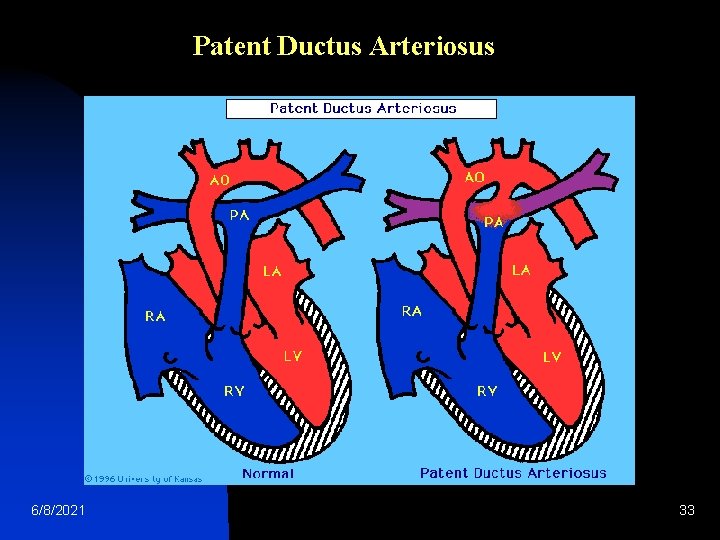
Patent Ductus Arteriosus 6/8/2021 33
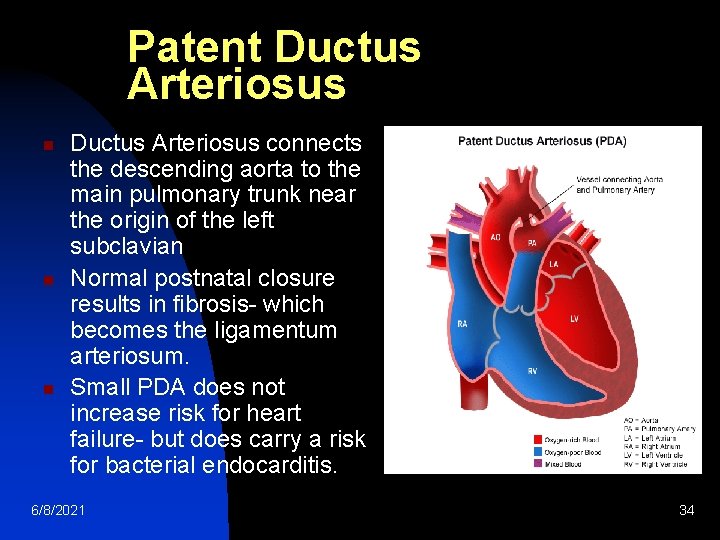
Patent Ductus Arteriosus n n n Ductus Arteriosus connects the descending aorta to the main pulmonary trunk near the origin of the left subclavian Normal postnatal closure results in fibrosis- which becomes the ligamentum arteriosum. Small PDA does not increase risk for heart failure- but does carry a risk for bacterial endocarditis. 6/8/2021 34
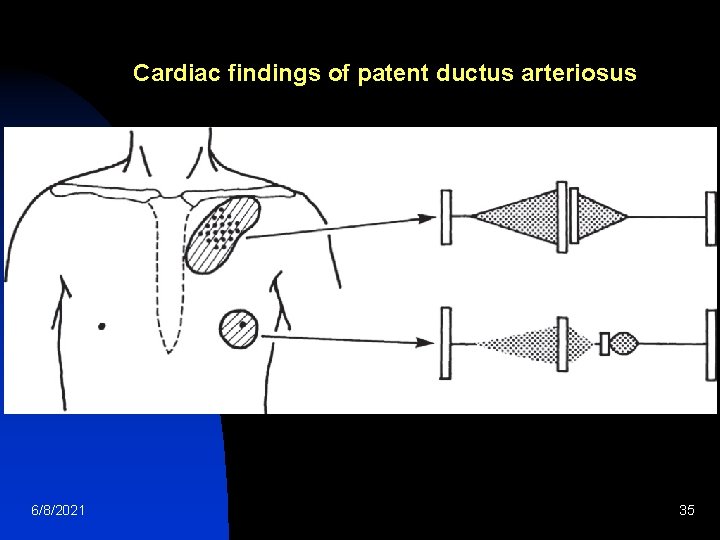
Cardiac findings of patent ductus arteriosus 6/8/2021 35
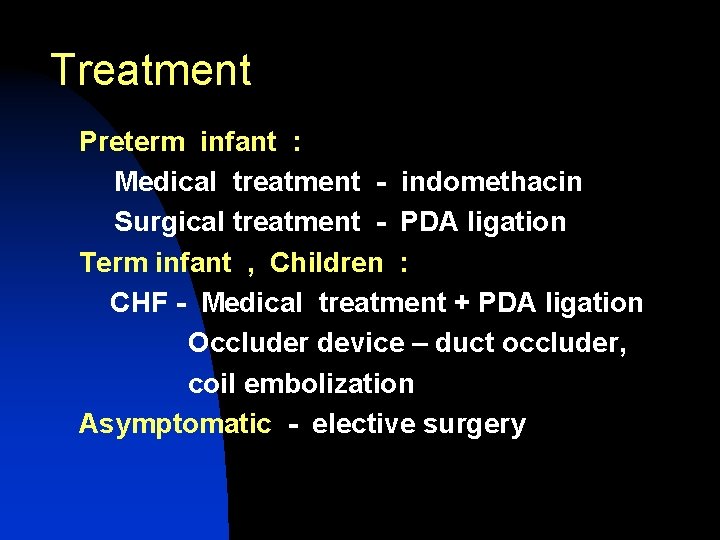
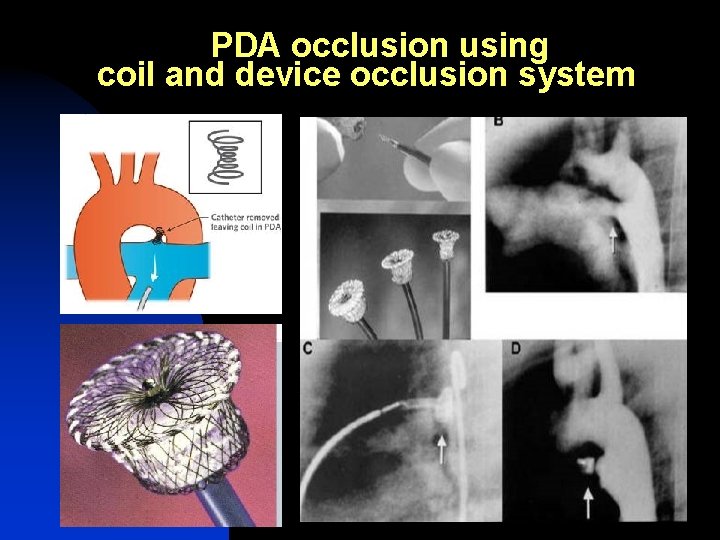
Treatment Preterm infant : Medical treatment - indomethacin Surgical treatment - PDA ligation Term infant , Children : CHF - Medical treatment + PDA ligation Occluder device – duct occluder, coil embolization Asymptomatic - elective surgery 37
PDA occlusion using coil and device occlusion system
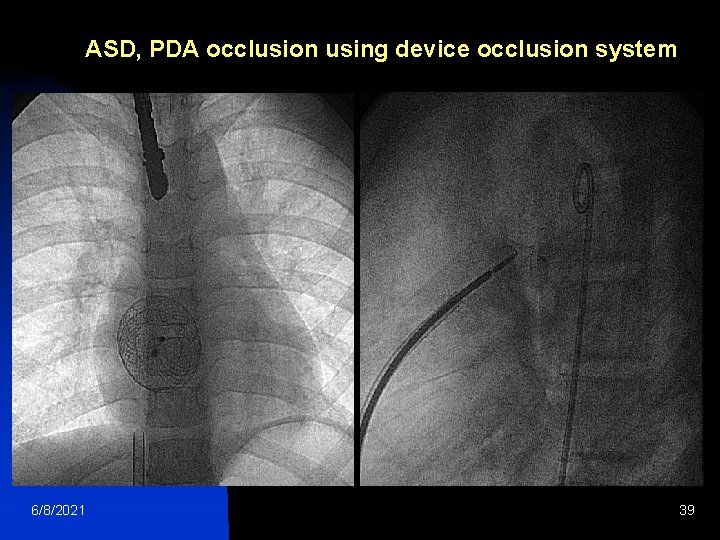
ASD, PDA occlusion using device occlusion system 6/8/2021 39
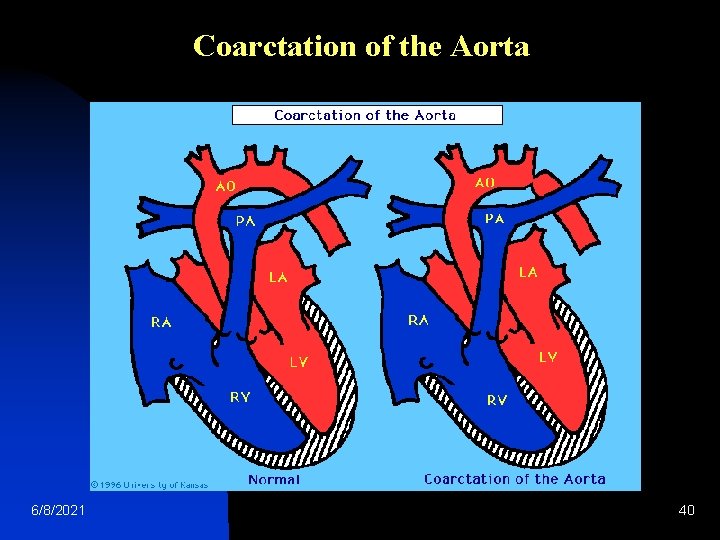
Coarctation of the Aorta 6/8/2021 40
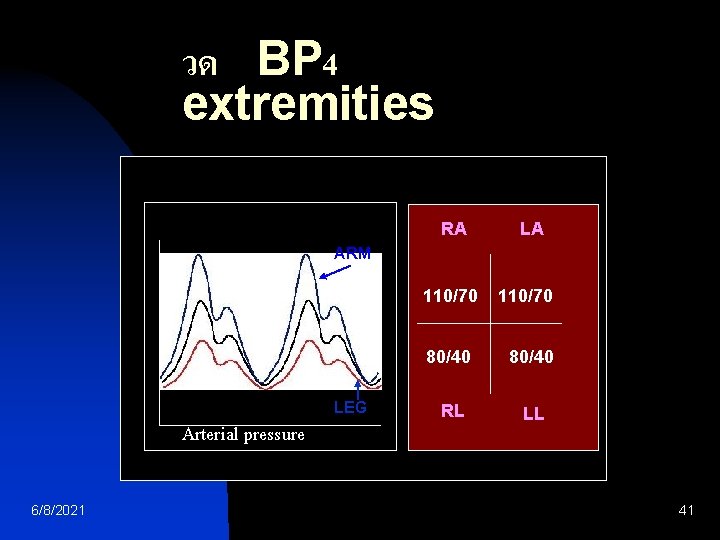
วด BP 4 extremities RA LA ARM 110/70 Arterial pressure 6/8/2021 LEG 110/70 80/40 RL LL 41
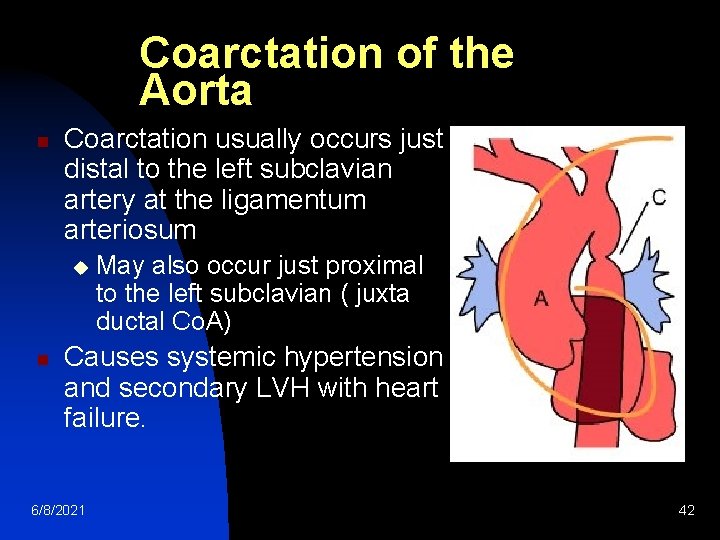
Coarctation of the Aorta n Coarctation usually occurs just distal to the left subclavian artery at the ligamentum arteriosum u n May also occur just proximal to the left subclavian ( juxta ductal Co. A) Causes systemic hypertension and secondary LVH with heart failure. 6/8/2021 42
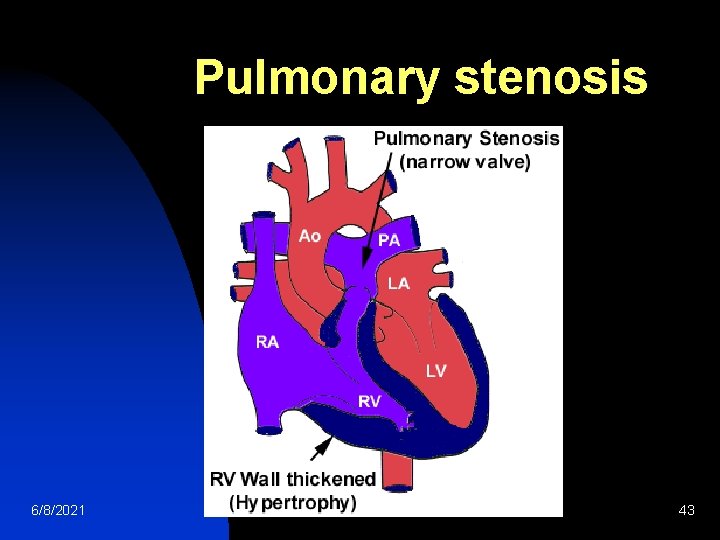
Pulmonary stenosis 6/8/2021 43
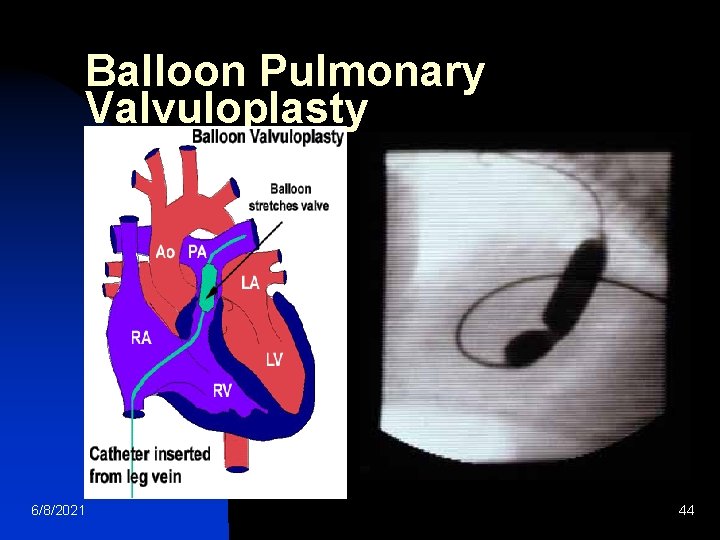
Balloon Pulmonary Valvuloplasty 6/8/2021 44
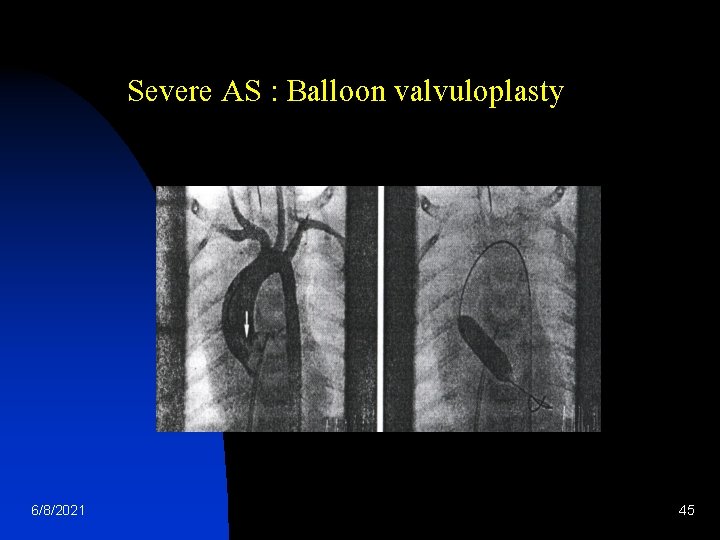
Severe AS : Balloon valvuloplasty 6/8/2021 45
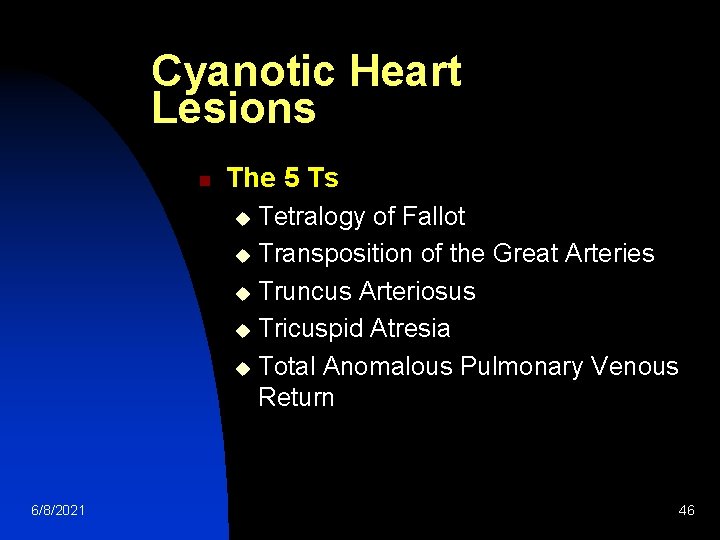
Cyanotic Heart Lesions n The 5 Ts Tetralogy of Fallot u Transposition of the Great Arteries u Truncus Arteriosus u Tricuspid Atresia u Total Anomalous Pulmonary Venous Return u 6/8/2021 46
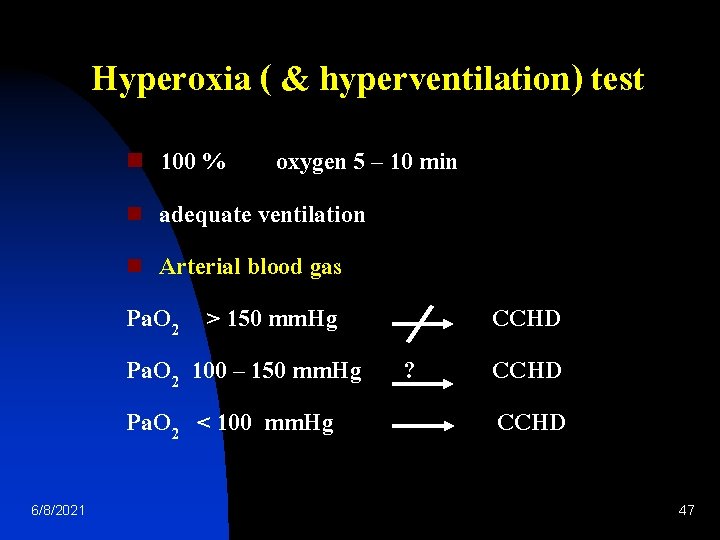
Hyperoxia ( & hyperventilation) test 100 % oxygen 5 – 10 min n adequate ventilation n Arterial blood gas Pa. O 2 > 150 mm. Hg CCHD Pa. O 2 100 – 150 mm. Hg ? CCHD Pa. O 2 < 100 mm. Hg CCHD n 6/8/2021 47
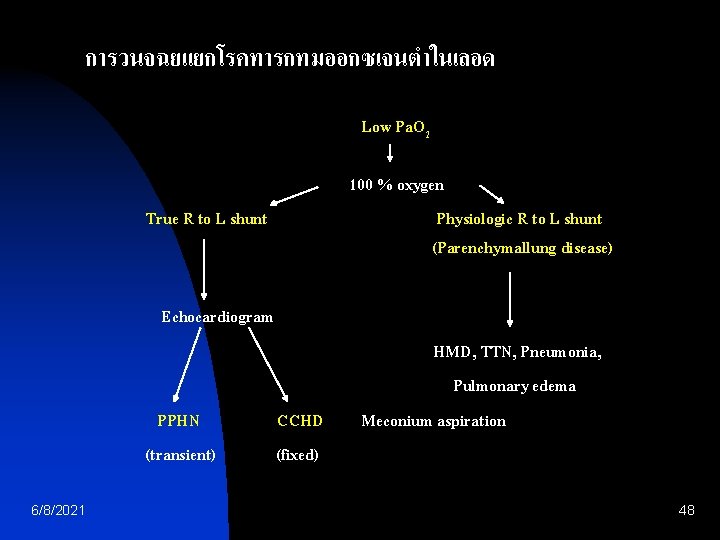
การวนจฉยแยกโรคทารกทมออกซเจนตำในเลอด Low Pa. O 2 100 % oxygen Physiologic R to L shunt (Parenchymallung disease) True R to L shunt Echocardiogram PPHN (transient) 6/8/2021 CCHD (fixed) HMD, TTN, Pneumonia, Pulmonary edema Meconium aspiration 48
Pathophysiology n n n 6/8/2021 Right ventricular outflow tract obstruction with right to left shunt Parallel circulation Common chamber 49
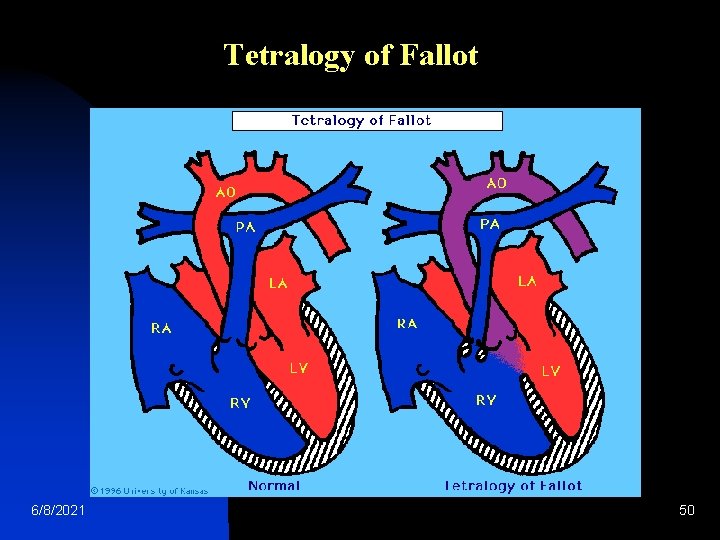
Tetralogy of Fallot 6/8/2021 50
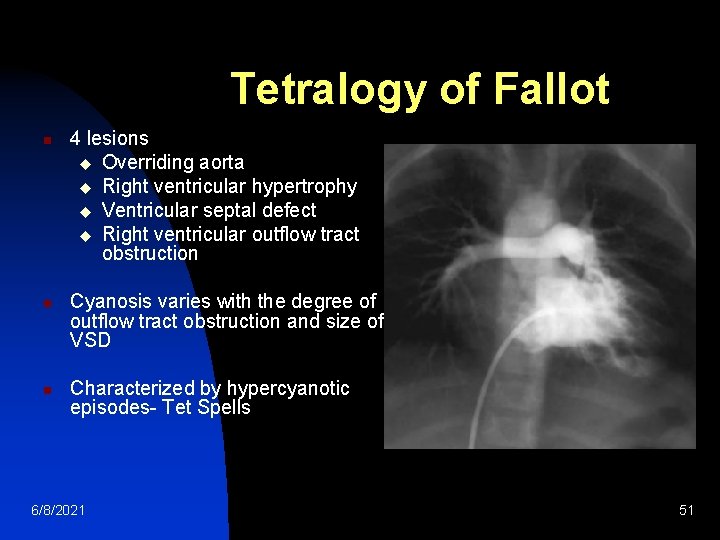
Tetralogy of Fallot n n n 4 lesions u Overriding aorta u Right ventricular hypertrophy u Ventricular septal defect u Right ventricular outflow tract obstruction Cyanosis varies with the degree of outflow tract obstruction and size of VSD Characterized by hypercyanotic episodes- Tet Spells 6/8/2021 51
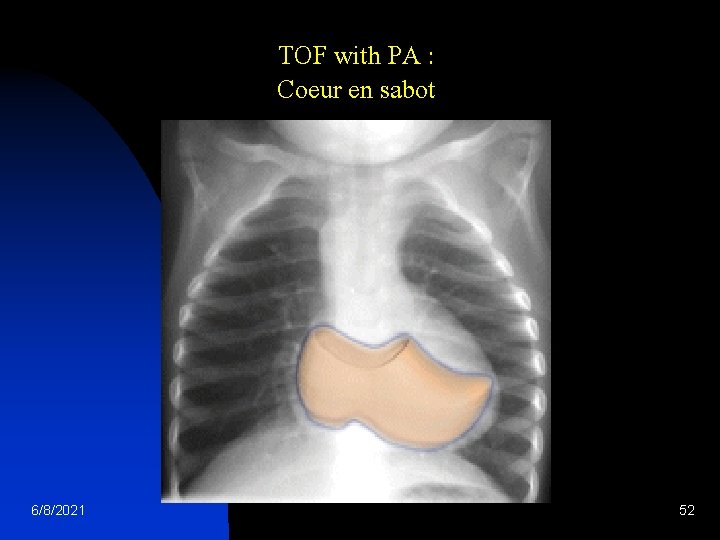
TOF with PA : Coeur en sabot 6/8/2021 52
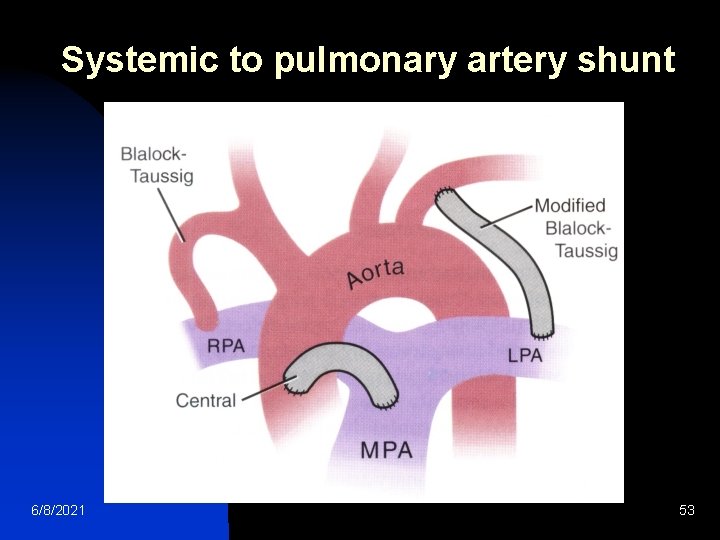
Systemic to pulmonary artery shunt 6/8/2021 53
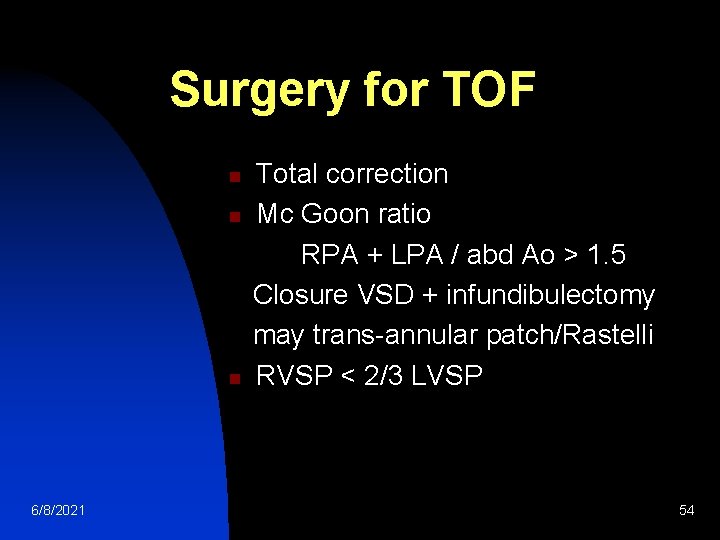
Surgery for TOF n n n 6/8/2021 Total correction Mc Goon ratio RPA + LPA / abd Ao > 1. 5 Closure VSD + infundibulectomy may trans-annular patch/Rastelli RVSP < 2/3 LVSP 54
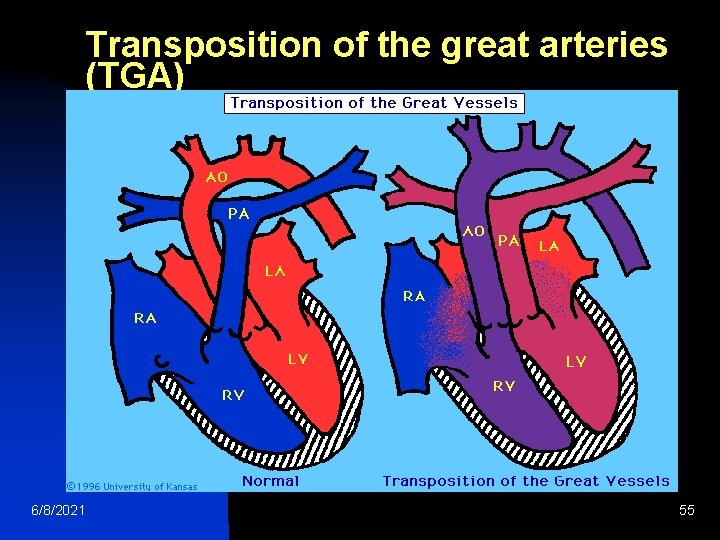
Transposition of the great arteries (TGA) 6/8/2021 55
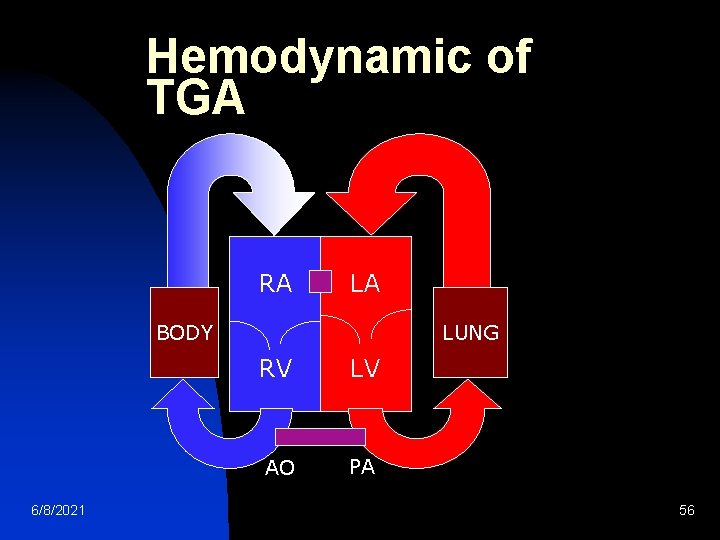
Hemodynamic of TGA RA LA BODY 6/8/2021 LUNG RV LV AO PA 56
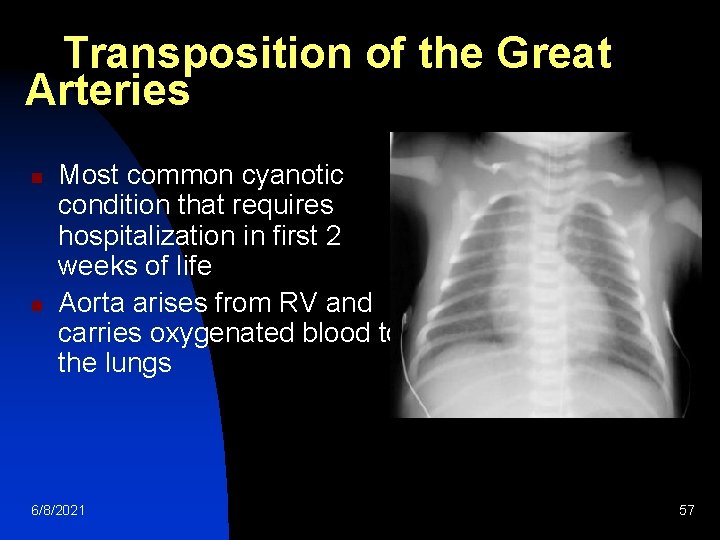
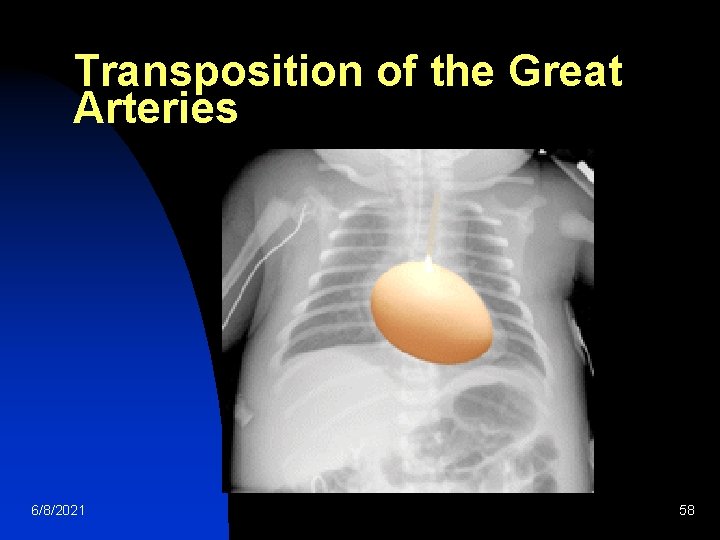
Transposition of the Great Arteries n n Most common cyanotic condition that requires hospitalization in first 2 weeks of life Aorta arises from RV and carries oxygenated blood to the lungs 6/8/2021 57
Transposition of the Great Arteries 6/8/2021 58
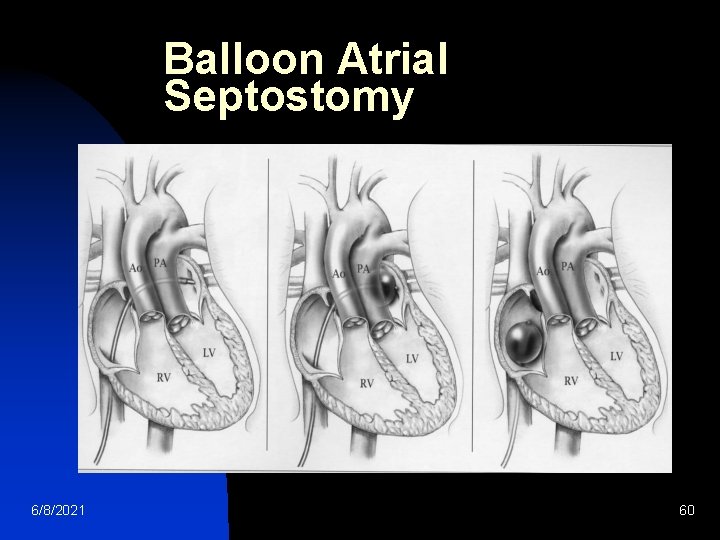
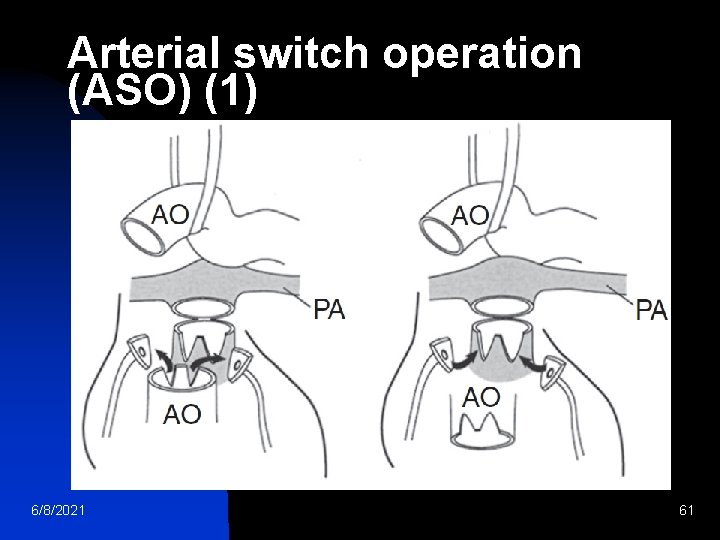
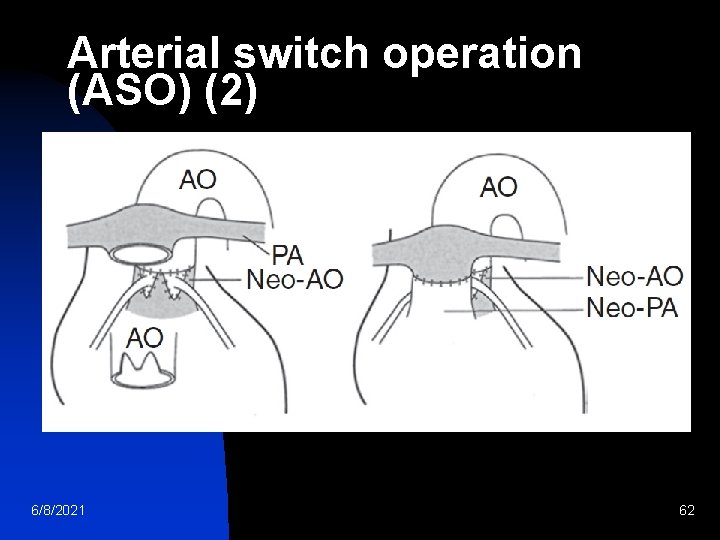
Transposition of the Great Arteries n 6/8/2021 Survival depends on allowing bloodflow from the 2 outflow tracts to mix. u Prostaglandins augment ductal flow u Inter-atrial septum may be opened with balloon septostomy u Surgical correction requires removal of aorta and pulmonary artery from their origins and reattached to the correct ventricles 59
Balloon Atrial Septostomy 6/8/2021 60
Arterial switch operation (ASO) (1) 6/8/2021 61
Arterial switch operation (ASO) (2) 6/8/2021 62
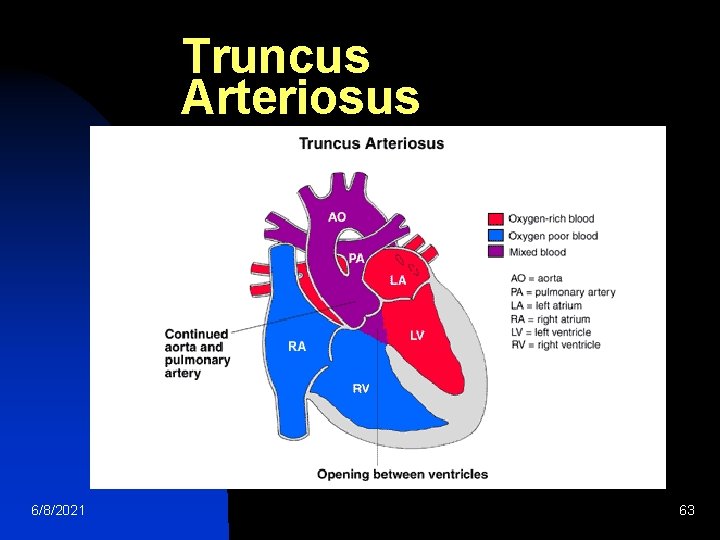
Truncus Arteriosus 6/8/2021 63
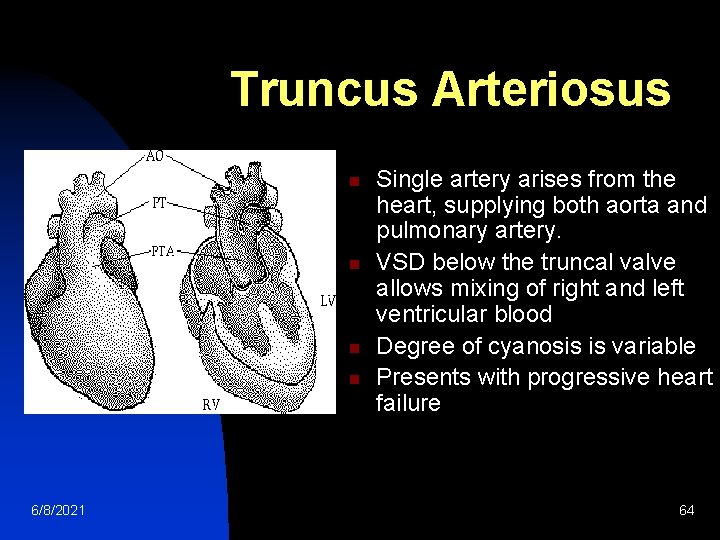
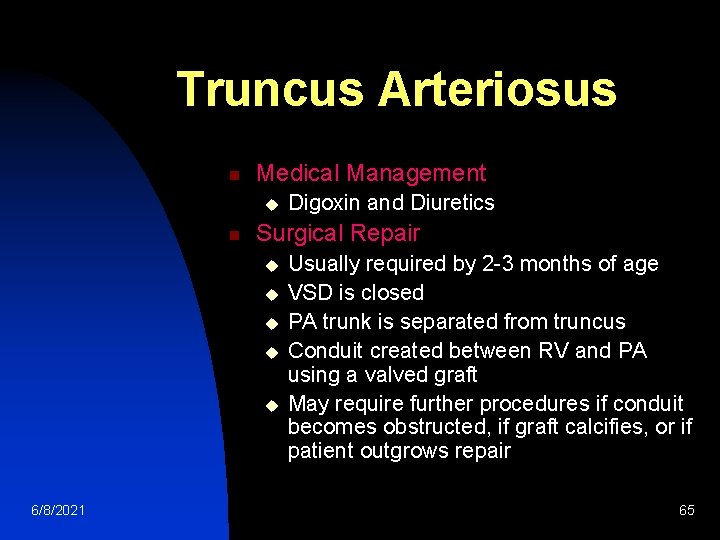
Truncus Arteriosus n n 6/8/2021 Single artery arises from the heart, supplying both aorta and pulmonary artery. VSD below the truncal valve allows mixing of right and left ventricular blood Degree of cyanosis is variable Presents with progressive heart failure 64
Truncus Arteriosus n Medical Management u n Surgical Repair u u u 6/8/2021 Digoxin and Diuretics Usually required by 2 -3 months of age VSD is closed PA trunk is separated from truncus Conduit created between RV and PA using a valved graft May require further procedures if conduit becomes obstructed, if graft calcifies, or if patient outgrows repair 65
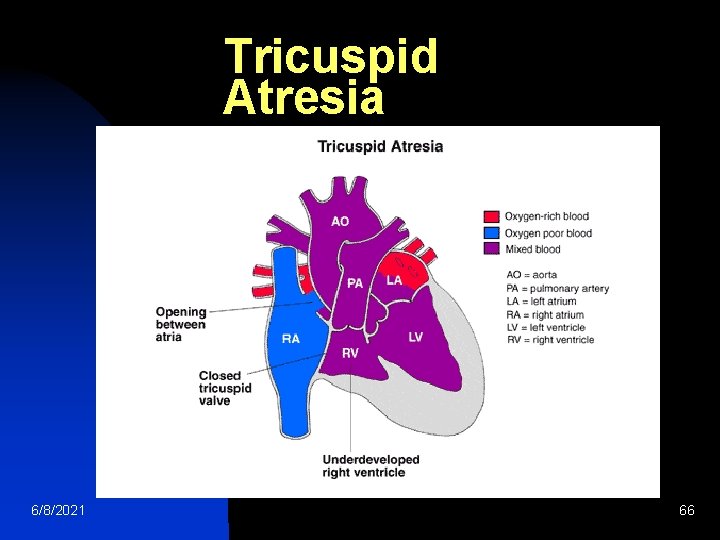
Tricuspid Atresia 6/8/2021 66
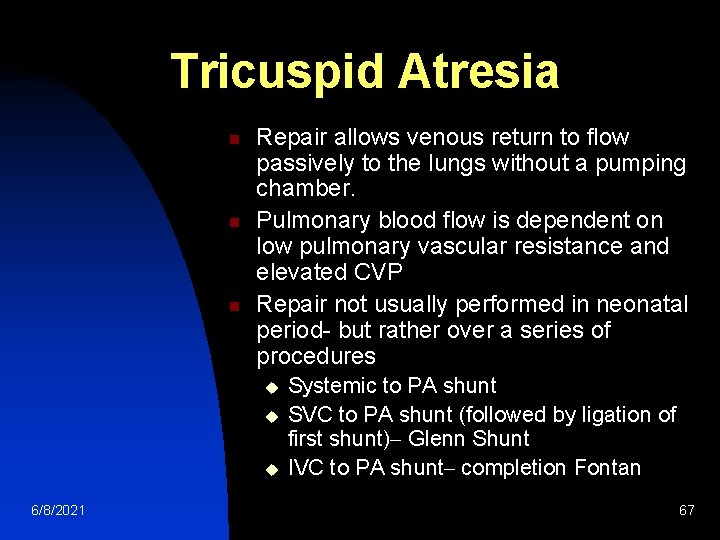
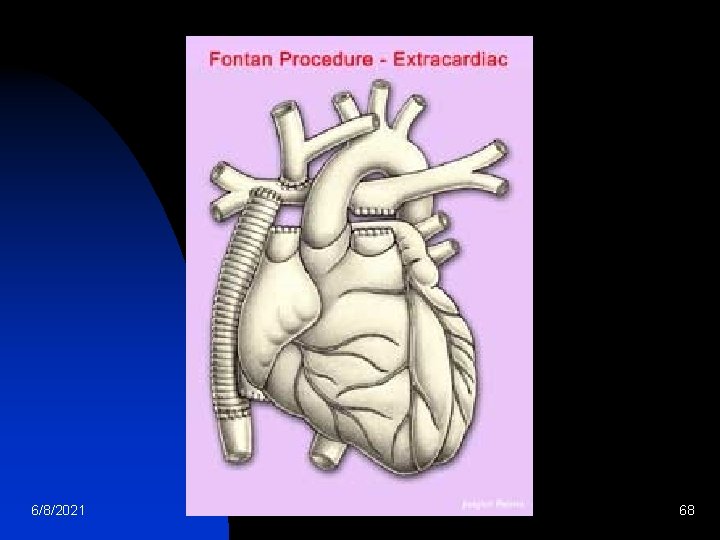
Tricuspid Atresia n n n Repair allows venous return to flow passively to the lungs without a pumping chamber. Pulmonary blood flow is dependent on low pulmonary vascular resistance and elevated CVP Repair not usually performed in neonatal period- but rather over a series of procedures u u u 6/8/2021 Systemic to PA shunt SVC to PA shunt (followed by ligation of first shunt)– Glenn Shunt IVC to PA shunt– completion Fontan 67
6/8/2021 68
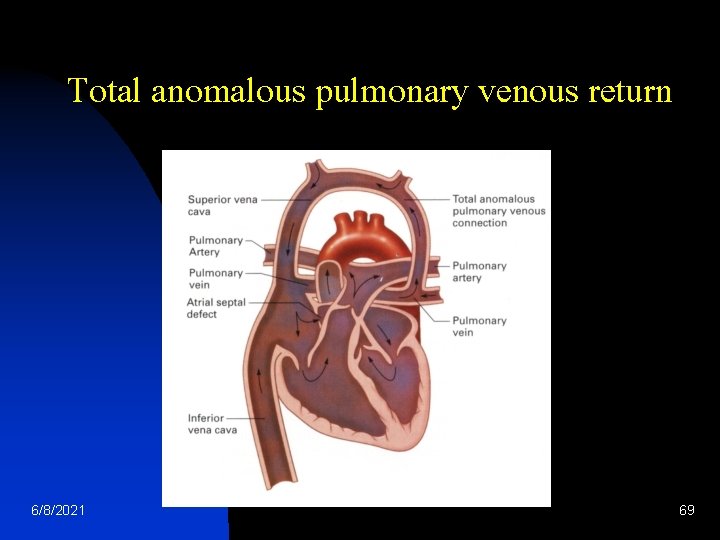
Total anomalous pulmonary venous return 6/8/2021 69
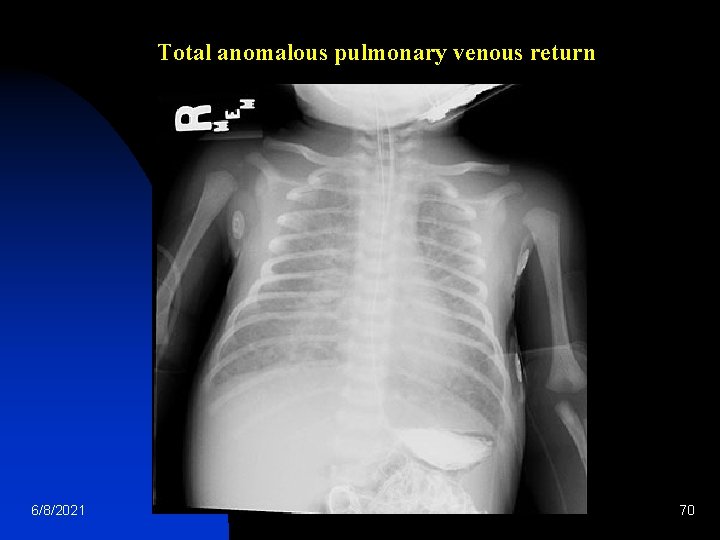
Total anomalous pulmonary venous return 6/8/2021 70
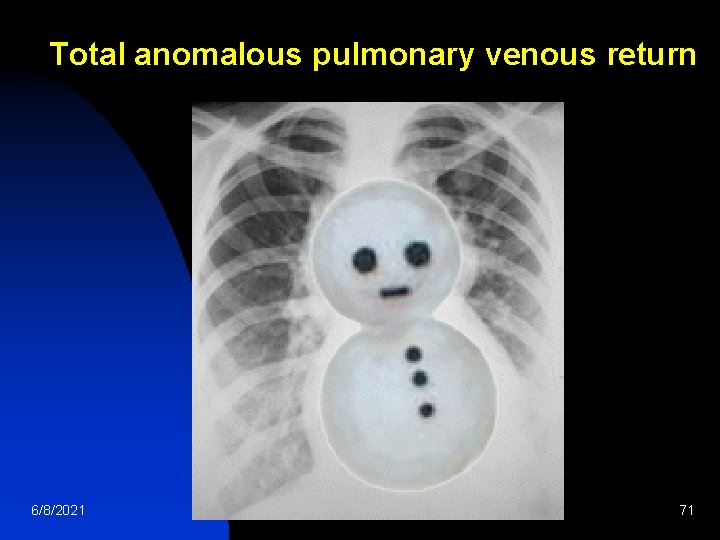
Total anomalous pulmonary venous return 6/8/2021 71
Total Anomalous Venous Return n 6/8/2021 The only accepted treatment is expeditious surgery. Surgical connection is made between pulmonary venous confluence and the LA. Connection to systemic venous circulation is ligated. 72
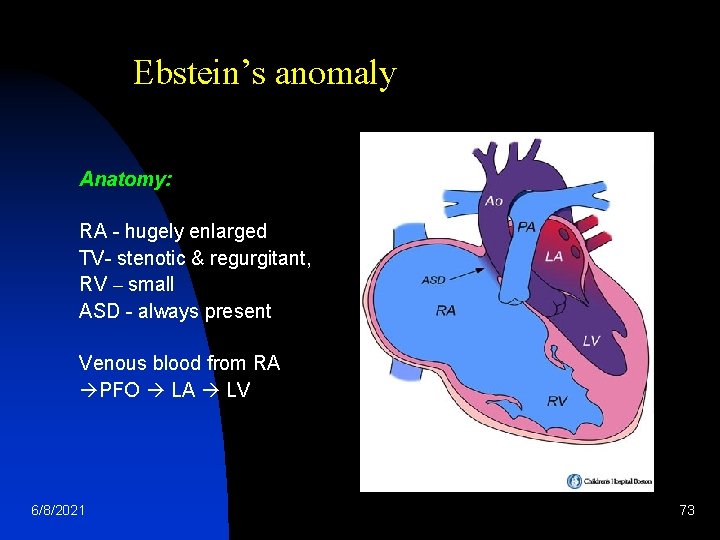
Ebstein’s anomaly Anatomy: RA - hugely enlarged TV- stenotic & regurgitant, RV – small ASD - always present Venous blood from RA PFO LA LV 6/8/2021 73
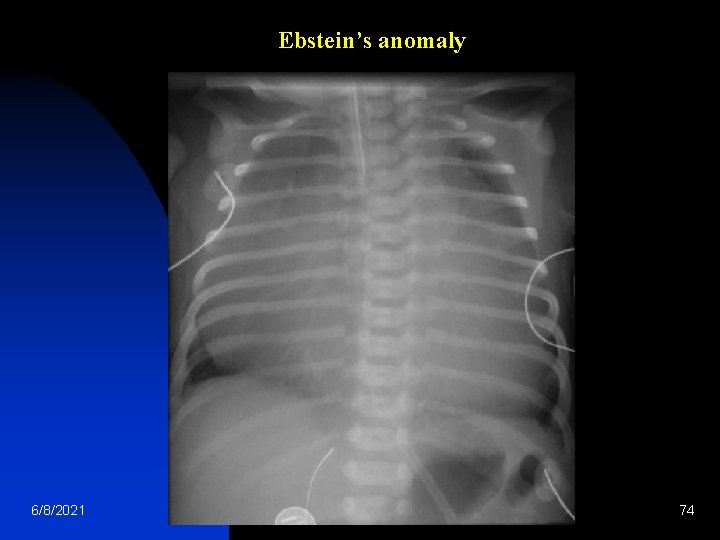
Ebstein’s anomaly 6/8/2021 74
Recommended pediatric cardiology book 6/8/2021 75