
Common Morality Deciding What To Do Bernard Gert
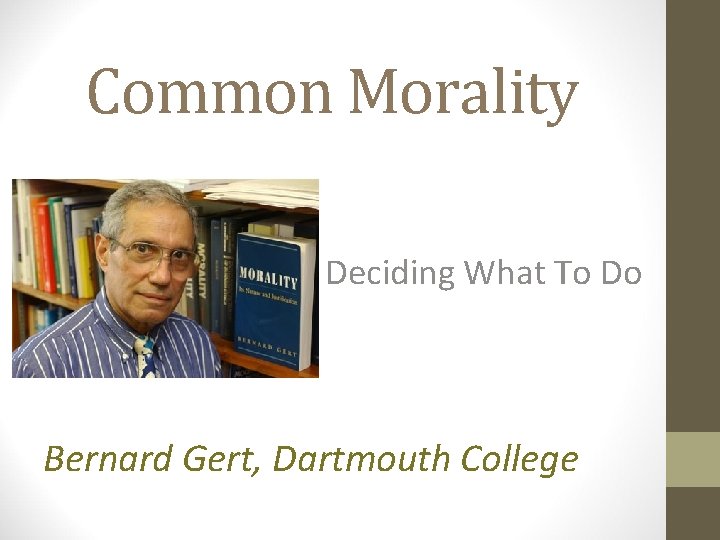
Common Morality Deciding What To Do Bernard Gert, Dartmouth College
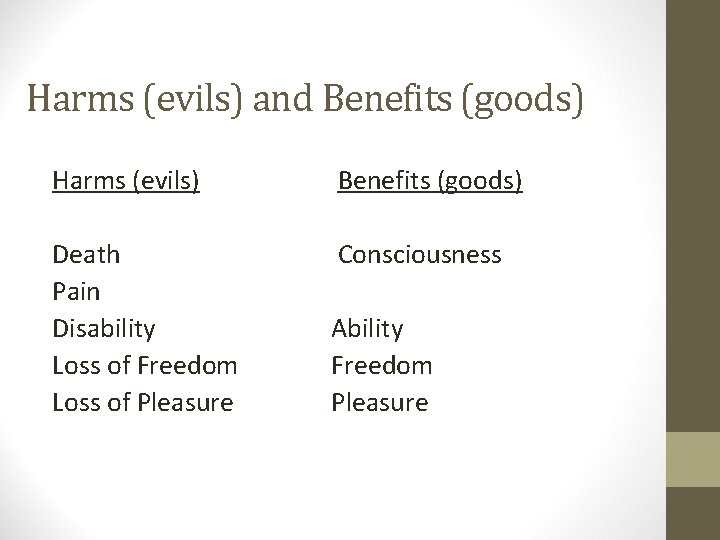
Harms (evils) and Benefits (goods) Harms (evils) Benefits (goods) Death Pain Disability Loss of Freedom Loss of Pleasure Consciousness Ability Freedom Pleasure
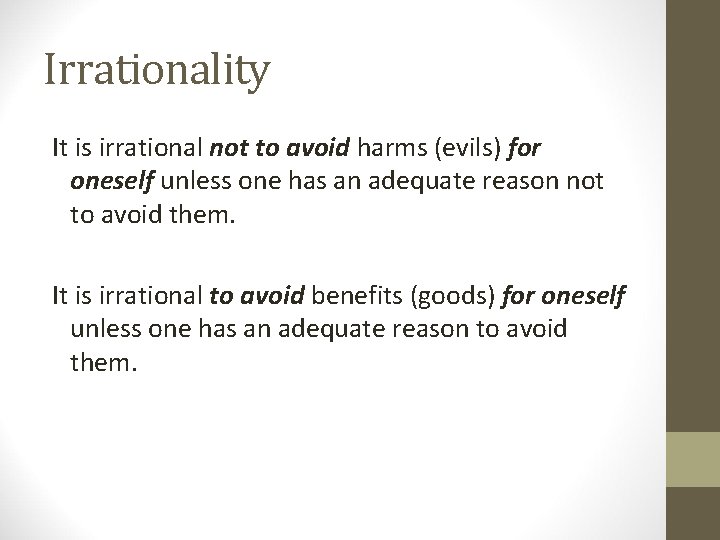
Irrationality It is irrational not to avoid harms (evils) for oneself unless one has an adequate reason not to avoid them. It is irrational to avoid benefits (goods) for oneself unless one has an adequate reason to avoid them.

Reasons and Adequate Reasons A reason for acting is a belief that one’s action will avoid a harm or gain a benefit for anyone. An adequate reason for an action is a belief that the harm avoided or benefit gained is adequate to make that otherwise irrational action rational.
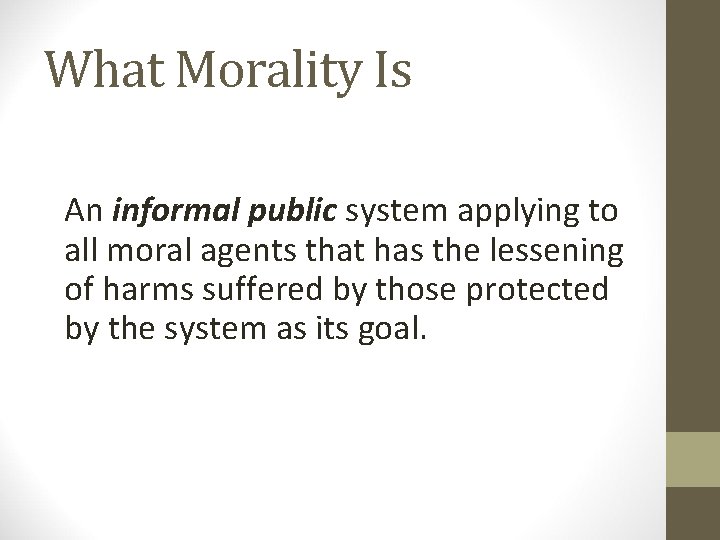
What Morality Is An informal public system applying to all moral agents that has the lessening of harms suffered by those protected by the system as its goal.

Moral Rules 1. Do not kill. 2. Do not cause pain. 3. Do not disable. 4. Don’t deprive of freedom. 5. Don’t deprive of pleasure. 6. Do not deceive. 7. Keep your promises. 8. Do not cheat. 9. Obey the law. 10. Do your duty.
Moral Rules Require Impartiality To be justified in violating a moral rule one must be willing for everyone to know that they can break the rule in the same circumstances.
Moral Ideals 1. Prevent harms. 2. Relieve harms. 3. Discourage breaking the moral rules. 4. Encourage following the moral rules. 5. Encourage following the moral ideals.
Moral Virtues and Vices Moral Virtues Kind Truthful Trustworthy Fair Conscientious Law-abiding Moral Vices Cruel Callous Deceitful Untrustworthy Unfair Irresponsible Indifference to law
Causes of Moral Disagreement Differences concerning: 1. the ranking of harms and benefits. 2. the interpretation of the moral rules. 3. who is fully protected by morality. 4. human nature.
Summary • Even though there is a common morality, it does not provide a unique correct answer to every moral question. Thus in addition to a common morality we need a procedure that all can accept that can decide the practical issue of how one ought to settle moral questions about which there is moral disagreement. This is a political question, and luckily goes beyond what I am scheduled to talk about.
- Slides: 11