
Common Monitoring Parameters Step 1 Consider purposeobjectives of
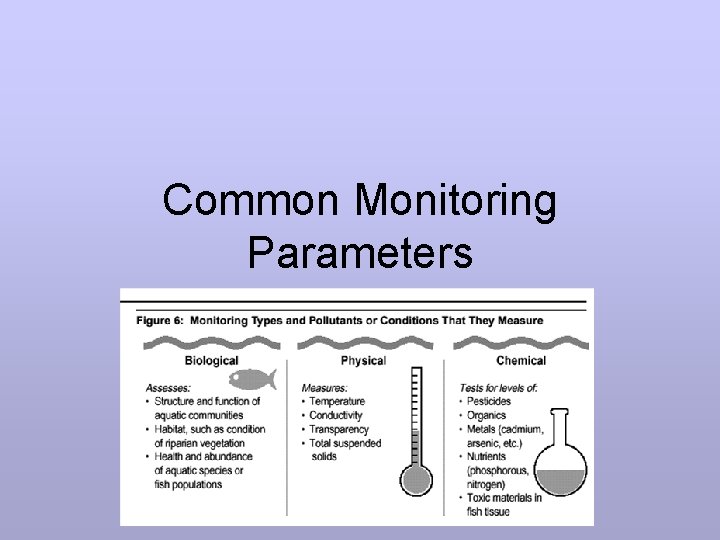
Common Monitoring Parameters
Step 1 Consider purpose/objectives of monitoring • • Assess use attainment Characterize watershed Identify pollutants and sources Investigate fate & transport Measure effectiveness Determine changes and trends Assess compliance Modeling
General classifications • • • Physical Chemical Biological Habitat Stream morphology
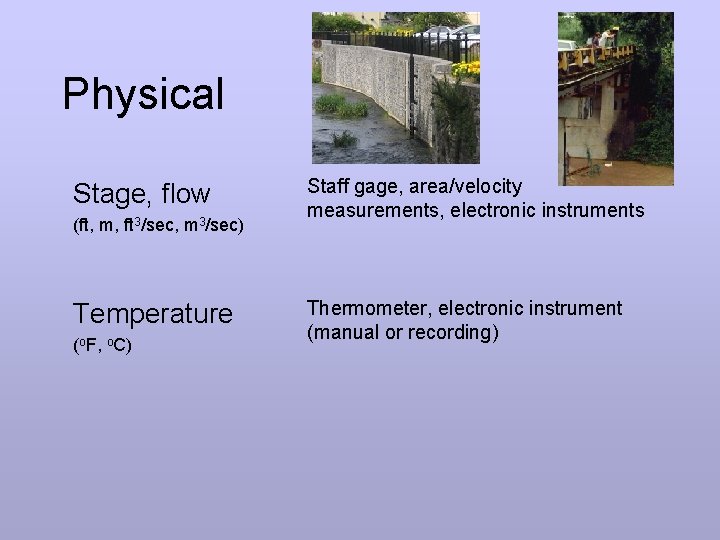
Physical Stage, flow (ft, m, ft 3/sec, m 3/sec) Temperature (o. F, o. C) Staff gage, area/velocity measurements, electronic instruments Thermometer, electronic instrument (manual or recording)
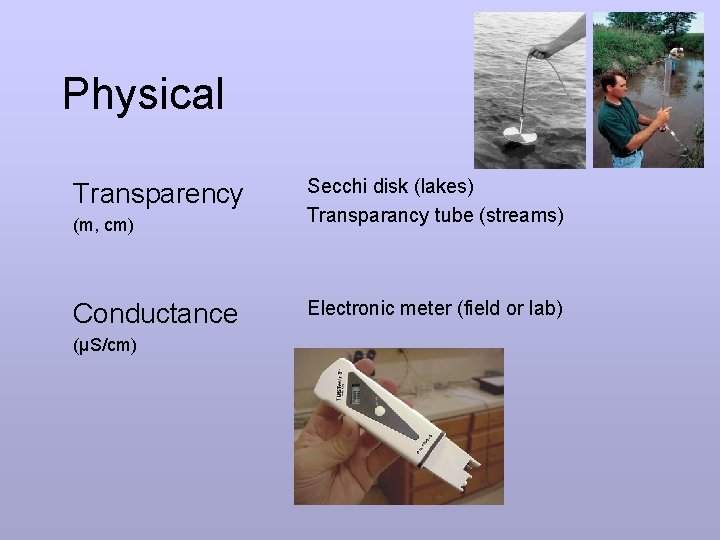
Physical Transparency (m, cm) Conductance (µS/cm) Secchi disk (lakes) Transparancy tube (streams) Electronic meter (field or lab)

Physical Total Dissolved Solids (TDS) (mg/L, ppm) Turbidity (NTU) Laboratory (gravimetric, evaporation of filtered water sample) Electronic meter (field or lab)
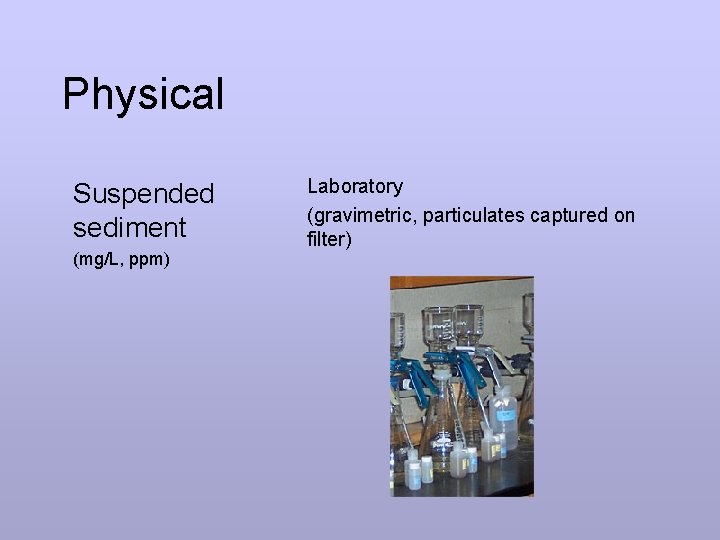
Physical Suspended sediment (mg/L, ppm) Laboratory (gravimetric, particulates captured on filter)
Chemical p. H Electronic meter (field or lab) Alkalinity, Acidity Laboratory (wet chemistry) (mg/L, ppm)
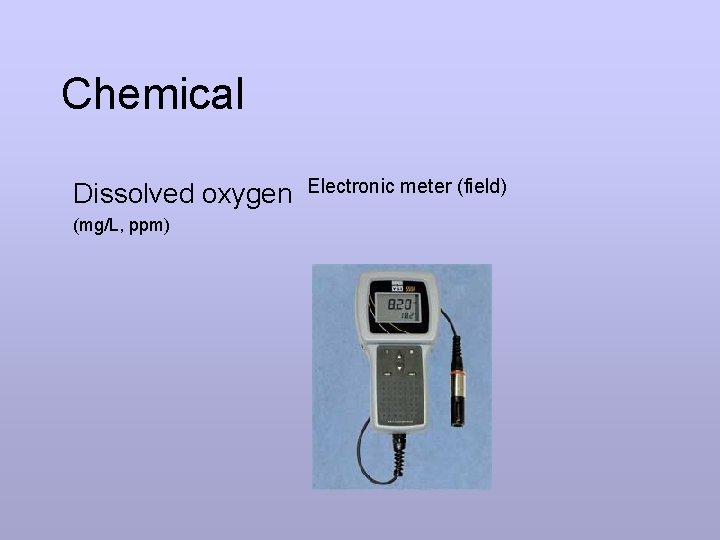
Chemical Dissolved oxygen (mg/L, ppm) Electronic meter (field)
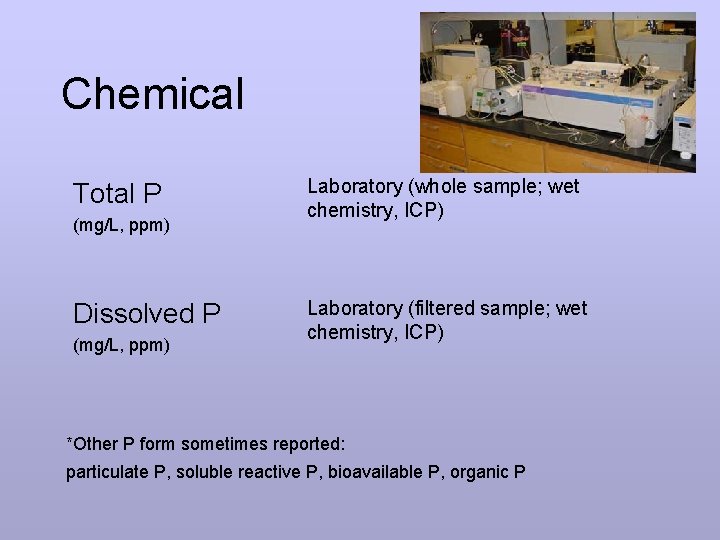
Chemical Total P (mg/L, ppm) Dissolved P (mg/L, ppm) Laboratory (whole sample; wet chemistry, ICP) Laboratory (filtered sample; wet chemistry, ICP) *Other P form sometimes reported: particulate P, soluble reactive P, bioavailable P, organic P
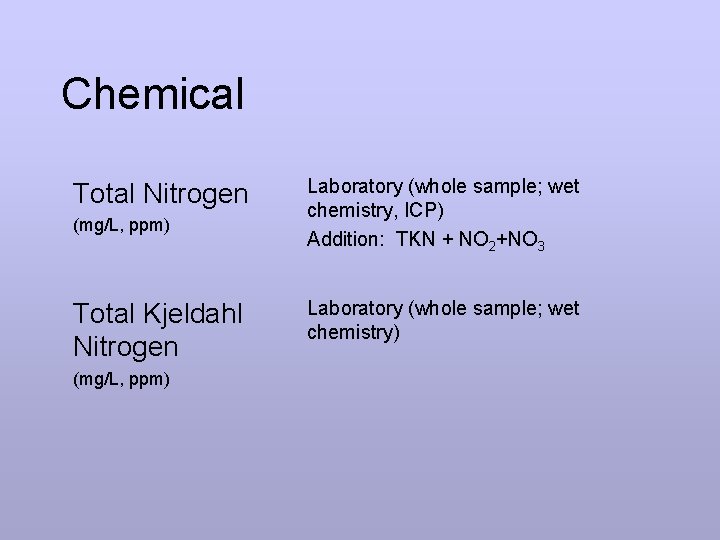
Chemical Total Nitrogen (mg/L, ppm) Total Kjeldahl Nitrogen (mg/L, ppm) Laboratory (whole sample; wet chemistry, ICP) Addition: TKN + NO 2+NO 3 Laboratory (whole sample; wet chemistry)
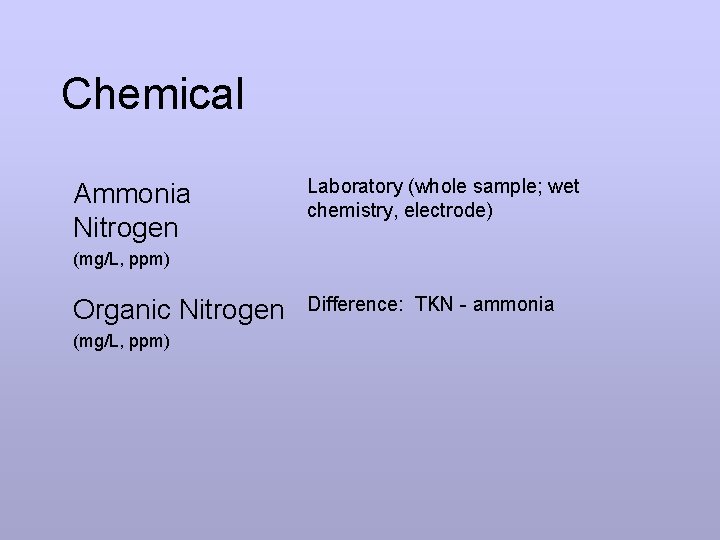
Chemical Ammonia Nitrogen Laboratory (whole sample; wet chemistry, electrode) (mg/L, ppm) Organic Nitrogen (mg/L, ppm) Difference: TKN - ammonia
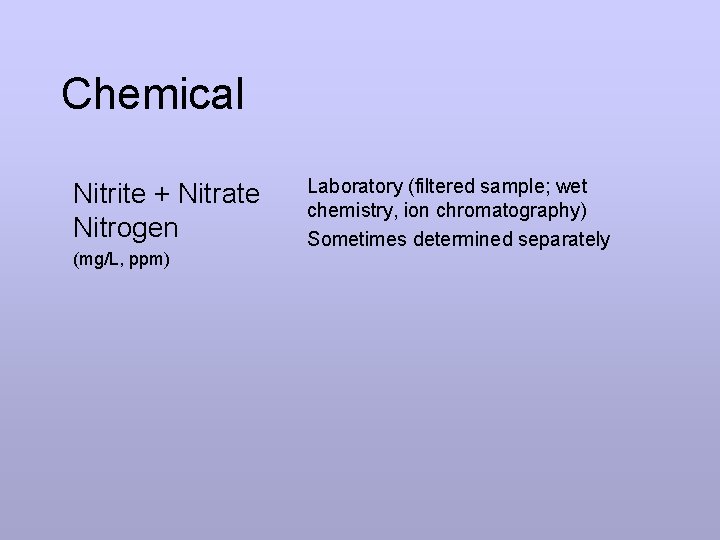
Chemical Nitrite + Nitrate Nitrogen (mg/L, ppm) Laboratory (filtered sample; wet chemistry, ion chromatography) Sometimes determined separately
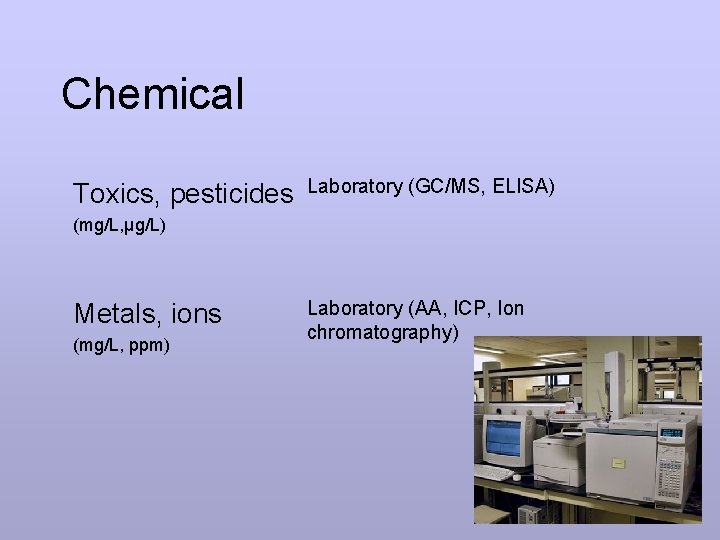
Chemical Toxics, pesticides Laboratory (GC/MS, ELISA) (mg/L, µg/L) Metals, ions (mg/L, ppm) Laboratory (AA, ICP, Ion chromatography)
Chemical Organic Carbon (TOC, DOC) (mg/L, ppm) Laboratory (carbon analyzer, infrared detector)
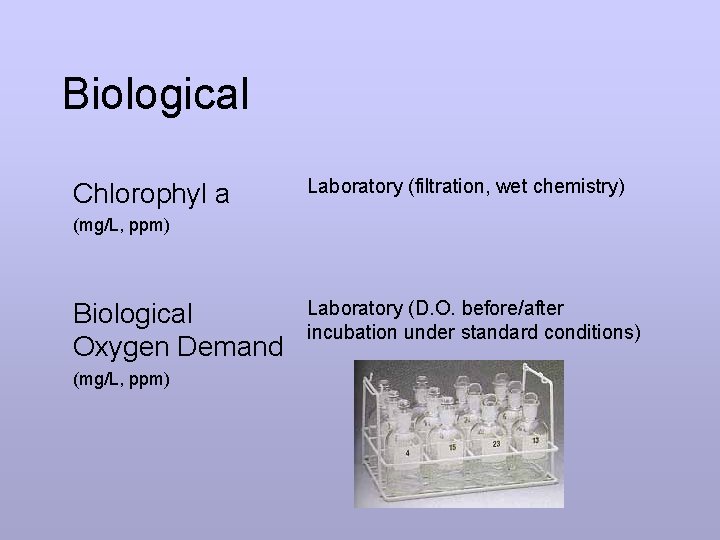
Biological Chlorophyl a Laboratory (filtration, wet chemistry) (mg/L, ppm) Biological Oxygen Demand (mg/L, ppm) Laboratory (D. O. before/after incubation under standard conditions)
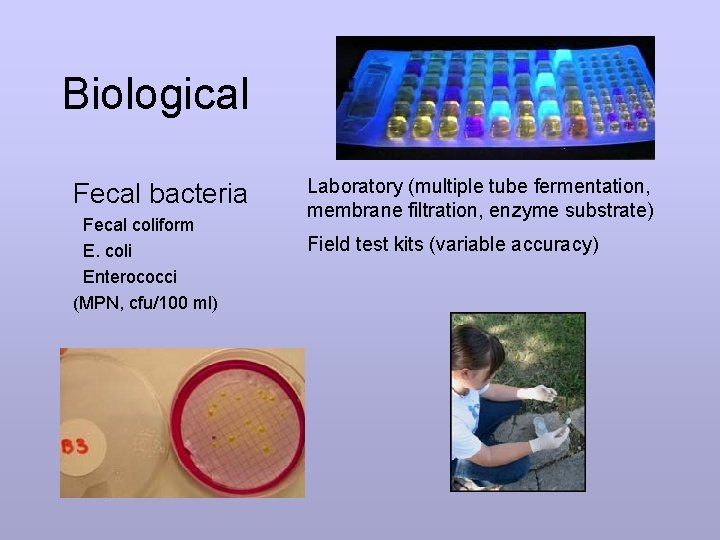
Biological Fecal bacteria Laboratory (multiple tube fermentation, membrane filtration, enzyme substrate) Fecal coliform Field test kits (variable accuracy) E. coli Enterococci (MPN, cfu/100 ml)
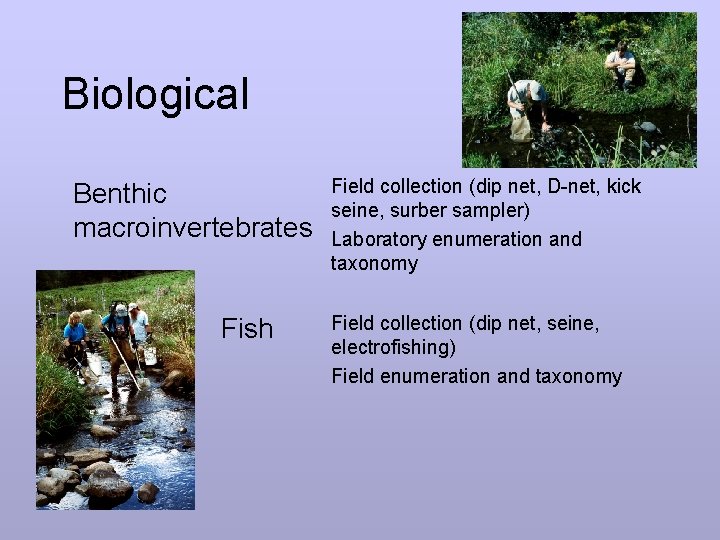
Biological Benthic macroinvertebrates Field collection (dip net, D-net, kick seine, surber sampler) Laboratory enumeration and taxonomy Fish Field collection (dip net, seine, electrofishing) Field enumeration and taxonomy
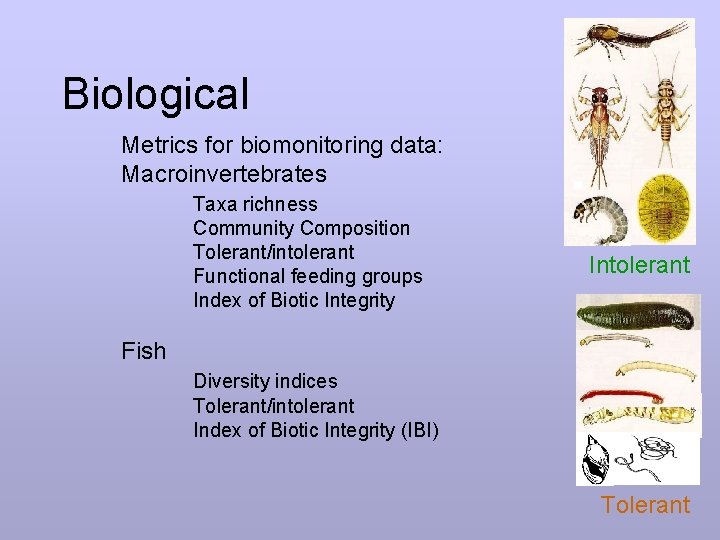
Biological Metrics for biomonitoring data: Macroinvertebrates Taxa richness Community Composition Tolerant/intolerant Functional feeding groups Index of Biotic Integrity Intolerant Fish Diversity indices Tolerant/intolerant Index of Biotic Integrity (IBI) Tolerant
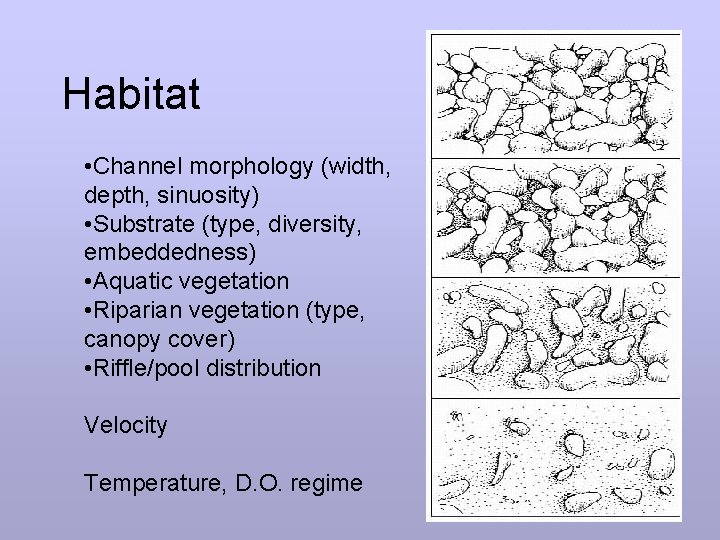
Habitat • Channel morphology (width, depth, sinuosity) • Substrate (type, diversity, embeddedness) • Aquatic vegetation • Riparian vegetation (type, canopy cover) • Riffle/pool distribution Velocity Temperature, D. O. regime
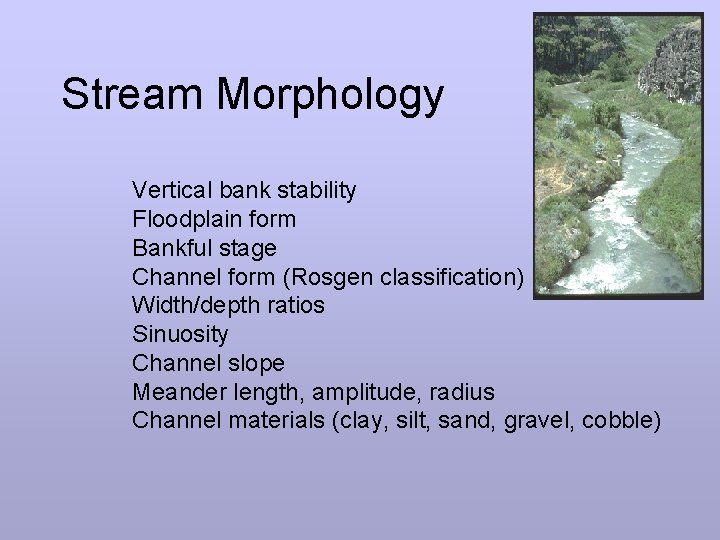
Stream Morphology Vertical bank stability Floodplain form Bankful stage Channel form (Rosgen classification) Width/depth ratios Sinuosity Channel slope Meander length, amplitude, radius Channel materials (clay, silt, sand, gravel, cobble)
Other Considerations • • • Project objectives Pollutant sources Land treatments implemented Cost Logistics Correlations/surrogates
- Slides: 22