
Common Monitoring and Evaluation System for Rural Development

- Slides: 19
Common Monitoring and Evaluation System for Rural Development 2014 -2020 Evaluation. WORKS! 2015
Key messages 1. In this programming period there are common provisions on monitoring and evaluation. 2. A proactive approach to monitoring and evaluation is required. 3. There is a Common Monitoring and Evaluation System (CMES) that is part of the Common Monitoring and Evaluation Framework (CMEF) 2
Common provisions on M&E Regulation (EU) No 1303/2013 – Common Provisions Regulation for all ESI Funds General provisions on Monitoring Committees, progress reports for programmes and partnership agreements (Art. 4753) General provisions on evaluation (evaluation plan, ex ante , ex post– Art. 54 -57) : • Provision of resources • Procedures for data collection • Independence of evaluation • Evaluations on the basis of the evaluation plan §§§ 3
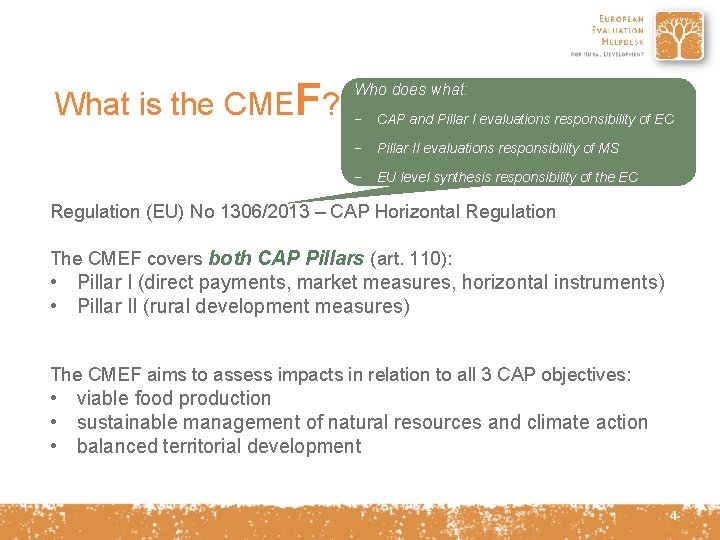
What is the CMEF? Who does what: − CAP and Pillar I evaluations responsibility of EC − Pillar II evaluations responsibility of MS − EU level synthesis responsibility of the EC Regulation (EU) No 1306/2013 – CAP Horizontal Regulation The CMEF covers both CAP Pillars (art. 110): • Pillar I (direct payments, market measures, horizontal instruments) • Pillar II (rural development measures) The CMEF aims to assess impacts in relation to all 3 CAP objectives: • viable food production • sustainable management of natural resources and climate action • balanced territorial development 4
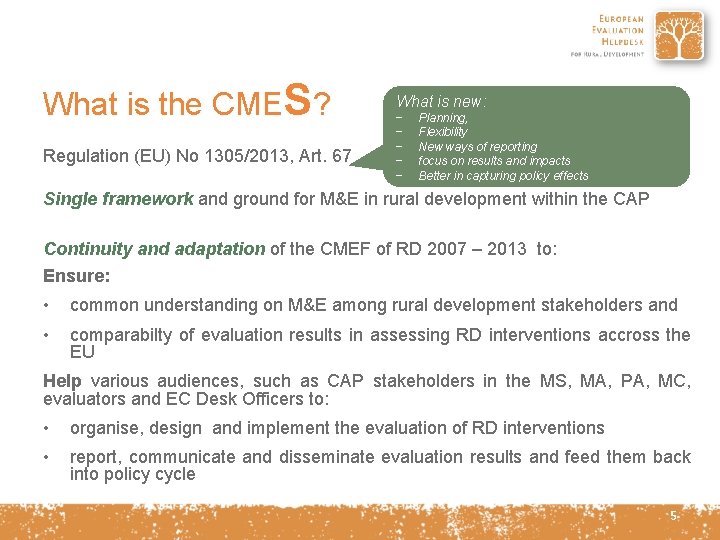
What is the CMES? Regulation (EU) No 1305/2013, Art. 67 What is new: − − − Planning, Flexibility New ways of reporting focus on results and impacts Better in capturing policy effects Single framework and ground for M&E in rural development within the CAP Continuity and adaptation of the CMEF of RD 2007 – 2013 to: Ensure: • common understanding on M&E among rural development stakeholders and • comparabilty of evaluation results in assessing RD interventions accross the EU Help various audiences, such as CAP stakeholders in the MS, MA, PA, MC, evaluators and EC Desk Officers to: • organise, design and implement the evaluation of RD interventions • report, communicate and disseminate evaluation results and feed them back into policy cycle 5
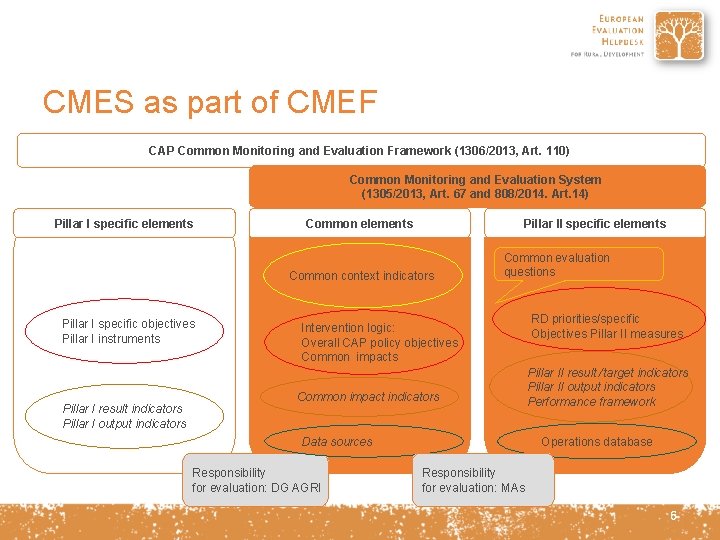
CMES as part of CMEF CAP Common Monitoring and Evaluation Framework (1306/2013, Art. 110) Common Monitoring and Evaluation System (1305/2013, Art. 67 and 808/2014. Art. 14) Pillar I specific elements Common elements Pillar II specific elements Common context indicators Pillar I specific objectives Pillar I instruments Pillar I result indicators Pillar I output indicators Common evaluation questions Intervention logic: Overall CAP policy objectives Common impact indicators Data sources Responsibility for evaluation: DG AGRI RD priorities/specific Objectives Pillar II measures Pillar II result /target indicators Pillar II output indicators Performance framework Operations database Responsibility for evaluation: MAs 6
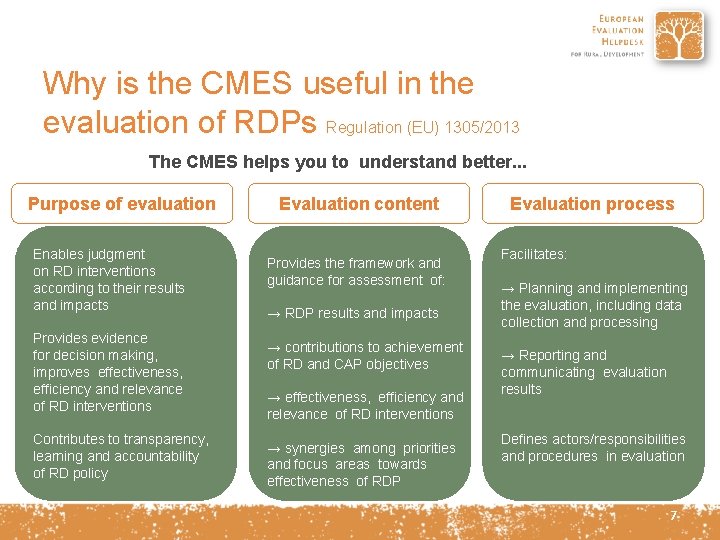
Why is the CMES useful in the evaluation of RDPs Regulation (EU) 1305/2013 The CMES helps you to understand better. . . Purpose of evaluation Enables judgment on RD interventions according to their results and impacts Provides evidence for decision making, improves effectiveness, efficiency and relevance of RD interventions Contributes to transparency, learning and accountability of RD policy Evaluation content Provides the framework and guidance for assessment of: → RDP results and impacts → contributions to achievement of RD and CAP objectives → effectiveness, efficiency and relevance of RD interventions → synergies among priorities and focus areas towards effectiveness of RDP Evaluation process Facilitates: → Planning and implementing the evaluation, including data collection and processing → Reporting and communicating evaluation results Defines actors/responsibilities and procedures in evaluation 7
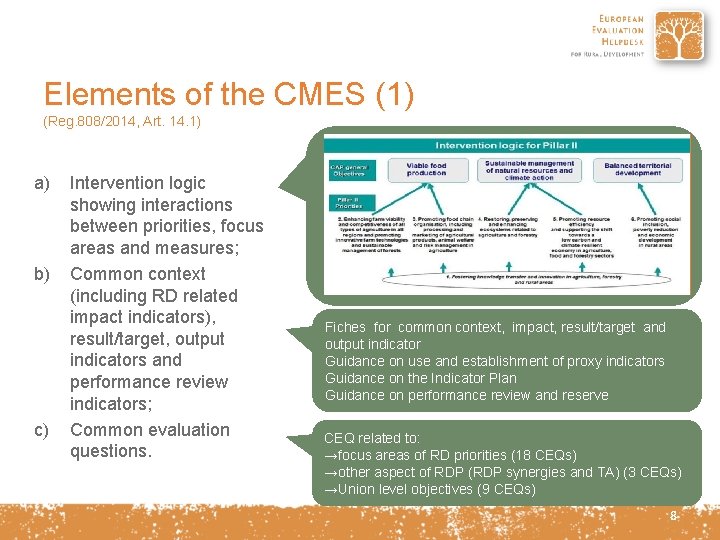
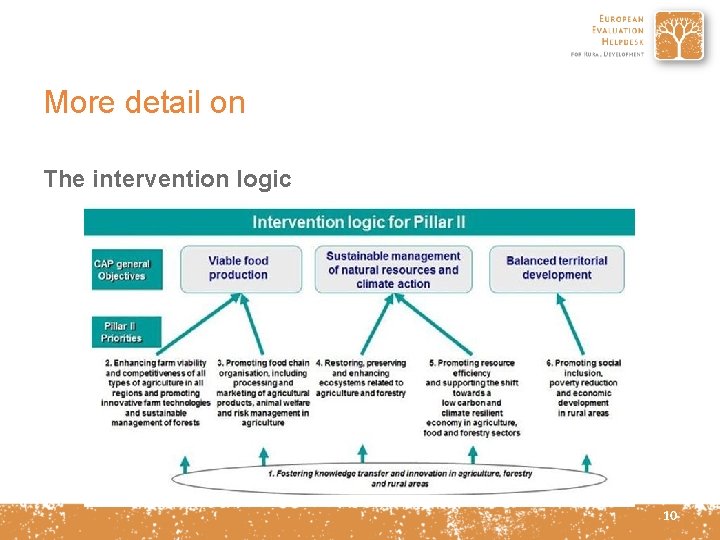
Elements of the CMES (1) (Reg. 808/2014, Art. 14. 1) a) b) c) Intervention logic showing interactions between priorities, focus areas and measures; Common context (including RD related impact indicators), result/target, output indicators and performance review indicators; Common evaluation questions. Fiches for common context, impact, result/target and output indicator Guidance on use and establishment of proxy indicators Guidance on the Indicator Plan Guidance on performance review and reserve CEQ related to: →focus areas of RD priorities (18 CEQs) →other aspect of RDP (RDP synergies and TA) (3 CEQs) →Union level objectives (9 CEQs) 8
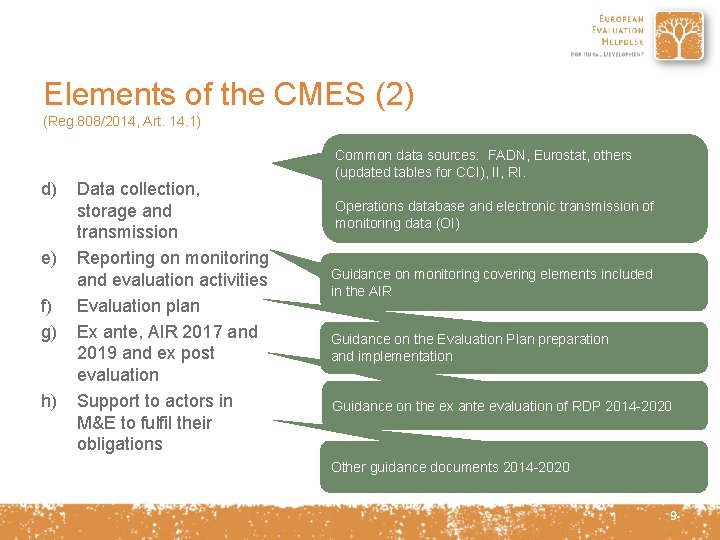
Elements of the CMES (2) (Reg. 808/2014, Art. 14. 1) d) e) f) g) h) Data collection, storage and transmission Reporting on monitoring and evaluation activities Evaluation plan Ex ante, AIR 2017 and 2019 and ex post evaluation Support to actors in M&E to fulfil their obligations Common data sources: FADN, Eurostat, others (updated tables for CCI), II, RI. Operations database and electronic transmission of monitoring data (OI) Guidance on monitoring covering elements included in the AIR Guidance on the Evaluation Plan preparation and implementation Guidance on the ex ante evaluation of RDP 2014 -2020 Other guidance documents 2014 -2020 9
More detail on The intervention logic 10
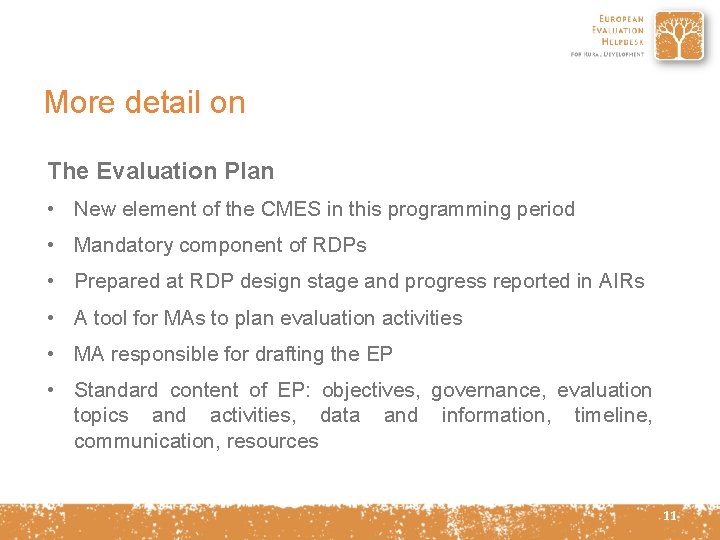
More detail on The Evaluation Plan • New element of the CMES in this programming period • Mandatory component of RDPs • Prepared at RDP design stage and progress reported in AIRs • A tool for MAs to plan evaluation activities • MA responsible for drafting the EP • Standard content of EP: objectives, governance, evaluation topics and activities, data and information, timeline, communication, resources 11
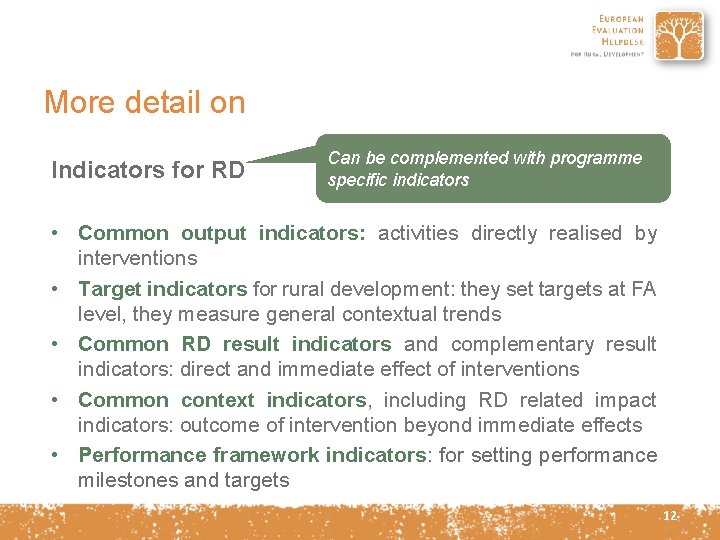
More detail on Indicators for RD Can be complemented with programme specific indicators • Common output indicators: activities directly realised by interventions • Target indicators for rural development: they set targets at FA level, they measure general contextual trends • Common RD result indicators and complementary result indicators: direct and immediate effect of interventions • Common context indicators, including RD related impact indicators: outcome of intervention beyond immediate effects • Performance framework indicators: for setting performance milestones and targets 12
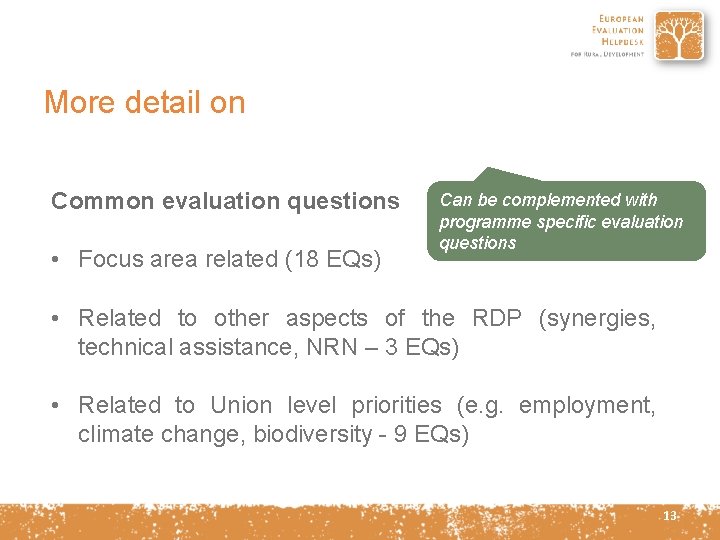
More detail on Common evaluation questions • Focus area related (18 EQs) Can be complemented with programme specific evaluation questions • Related to other aspects of the RDP (synergies, technical assistance, NRN – 3 EQs) • Related to Union level priorities (e. g. employment, climate change, biodiversity - 9 EQs) 13
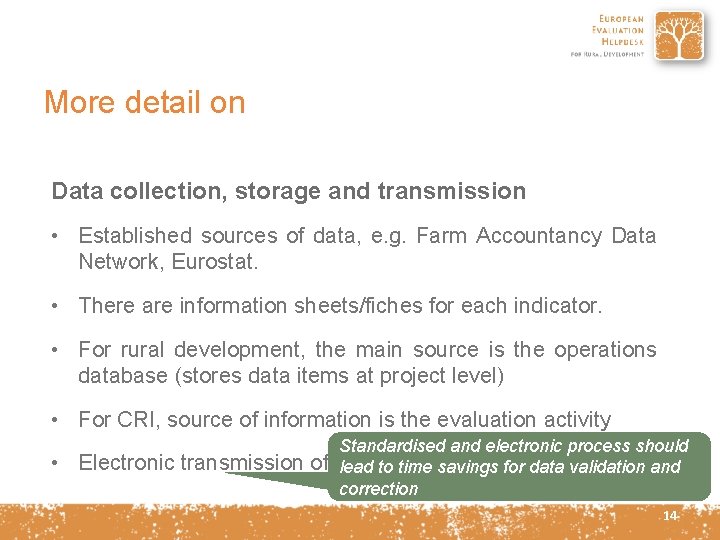
More detail on Data collection, storage and transmission • Established sources of data, e. g. Farm Accountancy Data Network, Eurostat. • There are information sheets/fiches for each indicator. • For rural development, the main source is the operations database (stores data items at project level) • For CRI, source of information is the evaluation activity • Electronic transmission of Standardised and electronic process should data via standard templates lead to time savings for data validation and correction 14
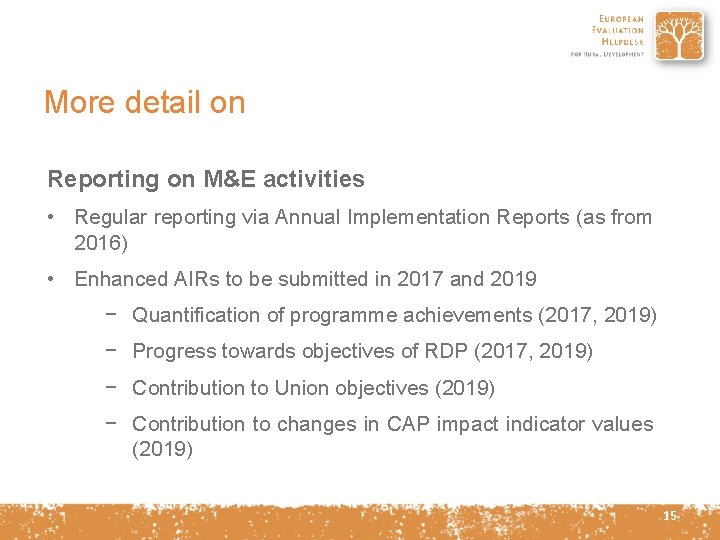
More detail on Reporting on M&E activities • Regular reporting via Annual Implementation Reports (as from 2016) • Enhanced AIRs to be submitted in 2017 and 2019 − Quantification of programme achievements (2017, 2019) − Progress towards objectives of RDP (2017, 2019) − Contribution to Union objectives (2019) − Contribution to changes in CAP impact indicator values (2019) 15
More detail on Evaluations • Ex ante evaluation (in parallel to RDP design) • AIR 2017 • AIR 2019 • Ex post evaluation (by end of 2024) 16
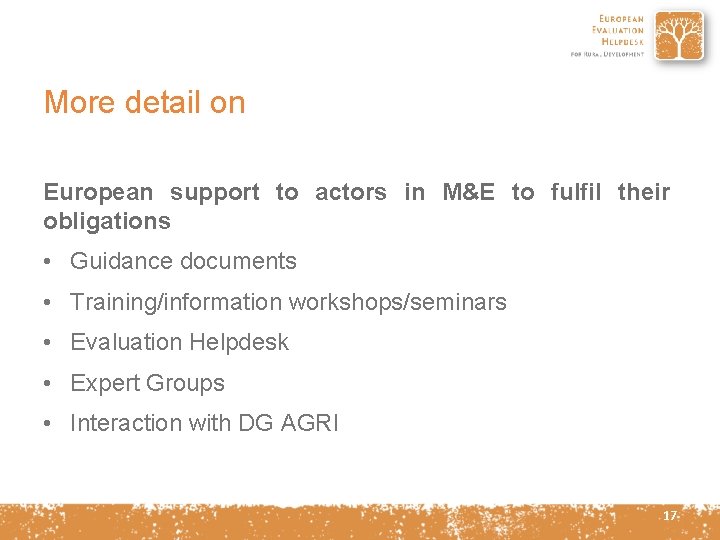
More detail on European support to actors in M&E to fulfil their obligations • Guidance documents • Training/information workshops/seminars • Evaluation Helpdesk • Expert Groups • Interaction with DG AGRI 17
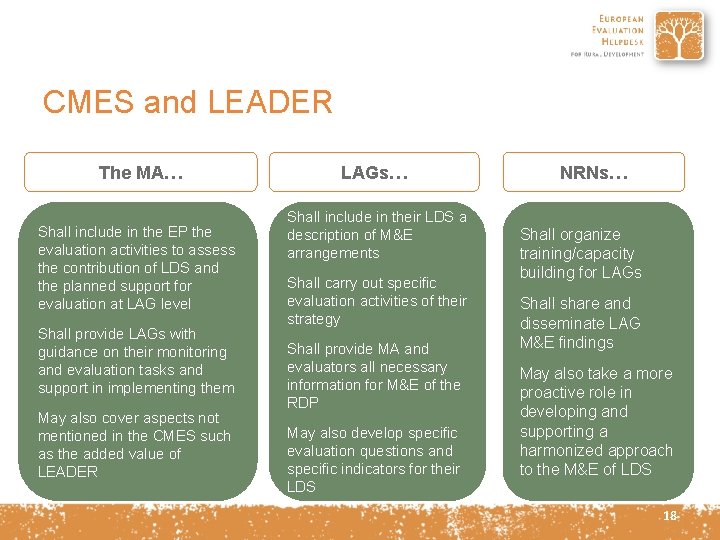
CMES and LEADER The MA… Shall include in the EP the evaluation activities to assess the contribution of LDS and the planned support for evaluation at LAG level Shall provide LAGs with guidance on their monitoring and evaluation tasks and support in implementing them May also cover aspects not mentioned in the CMES such as the added value of LEADER LAGs… Shall include in their LDS a description of M&E arrangements Shall carry out specific evaluation activities of their strategy Shall provide MA and evaluators all necessary information for M&E of the RDP May also develop specific evaluation questions and specific indicators for their LDS NRNs… Shall organize training/capacity building for LAGs Shall share and disseminate LAG M&E findings May also take a more proactive role in developing and supporting a harmonized approach to the M&E of LDS 18
Thank you for your attention! European Evaluation Helpdesk for Rural Development Boulevard Saint Michel 77 -79 B-1040 Brussels Tel. +32 2 7375130 E-mail info@ruralevaluation. eu http: //enrd. ec. europa. eu/evaluation 19